






This Template at a Glance
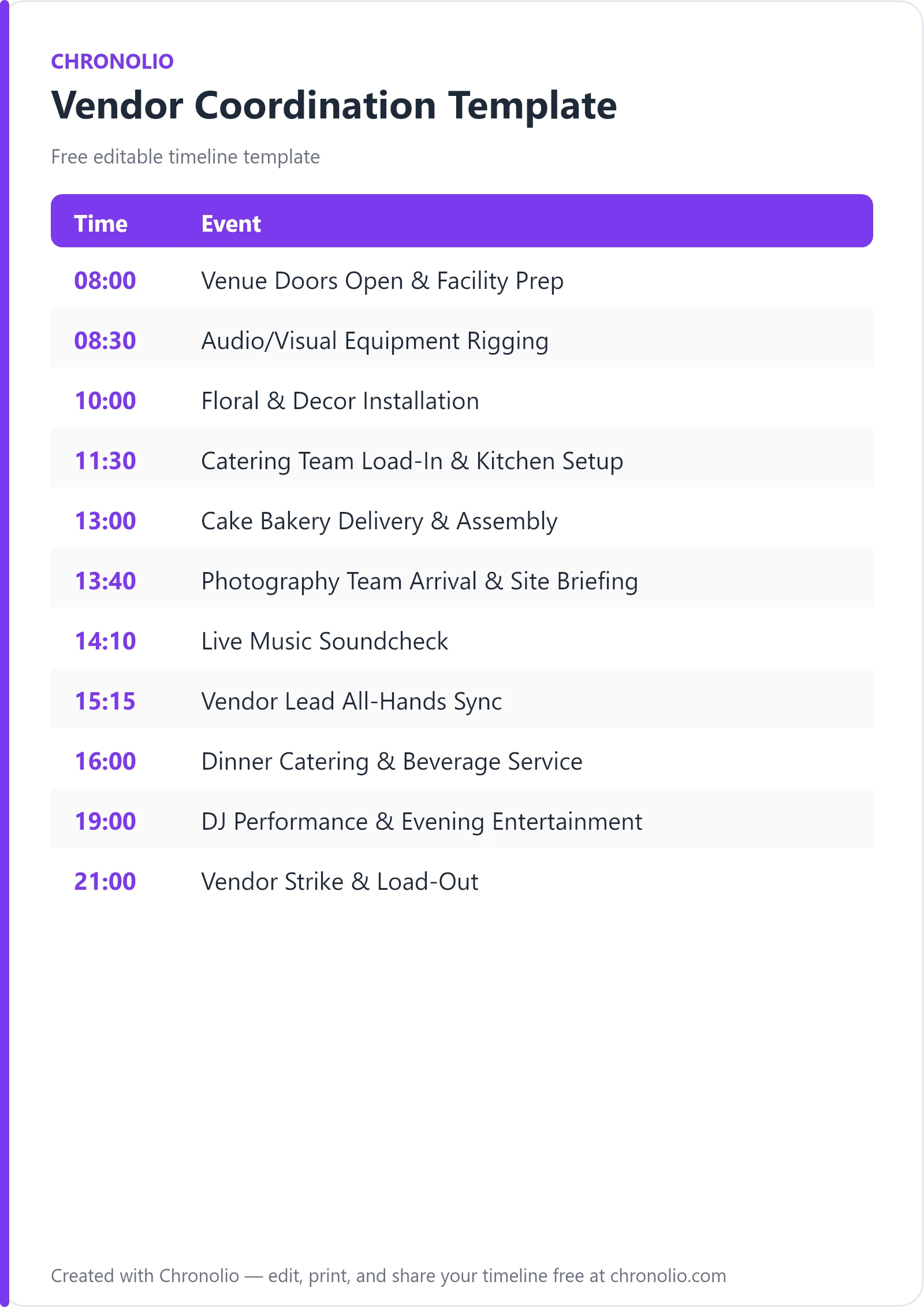
Here is the complete schedule this free template gives you — every time block, ready to edit, download, and share:
| Time | Event |
|---|---|
| 08:00 | Venue Doors Open & Facility Prep |
| 08:30 | Audio/Visual Equipment Rigging |
| 10:00 | Floral & Decor Installation |
| 11:30 | Catering Team Load-In & Kitchen Setup |
| 13:00 | Cake Bakery Delivery & Assembly |
| 13:40 | Photography Team Arrival & Site Briefing |
| 14:10 | Live Music Soundcheck |
| 15:15 | Vendor Lead All-Hands Sync |
| 16:00 | Dinner Catering & Beverage Service |
| 19:00 | DJ Performance & Evening Entertainment |
| 21:00 | Vendor Strike & Load-Out |
Vendor Coordination Template: What It Is and Why It Matters
A vendor coordination template is the definitive master run sheet used by event managers and venue operators to sequence every contracted supplier entering a property. From heavy production crews unloading in loading docks to delicate pastry chefs completing cake staging, a comprehensive schedule aligns third-party teams into one synchronized workflow. This operational blueprint ensures that every supplier knows precisely when to arrive, where to unload, which power sources to utilize, and how long they have to complete set up before the next team requires the floor.
In real-world venue management, chaotic setup windows lead to broken decor, delayed soundchecks, and overwhelmed service corridors. Drawing from years of multi-vendor event production, this template applies proven sequencing principles: heavy audio/visual rigging comes first, structural decor second, perishable catering and floral third, and media briefing immediately prior to doors opening. Whether you are coordinating a high-stakes corporate gala or aligning a christian wedding timeline, establishing strict load-in protocols protects both your venue infrastructure and your event program schedule.
Get Your Free Vendor Coordination Template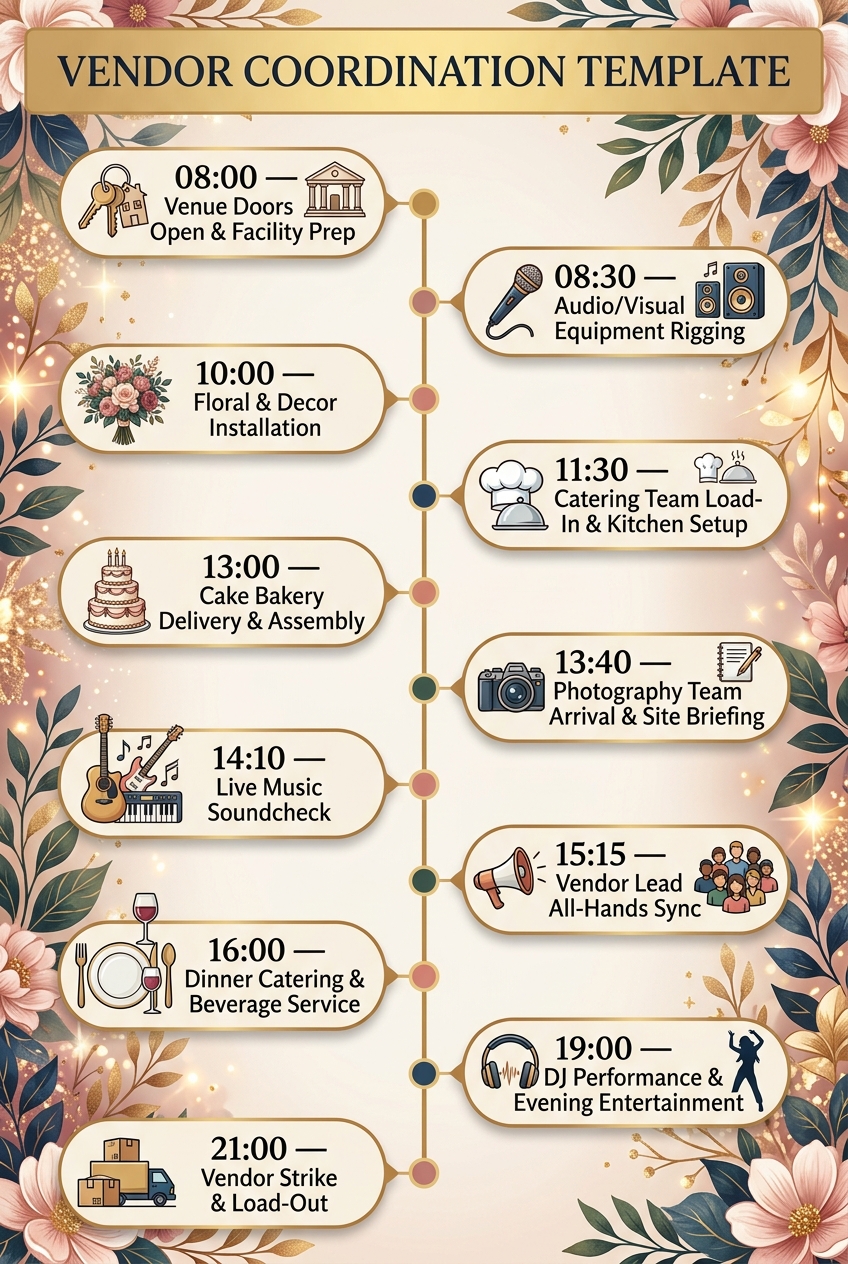
Why Events Need a Vendor Coordination Timeline
Operating a smooth event requires managing multiple independent businesses under tight deadline pressure. Without a centralized timeline, vendors naturally default to arriving whenever it suits their standard schedule, resulting in severe loading dock gridlock, contested freight elevators, and insufficient power distribution. A structured setup schedule gives suppliers guaranteed access windows so they can assemble equipment efficiently without stepping on each other's toes.
Clear scheduling also creates explicit operational accountability across all disciplines. When sound technicians know that floral designers occupy the main reception floor at a specific hour, they can prioritize overhead truss rigging prior to floral delivery. Staggered arrivals also allow the venue facility manager to inspect sound boards, electrical drops, and service doors before heavy decor fills the space.
Finally, an detailed vendor schedule directly protects guest experience. Guests should never see technicians rolling flight cases through dining rooms, nor should live speeches be interrupted by late audio testing. By allocating distinct service hours, soundcheck blocks, and vendor lead syncs, you ensure all back-of-house operational chaos vanishes long before the first guest steps through the doors.
What to Include in a Vendor Coordination Template
To guarantee smooth execution on site, your vendor setup schedule should capture the following essential operational elements:
- Facility access and unlock times: Explicit call times for venue doors, loading dock gates, and freight elevator initialization.
- Staggered load-in slots: Designated arrival windows and unloading bays assigned per vendor discipline.
- Technical setup durations: Uninterrupted work windows reserved for AV rigging, lighting focus, and line checks.
- Decor and staging allocations: Time blocks dedicated to backdrop erection, floral arch builds, and table centerpiece placement.
- Food and beverage staging windows: Back-of-house kitchen setup times, hot box positioning, and bar prep hours.
- Vendor sync meeting: A brief, mandatory all-hands alignment meeting with lead vendor representatives prior to doors opening.
- Service execution and program cues: Real-time timing for meal service, entertainment announcements, and special cues.
- Teardown and strike sequence: Post-event load-out order, loading dock queues, and final facility walk-through times.
Phase 1: Venue Access, Technical Rigging & Decor Setup
| Time | Event | | 08:00 | Venue Doors Open & Facility Prep | | 08:30 | Audio/Visual Equipment Rigging | | 10:00 | Floral & Decor Installation | | 11:30 | Catering Team Load-In & Kitchen Setup |
The setup day begins early at the Grand Ballroom Loading Dock, where the facility manager unlocks loading bays, initializes HVAC climate control, and activates main electrical distribution panels. Opening the venue at 08:00 gives internal staff half an hour to inspect service corridors and power drop points before heavy transport vehicles arrive. Starting facility prep before external vendors step foot on site avoids lost time searching for keys or troubleshooting locked freight elevators.
At 08:30, production technicians begin audio/visual equipment rigging in the Main Stage Area. Installing heavy ceiling trusses, flying speaker arrays, and running main snake cables across the stage floor must happen before tables, chairs, or floral displays enter the room. Having production crews complete dirty work uninterrupted prevents cabling trip hazards and keeps sensitive electronic equipment clear of floral water or food prep spillages.
Once overhead rigging and major stage wiring finish, florists and decor designers take over the Main Reception Hall at 10:00. This 90-minute window gives florists space to unload floral arches, drape backdrops, and place centerpieces on pre-positioned dining tables. At 11:30, the catering crew unloads hot boxes, insulated food warmers, and service trays into the Commercial Kitchen Annex. Placing back-of-house food prep after main room decor guarantees kitchen staff can move freely through service doors without blocking floral transport carts. If you are organizing family milestone events alongside vendor teams, consider referencing our anniversary party schedule template or birthday party timeline template for complementary guest flow planning.
Phase 2: Perishable Staging, Media Alignment & Soundcheck
| Time | Event | | 13:00 | Cake Bakery Delivery & Assembly | | 13:40 | Photography Team Arrival & Site Briefing | | 14:10 | Live Music Soundcheck | | 15:15 | Vendor Lead All-Hands Sync |
Delicate and climate-sensitive deliveries require late afternoon timing to protect product quality. At 13:00, the pastry chef arrives at the Dessert Display Platform for cake bakery delivery and assembly. Delaying multi-tiered cake setup until early afternoon minimizes exposure to room temperature changes and avoids risk of structural damage during heavy decor rigging. The pastry chef secures structural dowels, applies final sugar flower details, and completes staging in a controlled climate.
At 13:40, media professionals arrive at the Vendor Operations Office for site orientation. The lead photographer and videographer review ambient lighting levels across the room, establish off-camera flash locations, and confirm shot lists with the lead coordinator. This 30-minute briefing ensures photographers understand tight timing constraints before guest arrivals. Similar structured briefings are essential for personal events; planners often adapt these workflows when customizing a baby shower timeline template.
Live musicians take the Main Stage at 14:10 to conduct acoustic soundchecks, test wireless handheld microphones, and balance monitor mixes across speaker zones. Completing soundcheck before vendor briefing guarantees audio levels are locked without disturbing guest arrivals. At 15:15, the lead coordinator gathers all key supplier leads in Conference Room B for the vendor lead all-hands sync. During this brief 30-minute meeting, the team reviews master timeline milestones, assigns radio contact channels, and addresses final contingency plans before doors open.
Phase 3: Service Execution, Live Program & Vendor Strike
| Time | Event | | 16:00 | Dinner Catering & Beverage Service | | 19:00 | DJ Performance & Evening Entertainment | | 21:00 | Vendor Strike & Load-Out |
Service execution begins at 16:00 in the Main Dining Room with dinner catering and beverage operations. Waitstaff manage synchronized course service while bartenders handle high-volume drink queues across primary bars. Because catering setup was completed hours earlier in the back-of-house annex, front-of-house staff can focus entirely on hospitality, course pacing, and guest care without logistical interruptions.
At 19:00, primary entertainment shifts to the Main Ballroom Dance Floor as the DJ takes over program announcements and music cues. The DJ manages speech introductions, special dances, and general floor lighting queues, maintaining event energy while catering teams quietly clear empty glassware and transition back-of-house stations. Coordination between the DJ and catering lead is critical here so main program announcements do not clash with dessert service.
The operational day concludes at 21:00 with vendor strike and load-out across the loading dock and service exits. Tear-down follows a precise reverse order: mobile items, floral arrangements, and media gear clear first, followed by DJ audio cases, catering hot boxes, and structural stage rigging. Staggering load-out queues ensures freight elevators do not overflow and allows venue facility managers to complete sign-off inspections before final door lockup.
Vendor Coordination Template vs Master Day-of Itinerary
While both documents are critical for running an event, they serve entirely different audiences and operational goals:
| Feature | Vendor Coordination Template | Master Day-of Itinerary |
|---|---|---|
| Primary Audience | External vendors, production crews, venue facility managers | Event host, clients, VIP guests, internal staff |
| Focus Area | Load-in docks, utility power, setup windows, service access, strike | Program speeches, guest arrival, ceremonial cues, dining times |
| Key Metrics | Freight elevator access, soundcheck windows, load-out windows | Guest arrival times, toast sequences, key announcements |
| Level of Detail | Back-of-house technical setup and staging details | Front-of-house guest-facing program schedule |
A master day-of itinerary guides the host or client through their personal schedule and ceremonial events. In contrast, a vendor coordination schedule focuses on logistical mechanics: dock loading bays, cable runs, electrical power requirements, sound check windows, and teardown constraints. Both documents work together to keep the front-of-house presentation flawless while back-of-house logistics remain perfectly controlled.
Who Should Use This Template?
This vendor schedule framework is designed for event professionals and venue teams who manage multi-supplier events:
- Independent Event Planners: Coordinators managing complex corporate galas, trade shows, or private celebrations with dozens of suppliers.
- Venue Operations Managers: Facility directors controlling loading dock queues, freight elevators, and room turnover schedules.
- Production Directors: AV and lighting leads needing clear rigging access before decor installation.
- Catering Captains & Banquet Managers: Culinary teams coordinating back-of-house kitchen access and dining room service windows.
- Wedding Coordinators: Professionals organizing multi-vendor nuptial events; pair this with our catholic wedding timeline for seamless ceremony-to-reception logistics.
Chronolio offers specialized templates tailored to the specific roles involved in executing flawless events.
How to Use This Template
- Download or duplicate the template: Grab your preferred format using our direct Word document download or PDF template download.
- Set your key event anchor times: Input your locked guest arrival time and hard venue curfew first; all setup and teardown windows calculate relative to these anchors.
- Assign dedicated setup blocks: Allocate realistic load-in durations based on supplier requirements (e.g., 3 hours for AV, 90 minutes for florals).
- Distribute to vendors early: Send the draft schedule to all contracted suppliers 14 days prior to the event date to collect feedback on utility needs and arrival limits.
- Enforce on-site compliance: Use the vendor lead sync meeting on event day to verify every lead representative has a printed or digital copy of the run sheet.
Tips for Successful Vendor Coordination
- Establish strict dock arrival windows: Never allow vendors to show up "whenever they are ready." Assign exact 15-to-30-minute dock unloading slots.
- Audit electrical and power capacity early: Verify total wattage needs for lighting, live bands, and catering hot boxes during site visits to prevent tripped breakers.
- Create a dedicated vendor contact list: Maintain a single sheet containing on-site mobile numbers, driver details, and emergency contacts for every vendor lead.
- Build explicit soundcheck blocks: Ensure live music or DJ sound testing occurs before floral, media, or catering teams complete delicate work in the main hall.
- Designate a back-of-house vendor break area: Provide a private space away from guest view where vendors can store cases, take meals, and rest between duties.
- Confirm strike teardown permissions: Ensure vendors understand exact loading dock exit queues so early-departing suppliers do not block main venue exit doors.
Common Mistakes to Avoid
- Overlapping loading dock access: Scheduling catering delivery and heavy AV truck arrival at the same dock door simultaneously creates total physical gridlock.
- Ignoring room setup sequence: Allowing table decor placement before stage building and overhead lighting focus results in damaged centerpieces and restricted ladder placement.
- Omitting soundcheck buffer time: Failing to schedule an isolated soundcheck window leaves guests listening to screeching microphone feedback during cocktail hour.
- Forgetting the vendor sync: Skipping the pre-event vendor lead meeting leads to poor communication regarding speech timing and meal service cues.
- Unrealistic teardown timeframes: Expecting full room strike in 30 minutes leads to overtime fees from venue facility managers; allocate at least 90 to 120 minutes for complete teardown.
- Failing to check door dimensions: Forgetting to measure service elevator doors can lead to custom backdrops or large catering carts getting stuck in entryways.
In Summary
- Master Operational Blueprint: A vendor coordination schedule organizes load-in, setup, service, and teardown into clear time slots.
- Dock Gridlock Prevention: Staggering call times keeps loading bays, freight elevators, and service corridors moving smoothly.
- Sequential Workflows: Prioritizes technical AV rigging and staging before delicate floral, bakery, and food prep items enter the space.
- Team Alignment: Features a mandatory all-hands vendor lead sync to confirm communication channels and service timing before doors open.
- Protects Guest Experience: Keeps back-of-house noise, flight cases, and equipment out of guest sight lines during live events.
- Standardized Logistics: Works effectively across corporate functions, weddings, galas, and private celebrations.
Managing complex vendor schedules requires absolute timing precision and shared visibility across all teams. By establishing clear call times, staggered setup windows, and enforced teardown protocols, you eliminate on-site friction and create an environment where every event professional can deliver their best work. For corporate leaders structuring formal meetings, pair your operational planning with our board meeting timeline template to keep executive teams equally synchronized.
To maintain industry best practices when designing vendor workflows, consult event industry standards from recognized organizations like BizBash and Special Events Magazine.
Get Your Free Vendor Coordination Template