






This Template at a Glance
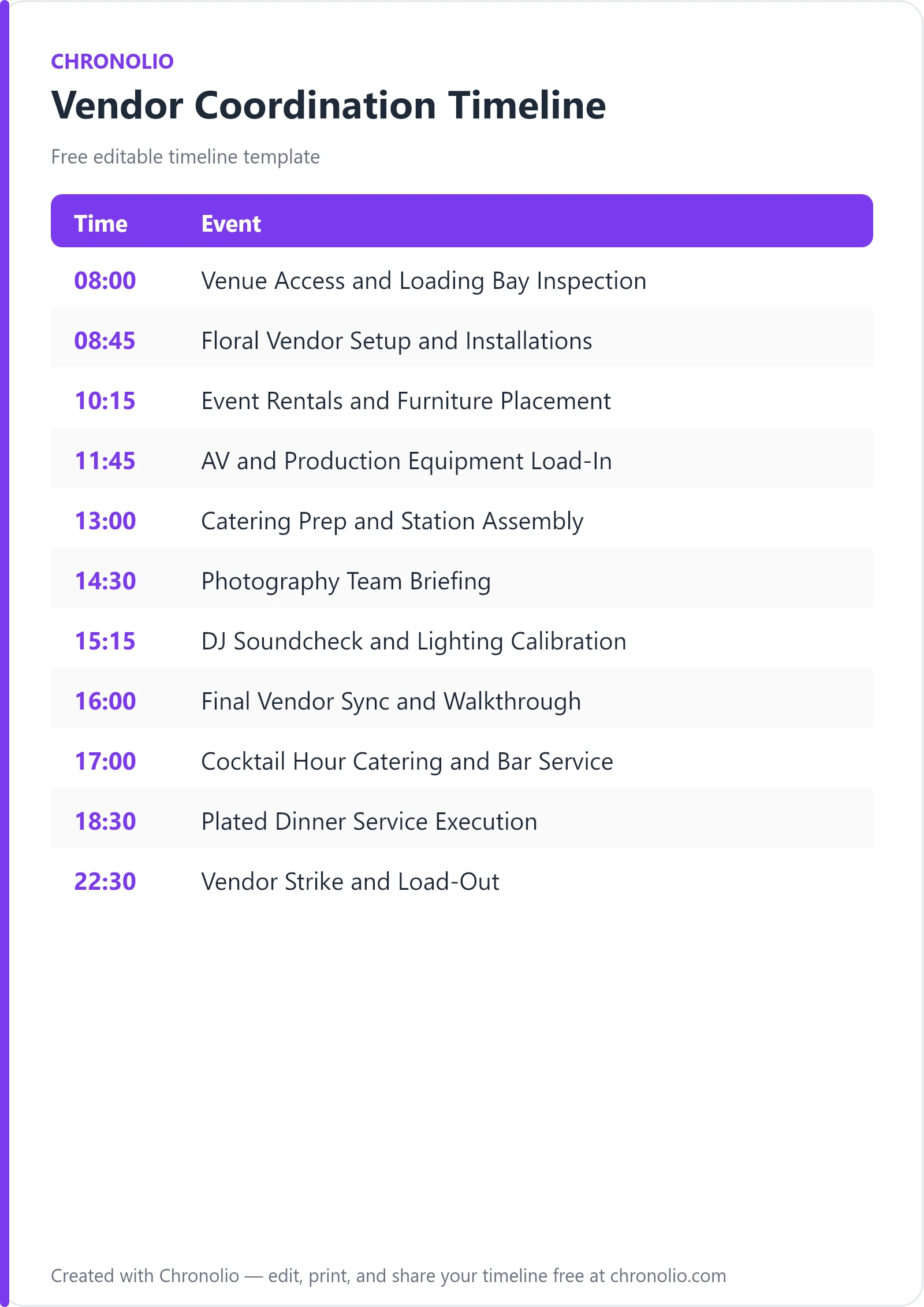
Here is the complete schedule this free template gives you — every time block, ready to edit, download, and share:
| Time | Event |
|---|---|
| 08:00 | Venue Access and Loading Bay Inspection |
| 08:45 | Floral Vendor Setup and Installations |
| 10:15 | Event Rentals and Furniture Placement |
| 11:45 | AV and Production Equipment Load-In |
| 13:00 | Catering Prep and Station Assembly |
| 14:30 | Photography Team Briefing |
| 15:15 | DJ Soundcheck and Lighting Calibration |
| 16:00 | Final Vendor Sync and Walkthrough |
| 17:00 | Cocktail Hour Catering and Bar Service |
| 18:30 | Plated Dinner Service Execution |
| 22:30 | Vendor Strike and Load-Out |
Vendor Coordination Timeline: What It Is and How It Works
Vendor coordination is the operational master plan that governs how third-party suppliers arrive, build, execute, and dismantle their services at an event venue. Rather than letting caterers, decorators, audio engineers, and photographers work in isolation, a vendor schedule establishes clear load-in windows, staging areas, and production cues.
Without organized oversight, loading bays become congested, audio feeds clash with floral installations, and service delays ripple into guest meal times. This master schedule aligns every crew lead around shared deadlines and operational boundaries.
Having managed hundreds of multi-vendor productions across commercial ballrooms, historic estates, and urban venues, I have found that successful events depend on staggered setup schedules rather than opening venue doors to everyone at once. This timeline reflects proven venue logistics and industry best practices designed to keep vendors focused, safe, and on schedule.
Create Your Vendor Coordination Timeline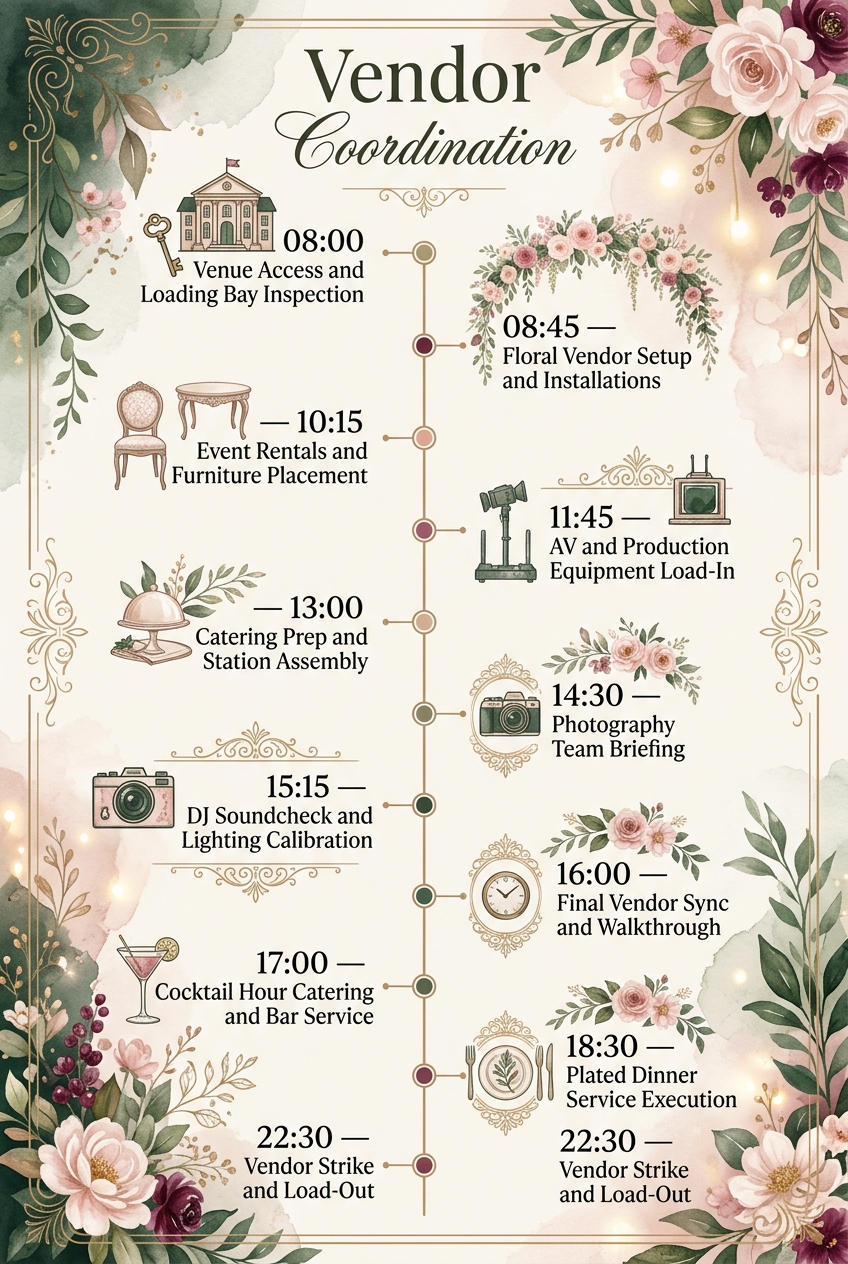
Why Vendor Coordination Needs a Detailed Timeline
Executing an event with multiple independent suppliers without a shared schedule is a direct path to chaotic load-ins and delayed door openings. Vendor coordination relies on clear dependencies, meaning one team's work directly impacts the next. For instance, decor teams cannot lay table linens until rental companies position the physical tables, and caterers cannot set formal place settings until linens are smoothed and centered.
A shared timeline provides vital operational transparency across all teams. When the audiovisual engineer knows the exact window allocated for soundcheck, they will not run loud pink noise calibration while the photography lead is trying to conduct a quiet briefing with the event host in the main hall.
Finally, an detailed running order establishes clear operational accountability. When delivery schedules, power access windows, and strike protocols are documented in advance, venue managers can quickly resolve space conflicts and keep every contractor accountable to the overall master timeline.
What to Include in a Vendor Coordination Timeline
A comprehensive master vendor timeline must capture both technical background work and guest-facing milestones:
- Venue Access & Site Inspection: Unlocking doors, verifying loading bay access, and checking existing facility conditions.
- Structural & Heavy Setups: Unloading rental furniture, rigging, drapery, and building staging or floral installations.
- Production & AV Rigging: Running main power lines, positioning speakers, mounting lighting trees, and setting up control booths.
- Catering Infrastructure & Prep: Assembling hot holding cabinets, staging prep kitchens, and organizing formal place settings.
- Creative & Media Briefings: Synchronizing camera teams, reviewing shot lists, and inspecting ambient room lighting.
- Soundchecks & Technical Calibrations: Testing wireless mics, tuning sound levels, and calibrating dynamic venue lighting.
- Operational Alignment Walkthroughs: A short, mandatory sync with all vendor leads to review service cues and safety contacts.
- Service Execution: Coordinating meal delivery, bar openings, and toast announcements alongside production crews.
- Vendor Strike & Load-Out: Systematic teardown, packing, loading, and final room walkthroughs with venue staff.
Phase 1: Morning Load-In & Site Infrastructure
| Time | Event |
|---|---|
| 08:00 | Venue Access and Loading Bay Inspection |
| 08:45 | Floral Vendor Setup and Installations |
| 10:15 | Event Rentals and Furniture Placement |
| 11:45 | AV and Production Equipment Load-In |
The morning phase focuses entirely on heavy logistics, physical load-in, and core infrastructure build. Establishing strict arrival windows at the loading bay prevents vehicle backlogs and dock congestion. At 08:00, the event manager meets the venue coordinator at the Grand Ballroom Entrance to complete a initial facility inspection, review power breaker locations, and secure dedicated elevator passes for delivery drivers.
+-------------------------------------------------------------------+ | MORNING SETUP & LOAD-IN | | | | 08:00 08:45 10:15 11:45 | | [Venue Access] -> [Floral Setup] ----> [Rentals & Decor] -> [AV] | | Inspection Arch & Centerpieces Tables & Linens Power | +-------------------------------------------------------------------+
Once the facility is unlocked, large-scale installations take priority. The floral crew arrives at 08:45 to unload centerpieces into the Main Reception Hall and construct the primary floral arch on stage. Giving florists early, unhindered access allows them to complete messy water fills and floral trimming before rental linens arrive.
At 10:15, decor crews move into the Main Dining Area to set tables, chairs, drapery, and linens according to the floor plan. Aligning this right after initial floral work ensures tables are locked into position before production teams lay heavy cabling. At 11:45, the AV team rolls heavy cases into the Main Stage and Control Booth areas to set main speakers, wireless receivers, and run protected power runs across high-traffic walkways.
Whether you are coordinating a commercial venue or arranging a ceremony using a church wedding ceremony timeline, getting structural teams in early keeps public pathways clear for later arrivals.
Phase 2: Afternoon Technical Prep & Operations Sync
| Time | Event |
|---|---|
| 13:00 | Catering Prep and Station Assembly |
| 14:30 | Photography Team Briefing |
| 15:15 | DJ Soundcheck and Lighting Calibration |
| 16:00 | Final Vendor Sync and Walkthrough |
Afternoon hours bridge physical venue setup with media preparation and technical fine-tuning. At 13:00, the catering staff takes over the Banquet Kitchen and Dining Tables. They organize hot holding cabinets, establish plating lines, and meticulously align formal place settings across all dining tables. Catering setup requires stable furniture placement, so holding off on full table prep until decor teams finish early afternoon tasks prevents re-work.
+-------------------------------------------------------------------+ | AFTERNOON TECHNICAL PREP & SYNC | | | | 13:00 14:30 15:15 16:00 | | [Catering] ---> [Photo Briefing] -> [DJ & AV Sync] -> [All Sync] | | Kitchen Prep Shot List Review Sound Check Vendor Walk | +-------------------------------------------------------------------+
At 14:30, media teams begin their pre-event alignment in the Bridal Suite and Foyer. The lead photographer and videographer inspect ambient lighting in the main hall, review memory cards and battery levels, and cross-check shot lists against scheduled timeline milestones. This media prep mirrors the organized walkthroughs recommended in our elopement timeline template and civil ceremony wedding timeline.
At 15:15, the DJ and audio engineers run full soundchecks from the DJ Booth and calibrate dynamic uplighting along the dance floor. Testing audio levels at 100% volume is critical at this point to fix frequencies before guests arrive.
Phase 2 closes at 16:00 with a quick, mandatory all-hands vendor briefing in the Central Foyer. The event coordinator reviews final timing cues, confirms radio channels, reviews emergency contacts, and verifies that all vendor leads are aligned before doors open.
Phase 3: Live Service Execution & Vendor Strike
| Time | Event |
|---|---|
| 17:00 | Cocktail Hour Catering and Bar Service |
| 18:30 | Plated Dinner Service Execution |
| 22:30 | Vendor Strike and Load-Out |
Phase 3 covers live service execution and eventual venue teardown. At 17:00, the event transitions to guest experience as bartenders initiate full service and waitstaff pass hors d'oeuvres on the outdoor Garden Terrace. Smooth service relies on strict timing integration between kitchen leads and front-of-house staff to ensure food reaches guests at proper temperatures.
+-------------------------------------------------------------------+ | LIVE SERVICE & EVENING STRIKE | | | | 17:00 18:30 22:30 | | [Cocktail Hour] -> [Plated Dinner Service] -> [Vendor Strike] | | Bar & Appetizers 3-Course Meal & Speeches Load-Out & Handover| +-------------------------------------------------------------------+
At 18:30, doors open to the Grand Ballroom for the formal plated dinner service. Catering staff deliver a multi-course meal in strict coordination with the DJ and production crew, who cue spotlight moments, speeches, and background dinner music. Coordinating meal delivery alongside live audio cues is just as essential here as it is when following a structured rehearsal dinner timeline template or a full traditional celebration using our Catholic wedding timeline.
Once the main event concludes, the timeline shifts to vendor strike at 22:30 in the Venue Load-Out Bay. Systematic equipment teardown prevents property damage and avoids costly overtime fees from the facility. Decorators pack away linens and props, florists compost or pack up installations, rental suppliers re-crate glassware, and production crews coil heavy power runs. The day ends with a joint handover walkthrough between the event coordinator and venue staff.
Vendor Coordination vs Day-of Event Itinerary
Event planners frequently mix up a master vendor coordination schedule with a standard day-of event itinerary. While both documents guide the event, they serve entirely different operational audiences.
| Feature | Vendor Coordination Timeline | Day-of Event Itinerary |
|---|---|---|
| Primary Audience | Suppliers, caterers, technicians, venue staff | Event hosts, guests, VIPs, participants |
| Core Focus | Load-in times, power drops, setup, tech checks, strike | Speeches, meals, key announcements, entertainment |
| Level of Detail | High technical detail (voltages, bay access, dock rules) | General sequence of events and movement locations |
| Key Milestones | Dock inspection, AV soundcheck, briefing, load-out | Arrival time, welcome remarks, dinner start, farewell |
| Primary Goal | Operational logistics and safety compliance | Smooth host and guest experience |
While a guest itinerary outlines what is happening for attendee enjoyment, a vendor schedule details how crews build and operate the infrastructure behind the scenes. According to industry logistics standards published by BizBash, managing operational load-in timelines independently from front-of-house itineraries drastically reduces behind-the-scenes event delays.
Who Should Use This Template?
This master schedule template is built for event leaders who oversee multi-supplier environments. It provides structured operational workflows for:
- Professional Event Planners & Producers: Managing independent creative vendors across multi-room venues.
- Venue Operations Managers: Standardizing dock access, facility protection, and load-out procedures.
- Catering Directors & Banquet Managers: Aligning kitchen firing schedules with room production cues.
- Corporate Event Directors: Coordinating AV, staging, tradeshow booths, and catering setups.
- Wedding Coordinators: Managing floral installations, photographers, DJs, and rental setups across various ceremonies, including detailed setups like our Christian wedding timeline.
Chronolio offers custom planning tools designed specifically for different event management roles, helping every coordinator generate, edit, and share clean schedules tailored to their production team.
How to Use This Template
You can adapt this timeline to fit your specific production schedule in four simple steps:
- Download or Duplicate the Template: Select your preferred format using our downloadable Word document version or the printable PDF version.
- Set Your Core Milestones: Lock in fixed points first, such as guest doors-open, meal service times, and strict venue exit cutoffs.
- Adjust Setup & Delivery Windows: Contact your florists, AV engineers, and rental suppliers to input realistic setup times based on their equipment needs.
- Distribute to All Vendor Leads: Send customized schedule extracts to each vendor head at least one week before the event, and keep printed copies on-site at the loading bay.
Tips for Successful Vendor Coordination
- Assign Dedicated Loading Bay Managers: Position a staff member at the loading dock during morning arrivals to direct delivery trucks and enforce quick turnaround times.
- Confirm Power and Cable Drops Early: Have your AV and catering leads inspect wall power outlets during early walkthroughs to avoid tripped breakers during live service.
- Buffer Soundchecks Before Guest Arrival: Always finish loud soundchecks and microphone tests at least 45 minutes before doors open to allow venue spaces to settle.
- Establish Clear Radio Channels: Assign dedicated walkie-talkie channels for venue management, catering leads, and production staff to prevent cross-chatter.
- Create a Central Vendor Break Area: Provide a quiet room with water and seating for vendor crews to take breaks away from main guest spaces.
- Conduct a Joint Pre-Event Walkthrough: Bring all crew leads together for 15 minutes before guest arrival to review timing cues and emergency exits.
- Enforce Strict Strike Protocols: Remind vendors during the afternoon sync that load-out cannot block emergency exits or delay venue lock-up.
Common Mistakes to Avoid
- Failing to Stagger Vendor Deliveries: Allowing all vendors to arrive at 08:00 creates massive loading dock congestion and lost labor time.
- Overlooking Setup Dependencies: Scheduling caterers to lay place settings before rental crews position tables leads to wasted effort.
- Ignoring Venue Load-Out Rules: Forgetting venue end-of-night cutoffs can lead to expensive security and labor penalty fees.
- Omitting AV Soundcheck Windows: Skipping dedicated audio tests leads to unexpected feedback and poor sound during speeches.
- Forgetting Catering Staff Briefings: Failing to sync waitstaff leads with production cues causes food to sit under heat lamps during long speeches.
- Not Storing Backup Vendor Contacts: Keeping vendor phone numbers locked on one person's phone creates delays if that coordinator is unavailable.
In Summary
- Master Vendor Schedule Definition: A timed operational blueprint governing vendor load-in, setup, live service execution, and strike.
- Designed For: Event planners, venue operators, production leads, catering directors, and wedding coordinators.
- Ensures Operational Efficiency: Staggers loading bay access to eliminate dock bottlenecks and equipment conflicts.
- Integrates Critical Setup Steps: Covers every critical phase from 08:00 venue opening to 22:30 final load-out.
- Improves Safety & Communication: Features mandatory vendor syncs, technical briefings, and unified safety protocols.
- Fully Customizable: Easily adapted and exported for any corporate gala, wedding, or multi-vendor event.
Navigating complex vendor schedules requires clear operational timing, clear dependencies, and consistent communication. By establishing a structured schedule for load-in, setup, soundchecks, and strike, event planners and venue operators ensure every supplier delivers peak performance while keeping the event running smoothly on time.
Create Your Vendor Coordination Timeline