





This Template at a Glance
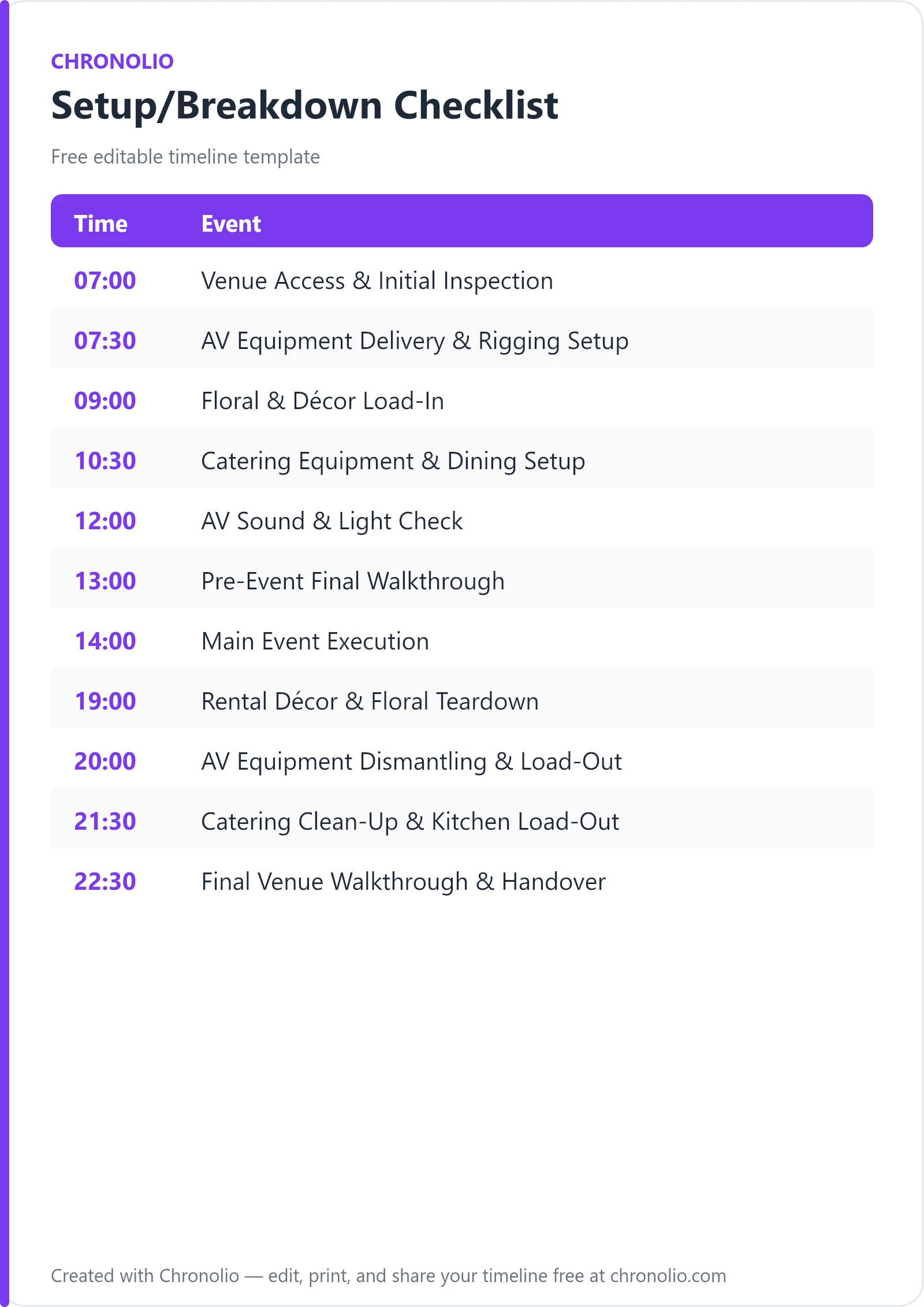
Here is the complete schedule this free template gives you — every time block, ready to edit, download, and share:
| Time | Event |
|---|---|
| 07:00 | Venue Access & Initial Inspection |
| 07:30 | AV Equipment Delivery & Rigging Setup |
| 09:00 | Floral & Décor Load-In |
| 10:30 | Catering Equipment & Dining Setup |
| 12:00 | AV Sound & Light Check |
| 13:00 | Pre-Event Final Walkthrough |
| 14:00 | Main Event Execution |
| 19:00 | Rental Décor & Floral Teardown |
| 20:00 | AV Equipment Dismantling & Load-Out |
| 21:30 | Catering Clean-Up & Kitchen Load-Out |
| 22:30 | Final Venue Walkthrough & Handover |
What Is a Setup/Breakdown Checklist?
A setup/breakdown checklist is the foundational logistics roadmap used by production managers, venue directors, and event coordinators to manage pre-event load-in and post-event strike. Unlike an attendee-facing agenda, this operational timeline dictates loading dock access windows, heavy machinery staging, structural AV rigging, table dressing, and kitchen load-out. It creates order during high-liability hours when production trucks, florists, audio technicians, and banquet staff overlap in tight venue footprints.
Drawing from decades of real-world venue operation and event logistics, this template reflects industry best practices for high-volume commercial venues and private event spaces alike. Whether you are managing complex corporate staging or organizing a private celebration with a birthday party timeline template, having a structured bump-in and bump-out schedule ensures every vendor executes their responsibilities safely and on time.
Use this Setup/Breakdown Checklist Template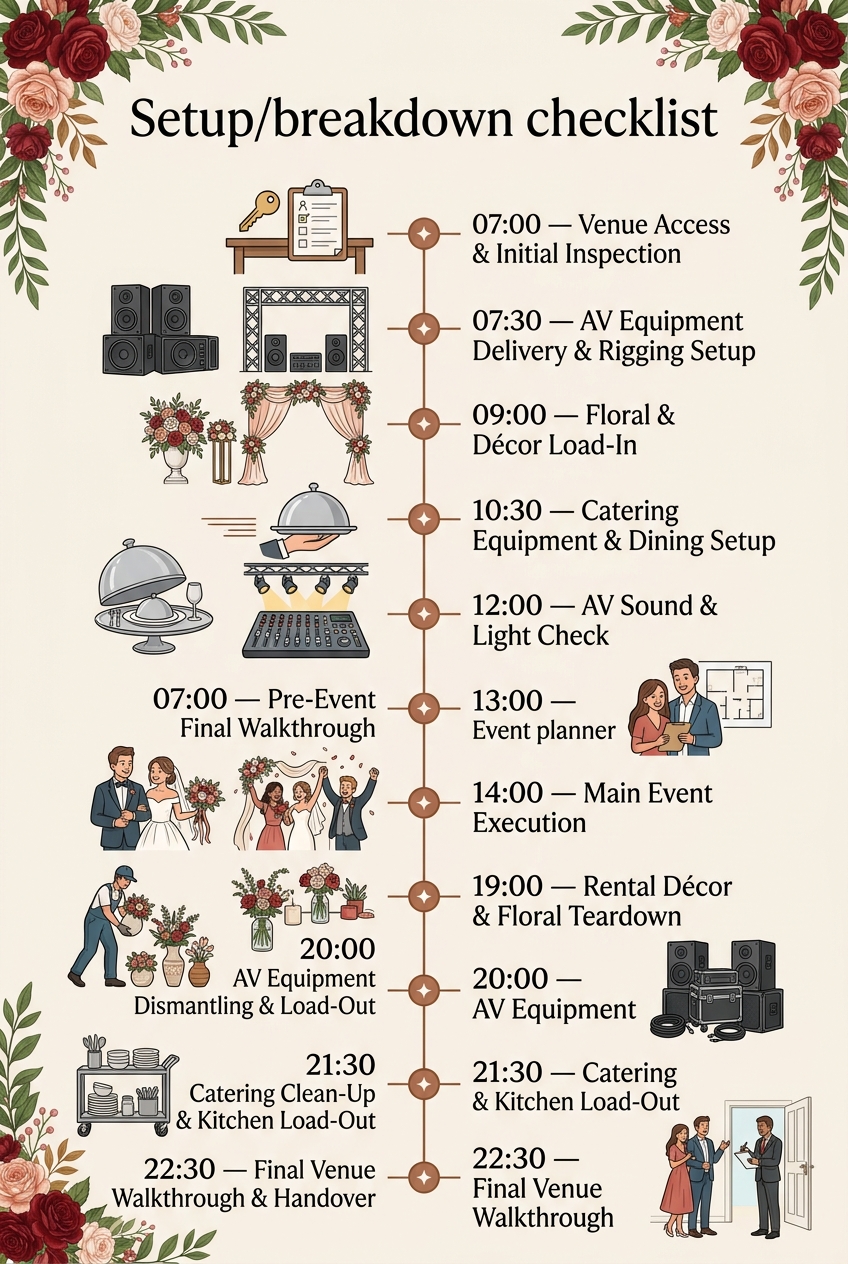
Why Events Need a Setup/Breakdown Checklist
Executing an event without a dedicated load-in and strike schedule is a recipe for chaos. Loading docks have limited bays, freight elevators have tight weight thresholds, and venue ballrooms quickly become hazardous work zones when multiple vendors dump equipment simultaneously. A master logistics checklist establishes sequential order, ensuring heavy infrastructure like stage trussing is anchored long before delicate floral arches or linen tables are placed.
Beyond spatial coordination, precise operational timelines keep event budgets intact. Venues enforce strict midnight curfews and levy steep hourly overtime fees if teardown drags past contracted rental hours. By establishing explicit breakdown shifts for AV crews, caterers, and decorators, production directors prevent union overtime penalty rates and protect venue damage deposits.
Finally, an detailed timeline establishes strict accountability and venue compliance. Conducting formal pre- and post-event inspections allows venue owners and production leads to document pre-existing facility damage, verify fire exit clearance under local safety codes like OSHA safety guidelines, and maintain clear communication across all operational departments.
What to Include in a Setup/Breakdown Checklist
To ensure complete coverage across all logistics teams, every pre- and post-event schedule should incorporate these key stages:
- Facility Inspection & Access Unlocking: Initial security sign-in, power distribution checks, and pathway verification.
- Heavy Infrastructure & AV Rigging: Unloading flight cases, hanging stage lighting, truss assembly, and video wall installation.
- Décor, Floral, & Furniture Staging: Unloading table rentals, installing backdrops, placing centerpieces, and arranging seating plans.
- Catering & Kitchen Setup: Transporting warming ovens, setting beverage stations, laying chinaware, and staging prep zones.
- Technical Testing & Sound Check: Balancing microphone levels, testing presentation graphics, and programming light cues.
- Pre-Show Master Walkthrough: Final clearance checks with vendor captains, venue operators, and safety marshals.
- Post-Event Teardown (Strike): Systematic dismantling of rental decor, packing technical equipment, and clearing kitchen trash.
- Facility Handover & Departure: Final walkthrough to assess room cleanliness, log structural issues, and return venue keys.
Phase 1: Morning Load-In & Heavy Infrastructure
| Time | Event | | 07:00 | Venue Access & Initial Inspection | | 07:30 | AV Equipment Delivery & Rigging Setup | | 09:00 | Floral & Décor Load-In | | 10:30 | Catering Equipment & Dining Setup |
The success of any event hinges on the first two hours of site access. At 07:00, the lead coordinator and venue manager unlock the load-in doors at the Main Ballroom inside the Grand Horizon Center to conduct a comprehensive pre-event facility inspection. This step ensures existing wall scratches or floor scuffs are documented before vendor trucks arrive, while confirming that safety pathways and electrical access points meet municipal fire standards.
Once doors are unlocked, heavy logistics take priority. At 07:30, the AV production crew docks their delivery trucks at the staging booth to unload audio, lighting, and projection systems. Rigging structures must always be hoisted and secured before room decorators enter the floor; doing so eliminates the safety risk of heavy overhead work taking place above floral staff or table installers.
+-------------------------------------------------------------------+ | BUMP-IN LOAD-IN HIERARCHY | +-------------------------------------------------------------------+ | 07:00 Site Access & Initial Inspection | | 07:30 Heavy AV Rigging, Truss, Staging & Overhead Power | | 09:00 Floral Arches, Backdrops & Tabletop Furniture Placement | | 10:30 Catering Linens, Glassware & Kitchen Equipment Setup | +-------------------------------------------------------------------+
By 09:00, overhead work wraps up, opening the floor for the florist and decor team to bring in entrance installations, stage drapery, and centerpieces. Placing centerpieces and drapery according to the approved venue floor plan sets the visual standard for the room. By 10:30, the catering team takes over the Banquet Hall and Prep Kitchen, unloading warming ovens, chinaware, and beverage stations, dressing tables with fresh linens to complete the structural transformation of the hall.
Phase 2: Technical Testing & Pre-Show Walkthrough
| Time | Event | | 12:00 | AV Sound & Light Check | | 13:00 | Pre-Event Final Walkthrough |
With physical furniture and decorative elements positioned, the venue transitions from a construction site to a controlled show environment. At 12:00, AV technicians conduct a rigorous sound and light check across the main stage. Wireless microphones are tested for frequency interference, light cues are synchronized to the event script, and presentation slides are test-fired onto projection screens. Conducting full audio-visual tests in a fully dressed ballroom is essential, as heavy drapery and carpet alter room acoustics significantly.
At 13:00, exactly one hour before doors open, the lead event coordinator gathers all vendor captains for a final pre-event walkthrough across the entire venue footprint. This mandatory check verifies that tabletop place settings match catering guarantees, AV systems respond instantly, and emergency exits remain completely unobstructed. Coordinating these steps ensures the operational flow mirrors structured corporate events, such as those found in our board meeting timeline template.
Phase 3: Main Event Execution
| Time | Event | | 14:00 | Main Event Execution |
At 14:00, the doors open to attendees, marks the shift from site setup to live operational management. Throughout the execution phase inside the Grand Horizon Center, production staff, caterers, and AV technicians transition to standby protocols in designated service bays and control booths.
Having logistics staff positioned out of guest sight lines allows the team to manage real-time requests—such as adjusting room temperatures, re-balancing stage audio, or clearing dining tables—without distracting attendees. Smooth execution here provides the framework for a memorable guest experience, much like the flow outlined in our anniversary party schedule template.
Phase 4: Post-Event Teardown & Venue Handover
| Time | Event | | 19:00 | Rental Décor & Floral Teardown | | 20:00 | AV Equipment Dismantling & Load-Out | | 21:30 | Catering Clean-Up & Kitchen Load-Out | | 22:30 | Final Venue Walkthrough & Handover |
As soon as guests clear the Main Ballroom at 19:00, the high-speed strike phase begins. Teardown follows a precise reverse order of morning load-in to maximize speed and prevent damage. Decorators enter first, carefully dismantling tabletop centerpieces, floral arches, and stage drapery. Fragile rentals are wrapped and packed directly into shock-absorbent transit crates before heavy machinery is moved onto the carpet.
At 20:00, the technical crew powers down the production booth, lowers overhead trussing, and strikes the main stage speakers, projection screens, and moving lights into heavy-duty road cases. Load-out sequencing is critical here; packing road cases in reverse truck-loading order streamlines dock loading and gets transport vehicles off-site quickly.
+-------------------------------------------------------------------+ | STRIKE & TEARDOWN HIERARCHY | +-------------------------------------------------------------------+ | 19:00 Floral, Linens & Fragile Decor Stripped & Packed | | 20:00 AV Disconnection, Truss Lowering & Road Case Packing | | 21:30 Catering Waste Disposal, Kitchen Washing & Equipment Load | | 22:30 Post-Event Venue Inspection & Key Return Handover | +-------------------------------------------------------------------+
By 21:30, catering staff complete prep kitchen sanitation, scraping plates, hauling compost and waste, and rolling hot-holding cabinets back onto freight trucks. At 22:30, the lead coordinator and venue owner perform the post-event walkthrough. They inspect carpet conditions, log trash removal compliance, sign off on the facility condition report, and return master keys—closing out the booking with zero venue penalty charges. This disciplined approach works equally well for private events like those mapped in our baby shower timeline template or formal religious services using a catholic wedding timeline.
Setup/Breakdown Checklist vs. Event Running Order
Event professionals often confuse a setup/breakdown checklist with an event running order or master agenda. While both documents keep an event running on schedule, they serve vastly different teams, environments, and operational goals.
| Feature | Setup/Breakdown Checklist | Event Running Order |
|---|---|---|
| Primary Audience | Production crews, vendors, caterers, venue operators | Event hosts, emcees, guests, speakers, clients |
| Operational Focus | Dock management, equipment rigging, teardown, sanitation | Announcements, speeches, entertainment, meal service |
| Active Hours | Pre-event load-in and post-event teardown hours | Live event show hours |
| Key Terminology | Rigging, strike, bump-in, load-out, flight cases, power drops | Cue, entrance, keynote, toast, curtain call, intermission |
| Risk Mitigation | Physical injury, venue damage fees, dock gridlock | Program delays, missed speeches, boring transitions |
A setup/breakdown checklist governs the physical environment before and after the event takes place. In contrast, an event running order manages what happens on stage and on the dining floor while guests are inside the building.
Who Should Use This Template?
This logistical framework is designed for event professionals and operational leads who manage physical venue spaces and supplier crews. You can easily adapt this checklist for various event formats using Chronolio’s custom timeline tools designed for specific organizational roles.
- Corporate Event Directors: Managing multi-truck vendor loads for annual conferences, product launches, and trade expos.
- Venue Managers & Facility Coordinators: Establishing firm loading dock rules, load-in shifts, and post-event cleanliness standards for rental clients.
- Wedding Planners & Coordinators: Managing florists, rental supply companies, band staging, and late-night breakdown crews for formal weddings like those detailed in our christian wedding timeline.
- AV & Production Crew Chiefs: Scheduling load-in, truss rigging, sound checks, and road case load-outs across tight venue access windows.
- Catering Operation Managers: Overseeing mobile kitchen assembly, food holding equipment delivery, service line dressing, and strike sanitation.
- Festival & Expo Logistics Teams: Organizing multi-vendor load-in schedules across large outdoor spaces or convention halls.
How to Use This Template
- Download or Duplicate the Template: Access the editable format via Chronolio or grab a offline document copy using our downloadable /downloads/setup-breakdown-checklist.docx or /downloads/setup-breakdown-checklist.pdf files.
- Input Contracted Venue Windows: Update the start time (07:00 in this example) to match your contracted venue access hour and midnight strike curfew.
- Assign Dedicated Vendor Slots: Coordinate with your florist, caterer, and AV lead to assign staggered loading dock arrival times to prevent driveway bottlenecks.
- Distribute to All Key Leads: Send the final timeline to the venue manager, production captain, and catering director at least one week prior to event day.
- Print Hard Copies for Site Leads: Provide laminated copies to dock marshals and lead coordinators on setup morning for easy real-time tracking.
Tips for a Successful Event Setup and Teardown
- Stagger Loading Dock Arrival Times: Never allow all vendor trucks to arrive at the same time. Stagger heavy AV, decor, and catering loads in 45-to-90-minute increments.
- Establish a Dock Marshal: Assign one crew member to manage loading dock bays, oversee freight elevator calls, and enforce truck parking limits.
- Conduct Pre-Existing Damage Inspections: Take time-stamped photo evidence of pre-existing floor scuffs, wall marks, or carpet stains before unloading equipment.
- Enforce Safety Protocols & PPE: Require high-visibility vests and steel-toed boots for all crew members during heavy AV rigging and truss hoisting phases.
- Maintain Clear Emergency Exits: Ensure fire exit doors, emergency corridors, and electrical breaker panels remain unobstructed by road cases at all times, adhering to standards maintained by professional bodies like the International Live Events Association.
- Schedule Adequate Breakdown Buffers: Teardown always takes longer when fatigue sets in at midnight. Allocate at least two full hours for final strike and venue sweeping.
- Keep Emergency Repair Kits On-Site: Equip your setup team with gaffer tape, zip ties, multi-tools, extension cords, touch-up paint, and extra floor protection mats.
Common Mistakes to Avoid
- Overcrowding the Floor Early: Allowing decorators onto the ballroom floor while AV technicians are still hoisting heavy trussing creates safety hazards and delays both teams.
- Ignoring Elevator Weight & Height Limits: Failing to measure freight elevator doors in advance can result in oversized crates being stuck on the loading dock.
- Skipping the Audio/Visual Sound Check: Rushing setup and foregoing a full room sound check leads to embarrassing microphone feedback and poor audio projection during the live event.
- Neglecting Teardown Labor Requirements: Staffing teardown with a fraction of your setup crew leads to exhaustion, broken rental items, and expensive venue overtime penalties.
- Leaving Trash Management to the Venue: Many venue contracts require planners to haul away their own garbage; leaving trash behind often results in automatic security deposit forfeitures.
- Forgetting Post-Event Facility Sign-Off: Leaving the venue without walking the space alongside the owner leaves you vulnerable to unfair damage claims post-event.
In Summary
- Purpose: A master logistics tool used to orchestrate pre-event venue load-in, AV rigging, catering setup, decor teardown, and final site handover.
- Primary Users: Event planners, venue directors, AV production leads, wedding coordinators, and catering managers.
- Core Benefit: Prevents loading dock congestion, ensures worker safety, keeps technical checks on time, and avoids steep venue overtime charges.
- Key Milestones: Initial venue inspection (07:00), AV rigging (07:30), decor/catering load-in (09:00–10:30), sound check (12:00), walkthrough (13:00), live event execution (14:00), decor teardown (19:00), AV strike (20:00), catering cleanup (21:30), and final handover (22:30).
- Execution Rule: Always sequence setup from top to bottom (overhead rigging first, floor furniture second, place settings last) and break down in exact reverse order.
Managing pre-event logistics and post-event teardown requires precise timing, vendor coordination, and strict safety compliance. Whether you are leading a production team through a large corporate conference or coordinating supplier arrivals for a wedding reception, this setup/breakdown checklist timeline provides the structural clarity needed to protect your schedule, your crew, and your budget. Customize this schedule in Chronolio today to streamline your next event bump-in.
Use this Setup/Breakdown Checklist Template