






This Template at a Glance
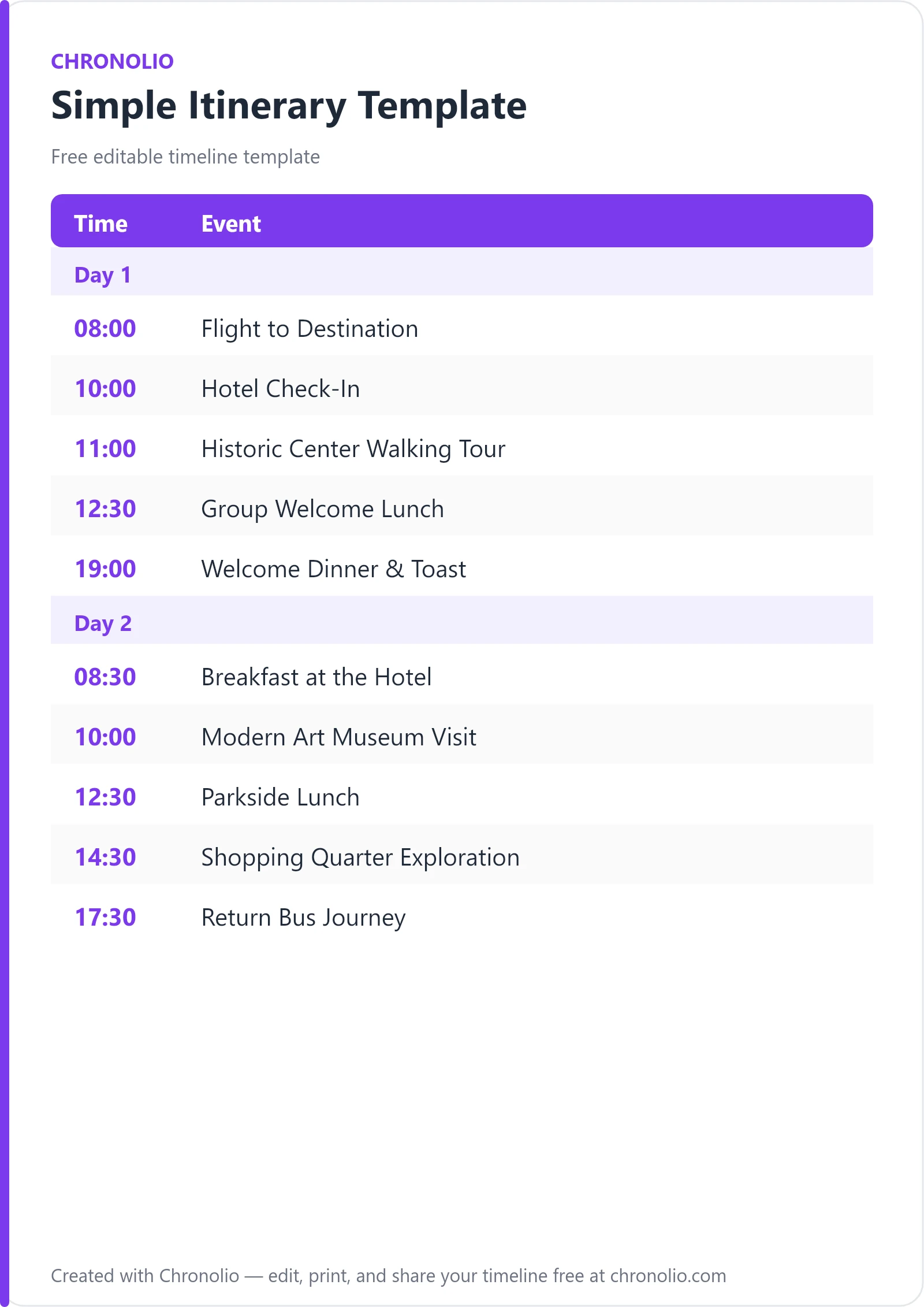
Here is the complete schedule this free template gives you — every time block, ready to edit, download, and share:
| Day | Time | Event |
|---|---|---|
| 1 | 08:00 | Flight to Destination |
| 1 | 10:00 | Hotel Check-In |
| 1 | 11:00 | Historic Center Walking Tour |
| 1 | 12:30 | Group Welcome Lunch |
| 1 | 19:00 | Welcome Dinner & Toast |
| 2 | 08:30 | Breakfast at the Hotel |
| 2 | 10:00 | Modern Art Museum Visit |
| 2 | 12:30 | Parkside Lunch |
| 2 | 14:30 | Shopping Quarter Exploration |
| 2 | 17:30 | Return Bus Journey |
What Is a Simple Itinerary Template?
A simple itinerary template is a daily agenda designed to organize travel arrangements, accommodation check-ins, group dining, and sightseeing events into an easy-to-follow chronological timetable. When planning multi-day excursions, having a structured running order prevents missed flight connections, reduces travel anxiety, and keeps everyone in your group informed.
This sample itinerary draws on real-world travel planning practices and hospitality standards, building realistic transit buffers between sightseeing stops so you never feel rushed. The principles of effective schedule management apply across all types of events: just as host managers organize corporate sessions with a board meeting timeline template or balance milestone celebrations using an anniversary party schedule template, a well-designed travel schedule keeps your day flowing smoothly. You can download this framework as a editable simple itinerary template DOCX or print it directly using our simple itinerary template PDF.
Use This Simple Itinerary Template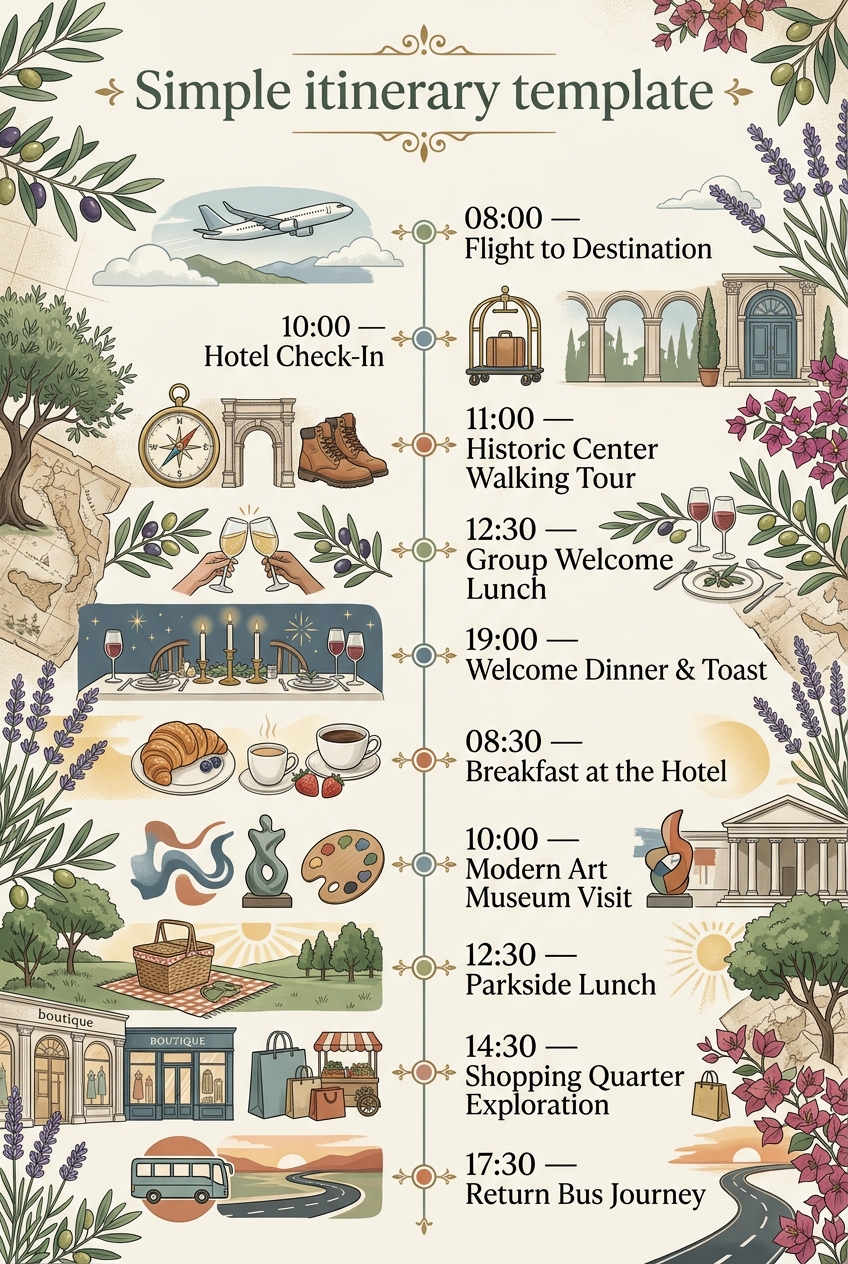
Why Simple Itineraries Need a Timeline
Without a central timetable, multi-day travel easily devolves into confusion over departure times, lost reservations, and wasted hours trying to figure out what comes next. A visual schedule establishes clear expectations for every traveler, outlining exactly when to gather in hotel lobbies, board buses, or sit down for group meals.
Setting exact start times also protects your trip from logistical delays. Traffic snarls and long security lines are common occurrences; building explicit travel times into your morning and afternoon blocks gives your group an operational buffer against unexpected hold-ups.
Finally, a structured schedule enhances the overall travel experience by balancing packed sightseeing blocks with adequate rest periods. By knowing exactly when formal activities end, travelers can relax during free hours without worrying about missing the next group gathering.
What to Include in a Simple Itinerary Template
To keep your travel plans clear and actionable, every daily running order should include the following core components:
- Transit Logistics: Flight details, gate numbers, departure terminals, and express bus departure times.
- Accommodation Details: Hotel check-in and check-out times, lobby locations, and addresses.
- Scheduled Group Meals: Breakfast, welcome lunches, and formal dinners with designated venue names.
- Guided Tours & Cultural Excursions: Entry times for museums, historical walking tours, and seasonal attractions.
- Leisure & Exploration Blocks: Dedicated time for shopping quarter visits, local market browsing, and spontaneous exploration.
- Buffer & Refresh Periods: Short windows between activities for freshening up, changing clothes, or resting.
Day 1: Travel, Arrival, and Welcome
| Time | Event |
|---|---|
| 08:00 | Flight to Destination |
| 10:00 | Hotel Check-In |
| 11:00 | Historic Center Walking Tour |
| 12:30 | Group Welcome Lunch |
| 19:00 | Welcome Dinner & Toast |
The first morning sets the pace for the trip, starting at Airport Gate A12 with an early flight to ensure you arrive with almost a full day ahead. Once on the ground, head directly to the Grand Downtown Hotel Lobby to drop off luggage and complete hotel check-in. Giving guests a quick 30-minute window to freshen up after transit makes the subsequent walking tour much more enjoyable.
At 11:00, gather at the Main City Square for a guided historic center walking tour, immersing your group in local architecture before sitting down at Bistro Primavera for a multi-course welcome lunch. Following lunch, travelers enjoy an open afternoon to unpack or explore independently before reconvening at 19:00 at the Skyview Rooftop Restaurant for a formal welcome dinner and toast overlooking the city skyline.
Day 2: Culture, Leisure, and Departure
| Time | Event |
|---|---|
| 08:30 | Breakfast at the Hotel |
| 10:00 | Modern Art Museum Visit |
| 12:30 | Parkside Lunch |
| 14:30 | Shopping Quarter Exploration |
| 17:30 | Return Bus Journey |
Day 2 begins at a relaxed pace with a cooked-to-order buffet at the Hotel Garden Restaurant, giving travelers time to fuel up and check out of their rooms if necessary. At 10:00, the schedule transitions to cultural exploration with a curated audio tour at the City Art Museum, followed by a casual outdoor meal nearby at the Central Park Cafe.
The afternoon shifts to unstructured leisure, allowing guests to explore the Old Town Artisan Market for handmade souvenirs, street food snacks, and boutique shopping. Finally, the group meets at the Central Express Bus Terminal at 17:30 for the return bus journey home, concluding a well-paced two-day trip.
Simple Itinerary Template vs Travel Packing List
It is easy to confuse a daily trip itinerary with other travel planning tools like packing lists or travel checklists. While both are essential for trip preparation, they serve entirely different functions during execution.
| Simple Itinerary Template | Travel Packing List |
|---|---|
| Focuses on time management, locations, and chronological flow. | Focuses on physical items, clothing, and travel documents needed. |
| Coordinates group movements, reservations, and group activities. | Helps individual travelers pack efficiently before departure. |
| Used dynamically throughout the trip to monitor schedule progress. | Used before departure and during packing prior to checkout. |
| Details transit gates, restaurant locations, and meeting points. | Details luggage contents, toiletries, chargers, and outerwear. |
A daily itinerary functions as an operational schedule for execution, whereas a packing list is an administrative checklist completed before the journey begins.
Who Should Use This Template?
This timeline structure adapts easily to almost any short travel itinerary or event schedule. It is particularly valuable for:
- Group Tour Leaders: Keeping large groups moving together on schedule between sights and meals.
- Corporate Travel Managers: Structuring business trips, site visits, and team-building getaways.
- Independent Vacationers: Planning personal weekend city breaks with a good mix of structure and freedom.
- Event & Party Hosts: Organizing multi-day weekend events like destination birthdays or family reunions.
If you are coordinating other social gatherings alongside or as part of your trip, consider using a specialized layout like our birthday party timeline template or a baby shower timeline template. Chronolio provides custom interfaces tailored to the distinct roles involved in planning events, whether you are a professional tour coordinator, administrative assistant, or private host.
How to Use This Template
- Customize or Download: Click the edit button on this page to open the template directly in Chronolio, or download the document as a Word file or PDF.
- Update Your Travel Details: Replace the sample locations, flight numbers, and restaurant names with your specific trip details.
- Adjust Time Blocks: Modify start times based on your actual flight arrivals, museum reservation slots, and bus departure times.
- Share with Travelers: Send digital copies to all trip participants or print physical summary cards to hand out upon arrival.
Tips for a Successful Trip Itinerary
- Build in Real Transit Buffers: Always add 15 to 30 minutes extra between activities to account for traffic, ticket lines, or lost group members. Consult travel advice from authoritative sources like Lonely Planet for realistic destination transfer estimates.
- Keep Essential Info Accessible: Include gate numbers, confirmation numbers, and hotel addresses directly in event titles or notes.
- Avoid Over-Scheduling: Limit mandatory group activities to two or three per day so travelers do not feel overwhelmed.
- Check Official Travel Advisories: Verify passport rules, entry requirements, and transit guidelines via official resources like the U.S. Department of State Travel site.
- Designate Meeting Points: Name precise physical landmarks (e.g., "Main City Square Fountain") rather than broad areas for group reconvening.
- Confirm Reservations Early: Double-check group meal bookings and entry ticket times 24 to 48 hours before arrival.
Common Mistakes to Avoid
- Ignoring Travel Fatigue: Scheduling demanding physical tours immediately after long flights or bus rides leads to exhausted guests.
- Tight Meal Windows: Allowing less than an hour for group lunches often causes the entire afternoon schedule to run behind.
- Forgetting Free Time: Packing every hour with structured events leaves zero room for rest, spontaneous shopping, or personal choices.
- Lacking a Centralized Plan: Leaving activity times up to verbal communication rather than publishing a written timetable creates confusion.
- Not Account for Local Hours: Failing to check museum closing days or kitchen afternoon breaks can ruin planned stops.
In Summary
- What It Is: A clear, chronological 2-day travel schedule covering transportation, accommodation, meals, and cultural sightseeing.
- Who It Is For: Tour organizers, corporate travel managers, event planners, and independent vacationers.
- Key Advantage: Keeps group trips running on time while preventing travel fatigue through balanced scheduling.
- Customizable Formats: Fully editable on Chronolio or downloadable as PDF and DOCX files.
- Core Principle: Successful itineraries balance punctual group commitments with essential downtime.
Planning a seamless trip requires balancing fixed travel commitments with flexible downtime. Whether you are leading a corporate travel group, organizing a family reunion, or managing tour excursions, using this simple itinerary template ensures every participant knows where to be and when, keeping your journey organized, punctual, and stress-free.
Use This Simple Itinerary Template