



This Template at a Glance
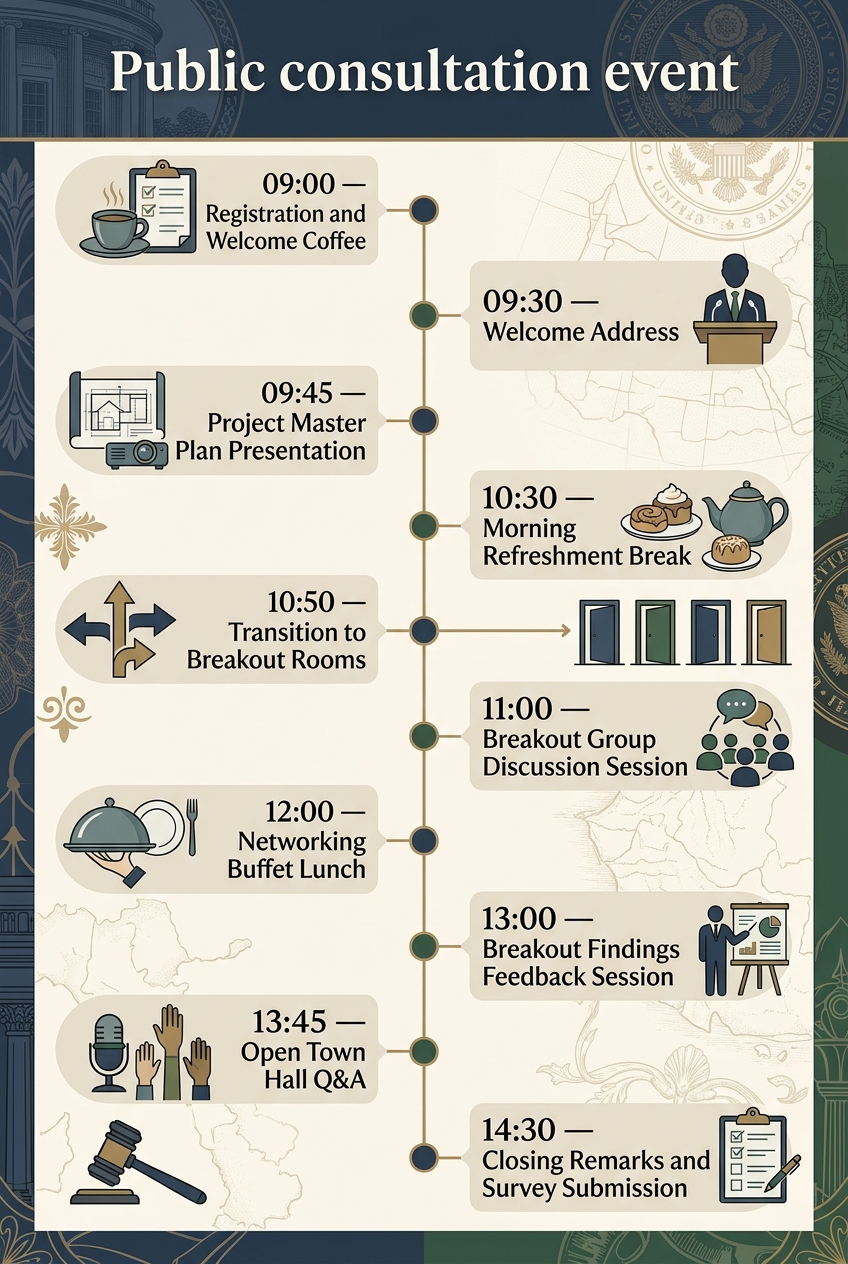
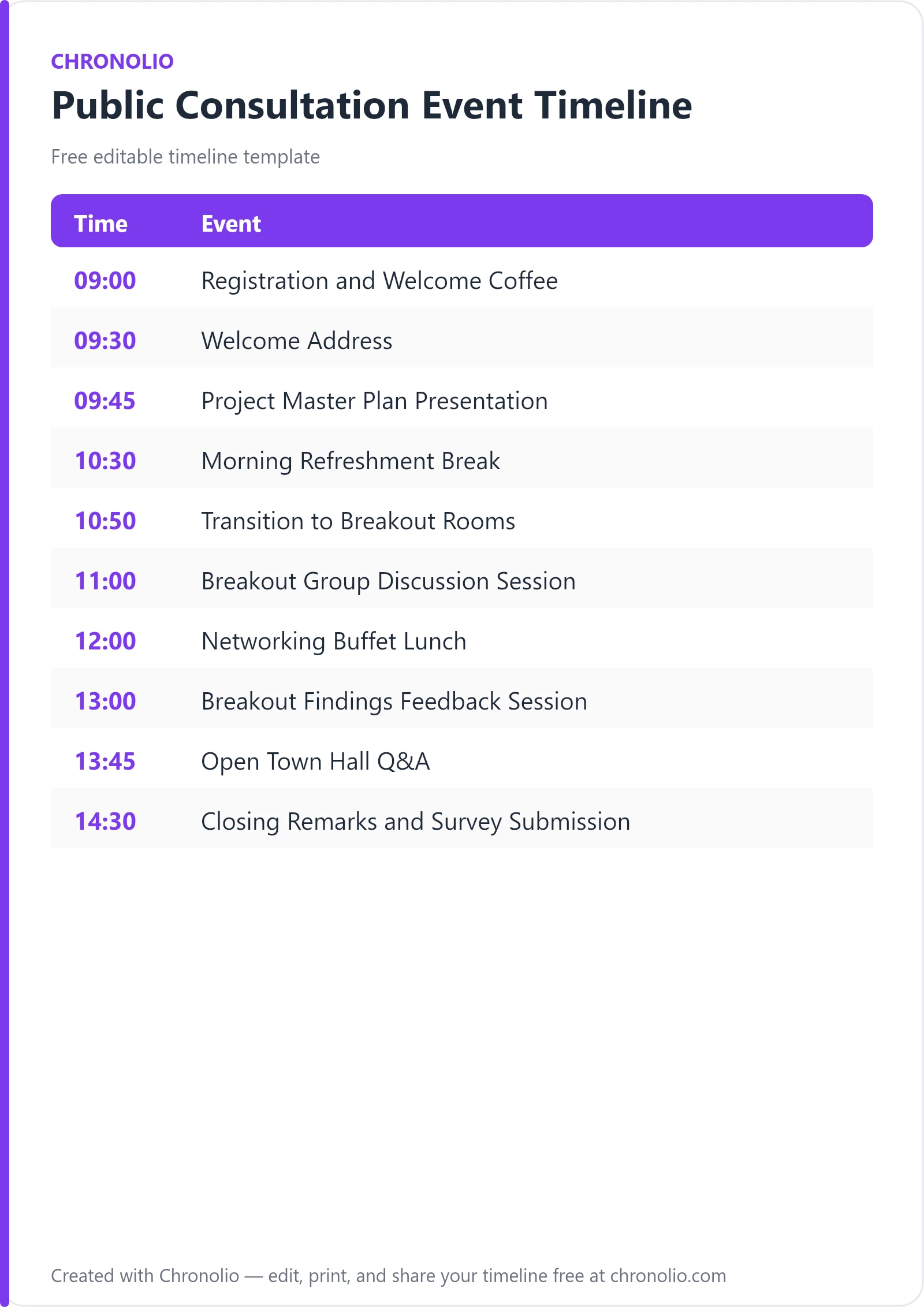
Here is the complete schedule this free template gives you — every time block, ready to edit, download, and share:
| Time | Event |
|---|---|
| 09:00 | Registration and Welcome Coffee |
| 09:30 | Welcome Address |
| 09:45 | Project Master Plan Presentation |
| 10:30 | Morning Refreshment Break |
| 10:50 | Transition to Breakout Rooms |
| 11:00 | Breakout Group Discussion Session |
| 12:00 | Networking Buffet Lunch |
| 13:00 | Breakout Findings Feedback Session |
| 13:45 | Open Town Hall Q&A |
| 14:30 | Closing Remarks and Survey Submission |
What Is a Public Consultation Event Timeline?
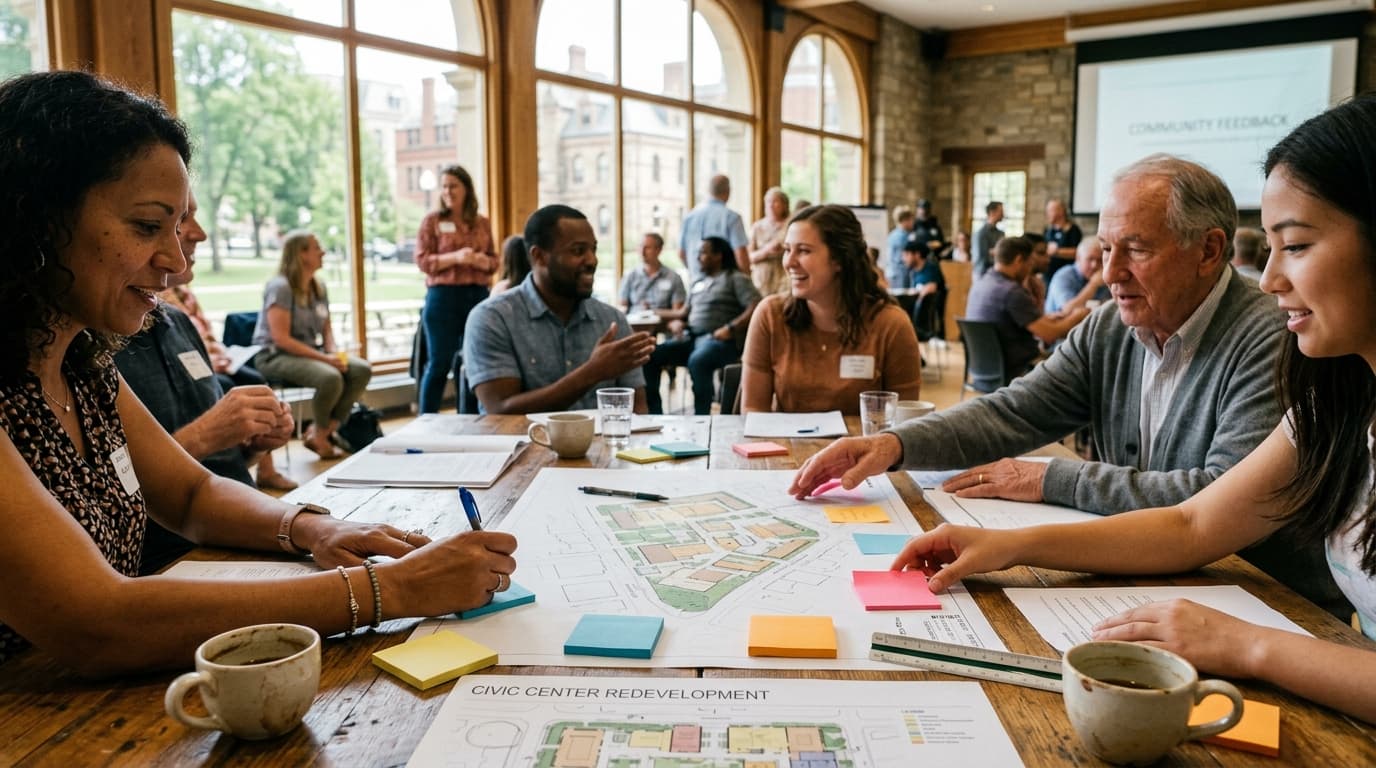
A public consultation event timeline is an operational master schedule designed to guide community stakeholders, urban planners, local government officials, and residents through a structured civic engagement day. Starting with attendee sign-in and morning coffee, this comprehensive running order balances top-down presentation with bottom-up public participation, allocating precise time blocks for master plan reveals, small-group discussions, and live audience Q&A sessions.
Having managed dozens of town hall gatherings and statutory consultation days, I can confirm that a structured schedule is the foundation of public trust. When residents feel an event is organized, transparent, and fair, discussions remain constructive—even on sensitive development proposals. This template reflects proven industry best practices for public sector engagement, ensuring key stakeholders receive essential project data while having ample time to submit official feedback. While planning corporate or community gatherings often involves distinct workflows—like managing a board meeting timeline template for executive governance or setting up an anniversary party schedule template for personal celebrations—civic events demand rigorous timing to uphold transparency and compliance.
You can download this complete schedule for your project in editable formats:
- Download Public Consultation Event Timeline - DOCX
- Download Public Consultation Event Timeline - PDF
Why Public Consultation Events Need a Timeline
Public consultations are high-stakes events where emotions can run high and technical details must be clearly conveyed. Without a rigid schedule, opening presentations easily consume the entire morning, leaving community members feeling silenced when the town hall Q&A gets cut short. A well-designed timeline guarantees that every public stakeholder gets equal airtime and that core statutory objectives are met.
Furthermore, running a seamless civic event requires coordination across multiple rooms and multi-disciplinary teams. Venue staff, session facilitators, technical planning experts, and roving microphone handlers all rely on the same operational schedule. Maintaining clear time boundaries prevents facilitator burnout and ensures feedback collection forms are submitted before attendees disperse.
Finally, following a published timeline demonstrates respect for your community’s time. Local residents, business owners, and elected representatives often take time out of their schedules to attend. Delivering a punctual, professional consultation builds credibility for the project leadership and sets a collaborative tone for the entire planning lifecycle.
What to Include in a Public Consultation Event Timeline
To keep public participants engaged while systematically collecting actionable feedback, your consultation day should incorporate several core elements:
- Welcome & Arrival Registration: A comfortable buffer window with refreshments where participants sign in, collect board packs or consultation summaries, and settle in.
- Contextual Opening Briefing: A opening address from the project sponsor establishing ground rules, session objectives, and scope boundaries.
- Expert Master Plan Presentation: Visual briefings delivered by urban planners, architects, or environmental engineers showcasing 3D renders and impact reports.
- Facilitated Breakout Workshops: Small-group discussions held in dedicated rooms to capture focused feedback on specific topics like traffic, design, and green space.
- Informal Networking Lunch: A catered break allowing informal, low-pressure conversations between residents, local council officials, and technical experts.
- Plenary Feedback Synthesis: A consolidated presentation where breakout leaders report key themes and recurring community concerns back to the main room.
- Open Town Hall Q&A: A structured, moderated period featuring roving microphones where participants ask direct questions to an expert panel.
- Formal Closing & Survey Collection: A final summary outlining next steps, decision dates, and official mechanisms for submitting written feedback.
Phase 1: Registration & Master Plan Presentation
| Time | Event |
|---|---|
| 09:00 | Registration and Welcome Coffee |
| 09:30 | Welcome Address |
| 09:45 | Project Master Plan Presentation |
The opening phase sets the professional tone for the entire public consultation. Beginning at 09:00 in the Main Foyer of the City Community Center, registration serves as a key data-capture point where staff log attendance, distribute printed information packets, and direct attendees to morning refreshments. Allowing a generous 30-minute arrival window prevents queues at the front desk and gives community members time to review display boards before formal proceedings start.
At 09:30, the project lead gathers everyone in the Main Auditorium for the welcome address. This brief 15-minute talk is critical for establishing clear ground rules for constructive dialogue and outlining how public input will influence the final proposal. Immediately following, urban planning and environmental experts lead a 45-minute master plan presentation. Using 3D renders and data slides, the panel presents technical findings clearly, ensuring attendees are fully informed before participating in workshop discussions.
Phase 2: Breakout Group Workshops
| Time | Event |
|---|---|
| 10:30 | Morning Refreshment Break |
| 10:50 | Transition to Breakout Rooms |
| 11:00 | Breakout Group Discussion Session |
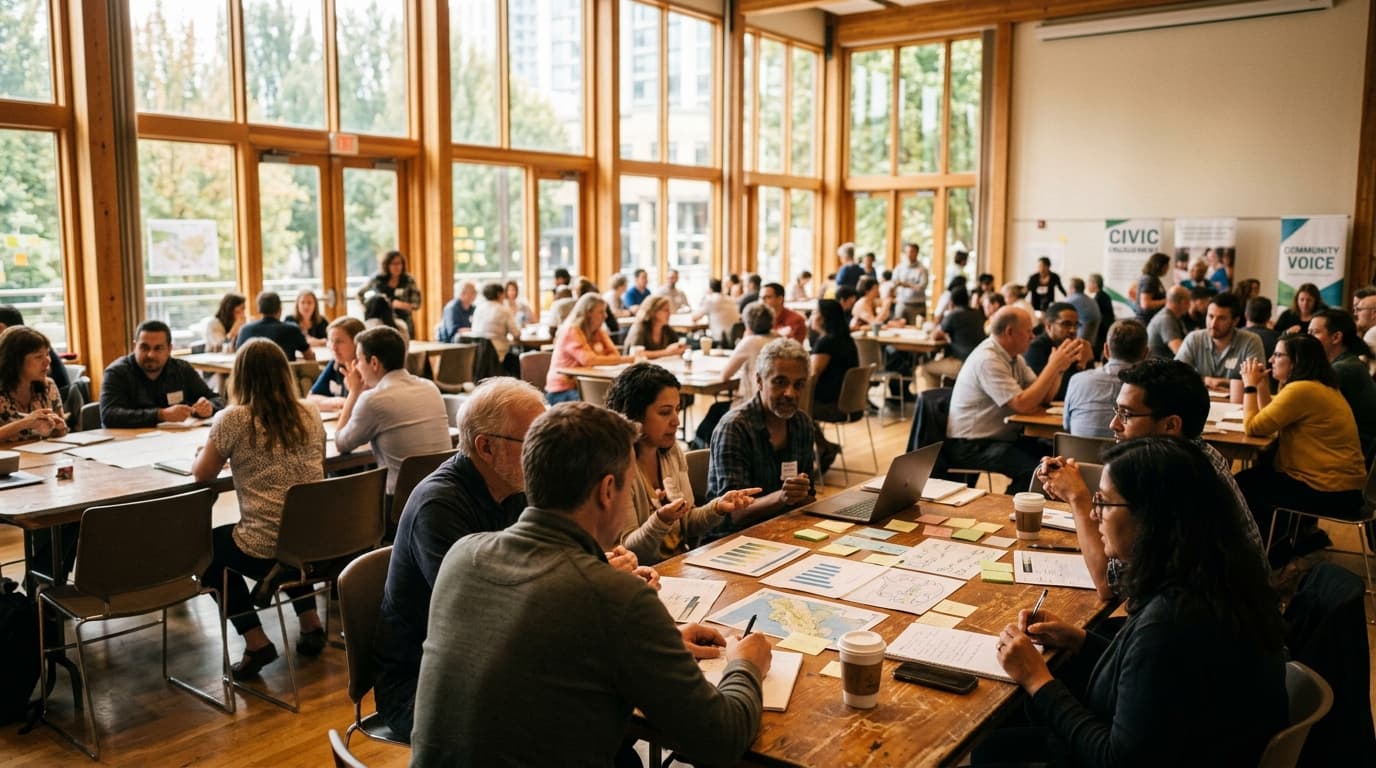
After detailed presentations, participants require a mental break to process information before sharing their views. A 20-minute morning break on the Garden Terrace offers refreshments alongside secondary visual display boards, encouraging participants to discuss key takeaways informally before breaking into focused groups.
At 10:50, directional signage and staff guide attendees from the main terrace into Community Rooms A through D. Transition buffers are essential in public events to prevent confusion as dozens of participants move across the venue. From 11:00 to 12:00, facilitator-led workshops capture detailed public sentiment on dedicated themes such as public transit, local infrastructure, and parklands. Facilitators record key suggestions on shared whiteboards, ensuring every voice is documented neutrally.
Phase 3: Networking & Feedback Synthesis
| Time | Event |
|---|---|
| 12:00 | Networking Buffet Lunch |
| 13:00 | Breakout Findings Feedback Session |
A key highlight of any full-day consultation is the 12:00 networking lunch held in the main Dining Hall. Providing a high-quality catered buffet with vegetarian and vegan options creates a relaxed environment where residents can converse directly with expert panelists without the pressure of a public microphone. Just as structured social meals keep guests engaged during long private events—whether using a birthday party timeline template or a baby shower timeline template—informal dining at civic events breaks down barriers between officials and the public.
At 13:00, attendees return to the Main Auditorium for the feedback synthesis session. Table representatives from each breakout room present a 5-minute recap of their group's main findings. This plenary session reassures participants that their table discussions were accurately recorded and highlights common themes across different topic areas to the entire audience.
Phase 4: Town Hall Q&A & Event Wrap-Up
| Time | Event |
|---|---|
| 13:45 | Open Town Hall Q&A |
| 14:30 | Closing Remarks and Survey Submission |
The event transitions into its most interactive phase at 13:45 with the open town hall Q&A. Moderated by the lead facilitator, roving microphone runners cross the room to let audience members ask direct questions to the panel of technical experts. Allocating 45 minutes to this section ensures panel members can thoroughly address complex queries regarding project timelines, funding allocations, and environmental mitigation plans.
The consultation concludes at 14:30 in the Main Foyer with formal closing remarks. Organizers summarize key points from the day, explain how the consultation transcript will be published, and outline the statutory approval timeline. Before departing, attendees submit completed physical feedback forms into collection boxes or scan QR codes for digital submissions, ensuring every participant leaves their official record on file.
Public Consultation Event Timeline vs Consultation Agenda
Organizers often confuse an operational timeline with a public agenda. While both detail the day's progression, they serve distinctly different audiences and operational purposes:
| Feature | Consultation Agenda | Consultation Event Timeline |
|---|---|---|
| Primary Audience | Public attendees, community groups, media | Event managers, facilitators, venue staff, speakers |
| Level of Detail | High-level topic titles and start times | Granular room movements, AV queues, setup buffers |
| Staff Instructions | Minimal or none | Detailed technical tasks, mic assignments, catering calls |
| Location Markers | Basic room names | Precise zone mapping, table layouts, transit corridors |
| Primary Goal | Inform participants what to expect | Ensure flawless operational execution and timekeeping |
While a consultation agenda is printed in registration packs to inform residents when key topics begin, the operational consultation timeline directs venue teams and facilitators behind the scenes. Having both tools ready ensures smooth event management and clear public communication.
Who Should Use This Template?
This timeline template is designed for civic leaders, project directors, and communication specialists organizing formal public engagement. It adapts easily across multiple sectors, including:
- Municipal Councils & Local Authorities: For statutory local plan consultations, zoning changes, and civic budget reviews.
- Urban Development & Property Firms: For pre-application consultation events, housing master plans, and commercial redevelopments.
- Infrastructure & Transport Agencies: For highway extensions, public transit corridors, and renewable energy installations.
- Environmental & Heritage Bodies: For national park management plans, conservation area reviews, and flood defence proposals.
- Healthcare & Education Trusts: For hospital master plans, university campus expansions, and school catchment reorganizations.
Chronolio offers custom support tailored for different organizational roles involved in planning high-stakes meetings and civic forums.
How to Use This Template
- Duplicate or Download: Export the schedule to your preferred workflow using the DOCX or PDF download links above, or launch it directly in Chronolio.
- Set Your Master Schedule: Update the start and end times to match your venue access booking and target audience availability.
- Customize Room Names: Replace generic room labels with your actual venue locations (e.g., swapping "Community Room A" for "Harbor View Suite").
- Assign Staff Responsibilities: Add named facilitators, timekeepers, and roving mic handlers to each timeline block.
- Distribute to Key Stakeholders: Share the high-level agenda with public attendees while sending the complete operational timeline to venue managers, AV technicians, and catering staff.
Tips for a Successful Public Consultation Event
- Establish Clear Ground Rules Early: Open the day by asking participants to remain respectful, avoid interrupting speakers, and keep questions focused on the consultation scope.
- Deploy Professional Neutral Facilitators: Use impartial facilitators for breakout tables to prevent vocal individuals from dominating discussions.
- Implement a 'Parking Lot' Board: Maintain a prominent whiteboard for off-topic questions or concerns so residents feel heard without losing focus on the current agenda item.
- Utilize Roving Microphones: Never allow audience members to speak without a microphone during town halls; unamplified questions compromise accessibility and audio recordings.
- Provide Multiple Feedback Channels: Offer physical survey sheets, online submission links, and visual voting boards to accommodate different communication preferences.
- Record and Transcribe Everything: Keep verbatim audio recordings and transcriptions to build a transparent statutory consultation report. According to the international standards set by the International Association for Public Participation (IAP2), maintaining clear documentation is essential for ethical public involvement.
Common Mistakes to Avoid
- Squeezing the Q&A Session: Shortening the open town hall Q&A to compensate for overrunning presentations often frustrates attendees and damages trust.
- Failing to Brief Room Facilitators: Sending facilitators into breakout discussions without standard recording templates leads to inconsistent feedback reports.
- Ignoring Technical AV Setup: Neglecting sound checks for roving microphones and slide projection results in delays during presentation transitions.
- Overloading Technical Presentations: bombarding residents with dense jargon or complex engineering drawings without clear visual summaries alienates non-expert stakeholders.
- Neglecting Accessibility Needs: Forgetting to review wheelchair access, induction loops, or dietary options limits community participation. Refer to official guidance like the UK Cabinet Office Consultation Principles to ensure compliance with best practices.
In Summary
- Purpose: A master operational template that balances informative presentations with public feedback and interactive Q&A.
- Structure: Spans a complete 6-hour format covering registration, presentations, breakout discussions, lunch networking, plenary feedback, and town hall Q&A.
- Target Audience: Ideal for local councils, urban planners, property developers, and public sector communication leads.
- Key Benefit: Prevents presentation overruns, ensures transparent documentation, and provides fair, structured airtime for all community members.
- Flexibility: Easily editable for shorter evening town halls or multi-day civic workshops.
Organizing a seamless public engagement day requires precise timekeeping, clear venue coordination, and robust feedback capture. This customizable public consultation event timeline gives your team the exact structural framework required to run a transparent, compliant, and highly productive community event. Whether you are managing public town halls or planning complex private gatherings like a formal Christian wedding timeline or Catholic wedding timeline, maintaining a well-organized schedule is the secret to success.
Edit This Public Consultation Event Timeline