





This Template at a Glance
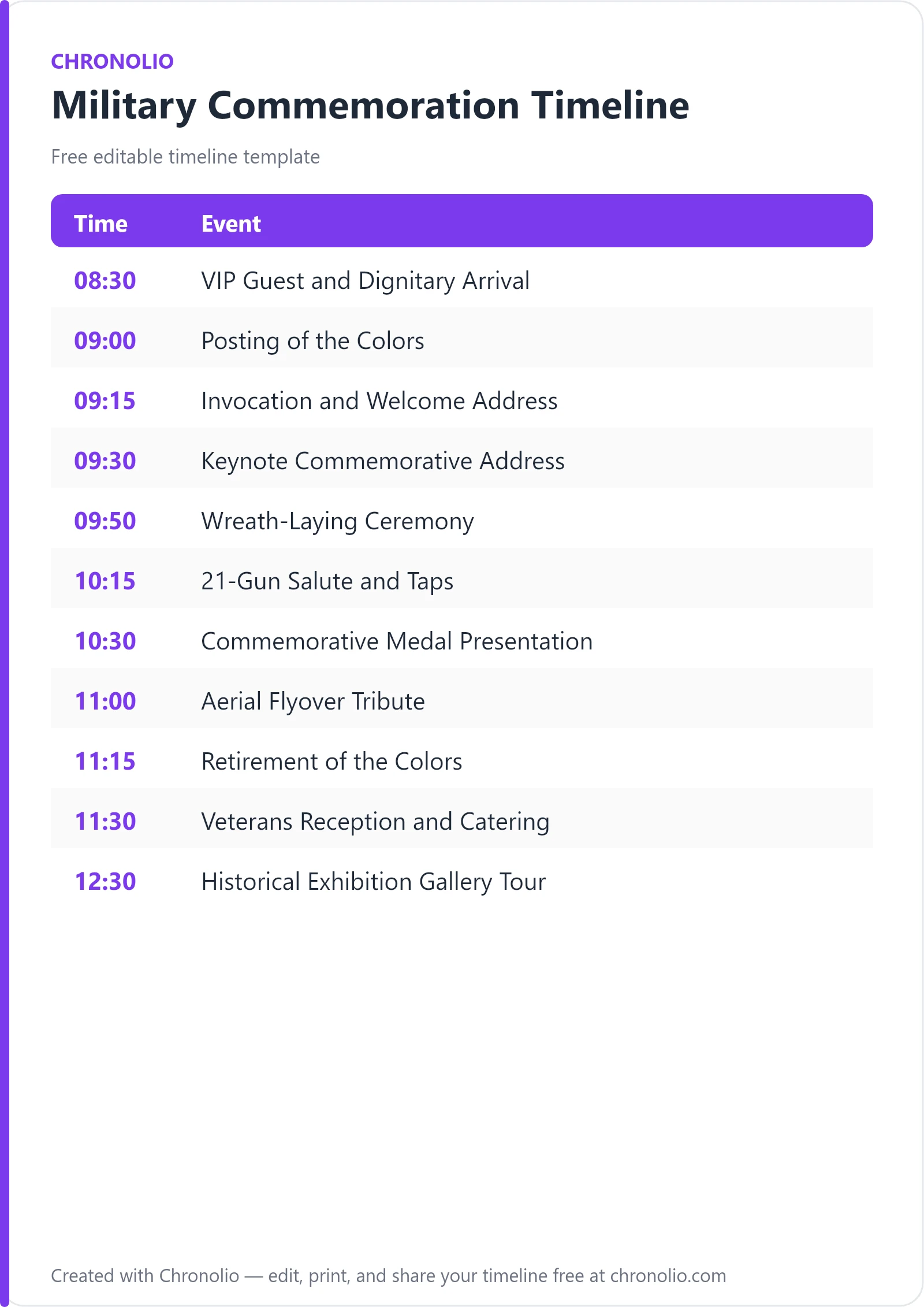
Here is the complete schedule this free template gives you — every time block, ready to edit, download, and share:
| Time | Event |
|---|---|
| 08:30 | VIP Guest and Dignitary Arrival |
| 09:00 | Posting of the Colors |
| 09:15 | Invocation and Welcome Address |
| 09:30 | Keynote Commemorative Address |
| 09:50 | Wreath-Laying Ceremony |
| 10:15 | 21-Gun Salute and Taps |
| 10:30 | Commemorative Medal Presentation |
| 11:00 | Aerial Flyover Tribute |
| 11:15 | Retirement of the Colors |
| 11:30 | Veterans Reception and Catering |
| 12:30 | Historical Exhibition Gallery Tour |
What Is a Military Commemoration Timeline?
A military commemoration timeline is an exact, schedule-driven sequence of ceremonial events designed to direct color guards, official speakers, ceremonial details, and distinguished guests through a solemn tribute. Unlike casual gatherings, military tributes demand strict adherence to time, military order of precedence, and drill field etiquette. From the initial arrival of dignitaries to the final note of Taps, every minute serves to honor service, sacrifice, and national heritage.
Having managed public military ceremonies, civic memorial dedications, and unit anniversaries across various grounds, I know firsthand that precise timing preserves the solemnity of the occasion. Built upon real-world service traditions and standard parade field protocols, this battle-tested template aligns complex moving parts—such as synchronized rifle volleys, chaplain invocations, and precision aircraft flyovers—into a cohesive sequence that maintains dignity without keeping attendees standing indefinitely in the elements.
Customize Your Military Commemoration Timeline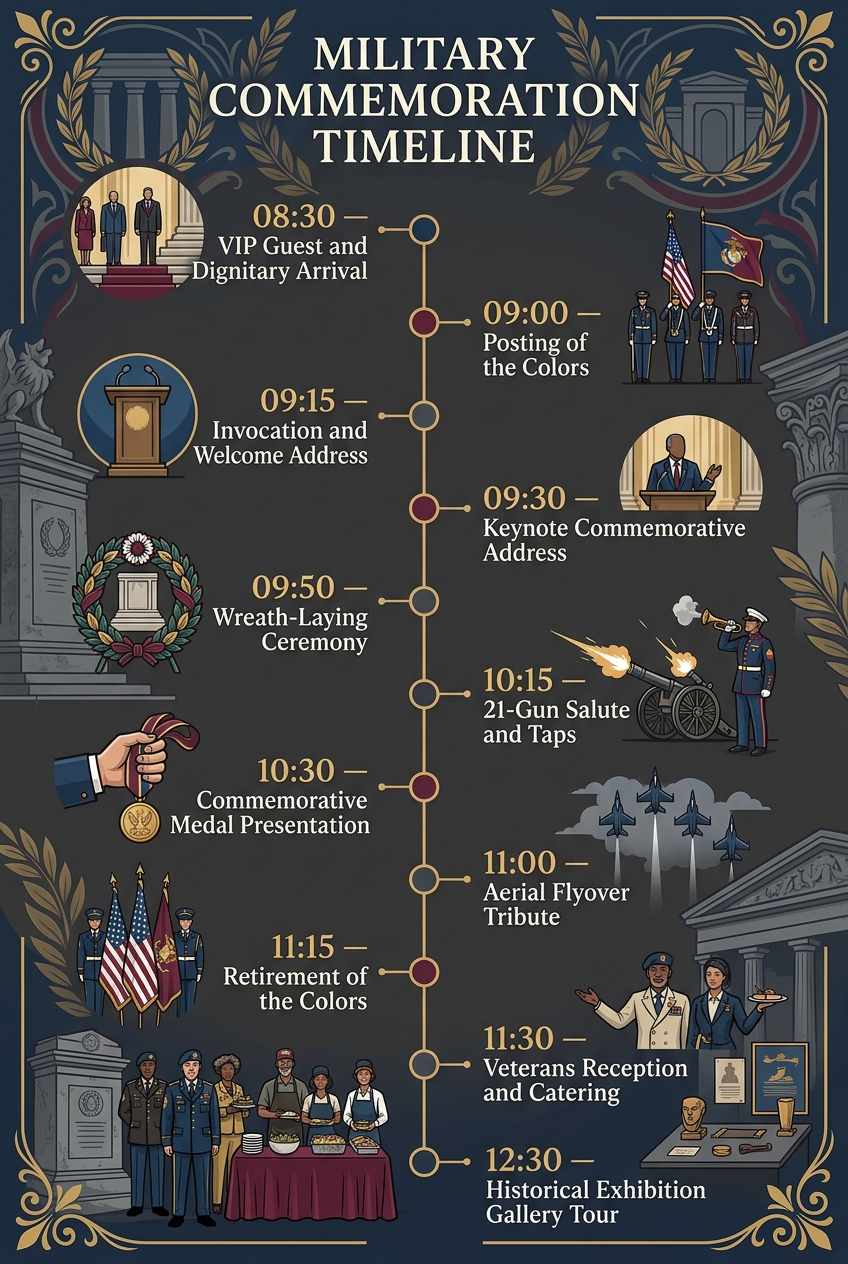
Why Military Commemorations Need a Timeline
Planning a military tribute involves managing high-stakes logistics under public observation. Precise time management is the single most critical tool for maintaining ceremonial dignity and operational control. When honor guard details, active-duty brass, civic leaders, and elderly veterans assemble, delays erode the solemn atmosphere and disrupt coordinated elements like airspace clearances or live broadcasts.
A structured schedule acts as the master operational plan for all participating units. It ensures that the color guard knows their exact march-on cues, the audio team is ready for Taps immediately after the final rifle volley, and vip guests arrive without bottlenecking entryways. By establishing clear transitions, you eliminate awkward pauses that disrupt the solemn tone of the service.
Finally, detailed timing provides crucial accessibility for aging veterans, military families, and community members. Outdoor ceremonies require careful pacing to keep audience members comfortable while allowing adequate time for personal reflection, wreath placements, and military honors.
What to Include in a Military Commemoration Timeline
To capture the true essence of military tradition while accommodating public participation, your schedule should incorporate the following core components:
- Pre-Ceremony Dignitary Arrival: Staggered entry schedules for official speakers, Gold Star families, and veteran contingents.
- Color Guard Protocol: The formal posting and eventual retirement of national and service branch colors.
- Religious & Civic Addresses: Chaplains' invocations, welcoming remarks by masters of ceremonies, and keynotes by commanding officers.
- Solemn Memorial Honors: Ceremonial wreath placements, observed moments of silence, 21-gun rifle salutes, and live bugle performances of Taps.
- Medal Presentations & Tributes: Official awards, pins, or commemorative scrolls presented to service members or surviving families.
- Aerial or Tactical Elements: Synchronized flyovers, cannon fires, or bell-tolling ceremonies coordinated with air traffic control.
- Community Fellowship: Post-ceremony catered receptions and museum or exhibit tours that foster connection.
Phase 1: Dignitary Arrival & Opening Honors
| Time | Event |
|---|---|
| 08:30 | VIP Guest and Dignitary Arrival |
| 09:00 | Posting of the Colors |
| 09:15 | Invocation and Welcome Address |
| 09:30 | Keynote Commemorative Address |
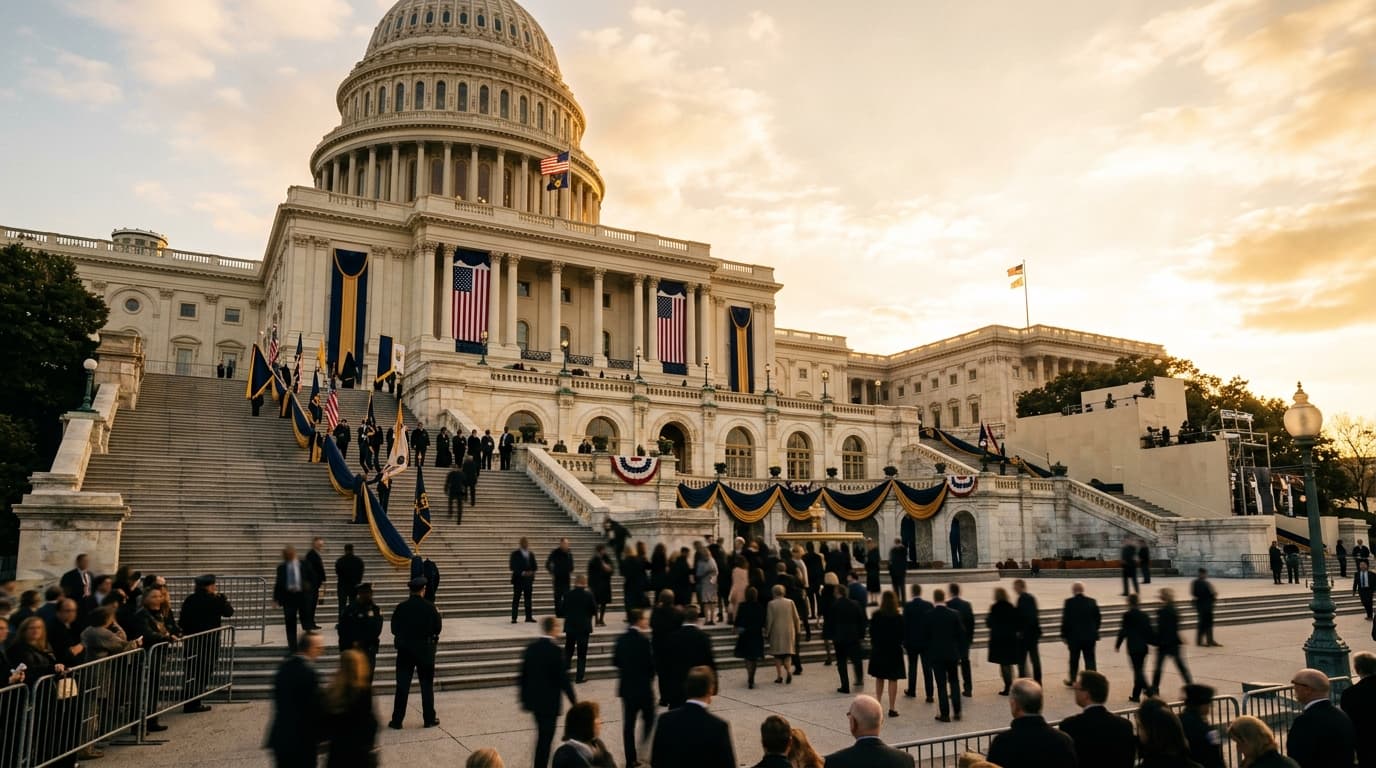
The success of a military tribute depends heavily on setting an orderly, respectful atmosphere during the initial gathering phase at the entrance plaza. Staggering dignitary and veteran arrivals 30 minutes before the opening colors allows protocol marshals to escort high-ranking officers, elected officials, and elderly veterans to designated front-row seating without cluttering the main aisle. During this window, the joint service honor guard executes preliminary gear, weapon, and uniform inspections out of direct public view.
At 09:00 sharp, the ceremony begins with the posting of the colors across the main parade ground. Much like the structured entry processional found in a Catholic wedding timeline, military color postings require absolute precision, silence from the audience, and crisp drill movements. Following the march-on, the military chaplain delivers the invocation from the main stage, grounding the crowd in a atmosphere of reflection. The master of ceremonies then frames the day's purpose before introducing the senior military commander for the keynote commemorative address.
Phase 2: Solemn Memorial Tributes & Military Honors
| Time | Event |
|---|---|
| 09:50 | Wreath-Laying Ceremony |
| 10:15 | 21-Gun Salute and Taps |
| 10:30 | Commemorative Medal Presentation |
| 11:00 | Aerial Flyover Tribute |
| 11:15 | Retirement of the Colors |
Phase two represents the emotional core of the commemoration, shifting from spoken speeches to deep-seated ceremonial rites. Transitioning to the central monument, branch representatives carry wreath displays to the eternal flame, followed by a quiet minute of silence. This sacred sequence demands tight coordination: the audio crew must hold all ambient sound while the rifle detail readies their weapons in the adjacent courtyard.
At 10:15, the firing detail executes three synchronized volleys for the 21-gun salute, immediately followed by a solitary bugler rendering Taps. The distance between the rifle squad and bugler must be planned so the acoustic transition feels continuous rather than abrupt. Afterwards, attendees return their focus to the main stage for formal medal presentations—a step that requires careful presenter alignment similar to awards pacing in a board meeting timeline.
The outdoor honors culminate at 11:00 with a precision missing-man flyover, requiring air-to-ground radio contact to ensure the aircraft cross overhead precisely as the stage program reaches its conclusion. The joint color guard then steps off to retire the colors, signaling the end of the strict military protocol.
Phase 3: Veterans Fellowship & Historical Reflection
| Time | Event |
|---|---|
| 11:30 | Veterans Reception and Catering |
| 12:30 | Historical Exhibition Gallery Tour |
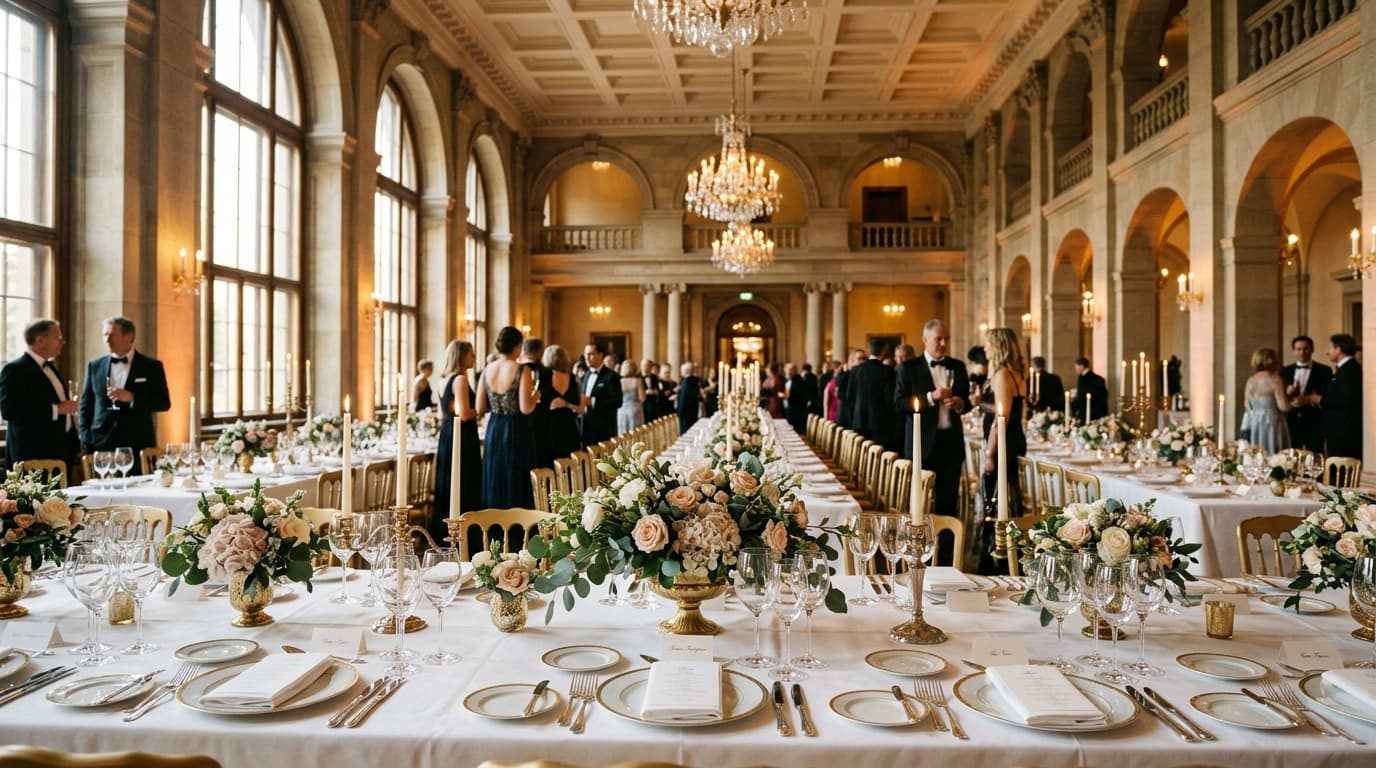
After standing or sitting through intense emotional honors on the outdoor grounds, guests need a clear transition into a hospitable indoor environment. Moving into the memorial hall banquet room allows attendees, Gold Star families, and active duty personnel to decompress and connect. Much like a celebratory anniversary party schedule, this catered reception encourages warm conversation, shared unit stories, and personal military reunions over lunch.
At 12:30, docents open the curated historical exhibit gallery, offering guided access to archived photographs, period equipment, and personal service logs. Structuring this as an optional guided tour ensures that guests who wish to remain engaged have an educational outlet, while those needing early departure can comfortably exit.
Military Commemoration Timeline vs Protocol Order of Service
It is common for planning committees to confuse an overall event timeline with a public order of service program. Understanding the differences between these operational tools guarantees that both organizers and audience members have the information they need.
| Operational Feature | Military Commemoration Timeline | Protocol Order of Service |
|---|---|---|
| Primary Audience | Event directors, honor guards, sound crews, protocol staff | General audience, public attendees, visiting dignitaries |
| Level of Detail | Internal operational cues, staging times, radio signals | Public event sequence, speaker names, hymn/prayer lyrics |
| Focus | Behind-the-scenes logistics, time management, setup | Event flow, educational context, printed keepsake |
| Time Precision | Measured in exact minute blocks (HH:MM) | General listed order or broad phase markers |
| Distribution | Private briefing packets, production binders | Printed paper programs handed out at entrances |
While the public program lists the general sequence of events, the internal military commemoration schedule controls backstage execution. For instance, while the program simply notes "Taps," the internal timeline details the exact minute the rifle detail presents arms, the bugler raises the horn, and the sound technician unmutes the ambient microphones.
Who Should Use This Template?
This comprehensive ceremonial schedule is tailored for organizers managing formal remembrance events, including:
- Veterans Service Organizations (VSOs): VFW posts, American Legion chapters, and Disabled American Veterans (DAV) groups staging annual memorial events.
- Active Duty & Reserve Military Units: Base commanders, public affairs officers (PAO), and command sergeant majors directing unit anniversaries, changes of command, or memorial ceremonies.
- Municipal & State Governments: City councils, parks departments, and state veteran affairs departments organizing Memorial Day and Veterans Day programs.
- Military Academies & ROTC Units: Drill instructors and cadet commanders training junior officers on proper military protocol and parade field movements.
- Historical Societies & Museums: Curators hosting memorial anniversaries, monument unveilings, or historical battle commemorations.
Organizations utilizing Chronolio can assign specialized event roles to ceremony marshals, honor guard leads, and audio coordinators to keep every team member aligned.
How to Use This Template
- Download or Duplicate: Access the template in Chronolio, or download the formatted print versions in Word format or PDF format.
- Establish the Anchor Time: Pinpoint your unchangeable event moment—such as an overhead flyover window or a live television broadcast time—and adjust surrounding times around it.
- Assign Responsibilities: Clearly delegate task owners for each row (e.g., Color Guard Commander for posting, Audio Tech for fanfare playback).
- Conduct a Walkthrough Briefing: Review the timing with speechmakers, chaplains, and drill details at least 24 hours prior during a formal rehearsal.
- Distribute Control Copies: Provide final printouts to stage managers, sound booths, and protocol escorts on the morning of the event.
Tips for a Successful Military Commemoration
- Sync Clocks with the Honor Guard: Ensure the master of ceremonies, rifle detail commander, and air support liaison share synchronized time sources before setup.
- Position Buglers for Optimal Acoustics: Place live buglers at a slight distance from the main crowd so Taps echoes clearly across the memorial park.
- Establish Weather Contingency Paths: Maintain covered walkways or indoor backup spaces for wind or rain, moving color postings inside without compromising dignity.
- Conduct Sound Checks Prior to Dignitary Entry: Complete all microphone tests, bugle levels, and speaker balance adjustments well before VIPs arrive at 08:30.
- Brief Speakers on Strict Time Limits: Remind guest speakers that military addresses should remain concise to prevent outdoor audience fatigue.
- Provide Dedicated Seating Marshals: Assign trained escorts who understand military rank order of precedence to guide distinguished guests smoothly to reserved rows.
- Maintain Clear Sightlines for Rifle Volleys: Barrier off the 21-gun salute zone to preserve safety buffers and ensure unhindered views for spectators.
Common Mistakes to Avoid
- Overpacking Keynote Speeches: Scheduling too many guest speakers stretches the outdoor agenda, leading to guest restlessness and missed flyover windows.
- Ignoring Acoustic Delays in Open Spaces: Failing to account for sound carry across large parade grounds can throw off synchronized movements like color postings.
- Miscalculating Rifle Reload & Transit Times: Forgetting to allow transit time for the firing detail to move into position leads to rushed salutes.
- Omitting Water & Shade Provisions: Leaving aging veterans exposed to direct sun without shaded seating or hydration stations creates health risks.
- Uncoordinated Flyover Windows: Failing to maintain radio contact with air crews can result in planes passing before or long after the memorial tribute.
- Skipping Formal Rehearsals: Assuming experienced military details do not need a site walkthrough often leads to awkward positioning errors on unfamiliar stages.
In Summary
- A military commemoration timeline coordinates military honors, public addresses, and community gatherings into a precise schedule.
- The schedule accounts for strict military protocol, including color guard postings, 21-gun salutes, and Taps.
- Designed for military base commanders, veterans service organizations, municipal event directors, and historical societies.
- Staggered dignitary arrivals prevent entry bottlenecks and establish an orderly, respectful atmosphere.
- Integrated indoor receptions give veterans and families space to connect after emotional outdoor ceremonies.
- Clear time management prevents delays that could disrupt coordinated elements like aerial flyovers.
Planning a formal military commemoration requires a balance of respectful honor, precise protocol, and smooth crowd management. By anchoring your planning in this structured timeline template, you ensure that every speech, rifle salute, and color movement honors service members with the dignity they deserve. Access the template directly in Chronolio or download customized files to prepare your team for a flawless event.
Customize Your Military Commemoration TimelineFor official guidance on protocol order of precedence and military honors, consult the U.S. Department of Veterans Affairs and review traditional funeral and memorial protocols through the Arlington National Cemetery Protocol Guide.