





This Template at a Glance
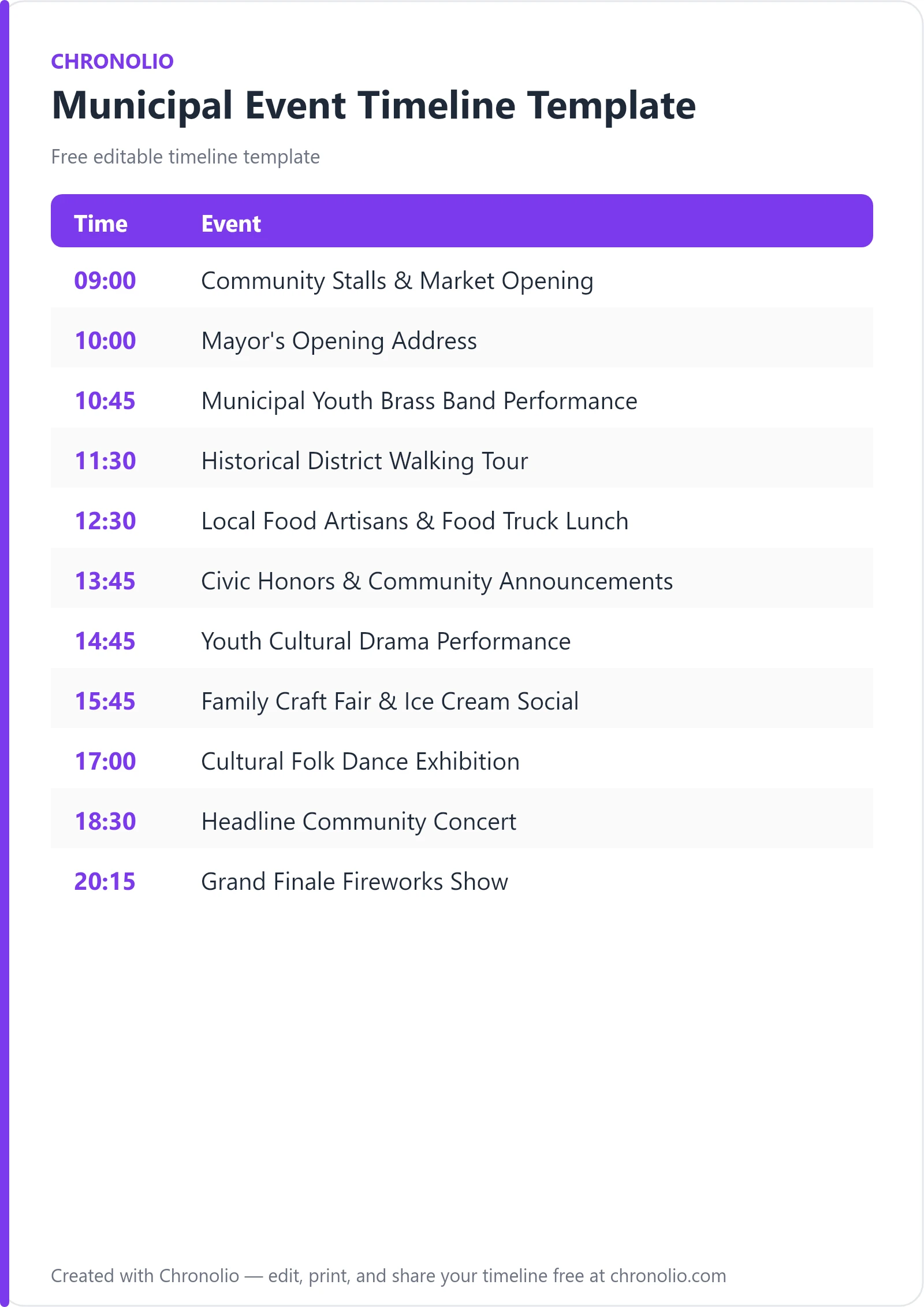
Here is the complete schedule this free template gives you — every time block, ready to edit, download, and share:
| Time | Event |
|---|---|
| 09:00 | Community Stalls & Market Opening |
| 10:00 | Mayor's Opening Address |
| 10:45 | Municipal Youth Brass Band Performance |
| 11:30 | Historical District Walking Tour |
| 12:30 | Local Food Artisans & Food Truck Lunch |
| 13:45 | Civic Honors & Community Announcements |
| 14:45 | Youth Cultural Drama Performance |
| 15:45 | Family Craft Fair & Ice Cream Social |
| 17:00 | Cultural Folk Dance Exhibition |
| 18:30 | Headline Community Concert |
| 20:15 | Grand Finale Fireworks Show |
What Is a Municipal Event Timeline?
A municipal event timeline is the master operational plan that governs every civic address, musical act, family activity, and public safety milestone during a city-sponsored celebration. Running a successful civic gathering requires balancing political protocol, public works logistics, vendor setup, and emergency services coordination across multiple outdoor zones. From town square artisan markets to main stage musical performances, a structured timetable keeps municipal staff and volunteers synchronized.
Having managed dozens of town celebrations, city jubilees, and street fairs over the past fifteen years, I can tell you that outdoor civic events succeed or fail based on crowd movement and buffer management. This template reflects real-world municipal event structures and common best practices established by experienced city planners. Whether your council is running a historic anniversary or an annual community fair, a clear schedule prevents stage overruns and keeps public safety teams fully informed.
Customize Your Municipal Event Timeline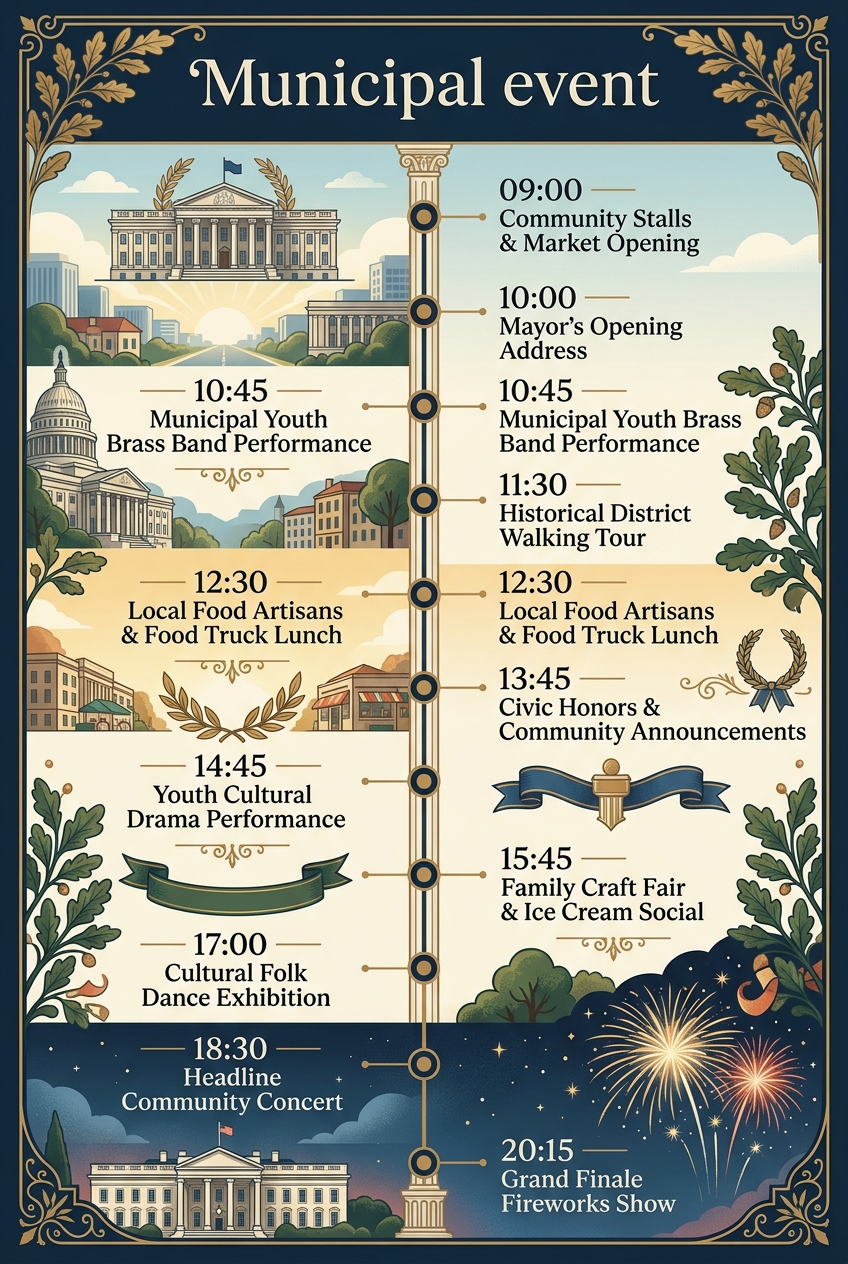
Why Municipal Events Need a Timeline
Public events host thousands of local residents across sprawling civic spaces like town plazas, public parks, and historic streets. Without a centralized schedule, stage managers, emergency services, and food vendors quickly fall out of sync, leading to sound bleeding between zones, missed speaker cues, and bottlenecked foot traffic.
A clear timetable acts as a unified source of truth for every department involved. City communications officers use it to publish public schedules, while public works crews rely on it to time road closures, trash pickups, and equipment tear-downs. Meanwhile, local vendors and non-profit groups need exact start and end times to manage inventory and volunteer shifts effectively throughout the day.
Finally, an accurate operational running order is critical for public safety and risk management. First responders and private security personnel must know where major crowds will gather at any given hour. Aligning your timeline across departments allows police and medical personnel to position emergency resources proactively during peak events like headline concerts and fireworks displays.
What to Include in a Municipal Event Timeline
When building a comprehensive civic schedule, you must detail both front-of-house public activities and back-of-house operations:
- Vendor Setup & Stall Opening Hours: Morning arrival times for artisans, non-profits, and food trucks.
- Civic Addresses & Protocols: Timings for mayoral welcomes, council proclamations, and guest dignitary speeches.
- Live Stage Entertainment: Musical performances, youth brass bands, and theatrical drama schedules.
- Off-Stage Community Activities: Historical walking tours, children's pavilion crafts, and public workshops.
- Public Ceremonies: Annual civic honors, community grant announcements, and resident awards.
- Evening Headliners & Pyrotechnics: Main concert start times and pyrotechnic launch sequences.
- Site Ingress & Egress Timings: Parking opening times, shuttle bus schedules, and post-event dispersal plans.
Phase 1: Morning Opening & Civic Dedication
| Time | Event |
|---|---|
| 09:00 | Community Stalls & Market Opening |
| 10:00 | Mayor's Opening Address |
| 10:45 | Municipal Youth Brass Band Performance |
| 11:30 | Historical District Walking Tour |
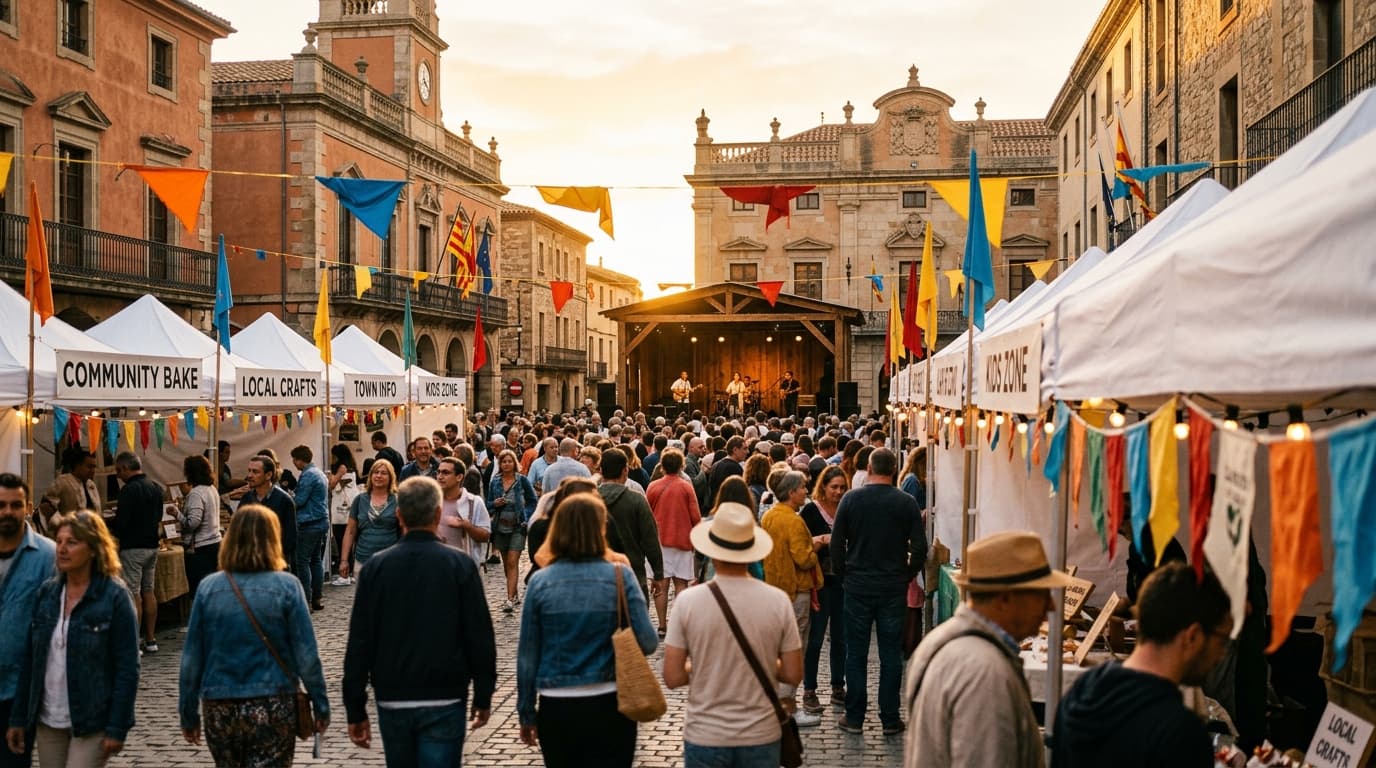
The morning phase focuses on welcoming early attendees and establishing an energetic community atmosphere across the town square plaza. Starting at 09:00 with the community stalls and market opening gives visitors time to browse local artisan goods, collect civic brochures, and interact with town representatives before stage amplification begins. Opening the market early also provides food and craft vendors an immediate revenue stream while setup crews perform final checks on the main stage sound system.
At 10:00, the official programming kicks off with the Mayor's opening address on the main stage, bringing town leaders together to set a welcoming tone and highlight upcoming civic infrastructure projects. Following the formal address, transition directly into youth cultural participation at 10:45 with the municipal youth brass band performance. This sequence draws families to the stage lawn while historic tour guides prepare at the town hall information desk for the 11:30 walking tour, which guides visitors through local heritage sites toward the civic museum.
Phase 2: Afternoon Community Activities & Civic Recognition
| Time | Event |
|---|---|
| 12:30 | Local Food Artisans & Food Truck Lunch |
| 13:45 | Civic Honors & Community Announcements |
| 14:45 | Youth Cultural Drama Performance |
| 15:45 | Family Craft Fair & Ice Cream Social |
Midday planning centers around catering to foot traffic, honoring local community contributions, and offering family-friendly entertainment. Scheduling the food truck lunch along the park promenade at 12:30 gives attendees a designated rest period under shade canopies, alleviating crowd pressure near the main stage and generating consistent sales for regional caterers.
After lunch, at 13:45, gather the crowd back at the main stage for the civic honors and community announcements. Presenting annual awards and local grants during peak afternoon attendance ensures maximum visibility for outstanding residents and municipal initiatives.
To maintain engagement for multi-generational families, diversify your event locations. Shift crowds away from the main plaza at 14:45 to the outdoor amphitheater for the youth cultural drama performance, followed by the family craft fair and ice cream social at 15:45 in the children's pavilion. Distributing programming across distinct zones prevents localized congestion and keeps children entertained with hands-on craft workshops and face painting.
Phase 3: Evening Entertainment & Grand Finale
| Time | Event |
|---|---|
| 17:00 | Cultural Folk Dance Exhibition |
| 18:30 | Headline Community Concert |
| 20:15 | Grand Finale Fireworks Show |
As late afternoon transitions into evening, build artistic energy on the main stage toward a memorable high-impact finale. The 17:00 cultural folk dance exhibition showcases regional heritage in colorful traditional costumes, encouraging interactive public participation right on the plaza as daylight fades. This energetic act acts as a bridge between daytime family activities and nighttime musical entertainment.
At 18:30, usher in the headline community concert on the main stage, drawing regional music fans and youth crowds for a high-energy live show. Leave a deliberate 15-minute operational cushion after the concert ends at 20:00 so security personnel and floor marshals can safely guide attendees from the plaza to the pier and lawns at waterfront park.
The day concludes at 20:15 with the grand finale fireworks show launched over the water, providing a striking, centralized visual spectacle that signals the official end of municipal festivities.
Municipal Event Timeline vs Civic Project Plan
Civic organizers frequently confuse an operational day-of timeline with a broader project management plan. While both tools are essential for city administration, they serve vastly different operational purposes.
| Feature | Municipal Event Timeline | Civic Project Plan |
|---|---|---|
| Primary Scope | Hour-by-hour operational schedule on the day of the event. | Month-by-month planning roadmaps leading up to the event. |
| Primary Audience | Stage managers, sound crews, vendors, and public attendees. | City council members, department heads, and contractors. |
| Key Deliverables | Speech timings, performance cues, and road closure triggers. | Permit approvals, budget allocations, and vendor contracts. |
| Time Horizon | Single day (e.g., 09:00 to 21:00). | 6 to 12 months prior to execution. |
| Flexibility | High real-time adjustments based on weather and stage flow. | Low flexibility due to legal, budgetary, and council deadlines. |
A municipal event schedule dictates real-time operational flow on site, whereas a project plan manages administrative milestones like securing health department permits, executing vendor contracts, and placing public notice advertising. For broader governance tracking, local councils often pair their master event schedule with a dedicated board meeting timeline template to organize committee approval dates.
Who Should Use This Template?
This timeline template is designed for civic teams, community leaders, and event producers who need a reliable, field-tested schedule structure. It is ideal for:
- City & Town Councils: Managing annual town days, founders' day celebrations, and municipal jubilees.
- Downtown Improvement Districts (BIDs): Organizing seasonal street fairs, holiday lighting ceremonies, and night markets.
- Parks & Recreation Departments: Scheduling community concerts, summer festivals, and outdoor movie nights.
- Civic Parade Committees: Balancing march schedules, dignitary stands, and post-parade park festivals.
- Chambers of Commerce: Hosting regional business expos, artisan craft fairs, and public food festivals.
Chronolio offers customized features designed for the distinct roles involved in municipal event execution, from public safety directors to stage managers.
How to Use This Template
- Download or Duplicate: Select your preferred file format below to edit offline, or use Chronolio to build a visual, cloud-based schedule.
- Adjust Your Civic Anchor Times: Set your headline concert and fireworks launch times first, then work backward to schedule speeches and morning market openings.
- Assign Zone Locations: Map every agenda line item to a specific public location (e.g., Main Stage, Park Promenade, Children's Pavilion) to prevent public confusion.
- Distribute to Municipal Departments: Share finalized drafts with public works, local police, fire departments, and emergency medical services at least two weeks prior.
- Publish Public Guides: Extract front-of-house highlights for your city website, social media channels, and printed event maps.
Tips for a Successful Municipal Event
- Build Strict Sound Buffers: Maintain at least 15 to 30 minutes between acoustic acts, brass bands, and amplified stage announcements to avoid sound bleed across zones.
- Centralize Public Information: Place a clearly marked municipal information booth near the main entrance to distribute schedules, lost-and-found services, and accessibility assistance.
- Designate Vendor Loading Windows: Schedule strict morning arrival slots for food trucks and craft stalls before pedestrian gates open to prevent vehicle traffic in pedestrian zones.
- Establish Clear Emergency Egress: Keep primary walkways clear of stall overhangs or stage equipment to maintain rapid access for emergency vehicles.
- Plan Around Sunlight & Shade: Position seating areas and children's activity pavilions under shade trees or temporary canopies during hot afternoon hours.
- Coordinate Waste Management Rounds: Schedule public works waste collection sweeps directly following peak meal windows, such as after the food truck lunch hour.
- Cross-Promote Milestones: Have your stage emcee announce upcoming off-stage events (such as walking tours or drama performances) 15 minutes before they begin.
Common Mistakes to Avoid
- Overcrowding the Stage Schedule: Packing back-to-back VIP speeches without staging buffers almost always causes late afternoon delays.
- Ignoring Zone Sound Distances: Placing quiet acoustic performances or drama plays right next to noisy children's rides or generator equipment ruins the audience experience.
- Late Fireworks Clearance: Failing to coordinate with local harbor masters, park wardens, or fire marshals early enough can delay your pyrotechnic permits.
- Neglecting Vendor Power Requirements: Forgetting to audit total electrical loads for food trucks and sound rigs leads to tripped breakers during peak lunch hours.
- Single-Channel Communications: Relying solely on cellular networks for staff coordination can fail when large crowds overload local cell towers; always equip key leads with two-way radios.
- Forgetting Accessibility Logistics: Failing to schedule clear, step-free access paths and dedicated viewing areas for mobility-impaired residents creates equity issues.
In Summary
- Purpose: A municipal event schedule organizes civic addresses, vendor markets, cultural performances, and evening entertainment into a seamless public celebration.
- Key Audiences: Designed for city planners, parks and recreation directors, downtown associations, and public safety teams.
- Structure: Uses distinct phased blocks to balance morning market openings, afternoon civic recognition, and evening concert headliners.
- Logistics: Coordinates multi-zone movement across plazas, park promenades, outdoor amphitheaters, and waterfront parks.
- Safety Alignment: Gives emergency services, public works, and marshals predictable timelines for crowd control and traffic management.
- Versatility: Fully customizable for town anniversaries, seasonal festivals, street fairs, and civic holiday observances.
Planning a community event involves coordinating dozens of moving parts, but establishing an operational running order keeps your team organized and your residents engaged. Whether you are managing a large-scale civic jubilee or a private celebration like an anniversary party schedule template, a structured timeline guarantees a stress-free event. You can also explore our guides for milestone celebrations, such as a birthday party timeline template, to streamline event coordination across any department or venue.
Customize Your Municipal Event TimelineFor formal guidance on municipal planning standards and public safety guidelines, consult resources provided by the International City/County Management Association and the National League of Cities.