





This Template at a Glance
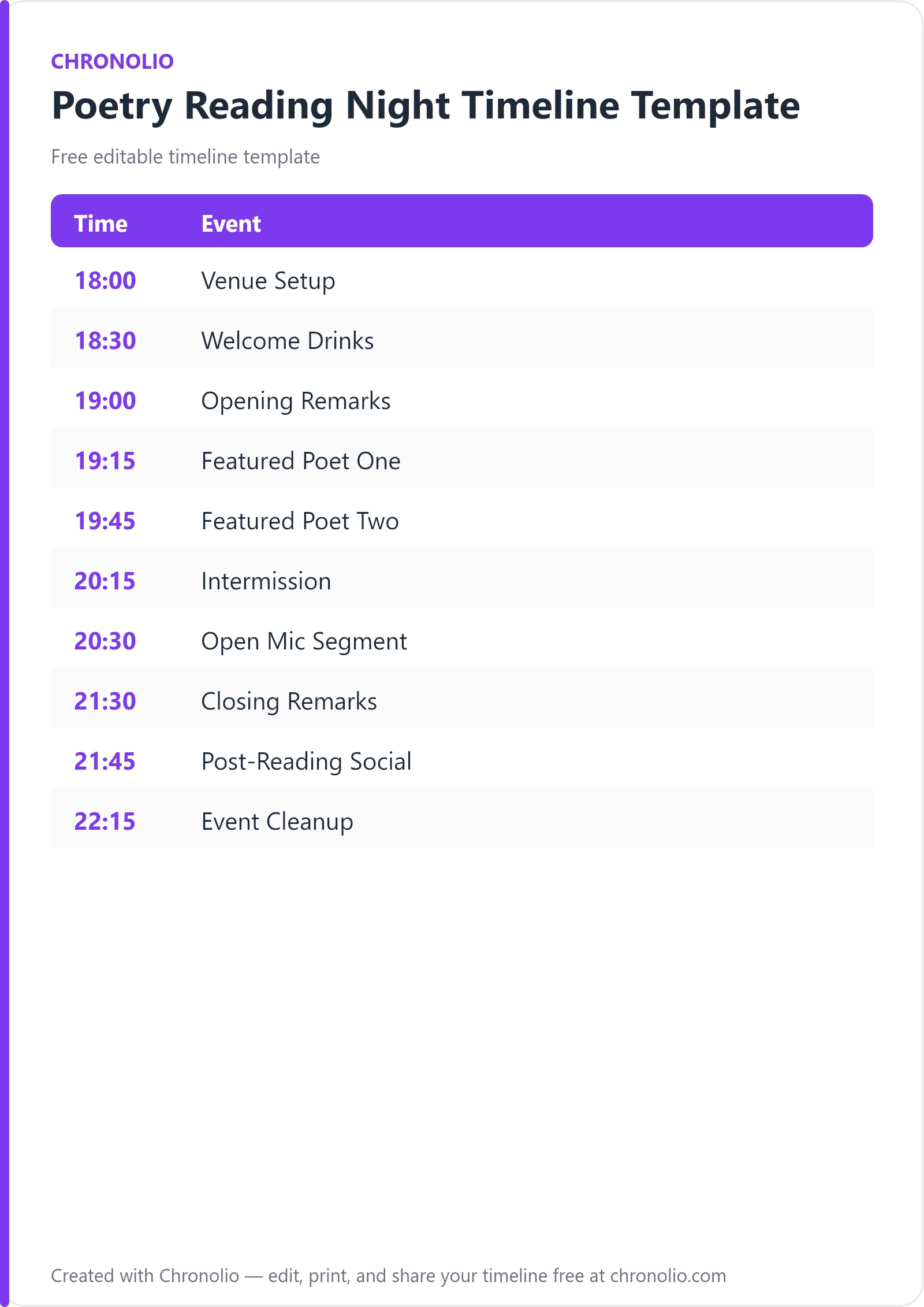
Here is the complete schedule this free template gives you — every time block, ready to edit, download, and share:
| Time | Event |
|---|---|
| 18:00 | Venue Setup |
| 18:30 | Welcome Drinks |
| 19:00 | Opening Remarks |
| 19:15 | Featured Poet One |
| 19:45 | Featured Poet Two |
| 20:15 | Intermission |
| 20:30 | Open Mic Segment |
| 21:30 | Closing Remarks |
| 21:45 | Post-Reading Social |
| 22:15 | Event Cleanup |
What Is a Poetry Reading Night Timeline?
A poetry reading night timeline is the master schedule that governs the flow, audio checks, stage transitions, and reader slots for a community or venue literary showcase. When hosting spoken word acts, local bards, or published authors, having a precise order of events keeps performance energy high, prevents microphone fatigue, and respects the audience's time. This template incorporates real-world literary event structures and best practice guidelines from experienced venue operators and event coordinators.
Whether you are running an intimate bookstore gathering, a coffeehouse slam, or a formal auditorium showcase, keeping your show structured prevents common bottlenecks like extended author introductions or chaotic open mic sign-ups. Managing time effectively ensures every writer on your bill receives their fair share of spotlight while audience members stay engaged throughout the evening.
Edit Your Poetry Reading Night Timeline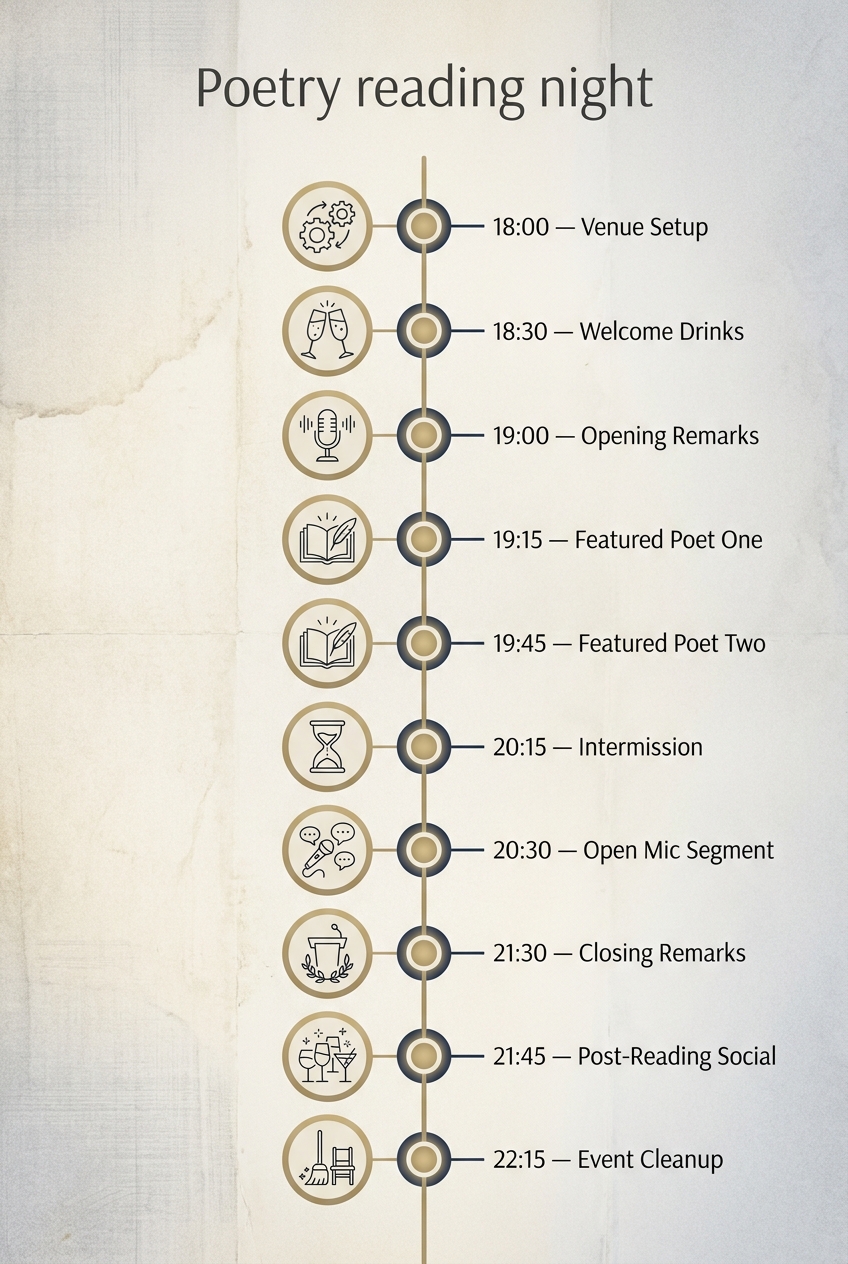
Why Poetry Reading Nights Need a Timeline
Literary events thrive on momentum, intimacy, and clear boundaries. Without a disciplined schedule, author Q&As run over time, stage chatter inflates, and late-night open mic participants end up reading to an empty room. Establishing a well-planned structure upfront protects your performers, helps venue bartenders manage peak service times, and keeps sound engineers coordinated throughout the night.
- Maintains performance energy: Spoken word and live readings require intense listener concentration; structured breaks give audiences time to digest complex themes and refresh their drinks without missing headliners.
- Respects author limits: Featured readers often rehearse tight 20- to 30-minute sets, and clear timing prevents host chatter or early delays from cutting into their prepared performance window.
- Streamlines stage management: Assigning fixed slots for host announcements, stage walk-ons, and technical adjustments prevents long, awkward pauses at the microphone.
- Facilitates venue operations: Clear timing for setup, drink service, and post-show networking ensures cafe staff and venue crews can manage inventory and close doors on schedule.
What to Include in a Poetry Reading Night Timeline
When building a comprehensive schedule for your literary event, include these core operational blocks:
- Pre-show technical setup: Microphone gain checks, stage lighting focus, seating arrangements, and sign-up sheet preparation.
- Atmospheric welcome hour: Soft ambient lighting, background audio, and casual lobby drinks to encourage ticket holders to settle in.
- Host opening and housekeeping: Welcoming remarks, emergency exit reminders, open mic rules, and author introductions.
- Featured headliners: Dedicated 20- to 30-minute spotlight slots for published authors or invited regional writers.
- Intermission: A designated 15-minute operational break for sign-up sheet collection, restroom visits, and book sales.
- Open mic segment: Fast-paced, time-capped student or community showcase slots managed by a vigilant emcee.
- Host closing and social hour: Expressed gratitude, upcoming event announcements, chapbook sales, and post-event mingling.
Pre-Event Preparation & Arrival
| Time | Event |
|---|---|
| 18:00 | Venue Setup |
| 18:30 | Welcome Drinks |
Every memorable literary gathering begins long before the host steps to the microphone. Starting stage preparations an hour before doors open allows staff to test audio lines, position acoustic panels, and configure seating lines to ensure clear views from every corner of the room. Setting up the podium and adjusting the microphone stand height during Venue Setup eliminates noisy mechanical tweaks when the show starts.
Opening the doors 30 minutes prior to showtime for Welcome Drinks allows guests to purchase refreshments, collect program flyers, and write their names on the open mic sign-up board. This gentle ramp-up builds room warmth, boosts pre-show bar sales, and ensures the main auditorium fills comfortably before the host takes the stage. Much like organizing a photography exhibition timeline or gallery reception, setting aside low-pressure arrival time creates a welcoming social atmosphere for attendees.
[ 18:00 - 18:30 ] Venue Setup & Sound Check [ 18:30 - 19:00 ] Welcome Drinks & Open Mic Sign-Ups [ 19:00 - 20:15 ] Featured Reader Presentations [ 20:15 - 20:30 ] Intermission & Book Signings [ 20:30 - 21:30 ] Open Mic Performances [ 21:30 - 22:30 ] Closing Remarks & Networking
Featured Headliners & Opening
| Time | Event |
|---|---|
| 19:00 | Opening Remarks |
| 19:15 | Featured Poet One |
| 19:45 | Featured Poet Two |
Promptly at 19:00, the event coordinator or emcee takes the stage for Opening Remarks. This short presentation sets the emotional tone for the night, sets ground rules for audience etiquette (such as silencing mobile phones and snapping instead of clapping if customary), and explains how the open mic draw will work.
Placing your principal headliners early in the program guarantees they perform while the audience is most attentive. During Featured Poet One, local author Sarah Jenkins presents a structured 30-minute set from her latest collection, followed immediately by Featured Poet Two, Marcus Thorne, who delivers urban spoken word pieces. Structuring back-to-back featured sets creates a dynamic contrast in poetic styles while keeping the audience captivated. If you plan broader cultural programming alongside live readings, consider reviewing our guide on managing a language celebration event schedule to coordinate multi-lingual presentations smoothly.
Intermission & Open Mic Segment
| Time | Event |
|---|---|
| 20:15 | Intermission |
| 20:30 | Open Mic Segment |
After an hour of intense listening, a scheduled Intermission provides essential mental breathing room. Attendees can step into the lobby, visit the book display table, chat with fellow poetry lovers, and order snacks. Behind the scenes, the emcee uses these 15 minutes to collect the open mic sign-up sheet, count the total registrants, and finalize a balanced running order.
When the show resumes at 20:30, the emcee launches the Open Mic Segment. To ensure fairness and maintain room energy, enforce a strict three-minute limit per participant—roughly equal to one long poem or two short works. A subtle desk bell or host hand signal at the two-minute mark gives emerging writers a polite cue to begin concluding their piece. Managing short stage rotations resembles the rhythmic timing needed when following a dance recital schedule template, where tight stage handoffs keep the production moving efficiently.
Wrap-Up & Post-Reading Networking
| Time | Event |
|---|---|
| 21:30 | Closing Remarks |
| 21:45 | Post-Reading Social |
| 22:15 | Event Cleanup |
As the final open mic performer steps down, the emcee takes the stage for Closing Remarks. Expressing sincere gratitude to the venue, audio crew, featured readers, and open mic writers leaves everyone on a warm note. Prominently announcing the date and submission details for the next event encourages audience retention and builds long-term community support.
Following formal remarks, transitioning guests into a Post-Reading Social gives fans an opportunity to buy signed chapbooks, exchange social media handles, and network with featured authors in an unhurried setting. This informal mingling period is often where new artistic collaborations begin. Finally, venue team members complete Event Cleanup, restoring furniture layouts, packing away stage equipment, and closing out bar registers efficiently before locking up. For larger venue activations that combine spoken word with media elements, cross-referencing a film screening event timeline can help refine media equipment tear-downs.
Poetry Reading Night Timeline vs Poetry Event Agenda
Event managers often confuse a master event timeline with a public-facing program agenda. While both detail the night's proceedings, they serve distinctly different operational purposes.
| Dimension | Master Timeline | Public Event Agenda |
|---|---|---|
| Primary Audience | Emcee, host, venue staff, audio technicians, and stage managers | Event attendees, open mic participants, and featured guests |
| Level of Detail | Includes internal setup, sound checks, stage prep, and breakdown times | Displays public start times, reader names, and broad section titles |
| Operational Focus | Soundboard levels, lighting cues, bar staff shifts, and reader limits | Program highlights, featured author bios, and venue maps |
| Primary Goal | Keeps the production running smoothly on time behind the scenes | Informs the audience what to expect and when headliners take the stage |
Who Should Use This Template?
This customizable framework supports a wide variety of arts coordinators, academic institutions, and venue leaders looking to host structured literary evenings:
- Independent bookstores and cafes hosting evening author showcases, chapbook launches, and monthly acoustic poetry gatherings.
- University English departments and literary journals managing student reading series, faculty showcases, and visiting author lectures.
- Community arts centers and libraries hosting public open mics, youth spoken word slams, and neighborhood culture nights.
- Arts festival organizers coordinating multi-venue fringe acts, literary stages, or community heritage programs—similar to coordinating a cultural heritage day schedule.
- Non-profit creative writing collectives hosting fundraising galas, member open mics, and regional poetry competitions.
Note that Chronolio provides tailored tools for all project roles involved in scheduling events, including emcees, technical directors, and venue operators.
How to Use This Template
- Duplicate or download the schedule: Open this template directly in Chronolio or download print-ready copies formatted as a editable Word document or a clean PDF document.
- Adjust for your operational hours: Change the initial setup and doors-open times to align with your venue's liquor license and closing policies.
- Insert reader details: Replace generic slot names with your confirmed featured authors' names, book titles, and brief bio highlights.
- Distribute to the event team: Share digital or printed copies with the emcee, sound engineers, bar staff, and merchandise manager at least 48 hours prior to showtime.
Tips for a Successful Poetry Reading Night
- Keep microphone stands easy to adjust: Open mic nights feature performers of all heights; test microphone clips and stand clutches beforehand so adjustments are quick and silent.
- Cap the open mic list early: Limit sign-ups to 10 to 12 performers per hour to ensure everyone gets their promised stage time without overrunning the night.
- Use visible time cues: Position a small display clock or digital timer at the foot of the stage where readers can track their time remaining without breaking focus.
- Designate a dedicated emcee: Never expect featured readers to host themselves; a warm, assertive emcee keeps transitions quick and energy high.
- Prepare background music for breaks: Playing low-volume instrumental music during arrival hours, intermission, and setup gaps prevents uncomfortable awkward silence.
- Set up a dedicated book table: Place featured author merchandise near the venue exit, equipped with clear card payment QR codes and cash change boxes.
- Provide warm water for readers: Keep bottled room-temperature water or herbal tea near the podium so performers can clear their throats comfortably.
Common Mistakes to Avoid
- Overbooking the open mic segment: Accepting 25 walk-up readers into a 60-minute window forces the emcee to cut performances short or stay past venue closing hours.
- Skipping sound checks for featured guests: Assuming a guest author knows how to project into a microphone often leads to poor audio quality and guest frustration.
- Allowing long host introductions: Spending five minutes introducing a poet who only reads for ten minutes disrupts show flow; keep emcee intros under 90 seconds.
- Forgetting to schedule an intermission: Skipping breaks causes audience fatigue, lowers bar sales, and leads to disruptive room exits during performance sets.
- Neglecting ground rules upfront: Failing to outline expectations around recording policies, audience clapping, or explicit language topics can lead to unexpected room tension.
In Summary
- Event duration: A complete poetry reading night spans 4.5 hours from venue setup to final door closure.
- Core structure: Combines pre-show gathering, two featured author sets, a mid-session break, an open mic block, and post-show networking.
- Open mic limit: Restricts walk-up performers to three minutes each to maximize community participation.
- Operational goal: Protects featured reader stage time while guaranteeing consistent venue operations and high audience engagement.
- Primary users: Ideal for venue managers, independent bookstore owners, university departments, and community arts coordinators.
Whether you are launching a brand-new monthly open mic or directing an annual literary festival, using a structured schedule guarantees your authors feel valued and your audience leaves inspired. To adapt this setup for museum spaces or gallery stages, see our guide on managing a museum launch day schedule.
Edit Your Poetry Reading Night TimelineFor additional resources on literary event standards and host best practices, consult the official guidelines provided by the Poetry Foundation and the community planning resources at the Academy of American Poets.