





This Template at a Glance
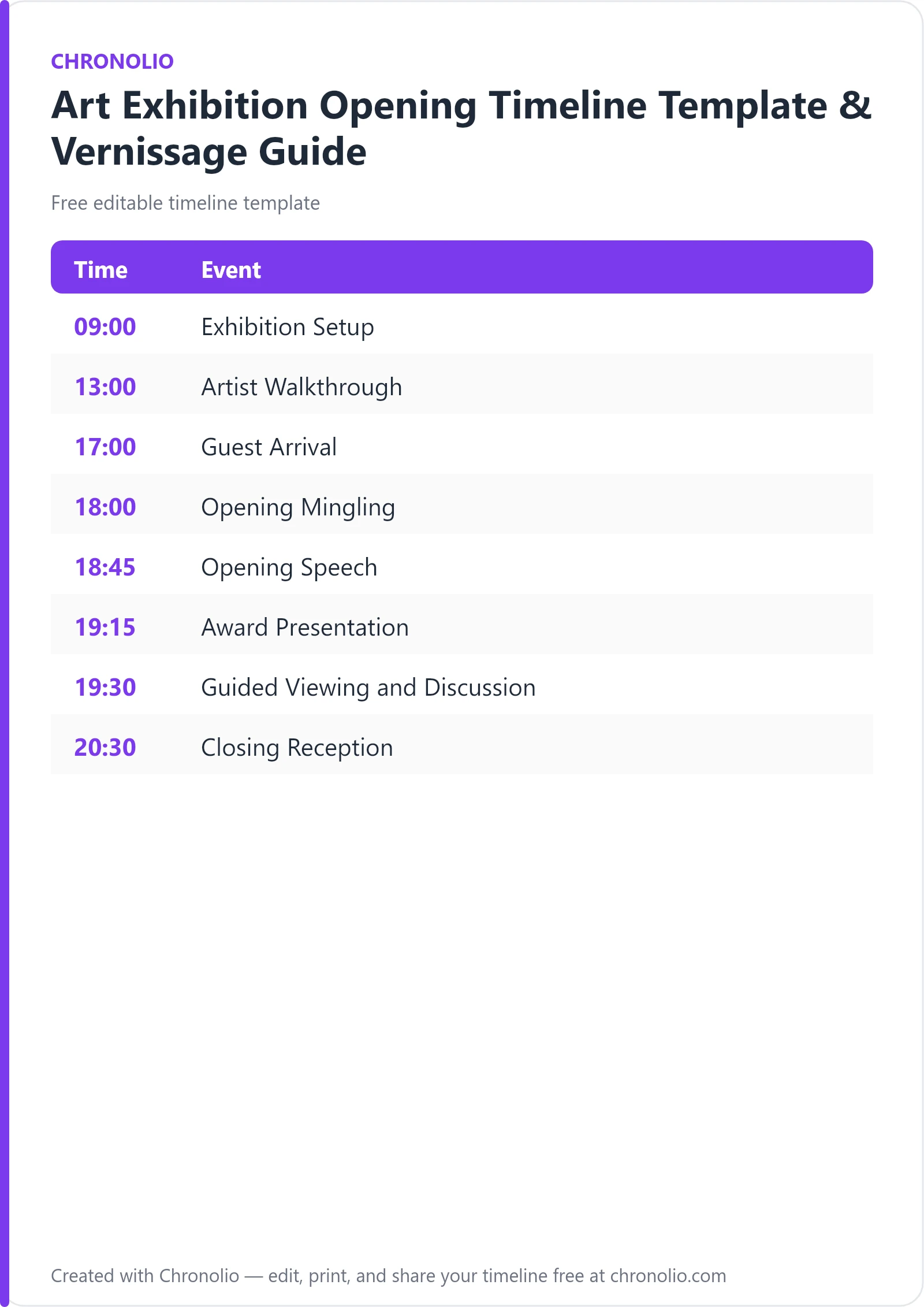
Here is the complete schedule this free template gives you — every time block, ready to edit, download, and share:
| Time | Event |
|---|---|
| 09:00 | Exhibition Setup |
| 13:00 | Artist Walkthrough |
| 17:00 | Guest Arrival |
| 18:00 | Opening Mingling |
| 18:45 | Opening Speech |
| 19:15 | Award Presentation |
| 19:30 | Guided Viewing and Discussion |
| 20:30 | Closing Reception |
Make this schedule yours
Change any time or name below, or move the whole day with the start time. Editing here is free and needs no account. Open it in Chronolio when it looks right to share and export it.
What Is an Art Exhibition Opening Timeline?
An art exhibition opening timeline is the operational master plan that governs a gallery opening night, or vernissage, from morning prep to final sign-off. It orchestrates the complex web of activities behind an art show—coordinating gallery staff, curators, featured artists, press contacts, caterers, and art patrons across key phases of the day.
Having run dozens of gallery openings in contemporary spaces, I can attest that flawless gallery events rely entirely on invisible structure. A well-structured timeline prevents common art show pitfalls: art collectors trapped in registration bottlenecks, speeches drowning out networking, or track lighting needing urgent adjustment while guests are walking through the door. This template reflects real-world exhibition workflows honed by commercial galleries and non-profit visual art institutions. If you are coordinating related cultural activations, you can pair this guide with our museum launch day schedule template or explore a specialized photography exhibition timeline for camera-focused galas. You can also download this template directly as an art exhibition opening timeline DOCX file or an art exhibition opening timeline PDF document for printed floor binder distribution.
Use This Art Exhibition Opening Timeline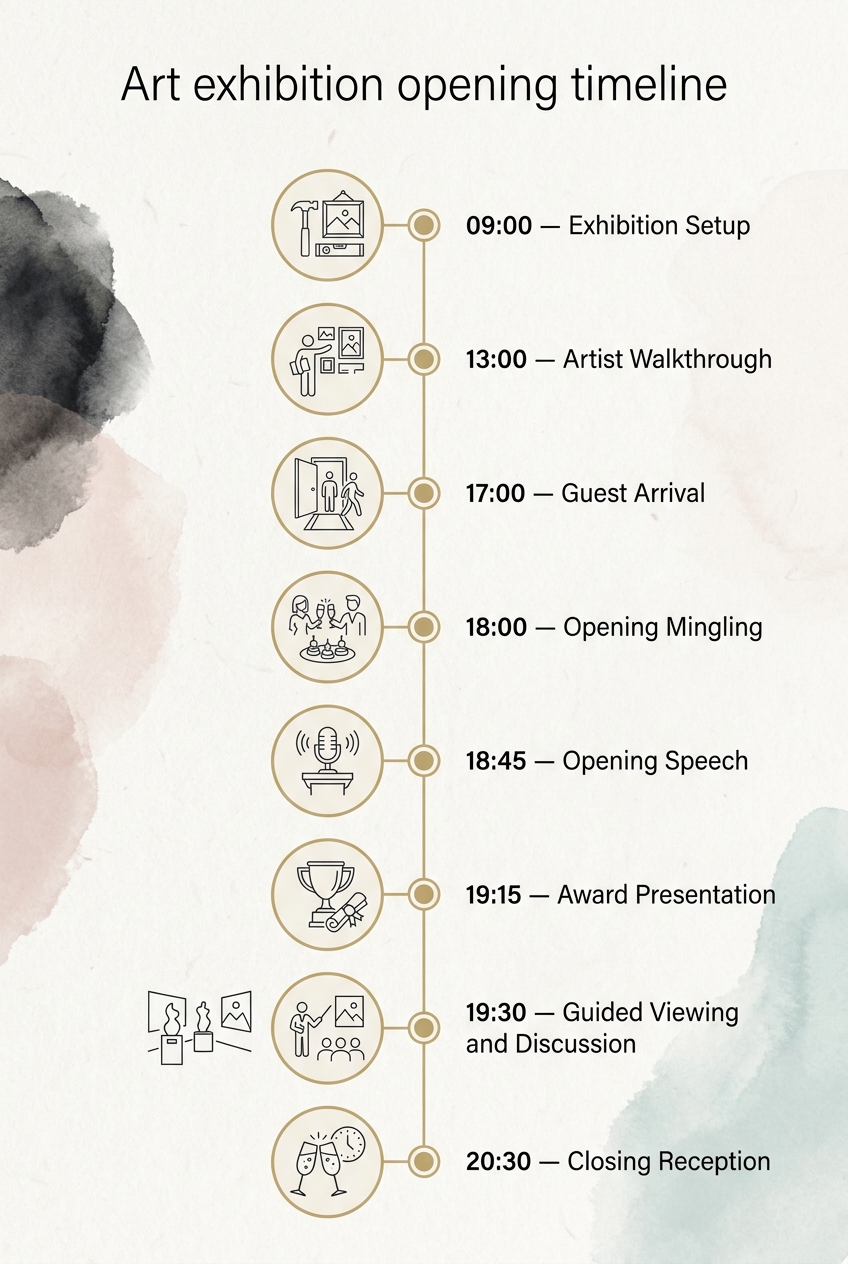
Why Art Exhibition Openings Need a Timeline
A gallery opening night is equal parts cultural debut, public relations launch, and commercial sales event. Without a strict run-of-show, the delicate balance between artistic engagement and social hospitality easily breaks down.
First, a structured schedule ensures gallery staff complete crucial physical preparations long before the first patron steps through the doors. Adjusting spotlight angles, inspecting hanging wires, printing catalog supplement sheets, and testing PA systems must happen isolated from public sight lines. Second, early planning creates dedicated, distraction-free space for media contacts and prominent collectors during afternoon preview slots.
Finally, an operational timeline establishes predictable pacing for your guests. Visitors want to know when formal addresses occur so they can gather near the primary gallery wall, and when they can comfortably speak with the artist or queue for signature cocktails. A clear schedule gives gallery directors total authority over the room's energy throughout the evening.
What to Include in an Art Exhibition Opening Timeline
A complete art exhibition opening schedule must account for technical readiness, public relations, formal ceremony, and guest management:
- Final curation and lighting tweaks: Morning adjustments to artwork placement, gallery wall text, and spot illumination.
- Artist and media walkthrough: A quiet preview session for journalists, art critics, and internal staff.
- Foyer registration and welcome: VIP guest check-in, distribution of exhibition pamphlets, and coat check handling.
- Cocktail and mingling hour: Initial viewing time paired with ambient music and tray-passed refreshments.
- Formal remarks and keynotes: Brief welcome speeches by the gallery owner, curator, and featured artist.
- Community awards or acknowledgments: Recognition of exhibition sponsors, partners, or featured student contributors.
- Interactive floor discussion: Artist-led floor conversations with art buyers and gallery patrons.
- Closing reception and wrap-up: Final beverage service, commemorative photography, and guest departures.
Phase 1: Morning Curation and Media Walkthrough
| Time | Event |
|---|---|
| 09:00 | Exhibition Setup |
| 13:00 | Artist Walkthrough |
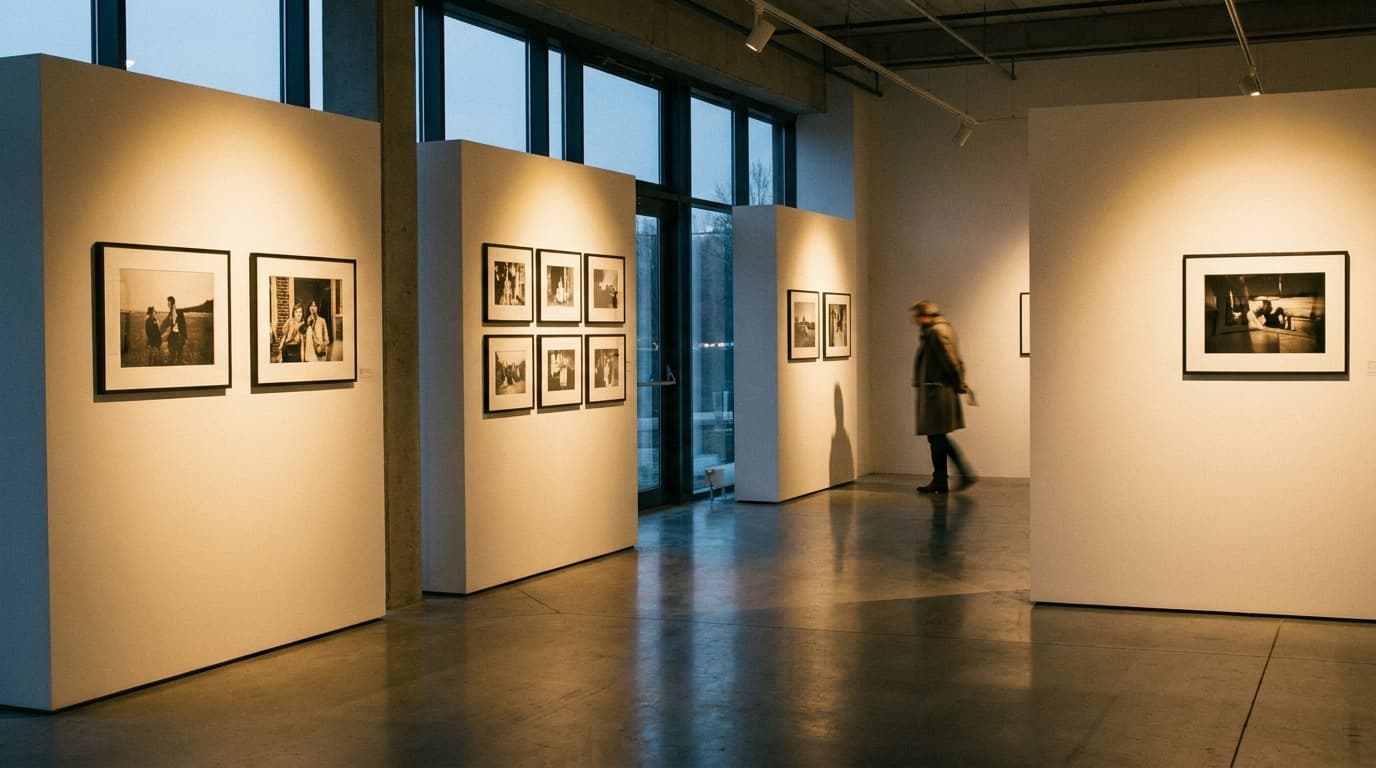
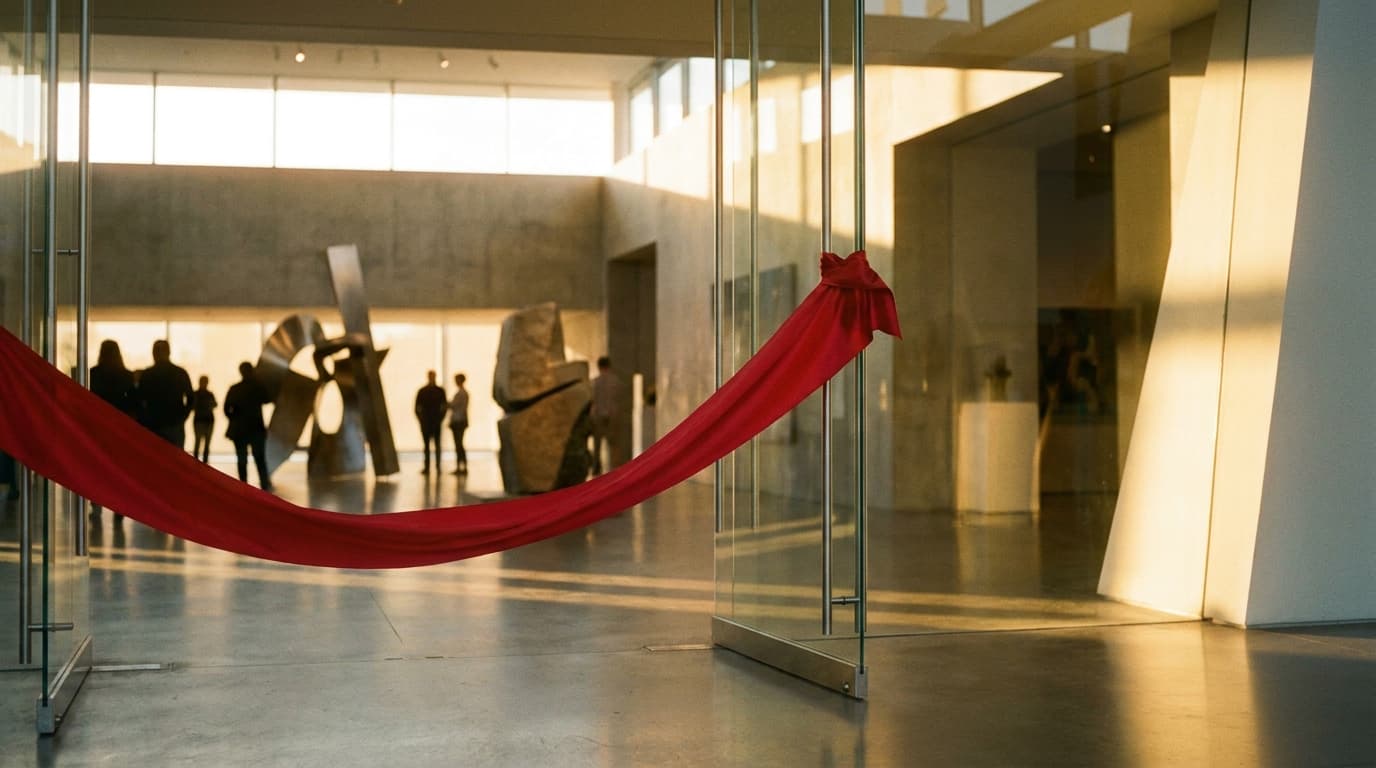
The success of any vernissage is determined hours before the red carpet is rolled out in the foyer. Starting at 09:00, gallery staff and lead curators conduct final visual checks throughout the Main Gallery Hall during the Exhibition Setup window. This early block gives art handlers room to adjust track lighting angles, clean glass display cases, double-check label heights, and confirm security barriers without crowding the floor.
At 13:00, the pace transitions from physical staging to storytelling during the Artist Walkthrough. Hosting this private walkthrough in the early afternoon allows the featured artist to walk journalists, curators, and gallery assistants through the work without public noise. The artist explains underlying themes, answers technical queries regarding mediums and framing, and provides media reps with exact quotes for morning publication, following standards advocated by organizations like the International Council of Museums.
Phase 2: Patron Arrival and Initial Viewing
| Time | Event |
|---|---|
| 17:00 | Guest Arrival |
| 18:00 | Opening Mingling |
Doors officially open at 17:00 as invited art patrons, sponsors, and local press arrive at the Gallery Foyer for Guest Arrival. Establishing a distinct check-in desk in the foyer prevents floor bottlenecks. Reception staff greet attendees, verify RSVPs, hand out printed exhibition pamphlets, and direct visitors toward the coat check and main gallery entrance.
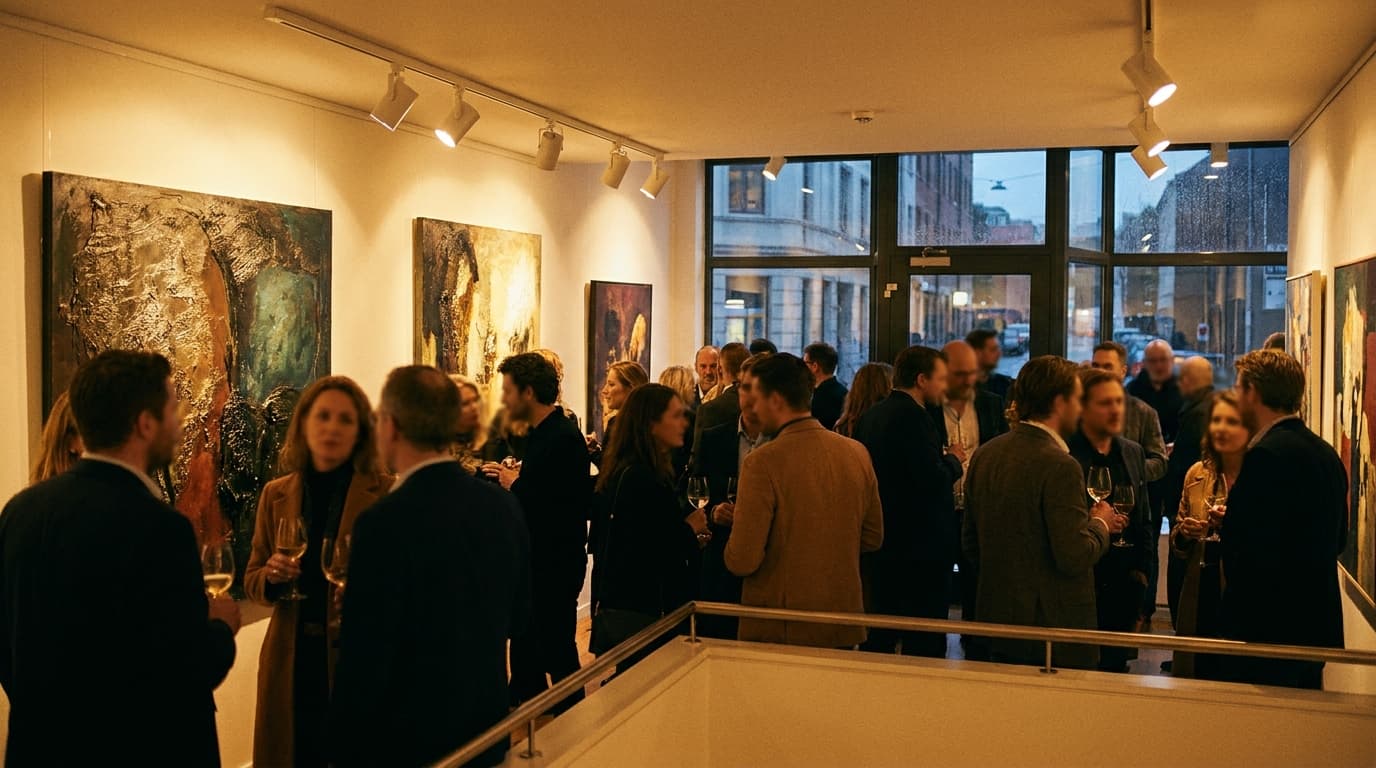
By 18:00, the crowd transitions into the Main Gallery Hall for Opening Mingling. This 45-minute window gives guests their first opportunity to walk the floor, observe the art pieces up close, and enjoy light refreshments served by catering staff. Background music should remain soft so conversation flows effortlessly between patrons and gallery associates.
Phase 3: Formal Program and Community Recognition
| Time | Event |
|---|---|
| 18:45 | Opening Speech |
| 19:15 | Award Presentation |
Promptly at 18:45, gallery staff gently gather guests around the main focal point or Center Stage for the Opening Speech. The gallery director opens with a short introduction, thanking sponsors and art advisory boards, before turning the microphone over to the featured artist. Concise speeches—lasting around 30 minutes total—keep the atmosphere lively while delivering essential context on the creative process.
Following the speeches, the program moves seamlessly into the Award Presentation at 19:15. Recognizing a local art student, grant winner, or community partner reinforces the gallery’s public mission and builds goodwill with local cultural institutions. If your venue hosts broader public outreach events, you may also draw inspiration from our cultural heritage day schedule guide or language celebration event timeline.
Phase 4: Guided Discussion and Closing Reception
| Time | Event |
|---|---|
| 19:30 | Guided Viewing and Discussion |
| 20:30 | Closing Reception |
At 19:30, formal presentations give way to intimate engagement during the Guided Viewing and Discussion. The artist moves organically across the Main Gallery Hall, pausing near key paintings or sculptures to answer direct questions from prospective buyers and art enthusiasts. Gallery sales advisors stay close by to discuss pricing, reserve tags, and provenance with interested collectors.
As the evening winds down at 20:30, guests transition back into the Gallery Foyer for the Closing Reception. Last call for beverages is served while attendees say their goodbyes. Simultaneously, an event photographer captures final casual group portraits of the artist, gallery directors, and key sponsors against the step-and-repeat banner.
Art Exhibition Opening Timeline vs Exhibition Running Order
It is common for visual arts managers to confuse an exhibition opening timeline with a daily exhibition running order. While both keep gallery operations smooth, they serve distinctly different functions throughout the lifecycle of an art show:
| Feature | Opening Timeline (Vernissage) | Daily Exhibition Running Order |
|---|---|---|
| Primary Purpose | Coordinates a high-profile, one-time debut event with press and patrons | Manages daily public gallery hours, docent tours, and routine maintenance |
| Target Audience | Invited VIPs, art buyers, press critics, and featured artists | General public, school tours, and walk-in gallery visitors |
| Key Schedule Focus | Speeches, catering, VIP check-in, media interviews, and awards | Staff shifts, audio guide rentals, security checks, and floor cleaning |
| Duration | Single evening (4 to 6 hours) | Multi-week or multi-month gallery run |
Who Should Use This Template?
This timeline template is designed for visual arts professionals and event organizers who need a precise, adaptable framework for art launches:
- Commercial Gallery Owners & Directors: Manage formal vernissages, track collector engagement, and drive artwork sales.
- Independent Exhibition Curators: Coordinate multi-artist group shows, catalog launches, and press walkthroughs seamlessly.
- Museum Event Officers: Execute high-capacity exhibition premieres, donor galas, and board receptions.
- Fine Art Photographers & Sculptors: Plan self-produced solo exhibitions and pop-up gallery showcases. (Pair this with our film screening event timeline if your visual display incorporates video installations).
- University Art Department Chairs: Organize annual MFA thesis exhibitions, student showcases, and faculty retrospectives.
Chronolio offers dedicated planning tools tailored to the distinct roles involved in orchestrating complex cultural gatherings.
How to Use This Template
- Duplicate or Download: Import this schedule directly into Chronolio or download the pre-formatted files in DOCX format or PDF format.
- Adjust Event Timestamps: Shift your guest arrival times based on local night life norms—for instance, changing an 17:00 start to 18:00 for downtown art districts.
- Assign Key Staff Roles: Attach specific gallery assistants, art handlers, and floor managers to each timeline block so everyone knows their exact position.
- Distribute Run-of-Show Docs: Print physical copies for catering captains, AV technicians, and speech presenters prior to morning setup.
Tips for a Successful Art Exhibition Opening
- Lock lighting angles early: Complete all spotlight adjustments during morning setup. Moving ladders across a floor filled with champagne-holding guests is a major safety hazard.
- Buffer your press hour: Schedule the artist walkthrough at least three hours before public doors open so the artist has time to rest and refresh before guest arrival.
- Position speeches strategically: Set up your speech area far enough from the front entrance so late-arriving guests don't disrupt the microphone audio.
- Streamline guest check-in: Use two separate check-in lines at the foyer entrance—one for pre-registered VIPs/press and one for general RSVPs—to eliminate foyer crowding.
- Brief sales staff on red dots: Ensure gallery associates carry red dot sticker sheets and digital sales tablets so they can mark sold artworks immediately during the guided viewing block.
- Keep background music low: Curate an ambient playlist without jarring vocals so patrons can discuss art without straining their voices.
Common Mistakes to Avoid
- Overrunning formal speeches: Allowing speeches to drag past 30 minutes drains guest energy and cuts into valuable artwork viewing time.
- Neglecting sound checks: Skipping an audio test in an acoustically resonant gallery hall often leads to harsh feedback during the director’s welcome address.
- Unclear artwork pricing: Forgetting to print or distribute price lists leaves prospective buyers confused and leads to lost sales opportunities.
- Inadequate trash collection: Failing to assign catering staff to clear empty wine glasses and napkins leaves gallery plinths clutter-strewn in event photos.
- Forgetting non-alcoholic options: Serving only wine or champagne alienated non-drinking art patrons; always stock premium zero-proof options.
- Lack of directional signage: Leaving coat checks, restrooms, and secondary gallery rooms unmapped causes unnecessary foyer bottlenecks.
In Summary
- Comprehensive Staging: Integrates morning prep, private afternoon press previews, and evening social hours into one master schedule.
- Targeted Audience Focus: Designed specifically for commercial galleries, museum curators, independent artists, and university visual art departments.
- Seamless Guest Flow: Separates arrival registration in the foyer from artwork viewing and speeches in the main hall.
- Structured Sales Time: Allocates dedicated, uninterrupted time for artists and gallery sales leads to connect directly with art collectors.
- Multi-Format Access: Available as a customizable digital template or downloadable print-ready DOCX and PDF binders.
Executing a flawless vernissage requires balancing artistic presentation, public relations, and guest hospitality. Whether you are running a boutique fine art launch or a major museum retrospective, this art exhibition opening timeline gives gallery directors, curators, and independent artists the exact operational roadmap needed for an unforgettable opening night.
Use This Art Exhibition Opening Timeline