





This Template at a Glance
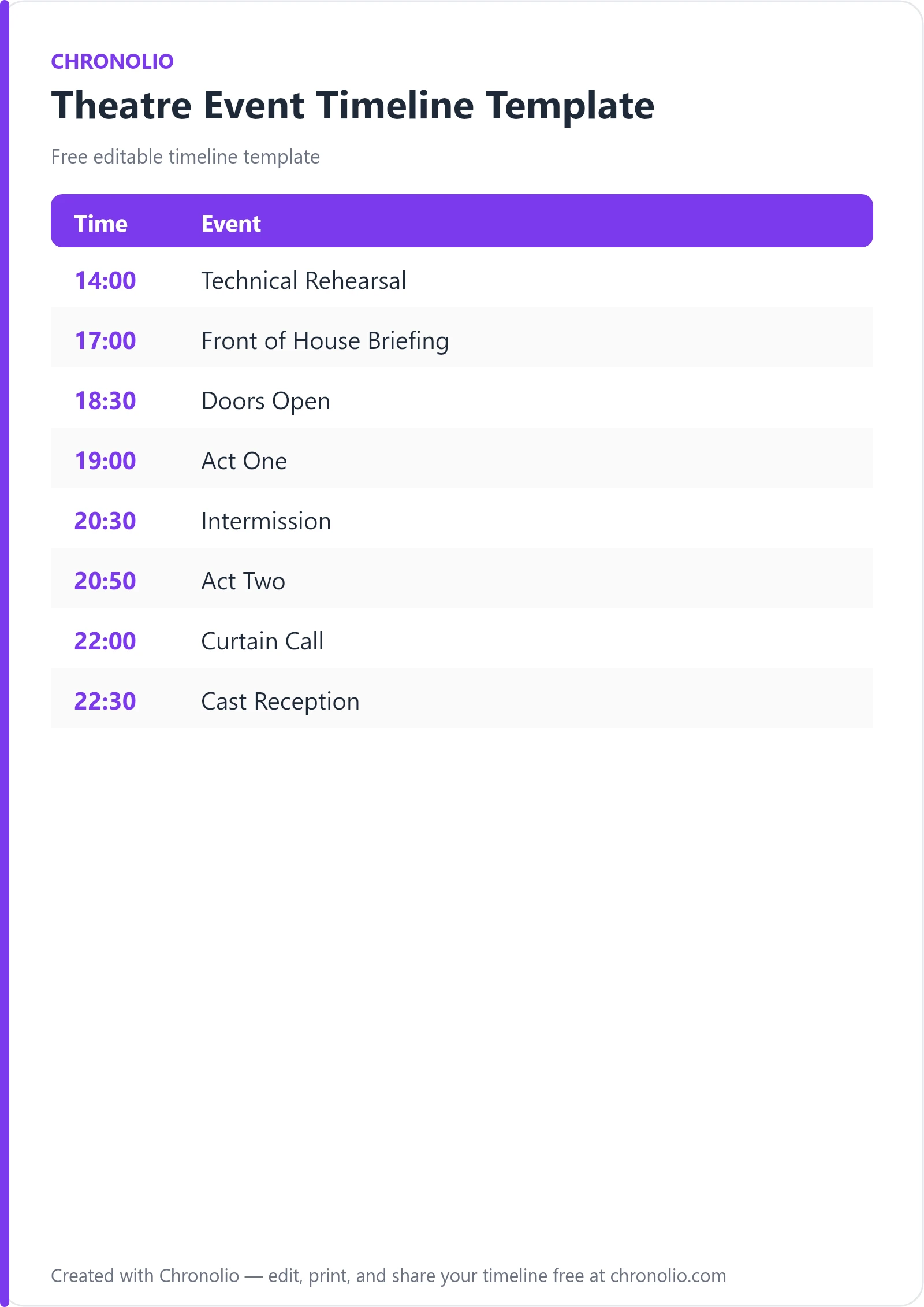
Here is the complete schedule this free template gives you — every time block, ready to edit, download, and share:
| Time | Event |
|---|---|
| 14:00 | Technical Rehearsal |
| 17:00 | Front of House Briefing |
| 18:30 | Doors Open |
| 19:00 | Act One |
| 20:30 | Intermission |
| 20:50 | Act Two |
| 22:00 | Curtain Call |
| 22:30 | Cast Reception |
What Is a Theatre Event Timeline?
A theatre event timeline is an operational master document that synchronizes every operational movement of a live theatrical production across backstage technical crews, front-of-house staff, performers, and venue management. Unlike an individual call sheet that details actor arrival times, this comprehensive run sheet establishes macro-level timing across the entire venue. It bridges the critical gap between technical execution on the main stage and front-of-house hospitality in the lobby.
In live performance management, time is your most rigid constraint. From setting lighting boards during afternoon tech checks to managing patron flow during intermission, every single phase requires precise pacing. This template reflects real-world theatre industry standards and venue operational practices honed across hundreds of opening nights. Whether you are staging a commercial musical or coordinating a community playhouse opening, maintaining an accurate theatre production timeline prevents backstage panic and guarantees a polished patron experience from first call to final curtain.
Customize Your Theatre Event Timeline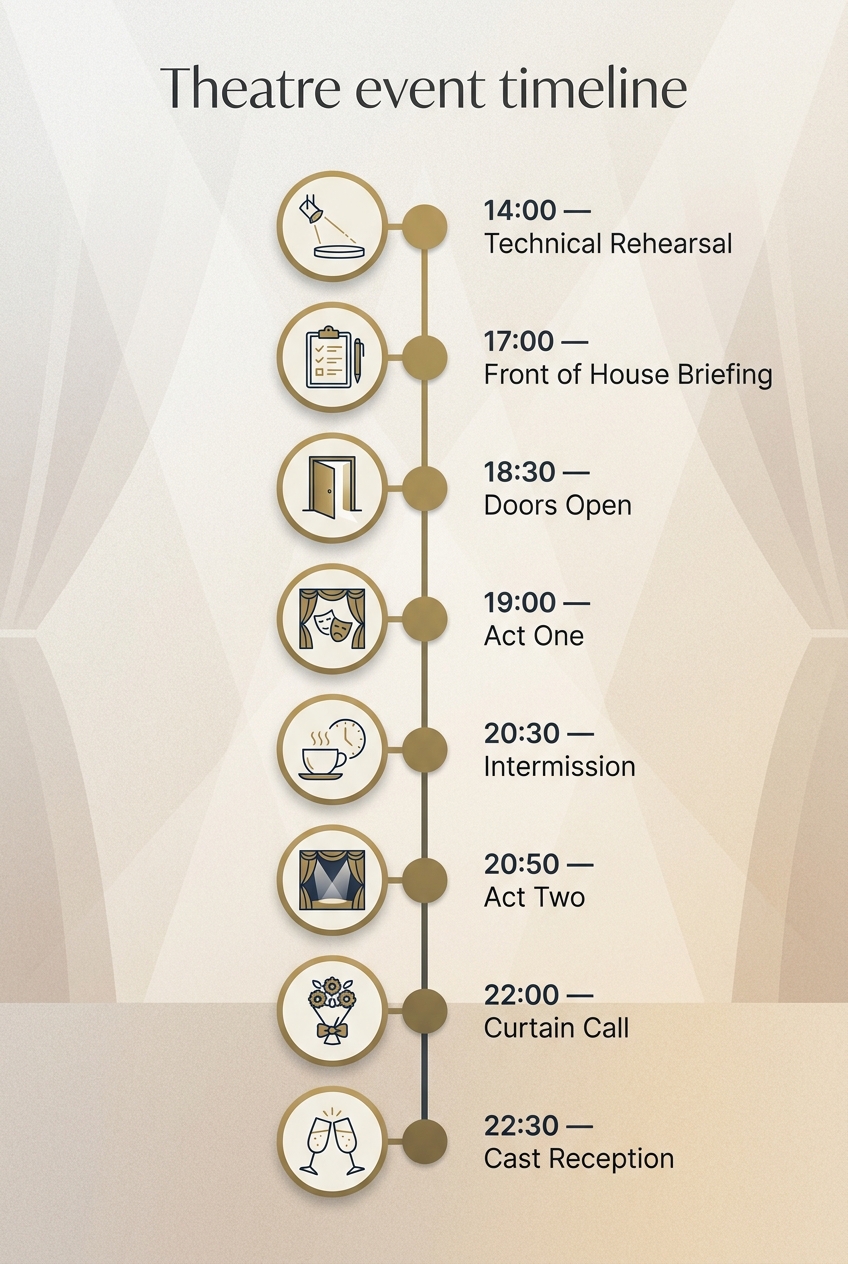
Why Theatres Need a Production Timeline
Live theatre is an intricate dance of moving parts where a single delay backstage can trigger massive lobby congestion or force a late curtain call. Maintaining strict operational timeline control protects your performance from technical misfires and administrative friction. When technical directors, house managers, and stage crew work from the same timing blueprint, house clearance happens smoothly and cues run seamlessly.
A clear timeline also safeguards the patron experience. Audiences expect precise start times, well-managed intermission lengths, and seamless ticket processing at the doors. If your lobby doors open late due to an extended sound check, long queues form outside, frustrating patrons and creating safety bottlenecks in the entrance hall. Aligning front-of-house briefings with stage readiness ensures your audience enters an organized, professional environment.
Finally, detailed time tracking establishes essential accountability across all departments. Production managers can monitor whether the cast remains on schedule during warm-ups, ensure union break regulations are met, and keep post-show events contained within staff contract hours. If you are balancing multi-disciplinary performing arts programs, combining this guide with a dance recital schedule or a film screening event timeline keeps multi-use venue spaces organized year-round.
What to Include in a Theatre Event Timeline
To build an effective theatrical run sheet, your master schedule should encompass four key functional areas:
- Technical Rehearsals & Cue Lock: Dedicated stage time for lighting, audio adjustments, scenic shifts, and safety checks before front-of-house staff arrive.
- Front of House & Usher Operations: Briefings on seating protocols, accessible seating requests, scanner testing, and foyer door schedules.
- Performance Acts & Intermission Blocks: Precise curtain times, estimated act durations, intermission timings, and chime sequences for house clearance.
- Post-Show Protocol & Green Room Events: Cast bows, curtain call logistics, house egress, and post-performance receptions or press meets.
Stage Preparation and Front of House Setup
| Time | Event |
|---|---|
| 14:00 | Technical Rehearsal |
| 17:00 | Front of House Briefing |
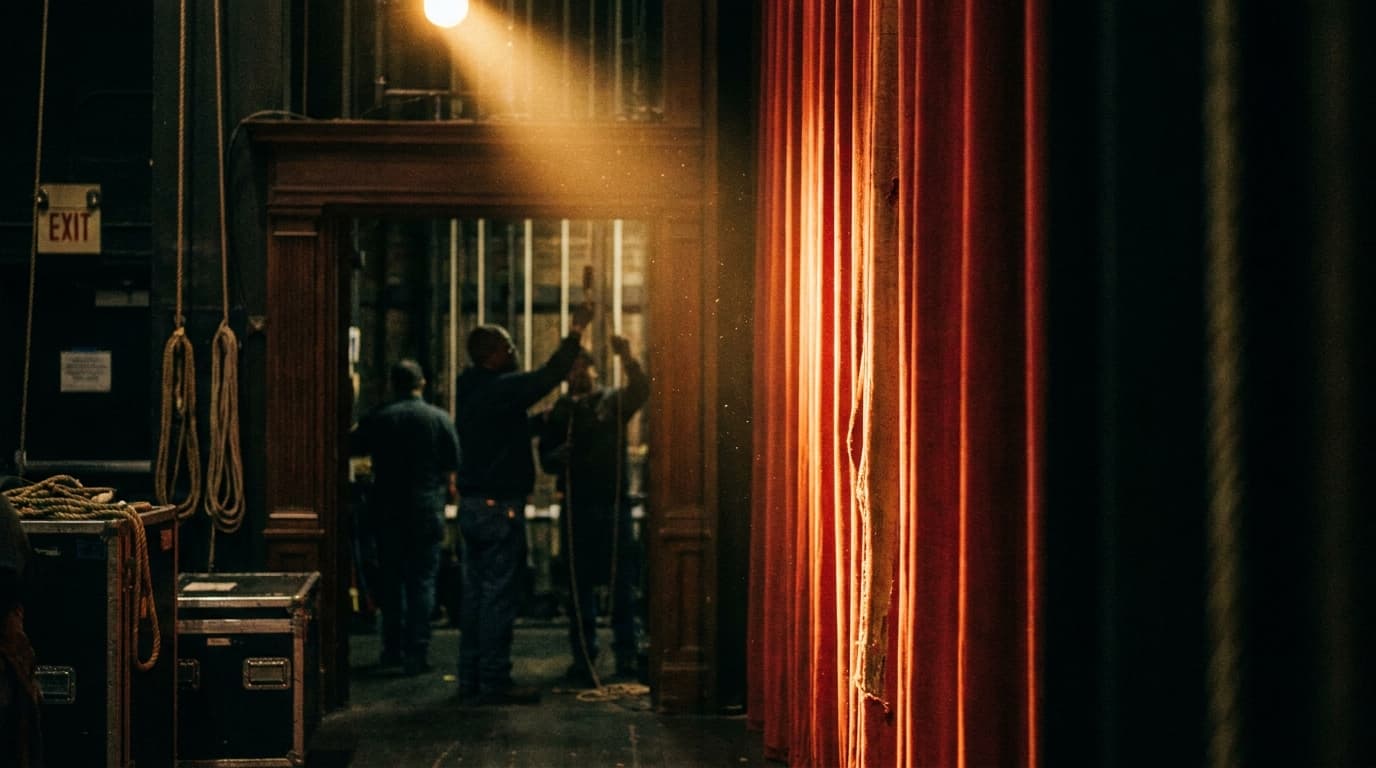
The afternoon hours lay the foundation for a seamless evening performance. At 14:00, the main stage belongs entirely to the technical crew and stage management team during the Technical Rehearsal. This dedicated block focuses on locking in complex lighting states, fine-tuning sound levels, and practicing high-risk scenic transitions, particularly for the second act's dramatic sequence. Running these checks hours before doors open gives sound and lighting technicians the breathing room needed to fix equipment glitches without stressing the cast.
At 17:00, operational focus expands beyond the proscenium arch to the lobby for the Front of House Briefing. The house manager gathers ushers, box office staff, and venue security to review the evening's ticketing numbers, VIP arrivals, and emergency evacuation protocols. Staff members receive aisle assignments and confirm ticket scanner connectivity, ensuring the front-of-house machinery is fully primed long before the first audience member steps into the foyer.
Doors Open and Act One Performance
| Time | Event |
|---|---|
| 18:30 | Doors Open |
| 19:00 | Act One |
At 18:30, the entrance hall doors open, initiating patron ingress into the theatre building. Opening house doors thirty minutes prior to curtain gives patrons ample time to scan tickets, purchase printed programs, visit concessions, and find their assigned auditorium seats without creating stressful lobby bottlenecks. During this window, ushers assist guests in locating their seats while stage management enforces a strict "stage clear" backstage as actors complete final vocal warm-ups and wardrobe adjustments in their dressing rooms.
Precisely at 19:00, the house lights dim, and the curtain rises for Act One on the main stage. The stage manager calls audio, visual, and lighting cues from the prompt corner, guiding the cast through opening scenes and dramatic plot developments. Managing this ninety-minute block with total focus ensures the performance builds dynamic tension while staying on track for a timely intermission call.
Intermission and Act Two Resolution
| Time | Event |
|---|---|
| 20:30 | Intermission |
| 20:50 | Act Two |
At 20:30, the stage lights fade on the Act One cliffhanger, initiating the 20-minute Intermission in the main lobby. Intermissions require crisp, military-precision operations; patrons flood the lobby seeking refreshments and restrooms simultaneously. Front-of-house staff manage line flow at concession bars, while stage crew complete necessary set resets and prop repositioning behind the main curtain. According to guidelines from the Stage Directors and Choreographers Society, maintaining predictable intermission breaks is essential for both performer fatigue management and audience comfort.
At 20:48, ushers flicker the lobby lights and sound warning chimes, prompting patrons to return to their seats before the 20:50 start of Act Two. This seventy-minute act carries the narrative through its emotional climax to the final resolution. Stage managers monitor pacing closely during Act Two, as actor energy and scene transitions must remain tight to ensure the show reaches its planned emotional peak right on schedule.
Curtain Call and Post-Show Celebration
| Time | Event |
|---|---|
| 22:00 | Curtain Call |
| 22:30 | Cast Reception |
The energy reaches its zenith at 22:00 during the Curtain Call on the main stage. The cast returns to take organized bows, acknowledge stage crew contributions, and receive audience applause, followed by the director joining them for final recognition. Stage management coordinates lighting specials and house light bring-ups to mark the official conclusion of the performance while ushers open main exit doors to facilitate audience egress.
Once the auditorium clears, operations shift to the green room at 22:30 for the private Cast Reception. This post-show gathering gives actors, creative directors, producers, and invited sponsors an opportunity to toast a successful opening night over light refreshments. Meanwhile, technical crews perform initial stage sweep procedures, powering down lighting grids and securing wardrobe elements for the next show day. If your venue hosts broad community programs, structuring these post-event gatherings aligns closely with protocols used in a cultural heritage day schedule or a museum launch day schedule.
Theatre Event Timeline vs Stage Call Sheet
It is common to confuse a production master timeline with a theatrical call sheet, but they serve distinct operational functions during a show's run:
| Feature | Theatre Event Timeline | Stage Call Sheet |
|---|---|---|
| Primary Scope | Macro venue operations (Stage, Lobby, FOH) | Micro individual schedules (Cast & Crew) |
| Target Audience | Venue Managers, FOH, Stage Managers, Technicians | Individual Actors, Dressers, Tech Crew |
| Key Focus | Doors open, curtain times, intermissions, clear out | Hair/makeup calls, stage entrance times, mic fitting |
| Updates | Fixed schedule set before opening night | Daily dynamic sheet subject to scene changes |
While a call sheet tells an individual actor when to arrive for wig fittings, the theatre master timeline governs space access across the entire building, ensuring technical staff, box office operators, and front-of-house teams never cross wires.
Who Should Use This Template?
This comprehensive production timeline is tailored specifically for live performance management across diverse arts organizations:
- Stage Managers & Deputy Stage Managers (DSMs): To keep main stage calls, cueing, and house clearing synchronized.
- Theatre Venue Operations Managers: To coordinate foyer staffing, security post assignments, and lobby concessions.
- Production Managers & Technical Directors: To allocate sufficient stage access for lighting calls, sound checks, and scenic maintenance.
- Community Theatre Companies & School Drama Departments: To instill professional, venue-grade operational standards into non-professional shows.
- Festival Coordinators & Performing Arts Centers: To manage tight turnarounds between multi-act lineups or touring roadshows.
Chronolio actively supports the distinct operational roles required to execute complex live performances without logistical hitches.
How to Use This Template
- Download or Duplicate: Access this timeline directly within Chronolio, or download offline versions via our Word document template or PDF document template.
- Set Your Curtain Time: Lock in your show's published start time (e.g., 19:00) and adjust pre-show tech calls accordingly.
- Adjust Act and Intermission Lengths: Input your show's exact act running times and adjust intermission duration based on your venue's restroom and concession capacity.
- Distribute to Key Lead Staff: Share the finalized master timeline with your technical director, house manager, box office head, and hospitality coordinator at least 48 hours prior to call time.
Tips for Running a Flawless Production
- Establish Clear Communication Links: Equip the stage manager and house manager with dedicated radios or headsets to coordinate door openings and house holds seamlessly.
- Enforce Intermission Warning Chimes: Sound warning chimes at 5 minutes, 3 minutes, and 2 minutes prior to Act Two curtain call to prevent late seating disruptions.
- Build in Pre-Show Technical Buffers: Leave a minimum 30-minute buffer between the end of technical rehearsal and the FOH briefing to accommodate run-over issues.
- Train Ushers on Late-Seating Protocols: Ensure usher teams know exact scene breaks where late arriving patrons can be seated discreetly without disrupting actors.
- Review Emergency Protocols at FOH Call: Use the 17:00 briefing to double-check fire exit clearances and verify first-aid responder assignments.
- Coordinate Concession Quantities with Intermission Length: Pre-pour popular drinks 5 minutes before Act One ends to eliminate lobby queues during short intermissions.
- Document Timeline Variances Daily: Note exact curtain-up and curtain-down times on your stage manager's report to spot pacing trends across a multi-week run.
Common Mistakes to Avoid
- Skipping the FOH Briefing: Assuming ushers know seating changes or VIP arrangements without a dedicated huddle leads to seating chaos at doors open.
- Underestimating Intermission Restroom Traffic: Scheduling a 15-minute intermission for a sold-out 1,000-seat house guarantees late starts for Act Two.
- Overrunning Afternoon Tech Rehearsals: Allowing tech rehearsals to bleed into front-of-house arrival times creates stress for actors needing dressing room preparation.
- Failing to Call "House Holds": Holding the curtain without informing backstage teams causes cast confusion and ruins performer focus.
- Ignoring Local Noise and Crew Curfews: Running post-show receptions past contract hours can incur costly union overtime rates or venue penalty fees.
- Not Testing Ticket Scanners in Advance: Waiting until doors open to discover Wi-Fi dead spots in the entrance hall causes massive entry delays.
In Summary
- A theatre event timeline standardizes operational timing across backstage crews, front-of-house teams, performers, and patrons.
- Main stage technical rehearsals require at least three hours of uninterrupted access prior to front-of-house briefings.
- Opening doors 30 minutes before curtain balances foyer clearance with backstage readiness.
- Standard intermissions require 20 minutes to process lobby concessions and restroom traffic effectively.
- Curtain calls and cast receptions mark the transition from public performance to private celebration.
- Distributing unified timelines prevents venue miscommunication and protects the overall patron experience.
Mastering live theatrical logistics demands absolute alignment between backstage artistry and front-of-house execution. By adopting a structured theatre event timeline, stage managers, producers, and venue operators eliminate operational guesswork, safeguard performance pacing, and deliver an unforgettable opening night for cast and audience alike. To tailor this schedule for your next show or cross-discipline arts festival—such as a multi-venue language celebration event or photography show—start editing your master plan today.
Customize Your Theatre Event Timeline