





This Template at a Glance
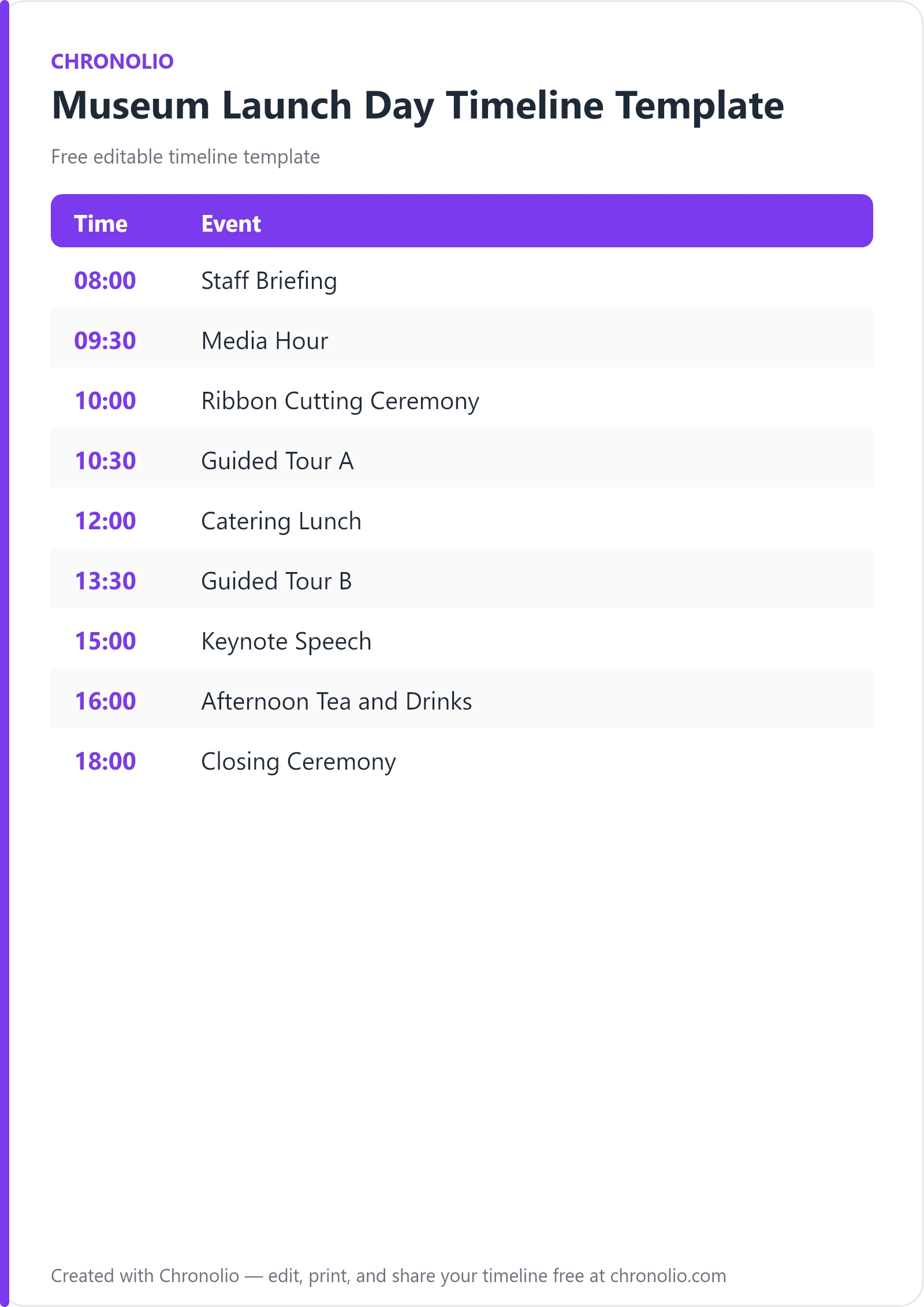
Here is the complete schedule this free template gives you — every time block, ready to edit, download, and share:
| Time | Event |
|---|---|
| 08:00 | Staff Briefing |
| 09:30 | Media Hour |
| 10:00 | Ribbon Cutting Ceremony |
| 10:30 | Guided Tour A |
| 12:00 | Catering Lunch |
| 13:30 | Guided Tour B |
| 15:00 | Keynote Speech |
| 16:00 | Afternoon Tea and Drinks |
| 18:00 | Closing Ceremony |
What Is a Museum Launch Day Timeline?
A museum launch day timeline is an all-inclusive operational master plan that aligns gallery staff, security personnel, curatorial teams, media outlets, and distinguished guests during an institution's public inauguration. Executing a successful grand opening requires balancing high-stakes press coverage with strict security measures, climate-controlled exhibit preservation, and smooth crowd circulation across permanent collections and temporary galleries.
Having managed dozens of grand openings and major exhibition unveils, I designed this guide to reflect real-world museum operations and industry best practices. It establishes clear timing windows for morning press previews, ceremonial ribbon-cuttings, docent-led gallery tours, board member lunches, and evening donor receptions. Whether you are opening a multi-story art institution or a regional heritage center, this run-of-show ensures your inaugural day flows seamlessly. To keep your team on the floor perfectly synchronized, download our print-ready Word template or offline PDF schedule for immediate reference.
Use this Museum Launch Day Timeline Template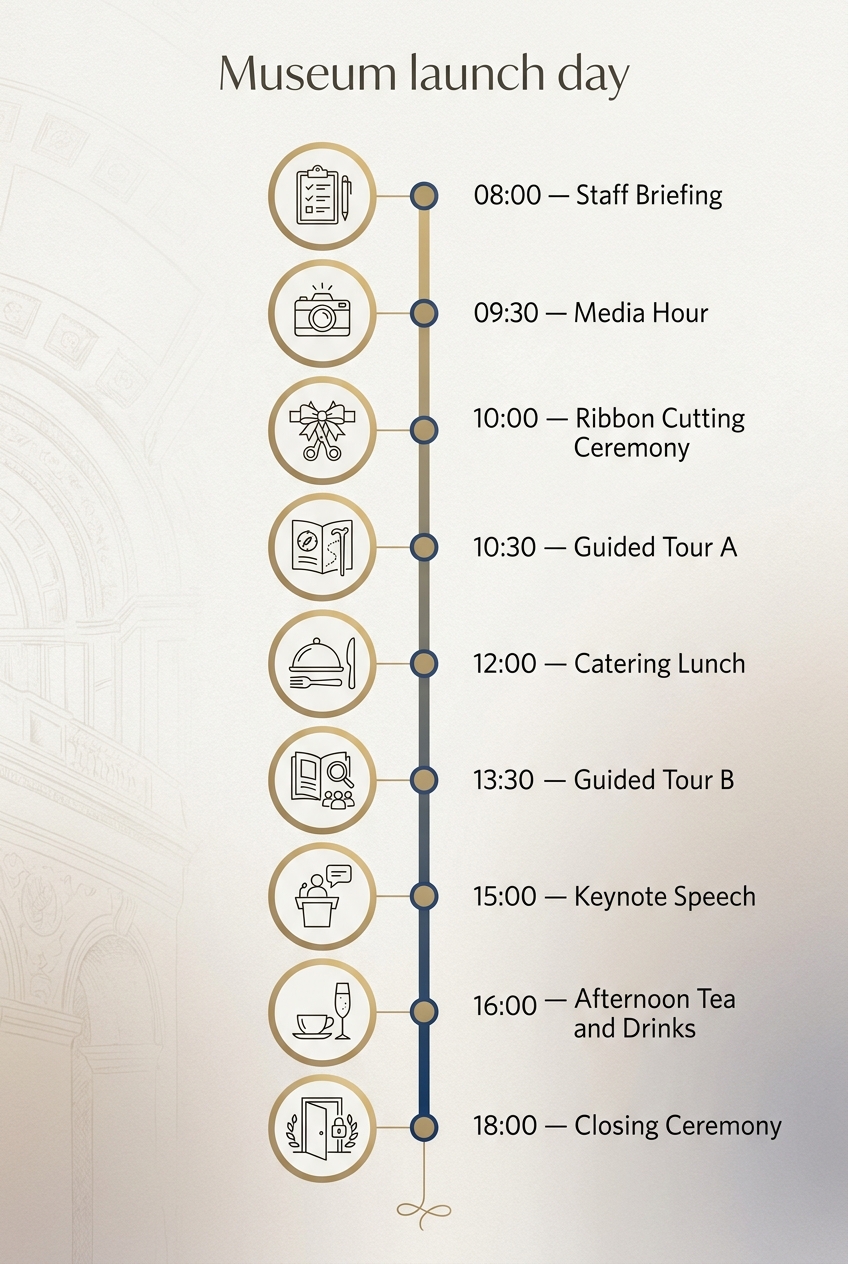
Why Museum Launch Days Need a Timeline
A grand opening is often the most visible day in a cultural institution's history. Without a rigorous schedule, visitor bottlenecks at gallery entrances can quickly overwhelm security personnel, cause delays for media broadcasts, and compromise the safety of valuable artifacts. Coordinating multiple moving parts—such as catering deliveries, VIP arrival protocols, press interviews, and timed-entry public tours—requires every department to operate off a single source of truth.
Furthermore, proper timing ensures that your front-of-house staff and docents remain composed and fully supported throughout an intense opening day. Staggering guided tours between different exhibit wings prevents gallery overcrowding and allows visitors to engage meaningfully with the curatorial narrative. By providing structured transition periods between speeches, lunches, and public access hours, a clear timeline creates a polished, professional environment that impresses major donors, local government officials, and the general public alike.
According to guidelines established by the American Alliance of Museums, well-planned facility operations and controlled visitor circulation directly impact public safety and institutional reputation. Incorporating detailed timing protocols safeguards both your building assets and your guest experience from the moment doors open.
What to Include in a Museum Launch Day Timeline
To ensure your grand opening runs efficiently from dawn until dusk, your operational schedule should incorporate these essential phases:
- Staff and Volunteer Briefings: Pre-opening operational meetings to review duty rosters, emergency exits, communication channels, and floor assignments.
- Exclusive Media Hour: Early access for photojournalists, television crews, and print reporters to capture high-resolution imagery and interview curatorial leadership.
- Ceremonial Ribbon-Cutting: Official opening speeches featuring the museum director, board members, municipal leaders, and major financial patrons.
- Staggered Guided Tours: Scheduled docent-led walkthroughs across specific galleries to balance visitor traffic and highlight key collection items.
- VIP Hospitality and Catering: Private dining and networking opportunities for trustees, foundational donors, and visiting dignitaries.
- Public Educational Programming: Keynote lectures, panel discussions, or living history presentations held in auditorium or lecture hall settings.
- Casual Social Receptions: Afternoon tea or cocktail hours designed to extend visitor engagement and encourage museum store sales.
- Closing Speeches and Appreciation Toasts: An intimate evening wrap-up to thank volunteers, security teams, and foundational staff members.
Morning Preparation, Press Preview, and Official Opening
| Time | Event |
|---|---|
| 08:00 | Staff Briefing |
| 09:30 | Media Hour |
| 10:00 | Ribbon Cutting Ceremony |
| 10:30 | Guided Tour A |
A successful launch day relies on immaculate morning preparation long before the first public visitor arrives at the ticket counter. Gathering all personnel at 08:00 in the Main Lobby for a Staff Briefing gives department heads the opportunity to verify radios, test ticket scanners, review emergency evacuation routes, and confirm gallery post assignments. Conducting this meeting in the primary atrium ensures that floor managers and security wardens are fully aligned on visitor flow limits and access control protocols before opening external gates.
At 09:30, opening the Grand Hall for an exclusive Media Hour gives broadcast crews and culture journalists thirty uninterrupted minutes to photograph pristine exhibit cases and interview the lead museum curator. This dedicated press window prevents media camera gear from blocking public walkways later in the day. Moving directly from press coverage to the Front Entrance at 10:00 for the Ribbon Cutting Ceremony gathers waiting crowds, civic leaders, and board members for official opening addresses.
Immediately following the ribbon drop, ushering visitors inside for Guided Tour A at 10:30 in the History Wing draws early crowds into specific exhibit zones, preventing congestion around the main lobby doors. If your museum features specialized historical displays, consider pairing this sequence with our cultural heritage day schedule guide to coordinate live reenactments or heritage presentations alongside gallery tours.
Midday VIP Hospitality, Modern Art, and Cultural Keynote
| Time | Event |
|---|---|
| 12:00 | Catering Lunch |
| 13:30 | Guided Tour B |
| 15:00 | Keynote Speech |
By midday, primary public spaces experience peak foot traffic, making structured hospitality breaks essential for executive leadership and major patrons. Transitioning board members and founding sponsors to the Museum Terrace at 12:00 for a Catering Lunch offers an elegant, quiet space for light networking away from busy public corridors. Isolating VIP dining on outdoor terraces or private function suites ensures gallery operations continue smoothly without disturbing invited guests.
At 13:30, launching Guided Tour B in the contemporary Art Gallery redirects afternoon foot traffic into modern collection spaces. Staggering docent tours across different physical wings maintains balanced floor distribution and prevents noise overlap between docent microphone headsets. If your venue includes visual art or photography installations, you can complement your floor management using our dedicated photography exhibition timeline template.
At 15:00, inviting attendees into the Auditorium for a Keynote Speech delivers an intellectual focal point for the afternoon. A featured presentation by an eminent historian or visiting scholar reinforces the museum’s educational charter. Scheduling this seated lecture in the mid-afternoon gives visitors a welcome opportunity to rest while listening to curator Q&A sessions, effectively reducing physical fatigue before the final leg of the launch schedule.
Evening Hospitality and Official Museum Closing
| Time | Event |
|---|---|
| 16:00 | Afternoon Tea and Drinks |
| 18:00 | Closing Ceremony |
As general public attendance tapers off in the late afternoon, hospitality programming shifts toward relaxed social engagement and retail promotion. Opening Afternoon Tea and Drinks at 16:00 in the Museum Cafe encourages guests to discuss the day's exhibits over light refreshments. Positioning afternoon receptions near the museum shop increases auxiliary revenue and provides visitors with a comfortable setting to purchase exhibit catalogs, branded apparel, and commemorative prints.
If your institution incorporates special live performances or literary readings during evening hours, seamlessly integrate those elements using our poetry reading night agenda guide or adapt our film screening event timeline for auditorium media presentations.
The launch day concludes at 18:00 in the Grand Hall with a dedicated Closing Ceremony. Gathering staff, docents, volunteers, and remaining donors for a final celebratory toast acknowledges the months of preparation behind the grand opening. Closing doors officially at 19:00 allows facilities and housekeeping teams to clear galleries, conduct security sweeps, and secure high-value exhibits safely overnight.
Museum Launch Day Timeline vs Daily Operating Schedule
While both documents regulate activity within a cultural institution, a museum launch day schedule differs significantly from standard, day-to-day facility management.
| Functional Aspect | Museum Launch Day Timeline | Daily Operating Schedule |
|---|---|---|
| Primary Goal | Maximizing public relations, donor appreciation, and inaugural foot traffic | Maintaining routine gallery visitation, sales, and exhibit conservation |
| Visitor Demographics | High ratio of press, civic leaders, board trustees, and VIP patrons | General public, school field trip groups, local tourists, and members |
| Staffing Requirements | All-hands operational deployment, full volunteer staff, executive management | Standard shift rotations for visitor services, retail, and floor guards |
| Programming Scope | Ceremonial speeches, ribbon-cuttings, catered dining, and keynotes | Self-guided tours, set docent talk times, and routine audio tours |
| Media & Access Control | Dedicated press preview windows, restricted VIP lounges, security escort | Standard ticketing turnstiles, coat check, and open public circulation |
A launch day schedule acts as an extraordinary event running order that prioritizes ceremonial milestones and public relations. In contrast, a daily operating schedule focuses primarily on routine ticket sales, recurring educational workshops, gallery cleaning cycles, and standard staffing shifts.
Who Should Use This Template?
This comprehensive launch template is designed specifically for project leads, operational directors, and creative organizers across the cultural sector. Chronolio directly supports the diverse range of roles involved in running complex events, ensuring clear communication across every department. This template is ideal for:
- Art Museums & Contemporary Galleries: Managing high-profile collection debuts, artist talks, and private donor receptions.
- History Museums & Archives: Coordinating ceremonial ribbon-cuttings, artifact unveilings, and scholarly keynotes.
- Science Centers & Planetariums: Staggering interactive exhibit demonstrations, media previews, and youth workshops.
- University & Academic Galleries: Aligning faculty speakers, student preview hours, and alumni board receptions.
- Municipal Heritage & Cultural Centers: Structuring civic speeches, community performances, and public hospitality.
- Private Collections & Foundation Spaces: Executing exclusive trustee tours and black-tie donor lunches.
How to Use This Template
- Duplicate or Import the Template: Open this schedule in Chronolio to customize every operational phase for your facility.
- Set Your Facility Opening Hours: Adjust the master start time to match your official ribbon-cutting ceremony and public opening hours.
- Assign Gallery Locations and Staff Lead Roles: Specify exact wings, auditoriums, and cafes for each item while assigning lead responsibility to key curators and floor managers.
- Export and Distribute Print Reference Copies: Share digital versions with media contacts and print physical copies for security personnel, docents, and catering managers.
Tips for a Successful Museum Launch Day
- Conduct a Full Dry Run the Day Before: Perform a complete walk-through of speeches, microphone checks, docent tour routes, and ticket scanner hardware 24 hours prior to launch.
- Establish a Dedicated Press Holding Area: Provide media crews with a secure room featuring reliable Wi-Fi, press kits, electrical power strips, and refreshments near the main lobby.
- Implement Clear Timed-Entry Ticketing: Limit crowd density inside high-value exhibition galleries by issuing timed wristbands or digital entry passes at the main entrance.
- Position Floor Wardens at Transition Points: Station visible volunteers or docents near elevators, stairwells, and wing corridors to answer visitor questions and direct foot traffic.
- Maintain Isolated Service Corridors for Catering: Ensure banquet staff and food carts utilize back-of-house service elevators and corridors to avoid cluttering public display halls.
- Prepare Quiet Resting Zones: Provide comfortable seating in secondary lobbies or courtyards so elderly patrons and families can rest without blocking main gallery aisles.
- Set Up Emergency Communication Channels: Ensure security chiefs, floor managers, and front-desk directors communicate via dedicated radio channels using standard protocols.
Common Mistakes to Avoid
- Overcrowding Main Lobby Entrances: Avoid holding long speeches in small foyers. Keep addresses brief and open wide circulation paths into adjacent wings immediately after the ribbon cut.
- Neglecting Climate and Security Constraints: Never bypass exhibit room capacity limits for press or VIP tours. Protecting light-sensitive archives and delicate display cases must remain paramount.
- Forgetting Staff Shift Rotations: Security guards, ticket agents, and docents standing for eight hours straight get fatigued quickly. Build explicit 20-minute rest rotations into every shift.
- Lacking Clear Directional Signage: Failing to install clear temporary floor banners or digital screens pointing toward restrooms, cafes, and keynotes creates confusion and delays.
- Over-scheduling Curatorial Staff: Avoid booking your head curator for back-to-back media interviews and continuous docent tours without built-in break windows.
- Underestimating Retail Shop Foot Traffic: Opening souvenir shops without extra register staff leads to massive check-out lines that block museum exits during peak hours.
In Summary
- A museum launch day timeline coordinates staff, media, VIPs, and public visitors during an inaugural grand opening.
- Morning schedules prioritize early staff safety briefings and quiet media preview hours prior to public ribbon-cutting ceremonies.
- Staggered gallery tours spread foot traffic evenly across history wings and modern art halls to protect artifacts and manage crowd density.
- Hospitality events like terrace VIP lunches and afternoon cafe receptions build lasting relationships with trustees and patrons.
- Educational lectures and keynotes held in auditoriums provide seated rest periods during peak visitation hours.
- Clear operational timelines differentiate press-heavy launch events from standard daily museum operational schedules.
Planning a museum launch day requires flawless synchronization across security, curatorial, press, and hospitality departments. Designed specifically for museum directors, gallery curators, event managers, and cultural board members, this timeline ensures your inaugural event runs smoothly and safely.
Use this Museum Launch Day Timeline Template