





This Template at a Glance
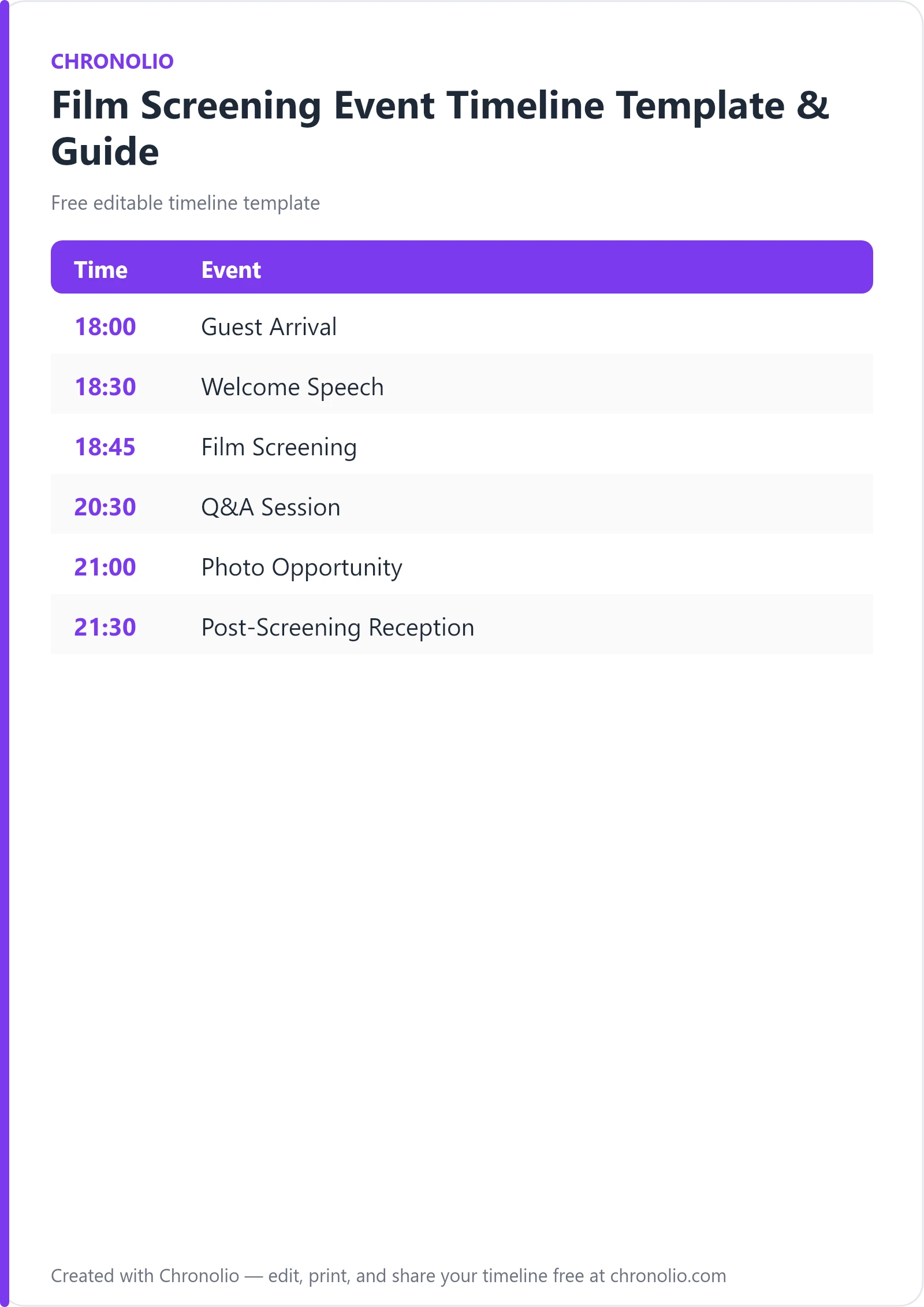
Here is the complete schedule this free template gives you — every time block, ready to edit, download, and share:
| Time | Event |
|---|---|
| 18:00 | Guest Arrival |
| 18:30 | Welcome Speech |
| 18:45 | Film Screening |
| 20:30 | Q&A Session |
| 21:00 | Photo Opportunity |
| 21:30 | Post-Screening Reception |
What Is a Film Screening Event Timeline?
A film screening event timeline is the master operational schedule that synchronizes auditorium operations, technical projection, talent management, and guest flow for a cinema presentation. Whether you are premiering an independent feature film, hosting a documentary showcase, or organizing a retrospective night, executing precise timing is critical for maintaining professional atmosphere and guest satisfaction.
As a venue operator who has hosted hundreds of premieres and film festival showcases, I can tell you that cinema events rely heavily on strict technical discipline. Unlike standard presentations, a film screening involves digital cinema packages (DCP), surround sound balancing, dimmed house lights, and strict projection cues. This downloadable template reflects real-world film screening event structures and proven venue management practices, ensuring your projectionist, house manager, moderator, and VIP guests stay perfectly aligned from the moment doors open until the final toast.
Build Your Film Screening Event Timeline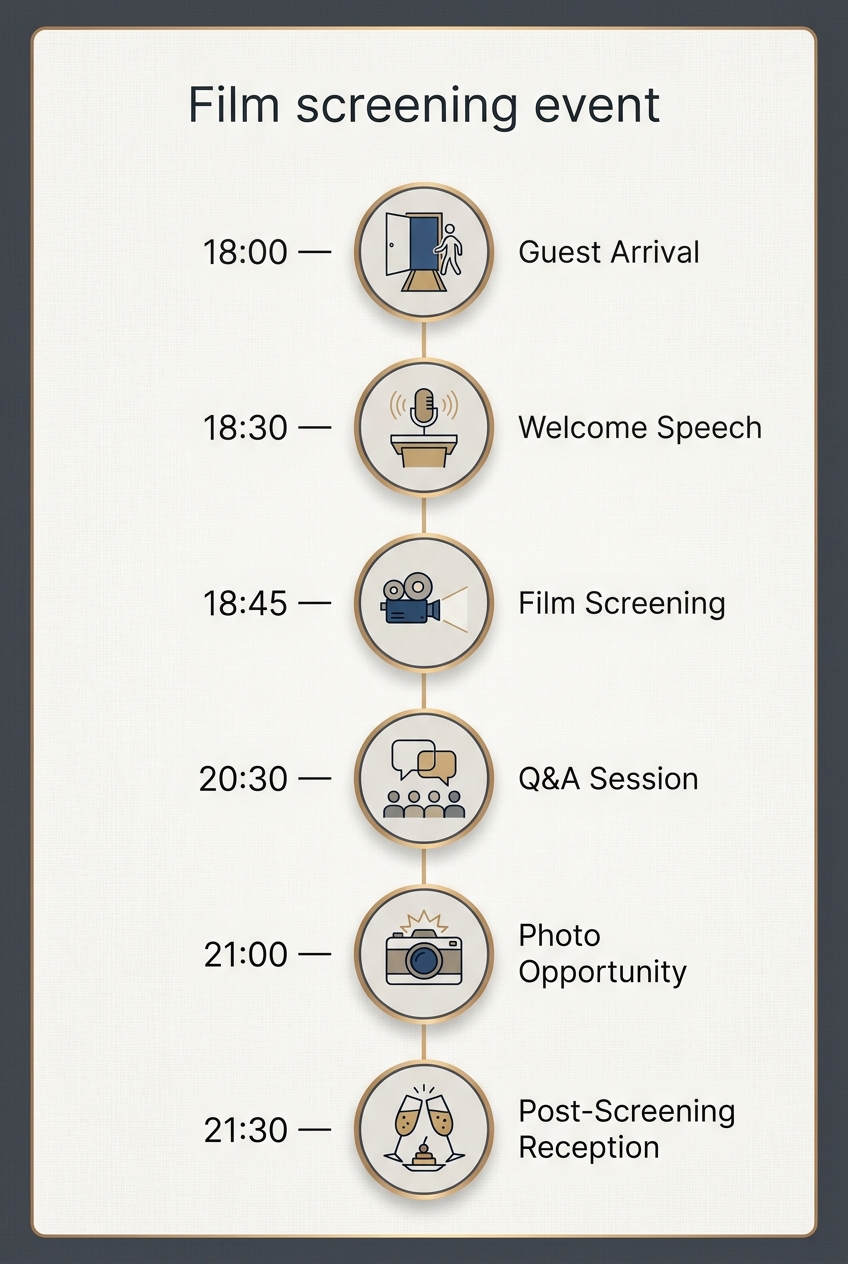
Why Film Screening Events Need a Timeline
Running a cinema showcase without a unified timeline almost always leads to technical hiccups and frustrated audiences. A structured schedule aligns front-of-house staff with the technical booth, ensuring house lights dim smoothly right as introductory remarks finish. Without clear cues, guests end up sitting in darkness waiting for media to start, or projection begins while attendees are still searching for seats in the aisle.
A well-planned timeline also guarantees that talent and guest speakers feel supported throughout the night. Managing guest speaker expectations requires strictly timed transitions between the feature credits and the Q&A panel. If the screening runs long or starts late, the post-film discussion becomes rushed, depriving attendees of the valuable exchange with the director and cast.
Finally, detailed timekeeping allows venue teams to manage venue turnover and social hours efficiently. Clear milestones prevent overcrowding in lobby areas by providing distinct transitions between check-in, auditorium seating, and post-screening receptions in dedicated lounges or gallery spaces.
What to Include in a Film Screening Event Timeline
To build an actionable schedule for your cinema event, make sure your plan covers these essential phases:
- Pre-Event Technical Check: Media testing, DCP key validation, sound levels, and wireless microphone checks.
- Lobby Check-in & Guest Arrival: Ticket scanning, program distribution, and initial guest networking.
- Auditorium Doors & Seating: Transitioning guests from the foyer into main auditorium seats.
- Welcome Speech & Opening Remarks: Presenter introduction, sponsor thank-yous, and feature context.
- Feature Film Projection: Continuous feature playback with synchronized lighting and audio controls.
- Moderated Q&A Session: Stage discussion with the director, producer, and lead cast members.
- Step-and-Repeat Photo Session: Press photos, cast group shots, and fan photo opportunities.
- Post-Screening Reception: Social networking, drinks, light refreshments, and informal discussion.
Phase 1: Arrival & Welcome
| Time | Event |
|---|---|
| 18:00 | Guest Arrival |
| 18:30 | Welcome Speech |
The evening begins in the main lobby, where establishing an efficient check-in flow prevents bottlenecks at the box office. Staff check tickets, hand out printed event programs, and point guests toward light refreshments. This initial 30-minute window gives attendees time to coat-check, grab a beverage, and mingle comfortably while latecomers arrive. If your event includes a gallery component, you might pair your visual presentation with our photography exhibition timeline template to keep foyer displays organized.
At 18:30, usher staff open the auditorium doors and direct guests toward main auditorium seating. Once the audience is seated, the event organizer delivers a concise 15-minute welcome address to introduce the film, acknowledge festival sponsors, and introduce special guests in attendance. Keeping this remarks window under 15 minutes preserves energy and keeps the audience focused on the upcoming feature.
Phase 2: Feature Presentation & Discussion
| Time | Event |
|---|---|
| 18:45 | Film Screening |
| 20:30 | Q&A Session |
At 18:45, the house lights slowly dim as the feature film begins in full continuous playback. Maintaining optimal projection and audio balance requires pre-tested cue sheets so the booth operator can smoothly drop lights as the opening logos roll. During this 105-minute block, auditorium doors remain monitored to minimize disruptions from late arrivals or guests stepping out briefly.
As the end credits roll at 20:30, the house lights bring up a soft warm ambient glow rather than full brightness. The moderator takes the stage immediately alongside the director and lead actor to launch the 30-minute Q&A session. A disciplined moderator keeps audience Q&A vibrant and punctual by managing microphone handoffs and filtering long winded questions so multiple audience members get a turn to speak.
Phase 3: Press, Media & Post-Screening Social
| Time | Event |
|---|---|
| 21:00 | Photo Opportunity |
| 21:30 | Post-Screening Reception |
Following the panel discussion at 21:00, a structured press photo session capitalizes on stage lighting, allowing photographers and guests to capture crisp photos with the cast and crew. Organizing this 30-minute photo op right at the front of the auditorium keeps crowd movement focused and prevents informal swarms on stage.
At 21:30, guests transition out of the auditorium into the gallery lounge for the post-screening reception. A dedicated post-show social hour provides the ideal setting for networking over sparkling wine and light snacks. If your screening forms part of a broader cultural program, consider framing your event calendar alongside our cultural heritage day schedule template or aligning arts evening schedules with our poetry reading night schedule.
Film Screening Event Timeline vs Call Sheet
Event planners often confuse a general event timeline with a production call sheet. While both documents help keep an event running, they serve distinctly different groups during the screening.
| Feature | Film Screening Event Timeline | Film Production Call Sheet |
|---|---|---|
| Primary Audience | Event Organizers, Venue Staff, Host, Guests | Film Crew, Technical Director, Projectionist, Stage Hands |
| Focus | Overall event flow, guest experience, start/end times | Technical cues, setup calls, mic assignments, light states |
| Detail Level | High-level schedule of guest-facing phases | Granular minute-by-minute technical cue lists |
| Visibility | Shared with public, attendees, press, sponsors | Internal operational document only |
Who Should Use This Template?
This timeline structure is built to accommodate a wide variety of film presentations and media showcases across the entertainment and cultural sectors. It offers flexible time blocks easily tailored to short film blocks, full feature premieres, or multi-day festival screenings.
- Independent Filmmakers & Producers: Premiering indie features, shorts, or documentary projects to distributors and press.
- Film Festivals & Film Societies: Managing packed screening blocks and panel discussions across multiple screening rooms.
- Cultural Institutions & Museums: Hosting educational film nights, much like host venues do in our museum launch day planning guide.
- Corporate & Brand Marketers: Launching brand documentaries, product launch films, or internal media showcases.
- Academic & Student Film Programs: Organizing end-of-term student showcases and alumni film nights.
Chronolio offers specialized features tailored to the different roles involved in cinema event management, from venue managers and moderators to PR agencies and festival coordinators.
How to Use This Template
- Download or Duplicate the Schedule: Select either our Word version or PDF template to edit offline, or duplicate it directly in Chronolio.
- Adjust for Feature Runtime: Replace the 105-minute screening placeholder with the exact runtime of your main feature or short film block.
- Set Sound & Technical Cues: Add specific cue lines for lighting changes, media playback start, and wireless mic activation times.
- Distribute to Key Personnel: Share the master timeline with your projectionist, venue manager, moderator, photographer, and VIP handling team.
Tips for a Successful Film Screening Event
- Perform a Full Technical Rehearsal: Run through your DCP or media files on the venue's projection setup at least two hours prior to lobby opening according to industry best practices recommended by organizations like the Sundance Institute.
- Prepare Q&A Questions in Advance: Have your moderator hold 2 or 3 pre-written questions to kick off the panel while audience members build up the courage to raise their hands.
- Designate a Roving Mic Handler: Assign a staff member to carry wireless microphones through auditorium aisles so Q&A questions remain clear for the entire room.
- Control Auditorium Temperature: Cinema auditoriums cool down quickly when filled with people; set HVAC controls comfortably ahead of time.
- Set Clear Press Photo Cues: Position a step-and-repeat backdrop near the stage or in the lounge to streamline photo ops without blocking exit doors.
- Keep House Lighting Transitions Smooth: Never snap lights directly from dark to full power; use a 5-second fade to give guest eyes time to adjust after the credits.
Common Mistakes to Avoid
- Overrunning the Welcome Remarks: Speechmakers who talk for more than 15 minutes test audience patience and push back the rest of the evening.
- Neglecting Projection Sound Levels: Failing to calibrate audio during soundcheck leads to dialogue that is either painfully loud or drowned out by house acoustics.
- Skipping Microphone Checks for Panels: Expecting panel members to project their voices without amplification during Q&A leads to poor audience engagement in large rooms.
- Failing to Reserve VIP & Crew Seating: Leaving reserved rows unmarked causes chaos as regular attendees fill seats designated for cast, crew, and press.
- Shortchanging Lobby Check-in Time: Allowing less than 30 minutes for arrival leads to long queue delays and late theater start times.
In Summary
- Complete Flow Coverage: Encompasses guest arrival, welcome speeches, film projection, panel discussion, press photos, and lounge networking.
- Adaptable Duration: Easily accommodates short film collections, feature films, or extended multi-panel festival slots.
- Audience-Centric Timing: Protects the guest experience by allocating ample time for lobby check-in and post-film discussion.
- Technical Synchronization: Keeps front-of-house staff and technical projectionists operating on identical time cues.
- Multi-Format Export: Fully downloadable in editable Word and PDF formats for quick printing and digital sharing.
Plan your upcoming cinema premiere or showcase with confidence. By structuring your arrival times, technical cues, and post-show networking with a reliable plan, you ensure an exceptional experience for your audience and film crew alike.
Build Your Film Screening Event Timeline