





This Template at a Glance
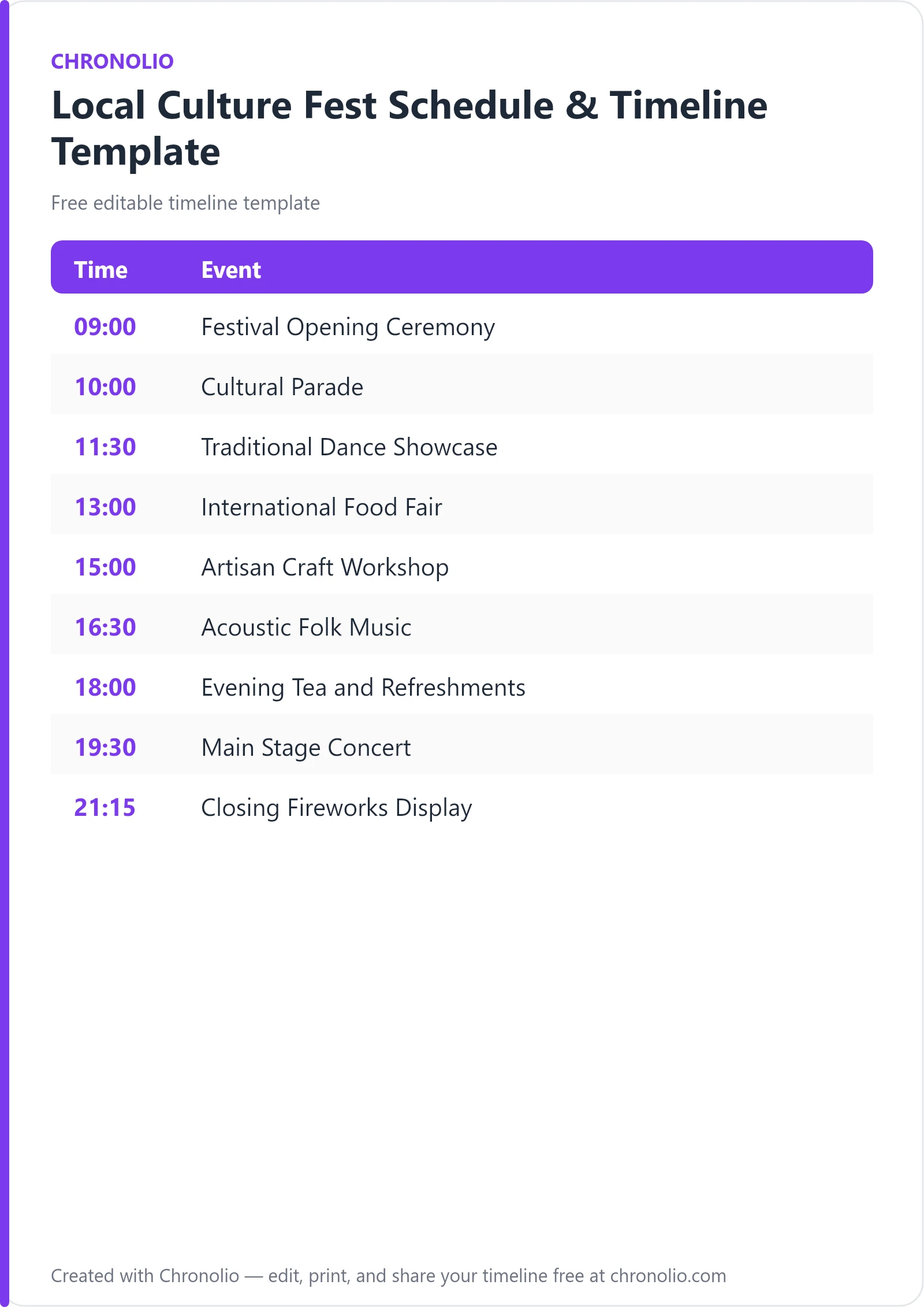
Here is the complete schedule this free template gives you — every time block, ready to edit, download, and share:
| Time | Event |
|---|---|
| 09:00 | Festival Opening Ceremony |
| 10:00 | Cultural Parade |
| 11:30 | Traditional Dance Showcase |
| 13:00 | International Food Fair |
| 15:00 | Artisan Craft Workshop |
| 16:30 | Acoustic Folk Music |
| 18:00 | Evening Tea and Refreshments |
| 19:30 | Main Stage Concert |
| 21:15 | Closing Fireworks Display |
What Is a Local Culture Fest Timeline?
A local culture fest timeline is an essential master operational schedule that details the precise timing, location, and flow of events for a community heritage festival. Operating a multi-faceted cultural event requires synchronizing simultaneous activities—such as street parades, live music, dance troupes, craft demonstrations, and culinary markets—across sprawling festival grounds. Having managed municipal heritage celebrations and broad cultural gatherings for over fifteen years, I have built this timeline template to reflect proven real-world event sequencing that prevents logistical bottlenecks and maximizes attendee engagement.
Without a centralized master schedule, vendor load-ins conflict with civic parade setups, stage acts run over, and crowd traffic stalls near high-density areas like food courts. By implementing a standardized local culture fest schedule, organizers can align municipal agencies, stage managers, sound engineers, performers, and street vendors around a single source of truth. Similar to structuring a complex craft fair schedule, a well-designed cultural festival schedule balances quiet workshop moments with high-energy main stage acts, ensuring your community experiences a seamless, memorable celebration.
Customize Your Local Culture Fest Timeline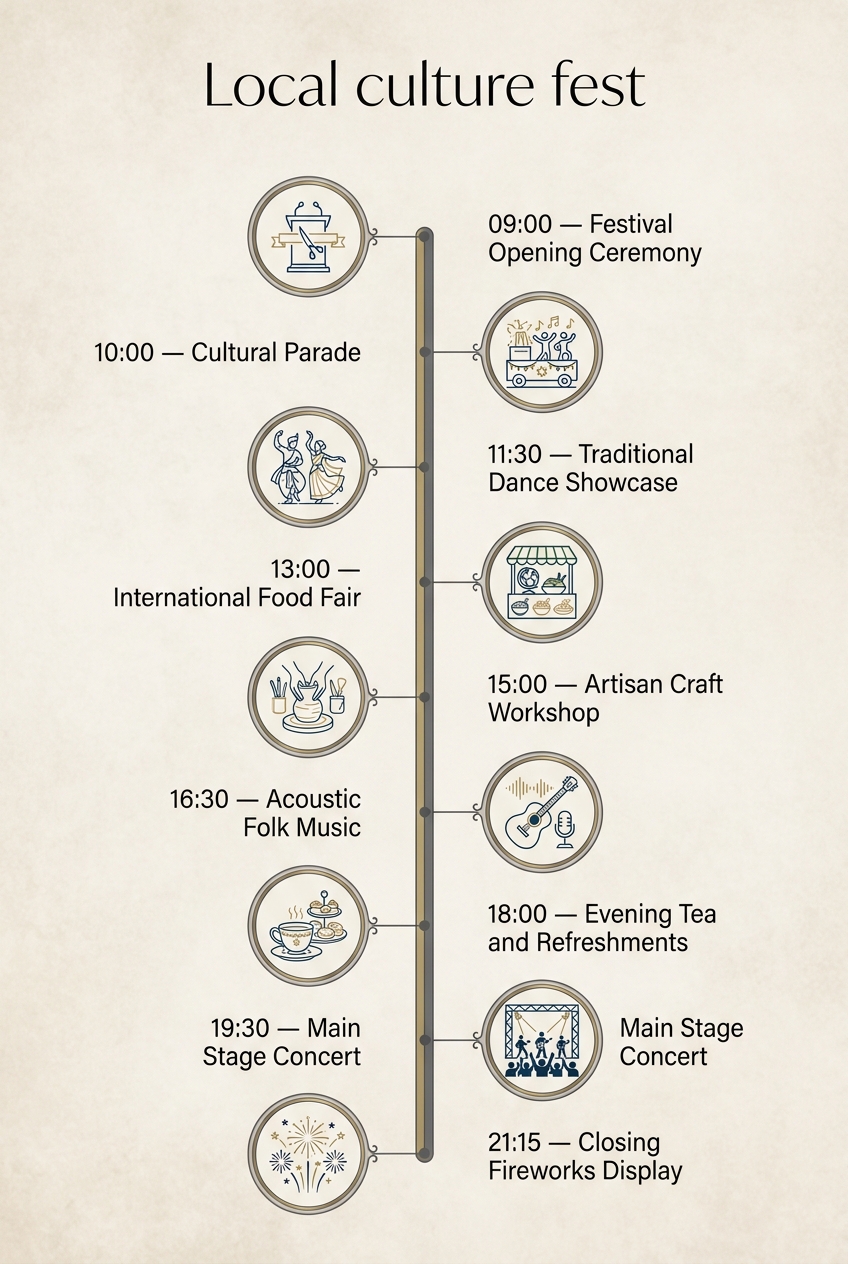
Why Local Culture Fests Need a Timeline
Running a multi-disciplinary community festival involves dozens of moving parts operating simultaneously across distinct physical zones. A structured timeline gives your organizing committee, zone captains, and municipal partners the visibility required to maintain operational control throughout festival day. When every team member knows exact start times, setup windows, and queue periods, the entire festival atmosphere remains welcoming and stress-free for visiting families.
Time management is particularly critical when working with public street closures, volunteer shifts, and acoustic sound bleed between stages. A clear running order keeps performance venues on schedule, preventing delayed dance groups from cutting into subsequent musical acts. If your event incorporates extensive culinary vendor zones alongside live entertainment, pairing this layout with a dedicated food and drink festival timeline helps balance crowd movement between lunch rushes and featured stage shows.
Finally, an accurate schedule safeguards public safety and municipal compliance. Emergency services, transit authorities, and security personnel rely on your timeline to coordinate crowd control during high-density moments like street parades and night-time fireworks displays. Providing clear timings for heavy foot-traffic transitions ensures a safe environment for all attendees.
What to Include in a Local Culture Fest Timeline
To ensure your cultural event runs smoothly from gate opening to final crowd dispersal, your schedule should incorporate these vital structural phases:
- Official Opening Ceremonies: Civic ribbon cuttings, dignitary welcomes, and land acknowledgments at primary entrance points.
- Street Processions & Parades: Scheduled parade start times, float staging, and designated spectator viewing corridors.
- Stage Performing Arts: Traditional folk dances, theatrical storytelling, and multi-generational heritage showcases.
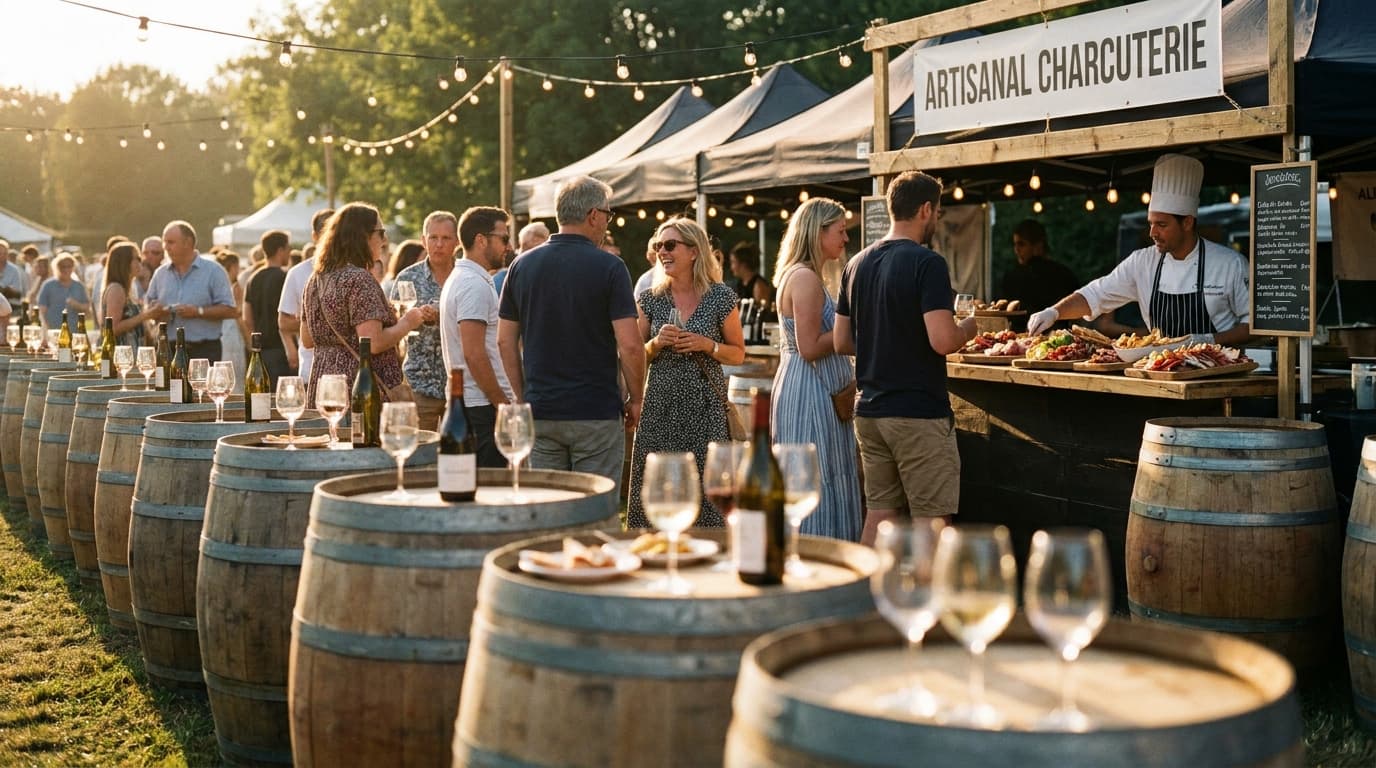
- Culinary & Food Fair Hours: Dedicated meal windows highlighting local chefs, food trucks, and regional tasting stalls.
- Interactive Workshops: Hands-on artisan craft sessions, masterclasses, and educational cultural demonstrations.
- Acoustic & Side-Stage Acts: Intimate musical performances in gardens or quiet courtyards to disperse main-stage crowds.
- Headlining Night Entertainment: High-energy evening concerts combining modern and traditional musical fusion.
- Closing Spectacular: Musical fireworks, drone shows, or ceremonial lantern send-offs to conclude the festival.
Morning Kickoff & Heritage Processions
| Time | Event |
|---|---|
| 09:00 | Festival Opening Ceremony |
| 10:00 | Cultural Parade |
| 11:30 | Traditional Dance Showcase |
The festival morning establishes the energy and civic pride of the day. Beginning at 09:00, the Festival Opening Ceremony takes place at the Main Entrance Plaza, where municipal leaders cut the ribbon and welcome early arrivals. Gathering local dignitaries near the primary gates creates an immediate sense of official celebration while allowing queue lines to build naturally without blocking internal vendor aisles.
At 10:00, crowd focus shifts to Central Avenue for the Cultural Parade. This vibrant procession features traditional regional costumes, handcrafted giant puppets, and marching bands winding through the festival grounds. Structuring the parade early in the day utilizes fresh street closures before general foot traffic reaches peak density, giving families clear sightlines along the parade route.
As the parade completes its loop, visitors are guided naturally toward the Amphitheater Stage for the 11:30 Traditional Dance Showcase. Local dance troupes perform intricate folk routines representing the region's diverse heritage. Allowing spectators to join performers on stage for basic dance instruction immediately after the show builds community interaction and transitions guests smoothly toward the upcoming lunch hour.
Afternoon Food, Crafts & Acoustic Music
| Time | Event |
|---|---|
| 13:00 | International Food Fair |
| 15:00 | Artisan Craft Workshop |
| 16:30 | Acoustic Folk Music |
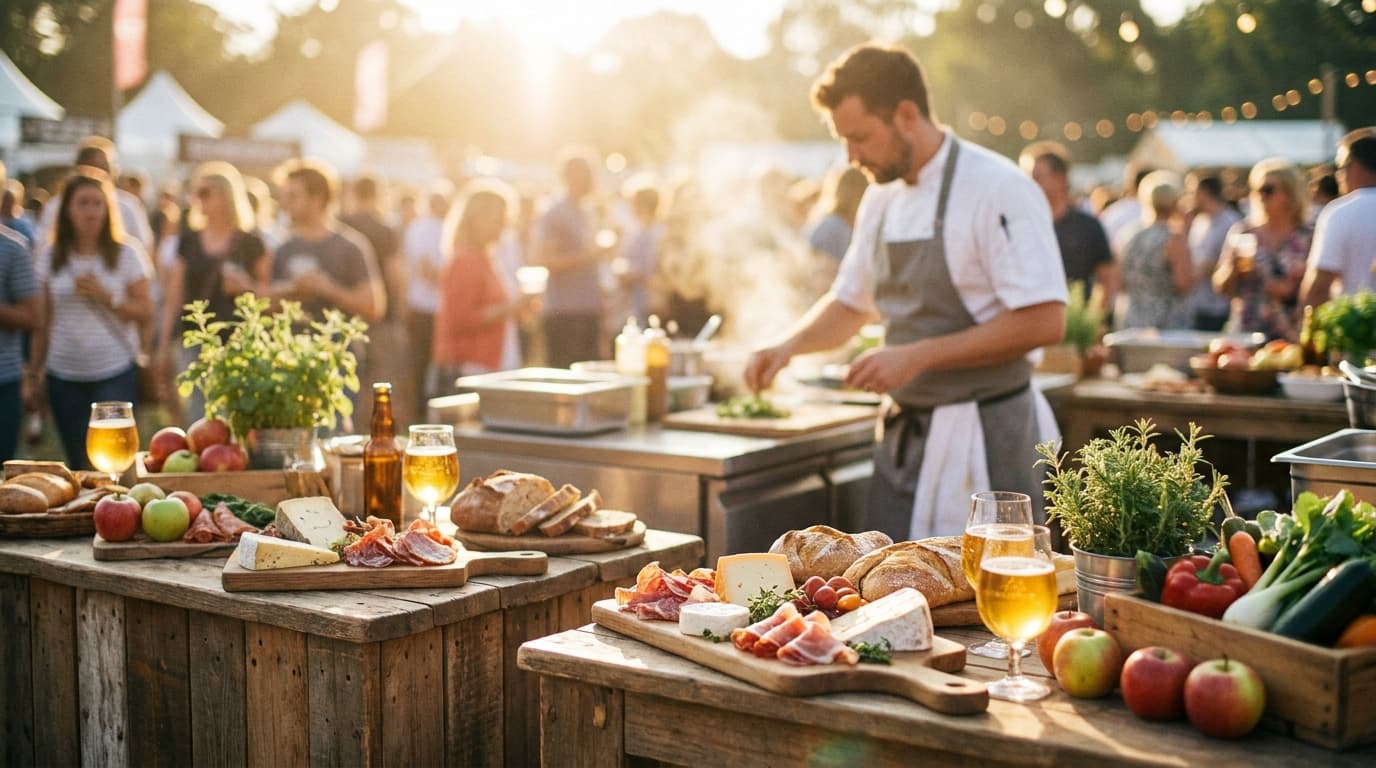
After an active morning of street processions, attendees naturally seek food and relaxed entertainment. At 13:00, the festival transitions into the International Food Fair located within the Food Court Pavilion. Visitors sample authentic street food, family recipes, and local delicacies cooked by community chefs. Scheduling a generous 90-minute window for lunch reduces food stall queues and encourages guests to explore neighboring artisan booths.
Following lunch, activity shifts to the Crafts Workshop Tent at 15:00 for the Artisan Craft Workshop. Attendees participate in hands-on crafting sessions guided by master artisans, building traditional keepsakes to take home. Interactive workshops serve as a vital engagement touchpoint, similar to the participatory activity blocks used in a comic/fan convention timeline.
To balance the bustling afternoon environment, the Garden Gazebo hosts Acoustic Folk Music at 16:30. Unplugged local musicians perform traditional ballads in a shaded, serene setting. This quiet hour gives families and older attendees a restful interlude before evening main stage crowds begin assembling.
Evening Gathering, Concert & Fireworks Finale
| Time | Event |
|---|---|
| 18:00 | Evening Tea and Refreshments |
| 19:30 | Main Stage Concert |
| 21:15 | Closing Fireworks Display |
As dusk approaches, early evening programming gently gathers visitors together while main-stage production crews perform final sound checks. At 18:00, guests assemble in the Heritage Courtyard for Evening Tea and Refreshments. Serving locally brewed herbal teas and light regional pastries creates a cozy social atmosphere where neighbors chat and refresh themselves before nightfall.
At 19:30, the main crowd migrates to the Grand Stage for the Main Stage Concert. Featuring a dynamic fusion of modern and traditional music, the headlining band delivers a high-energy set that appeals to all generations. High-caliber main stage lighting and amplified sound create an exhilarating peak for the festival's artistic program, drawing parallels to the production staging found in a major music festival timeline.
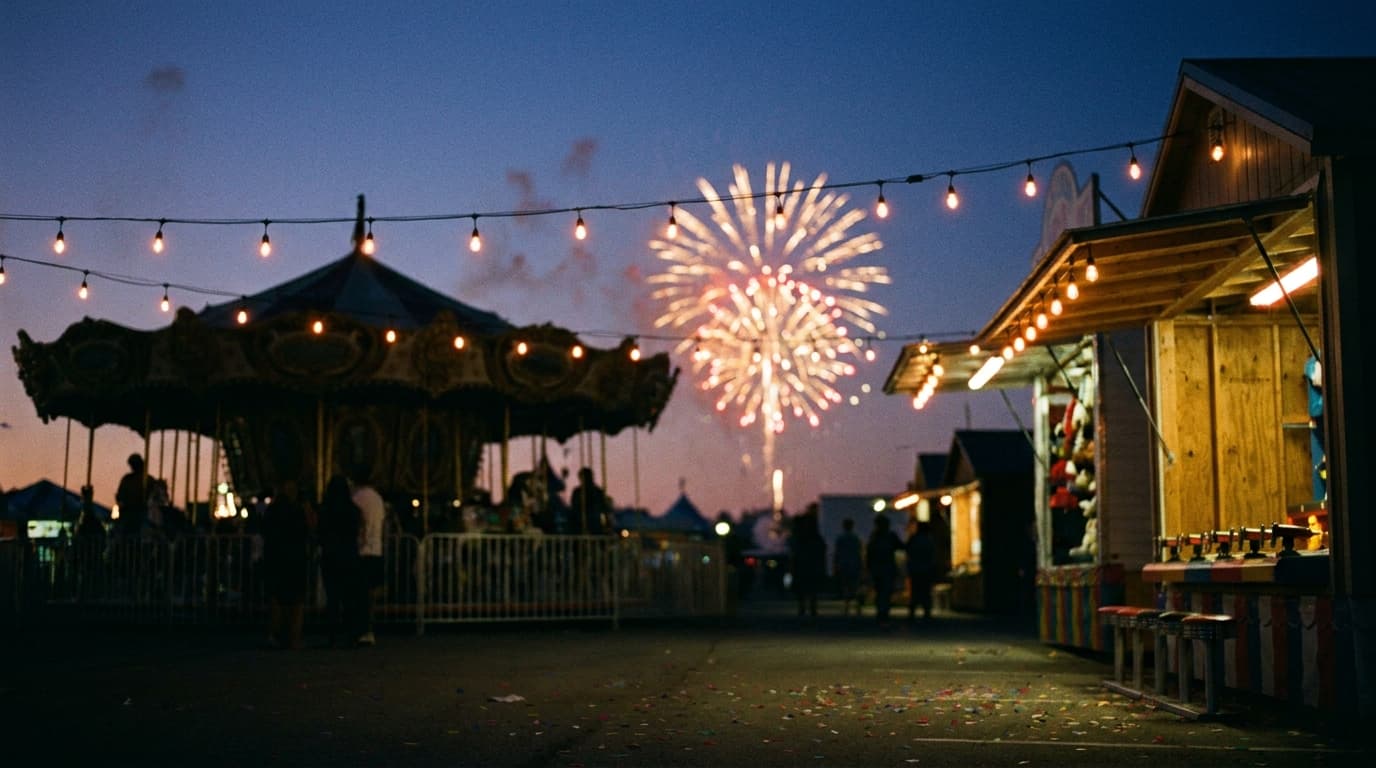
The festival culminates at 21:15 with the Closing Fireworks Display over the Festival North Field. Synchronized to a custom musical soundtrack, the colorful pyrotechnics illuminate the night sky, offering a breathtaking climax to the day's festivities. Placing the fireworks display in an open northern field allows safe crowd dispersal directly toward outer parking lots and public transport hubs. For late-season festivals, pairing this visual impact with elements from a light festival schedule can further enhance night-time atmospheric lighting.
Local Culture Fest Timeline vs Event Master Plan
While planners often use event management terminology interchangeably, a day-of timeline fulfills a distinct operational role compared to an overall festival master plan.
| Feature / Aspect | Local Culture Fest Timeline | Event Master Plan |
|---|---|---|
| Primary Focus | Minute-by-minute day-of execution and stage flow | Long-term strategy, budgeting, and permit approvals |
| Primary Target Audience | Stage managers, performers, volunteers, and sound crews | Executive committee, municipal councils, and sponsors |
| Detail Level | Specific stage times, zone locations, and cue triggers | High-level milestones, vendor contracts, and risk matrix |
| Time Horizon | Single festival day (24-hour window) | 6 to 12 months leading up to the festival |
The local culture fest timeline serves as the practical execution sheet on festival day, translating months of strategic preparation into precise, actionable cues for on-site staff.
Who Should Use This Template?
This versatile festival template supports broad community management teams and event professionals. Chronolio provides specialized feature sets tailored for the various roles required to stage complex public gatherings:
- Municipal Cultural Departments: City arts councils and civic event teams organizing annual heritage days.
- Community Heritage Associations: Non-profit cultural societies preserving regional traditions and arts.
- Festival Directors & Event Producers: Professional event leads overseeing multi-stage logistics, permits, and vendor operations.
- Stage Managers & Production Leads: Technical crews managing audio, lighting, green rooms, and artist turnarounds.
- Volunteer Coordinators: Team leads briefing station staff, info desk assistants, and parade marshals.
How to Use This Template
- Duplicate or Import: Load this timeline template into your Chronolio account or download the editable .docx file or .pdf format.
- Set Your Event Date & Zones: Enter your festival date and update location labels (e.g., Main Entrance Plaza, Amphitheater Stage) to match your site layout.
- Adjust Performance Durations: Customize act lengths based on your contracted artist schedules and parade route distances.
- Assign Zone Leads: Tag specific stage managers, security directors, and volunteer leads to each scheduled item.
- Publish & Share: Distribute read-only digital links to vendors, emergency responders, and performers, or print physical run sheets for production booths.
Tips for a Successful Local Culture Fest
- Establish Buffer Zones Between Acts: Always schedule 15 to 30 minutes between stage performances to allow stage hands time to swap instruments and adjust audio levels.
- Separate High-Noise Attractions: Position acoustic music zones like garden gazebos well away from amplified main stages and loud parade routes according to guidance from public event standards like the International Festivals & Events Association.
- Position Staging Near Electricity & Water: Ensure food stall pavilions and main stages have direct, safe access to municipal power drops and potable water lines.
- Coordinate Street Closures Early: Work with local transit authorities months ahead to finalize road closures before parade floats assemble.
- Provide Shaded Rest Areas: Older attendees and families require shaded seating areas near food stalls and acoustic stages to stay comfortable throughout a 12-hour festival day.
- Brief Volunteers on Zone Timings: Host a 30-minute morning briefing with all volunteer leads so everyone knows where major processions start and finish.
- Centralize Information Booths: Place user-friendly schedule boards at main entrances so visitors can plan their custom day-of itineraries easily.
Common Mistakes to Avoid
- Overcrowding Stage Agendas: Packing back-to-back performances without changeover times causes cascading delays that disrupt evening main stage headliners.
- Ignoring Food Court Queue Spaces: Placing popular street food vendors in narrow pathways creates dangerous foot-traffic bottlenecks during peak lunch hours.
- Omitting Dedicated Vendor Load-In Windows: Allowing food trucks and craft artisans to load in while public gates are open poses severe safety hazards.
- Failing to Secure Stage Green Rooms: Leaving performer warm-up areas open to the public leads to missing acts when cue times arrive.
- Underestimating Parade Staging Time: Forgetting that giant puppets and marching bands require 60 minutes of pre-parade line-up leads to delayed street openings.
- Neglecting Sound Bleed Management: Operating heavy acoustic systems near quiet storytelling or craft tents ruins attendee experiences in both zones.
In Summary
- A local culture fest timeline is an operational master schedule that coordinates multi-zone heritage festivals.
- Designed for municipal event leads, cultural associations, stage crews, and community festival directors.
- Balances high-energy parades and main-stage concerts with relaxing craft workshops and acoustic sets.
- Incorporates essential civic safety protocols, street closure alignments, and smooth crowd transitions.
- Prevents stage delays by establishing strict setup windows, dedicated changeovers, and zone separation.
- Can be customized digitally within Chronolio or exported to PDF and Word formats for print distribution.
Planning a vibrant heritage celebration requires balancing artistic tradition with rigorous logistical timing. By establishing a structured master schedule early in your planning cycle, you ensure that every performer, vendor, volunteer, and visitor enjoys a seamless community experience. Whether you are managing municipal cultural departments, non-profit heritage committees, or independent festival production crews, this template provides the operational foundation required to deliver an unforgettable cultural event.
Customize Your Local Culture Fest Timeline