





This Template at a Glance
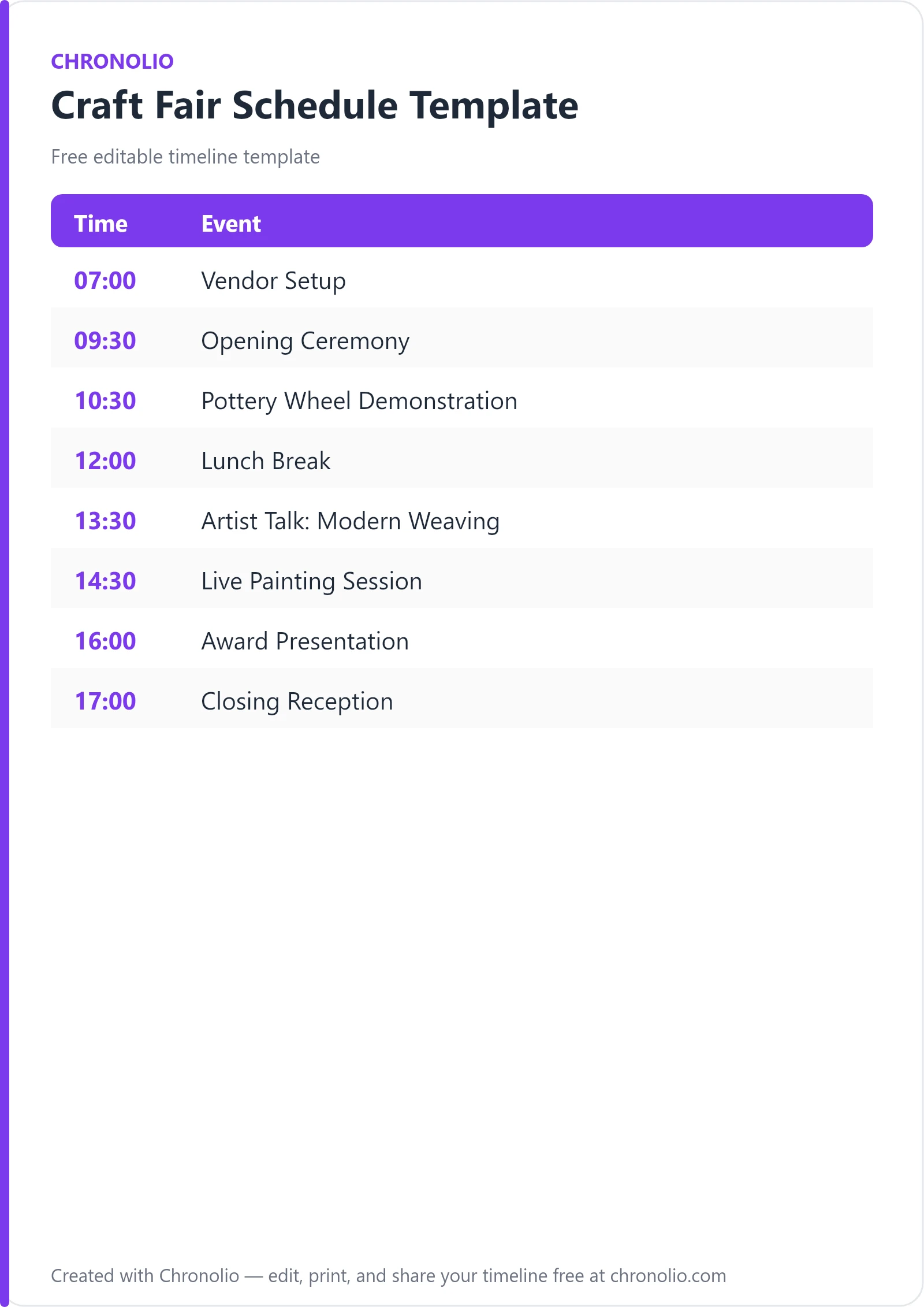
Here is the complete schedule this free template gives you — every time block, ready to edit, download, and share:
| Time | Event |
|---|---|
| 07:00 | Vendor Setup |
| 09:30 | Opening Ceremony |
| 10:30 | Pottery Wheel Demonstration |
| 12:00 | Lunch Break |
| 13:30 | Artist Talk: Modern Weaving |
| 14:30 | Live Painting Session |
| 16:00 | Award Presentation |
| 17:00 | Closing Reception |
What Is a Craft Fair Schedule?
A craft fair schedule is the operational master plan that governs the day-of order of events for artisan markets, maker expos, and community craft shows. It bridges the gap between backstage logistics—such as vehicle unloading, electrical hookups, and vendor check-ins—and public-facing programming like pottery throwings, live painting, and jury awards. By establishing clear time blocks for booth preparation and live features, this template eliminates venue bottlenecks and prevents foot traffic gridlock.
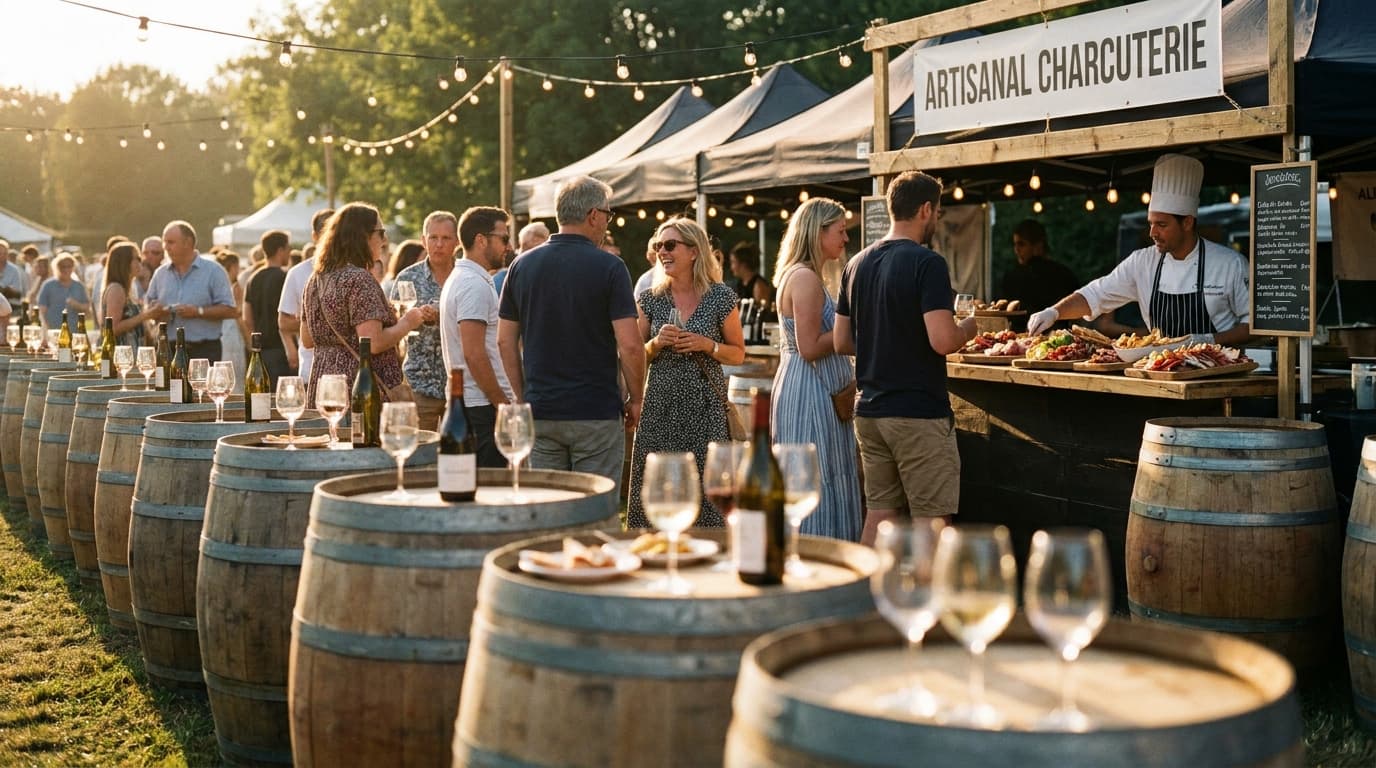
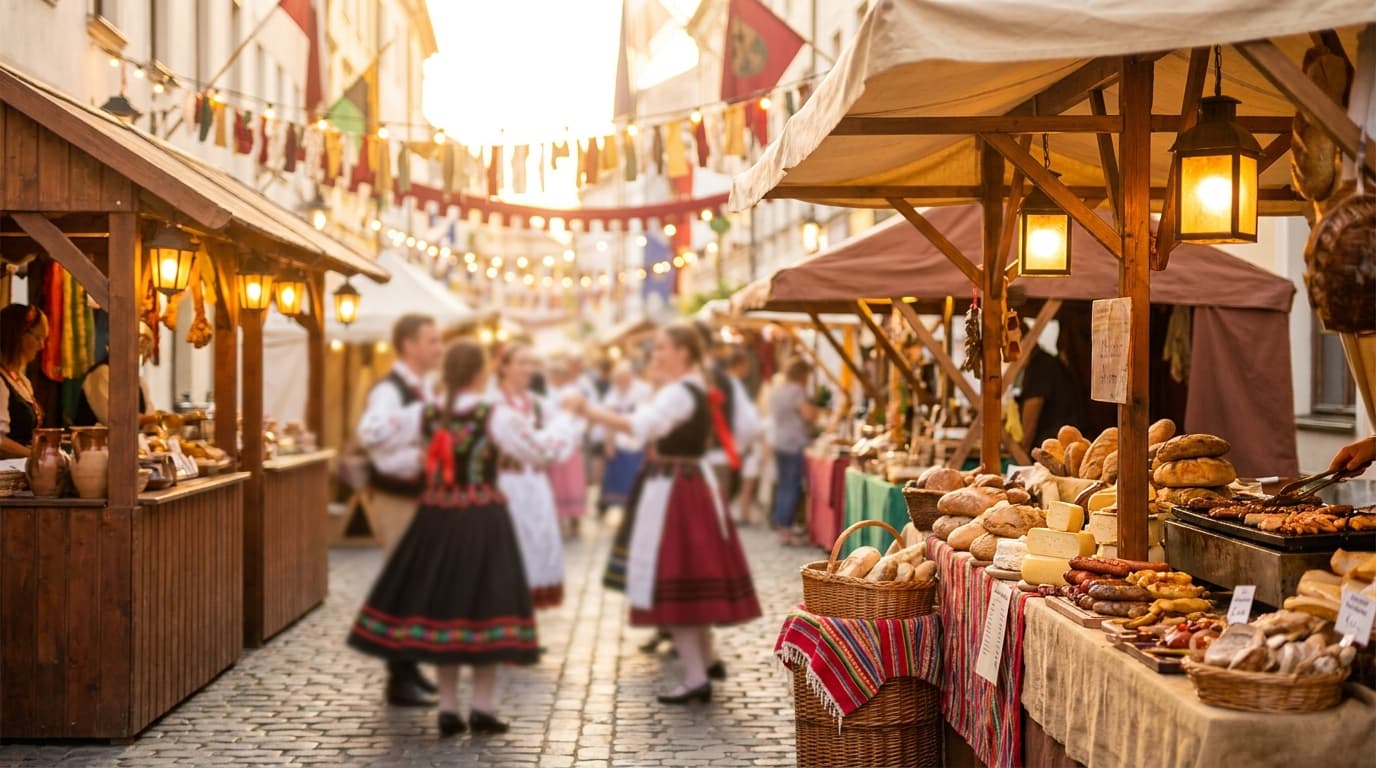
Having run dozens of artisan markets across various hall layouts, I built this timeline around real-world crowd flows and seller requirements. It draws on industry best practices published by organizations like the Craft Industry Alliance to ensure both makers and shoppers have an exceptional experience. Much like managing a holiday market schedule or a multi-zone food and drink festival timeline, maintaining a steady tempo throughout the venue is the key to maximizing artisan sales and visitor retention.
Customize Your Craft Fair Schedule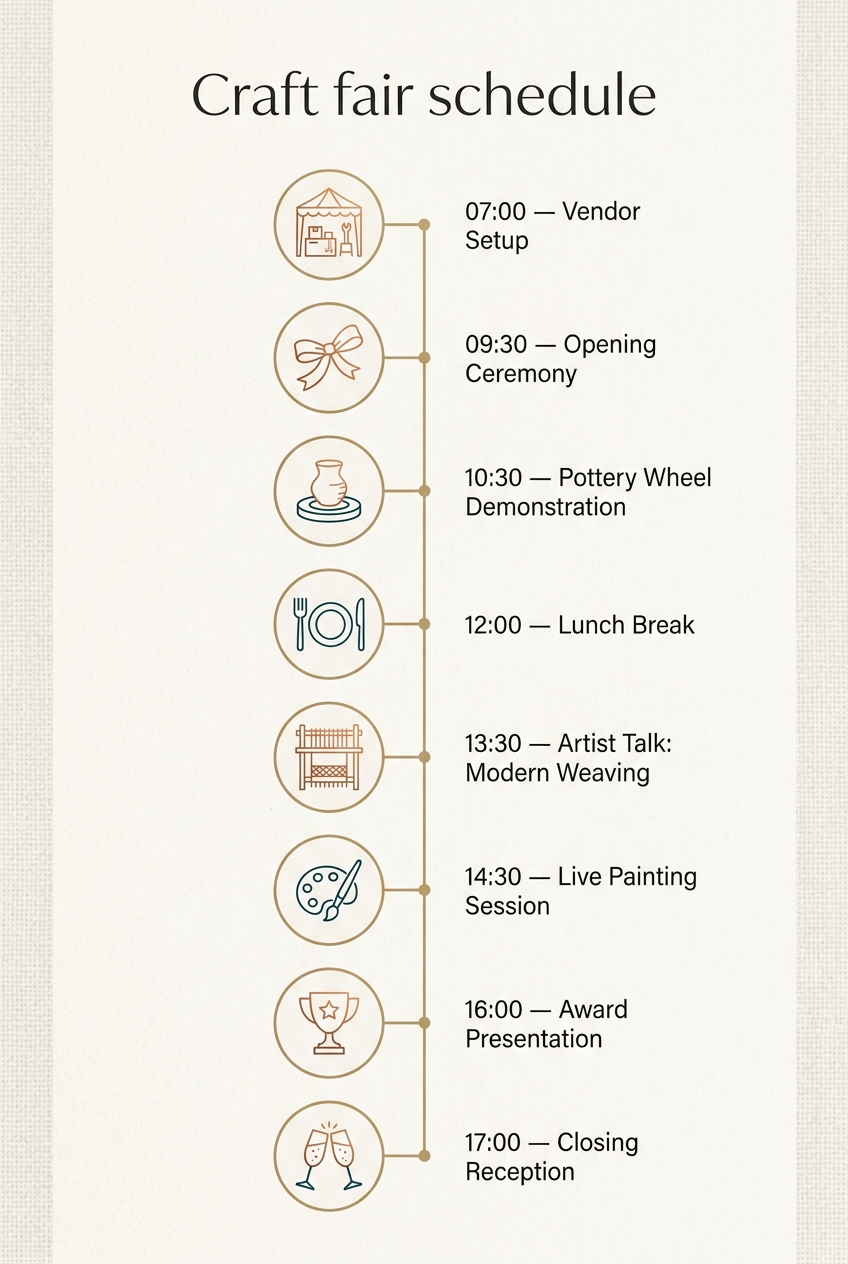
Why Craft Fairs Need a Schedule
Running a successful maker fair requires balancing two distinct operational priorities: supporting vendor commercial success and providing high-value entertainment for ticket holders. Without a detailed schedule, morning load-in descends into parking lot chaos, live staging causes disruptive noise during peak sales hours, and visitors miss out on interactive workshops.
A structured timeline acts as a single source of truth for your stage managers, security staff, and participating artists. Clear scheduling minimizes aisle congestion during peak arrival hours by establishing firm setup deadlines well before public gates open. Furthermore, published schedules encourage attendees to linger longer at the event, driving increased foot traffic past vendor booths between featured demonstrations and speaker sessions.
Finally, an accurate schedule provides essential coordination for multi-room venues. When stage hands, sound technicians, and food truck vendors operate on the same precise clock, transitions between venue zones happen effortlessly.
What to Include in a Craft Fair Schedule
Every well-designed craft fair timeline should incorporate the following core components:
- Dedicated Vendor Setup Window: Ample time for load-in, booth styling, point-of-sale testing, and safety walk-throughs before public opening.
- Official Opening Ceremony: A brief welcoming gesture at the main entry point to signal doors opening and establish a celebratory tone.
- Staggered Artisan Demonstrations: Live visual craft displays (e.g., pottery, glassblowing, woodturning) scheduled in dedicated stages to draw crowds.
- Scheduled Visitor Breaks: Designated downtime allowing patrons to visit food trucks and outdoor seating without missing major programming.
- Educational Talks & Panels: Quiet room sessions focusing on artistic process, history, or technique to engage deep art enthusiasts.
- Interactive Collaborative Art: Live sessions where guests observe multi-artist pieces coming to life across the afternoon.
- Formal Award Presentation: A centralized ceremony announcing jury selections and public votes to honor exceptional work.
- Closing Reception & Networking: A structured wind-down period allowing artists and patrons to connect before tear-down begins.
Phase 1: Morning Load-In & Grand Opening
| Time | Event |
|---|---|
| 07:00 | Vendor Setup |
| 09:30 | Opening Ceremony |
The morning begins bright and early at 07:00 with Vendor Setup in the Main Exhibition Hall. Giving artisans a full two-hour window ensures they can navigate loading docks safely, unload heavy inventory boxes, set up table displays, and fine-tune booth lighting without feeling rushed. Completing display setups thirty minutes before doors open gives artists time to catch their breath, test their mobile card readers, and conduct final safety checks across booth aisles.
At 09:30, foot traffic naturally gravitates toward the Main Entrance Plaza for the Opening Ceremony. Keep this welcome message concise—a warm welcome from the fair director and a brief ribbon-cutting ceremony creates excitement without delaying patrons eager to explore the floor. Opening gates promptly at 10:00 maximizes early shopping energy.
Phase 2: Midday Demonstrations & Visitor Break
| Time | Event |
|---|---|
| 10:30 | Pottery Wheel Demonstration |
| 12:00 | Lunch Break |
Once shoppers have made their initial pass around the exhibition floor, schedule your first major feature at 10:30. The Pottery Wheel Demonstration on Demo Stage A offers an engaging, highly visual look at clay throwing. Positioning visual demonstrations mid-morning keeps visitor energy high and draws shoppers deeper into secondary aisle clusters. Stage A should feature clear elevated seating or mirror setups so onlookers get an unhindered view of the maker's technique.
By 12:00, patrons and booth holders alike need rest. Directing crowds to the Lunch Break in the Courtyard leverages outdoor seating and local food vendors to clear indoor main aisles. Encouraging a coordinated midday pause prevents buyer fatigue, boosts local catering sales, and gives single-person booth operators a chance to eat while peer vendors keep an eye on neighboring tables.
Phase 3: Afternoon Educational Sessions & Interactive Art
| Time | Event |
|---|---|
| 13:30 | Artist Talk: Modern Weaving |
| 14:30 | Live Painting Session |
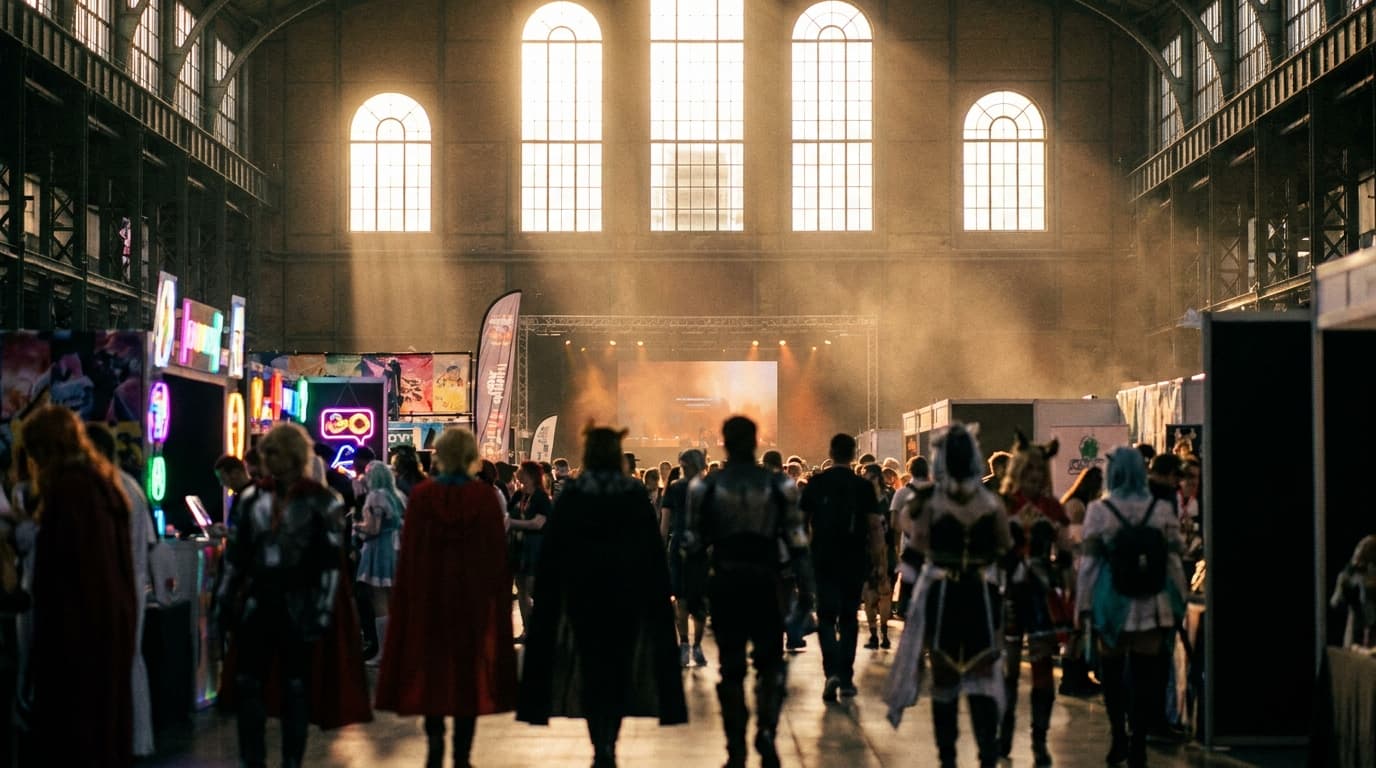
After lunch, diversify your programming by shifting focus toward education and immersive performance. At 13:30, host the Artist Talk: Modern Weaving in the Lecture Hall. Moving quiet, narrative-focused events to an enclosed room prevents acoustic bleed from the bustling trade floor while offering craft enthusiasts a sit-down learning experience. If your fair shares elements with a regional local culture fest timeline or a multi-stage comic and fan convention schedule, structured panel sessions add immense perceived value to general admission tickets.
At 14:30, transition crowd focus back to the central floor with a Live Painting Session in the Central Gallery. Watching watercolorists collaborate in real time creates a dynamic focal point that slows down foot traffic and encourages impulse purchases at neighboring fine art booths.
Phase 4: Evening Awards & Closing Networking
| Time | Event |
|---|---|
| 16:00 | Award Presentation |
| 17:00 | Closing Reception |
At 16:00, convene attendees and makers near the Main Stage for the Award Presentation. Celebrating excellence with "Best in Show" and "People's Choice" ribbons honors hard-working makers and builds prestige for future fair editions. Announcing awards late in the afternoon incentivizes visitors to remain on-site throughout the day and provides winning artists with an immediate sales boost before doors close.
The fair concludes at 17:00 with a Closing Reception in the Main Exhibition Hall. Offering light refreshments during this final hour fosters a celebratory community atmosphere, giving patrons one last chance to finalize purchases and allowing artists to network before pack-out commences.
Craft Fair Schedule vs. Craft Fair Running Order
It is common for novice event planners to confuse a master public schedule with an operational running order. While both keep the event on track, they serve distinctly different audiences and contain different operational details.
| Feature | Craft Fair Schedule | Craft Fair Running Order |
|---|---|---|
| Primary Audience | Public attendees, visitors, and general vendors | Stage managers, AV crew, security, and staff |
| Level of Detail | High-level times, session titles, and public zones | Minute-by-minute cues, technical setups, and staffing duties |
| Primary Focus | Guest navigation, session discovery, and overall flow | Operational execution, technical AV hits, and safety cues |
| Distribution | Event website, printed hand-outs, signage boards | Internal staff binders, radio headsets, and crew sheets |
Who Should Use This Template?
This timeline template is tailored for professionals and organizations tasked with managing multi-vendor, artisan-focused events:
- Market Directors & Craft Event Organizers: Streamline day-of operations across multiple stages and halls.
- Venue Operators & Community Centers: Standardize load-in schedules and facility usage for weekend bookings.
- Art Center Coordinators & Non-Profit Boards: Ensure smooth execution of annual fundraising sales and maker showcases.
- Artisan Guild Leadership: Provide clear expectations to member sellers regarding setup times and presentation commitments.
Event logistics teams holding different administrative roles can adapt this template directly within Chronolio to assign specific shift responsibilities, vendor contact sheets, and stage cues.
How to Use This Template
- Duplicate or Import: Load this schedule into your Chronolio workspace, or download offline files using the craft fair schedule DOCX template or craft fair schedule PDF export.
- Adjust Stage & Room Names: Customize location labels (e.g., "Demo Stage A", "Lecture Hall") to match your venue's specific floor plan.
- Tailor Time Blocks: Align vendor setup windows with your facility's loading dock capacity and parking limits.
- Publish to Vendors & Guests: Share the interactive online link with participating artists two weeks prior, and post printed schedules at key hall entry points.
Tips for a Successful Craft Fair
- Enforce Strict Setup Deadlines: Require all vendor vehicles to exit loading zones at least 45 minutes before public gates open to prevent parking congestion.
- Position Demo Stages Away from High-Traffic Aisles: Place live stages near the rear or side corners of the hall to pull foot traffic through lesser-seen vendor areas.
- Provide Booth Relief Volunteers: Assign floater volunteers to watch stalls for 10-minute intervals so solo artists can take bathroom and meal breaks.
- Use Clear Overhead Wayfinding Signage: Ensure stages, lecture rooms, rest areas, and restrooms are visible above booth display walls.
- Stagger Loud Sound Cues: Schedule microphones and acoustic performances around quiet educational panels to avoid noise overlap.
- Promote Award Voting Early: Distribute People's Choice ballots at entry doors so guests actively engage with booths before the 16:00 award ceremony.
Common Mistakes to Avoid
- Insufficient Load-In Windows: Allowing under two hours for setup leads to unfinished booths and hazardous clutter when gates open.
- Over-Scheduling Stage Features: Packing back-to-back presentations exhausts visitors and distracts from core vendor shopping time.
- Ignoring Acoustics: Placing live music or loud amplified demos adjacent to quiet lecture rooms ruins educational talks.
- Lacking Vendor Communication: Failing to send precise load-in maps and time slots in advance causes severe parking gridlock.
- Forgetting Dedicated Eating Areas: Forcing patrons to eat while standing in crowded display aisles leads to accidental spill risks on handmade goods.
- Neglecting the Wind-Down Period: Abruptly shutting down the venue at the end of the day alienates shoppers looking for last-minute purchases.
In Summary
- Purpose: Coordinates vendor logistics, live artisan stage features, educational sessions, and award ceremonies into a seamless timeline.
- Key Audiences: Market directors, venue managers, artisan guild leadership, and municipal event coordinators.
- Primary Focus: Balances efficient early morning load-in with high-value public programming to maximize artisan sales and patron retention.
- Operational Benefit: Eliminates venue congestion, keeps stage programming strictly on time, and delivers a superior visitor experience.
Planning a seamless craft fair requires balancing early morning logistics with engaging public entertainment. Whether you are hosting an annual artisan showcase, managing a multi-day community expo, or running a light festival schedule, this template provides the structure you need. Adapt this schedule online today to coordinate your team, empower your vendors, and host an unforgettable event.
Customize Your Craft Fair Schedule