





This Template at a Glance
Here is the complete schedule this free template gives you — every time block, ready to edit, download, and share:
| Time | Event |
|---|---|
| 08:00 | Vendor Setup |
| 11:00 | Morning Tasting Session |
| 13:00 | Gourmet Food Pairing |
| 14:30 | Brewing Masterclass |
| 15:30 | Afternoon Tasting Session |
| 18:30 | Catering Buffet |
| 19:30 | Live Acoustic Music |
| 21:30 | Evening Party |
What Is a Beer/wine fest Timeline?
A beer/wine fest timeline is the operational master blueprint that governs every hour of a beverage festival, from dawn setup to late-night load-out. Coordinating dozen of commercial craft breweries, independent wineries, food trucks, and thousands of enthusiastic attendees requires precise time management. This template reflects real-world beer and wine festival structures, incorporating industry best practices derived from operating successful large-scale food and beverage events.
Without a centralized schedule, critical logistics like keg chilling, ice distribution, glass delivery, and security wristbanding fall into chaos. A well-constructed timeline delineates clear operational boundaries so that pourers stay stocked, lines keep moving, and guests transition smoothly between tasting halls, educational masterclasses, and entertainment stages. Whether you are running an intimate boutique wine tasting or a sprawling regional craft beer convention, having a timed schedule ensures compliance with liquor liability standards and venue guidelines.
Customize Your Beer/Wine Fest Timeline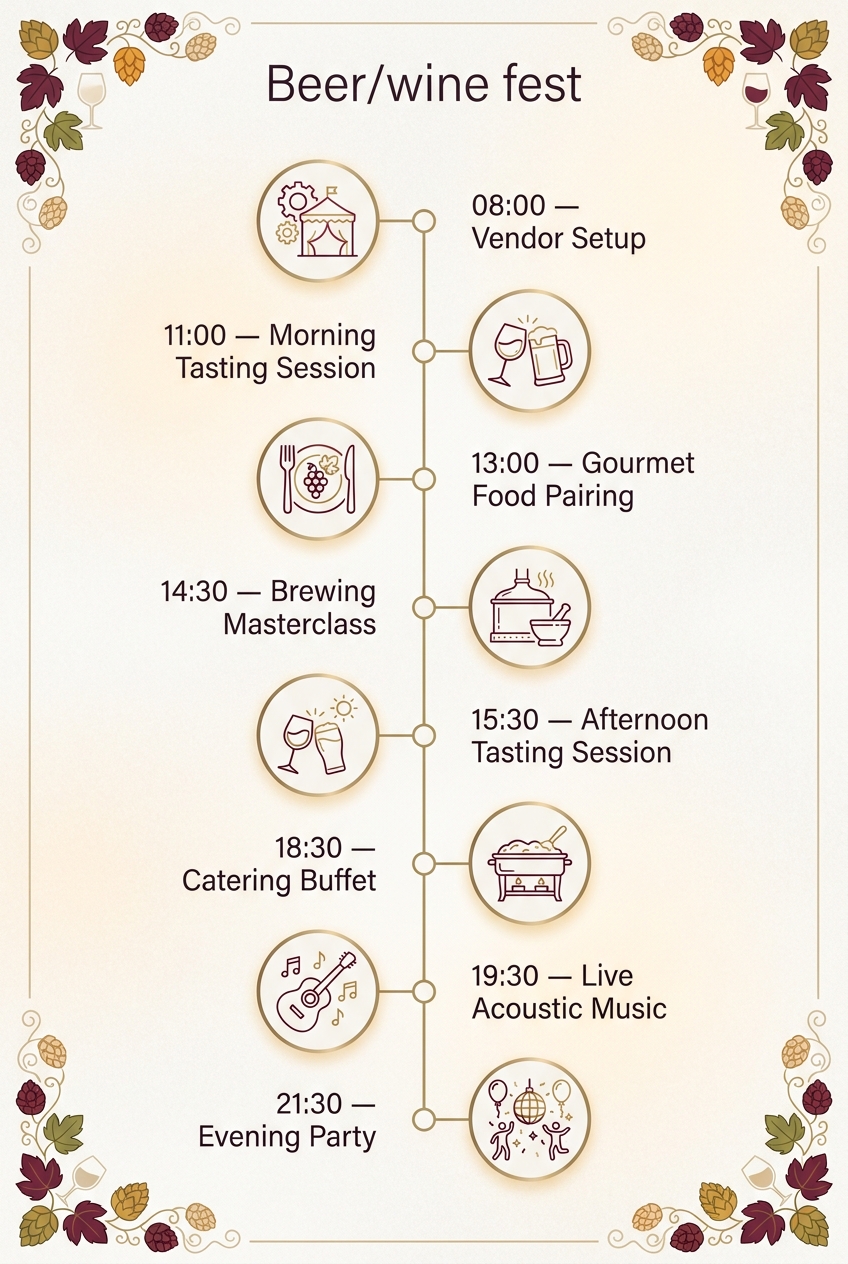
Why Beer/wine fests Need a Timeline
Running a multi-vendor beverage festival is fundamentally different from organizing a standard conference or market. You are balancing strict municipal alcohol control regulations, perishable inventory, and heavy attendee foot traffic within strict time windows.
- Vendor and Supply Chain Coordination: Breweries and wineries need specific load-in windows to unload heavy kegs, jockey boxes, and cases of wine. A structured timeline ensures pallet jacks and ice deliveries do not block guest entryways during public doors.
- Crowd and Consumption Management: Unlimited or token-based pouring can lead to rapid overconsumption if sessions are not clearly defined. Staggered tasting sessions give your floor managers control over alcohol service while ensuring mandatory hydration and food pairing intervals are respected.
- Staff and Security Synchronization: Security teams, ID checkers, and volunteers must know exact shift changes, gate openings, and last-call times. A shared schedule ensures that age-verification wristbanding begins well before doors open, preventing bottlenecking at the front entrance.
For organizers managing broader culinary gatherings, you might also want to pair this guide with our Food and Drink Festival Timeline & Schedule Template to coordinate larger kitchen setups alongside beverage pourers.
What to Include in a Beer/wine fest Timeline
To build a seamless event, your master schedule must incorporate every phase of the guest and vendor journey:
- Vendor Load-In & Technical Setup: Floor assignments, draft line balancing, refrigeration check, and glassware deployment.
- Morning/Early Tasting Session: Gate processing, souvenir glass distribution, initial light lager and crisp white wine pours.
- VIP & Exclusive Pairings: Private lounge activations featuring sommelier- and brewmaster-guided culinary small bites.
- Educational Seminars: Hop selection lectures, fermentation masterclasses, and winemaker panel discussions.
- Afternoon High-Volume Tasting: Transitioning to heavier stouts, aged reds, and high-ABV craft offerings.
- Meal & Hydration Breaks: Dinner buffets, food truck service, and mandatory water refills.
- Main Stage Entertainment: Live acoustic acts, main stage musical performances, and ambient atmosphere control.
- Late Night Party & Retail Sales: Closing festivities, bottle shop sales, last call, and vendor load-out routines.
Vendor Setup and Morning Session
| Time | Event |
|---|---|
| 08:00 | Vendor Setup |
| 11:00 | Morning Tasting Session |
The foundation of a smooth festival day starts long before the public arrives. Beginning at 08:00, vendor load-in requires disciplined dock management to handle trucks loaded with draft equipment, jockey boxes, kegs, and cases of wine. During this early morning window, event logistics teams distribute bags of ice, place glass-rinse buckets at every station, and verify that all vendor pouring permits and tax documentation are visibly posted. Venue technicians check power drops for draft refrigeration units while staff set up main entrance ticketing lanes, organizing thousands of souvenir tasting glasses and age-verification wristbands.
At 11:00, the main exhibition hall gates open to initiate the morning tasting session. Opening with lighter beverage profiles like crisp pilsners, session IPAs, and bright white wines allows guests to calibrate their palates before moving on to heavier products. Entrance queues move quickly when ticket scanning and ID checks are separated into dedicated lanes. As attendees enter, they receive their official festival map and commemorative glassware, spreading out across the main hall without overwhelming individual brewery or winery booths.
If your event shares operational overlap with artisan pop-ups or merchant booths, consider referencing our Craft Fair Schedule Template (Free Day-of Agenda) for managing multi-booth floor layouts.
VIP Experience and Educational Masterclasses
| Time | Event |
|---|---|
| 13:00 | Gourmet Food Pairing |
| 14:30 | Brewing Masterclass |
| Time | Event |
|---|---|
| 13:00 | Gourmet Food Pairing |
| 14:30 | Brewing Masterclass |
By midday, the festival transitions into its premium educational offerings. At 13:00, the VIP Tasting Lounge hosts an exclusive gourmet food pairing. This controlled environment gives premium ticket holders an elevated seat-down experience featuring artisanal cheeses and charcuterie paired deliberately with rare barrel-aged beers and single-vineyard vintages. Cicerones and sommeliers walk guests through flavor affinities, explaining how acidity, carbonation, and tannin structures elevate culinary pairings.
Following lunch, attention shifts to the main seminar stage at 14:30 for the brewing masterclass. While general tasting continues on the floor, engaged enthusiasts gather to hear local brewmasters dissect hop dry-hopping techniques, yeast strain selection, and mash temp chemistry. Structuring educational panels during the middle of the day serves a double purpose: it offers intellectual value for dedicated hobbyists while temporarily diverting crowd density away from the main pouring aisles.
Afternoon Tasting Session and Dining Phase
| Time | Event |
|---|---|
| 15:30 | Afternoon Tasting Session |
| 18:30 | Catering Buffet |
The 15:30 afternoon session represents the peak operational footprint of the festival. Floor captains must perform mid-day ice replenishments and dump bucket empties right before this window begins. During this three-hour block, vendors introduce their bolder inventory—imperial stouts, double IPAs, full-bodied Cabernet Sauvignons, and fortified wines. Because higher ABV products are now being poured, floor security and medical personnel increase their hall sweeps, ensuring water stations remain fully stocked and functional.
At 18:30, as the main afternoon session winds down, guests are guided toward the outdoor patio for a hearty catering buffet. Serving high-protein, substantial food options like sliders, wood-fired pizzas, and street tacos is a mandatory risk-management strategy when hosting alcohol events. Transitioning guests from the indoor exhibition floor to outdoor patio dining encourages a natural break in drinking, allowing patrons to rest, hydrate, and prepare for evening entertainment.
If you are incorporating community cultural elements or regional heritage acts into your food and drink programming, you can review our Local Culture Fest Schedule & Timeline Template for ideas on managing stage transitions.
Evening Stage Entertainment and After-Party
| Time | Event |
|---|---|
| 19:30 | Live Acoustic Music |
| 21:30 | Evening Party |
As night falls, the energy of the festival pivots from technical tasting to social celebration. At 19:30, live acoustic music kicks off on the main stage. Positioned near the patio and main lounge, live musical acts shift attendee focus toward social relaxation and away from rapid line-standing. Audio levels are carefully balanced to keep the atmosphere energetic without drowning out conversation, while vendors transition to pouring their remaining standard offerings.
At 21:30, the event enters its final phase with the main hall evening party. Upbeat music maintains high spirits while vendors initiate bottle shop operations, giving attendees their final opportunity to purchase closed retail bottles and packaged cans to take home. At 22:30, pourers declare last call, allowing venue staff to wind down alcohol service smoothly before final hall clearance at 23:00.
For organizers holding seasonal winter or holiday tasting events, our Holiday Market Schedule Template (Free Agenda & Guide) offers specialized insight into evening crowd management under festive lighting setups.
Beer/wine fest Timeline vs Event Checklist
Event planners often confuse an event timeline with an event checklist. While both are critical tools, they serve distinctly different functions during a high-stakes festival day.
| Feature | Beer/Wine Fest Timeline | Event Day-of Checklist |
|---|---|---|
| Primary Focus | Chronological flow and synchronized execution | Task completion and item verification |
| Structure | Time-stamped hourly or minute-by-minute schedule | Categorized list of physical to-dos |
| Primary Users | Event Director, Stage Managers, Floor Captains | Setup Crew, Volunteers, Individual Vendors |
| Key Variable | Time, venue zones, and inter-departmental triggers | Status (Pending / In Progress / Completed) |
| Example Content | "15:30 - Afternoon session opens in Main Hall" | "Confirm 500 lbs of ice delivered to Zone B" |
A checklist ensures that you didn't forget to order spit buckets or wristbands, whereas a timeline ensures that those buckets and wristbands are positioned before gates open. You need the checklist during pre-production, but on the day of the event, the timeline is what keeps your operation running on time.
Who Should Use This Template?
This festival master schedule is built for professionals and community leaders running craft beverage experiences across various scales:
- Commercial Craft Beer & Wine Festival Organizers managing high-capacity, multi-session tasting conventions.
- Boutique Wineries and Craft Breweries Associations hosting annual guild showcases or regional fundraising galas.
- Venue Managers and Event Directors overseeing convention centers, fairgrounds, or outdoor parks.
- Non-Profit Foundations and Cultural Agencies executing charity tasting events and community food fairs.
- Hospitality Groups and VIP Experience Coordinators running private sommelier dinners and masterclasses.
Keep in mind that Chronolio provides custom views tailored specifically for different team roles, allowing your security chief, stage manager, and beverage director to view personalized sub-schedules derived from this single master schedule.

How to Use This Template
- Download or Duplicate the Schedule: Start by downloading our editable files (Beer/Wine Fest Schedule Docx or Beer/Wine Fest Schedule PDF), or click the edit button above to open this layout directly in Chronolio.
- Adjust Session Windows for Local Regulations: Modify your doors open and last-call times to comply with local alcohol licensing boards and municipality curfew rules.
- Assign Zone Responsibilities: Map specific teams (security, ice crew, glassware distribution, stage hands) to each timeframe on the schedule.
- Distribute to Vendors in Advance: Send the load-in and setup portions of the timeline to participating breweries and wineries at least two weeks before the event to prevent morning dock bottlenecks.
- Publish Guest-Facing Highlights: Extract public session times, masterclass schedules, and music line-ups to post on your festival website and printed event programs.
Tips for a Successful Beer/wine fest
- Establish a Dedicated Ice and Water Fleet: Never make vendors hunt for ice or water. Assign a dedicated logistics crew with rolling carts to continuously re-supply ice and rinse water throughout active sessions.
- Separate ID Checking from Ticket Scanning: Bottlenecks happen when one staff member tries to check IDs, scan tickets, and hand out glasses simultaneously. Set up pre-check wristbanding stations along the queue line so patrons enter with wristbands already secured.
- Mandate Spit Buckets and Rinse Stations: Place rinse pitchers and dump buckets every four feet along vendor counters. Proper sanitation and palate cleansing are essential for high-end wine and beer tasting.
- Position High-Profile Vendors Strategically: Spread headline breweries and famous wineries across different corners of the venue. Placing major attractions side-by-side causes localized hall congestion.
- Schedule Mandatory Floor Cleanings: Plan a 30-minute buffer between afternoon and evening sessions to perform floor sweeps, empty trash cans, mop spills, and restock restrooms.
- Provide Abundant Free Hydration: Position self-service water stations prominently throughout the venue. Hydrated guests stay safer and enjoy the event longer.
Common Mistakes to Avoid
- Underestimating Morning Load-In Time: Allowing only one hour for vendor setup is a recipe for disaster. Jockey boxes freeze, draft lines leak, and wine bottles need chilling. Always allow a minimum of two to three hours for vendor setup.
- Forgetting Vendor Break Protocols: Brewery and winery reps stand for hours pouring non-stop. If you don't schedule floating volunteers to cover vendor relief breaks, reps become fatigued and service stalls.
- Ignoring Draft Line Technical Support: Draft systems fail under high demand. Not having an on-site draft technician or jockey box mechanic on call causes long line delays when lines freeze or pour pure foam.
- Over-scheduling Overlapping Seminars: Running major masterclasses during peak general tasting hours can fragment attendance. Time educational sessions during natural transition periods or early session hours.
- Neglecting Evening Retail Compliance: If selling bottles for off-premise consumption at night, failing to seal bags or clear regulatory permissions can result in severe licensing fines. Ensure legal protocols are scheduled and strictly enforced.
In Summary
- Comprehensive Structure: Covers early morning dock setup through evening party wrap-up across eight clear time blocks.
- Balanced Flow: Integrates general tasting sessions with exclusive VIP food pairings and educational brewing masterclasses.
- Risk Management Built-In: Inbuilt meal buffers, hydration windows, and security checks ensure regulatory compliance and guest safety.
- Vendor Friendly: Provides realistic two-hour load-in and preparation windows to set up complex draft and wine equipment.
- Fully Customizable: Designed to be easily edited for single-day shows, outdoor park festivals, or indoor convention centers.
Planning a late-evening outdoor gathering or multi-sensory festival layout? Explore our Light Festival Schedule Template (Free Agenda & Guide) for specialized timing strategies on outdoor ambient lighting and crowd navigation.
Whether you are managing an independent craft brewery showcase, a regional winemakers' expo, or a large-scale municipal festival, maintaining strict control over your schedule is the key to delivering a memorable, profitable, and safe experience. Using this master schedule ensures your staff, vendors, entertainment, and attendees remain perfectly aligned from first pour to final curtain.
Customize Your Beer/Wine Fest TimelineExternal References for Festival Operators:
- Learn more about craft beer safety and event operational guidelines from the Brewers Association.
- Review professional wine service and tasting protocol standards via the Guild of Sommeliers.