




This Template at a Glance
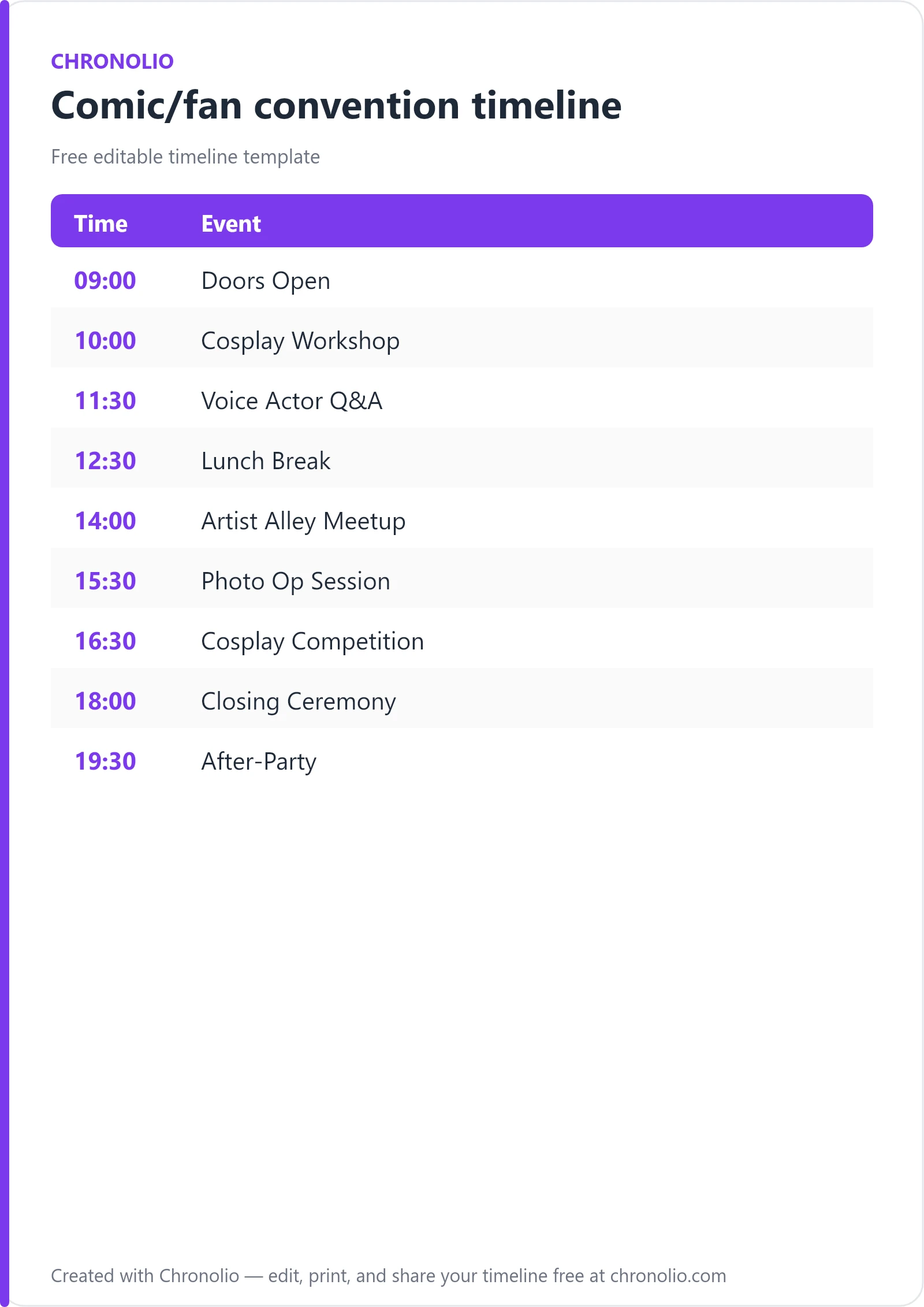
Here is the complete schedule this free template gives you — every time block, ready to edit, download, and share:
| Time | Event |
|---|---|
| 09:00 | Doors Open |
| 10:00 | Cosplay Workshop |
| 11:30 | Voice Actor Q&A |
| 12:30 | Lunch Break |
| 14:00 | Artist Alley Meetup |
| 15:30 | Photo Op Session |
| 16:30 | Cosplay Competition |
| 18:00 | Closing Ceremony |
| 19:30 | After-Party |
Comic/fan convention timeline: What It Is and How It Works
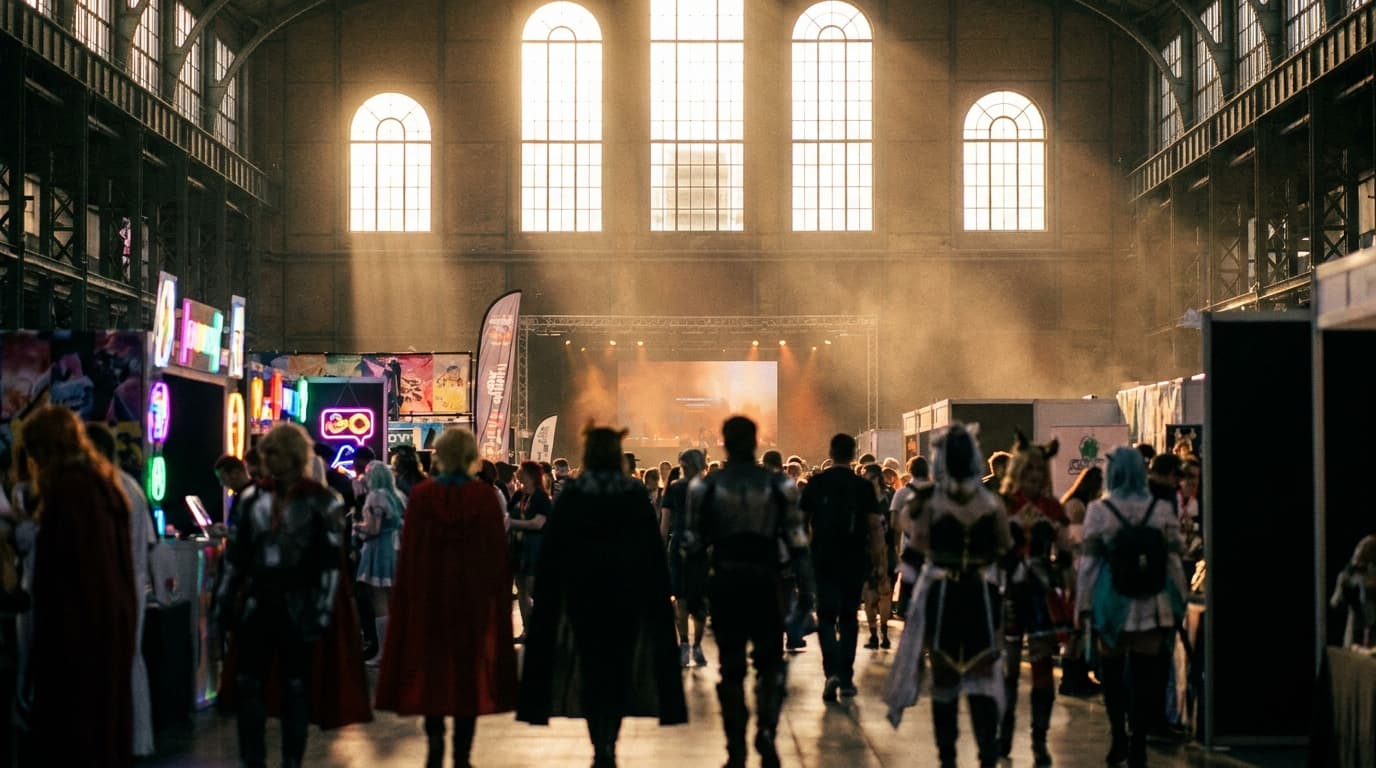
A comic/fan convention timeline is the operational backbone of any pop-culture gathering, coordinating thousands of passionate fans, celebrity guests, indie creators, and venue staff across multiple program tracks. Managing a convention requires tight logistics: you are balancing high-stakes main stage appearances with quiet workshop spaces, fast-paced photo studios, and bustling exhibition floors.
In my years managing large-scale fan gatherings, I have learned that a convention schedule is far more than a public agenda published in a show guide. It is a precise choreography of crowd control, green room logistics, prop safety inspections, and tech turnarounds. Designed using real-world convention operations and crowd dynamics best practices, this schedule ensures your event runs smoothly from badge pickup to the final after-party.
Customize your comic/fan convention timeline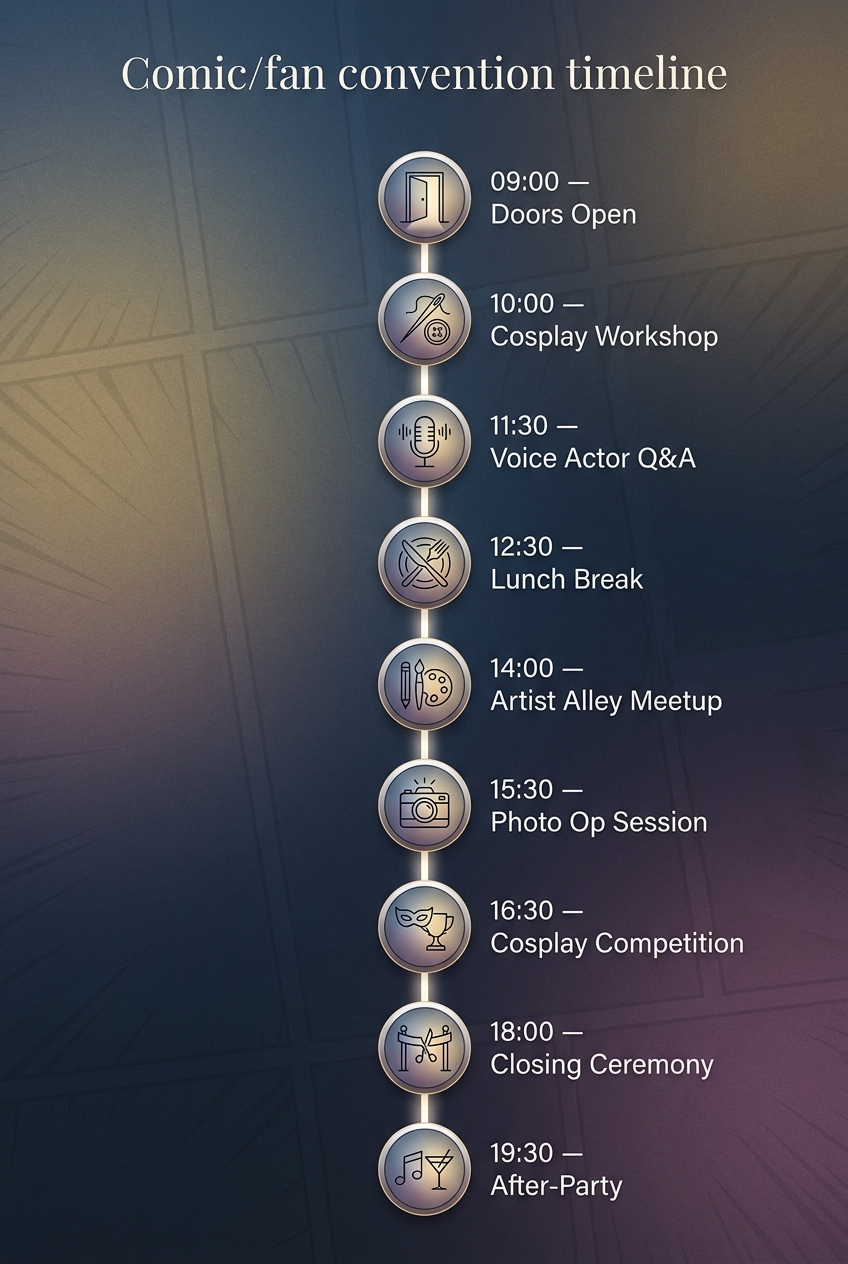
Why Comic/fan Conventions Need a Timeline
Pop-culture conventions are unique because they run multiple high-energy operational zones simultaneously. Without a rigid schedule, hallway choke points develop, celebrity appearances run over, and disappointed fans miss panels they queued hours to see.
A well-structured schedule gives your operations team the power to manage queue lines, clear panel rooms efficiently, and prevent hall congestion. When line managers know exactly when a room empties, they can pre-queue attendees safely without blocking fire exits or vendor aisles.
Furthermore, talent management relies heavily on precise timing. Guest speakers, voice actors, and professional cosplayers often operate on tight contracts with strict session times, autograph caps, and photo op schedules. A master timeline keeps talent handlers, security leads, and technical crews perfectly aligned.
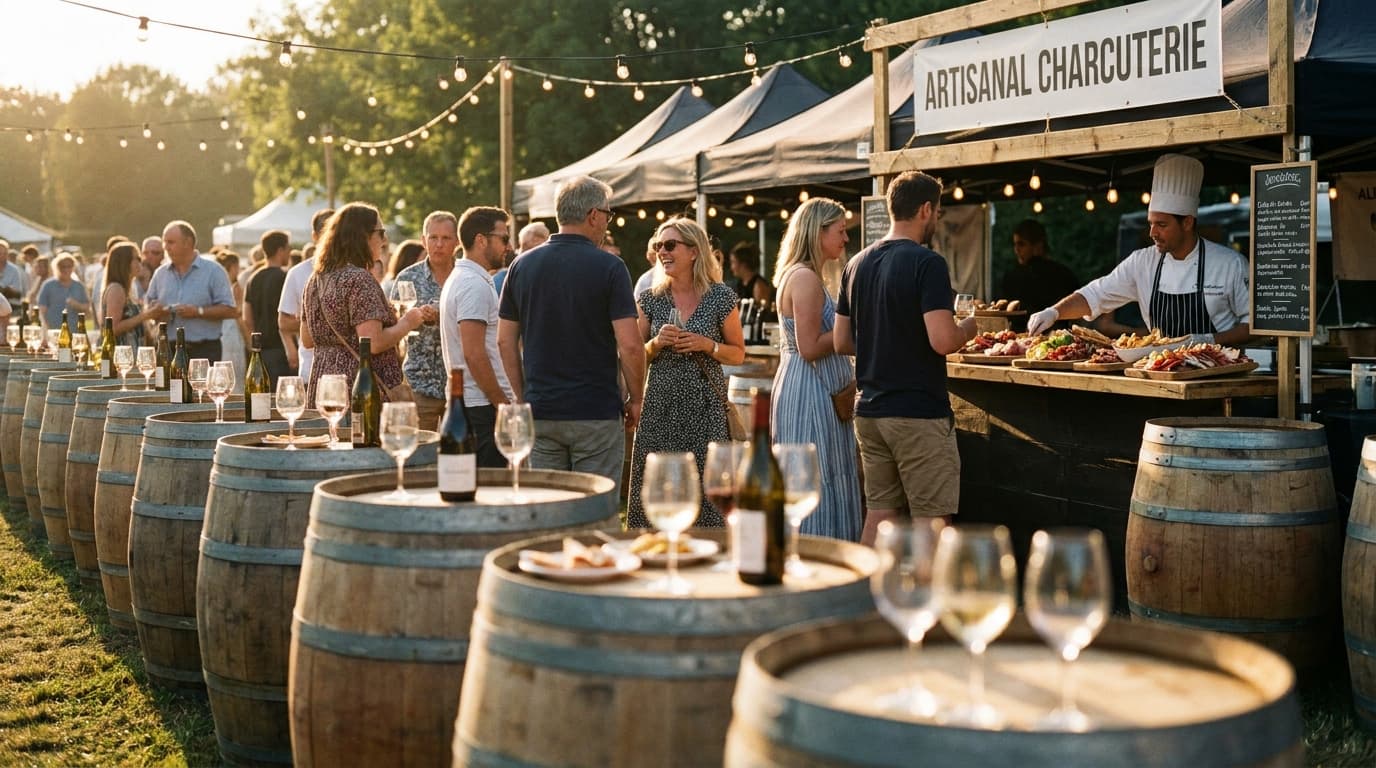
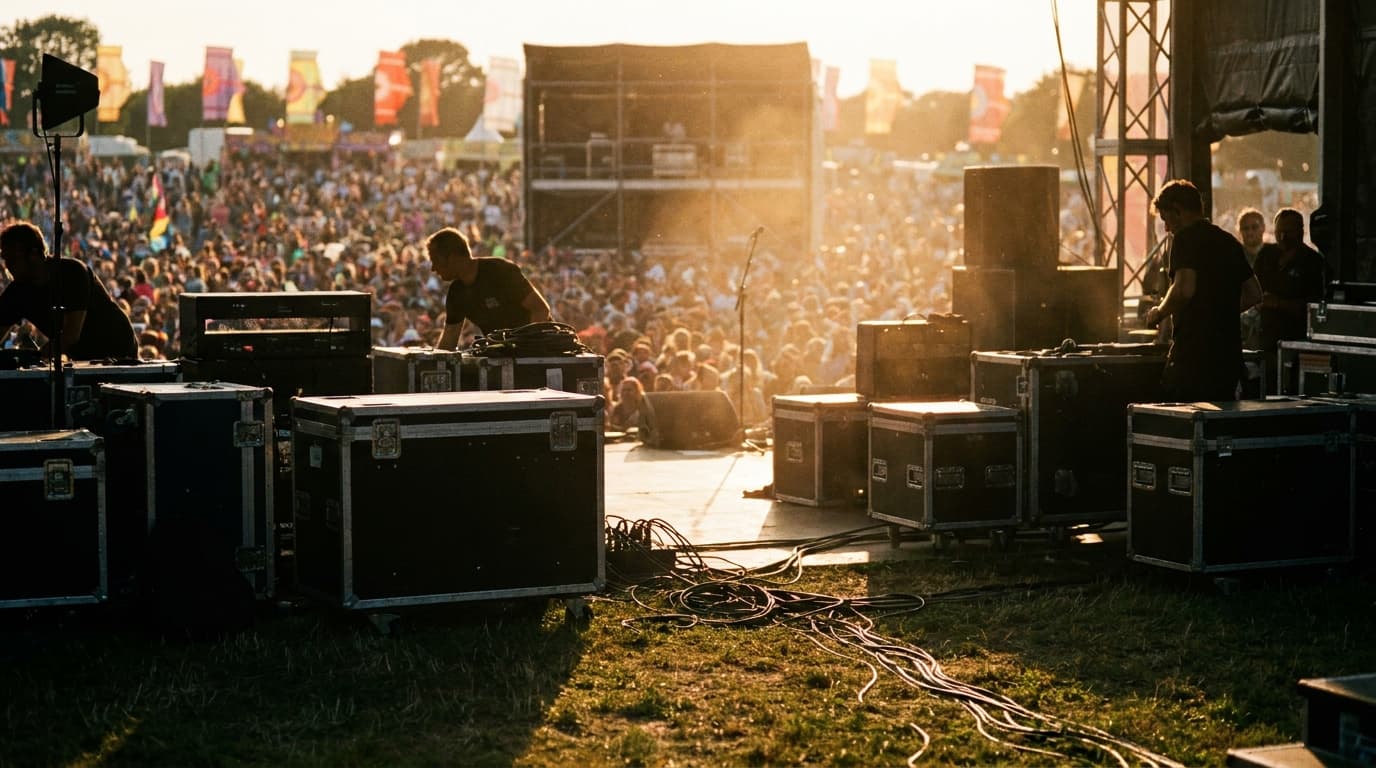
Much like managing complex multi-stage events—such as running a multi-stage Music festival timeline: A Proven Strategy for Success or balancing vendor stalls on a Food and Drink Festival Timeline: A Proven Day-of Schedule—a convention demands clear, zone-by-zone timing to protect attendee safety and vendor profitability.
What to Include in a Comic/fan Convention Timeline
When building out your convention master plan, ensure your running order incorporates these vital operational phases:
- Doors Open & Registration: Managing early morning arrival surges, weapons check/prop inspection, and badge collection.
- Main Stage Headliners: High-capacity Q&A panels featuring voice actors, comic creators, or media celebrities.
- Interactive Workshops: Hands-on panel discussions focused on cosplay fabrication, prop building, writing, or illustration.
- Exhibitor & Artist Alley Hours: Continuous access to comic creators, merchandise vendors, and indie illustrators.
- Professional Photo & Autograph Sessions: Dedicated, highly structured studio times designed to move attendees quickly through photo queues.
- Marquee Competitions: Late-afternoon cosplay contests, craftsmanship judging, and masquerades.
- Official Closing & After-Hours Events: Closing ceremonies, prize announcements, and night-time social parties.
Morning Setup and Opening Sessions
| Time | Event |
|---|---|
| 09:00 | Doors Open (Main Entrance) |
| 10:00 | Cosplay Workshop (Panel Room A) |
| 11:30 | Voice Actor Q&A (Main Stage) |
The opening phase sets the tone for the entire convention day. Opening the doors at 09:00 requires your registration desk, security detail, and prop-check team to be fully staffed at least 45 minutes prior. Early arrival management prevents dangerous queue spillover into street traffic or lobby spaces.
Transitioning into the 10:00 workshop block gives early arrivals a destination, drawing crowds away from the entrance lobby into designated panel rooms. Placing hands-on workshops—like foam crafting or sewing—in dedicated secondary rooms keeps the main concourse clear. By 11:30, your first major main stage draw, the Voice Actor Q&A, kicks off. Notice the 30-minute buffer between 11:00 and 11:30; this critical interval lets room monitors clear Panel Room A and allows attendees to walk across the venue to the main stage without rushing.
Midday Break and Fan Interaction
| Time | Event |
|---|---|
| 12:30 | Lunch Break (Outdoor Plaza) |
| 14:00 | Artist Alley Meetup (Artist Alley) |
| 15:30 | Photo Op Session (Photo Studio B) |
Midday is when venue traffic reaches peak density. Scheduling an explicit lunch break at 12:30 encourages attendees to exit the main stage and move toward outdoor food trucks or plaza seating. Much like coordinating vendor movement at a Holiday market schedule: A Proven Guide for Event Success, giving attendees clear food options keeps dining queues manageable and keeps energy high for the afternoon.
At 14:00, steering attendees toward Artist Alley supports your indie creators during prime shopping hours. Artist Alley meetups allow fans to purchase original sketches, buy prints, and get comic books signed in an open-floor format. Follow this with structured, professional photo sessions in Photo Studio B at 15:30. Photo ops must run on strict 15- to 30-second turnaround per fan; professional photographers and line handlers keep this ticketed segment on time so guest talent stays on schedule.
Evening Highlights and After-Hours
| Time | Event |
|---|---|
| 16:30 | Cosplay Competition (Main Stage) |
| 18:00 | Closing Ceremony (Main Stage) |
| 19:30 | After-Party (Grand Hall) |
Late afternoon presents your event's main highlight: the Cosplay Competition at 16:30. Hosting craftsmanship judging earlier in the day allows cosplayers to take the main stage effortlessly during this block, keeping stage transitions fast and entertaining for the audience.
Directly following the contest, the 18:00 Closing Ceremony offers a natural conclusion to the daytime program. Organizers use this hour to distribute award ribbons, thank volunteers, announce raffle winners, and preview dates for next year's convention.
After a short setup pause, the Grand Hall reopens at 19:30 for the official after-party. Transitioning from an exhibition format to an evening celebration—complete with a live DJ and refreshments—keeps adult attendees engaged on-site long after the main exhibit hall closes. This dual daytime-to-evening format mirrors the operational shift seen when running a Local Culture Fest: A Proven Timeline for Success or a community night-market.
Comic/fan Convention Timeline vs Event Program Guide
It is essential for convention planners to distinguish between an internal operational timeline and the public program guide given to attendees.
| Feature | Master Operational Timeline | Public Event Program Guide |
|---|---|---|
| Primary Audience | Staff, security, stage crew, guest handlers | Convention attendees, general public |
| Detail Level | Technical cues, green room times, room resets | Start times, panel titles, speaker names |
| Queue Management | Line setup times, room clearing protocols | Scheduled start and end times |
| Talent Logistics | Contractual breaks, VIP transport, arrival windows | Public Q&A windows and photo op slots |
| Flexibility | Dynamic; updated real-time by operations | Static print or mobile app listing |
While the public program tells attendees when a panel begins, the master operational timeline tracks when green rooms open, when technical resets happen, and when line caps take effect. Keeping these two views distinct avoids confusing attendees with internal logistical steps while giving crew members the precise timing they need behind the scenes.
Who Should Use This Template?
This timeline template is designed for convention organizers, venue managers, and fan community leaders who need a reliable operational structure. Chronolio supports various organizational roles involved in event execution, making it perfect for:
- Comic and Pop-Culture Conventions: Multi-genre shows featuring artists, celebrity panels, and exhibit floors.
- Anime and Gaming Expos: High-density events focused on voice talent, esports, and cosplay showcases.
- Niche Fan Meetups and Mini-Cons: Single-day regional gatherings run by local fan clubs or comic shops.
- Craft and Creator Fairs: Indie art markets that share similar layouts to an Artist Alley—similar to organizing a Craft Fair Schedule: A Proven Timeline for Success.
- Media & Franchised Fan Events: Studio-backed conventions requiring strict talent management and press access timing.
How to Use This Template
- Download or Duplicate: Start by customizing this schedule in Chronolio, or download offline copies via the /downloads/comic-fan-convention-timeline.docx or /downloads/comic-fan-convention-timeline.pdf links.
- Set Your Event Date & Hours: Adjust the overall operating window to align with your venue contract and rental hours.
- Customize Programming Blocks: Tailor panel titles, main stage headliners, and guest appearances to match your finalized talent roster.
- Assign Department Leads: Attach specific roles (e.g., Stage Manager, Security Lead, Guest Handler) to each line item so accountability is absolute.
- Distribute to Venue & Staff: Share the master timeline with venue management, AV technicians, security teams, and volunteer leads ahead of time.
Tips for a Successful Comic/fan Convention
- Enforce Room Clearing Rules: Establish a clear policy on whether panel rooms are cleared between sessions to prevent attendees from camping in seats all day.
- Incorporate Prop and Weapons Checks: Set up dedicated security stations right at entry doors to inspect, tag, and approve cosplay props before fans enter the main floor.
- Cap Queue Lines Early: Train line management volunteers to cap lines as soon as a room reaches maximum seated capacity to avoid blocking venue walkways.
- Protect Talent Green Rooms: Maintain a secure, quiet green room area away from the main concourse where celebrity guests and panelists can rest between sessions.
- Schedule Adequate AV Buffer Time: Never schedule back-to-back main stage panels without at least 15 to 30 minutes for microphone handoffs and laptop swaps.
- Provide Volunteer Relief Breaks: Ensure floor volunteers and badge checkers rotate out every 2 to 3 hours so staff remain helpful and energized.
- Utilize Real-Time Digital Updates: Use digital signage or push notifications via your event app to alert attendees if a panel room changes or a line is full.
Common Mistakes to Avoid
- Overbooking Panel Rooms: Packing sessions back-to-back with zero turnaround time guarantees panels will run over schedule by mid-afternoon.
- Ignoring Crowd Flow Bottlenecks: Placing popular photo studios or celebrity autograph tables in narrow hallways creates gridlock across the floor.
- Underestimating Cosplay Pre-Judging: Running a cosplay competition without morning pre-judging forces stage judges to evaluate complex craftsmanship in seconds, causing major delays.
- Forgetting Catering for Crew & Guests: Leaving green rooms without water or failing to plan crew lunch schedules causes staff exhaustion and talent dissatisfaction.
- Neglecting Security Buffer Zones: Failing to maintain designated queuing spaces around high-profile panels leads to fire code violations and hall closures.
- Failing to Publish Rules Early: Leaving prop policies, cosplay rules, or queueing guidelines unannounced until day-of leads to long registration delays.
In Summary
- Master Operational Tool: This comic/fan convention timeline manages overall event flow, stage transitions, and venue security.
- Balanced Programming: Integrates high-capacity main stage Q&As with small workshops, Artist Alley shopping, and evening parties.
- Crowd Control Built-In: Features mandatory buffer times between panels to keep concourses clear and queue lines manageable.
- Talent Friendly: Provides clear windows for celebrity arrivals, photo ops, green room breaks, and autograph sessions.
- Fully Customizable: Easily exportable to PDF or Word formats for venue managers, AV crews, and volunteer leads.
Organizing a successful pop-culture gathering requires keeping hundreds of moving parts in balance. According to event safety guidelines from industry resources like the Event Safety Alliance, clear scheduling and proactive crowd management are essential for maintaining life safety and venue compliance during high-density assemblies. By implementing this structured timeline, you can deliver an unforgettable experience for fans, guests, and creators alike.
Customize your comic/fan convention timeline