





This Template at a Glance
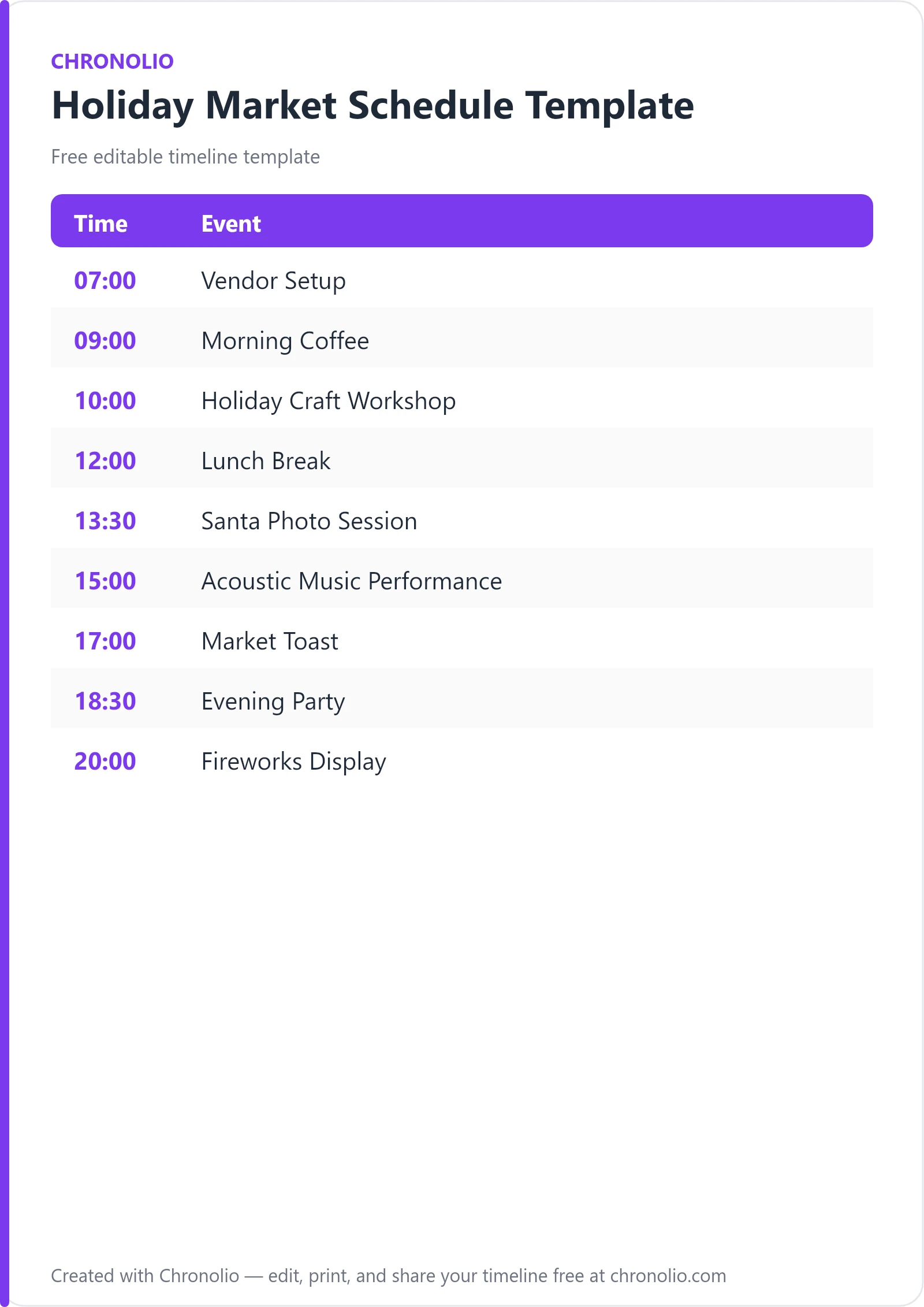
Here is the complete schedule this free template gives you — every time block, ready to edit, download, and share:
| Time | Event |
|---|---|
| 07:00 | Vendor Setup |
| 09:00 | Morning Coffee |
| 10:00 | Holiday Craft Workshop |
| 12:00 | Lunch Break |
| 13:30 | Santa Photo Session |
| 15:00 | Acoustic Music Performance |
| 17:00 | Market Toast |
| 18:30 | Evening Party |
| 20:00 | Fireworks Display |
What Is a Holiday Market Schedule?
A holiday market schedule is the operational master timeline that governs every moving part of a seasonal outdoor or indoor community market. It defines exact start and end times for vendor load-in, public open hours, scheduled stage performances, children's activities, and night-time special events.
Managing a winter market requires juggling dozens of artisan stallholders, mobile food caterers, stage performers, and thousands of attendees across multiple venue zones. Without a unified day-of running order, key activities overlap, crowd bottlenecks form near popular attractions, and vendors miss out on peak foot traffic windows.
This operational guide reflects proven event management best practices gathered from hundreds of successful street fairs, seasonal bazaars, and outdoor winter festivals. By coordinating your vendor setup with entertainment milestones, you protect your venue safety, keep attendees engaged for longer periods, and ensure stallholders experience smooth sales operations from morning to night.
Customize Your Holiday Market Schedule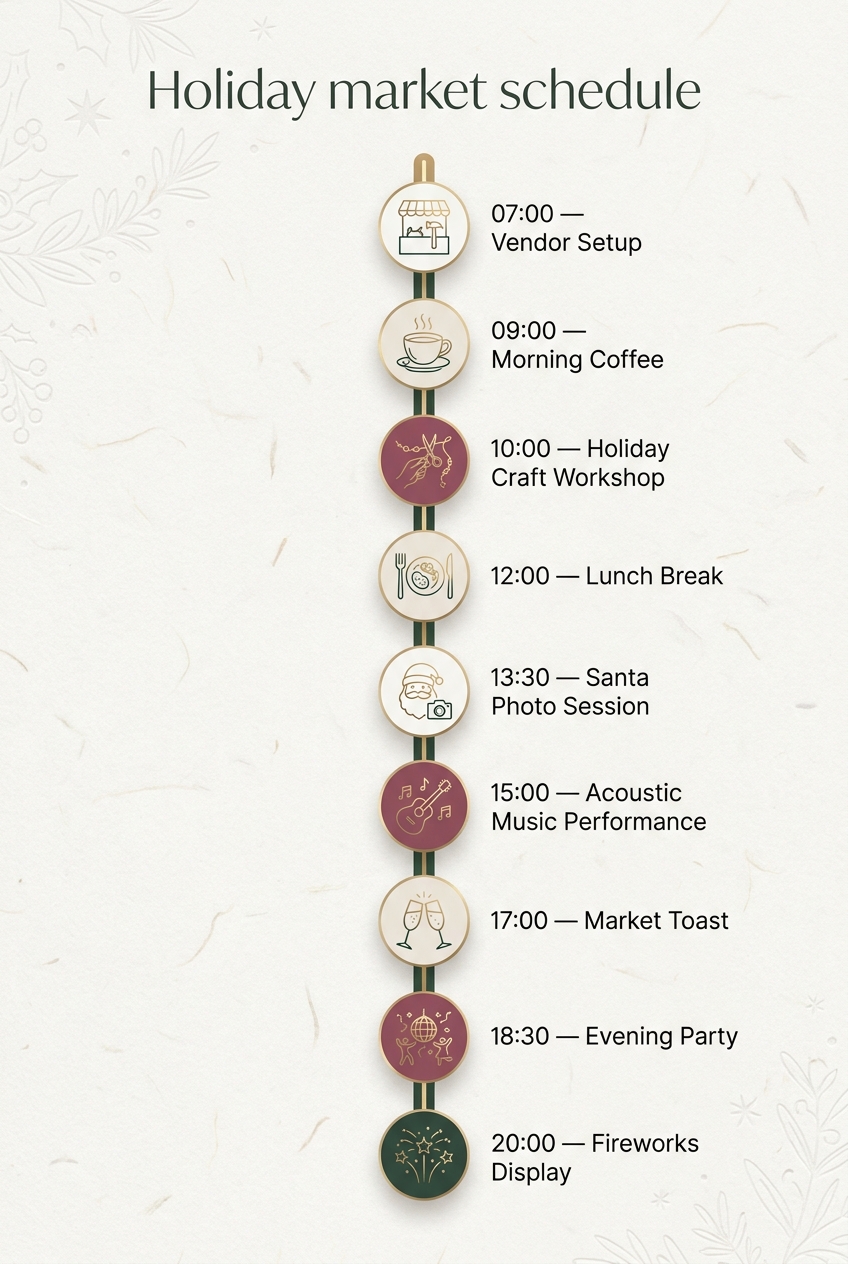
Why Holiday Markets Need a Timeline
A structured schedule is the single most critical asset for market organizers, venue managers, and municipal safety teams. Seasonal markets operate under strict space and environmental constraints, often taking place in pedestrianized city squares, parks, or historic venues during cold weather.
- Prevents logistical gridlock during load-in: Establishing staggered arrival windows keeps delivery vans and vendor vehicles from blocking narrow emergency lanes or main footpaths before opening.
- Balances crowd distribution across the venue: Spacing out major attractions like Santa visits and stage performances prevents dangerous crowd densities near high-traffic stall zones.
- Extends attendee dwell time and spending: Offering timed activities from morning coffee through evening fireworks encourages visitors to stay longer and spend more with food and craft vendors.
- Aligns staff, volunteers, and emergency services: A shared run-sheet ensures site operations teams, security personnel, and sound engineers know exactly when shifts, announcements, and key site transitions occur.
When you pair your holiday market schedule with a dedicated craft fair schedule template, you gain complete control over both retail vendor expectations and public entertainment flow.
What to Include in a Holiday Market Schedule
To ensure your seasonal market operates smoothly, your master document must capture both backstage operational milestones and front-of-house public programming:
- Vendor Load-In & Logistics: Designated vehicle access times, booth allocation, electrical safety checks, and waste disposal windows.
- Soft Opening & Hospitality: Morning beverage services, background ambient music, and quiet browsing periods for early arrivers.
- Interactive Family Programming: Scheduled craft workshops, story readings, and reserved slots for photo opportunities in Santa's Grotto.
- Food & Beverage Peaks: Dedicated lunch and dinner service periods supported by seating maintenance and waste management clearing.
- Stage & Live Entertainment: Sound checks, local choir performances, acoustic soloists, and official speeches or lighting ceremonies.
- Night-Time Transitions & Special Effects: Decorative light activations, evening DJ or band sets, and controlled pyrotechnics or fireworks displays.
- Post-Event Pack-Down: Clear site evacuation times, vendor load-out sequencing, and public safety sweeps.
Morning Setup & Soft Opening
| Time | Event |
|---|---|
| 07:00 | Vendor Setup |
| 09:00 | Morning Coffee |
The early morning hours are critical for building a safe, organized, and visually appealing market footprint. Beginning vendor load-in at 07:00 gives artisan stallholders and food truck operators two full hours to unpack merchandise, assemble display racks, and complete required electrical equipment checks without public interference. Site managers should monitor vehicle access points strictly, ensuring delivery trucks vacate the Main Market Square at least thirty minutes before doors open.
By 09:00, the market transitions into a soft opening centered around the Central Plaza Cafe. Early morning shoppers—often families with young children or seniors seeking a quieter browsing experience—can grab hot beverages and pastries while exploring newly opened stalls. If your event spans multiple days or incorporates culinary focus areas, consider pairing this sequence with a food and drink festival timeline to optimize catering setup and morning health inspections.
07:00 - 09:00 [Vendor Load-In & Setup] -------> Main Market Square (Vehicles clear by 08:30) 09:00 - 10:00 [Soft Opening & Morning Coffee] -> Central Plaza Cafe & Initial Stall Browsing
Daytime Workshops & Family Activities
| Time | Event |
|---|---|
| 10:00 | Holiday Craft Workshop |
| 12:00 | Lunch Break |
| 13:30 | Santa Photo Session |
Mid-morning to early afternoon forms the primary window for family-oriented programming and interactive workshops. Opening the Holiday Craft Workshop at 10:00 inside the heated Community Workshop Tent draws parents and children into the market early, offering hands-on activities like ornament making and wreath crafting. Placing this workshop tent near the perimeter keeps central thoroughfares open while generating steady ambient foot traffic for neighboring craft stalls.
As midday approaches, foot traffic naturally concentrates around food service zones. Scheduling a dedicated lunch break between 12:00 and 13:30 gives food truck operators maximum sales exposure while encouraging shoppers to rest in designated warming zones. Immediately following lunch, opening the Santa Photo Session at 13:30 inside Santa's Grotto captures peak family attendance. Utilizing a ticketing or queue management system at the grotto prevents long, static lines from blocking merchant booth access.
Evening Entertainment & Grand Finale
| Time | Event |
|---|---|
| 15:00 | Acoustic Music Performance |
| 17:00 | Market Toast |
| 18:30 | Evening Party |
| 20:00 | Fireworks Display |
As daylight fades in the late afternoon, the market shifts its atmosphere from family shopping to festive evening celebration. Starting an acoustic stage performance at 15:00 provides a smooth auditory transition, keeping crowds relaxed and engaged as natural lighting dimmers. Positioning live performers on the Main Stage draws shoppers toward central refreshment areas and encourages late-afternoon food and drink purchases.
At 17:00, gather attendees at the Central Stage for the official Market Toast and community speech, celebrating local business sponsors and municipal organizers. This brief formal moment anchors the evening and transitions the venue directly into the 18:30 Evening Party, where festive ambient lighting, uptempo music, and warm seasonal cocktails take center stage. To explore strategies for managing large-scale evening light displays and stage audio, review our light festival schedule guide.
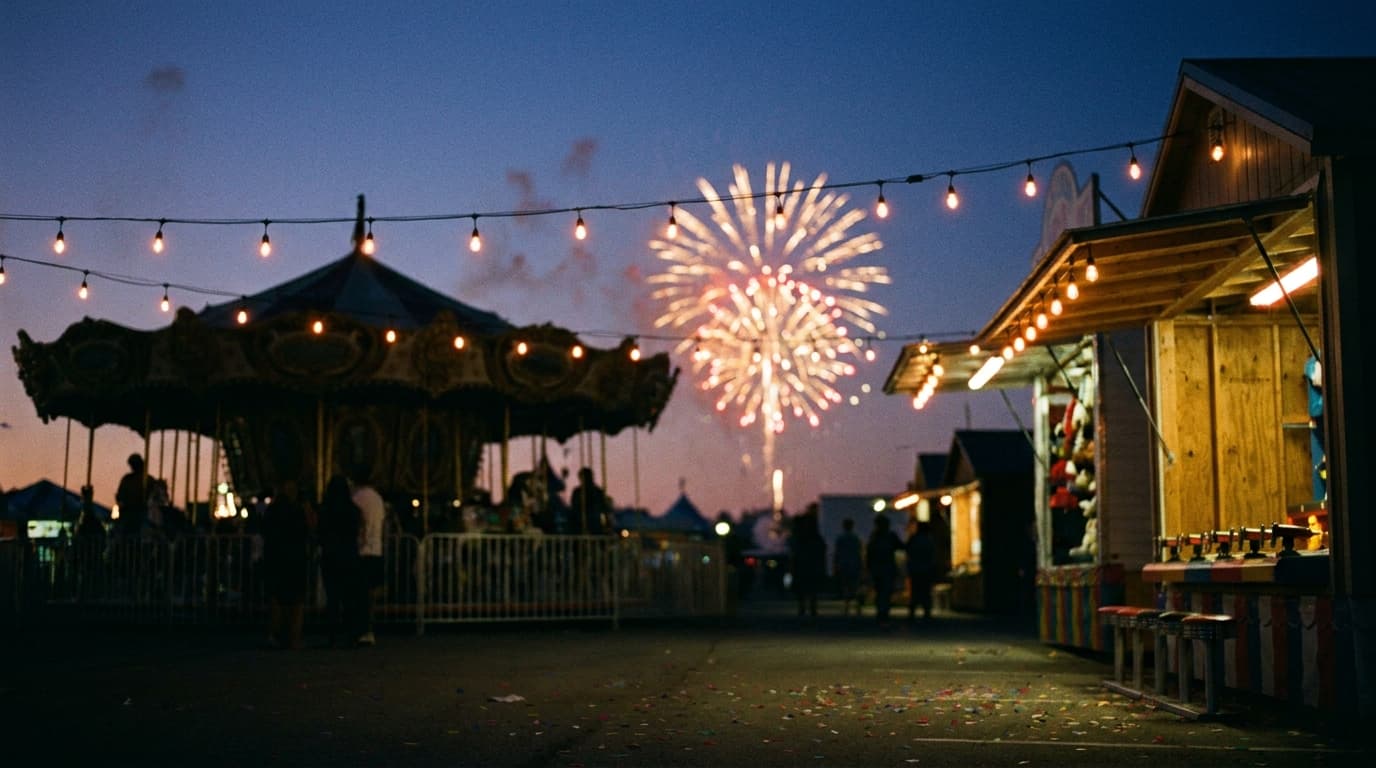
The entire event culminates in a spectacular 20:00 fireworks display launched from the safety of the North Field. Ending the night with a major scheduled highlight ensures attendees stay through the evening hours, maximizing final retail sales for vendors before controlled site egress begins.
Holiday Market Schedule vs Craft Fair Itinerary
While holiday markets and craft fairs share similarities, their operational structures fulfill different operational goals. A holiday market schedule integrates complex entertainment, food operations, and public spectacles, whereas a craft fair itinerary focuses heavily on vendor sales and retail traffic.
| Feature / Dimension | Holiday Market Schedule | Craft Fair Itinerary |
|---|---|---|
| Primary Operational Goal | Balanced community experience, dwell time, and seasonal entertainment | Direct artisan retail sales and maker-buyer engagement |
| Site Layout Complexity | Multi-zone (Stage, Grotto, Food Court, Fireworks Field) | Single or dual hall indoor/outdoor booth aisles |
| Public Entertainment | High (Live bands, Santa visits, ceremonial toasts, fireworks) | Low to Moderate (Background music, sporadic demonstrations) |
| Food & Beverage Integration | High (Dedicated food trucks, hot bar bars, warm dining zones) | Moderate (Standard venue concessions or light catering) |
| Average Attendee Dwell Time | 3 to 6 hours | 1 to 3 hours |
Understanding these differences ensures you select the correct planning framework. If your event centers purely on cultural performances or broad municipal celebrations without heavy retail, consult our local culture fest timeline or music festival timeline guide for alternate scheduling models.
Who Should Use This Template?
This timeline template is designed for event managers, municipal teams, and business groups running festive outdoor or hybrid events. Chronolio provides tailored tools for various professional roles, ensuring seamless collaboration between organizers, venue owners, and contractors.
- Main Street & Business Improvement Districts (BIDs): Municipal officers coordinating town center holiday activations, street closures, and public celebrations.
- Festival & Event Production Companies: Professional planners managing multi-vendor logistics, stage entertainment, and safety compliance.
- Non-Profit & Community Committees: School boards, charity foundations, and local clubs hosting seasonal fundraising bazaars.
- Venue Operators & Historic Estates: Commercial spaces running seasonal winter markets within private grounds or indoor halls.
- Chambers of Commerce: Regional business groups organizing annual artisan trade showcases and holiday shopping expos.
How to Use This Template
- Download or duplicate the master schedule: Access this template directly in Chronolio or download the editable files in Word or PDF formats.
- Set your market dates and operating hours: Adjust the morning start times and evening closing hours to match your site permit and municipal noise ordinances.
- Customize zone assignments: Map specific timeline activities (like the Santa Grotto or Main Stage) to your actual physical site map.
- Distribute role-specific views: Share trimmed versions of the schedule with vendors (load-in focus), technical teams (stage focus), and security (egress focus).
- Publish the public agenda: Export the visitor-facing schedule to your event website, social media channels, and printed venue hand-outs.
Tips for a Successful Holiday Market
- Establish dedicated vendor load-in zones: Avoid site bottlenecks by assigning staggered fifteen-minute arrival windows for merchant vehicles during morning setup.
- Position high-draw attractions strategically: Place popular draws like Santa's Grotto and the Holiday Craft Workshop at opposite ends of the venue to distribute foot traffic evenly across all seller booths.
- Build in thermal comfort zones: Provide outdoor heating lamps, covered seating, or indoor warming tents near food courts to keep attendees comfortable in winter weather, as recommended by the Main Street America community event guidelines.
- Prepare electrical power redundancies: Winter markets rely heavily on lighting, food warmers, and sound systems; ensure a certified site electrician is present during morning load-in to test load distribution.
- Implement clear queue management: Use retractable stanchions and floor signage around the Santa Grotto and workshop tents to keep waiting lines from encroaching on merchant stall walkways.
- Maintain active waste management schedules: Assign dedicated facilities staff to clear trash cans and dining tables every sixty minutes during peak lunch and dinner hours.
Common Mistakes to Avoid
- Overcrowding the morning load-in window: Allowing all vendors to arrive simultaneously at 07:00 leads to vehicle gridlock and delayed booth setup times.
- Ignoring weather contingencies: Failing to secure backup indoor spaces or heavy-duty anchors for outdoor gazebos during unexpected winter wind or rain storms.
- Underestimating queue times for Santa visits: Scheduling brief thirty-minute Santa sessions creates frustrated crowds; allocate at least ninety minutes per session.
- Clashing stage audio with quiet activity zones: Placing loud acoustic performances or public speakers directly adjacent to story-telling tents or craft workshops.
- Forgetting site egress lighting: Neglecting clear, powered floodlighting for parking fields and exit pathways following the evening fireworks display.
- Omitting vendor rest breaks: Failing to schedule short mid-day operational lulls where single-operator booth owners can take comfort breaks.
In Summary
- A holiday market schedule coordinates vendor logistics, family entertainment, and stage performances into a single operational timeline.
- Morning setup requires two full hours to clear vehicles, complete safety checks, and allow stallholders to prepare merchandise.
- Interactive craft workshops and Santa visits maintain steady daytime foot traffic between morning openings and evening stage shows.
- Staggering food service peaks with live entertainment extends attendee dwell time beyond three hours.
- The master schedule serves event planners, municipal BIDs, non-profit committees, and commercial venue managers.
- Chronolio enables custom schedule editing, multi-format exports, and clear role-based sharing for site crews and vendors.
Organizing a seamless seasonal market requires balancing practical vendor logistics with engaging public entertainment. Whether you are hosting a small town square bazaar or a massive multi-day winter festival, using a structured holiday market schedule ensures your vendors thrive, your attendees stay entertained, and your site operations run safely from morning load-in to the final evening fireworks.
Customize Your Holiday Market Schedule