





This Template at a Glance
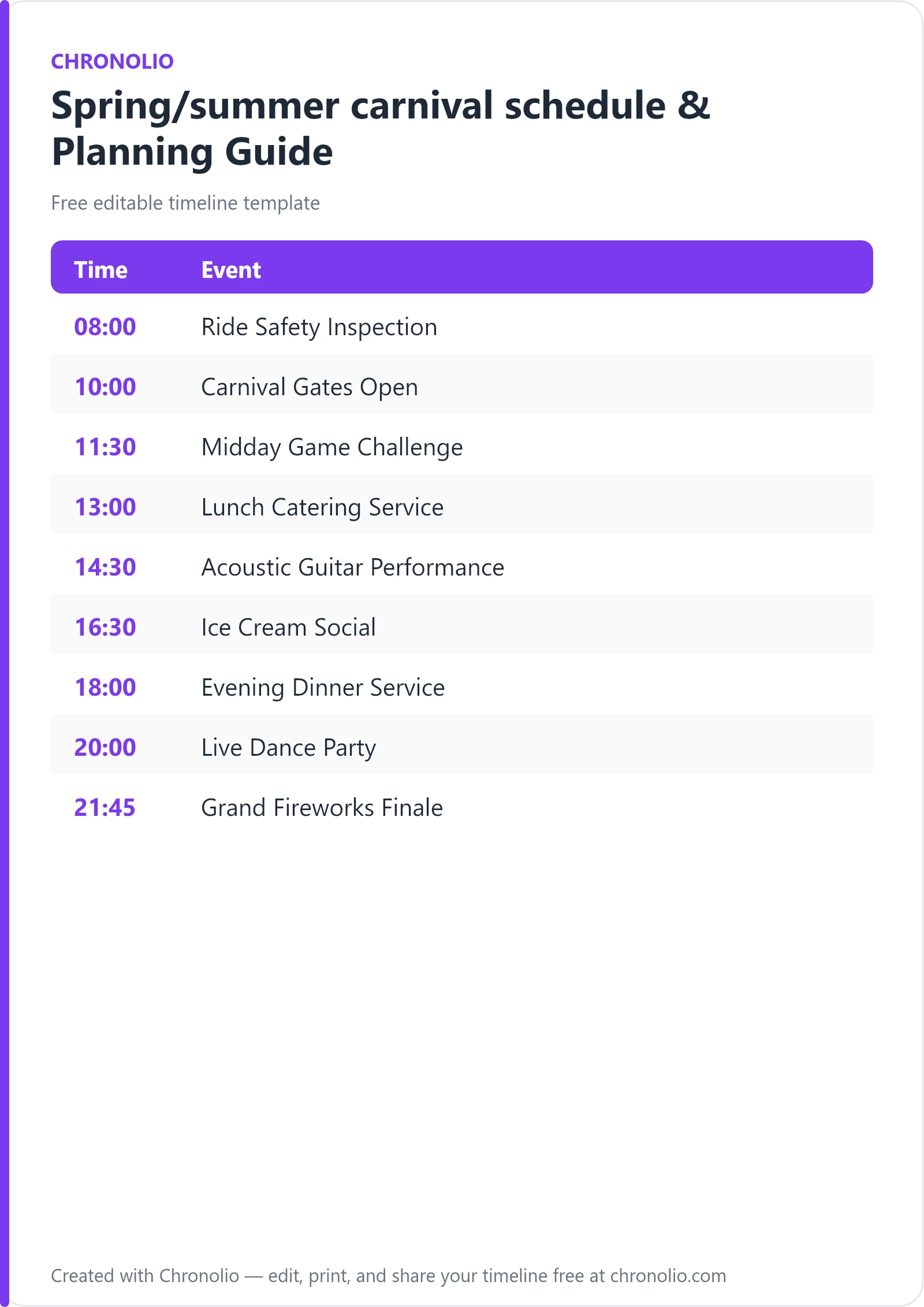
Here is the complete schedule this free template gives you — every time block, ready to edit, download, and share:
| Time | Event |
|---|---|
| 08:00 | Ride Safety Inspection |
| 10:00 | Carnival Gates Open |
| 11:30 | Midday Game Challenge |
| 13:00 | Lunch Catering Service |
| 14:30 | Acoustic Guitar Performance |
| 16:30 | Ice Cream Social |
| 18:00 | Evening Dinner Service |
| 20:00 | Live Dance Party |
| 21:45 | Grand Fireworks Finale |
What Is a Spring/summer carnival schedule?
A spring/summer carnival schedule is an end-to-end operational timeline designed to manage crowd movement, safety protocols, entertainment acts, and vendor logistics across a fairground or community park. Operating an outdoor carnival requires balancing high-throughput mechanical attractions on the midway with organized stage programming, concession rushes, and strict safety compliance windows.
Building a functional running order ensures that every department—from ride technicians and ticket booth operators to sound engineers and concessionaires—operates on the same synchronized clock. Grounded in industry practices established by safety organizations like the International Association of Amusement Parks and Attractions (IAAPA), this operational guide reflects real-world carnival workflows tested across hundreds of successful outdoor festivals. Whether you are running a single-day community carnival or a week-long summer fair, having a structured agenda prevents bottlenecked entrances, extended ride downtime, and chaotic entertainment schedules.
Customize Your Spring/Summer Carnival Schedule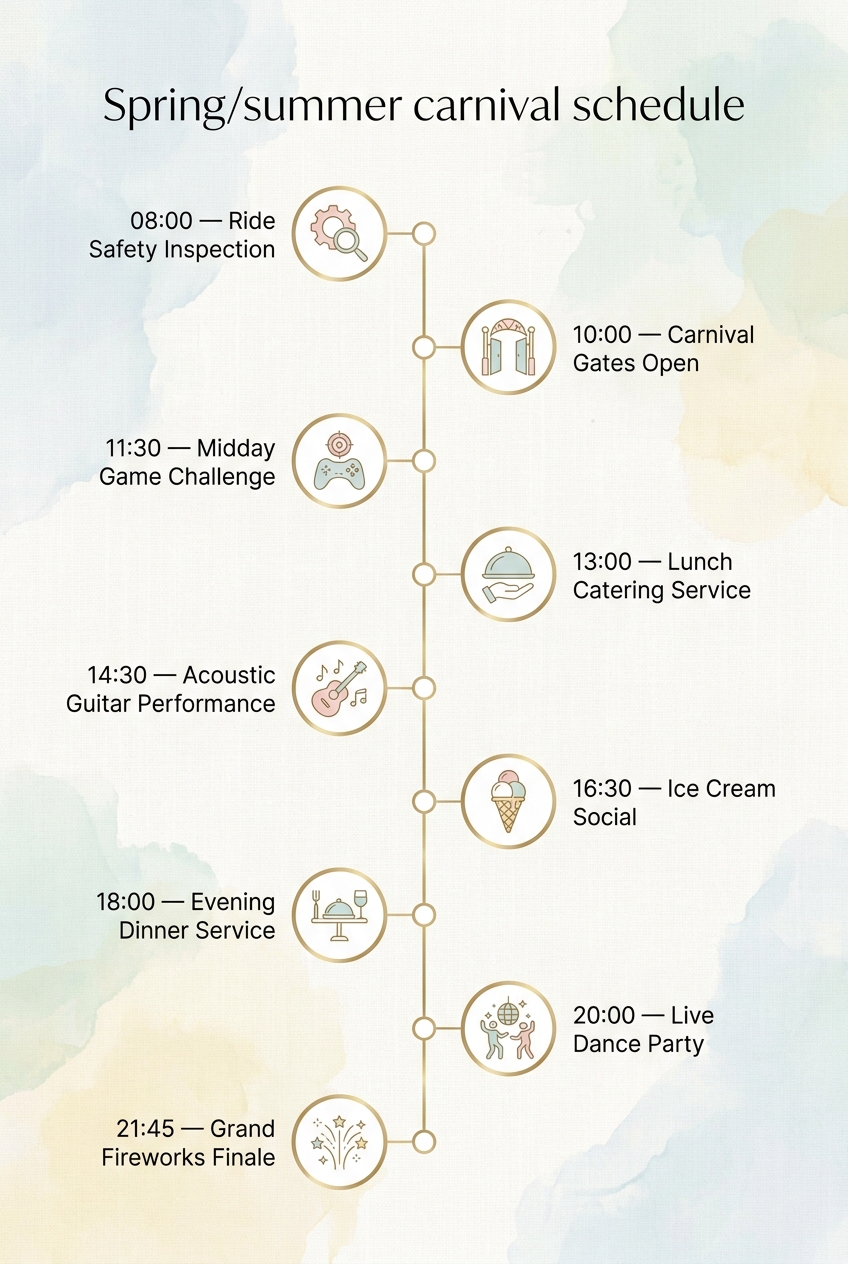
Why Spring/summer carnivals Need a Timeline
Outdoor fairgrounds are complex environments with dozens of moving parts operating simultaneously. Without a clear daily master schedule, minor delays on the main stage or at the ride inspection line can quickly cascade into major security hazards or lost concession revenue. Maintaining a precise running order protects guest safety, ensures high vendor satisfaction, and guarantees that your headline acts perform to full crowds.
A structured operational timeline also streamlines communication across distinct vendor and staff groups. Concessionaires need to know peak meal hours so they can pre-cook popular food items, while stage managers must align sound checks around mechanical ride operations. When every team lead holds a shared itinerary, your event operations remain proactive rather than reactive throughout the entire warm-weather festival.
Finally, an published event schedule enhances the overall visitor experience. Guests want to plan their day around specific milestones—such as entering the gates early for shorter lines, participating in prize competitions, catching afternoon live acoustic music, and securing a prime spot for the closing pyrotechnics display.
What to Include in a Spring/summer carnival schedule
To maintain high energy and operational safety across an outdoor fairground, your master schedule should incorporate the following core elements:
- Pre-Opening Safety & Mechanical Inspections: Mandatory technical evaluations of all rides, harnesses, and electrical systems before public entry.
- Gate Activation & Ticketing: Timed opening of entrance gates, wristband distribution, and early-bird crowd intake.
- Midway & Game Row Activations: Scheduled game challenges, tournaments, and central booth prize announcements.
- Staff & Vendor Support Rotations: Dedicated, off-peak catering breaks for crew, safety stewards, and independent concession vendors.
- Multi-Stage Live Entertainment: A mix of relaxed daytime performances on secondary stages and high-energy evening main stage shows.
- Food Court & Concession Highlights: Programmed culinary features like ice cream socials or food truck showcases during mid-afternoon lulls.
- Nighttime Headliners & Grand Finale: Prime-time dance parties, light shows, and safely coordinated pyrotechnic displays to close the night.
Phase 1: Morning Setup and Gates Open
| Time | Event |
|---|---|
| 08:00 | Ride Safety Inspection |
| 10:00 | Carnival Gates Open |
| 11:30 | Midday Game Challenge |
The success of any outdoor fair relies entirely on morning discipline. At 08:00, before a single guest steps onto the grounds, technicians execute the Ride Safety Inspection across the Main Midway. During this dedicated window, mechanics, state inspectors, and ride captains perform manual lock checks, run unweighted cycles, and verify emergency shut-off switches on every mechanical carnival ride. Conducting this work early ensures zero overlap with arriving families and guarantees full compliance with municipal safety regulations.
By 10:00, the Carnival Gates Open at the Main Entrance, launching the public operating day. Early-bird ticket holders and local families arrive to pick up ride wristbands, purchase game tickets, and explore the layout while line queues are short. Keeping ticketing gates fully staffed during this initial intake window prevents physical queue buildup onto municipal sidewalks and sets a welcoming, relaxed tone for the day.
As morning shifts into afternoon, foot traffic naturally drifts toward Game Row. The Midday Game Challenge at 11:30 incentivizes early crowd movement deeper into the fairgrounds. Attract guests toward classic ring toss, balloon pop, and milk jug booths with scheduled competition rounds and oversized plush prizes announced over the central public address system. Similar to managing crowd surges in a food and drink festival schedule, structuring early interactive activities keeps visitors engaged and spread evenly across the event footprint.
Phase 2: Afternoon Entertainment and Refreshments
| Time | Event |
|---|---|
| 13:00 | Lunch Catering Service |
| 14:30 | Acoustic Guitar Performance |
| 16:30 | Ice Cream Social |
Running a day-long outdoor carnival requires deliberate operational breaks for site personnel and planned rhythm shifts for attendees. At 13:00, the Lunch Catering Service opens in the Vendor Lounge behind the main stage. Staggering shift breaks during this window gives security personnel, ticket takers, and concession operators time to recharge with hot meals supplied by local food truck partners. Keeping staff well-fed and hydrated off-site keeps front-of-house operations running smoothly through the warm afternoon hours.
By mid-afternoon, ambient summer heat and mid-day fatigue start to set in across the midway. At 14:40, the focus shifts to the Secondary Stage for an Acoustic Guitar Performance. Positioned in a shaded, grass-covered acoustic zone away from the noisy generator banks of the mechanical rides, this local musician set offers families a gentle, relaxing respite. Broadening your programming mix with quiet acoustic zones mirrors best practices found in a local culture fest timeline, where diverse performance spaces accommodate different crowd energy levels.
At 16:30, as peak afternoon temperatures plateau, the Ice Cream Social activates inside the main Food Court. Offering free or discounted seasonal fruit-flavored ice cream and chilled treats drives foot traffic directly into vendor plazas during an otherwise quiet retail hour. It serves as a refreshing transition point that encourages families to stay on-site straight through to the evening dinner rush rather than packing up for home.
Phase 3: Evening Main Stage and Grand Finale
| Time | Event |
|---|---|
| 18:00 | Evening Dinner Service |
| 20:00 | Live Dance Party |
| 21:45 | Grand Fireworks Finale |
Evening marks the peak attendance window for spring and summer carnivals. At 18:00, the Evening Dinner Service fills the Picnic Grove with hungry visitors seeking classic fair treats like corn dogs, funnel cakes, and regional barbecue specialties. Ensure picnic tables and trash receptacles are fully cleared by maintenance crews right before 18:00 to handle the substantial surge in concession sales.
At 20:00, as twilight falls, the central crowd shifts toward the illuminated Main Stage for the Live Dance Party. A featured DJ or cover band takes over a stage decorated with high-powered LED lighting arrays and haze effects. Similar to the lighting schedules required for a light festival timeline, coordinating scenic stage lighting with dusk creates a high-energy atmosphere that holds teenager and adult demographics on the grounds after dark.
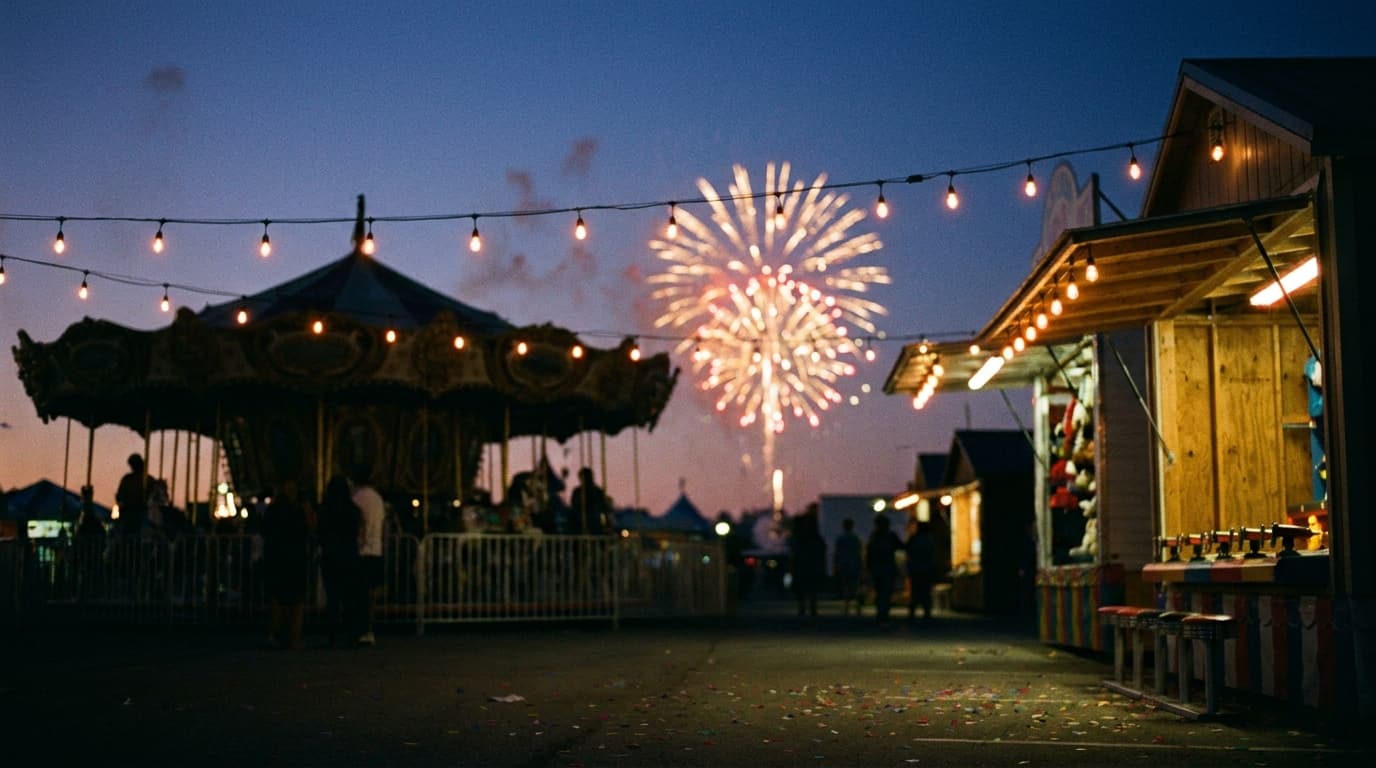
The day concludes at 21:45 on the North Field with the Grand Fireworks Finale. Launching a professional pyrotechnic display requires strict adherence to outdoor fire safety standards set by organizations like the National Fire Protection Association (NFPA). Ground crews seal off safety perimeter zones 30 minutes prior, allowing thousands of carnival guests to gather in safety on the main lawn to watch the spectacular closing show.
Spring/summer carnival schedule vs Carnival Running Order
While many event coordinators use these terms interchangeably, a master carnival schedule and an internal running order serve distinct operational roles during fairground execution.
| Schedule Element | Master Carnival Schedule | Ground Running Order |
|---|---|---|
| Primary Audience | Public attendees, ticket holders, community | Operations staff, ride techs, stage crew, security |
| Focus | Public show times, gate hours, highlight events | Minute-by-minute technical queues, power loads, shifts |
| Level of Detail | High-level times, stage locations, key features | Technical cues, load-in timings, safety holds |
| Format | Printed maps, mobile apps, entrance signboards | Laminated cue sheets, radio comms channels, spreadsheets |
A public schedule informs guests when major attractions occur so they can plan their day on the grounds. In contrast, an internal running order maps out precise operational mechanics—such as sound check call times, fuel delivery windows for generator sets, and fire marshal walk-throughs—required to keep those public moments happening safely on time.
Who Should Use This Template?
This timeline structure is tailor-made for event professionals, municipal teams, and business operators who oversee outdoor entertainment spaces. You can adapt this structure across various organizer roles, utilizing Chronolio's specialized support for event managers, operators, and venue staff.
- Municipal Parks & Recreation Departments: Managing annual town fairs, summer solstice carnivals, and holiday weekend festivals.
- Fairground & Amusement Operators: Coordinating multi-day outdoor midway attractions, game operations, and ride safety teams.
- Non-Profit & School Boards: Organizing annual fundraising carnivals, spring bazaars, and community field days.
- Independent Festival Producers: Merging artisan vendor markets—similar to those using a craft fair schedule—with high-capacity mechanical rides and live music stages.
- Private Event Venues & Resorts: Hosting corporate summer retreats, multi-generational family festivals, and seasonal destination carnivals.
How to Use This Template
- Download or Duplicate: Access the template directly on Chronolio or download a copy in Word format or PDF format.
- Set Your Event Date & Hours: Adjust the master timeline to fit your specific operating window, extending or shifting hours based on local noise curfews.
- Customize Activity Stages: Rename secondary stage acts, game booth challenges, and food court features to highlight your local vendors and talent.
- Assign Department Leads: Add operational columns designating responsible team leads (e.g., Safety Lead, Stage Manager, Vendor Director) for each scheduled phase.
- Publish & Distribute: Share the high-level agenda with attendees via digital apps and gate signage, while distributing the detailed operational order to staff and security teams.
Tips for a Successful Carnival
- Establish Rigorous Pre-Opening Checks: Never cut short morning mechanical inspections; build in a 30-minute buffer before gates open to handle unexpected ride maintenance.
- Designate Quiet Zones: Offset loud mechanical midway noise by placing acoustic stages, shade tents, and family seating areas on the opposite side of the grounds.
- Coordinate Concession Peaks: Brief food vendors on your stage schedule so they can prepare inventory ahead of the 13:00 and 18:00 meal rushes.
- Implement Clear Site Signage: Position large-format schedule boards near entrance gates and central walkways so guests do not miss scheduled challenges or pyrotechnics.
- Establish Fire Safety Perimeters: Verify fireworks fall-down zones with local emergency services hours before the 21:45 launch window.
- Prepare for Weather Shifts: Keep contingency timeline buffers in mind for heat breaks or sudden rain delays, similar to protocols used for a comic/fan convention schedule during outdoor crowd holds.
Common Mistakes to Avoid
- Skipping Pre-Gate Inspection Windows: Rushing ride safety checks to open gates early compromises safety and risks state compliance violations.
- Overcrowding Main Stage Timings: Scheduling major stage acts at the exact same time as game row highlights causes crowd congestion in narrow walkways.
- Neglecting Staff Meal Rotations: Forgetting to schedule dedicated vendor and security breaks leads to fatigued personnel during high-capacity evening hours.
- Ignoring Sound Bleed: Placing acoustic sets too close to mechanical ride sound systems or main stage speakers ruins the performance for attendees.
- Late Pyrotechnic Communications: Failing to announce the fireworks setup on the public address system leaves guests unaware of closed field zones.
- Inadequate Trash Removal Cycles: Forgetting to clean food courts between lunch and dinner services results in overflowed waste bins during peak dining hours.
In Summary
- Purpose: A comprehensive operational master plan coordinating mechanical ride safety, public gate admissions, game challenges, live music, and evening fireworks.
- Target Audience: Designed for municipal park directors, carnival operators, fairgrounds committees, and festival event producers.
- Safety Priority: Dedicates mandatory early-morning windows for certified ride safety inspections before public access.
- Entertainment Balance: Pairs high-energy main stage acts and pyrotechnics with chilled daytime acoustic performances and family ice cream socials.
- Operational Flow: Prevents bottlenecking by aligning concession support, security coverage, and staff meal breaks with public crowd shifts.
Planning an outdoor carnival demands precise scheduling to balance public fun with rigorous safety compliance. By utilizing this structured timeline, fair directors, park superintendents, and event producers can deliver a seamless, high-energy festival experience that keeps guests entertained from the morning gate opening straight through to the grand fireworks finale.
Customize Your Spring/Summer Carnival Schedule