





This Template at a Glance
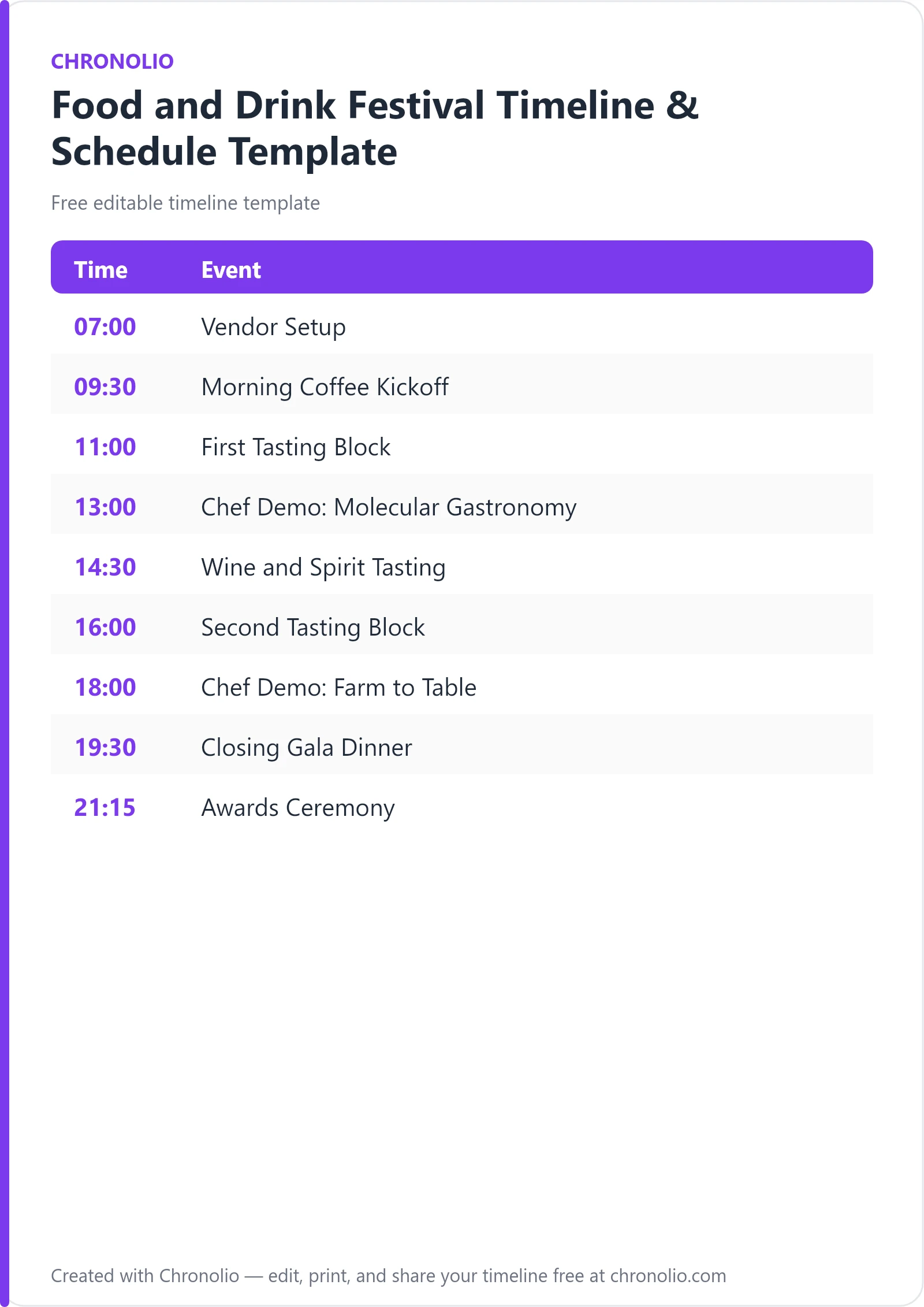
Here is the complete schedule this free template gives you — every time block, ready to edit, download, and share:
| Time | Event |
|---|---|
| 07:00 | Vendor Setup |
| 09:30 | Morning Coffee Kickoff |
| 11:00 | First Tasting Block |
| 13:00 | Chef Demo: Molecular Gastronomy |
| 14:30 | Wine and Spirit Tasting |
| 16:00 | Second Tasting Block |
| 18:00 | Chef Demo: Farm to Table |
| 19:30 | Closing Gala Dinner |
| 21:15 | Awards Ceremony |
What Is a Food and Drink Festival Timeline?
A food and drink festival timeline is the operational backbone of any multi-vendor culinary gathering, detailing every shift, setup window, tasting session, and stage performance from dawn load-in to evening teardown. Managing a large-scale culinary event requires balancing health department regulations, cold-chain refrigeration checks, celebrity chef arrival times, and steady guest circulation across tasting halls. Without a synchronized schedule, vendor queues spill over, food runs out unevenly, and stage schedules collapse under operational friction.
This template reflects real-world food festival structures developed alongside venue operators, hospitality directors, and event producers. Whether you are hosting a craft beverage showcase, a regional artisan food fair, or a fine dining summit, having an accurate master agenda ensures that every team member, vendor liaison, and audio-visual technician stays aligned throughout the festival day.
Use this Food and Drink Festival Timeline Template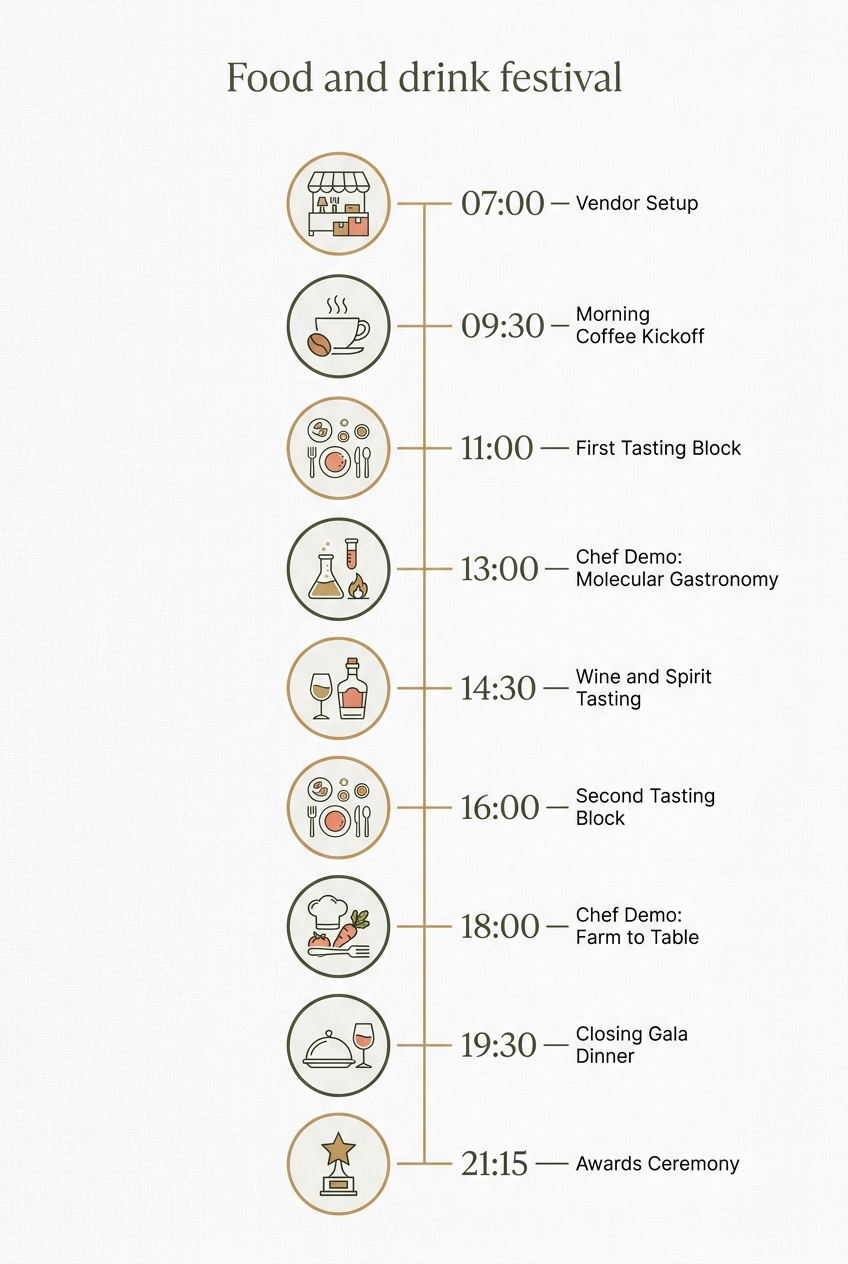
Why Food and Drink Festivals Need a Timeline
Running a successful culinary gathering involves coordinating dozens of independent kitchens, beverage stations, and entertainment stages working simultaneously. Unlike traditional conferences or indoor trade shows, culinary events present unique operational risks—including perishable inventory, temporary power grids, greywater management, and strict local health codes. A precise schedule ensures seamless health inspection compliance before gates open to the public.
A well-structured running order also dictates guest flow and ticket capacity. By staggering tasting sessions and main stage cooking demonstrations, organizers prevent bottlenecks near popular vendor stalls. Guests enjoy balanced wait times and shorter lines, while participating chefs have designated windows to prep, restock, and present their signature small plates without burning out their kitchen crew.
Finally, an operational schedule establishes clear accountability for vendors, logistics directors, and technical crews. From stage soundchecks to trash collection sweeps and ice drop-offs, every critical task is assigned a definitive timestamp and location, keeping the entire festival running on time.
What to Include in a Food and Drink Festival Timeline
A complete food and drink festival running order should account for both back-of-house logistics and front-of-house guest experiences. Key elements include:
- Vendor Load-In & Inspection Window: Designated arrival slots for artisan stalls, food trucks, and beverage suppliers to set up appliances, test POS hardware, and clear municipal health sweeps.
- Morning VIP Kickoff: Exclusive early-access sessions featuring specialty coffee, breakfast pastries, and media networking.
- Structured Tasting Blocks: Ticketed periods for attendees to sample dishes, redeem tasting tokens, and vote for guest choice awards.
- Culinary Stage Demonstrations: Timed cooking masterclasses led by featured guest chefs highlighting modern techniques, local ingredients, or sustainable sourcing.
- Beverage Seminars & Masterclasses: Guided wine, craft beer, or spirit tastings led by certified sommeliers and master mixologists.
- Evening Gala & Award Presentation: Formal multi-course dinners and industry awards recognizing culinary excellence across participating vendors.
Morning Arrival & Health Inspections
Morning Arrival & Health Inspections
| Time | Event |
|---|---|
| 07:00 | Vendor Setup |
| 09:30 | Morning Coffee Kickoff |
The festival day opens with controlled back-of-house load-in at the Main Festival Plaza. Commercial kitchen operators, local farms, and beverage distributors need dedicated time to unload equipment, establish cold-chain refrigeration, and dial in temporary heating units. Establishing a hard cutoff for setup gives health inspectors and safety Marshals time to verify water temperatures, handwashing stations, and fire extinguishers before public entry.
At 09:30, early-bird ticket holders and media guests enter the North Courtyard for the artisanal coffee kickoff session. Staggering early entry with light breakfast pastries and micro-roaster pours helps venue security smooth out gate processing, testing scanner operations and queue management before the main morning gates open. If your event includes non-culinary exhibitors, balance vendor load-in timing by pairing this schedule with a craft fair schedule.
Midday Tastings & Culinary Demos
Midday Tastings & Culinary Demos
| Time | Event |
|---|---|
| 11:00 | First Tasting Block |
| 13:00 | Chef Demo: Molecular Gastronomy |
| 14:30 | Wine and Spirit Tasting |
By 11:00, the main grounds open for the first official tasting block. Attendees receive five pre-allocated tasting tokens to exchange for small plates across participating vendor booths. Limiting entry per block prevents overwhelming vendor prep stations and keeps kitchen output steady during the initial lunch rush.
At 13:00, crowd focus shifts briefly toward the Demonstration Kitchen Stage for a molecular gastronomy masterclass. Live cooking demonstrations give attendees a chance to sit, relax, and digest while enjoying high-energy culinary entertainment featuring liquid nitrogen textures and spherification techniques. Following the demo, guests transition into The Tasting Lounge at 14:30 for a guided sommelier tasting session, featuring regional wine flights paired with artisanal cheeses. For events with strong community elements or regional entertainment, compare this flow with a local culture fest timeline.
Afternoon Flavors & Farm-to-Table
Afternoon Flavors & Farm-to-Table
| Time | Event |
|---|---|
| 16:00 | Second Tasting Block |
| 18:00 | Chef Demo: Farm to Table |
The afternoon session kicks off at 16:00 with the second primary tasting block, shifting culinary focus toward savory street food, global tap-room specialties, and live acoustic stage performances across the main festival grounds. Spacing two major tasting blocks apart gives vendor kitchens a crucial 90-minute downtime window to restock inventory, clear trash, and wipe down prep counters.
At 18:00, the event transitions toward sustainability with a farm-to-table culinary presentation on the main stage. Local growers and executive chefs collaborate to highlight seasonal harvesting techniques, organic sourcing, and zero-waste kitchen practices. If your festival features multiple stages or live acoustic bands, consider cross-referencing your stage production with a dedicated music festival timeline to keep soundchecks from bleeding into chef presentations.
Evening Gala & Culinary Awards
Evening Gala & Culinary Awards
| Time | Event |
|---|---|
| 19:30 | Closing Gala Dinner |
| 21:15 | Awards Ceremony |
As general public tasting blocks close on the main grounds, premium ticket holders and culinary VIPs transition into the Grand Banquet Hall at 19:30 for the seated multi-course closing gala dinner. Featured festival chefs showcase multi-course signature pairings, providing an exclusive, high-end hospitality highlight for sponsors, judges, and culinary media.
The event concludes at 21:15 on the Main Stage with the annual culinary awards ceremony. Judges reveal the winners for Best Tasting Stall, Most Innovative Dish, and Best Presentation. Ending with a public award presentation provides a energetic grand finale, sending attendees home satisfied while giving vendor crews time to begin quiet breakdown operations across outer plazas. For winter or holiday food pop-ups, cross-check nighttime operations using a holiday market schedule.
Food and Drink Festival Timeline vs Festival Running Order
While many event coordinators use these terms interchangeably, understanding the difference between a master timeline and a tactical day-of running order prevents operational confusion on site.
| Feature | Food & Drink Festival Timeline | Festival Running Order |
|---|---|---|
| Primary Scope | Complete end-to-end schedule from load-in to load-out | Minute-by-minute cues for stage audio, lighting, and speakers |
| Target Audience | Event directors, venue managers, vendors, municipal inspectors | Stage managers, AV technicians, emcees, culinary talent |
| Detail Level | Broad operational blocks, tasting windows, and health checks | Granular production cues, mic checks, and dish plating timing |
| Flexibility | Moderate (buffers built around public entry blocks) | Low (cues must trigger precisely for stage recording/AV) |
| Distribution | All stakeholders, vendors, security, public website | Production crew, stage liaisons, emcees only |
A food and drink festival timeline outlines what is happening across the entire venue, giving security, health officials, and vendor coordinators a clear macro picture. Conversely, a running order directs exact technical triggers on specific stages, ensuring the stage manager knows precisely when to cue the chef's lapel mic or switch camera feeds to the overhead burner cam.
Who Should Use This Template?
This festival schedule template provides a battle-tested structure adaptable across multiple event scales and hospitality sectors. You can easily adapt this format within Chronolio, which supports various event roles across operations, vendor management, and production.
- Festival Producers & Event Directors: Overseeing site logistics, ticket tiers, and overall event delivery.
- Culinary Associations & Chef Guilds: Organizing chef showcases, regional competitions, and charity galas.
- Chambers of Commerce & Tourism Boards: Hosting downtown food weeks, craft brewery trails, and agricultural showcases.
- Venue Operators & Convention Centers: Managing multi-room indoor/outdoor hospitality facilities.
- Winery & Brewery Cooperatives: Executing poured beverage summits with structured tasting sessions.
- Non-Profit Food Foundations: Planning fundraising dinners and public agricultural education expos.
To keep a physical reference handy behind the bar or at the production trailer, you can download a printable Word document version (.docx) or a ready-to-print PDF version (.pdf).
How to Use This Template
- Download or Duplicate the Schedule: Open this template inside Chronolio or download your preferred document format.
- Set Your Event Date & Venue Hours: Align gates-open times with local municipal permits and venue noise curfews.
- Adjust Tasting Block Intervals: Tailor the duration of sampling sessions based on total expected attendance and food vendor capacity.
- Assign Department Ownership: Add specific lead contact names for vendor staging, stage management, ice replenishment, and security.
- Distribute to Stakeholders: Share customized views with participating chefs, health inspectors, production crews, and sponsors.
Tips for a Successful Food and Drink Festival
- Build Buffers for Health Inspections: Schedule local health department walkthroughs at least 60 minutes before public gates open so vendors can rectify minor issues without delaying entry.
- Separate Water and Power Delivery: Ensure high-draw electrical items like convection ovens and deep fryers reside on dedicated generators, separated from potable water supply lines.
- Manage Ice and Greywater Supplies: Schedule designated mid-afternoon ice drop-offs and greywater tank pumps between major tasting blocks to prevent vendor delays.
- Implement Clear Token Systems: If using physical or digital tasting tokens, train gate staff to distribute tokens immediately upon ticket scanning to prevent entryway bottlenecks.
- Provide Chef Prep Kitchens: Establish a shaded, temperature-controlled back-of-house scullery equipped with commercial dishwashers and cold storage for main-stage demo chefs.
- Integrate Hydration Stations: Place free water refilling stations prominently near alcohol sampling lounges to promote safe drinking habits. Standard health and safety guidelines from organizations like the National Restaurant Association stress the importance of clear sanitation and hydration standards at public food gatherings.
- Highlight Local Culinary Awards: Partner with recognized organizations such as the James Beard Foundation or regional restaurant leagues to increase award prestige and media visibility.
Common Mistakes to Avoid
- Overcrowding Tasting Blocks: Selling too many tickets within a single sampling window leads to 30-minute queue lines and exhausted vendor supplies.
- Ignoring Trash Sweeps: Failing to schedule dedicated waste removal runs during tasting blocks results in overflowing trash cans and pest issues near dining areas.
- Neglecting Back-of-House Ice Logistics: Underestimating ice consumption during warm-weather outdoor beverage tastings causes lukewarm drink pours and unhappy patrons.
- Scheduling Demos Without Audio Buffers: Placing live culinary stages directly adjacent to noisy generator yards or loud music stages ruins the audience demo experience.
- Forgetting Vendor Restock Windows: Running continuous tasting blocks without a scheduled midpoint pause leaves chefs with no time to prep fresh ingredients or sanitize work surfaces.
- Skipping POS Connectivity Testing: Failing to stress-test local cellular data or temporary Wi-Fi networks before load-in causes massive payment line delays during opening rush.
In Summary
- Master Operational Tool: A food and drink festival timeline synchronizes vendor arrival, tasting sessions, chef demos, and evening gala awards.
- Ensures Safety Compliance: Dedicated health inspection buffers prevent delayed gate openings and guarantee compliance with municipal food codes.
- Optimizes Crowd Circulation: Staggered tasting blocks control foot traffic flow and keep line wait times short across vendor stalls.
- Supports Back-of-House Logistics: Timed schedules coordinate ice delivery, waste management, and kitchen scullery support.
- Adaptable Format: Works seamlessly for city street fairs, convention hall summits, winery estate tours, and charity culinary galas.
- Multi-Device Ready: Easily edit, collaborate, and export schedules using Chronolio for print, web, or mobile access.
Planning a seamless culinary experience requires balancing detailed health regulations, vendor logistics, and guest entertainment. With this proven timeline template, you can run a crisp, punctual food and drink festival that keeps attendees full, vendors satisfied, and stage performances on schedule.
Use this Food and Drink Festival Timeline Template