





This Template at a Glance
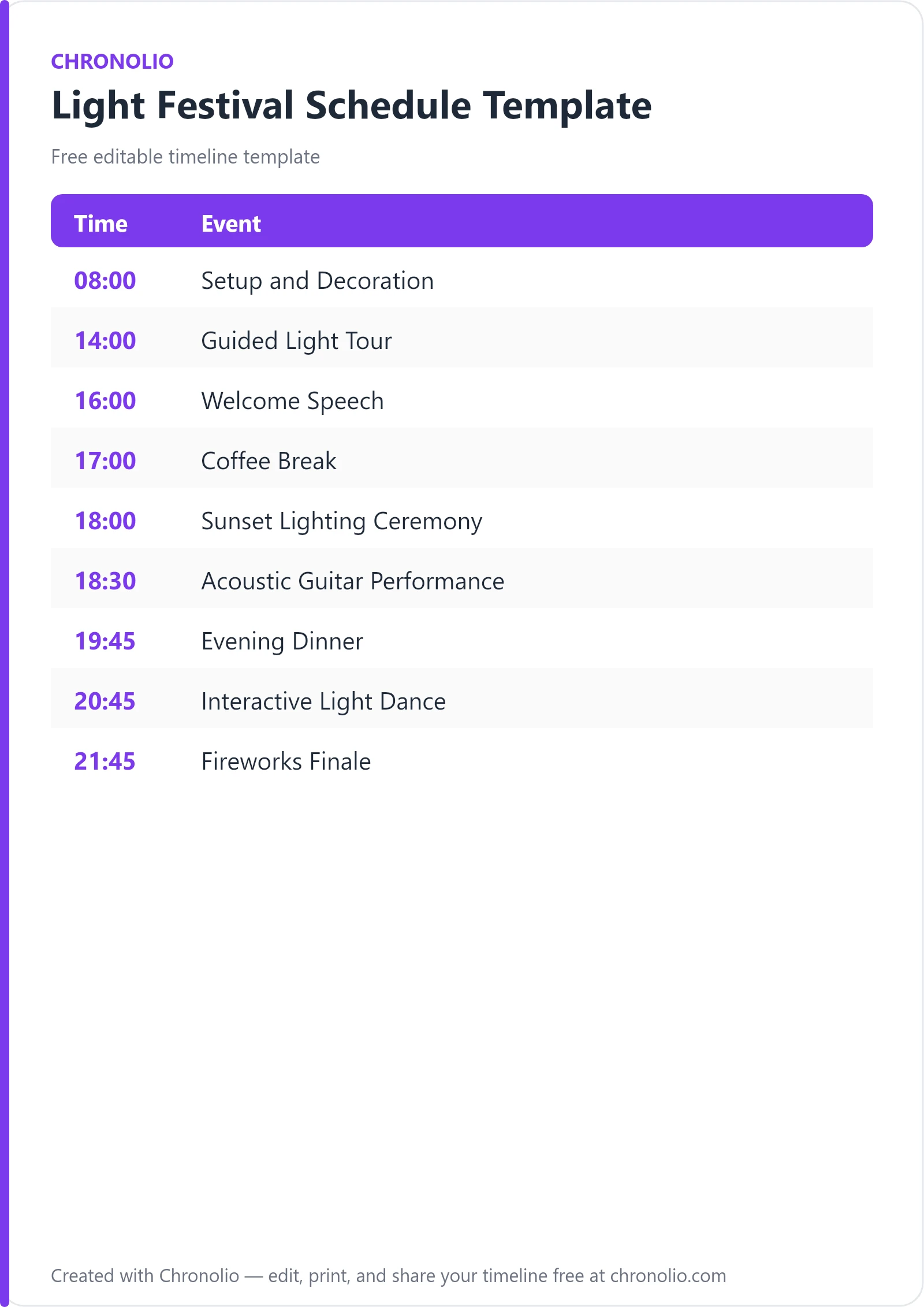
Here is the complete schedule this free template gives you — every time block, ready to edit, download, and share:
| Time | Event |
|---|---|
| 08:00 | Setup and Decoration |
| 14:00 | Guided Light Tour |
| 16:00 | Welcome Speech |
| 17:00 | Coffee Break |
| 18:00 | Sunset Lighting Ceremony |
| 18:30 | Acoustic Guitar Performance |
| 19:45 | Evening Dinner |
| 20:45 | Interactive Light Dance |
| 21:45 | Fireworks Finale |
What Is a Light Festival Schedule?
A light festival schedule is the foundational operational blueprint used by event directors, lighting technicians, site managers, and safety marshals to choreograph an outdoor illumination event. Managing high-voltage electrical installations, shifting natural twilight, live stage performances, and dense evening foot traffic requires rigorous temporal precision. Without a clear running order, light displays risk flickering prematurely in broad daylight, acoustic zones bleed into adjacent audio setups, and emergency egress paths become hazardous in unlit darkness.
This detailed schedule reflects proven real-world light festival management standards refined across municipal parks, botanic gardens, and cultural arts districts. Whether you are hosting a seasonal holiday trail, an immersive projections show, or a community lantern celebration, running a flawless event demands a synchronized master schedule. To support your broader programming needs, you can easily pair this timeline with a local culture fest guide or run it alongside a dedicated food and drink festival template for public dining zones.
Customize Your Light Festival Schedule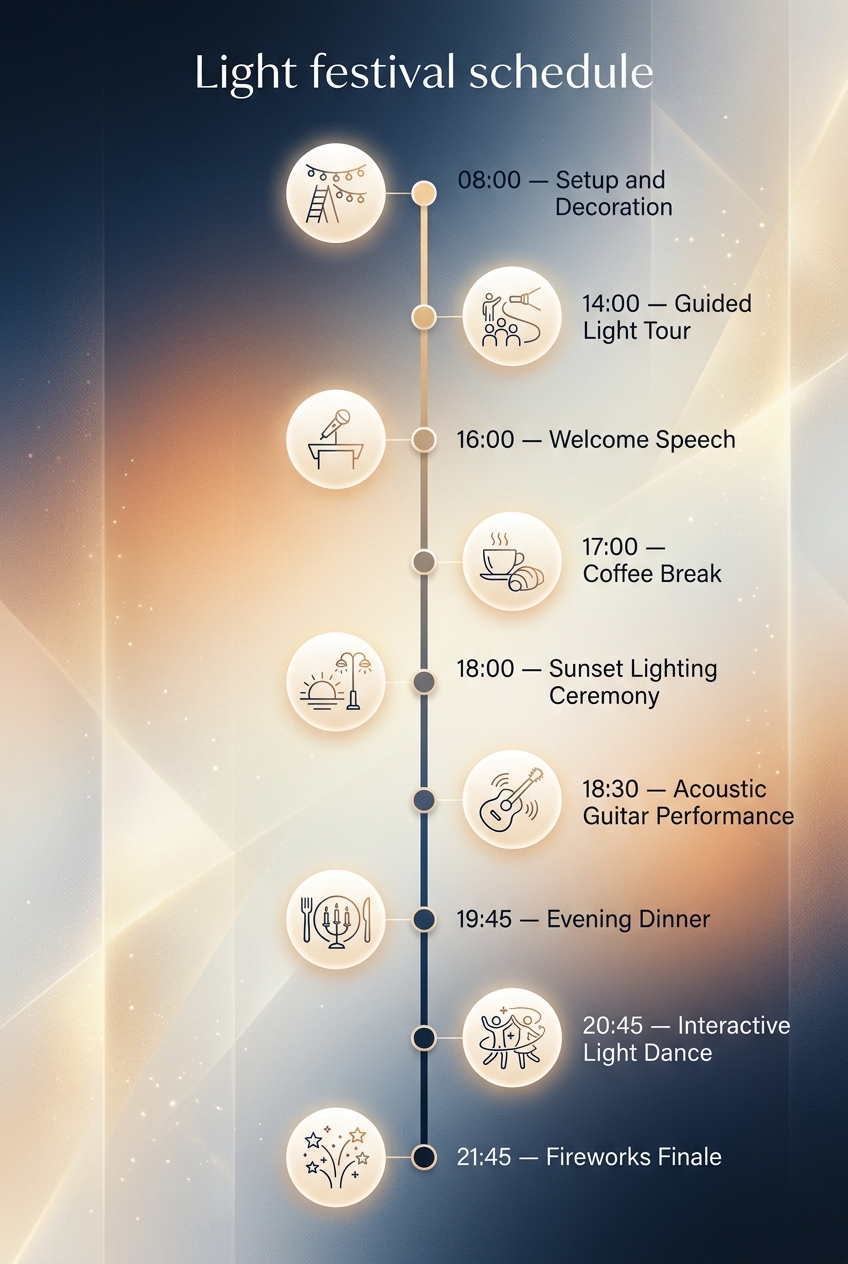
Why Light Festivals Need a Timeline
Outdoor light festivals operate under unique physical constraints that traditional daytime events never encounter. Your core attraction—vibrant illumination—is entirely invisible and ineffective until the sun sets. A precise timeline bridges the critical gap between daytime technical setup and evening visual delivery.
- Power Load and Safety Compliance: Electrical rigging, generator balancing, and cable coverage must be completed and inspected under full daylight conditions. Rushing electrical safety checks in the dark leads to tripped breakers, blackouts, or trip hazards.
- Crowd Flow and Egress Management: Light art installations naturally create high-density spectator bottlenecks. Staggering stage entertainment, guided walking tours, and refreshment periods spreads crowd pressure evenly across park grounds.
- Synchronized Sunset Ceremonies: The transition from twilight to complete darkness happens quickly. Locking down an exact "flip-the-switch" time builds dramatic tension and ensures all projection mapping and light displays hit peak brilliance simultaneously.
- Vendor and Performer Coordination: Catering teams, LED dancers, acoustic musicians, and pyrotechnicians need absolute clarity on when sound checks end, when ambient noise must drop, and when high-impact lighting cues take priority.
What to Include in a Light Festival Schedule
To build a seamless visitor experience, your schedule must cover every stage of site operations from dawn setup to post-event site clearance:
- Site Load-in & Rigging: Daytime installation of light sculptures, fiber-optic trees, hanging lanterns, and heavy electrical infrastructure.
- Electrical & Audio Safety Testing: Comprehensive inspections of ground fault circuit interrupters (GFCIs), cable distribution ramps, and public address (PA) audio lines.
- Daytime Walking Tours: Controlled site orientations for press, VIPs, or early arrivals interested in the architecture and design behind the installations.
- Opening Addresses & Hospitality: Formal welcome remarks on the main stage alongside warm refreshment service before temperature drops at dusk.
- The Dusk Lighting Ceremony: The focal opening moment where main circuit breakers are thrown to illuminate the entire site in unison.
- Staggered Ambient Performances: Low-intensity live music, roving performers, and illuminated art activations positioned across distinct geographic zones.
- Interactive Mainstage Acts: High-energy evening spectacles, such as choreographed LED dance troupes or projection-mapped storytelling.
- Grand Finale Display: High-impact fireworks or synchronized light shows that signal the formal conclusion of the evening's entertainment.
Phase 1: Site Preparation and Daytime Arrivals
| Time | Event |
|---|---|
| 08:00 | Setup and Decoration |
| 14:00 | Guided Light Tour |
The morning hours must be reserved strictly for heavy physical labor, structural rigging, and electrical safety validation. Operating at Central Park Main Lawn, ground crews install hanging lanterns, position ground-level neon sculptures, and unroll heavy-duty, weather-rated power feeds. Completing all wiring checks before noon gives master electricians ample buffer time to troubleshoot dead circuits, balance phase loads across generators, and lay low-profile rubber cable ramps over public footpaths.
By mid-afternoon, as the site opens to early registrants at the North Entrance, daylight offers a unique educational opportunity. Conducting a guided walking tour through the fiber optic forest and neon garden allows design enthusiasts to appreciate the complex mechanical engineering and artistic craftsmanship behind the displays before they are fully illuminated at dusk.
+-------------------------------------------------------------------+ | PHASE 1: SITE PREPARATION & DAYTIME | | 08:00 AM 14:00 PM 16:00 PM | | |-------------------------------|--------------------------| | | Setup, Rigging & Safety Checks | Guided Architectural | | | (Central Park Main Lawn) | Light Tour (North Ent.) | | +-------------------------------------------------------------------+
Phase 2: Opening Ceremonies and Sunset Illumination
| Time | Event |
|---|---|
| 16:00 | Welcome Speech |
| 17:00 | Coffee Break |
| 18:00 | Sunset Lighting Ceremony |
As late afternoon light begins to soften, guest foot traffic shifts toward the central hospitality hubs. Convening at the Main Stage at 16:00 for the official opening remarks sets a welcoming tone, allowing civic leaders and artistic directors to acknowledge sponsors and outline event highlights. Providing complimentary warm beverages at the Refreshment Pavilion during the subsequent 17:00 coffee break encourages visitors to gather safely in high-capacity zones while twilight approaches. If your festival features artisanal pop-ups, integrating elements from a holiday market schedule helps keep food and retail stalls running smoothly during this pre-dusk lull.
The culmination of this phase occurs at exactly 18:00 during the Sunset Lighting Ceremony. Timing this ritual precisely to match civil sunset transforms the environment instantaneously. Switching on all master circuits simultaneously delivers an unforgettable visual spectacle, turning a graying park landscape into a brilliant, glowing wonderland in a single second.
Phase 3: Evening Entertainment and Dining
| Time | Event |
|---|---|
| 18:30 | Acoustic Guitar Performance |
| 19:45 | Evening Dinner |
Once the main illuminations are active, foot traffic naturally disperses along illuminated pathways. To avoid congestion, schedule localized, ambient artistic activations in secondary site zones. Placing an acoustic guitar set beneath the glowing canopy of Willow Grove at 18:30 draws quieter crowds into side gardens, leaving main thoroughfares clear for general wandering and photo opportunities. Festival planners running complex multi-stage programming often adapt timing structures from a music festival timeline to prevent acoustic cross-bleed between acoustic groves and amplified main stages.
By 19:45, visitors are ready to warm up and refuel. Concentrating evening dinner service around The Reflecting Pond Terrace allows guests to enjoy gourmet food platters while admiring the vibrant reflections of light sculptures shimmering on the water’s surface. Spacing out dinner service across a full 45-minute window gives catering operations steady throughput while maintaining relaxed guest pacing.
+-------------------------------------------------------------------+ | PHASE 3: EVENING ENTERTAINMENT & DINING | | 18:30 PM 19:45 PM 20:45 PM | | |-------------------------------|--------------------------| | | Acoustic Guitar Performance | Gourmet Evening Dinner | | | (Willow Grove) | (Reflecting Pond) | | +-------------------------------------------------------------------+
Phase 4: Interactive Shows and Grand Finale
| Time | Event |
|---|---|
| 20:45 | Interactive Light Dance |
| 21:45 | Fireworks Finale |
The final operational phase pulls all distributed attendees back toward major focal points for peak entertainment value. At 20:45, the Grand Plaza hosts an interactive dance performance featuring wearers in custom wireless LED costumes. Incorporating audience participation into the show's final minutes breaks down traditional barrier fences, turning passive observers into active participants within an illuminated performance art piece. If your event includes interactive craft booths or illuminated art markets along the perimeter, cross-referencing your floor plan with a craft fair schedule helps stall owners handle late-night retail rushes safely.
The festival reaches its grand climax at 21:45 along the Park Perimeter. Launching a high-altitude pyrotechnic display synchronized with the park's ground-level lighting system creates a cohesive finale across the skyline. Concluding the formal schedule by 22:00 respects municipal noise ordinances, facilitates orderly crowd egress toward public transit hubs, and gives technical crews safe, controlled conditions for overnight teardown.
Light Festival Schedule vs Festival Running Order
While many organizers treat these terms as interchangeable, a macro event schedule serves a fundamentally different purpose than a stage-level running order. Understanding this distinction prevents operational confusion between administrative teams and ground technicians.
| Operational Feature | Light Festival Schedule | Stage Running Order |
|---|---|---|
| Primary Audience | Public attendees, overall event directors, site marshals, vendors | Stage managers, sound engineers, lighting operators, performers |
| Time Granularity | 15-to-60-minute macro blocks | Minute-by-minute or cue-by-cue micro timing |
| Focus Area | Entire festival site, crowd flow, dining, major show milestones | Specific performance stage, audio channels, lighting board states |
| Safety Integration | Site-wide egress, emergency lighting, perimeter security | Backstage access, stage monitor levels, pyrotechnic firing safety |
| Public Availability | Published on websites, signboards, and printed maps | Strictly internal restricted document for production crew |
A light festival schedule outlines the entire guest journey across multiple geographic zones, balancing lighting switch-ons with catering and mainstage events. In contrast, a stage running order is a technical document that specifies exact audio track start times, microphone channel assignments, and lighting board dimmer cues for individual acts.
Who Should Use This Template?
This master schedule template is engineered for event professionals and community leaders responsible for executing outdoor illuminated experiences:
- Municipal Parks & Recreation Departments: Managing public land usage, community safety, and local noise compliance.
- Cultural Arts Councils & Foundation Directors: Coordinating multi-artist light installations, public grants, and stage entertainment.
- Commercial Event Production Agencies: Delivering large-scale ticketed light trails, lantern festivals, and winter wonderlands.
- Destination Marketing Organizations (DMOs): Driving shoulder-season tourism through evening downtown illuminations.
- Botanic Gardens & Historical Estates: Managing high-density evening walking tours through delicate natural environments.
Keep in mind that Chronolio natively supports distinct event planning roles, allowing master directors, technical managers, and vendor coordinators to collaborate seamlessly on a single dynamic schedule.
How to Use This Template
- Download or Duplicate: Select your preferred working format by downloading the Light Festival Schedule Word Doc or the print-ready Light Festival Schedule PDF. Alternatively, click the edit button above to customize it directly within Chronolio.
- Calibrate to Local Sunset: Look up the exact astronomical sunset time for your event date and location. Adjust the 18:00 Sunset Lighting Ceremony row so that main circuits illuminate precisely at dusk.
- Assign Site Zones: Map each event row to specific geographic zones within your venue (e.g., Main Lawn, Refreshment Pavilion, Perimeter) to manage foot traffic.
- Coordinate Technical Crews: Distribute the timing sheet to your master electrician, audio lead, catering manager, and security chief during morning briefing.
- Publish Public Schedules: Export a streamlined version of the schedule to print on site signage, event maps, and mobile ticketing apps for public guidance.
Tips for a Successful Light Festival
- Verify Dusk and Twilight Calculations: Natural light shifts rapidly across seasons. Do not guess sunset times; verify official astronomical tables for your exact postal code for the night of the show.
- Establish Secondary Emergency Pathway Lighting: Never rely solely on artistic light installations for pathway visibility. Maintain dedicated, generator-backed white LED safety rope lights along all public egress corridors in accordance with safety guidelines from organizations like the Event Safety Alliance.
- Implement Dynamic Power Load Balancing: Stagger high-draw electrical equipment (such as commercial catering ovens and high-wattage searchlights) so they do not strike simultaneously and trip primary circuit breakers.
- Establish Clear Acoustic Isolation Zones: Position acoustic acts (like Willow Grove guitar sets) far from high-decibel PA speakers at the Main Stage to maintain atmospheric integrity.
- Plan for Low-Light Wayfinding: Ensure all directional signage features photo-luminescent paint or low-voltage LED backlighting so visitors can read venue maps easily in the dark.
- Coordinate Fire Clearance Early: Work closely with municipal fire marshals well in advance of the event to establish strict safety perimeters around pyrotechnic launcher sites, as recommended by international industry groups like the International Festivals & Events Association.
Common Mistakes to Avoid
- Illuminating Installations Too Early: Firing up light displays while the sun is still above the horizon washes out colors, wastes generator fuel, and ruins the grand dramatic reveal.
- Underestimating Daylight Setup Windows: Structural light rigging and outdoor cable placement take twice as long as standard stage setups. Never schedule sound checks less than two hours before public doors open.
- Ignoring Cable Hazard Management: Uncovered power cables running across dark turf paths are severe trip hazards. Cover every public crossing with heavy-duty rubber cable ramps and mark ramp edges with high-visibility reflective tape.
- Overcrowding Dark Zones: Failing to provide wide walking paths around popular photo-opportunity installations creates dangerous pedestrian gridlock.
- Forgetting Cold-Weather Guest Needs: Outdoor night events cause ambient temperatures to drop fast. Omitting hot food, warm drinks, or heated resting areas causes visitors to leave prematurely.
- Failing to Conduct Nighttime Dry Runs: Testing lights only during daylight hours hides glare problems, dark spots on steps, and color balance issues. Conduct at least one full dark trial run the night before opening.
In Summary
- Master Operational Tool: A light festival schedule synchronizes technical electrical setup, lighting switch-ons, stage performances, and site safety.
- Built Around Twilight: The key operational pivot of the schedule is the dusk lighting ceremony, timed precisely to local sunset.
- Promotes Visitor Safety: Staggers high-draw power loads and separates pedestrian foot traffic into managed, well-lit zones across the venue.
- Multi-Audience Adaptability: Serves municipal park managers, commercial festival directors, lighting technicians, and public guests alike.
- Fully Flexible: Easily customized for winter light walks, lantern parades, projection-mapping shows, and municipal arts festivals.
Managing an outdoor illumination event requires balancing art, technical power distribution, and crowd control under the cover of night. By using this proven light festival schedule template, you ensure that every electrical cue, musical performance, and fireworks launch occurs with absolute precision. Customize your timeline today to deliver a safe, spectacular, and unforgettable night of lights for your entire community.
Customize Your Light Festival Schedule