





This Template at a Glance
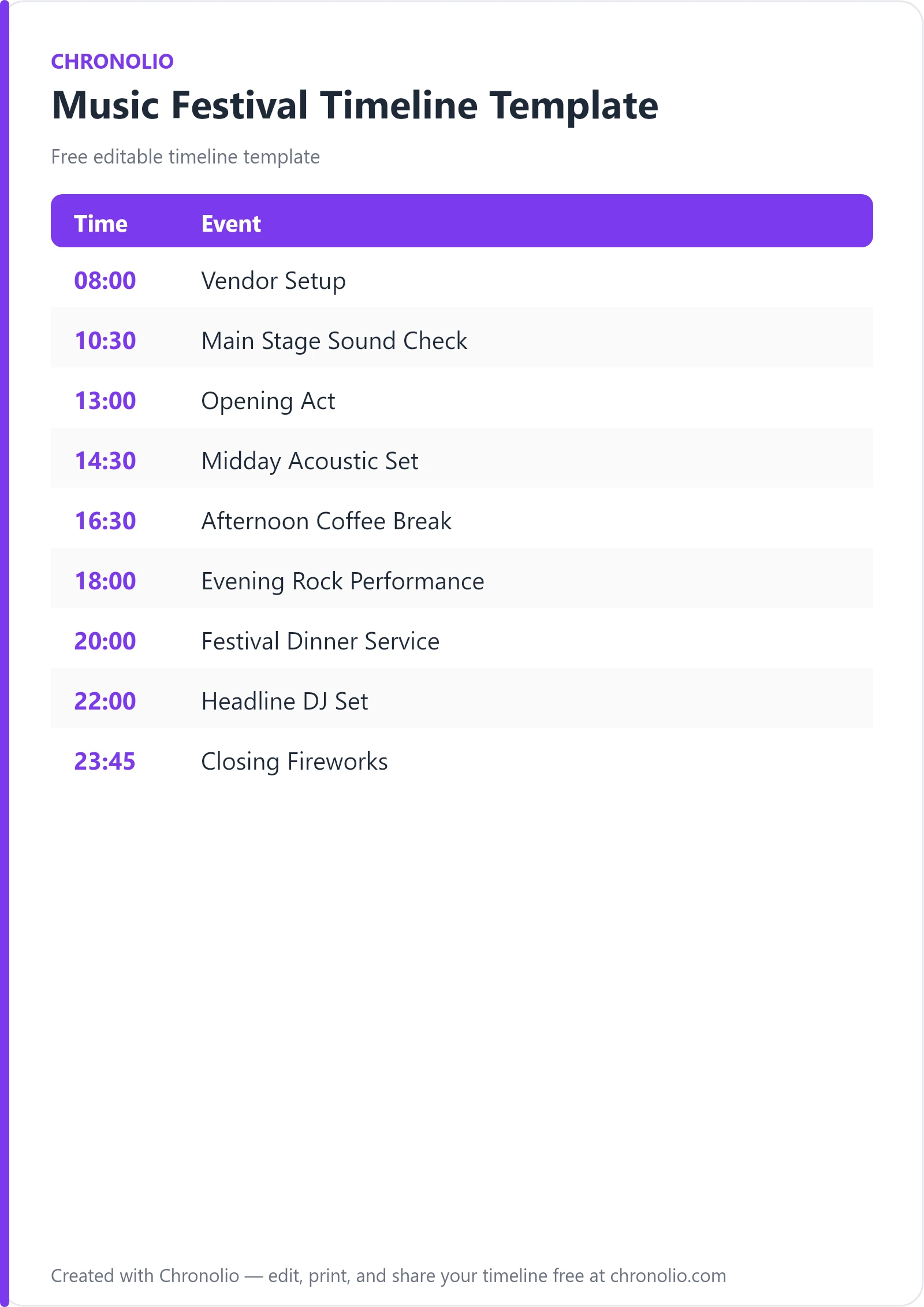
Here is the complete schedule this free template gives you — every time block, ready to edit, download, and share:
| Time | Event |
|---|---|
| 08:00 | Vendor Setup |
| 10:30 | Main Stage Sound Check |
| 13:00 | Opening Act |
| 14:30 | Midday Acoustic Set |
| 16:30 | Afternoon Coffee Break |
| 18:00 | Evening Rock Performance |
| 20:00 | Festival Dinner Service |
| 22:00 | Headline DJ Set |
| 23:45 | Closing Fireworks |
What Is a Music Festival Timeline?
A music festival timeline is an operational blueprint that synchronizes artist set times, stage changeovers, technical sound checks, and site operations into a unified schedule. Running a live outdoor event requires seamless coordination between front-of-house (FOH) audio engineers, stage managers, artist liaisons, security personnel, and food vendors. Without a central schedule, audio bleed across stages, late set starts, and bottlenecked entry gates can rapidly compromise attendee safety and artist performance quality.
This template reflects real-world production standards tested across multi-stage gatherings and single-day outdoor events. Whether you are managing sound limits for late-night acts or coordinating vendor supply deliveries, using a structured schedule guarantees that every staff department knows exact start and end times. You can also align culinary zones using a food and drink festival schedule or coordinate craft markets alongside live music using our craft fair schedule template.
Customize Your Music Festival Timeline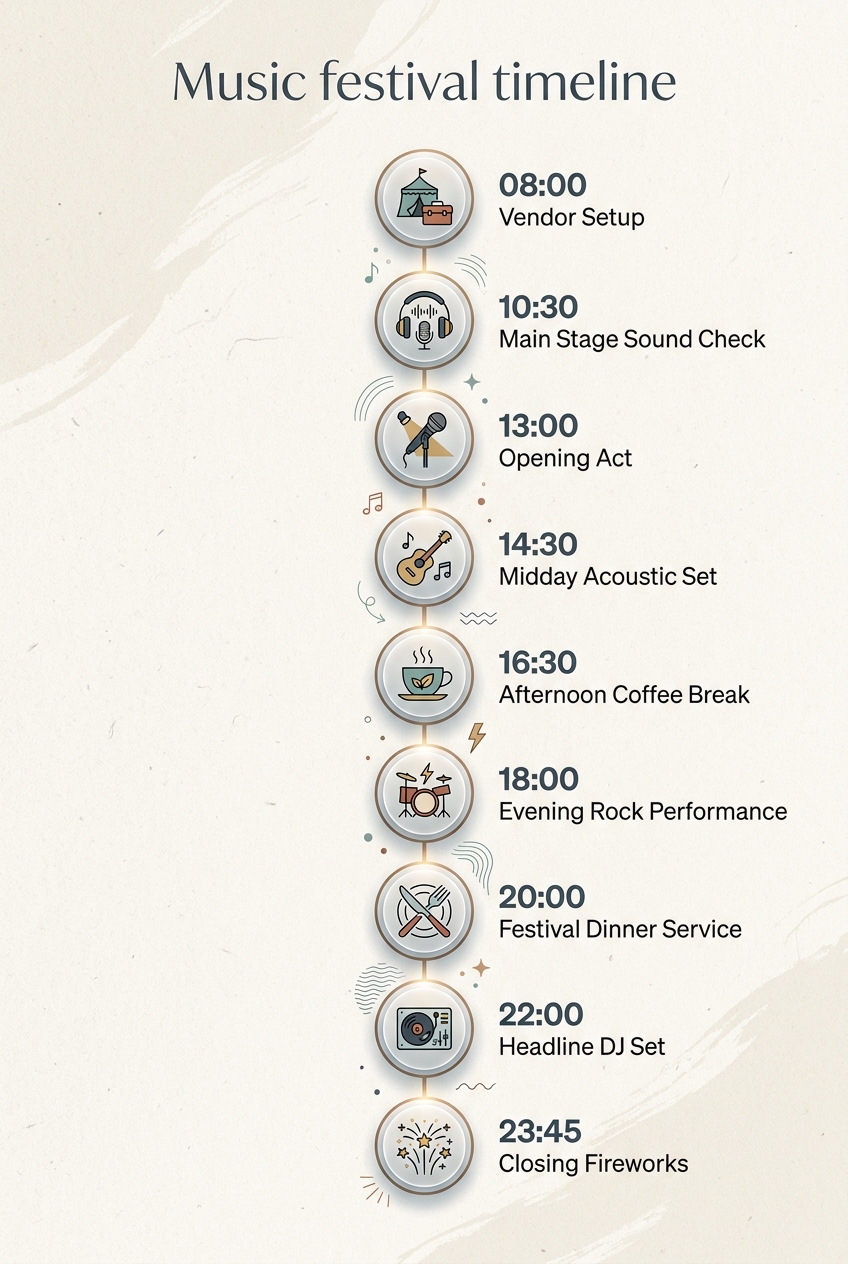
Why Music Festivals Need a Timeline
Live music production operates under rigid time constraints, strictly governed by local noise ordinances, artist contract duration clauses, and site curfew limits. A master timeline serves as the central source of truth, ensuring that every department head works off synchronized clocks from morning load-in until final site egress.
- Prevents costly stage delays: Main stage acts require dedicated changeover windows to move drum kits, recalibrate monitor mixes, and verify backline patches. Scheduling deliberate transition gaps stops initial delays from snowballing into late-night headliner cuts.
- Streamlines vendor and staff logistics: Merchandise stalls and food trucks require strict delivery windows to set up point-of-sale systems and stock inventory before gates open to the public.
- Ensures safety and crowd control: Staggering major performances across different stages balances foot traffic across the grounds, reducing security congestion near main entrances and concession areas.
- Keeps artists and tour managers aligned: Providing tour managers with an absolute timeline for arrival, sound check, hospitality, and stage call times minimizes backline confusion and late artist appearances.
What to Include in a Music Festival Timeline
Building an effective festival master plan requires tracking both public-facing programming and behind-the-scenes site operations. Every complete festival timeline should account for:
- Site setup and vendor load-in: Arrival times for commercial vendors, health inspectors, waste management teams, and box office staff.
- Technical production and sound checks: Sound system tuning, wireless frequency scanning, monitor checks, and headliner audio call times.
- Stage performance blocks: Exact set start and end times across main, secondary, and acoustic stages.
- Stage changeover gaps: Dedicated 15- to 45-minute windows for stagehands to swap instruments, microphone lines, and stage plots.
- Guest dining and social intermissions: Designated windows for attendees to patronize food courts, beverage stalls, and commercial sponsor booths.
- Special effects and closing finales: Timing for synchronized light shows, video production, headline DJ sets, and regulated pyrotechnic displays.
Morning Site Prep & Production
| Time | Event |
|---|---|
| 08:00 | Vendor Setup |
| 10:30 | Main Stage Sound Check |
Morning hours on festival grounds are dedicated entirely to heavy site logistics, safety checks, and high-decibel audio calibration. Allowing food vendors to arrive at 08:00 ensures that propane lines, power drops, and point-of-sale registers are verified well before public gate opening. This setup window mirrors the vendor management strategy found in a holiday market schedule template, where morning access prevents foot-traffic conflicts later in the day.
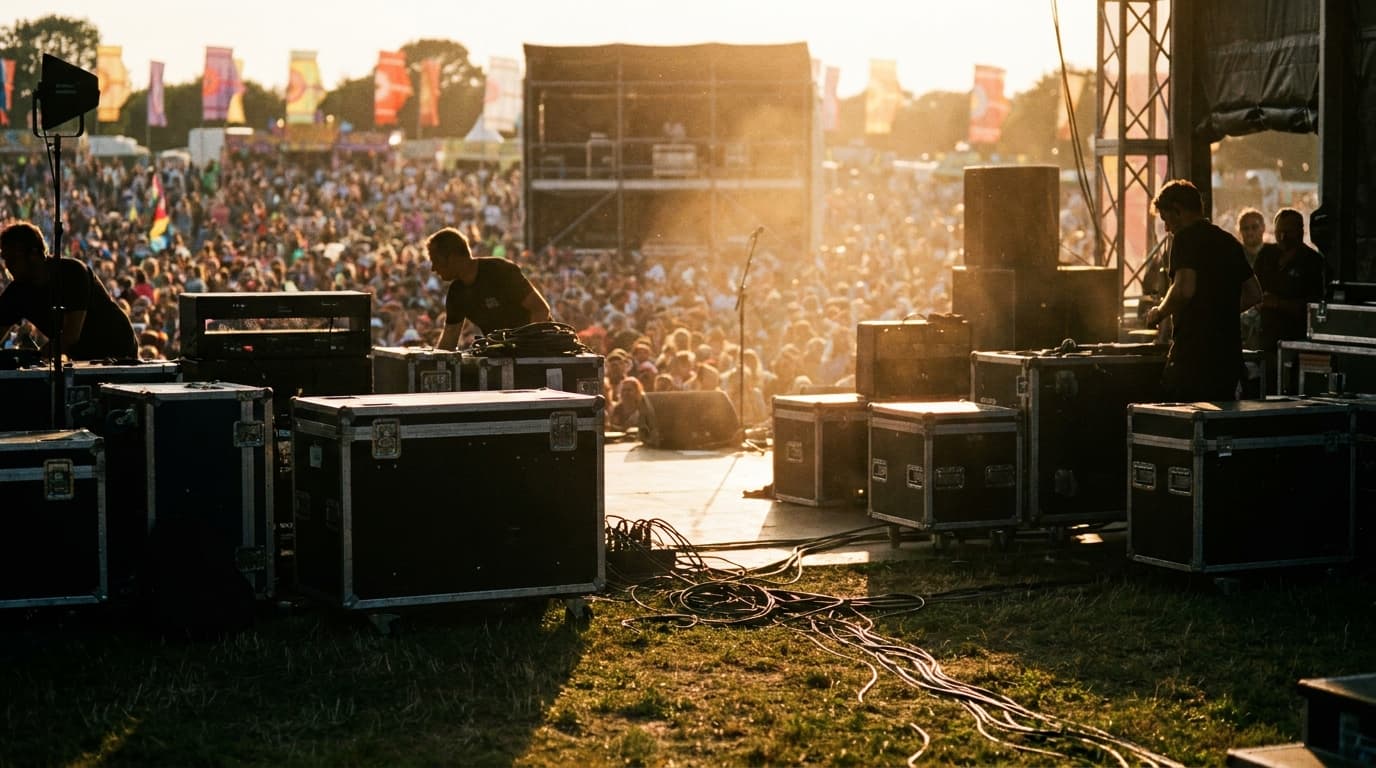
At 10:30, the main stage production team conducts a full system check. Front-of-house engineers use this period to run pink noise through the PA system, balance monitor wedges, and test wireless microphone channels across the field. Executing the main sound check before gates open guarantees pristine audio quality without exposing early-arriving guests to harsh tuning tones.
Afternoon Performances & Guest Flow
| Time | Event |
|---|---|
| 13:00 | Opening Act |
| 14:30 | Midday Acoustic Set |
| 16:30 | Afternoon Coffee Break |
Afternoon programming sets the initial energy level for arriving attendees while distributing crowds across distinct areas of the grounds. The 13:00 opening act on the main stage draws early arrivals into the central arena, creating immediate atmosphere and energizing the venue grounds.
By 14:30, shifting focus to a secondary stage—such as an acoustic performance in a garden setting—spreads out density and reduces sound fatigue. This multi-zone approach is similar to managing artistic exhibits in a local culture fest timeline. Following two solid performance sets, building in an 16:30 intermissions encourages guests to visit vendor rows, hydrate, and explore sponsor installations, generating essential revenue for commercial partners.
Evening Main Stage & Dining Service
| Time | Event |
|---|---|
| 18:00 | Evening Rock Performance |
| 20:00 | Festival Dinner Service |
As temperatures cool and evening lighting takes effect, festival energy peaks with high-impact main stage performances supported by lighting production. The 18:00 rock performance utilizes custom visual displays and dynamic lighting cues to transition the festival atmosphere from day to night.
Following the main stage rock set, scheduling a dedicated dinner break at 20:00 prevents severe overcrowding at concessions during late-night headliner performances. Providing a dedicated 90-minute window with specialized menus keeps lines moving quickly and gives attendees time to rest before the evening’s final sets.
Nighttime Headliner & Pyrotechnic Finale
| Time | Event |
|---|---|
| 22:00 | Headline DJ Set |
| 23:45 | Closing Fireworks |
Nighttime programming represents the emotional highlight of the festival, requiring seamless alignment between audio, lighting, pyrotechnics, and security teams. The 22:00 electronic headliner set delivers a high-energy dance atmosphere, requiring maximal PA output and complex video syncing.
The evening concludes at 23:45 with a synchronized fireworks show directly over the main stage. Integrating visual displays and pyrotechnics requires precise municipal permitting and safety clearance, akin to the technical coordination documented in our light festival schedule template. A punctual midnight wrap ensures compliance with local noise curfews while leaving attendees with an unforgettable final experience.
Music Festival Timeline vs Festival Run of Show
While both documents manage time, a festival timeline and a production run of show serve entirely different teams on site:
| Operational Feature | Music Festival Timeline | Festival Run of Show |
|---|---|---|
| Primary Audience | Event directors, artist managers, security, vendors, general public | FOH audio engineers, lighting directors, stage hands, video operators |
| Level of Detail | Macro level (sets, breaks, vendor hours, sound checks) | Micro level (minute-by-minute audio mutes, light cues, pyrotechnic firings) |
| Time Format | Scheduled clock times (e.g., 18:00 - Evening Rock Performance) | Elapsed call times and exact timecode triggers (e.g., +00:14:30 - Trigger Strobe FX) |
| Scope | Covers whole festival site operations | Specific to a single stage or technical production element |
Who Should Use This Template?
This master timeline template is designed for event organizers and operational leads across the live entertainment industry. You can easily adapt this framework for distinct team roles involved in festival execution:
- Festival Directors and Producers: Establish overall daily programming and ensure municipal permit compliance.
- Stage Managers and Production Crew: Track backline swaps, set start times, and artist changeovers.
- Artist Relations Managers: Coordinate hospitality calls, green room schedules, and stage arrival times.
- Vendor Operations Teams: Oversee commercial booth load-in, health inspections, and re-stocking schedules.
- Security and Crowd Safety Officers: Align guard shifts with anticipated crowd movements between stages.
- Fan Convention & Culture Organizers: Adapt multi-stage scheduling for panel halls or exhibition floors, similar to a comic and fan convention timeline.
How to Use This Template
- Download or Duplicate: Open this template in Chronolio to edit directly, or download offline copies using our downloadable Word template or PDF reference sheet.
- Set Your Target Date and Hours: Adjust the master clock to match your municipal noise permit parameters and venue door times.
- Customize Stage and Act Details: Input exact band names, stage numbers, audio changeover times, and specific sound check slots.
- Distribute Departmental Copies: Export customized schedule views for stage hands, vendor coordinators, security staff, and artist liaisons.
Tips for a Successful Music Festival
- Build generous stage changeover buffers: Never schedule acts back-to-back on a single stage without at least 30 minutes for backline clearing, line checks, and monitor testing.
- Enforce strict stage call times: Require performing artists to report to the stage manager's desk at least 45 minutes prior to their scheduled start time.
- Coordinate sound check order thoughtfully: Conduct headliner sound checks early in the morning so backline gear can remain staged behind opening acts without obstruction.
- Establish clear acoustic separation: Position secondary stages facing away from the main stage or utilize natural terrain barriers to minimize sound bleed.
- Align concessions with set schedules: Plan major food service breaks directly after prominent afternoon sets to maximize vendor sales and balance site foot traffic.
- Maintain active FOH communication: Ensure FOH sound engineers, stage managers, and event directors share a dedicated radio channel for immediate time adjustments.
Common Mistakes to Avoid
- Underestimating backline changeover duration: Complex bands with acoustic drum kits and elaborate pedalboards take longer to clear than acoustic acts; plan transition windows accordingly.
- Ignoring decibel limits and municipal curfews: Running past scheduled set times can lead to severe municipal fines or instant power shutdowns by local authorities.
- Forgetting vendor supply access windows: Failing to designate quiet morning hours for delivery vehicles forces restock carts through dense afternoon crowds.
- Overbooking main stage acts: Cramming too many artists into a single day creates extreme schedule fragility where a single 10-minute delay ruins the headliner set.
- Neglecting staff and crew meal breaks: Audio engineers and stagehands need dedicated shift rotations; unassigned rest breaks lead to costly technical blunders during peak performances.
In Summary
- A music festival timeline coordinates artist sets, technical sound checks, vendor operations, and crowd flow.
- Early morning hours (08:00–12:00) are reserved for vendor setup, health checks, and main stage audio calibration.
- Afternoon schedules alternate main stage and secondary acoustic sets to manage attendee volume across zones.
- Evening programming transitions into visual lighting production and dedicated dining intervals.
- Late-night acts culminate with headliner DJ performances and synchronized pyrotechnic displays.
- Maintaining precise changeover buffers prevents stage delays and ensures compliance with strict local venue curfews.
Organizing a seamless festival requires balancing artistic demands with rigorous site logistics. According to live event management studies published by Eventbrite's Event Academy, clear scheduling across internal production departments directly correlates with improved attendee satisfaction and reduced site safety incidents. By utilizing this structured timeline, festival directors, stage managers, and production teams can run an punctual, safe, and memorable live music experience.
Customize Your Music Festival Timeline