







This Template at a Glance
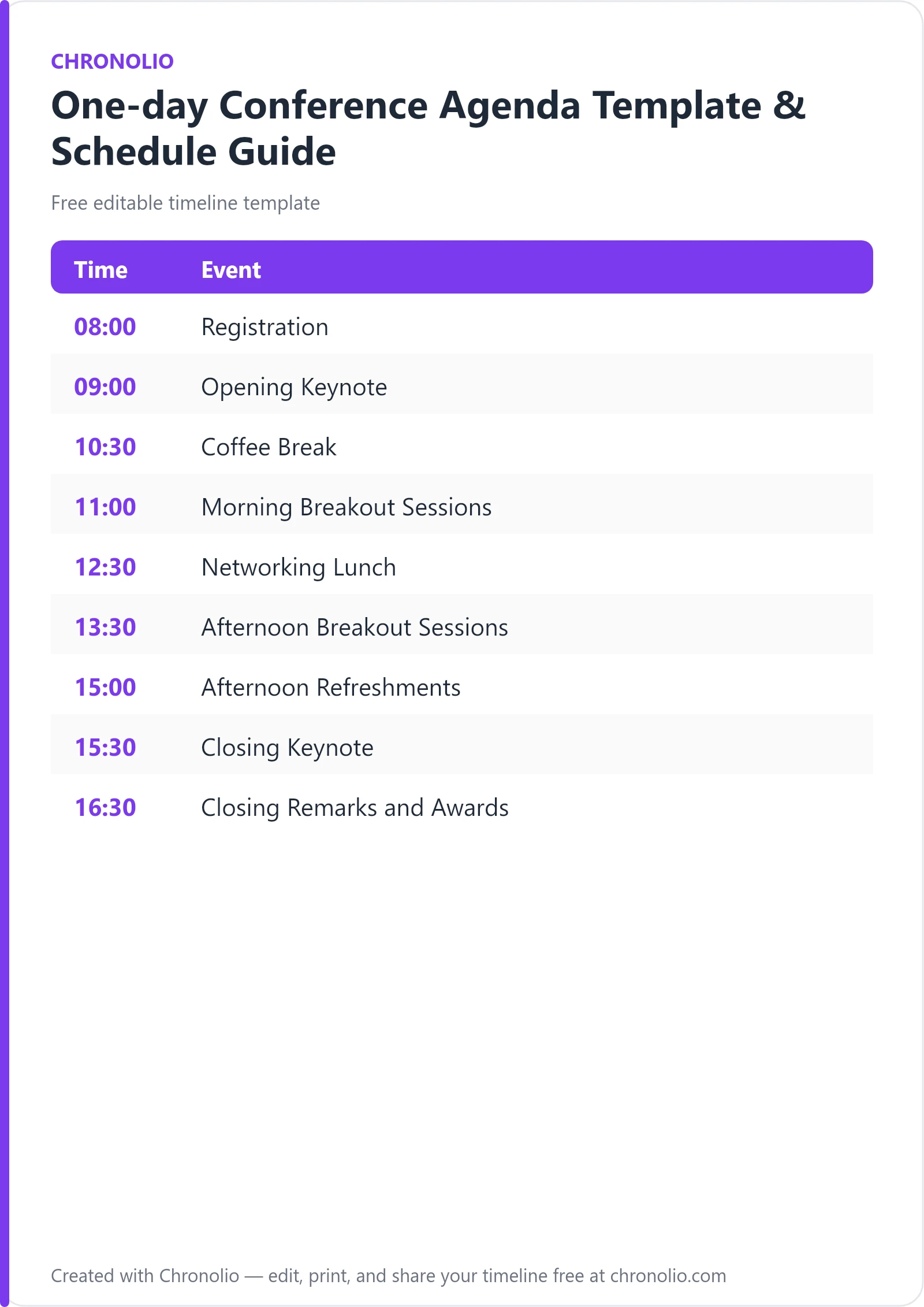
Here is the complete schedule this free template gives you — every time block, ready to edit, download, and share:
| Time | Event |
|---|---|
| 08:00 | Registration |
| 09:00 | Opening Keynote |
| 10:30 | Coffee Break |
| 11:00 | Morning Breakout Sessions |
| 12:30 | Networking Lunch |
| 13:30 | Afternoon Breakout Sessions |
| 15:00 | Afternoon Refreshments |
| 15:30 | Closing Keynote |
| 16:30 | Closing Remarks and Awards |
What Is a One-day Conference Agenda?
A one-day conference agenda is the operational master schedule that coordinates speakers, attendees, venue staff, and AV crews throughout a single day of programming. Running a single-day gathering requires tight timing: unlike multi-day summits, you do not have the luxury of rolling over delayed sessions to the next morning. Every presentation, panel, workshop, and coffee break must fit into a cohesive 8 to 9-hour block without overwhelming attendees.
As venue operators and event producers, we know that guest satisfaction depends heavily on pacing. Packed schedules lead to cognitive overload, while overly sparse agendas make attendees feel they haven’t received value for their ticket price. This template reflects real-world conference master plans, incorporating the essential operational buffers and energy resets that professional event managers rely on. Whether you are hosting an executive gathering or a creative summit, using a tailored framework like our Leadership Conference Schedule Template ensures your venue flow remains seamless from morning registration to final applause.
Customize Your One-day Conference Agenda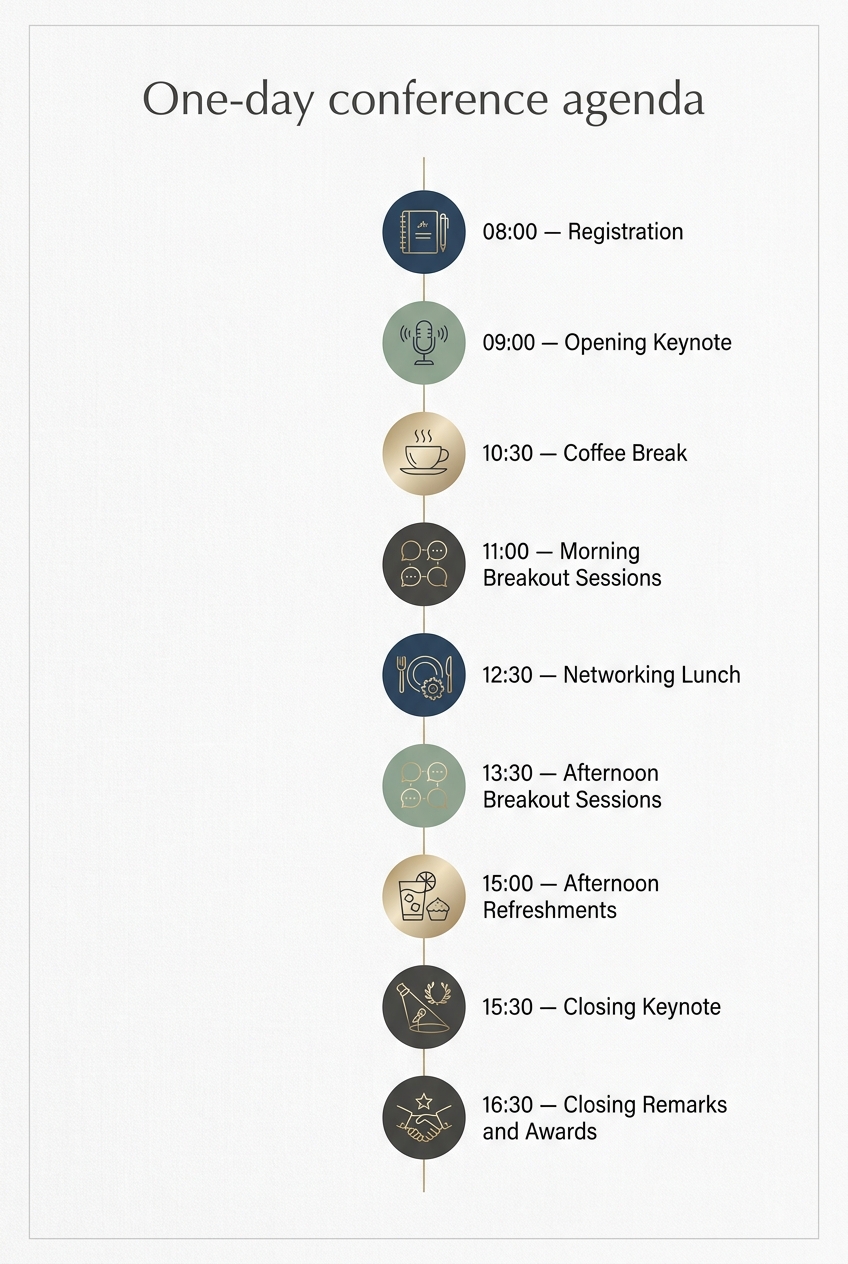
Why One-day Conferences Need a Timeline
Planning a single-day event is an exercise in time management. Because your participants are giving up an entire workday, they expect a crisp, professional flow that respects their time. A structured master schedule serves as the single source of truth for your entire execution team—from room monitors and sound engineers to catering staff and session chairs.
Without a synchronized timeline, common operational pain points quickly compound. Micro-delays during morning check-in can push your opening keynote back by twenty minutes, creating a cascade that shortens breakout sessions or delays lunch service. According to event management guidelines published by the Events Industry Council, maintaining rigorous timing is vital for attendee engagement and speaker satisfaction.
Furthermore, a well-communicated schedule enhances the attendee experience. When participants know exactly when breaks occur and where specific track sessions are located, they navigate the venue with confidence, build meaningful connections during networking windows, and stay energized throughout the afternoon plenary.
What to Include in a One-day Conference Agenda
To create a balanced and memorable event, your single-day schedule should incorporate these essential operational phases:
- Welcome and Badge Pick-up: A generous morning arrival window featuring registration desks, badge printing, and informal morning coffee.
- Plenary Keynote Sessions: High-profile opening and closing presentations held in the main ballroom to align all delegates.
- Structured Breakout Tracks: Parallel workshop or panel options in separate meeting rooms focused on specialized skills or niche topics.
- Dedicated Networking Buffers: Dedicated intermissions with light food and beverages served in central spaces like the exhibition hall.
- Catered Meal Service: A full midday lunch period designed to facilitate organic peer-to-peer conversations.
- Closing Ceremony: Final wrap-up remarks, organizational announcements, and award presentations to end on an inspiring note.
Morning Arrival and Keynote Opening
| Time | Event |
|---|---|
| 08:00 | Registration |
| 09:00 | Opening Keynote |
| 10:30 | Coffee Break |
The morning sequence sets the tone for the entire event. Opening registration at 08:00 in the Main Foyer gives early arrivals ample opportunity to collect badges and program packets without creating long queues. Serving hot coffee and light pastries near the check-in counters transforms potential wait time into a relaxed welcome window, encouraging guests to settle into the venue atmosphere before formal programming begins.
At 09:00, attendees transition into the Grand Ballroom for the opening keynote. Holding this flagship session first guarantees maximum attendance, taking advantage of high morning focus. A strong, visionary address aligns the audience around your central event theme. Following this 90-minute block, guests move to the Exhibition Hall at 10:30 for a designated coffee break. This 30-minute intermission allows participants to digest keynote insights and connect before dividing into specialized educational tracks.
Midday Tracks and Networking Lunch
| Time | Event |
|---|---|
| 11:00 | Morning Breakout Sessions |
| 12:30 | Networking Lunch |
At 11:00, the agenda transitions from general plenary content to tactical learning. Attendees disperse into Meeting Rooms A through D for concurrent morning breakout sessions. These 90-minute blocks are tailored for targeted deep-dives, interactive skill-building, or panel discussions. If you are organizing specialized tracks, consider pairing this flow with our Medical Conference Timeline Template or our Creative Industry Conference Timeline to align session formats with industry expectations.
By 12:30, morning sessions conclude, and guests move to the Dining Pavilion for a full hour of networking lunch. A catered buffet style works best here, as it allows attendees to move freely and choose conversation partners organically. Providing ample seating and clear catering signage ensures that meal service runs smoothly, leaving participants refreshed and ready for afternoon learning.
Afternoon Sessions and Plenary Wrap-Up
| Time | Event |
|---|---|
| 13:30 | Afternoon Breakout Sessions |
| 15:00 | Afternoon Refreshments |
| 15:30 | Closing Keynote |
| 16:30 | Closing Remarks and Awards |
The afternoon block opens at 13:30 with a second round of specialized breakout sessions across Meeting Rooms A through D. Because attendees naturally experience a mid-afternoon energy dip, these sessions should feature live demonstrations, audience Q&A, or small-group problem solving to maintain interactive audience engagement.
At 15:00, attendees gather in the Exhibition Hall for cold beverages and light snacks. This final 30-minute break provides a crucial transition period, allowing room monitors to re-set stage equipment while attendees check work emails and network with exhibitors.
The day concludes in the Grand Ballroom. At 15:30, the closing keynote synthesizes the day’s overarching themes and addresses big-picture industry trends. At 16:30, organizers deliver final closing remarks and present stand-out contributor awards. Wrapping up promptly at 17:00 respects attendee travel schedules, ensuring everyone departs with positive memories of a crisp, well-managed event.
One-day Conference Agenda vs Event Running Order
While attendees use a conference agenda to navigate their day, venue teams rely on an internal running order to execute it. Understanding the difference between these two documents keeps both guests and crew synchronized.
| Feature | Conference Agenda | Event Running Order |
|---|---|---|
| Primary Audience | Attendees, speakers, sponsors | Production crew, stage managers, caterers |
| Focus | High-level timing, room locations, session topics | Minute-by-minute cues, AV setups, staff duties |
| Visibility | Published on website, print program, event app | Internal operational document only |
| Detail Level | Broad session blocks (e.g., 09:00 - 10:30 Keynote) | Micro-timing (e.g., 08:55 Keynote mic check, 09:00 Walk-up music) |
While the published one-day conference agenda gives delegates a clear roadmap of session choices, the underlying running order contains technical AV cues, lighting changes, caterer call times, and speaker green room schedules.
Who Should Use This Template?
This versatile single-day schedule is crafted for event planners, corporate operators, and community organizers across various sectors. It is ideal for:
- Corporate Event Planners: Structuring annual company summits, product rollouts, or regional sales meetings.
- Trade Associations & Non-Profits: Hosting member conventions, educational seminars, and policy forums.
- Academic & Research Institutions: Organizing focused single-day symposia; for multi-day events, see our Multi-day Academic Conference Timeline.
- Startup Accelerators & Tech Hubs: Managing founder showcases or investor demo days; compare this with our Startup Pitch Event Timeline.
- Training Organizations: Executing professional development masterclasses and professional certification workshops.
Event success relies on clarity across various team members; explore how Chronolio supports different roles involved in seamlessly executing complex event schedules.
How to Use This Template
- Download or Duplicate: Access the customizable template above or download print-ready files in .docx format or .pdf format.
- Set Your Event Date and Location Details: Input your event title, date, venue address, and specific room names (e.g., Main Ballroom, Exhibition Hall).
- Adjust Session Durations: Modify start and end times to fit your speaker presentations, panel sizes, and venue catering windows.
- Publish and Distribute: Share the finalized agenda with attendees via your event website and app, and send technical schedules to venue partners.
Tips for a Successful One-day Conference
- Brief Session Chairs Early: Ensure every track has a dedicated chair instructed to give speakers 5-minute and 2-minute warnings so sessions finish on time.
- Incorporate Visual Timers: Place large digital countdown clocks at the back of every room visible to presenters.
- Keep Catering Close: Serve coffee breaks directly adjacent to breakout rooms or in the central exhibition hall to maximize networking time and limit transit delay.
- Standardize AV Setup Times: Schedule all speaker slide decks to be pre-loaded on master presentation laptops before registration opens at 08:00.
- Buffer Room Transitions: Leave a minimum 10-minute cushion between breakout sessions so delegates can transition rooms comfortably.
- Promote Digital Agendas: Place QR codes linking to the live schedule throughout venue foyers to minimize printed paper waste.
Common Mistakes to Avoid
- Overcrowding the Schedule: Packing too many presentations into single blocks leads to audience fatigue and guarantees schedule slip.
- Shortchanging Break Times: Cutting breaks down to 10 or 15 minutes causes bottlenecks at restrooms and coffee stations.
- Neglecting Wayfinding Signage: Poor floor plan signage causes confusion during room transitions, cutting into presentation time.
- Skipping Room Capacity Limits: Failing to monitor room capacity during popular breakout sessions leads to overcrowded doorways and safety hazards.
- Ignoring Technical Checks: Failing to conduct sound and visual checks before 08:00 results in live delays during the opening keynote.
In Summary
- A one-day conference agenda balances keynotes, breakout workshops, structured meals, and networking intermissions within a clear 8:00 AM to 5:00 PM structure.
- Dedicated 30-minute morning and afternoon breaks prevent attendee burnout and maintain continuous momentum across the exhibition floor.
- Assigning dedicated track chairs and visual countdown clocks keeps presenters punctual throughout the day.
- Parallel breakout sessions allow delegates to personalize their learning experience while general plenaries unite the entire audience.
- Using a proven, fully editable template reduces planning time and ensures seamless venue execution.
Planning a single-day conference requires balancing dense educational content with engaging networking opportunities. This master template offers a tested structure that respects attendee attention spans, keeps presenters on track, and empowers catering and production teams to execute flawless operations. Adapt this agenda to your venue specs and programmatic goals today.
Customize Your One-day Conference Agenda