






This Template at a Glance
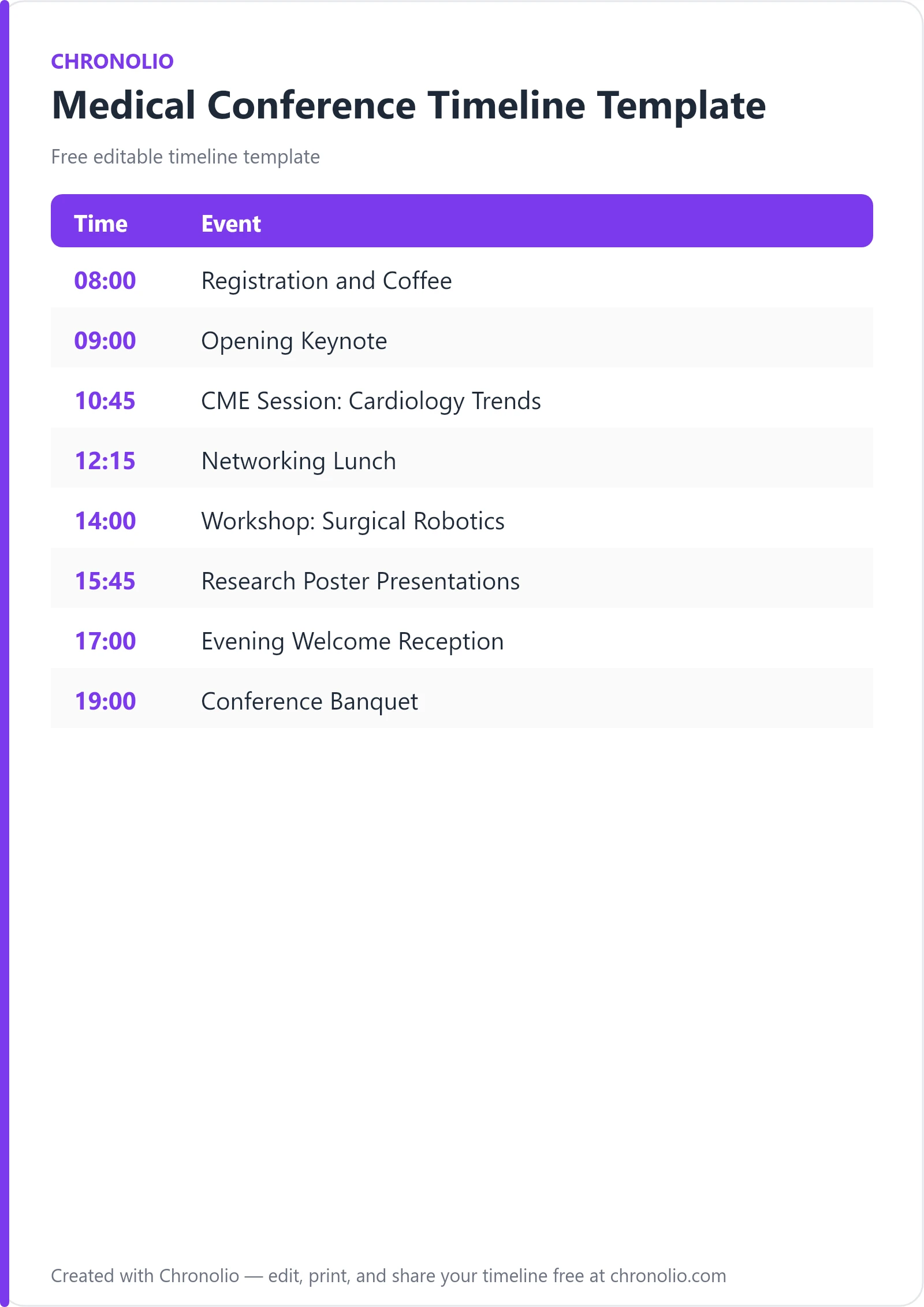
Here is the complete schedule this free template gives you — every time block, ready to edit, download, and share:
| Time | Event |
|---|---|
| 08:00 | Registration and Coffee |
| 09:00 | Opening Keynote |
| 10:45 | CME Session: Cardiology Trends |
| 12:15 | Networking Lunch |
| 14:00 | Workshop: Surgical Robotics |
| 15:45 | Research Poster Presentations |
| 17:00 | Evening Welcome Reception |
| 19:00 | Conference Banquet |
What Is a Medical Conference Timeline?
A medical conference timeline is an operational master schedule that maps out every presentation, accredited educational session, break, and social gathering across a clinical convention or research symposium. Managing a high-stakes healthcare event requires balancing strict Accreditation Council for Continuing Medical Education (ACCME) guidelines with the practical needs of busy clinicians who must manage patient care inquiries during breaks.
Having managed dozens of multi-track clinical symposia, I can tell you that medical gatherings operate under far tighter parameters than typical corporate events. Attendees need clear tracking of AMA PRA Category 1 Credits™, distinct room transitions, and predictable break times to remain focused. This template reflects real-world medical conference structures and industry best practices, ensuring your plenary sessions, breakout tracks, and vendor exhibitions execute seamlessly. If you are planning a single-day educational event, you may also want to pair it with a one-day conference agenda to compare different pacing options.
Build Your Medical Conference Timeline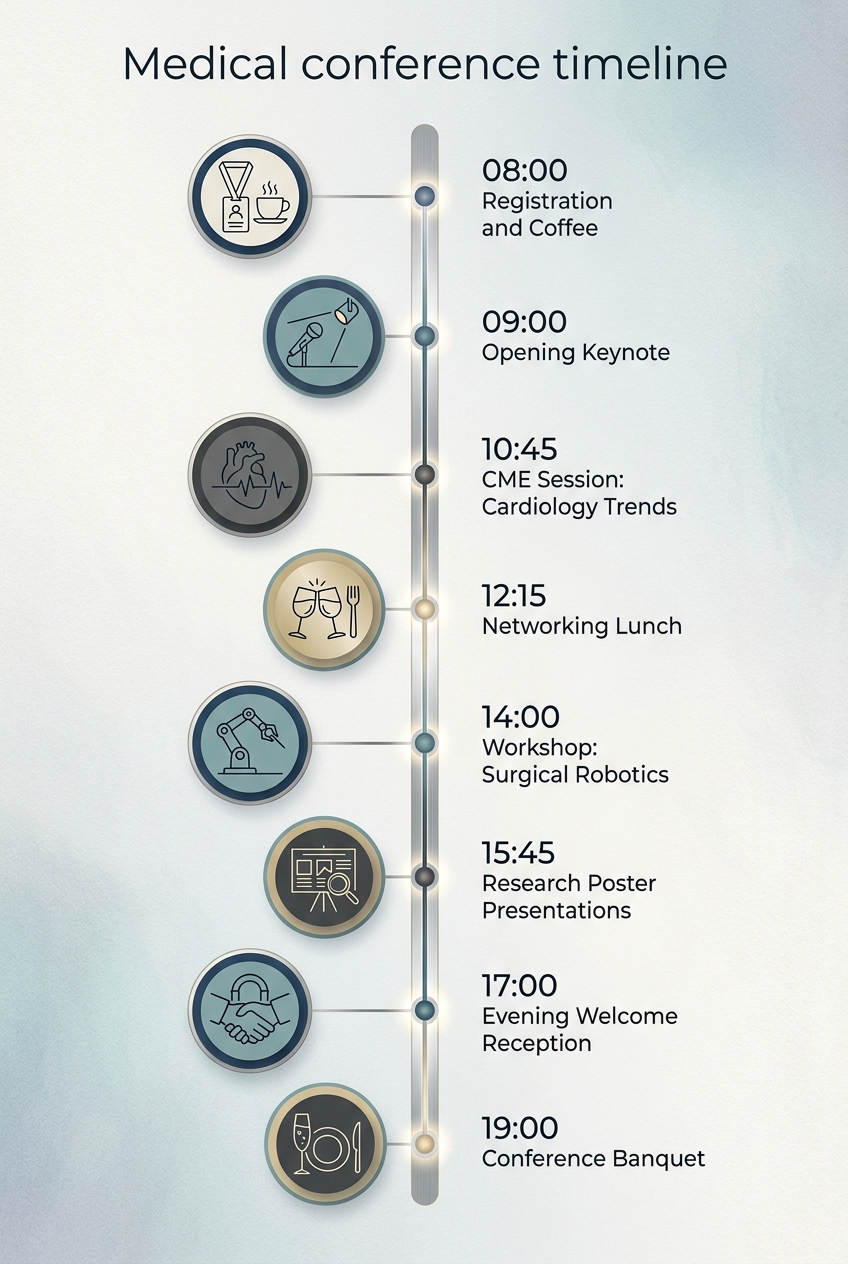
Why Medical Conferences Need a Timeline
Precise timing is the backbone of any accredited healthcare event. Physicians, surgeons, and healthcare executives take valuable time away from their practices and patients to attend. A disciplined, visible schedule demonstrates respect for attendee time while ensuring that complex logistics run without friction.
- Ensures CME Compliance: Accredited continuing education mandates exact contact hours. A structured timeline guarantees that lectures start and end precisely on schedule, preserving accredited credit calculations for attending medical professionals.
- Streamlines Venue and Vendor Logistics: Catering crews, audiovisual technicians, and exhibition handlers rely on fixed timing. Knowing exactly when the Garden Terrace buffet opens or when the poster session begins in the Gallery Hall keeps service staff aligned.
- Facilitates Multi-Track Navigation: Attendees frequently jump between specialized clinical tracks. A synchronized schedule prevents overlap and ensures smooth foot-traffic flow between breakout rooms and plenary halls.
What to Include in a Medical Conference Timeline
To deliver a high-value educational experience, your conference running order must blend formal instruction with informal collaboration. Ensure your master schedule incorporates these core components:
- Badge Pickup and Welcome Hospitality: Early morning check-in equipped with breakfast and coffee service to encourage early arrival.
- Plenary Keynote Sessions: High-impact presentations by recognized opinion leaders on pioneering clinical research or industry trends.
- Accredited CME Breakouts: Specialized sub-specialty lectures and panel discussions with dedicated Q&A periods.
- Interactive Workshops: Small-group, hands-on learning environments such as surgical skill labs or diagnostic simulations.
- Research Poster Exhibitions: Designated time for junior researchers and residents to display abstract findings and engage with senior faculty.
- Structured Networking Breaks: Dedicated, catered time blocks designed for peer connections and commercial exhibit hall engagement.
- Evening Social Functions: Formal or semi-formal dinners and receptions to celebrate community achievements and foster long-term professional relationships.
Morning Keynotes and CME Breakouts
The opening phase sets an authoritative tone for the entire gathering. Attendees use this block to register, settle in, and participate in high-level plenary education before transitioning to specialized breakout rooms.
| Time | Event |
|---|---|
| 08:00 | Registration and Coffee |
| 09:00 | Opening Keynote |
| 10:45 | CME Session: Cardiology Trends |
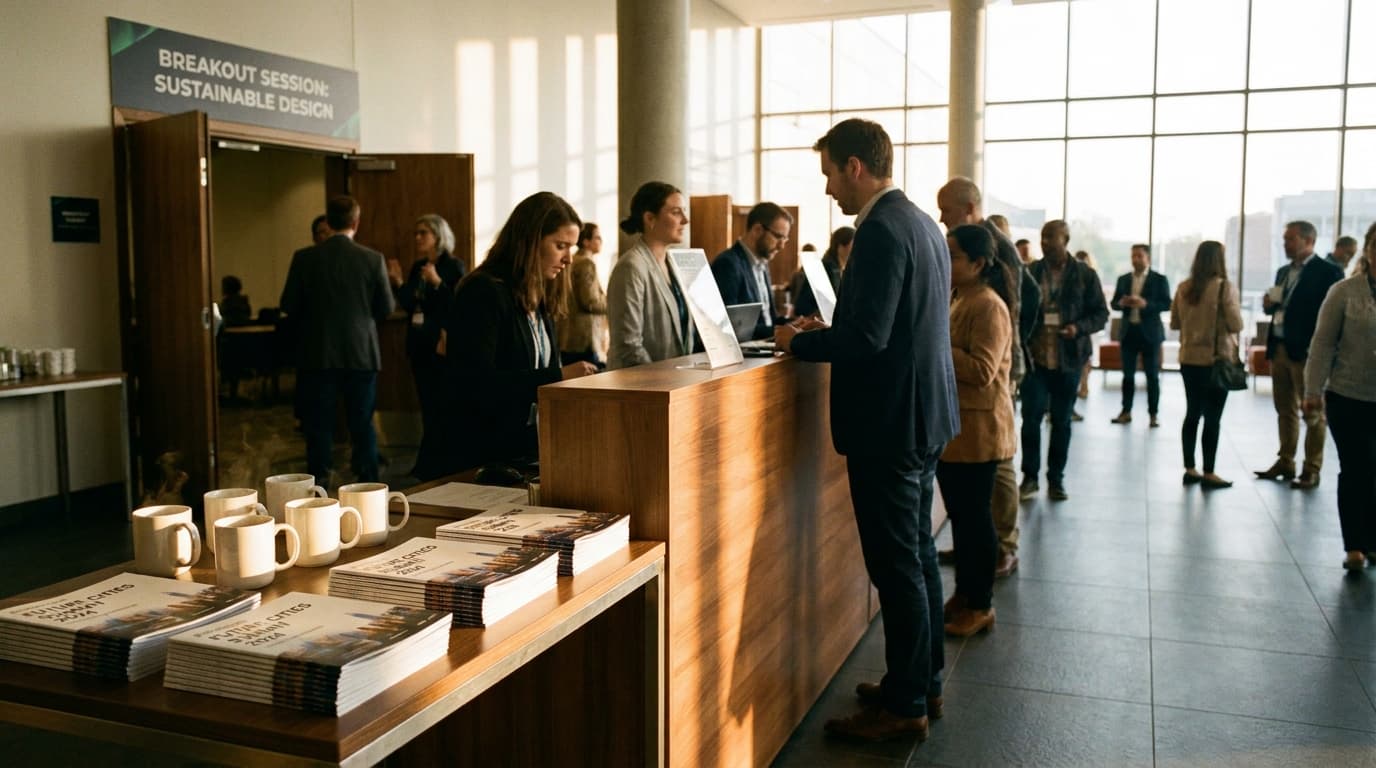
Morning registration takes place in the Grand Ballroom Foyer, where attendees collect their physical badges, informational packets, and CME tracking sheets. Providing hot coffee and breakfast items during this first hour gives clinicians a dedicated period to greet colleagues and review the daily schedule before formal programming begins.
At 09:00, the focus shifts to the Main Auditorium for the Opening Keynote. Dr. Aris Thorne leads a 90-minute presentation on genomic medicine, offering 1.5 CME credits right out of the gate. Holding your premier plenary address early guarantees maximum attendance before participants disperse into concurrent tracks. Following a brief 15-minute transition, attendees move into specialized programming, such as the cardiology review in Room A102, which leaves plenty of time for audience engagement and expert Q&A. For multi-day academic gatherings, you can review our multi-day academic conference schedule to see how multi-track mornings are structured across several days.
Afternoon Workshops and Poster Sessions
Afternoon programming transitions attendees from passive learning in lecture halls to active participation, technical hands-on training, and peer-to-peer research reviews.
| Time | Event |
|---|---|
| 12:15 | Networking Lunch |
| 14:00 | Workshop: Surgical Robotics |
| 15:45 | Research Poster Presentations |
A substantial 90-minute break is crucial after a dense morning of clinical lectures. Moving attendees out to the Garden Terrace for a buffet-style lunch allows catering teams to reset interior halls while table signs organized by specialty turn mealtime into an organic networking opportunity.
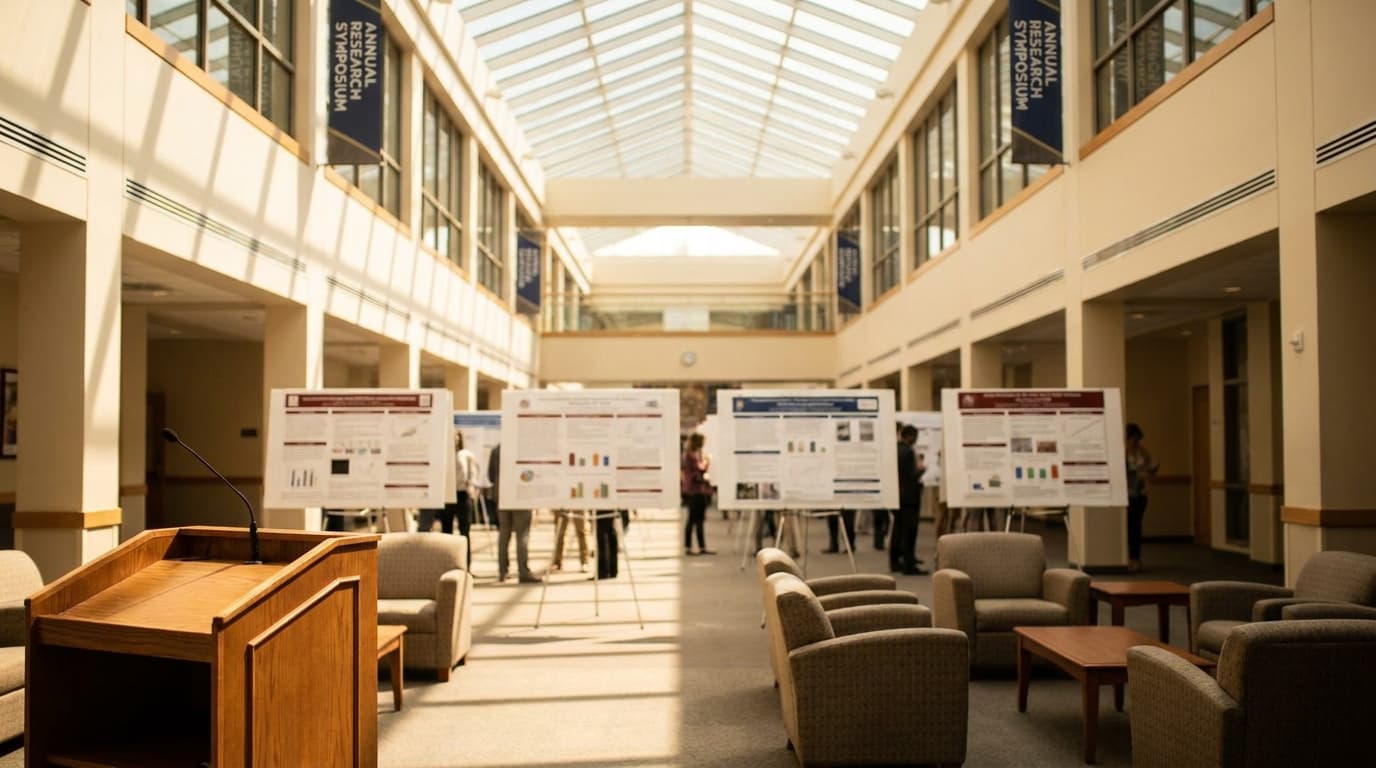
At 14:00, interactive sessions begin in specialized facilities like the Tech Lab. Capping attendance at 50 participants for events like the Surgical Robotics workshop guarantees that every attendee receives direct equipment access and hands-on faculty instruction. Following the workshop, attendees transition into the Gallery Hall for research poster presentations. This dedicated hour lets young investigators present public health findings while expert judges evaluate submissions for institutional awards. If your conference leans heavily into scientific research displays, explore our research symposium schedule template for specialized timing strategies.
To save time when planning your layout, download our ready-to-use documents: you can grab the medical conference timeline in Word format or download the medical conference timeline PDF version for immediate printing.
Evening Receptions and Banquets
The final phase of the conference day gives attendees time to relax, digest the day's clinical insights, and build meaningful professional relationships in a social setting.
| Time | Event |
|---|---|
| 17:00 | Evening Welcome Reception |
| 19:00 | Conference Banquet |
Transitioning from educational sessions to an informal mixer at the Sky Lounge helps bridge the gap between daytime clinical learning and evening activities. Offering hors d'oeuvres and beverages encourages unstructured peer discussion in a relaxed environment after an intense day of lectures.
The main day concludes in the Main Dining Hall with a formal Conference Banquet. This structured dinner honors clinical excellence, recognizes research poster contest winners, and features a final closing toast from the keynote speaker. Leaving a short 30-minute buffer before the banquet allows attendees who are staying on-site to return to their hotel rooms briefly, check urgent clinical communications, and refresh before dinner.
Medical Conference Timeline vs Academic Agenda
While both formats structure complex educational content, medical conference schedules require specific adjustments to accommodate mandatory clinical accreditations, commercial exhibits, and hands-on skill labs.
| Aspect | Medical Conference Timeline | Academic Agenda |
|---|---|---|
| Primary Goal | Clinical practice updates, CME compliance, and skill acquisition | Scholarly paper presentations, methodology review, and peer critique |
| Session Structure | Plenary lectures combined with mandatory Q&A and accredited breakouts | Sequential abstract readings, panel discussions, and open floor debates |
| Special Features | Hands-on lab simulations, exhibit halls, and formal CME tracking | Workshop panels, roundtables, and publication review boards |
| Attendee Profile | Practicing physicians, surgeons, nurses, and medical researchers | Professors, post-doctoral fellows, graduate students, and scholars |
Who Should Use This Template?
This versatile schedule framework is designed for healthcare leaders, event planners, and medical education directors who need a proven operational plan. It is ideal for:
- Hospital System Education Committees: Organizing internal clinical updates and nursing education days.
- National and Regional Medical Societies: Planning annual scientific meetings and specialty congresses.
- Academic Medical Centers: Hosting clinical research symposia, grand rounds series, and resident poster competitions.
- Healthcare Association Executives: Running leadership summits that require balancing governance with education. If you are structuring executive sessions alongside your educational content, check out our leadership conference schedule template.
- Continuing Medical Education (CME) Providers: Ensuring strict compliance with accreditation timing standards.
Chronolio supports the distinct roles involved in executing high-stakes conference operations, from track chairs and AV directors to hospitality coordinators.
How to Use This Template
- Download or Duplicate: Open the template in Chronolio or download the editable version for your venue software.
- Set Your Event Date and Timezone: Adjust the baseline hours to align with your venue's access agreements and catering schedules.
- Customize Track Content: Input your specific clinical lecture titles, faculty names, and designated room locations (e.g., Main Auditorium, Tech Lab).
- Distribute to Stakeholders: Share tailored versions of the schedule with A/V crews, venue managers, accredited sponsors, and attending faculty.
Tips for a Successful Medical Conference
- Incorporate Hard Breaks: Clinicians are rarely off the clock; schedule dedicated 15- to 20-minute windows between breakouts so attendees can respond to urgent clinical messages without missing presentation content.
- Verify CME Accreditation Requirements Early: Align all session lengths and evaluation distribution plans with guidelines established by accredited organizations like the Accreditation Council for Continuing Medical Education (ACCME).
- Buffer Hands-On Lab Setup Times: Interactive workshops involving machinery or surgical simulators require significant technical reset time; always build in a 30-minute room buffer before and after these sessions.
- Organize Meal Times by Specialty: Use clear signage during catered lunches to bring practitioners from shared fields together naturally.
- Centralize Poster Display Logistics: Set up poster boards in high-traffic corridors or near catering tables to maximize visitor foot traffic throughout the day.
- Provide Digital Access to Materials: Publish presenter slides and abstract documents in an attendee portal ahead of time to facilitate active participation during Q&A blocks.
Common Mistakes to Avoid
- Overcrowding the Daily Schedule: Packing lectures back-to-back without movement buffers leads to severe schedule drift and reader fatigue.
- Shortchanging Q&A Time: Medical professionals attend live events to engage with subject experts; cutting Q&A periods frustrates attendees and degrades the educational value.
- Ignoring On-Site Wi-Fi Capacity: Healthcare workers carry multiple devices and rely on fast connectivity to access reference material and hospital records.
- Failing to Test Audiovisual Equipment: Medical presentations often feature detailed high-definition clinical video; skip pre-conference AV checks at your own peril.
- Isolating the Exhibit Hall: Placing commercial booths in obscure corridors discourages sponsor participation; integrate vendor areas directly into morning registration and coffee stations.
- Vague Room Signage: Large convention venues can be confusing; failing to post clear directional signs causes delayed session starts.
In Summary
- Comprehensive Master Plan: This medical conference timeline coordinates registration, accredited lectures, practical labs, poster displays, and networking.
- Designed for Compliance: Structures educational tracks to easily calculate and fulfill continuing medical education requirements.
- Optimized Event Flow: Deliberately pairs intensive morning plenary sessions with interactive afternoon workshops and relaxed evening social receptions.
- Fully Adaptable: Easily tailored for single-day specialty symposia or extended multi-track medical congresses.
- Built for All Stakeholders: Keeps venue staff, technical teams, medical faculty, and attending clinicians aligned throughout the event.
Running a flawless medical event requires a balance between rigorous educational timing and exceptional hospitality. By structuring your master schedule around clear operational phases, you give faculty members, venue operators, and attending physicians the predictability they need for a successful event. Whether you are running a regional clinical update or a multi-day scientific assembly, this schedule provides the structural foundation your team needs.
Build Your Medical Conference Timeline