






This Template at a Glance
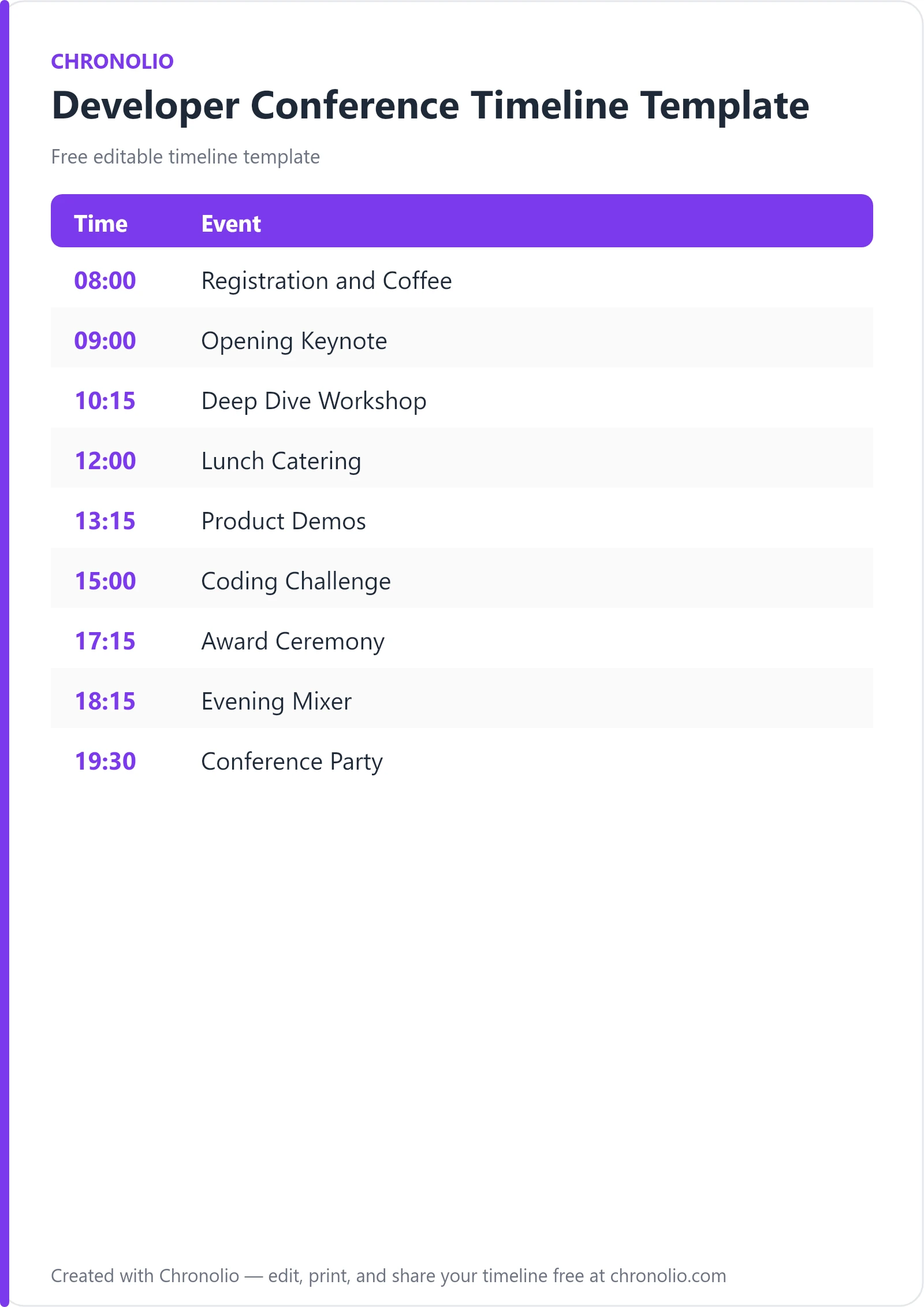
Here is the complete schedule this free template gives you — every time block, ready to edit, download, and share:
| Time | Event |
|---|---|
| 08:00 | Registration and Coffee |
| 09:00 | Opening Keynote |
| 10:15 | Deep Dive Workshop |
| 12:00 | Lunch Catering |
| 13:15 | Product Demos |
| 15:00 | Coding Challenge |
| 17:15 | Award Ceremony |
| 18:15 | Evening Mixer |
| 19:30 | Conference Party |
What Is a Developer Conference Timeline?
A developer conference timeline is a precise master schedule that orchestrates the flow of technical keynotes, hands-on software workshops, product demonstrations, competitive coding challenges, and after-hours networking. Organizing a high-impact engineering gathering requires balancing intensive technical learning with energetic social interactions across multiple physical or virtual spaces. Having managed software engineering summits and developer relations events for years, I have seen how a well-structured agenda prevents delegate burnout while ensuring venue technology, network infrastructure, and catering operate in total alignment.
This template incorporates industry best practices for software events, giving developer relations teams, engineering leaders, and conference producers a practical blueprint. If you are planning a broader corporate or industry event, you can also explore our one-day conference agenda template to compare different structural approaches.
Customize This Developer Conference Timeline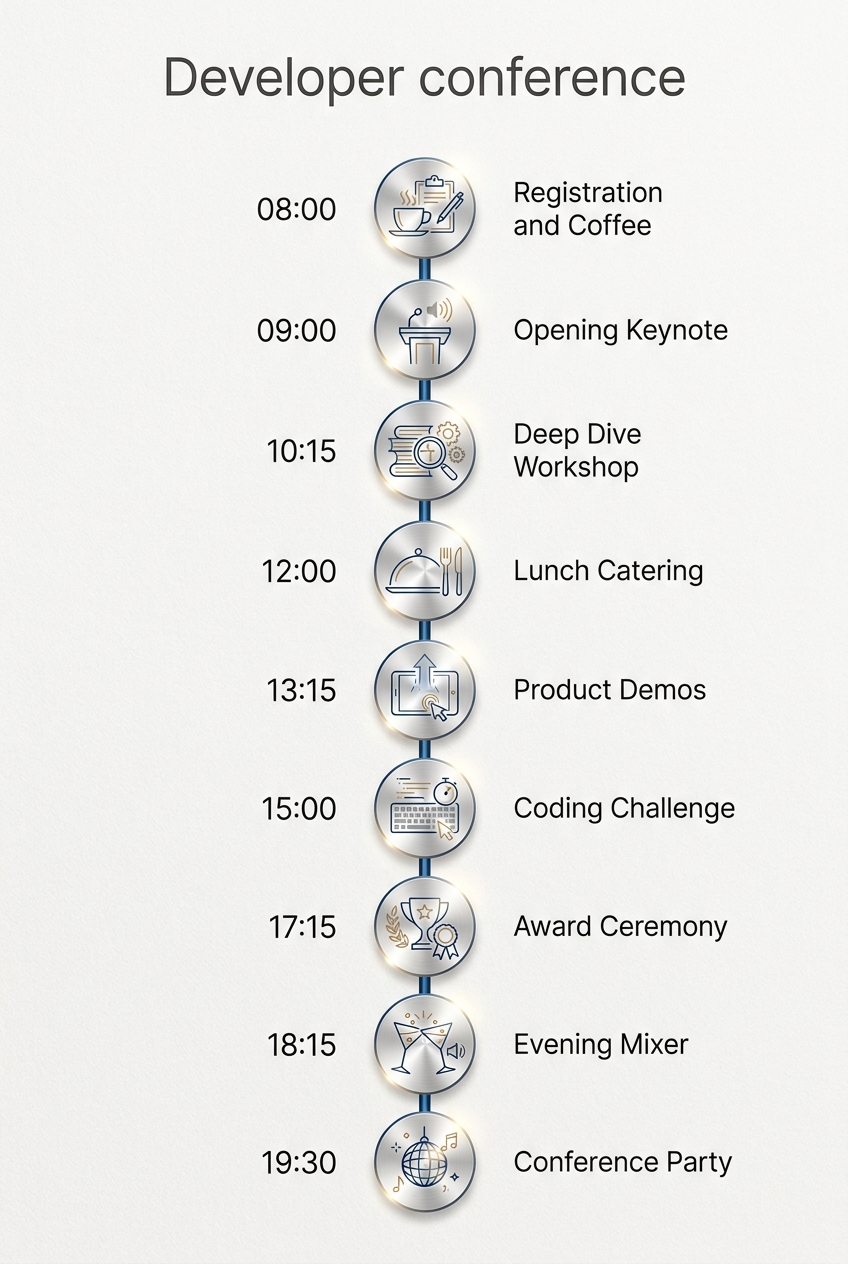
Why Developer Conferences Need a Timeline
Technical events carry complex logistics that go far beyond standard conference presentations. Attendees need high-speed Wi-Fi, accessible power outlets, dedicated code environments, and structured transition windows between technical deep dives and social events. Without a strict timeline, technical sessions frequently run over time due to live troubleshooting or extended Q&A periods, causing downstream delays that disrupt catered lunches, sponsor booth traffic, and evening entertainment.
A structured schedule also aligns cross-functional event staff, AV technicians, and sponsor teams. When every party knows precise setup and teardown windows for spaces like the Exhibition Hall or Innovation Lab, sponsor engagements run smoothly and room resets happen without interrupting nearby presentations.
Finally, software developers appreciate predictability. Clear schedules allow delegates to strategically choose between concurrent workshops, schedule meetings with vendors in the exhibition space, and prepare their local environments before hands-on sessions begin.
What to Include in a Developer Conference Timeline
Every comprehensive developer conference agenda should incorporate key operational and educational phases:
- Welcome and Registration Check-In: Early-morning arrival, badge collection, Wi-Fi credential distribution, and warm beverage service.
- Visionary Keynote Address: Opening remarks highlighting macro software trends, platform updates, and key architectural shifts.
- Hands-On Technical Workshops: Practical coding sessions focused on specific stacks, cloud-native frameworks, or APIs.
- Dedicated Catering Breaks: Catered lunches and refreshment breaks designed to encourage spontaneous peer networking.
- Product Demonstrations and Expo: Vendor showcases highlighting modern developer tools, continuous integration platforms, and developer services.
- Interactive Coding Challenge: A structured mini-hackathon or algorithmic competition to test engineering skills under pressure.
- Recognition and Award Ceremony: Formal acknowledgment of challenge winners and active open-source community contributors.
- Casual Evening Socials: Transition events on terraces or lounges featuring light bites, drinks, and relaxed conversation.
- After-Hours Party: Celebratory evening events with live entertainment to build long-term community relationships.
Morning Kickoff & Deep-Dive Technical Workshops
| Time | Event |
|---|---|
| 08:00 | Registration and Coffee |
| 09:00 | Opening Keynote |
| 10:15 | Deep Dive Workshop |
The early morning hours set the technical baseline for the entire day. Opening registration and coffee service in the Main Lobby at 08:00 gives delegates an hour to collect their name badges, connect to the high-density Wi-Fi network, and grab coffee while catching up with peers. This buffer is critical for preventing late arrivals from disrupting the opening address.
At 09:00, the event moves to the Grand Hall for the opening keynote presentation, where organizers welcome attendees and keynote speakers share future trends in software engineering and cloud platform architecture. Leaving a 15-minute transition window after the keynote allows participants to move into Workshop Room A for the hands-on deep dive workshop. Here, attendees spend 90 minutes building cloud-native microservices from scratch, requiring reliable venue power distribution and prepared local environments.
Afternoon Demos, Hackathon & Awards
| Time | Event |
|---|---|
| 12:00 | Lunch Catering |
| 13:15 | Product Demos |
| 15:00 | Coding Challenge |
| 17:15 | Award Ceremony |
Midday transitions the conference from passive learning into interactive exploration and friendly competition. A full buffet-style lunch in the Dining Hall at 12:00 provides essential fuel and mid-day networking opportunities. Keeping lunch to one hour ensures the afternoon sessions stay strictly on schedule without causing afternoon fatigue.
At 13:15, attendees head into the Exhibition Hall for live product demonstrations, where software vendors showcase cutting-edge developer tools and automated testing frameworks. At 15:00, the focus shifts to the Innovation Lab for a two-hour hackathon-style coding challenge. Teams collaborate to solve algorithmic puzzles or construct working prototypes before time expires. The afternoon culminates at 17:15 in the Grand Hall with an awards ceremony recognizing top hackathon teams, celebrating creative solutions and community contributions with trophies and tech prizes on stage.
Evening Socials & After-Party
| Time | Event |
|---|---|
| 18:15 | Evening Mixer |
| 19:30 | Conference Party |
After an intense day of technical sessions and competitive coding, shifting the focus toward casual networking allows developers to process what they learned and establish lasting industry connections. The evening mixer on the Roof Terrace at 18:15 creates a relaxed atmosphere with drinks, appetizers, and open-air conversation as the sun sets.
At 19:30, the main event transitions into the Grand Ballroom for the official conference party. Featuring live music, interactive entertainment, and continuous food and beverage service, this celebration runs through 21:30. Designing an evening schedule that flows naturally from a quiet terrace mixer into a high-energy party keeps retention high and finishes the conference on a memorable note.
Developer Conference Timeline vs Event Running Order
While both documents help coordinate your event, they serve distinct operational functions during conference execution.
| Aspect | Developer Conference Timeline | Event Running Order |
|---|---|---|
| Primary Audience | Attendees, speakers, sponsors, and general public | AV technicians, stage managers, venue operators |
| Level of Detail | High-level session topics, times, and room names | Minute-by-minute technical CUEs, mic assignments, lighting |
| Focus Area | Learning paths, workshop timing, and networking windows | Backend logistics, stage transitions, and audio cues |
| Distribution | Published on website, event app, and print booklets | Kept internally with core production staff |
A developer conference timeline provides the overarching structure for the delegate experience, whereas an internal running order dictates specific backend technical cues. For additional insights on coordinating multi-track academic or technical agendas, compare this approach with our multi-day academic conference template or our research symposium schedule template.
Who Should Use This Template?
This timeline template is specifically crafted for technical event organizers and community builders who need a reliable, professional framework. It is ideal for:
- Developer Relations (DevRel) Teams: Companies hosting annual developer summits, platform launch events, or user conferences.
- Open-Source Foundations: Community organizations coordinating developer gatherings, contributor summits, and maintainer meetups.
- Enterprise Software Vendors: Product teams running partner developer days, technical advisory summits, or API workshops.
- Tech Incubators & Accelerators: Organizations orchestrating hackathons, demo days, and technical pitch competitions.
- University Computer Science Departments: Academic institutions hosting regional engineering symposia and student hackathons.
Chronolio offers specialized support tailored to the distinct roles involved in running high-stakes technical conferences, ensuring project managers, technical producers, and venue operators stay synchronized.
How to Use This Template
- Access the Schedule: Click the edit button on this page to open the interactive timeline builder.
- Adjust Dates and Times: Modify session start times and durations to fit your specific venue availability and track structure.
- Customize Track Details: Update stage names, workshop topics, speaker names, and technology prerequisites.
- Export for Distribution: Download your finished schedule as a editable Word document (.docx) or print-ready PDF (.pdf).
- Share with Stakeholders: Distribute customized versions to venue AV crews, catering staff, platform sponsors, and attendees via your event app.
Tips for a Successful Developer Conference
- Test Wi-Fi and Power Infrastructure Early: Ensure the venue provides high-density access points and power strips at every workshop table to handle heavy developer loads.
- Provide Environment Setup Guides Ahead of Time: Send attendees container images or repo installation steps prior to the event so workshop time is spent coding, not downloading dependencies.
- Incorporate Mandatory Buffer Windows: Build 15-minute buffers between main-stage keynotes and breakout workshops according to guidance from organizations like the IEEE Computer Society to handle crowd movement.
- Balance Heavy Theory with Interactive Coding: Pair passive keynote presentations with active hands-on challenges to keep energy levels consistent throughout the afternoon.
- Designate Quiet Spaces for Async Work: Provide quiet lounges where developers can take urgent work calls or answer pull requests without leaving the venue.
- Coordinate Catering with Tech Sessions: Ensure coffee stations remain populated during workshop transitions to prevent long queues from delaying morning sessions.
Common Mistakes to Avoid
- Overpacking the Schedule: Scheduling back-to-back technical sessions without rest periods leads to cognitive overload and early delegate departure.
- Ignoring AV Setup Windows: Failing to allocate 15 minutes before workshops for instructor laptop testing and display resolution adjustments causes delays.
- Underestimating Wi-Fi Bandwidth Requirements: Assuming standard venue Wi-Fi can support hundreds of concurrent SSH connections, package downloads, and livestreams.
- Neglecting Sponsor Booth Walkways: Placing product demo areas in narrow hallways causes severe foot traffic bottlenecks during lunch hours.
- Delayed Hackathon Judging: Overrunning the coding challenge evaluation period, which pushes back the awards ceremony and encroaches on evening social plans.
- Forgetting Accessibility Needs: Omitting live captioning or accessible seating arrangements in main halls and breakout spaces.
In Summary
- Purpose-Built Structure: Designed specifically to balance keynotes, hands-on workshops, coding challenges, and evening socials.
- Optimized Operational Flow: Incorporates realistic 15-minute buffer windows for smooth venue movement across multiple rooms.
- Sponsor and Community Friendly: Dedicates prime afternoon hours for live product demonstrations and open-source recognition.
- Fully Customizable: Easily adaptable for single-day developer summits or expanded multi-track engineering conventions.
- Multi-Format Export Support: Available for instant customization and download in Word and PDF formats for team distribution.
Planning a complex technical conference requires balancing hard technical logistics with a fantastic delegate experience. By relying on a proven schedule template, you ensure your speakers, sponsors, facilitators, and attendees enjoy an engaging, seamless event from the morning registration coffee to the final evening party. You can also explore our creative industry conference timeline or leadership conference schedule template for additional event planning frameworks.
Customize This Developer Conference Timeline