




This Template at a Glance
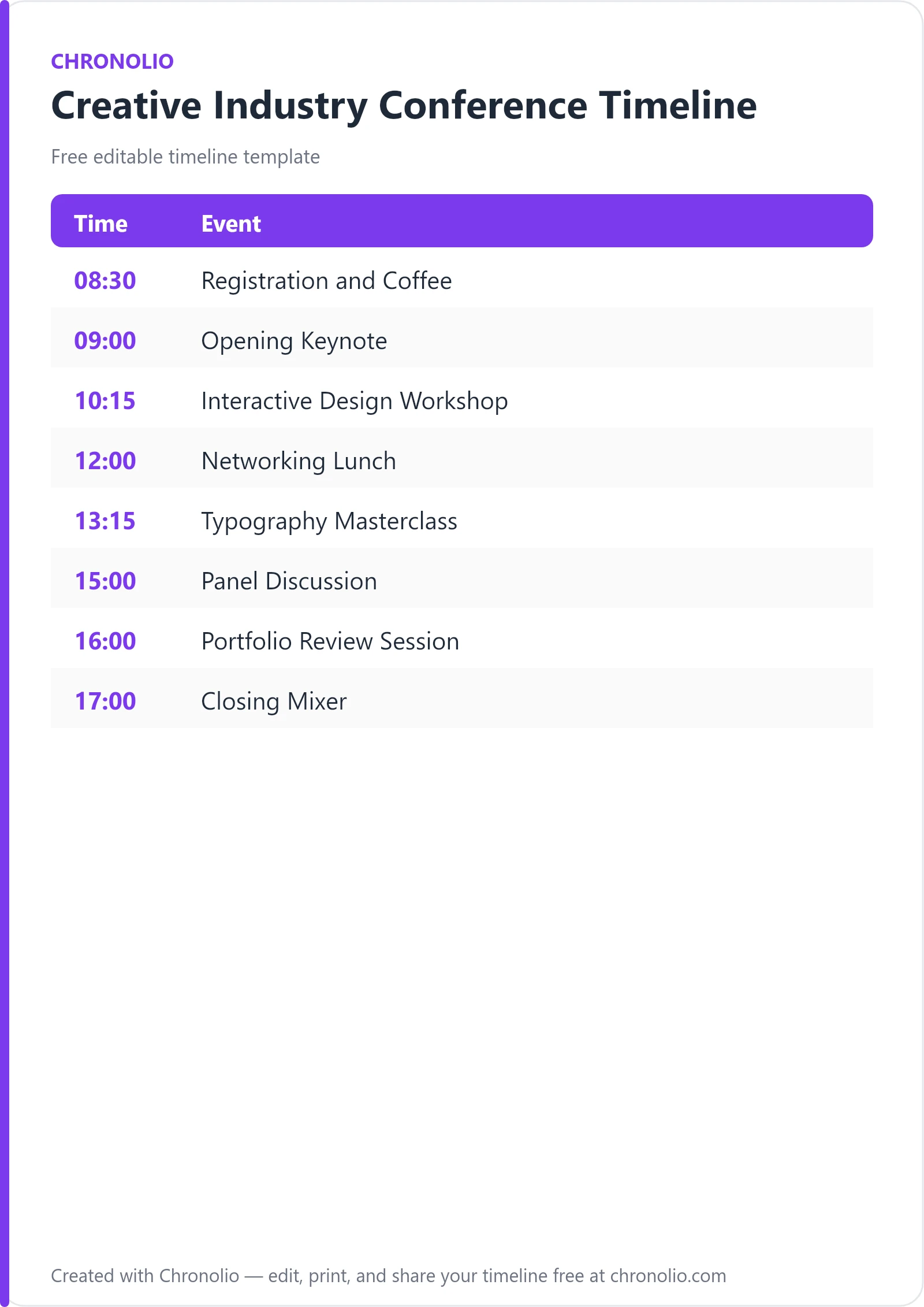
Here is the complete schedule this free template gives you — every time block, ready to edit, download, and share:
| Time | Event |
|---|---|
| 08:30 | Registration and Coffee |
| 09:00 | Opening Keynote |
| 10:15 | Interactive Design Workshop |
| 12:00 | Networking Lunch |
| 13:15 | Typography Masterclass |
| 15:00 | Panel Discussion |
| 16:00 | Portfolio Review Session |
| 17:00 | Closing Mixer |
What Is a Creative Industry Conference Timeline?
A creative industry conference timeline is an end-to-end event schedule that maps out keynotes, breakout tracks, hands-on workshops, and networking mixers across a venue's spaces. Having managed scores of design symposia and agency gatherings, I can tell you that creative professionals expect an event to feel as polished and well-crafted as the work they produce.
This master operational blueprint coordinates your AV technicians, keynote presenters, workshop facilitators, and catering staff behind the scenes. It establishes precise start times, room clears, stage reset buffers, and registration flows. Whether you are bringing together graphic designers, UX researchers, art directors, or digital storytellers, this template reflects real-world creative conference operational standards refined through hundreds of successful events.
Use This Creative Industry Conference Timeline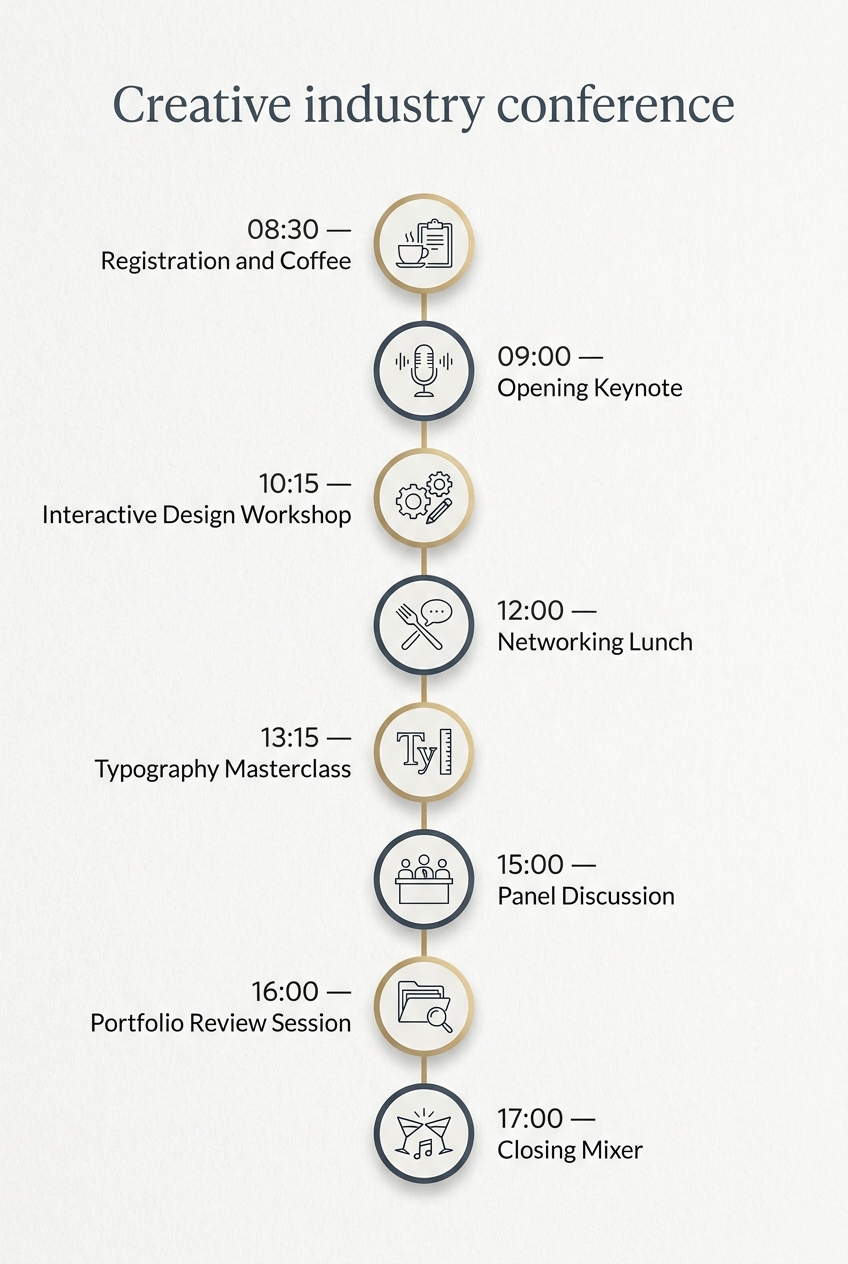
Why Creative Industry Conferences Need a Timeline
Creative events carry a unique rhythm compared to standard corporate meetings. Attendees do not just sit passively in auditorium seats; they bounce between hands-on prototyping sessions, keynote presentations, live critique galleries, and social lounges. Without a strict run of show, interactive workshops spill over, keynote speakers lose audience attention, and catered meals go cold in the banquet halls.
A detailed timeline provides clear boundaries that allow creative energy to flourish without turning into logistical chaos. It ensures your keynote creative directors get the tech checks they need on the main stage, while workshop facilitators in breakout rooms have adequate time to set up laptops, design software, and workshop materials.
Finally, explicit scheduling gives attendees peace of mind. When delegates know precisely when portfolio reviews or networking drinks take place, they engage fully in the present session rather than constantly checking their phones or worrying about missing key industry contacts.
What to Include in a Creative Industry Conference Timeline
When building out your event schedule, aim to balance intense learning with informal social connections:
- Morning Welcome & Check-in: A dedicated window for registration badge pickup, warm morning coffee, and initial venue orientation in the lobby.
- Inspirational Main Stage Keynote: A high-impact opening presentation by a renowned creative leader setting the theme for the day.
- Interactive Masterclasses & Workshops: Small-group, hands-on sessions covering software skills, design systems, or craft techniques.
- Catered Networking Lunch: Generous break time for delegates to unpack morning sessions over shared dining tables.
- Thought-Leadership Panel Discussions: Group debates featuring diverse experts discussing industry ethics, emerging technology, or business strategy.
- Mentorship & Portfolio Reviews: Dedicated one-on-one critique sessions connecting seasoned creative directors with emerging talent.
- Evening Social Mixer: An off-stage social reception on a rooftop or lounge where attendees can reflect, connect, and celebrate.
Kickoff & Morning Keynote Phase
| Time | Event |
|---|---|
| 08:30 | Registration and Coffee |
| 09:00 | Opening Keynote |
| 10:15 | Interactive Design Workshop |
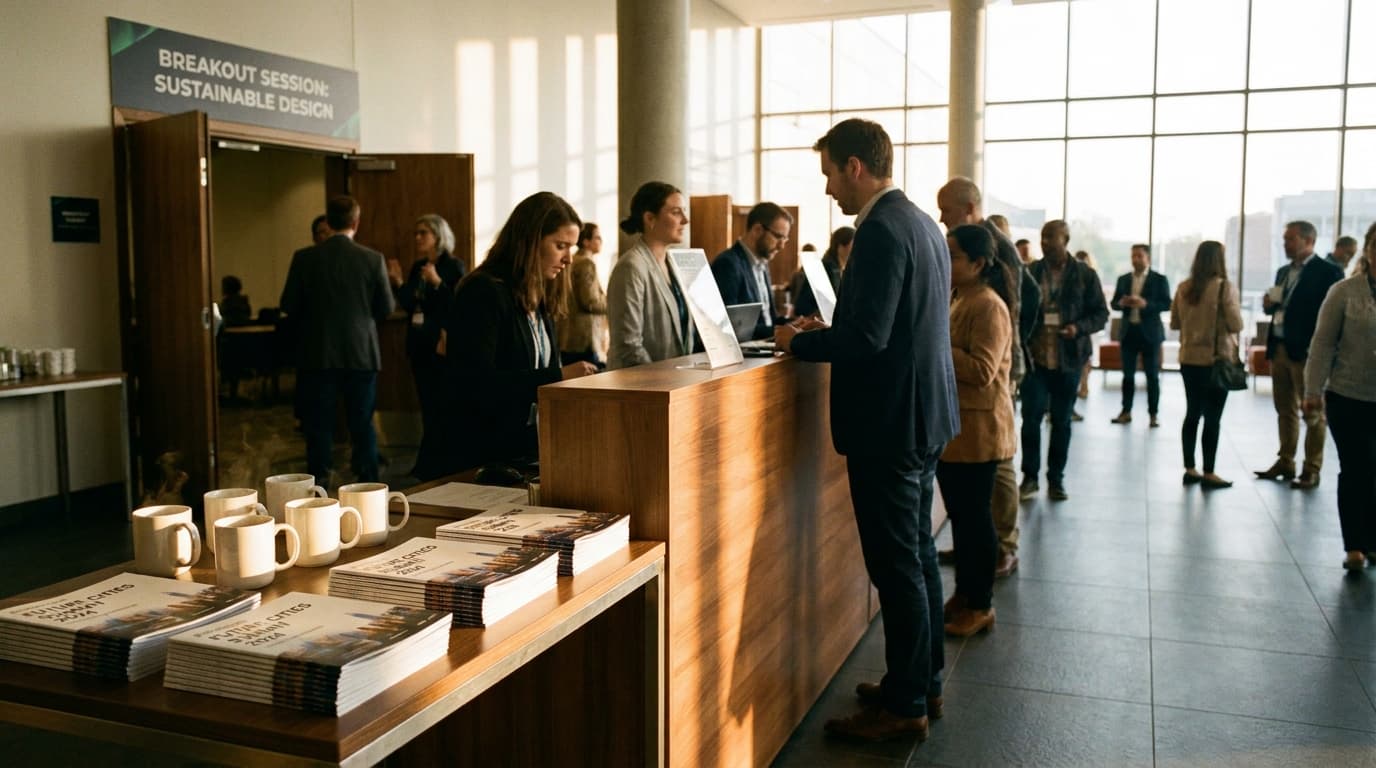
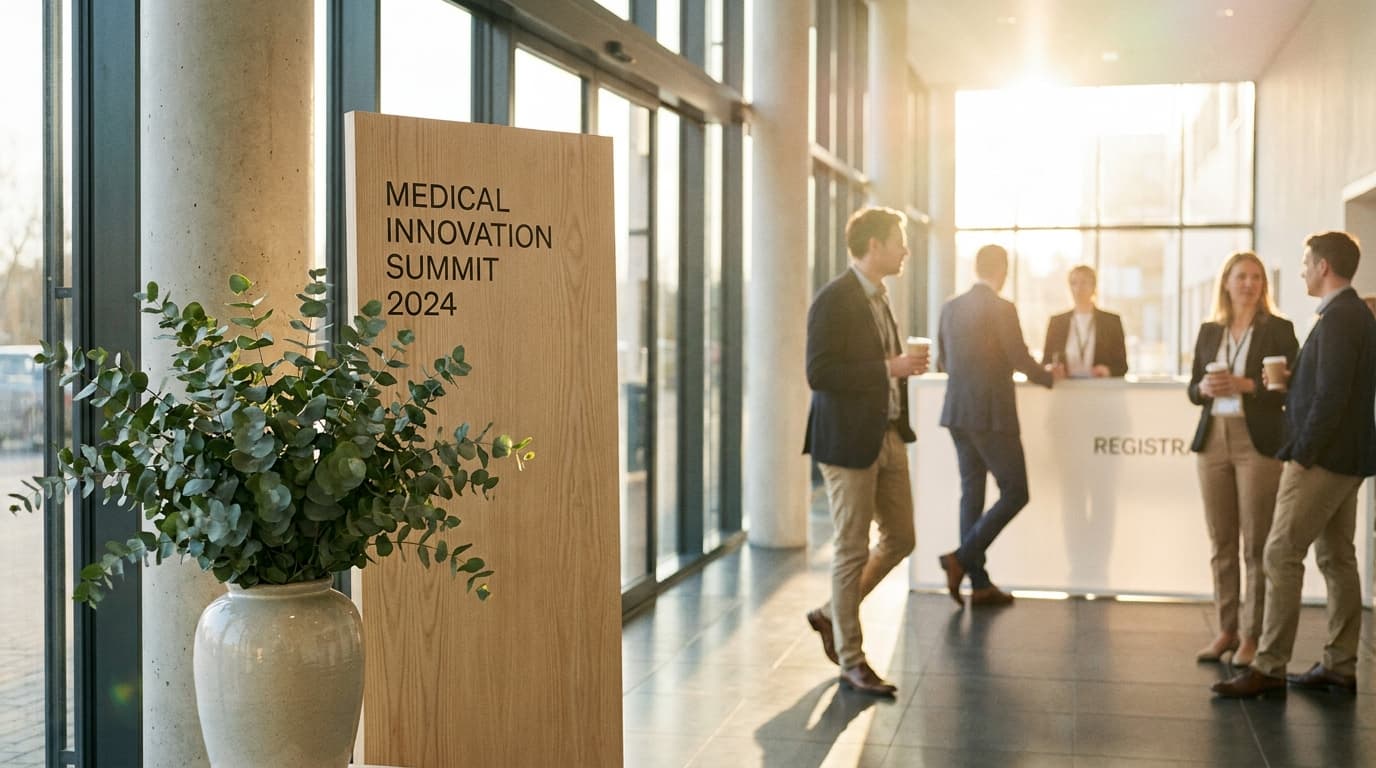
The early morning setting dictates the atmosphere for the entire event. At 08:30, open the doors in the Grand Ballroom Foyer for Registration and Coffee. Early arrivals need time to collect their custom lanyards, review venue maps, and settle in with freshly brewed espresso before walking into the main hall. Keeping check-in moving swiftly with digital badge scanning prevents bottlenecks at the entrance.
Promptly at 09:00, draw the audience into the main auditorium for the Opening Keynote. Placing your flagship guest speaker—such as a renowned creative director presenting on digital storytelling and design futures—in this opening slot captures maximum attendee energy and attention. A 10-minute audience Q&A at the end creates an engaging, interactive bridge.
Allow a full 15 minutes after the keynote for attendees to move across the venue. At 10:15, the schedule splits into focused tracks with an Interactive Design Workshop in Workshop Room A. Facilitators need this quiet morning window to lead hands-on user interface prototyping sessions using collaborative software before cognitive fatigue sets in.
08:30 AM [Registration & Coffee] - Grand Ballroom Foyer 09:00 AM [Opening Keynote] - Main Stage 10:15 AM [Interactive Design Workshop] - Workshop Room A
Midday Learning & Networking Phase
| Time | Event |
|---|---|
| 12:00 | Networking Lunch |
| 13:15 | Typography Masterclass |
After a concentrated morning of technical exercises, schedule the Networking Lunch at 12:00 in the Dining Hall. Providing a full 60 minutes allows delegates to digest complex morning concepts and network naturally without feeling rushed. Buffet-style dining stations with varied dietary choices help manage long queues efficiently so everyone gets time to converse.
If you are expanding your event portfolio, you might also compare this flow with our one-day conference agenda or our specialized leadership conference schedule for executive-level creative gatherings.
At 13:15, transition attendees back into specialized learning with a Typography Masterclass in Workshop Room B. Midday energy can drop after lunch, so hands-on live project work—such as testing font accessibility or screen legibility—keeps participants actively engaged and focused.
12:00 PM [Networking Lunch] - Dining Hall 01:15 PM [Typography Masterclass] - Workshop Room B
Afternoon Panel & Evening Reception Phase
| Time | Event |
|---|---|
| 15:00 | Panel Discussion |
| 16:00 | Portfolio Review Session |
| 17:00 | Closing Mixer |
Reconvene all track attendees back at the Main Stage at 15:00 for a high-profile Panel Discussion. Afternoon panels thrive when tackling industry debate topics—such as the ethics of artificial intelligence in design—where multiple guest speakers present contrasting viewpoints moderated by an experienced industry journalist.
At 16:00, shift into the Gallery Lounge for the Portfolio Review Session. This crucial segment pairs emerging junior creatives with established industry mentors for rapid, direct critique. Organizers should ensure quiet lounge seating and visible timing clocks so mentors provide constructive advice without overrunning their assigned 10-minute review slots.
Wrap up the conference at 17:00 on the Roof Terrace with an informal Closing Mixer. Moving from formal auditoriums to an outdoor lounge with drinks and appetizers shifts the environment into a celebration, allowing guests to consolidate contact details and celebrate new creative partnerships.
03:00 PM [Panel Discussion] - Main Stage 04:00 PM [Portfolio Review Session] - Gallery Lounge 05:00 PM [Closing Mixer] - Roof Terrace
Creative Industry Conference Timeline vs Run of Show
While many organizers use these terms interchangeably, a high-level conference schedule serves a very different audience than an operational run of show:
| Creative Conference Timeline | Production Run of Show |
|---|---|
| Target Audience: Attendees, general public, guest speakers, and sponsors. | Target Audience: Stage managers, AV technicians, lighting directors, and venue operators. |
| Focus: Session titles, speaker names, room names, track descriptions, and public break times. | Focus: Technical cues, microphone assignments, slide deck switches, lighting changes, and stage resets. |
| Detail Level: High-level overview presented in 15 to 60 minute session blocks. | Detail Level: Minute-by-minute breakdown including technical rehearsal cues. |
Who Should Use This Template?
This timeline template provides an adaptable operational structure across a range of creative event formats and organizations. Specifically, it works best for:
- Design & Advertising Agencies: Hosting internal creative summits, client showcases, or multi-team skill workshops.
- Creative Industry Associations: Organizers running regional design conventions, craft symposia, or annual trade conferences.
- University Design Faculties: Planning student portfolio days, design research talks, or alumni industry panels (which can also pair nicely with our research symposium schedule or multi-day academic conference formats).
- Tech & SaaS Companies: Running user-experience (UX) conventions, product design days, or developer-creative summits.
- Event Planning Agencies: Coordinating complex multi-track creative gatherings requiring seamless stage resets.
Chronolio supports the different team roles involved in orchestrating these events, from technical directors to hospitality managers.
How to Use This Template
- Duplicate or Download: Save a digital copy directly into your Chronolio workspace or grab the offline editable versions in Word (.docx) or PDF format.
- Set Your Event Date & Timezone: Establish your primary event date and adjust track start times to match local venue access hours.
- Assign Rooms & Facilitators: Input specific room numbers, gallery spaces, and speaker bios for every main stage presentation and breakout session.
- Distribute to Teams: Share the finalized schedule with your venue production staff, catering leads, and masterclass facilitators at least two weeks before the event.
Tips for a Successful Creative Industry Conference
- Schedule 15-Minute Buffer Windows: Creative conversations run long. Build mandatory 15-minute transition windows between keynotes and workshops so attendees can move across the venue without missing content.
- Test Workshop Software Pre-Event: Verify that room Wi-Fi and high-bandwidth creative applications are fully pre-installed and tested on workshop laptops before doors open.
- Enforce Strict Timekeeping for Mentors: During portfolio review sessions, assign room monitors with visible countdown timers to keep mentor-mentee critiques moving on schedule.
- Designate a Quiet Creator Space: Creative conferences can be sensory-heavy. Provide a quiet lounge space away from main stage speakers where attendees can check emails or recharge.
- Balance Tech and Craft Topics: Mix forward-looking digital trends (like AI design tools) with foundational creative skills (like typography masterclasses) to keep the schedule dynamic.
- Incorporate Interactive Polling: Encourage main-stage speakers to use live audience Q&A tools so remote or quiet attendees can participate easily.
- Integrate Professional Organizations: Partner with established bodies like AIGA or the Design Council to source expert panelists and establish benchmark standards for session topics.
Common Mistakes to Avoid
- Overbooking the Schedule: Packing back-to-back presentations without real break periods leads to attendee burnout by mid-afternoon.
- Ignoring Technical Rehearsals: Skipping morning AV checks with keynote speakers often causes embarrassing mic feedback or slide display glitches on the main stage.
- Underestimating Check-In Lines: Having too few registration desks during morning coffee causes massive registration delays that push back your opening keynote.
- Lacking Clear Track Signage: Failing to clearly signpost room locations (like distinguishing Workshop Room A from Workshop Room B) creates traffic jams in corridors.
- Shortchanging Meal Breaks: Offering less than 60 minutes for lunch forces delegates to choose between eating or networking with industry peers.
- Forgetting Presenter Green Rooms: Failing to provide a quiet holding area for incoming keynote speakers leads to lost presenters right when their stage slot begins.
In Summary
- Comprehensive Structure: A balanced 08:30 to 19:00 creative conference timeline covering keynotes, workshops, panels, portfolio reviews, and social mixers.
- Optimized Flow: Designed with explicit 15-minute room transition buffers to maintain energy and prevent schedule overrun.
- Dual Engagement: Combines large-scale main stage inspiration with intimate, hands-on masterclasses and critique sessions.
- Professional Standard: Suitable for agency summits, design association conventions, tech UX days, and university showcases.
- Fully Customizable: Easily editable in Chronolio or available offline in Word and PDF formats for immediate event production.
Whether you are hosting an agency summit or a regional design convention, running a disciplined event timeline ensures your attendees leave inspired, connected, and energized. Event planners, agency leads, and creative directors can customize this template directly within Chronolio to fit their exact venue layout and session requirements.
Use This Creative Industry Conference Timeline