






This Template at a Glance
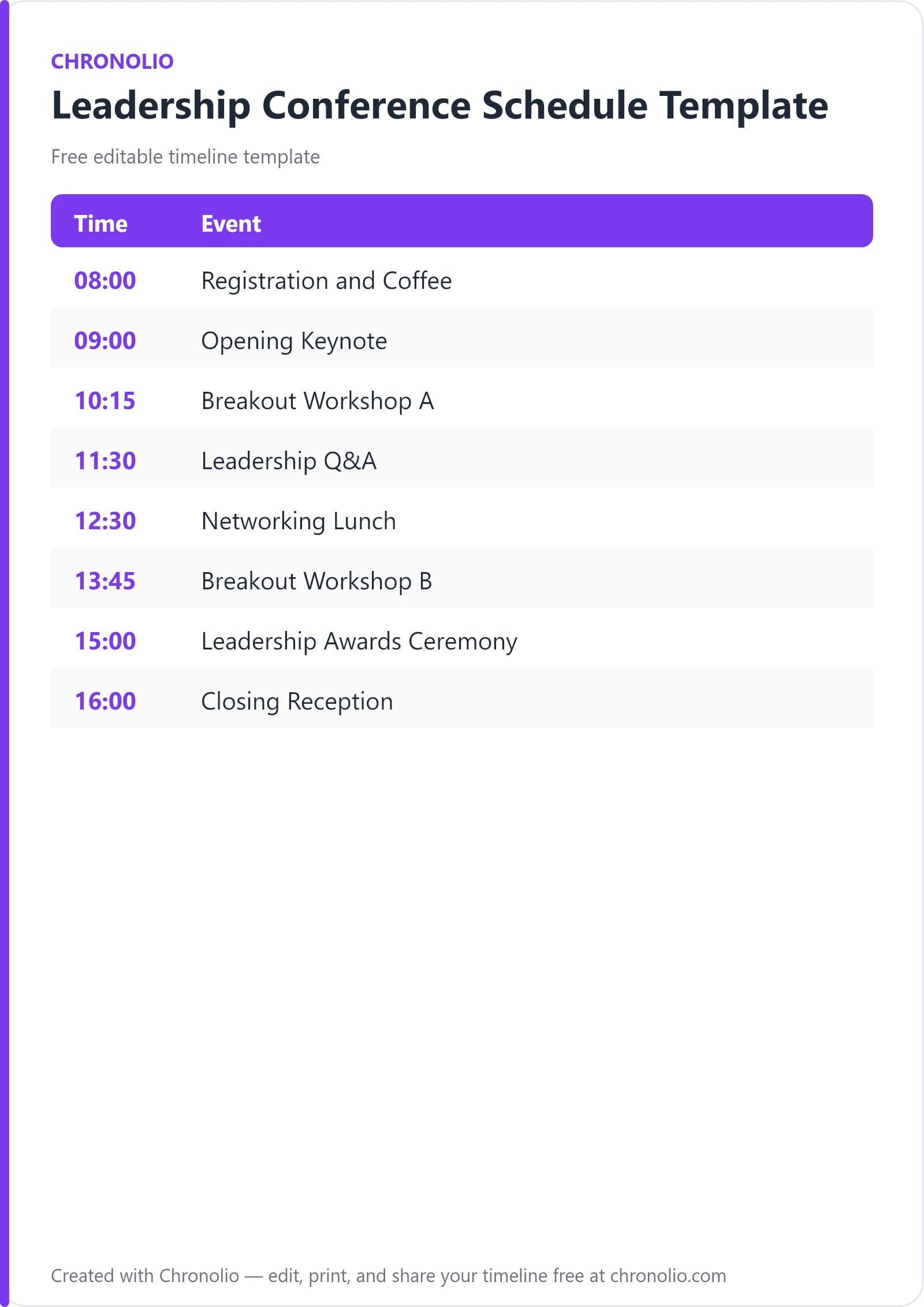
Here is the complete schedule this free template gives you — every time block, ready to edit, download, and share:
| Time | Event |
|---|---|
| 08:00 | Registration and Coffee |
| 09:00 | Opening Keynote |
| 10:15 | Breakout Workshop A |
| 11:30 | Leadership Q&A |
| 12:30 | Networking Lunch |
| 13:45 | Breakout Workshop B |
| 15:00 | Leadership Awards Ceremony |
| 16:00 | Closing Reception |
What Is a Leadership Conference Schedule?
A leadership conference schedule is the master strategic roadmap that governs the sequence, duration, and transition of every session, speaker, and networking break during an executive summit. Beyond serving as a simple timetable, a well-engineered schedule orchestrates attendee movement, manages physical venue capacity, and maintains high energy levels from the opening remarks through the closing reception.
Drawing from years of managing corporate leadership events, this framework reflects real-world operational best practices across executive venues. It integrates key plenary addresses in main auditoriums, concurrent technical workshops in break-out rooms, structured panel discussions, and curated meal periods. Whether you are adapting a general one-day conference agenda or building an executive leadership program from scratch, an accurate schedule keeps stage managers, audio-visual (AV) technicians, caterers, and corporate presenters perfectly synchronized.
Build Your Leadership Conference Schedule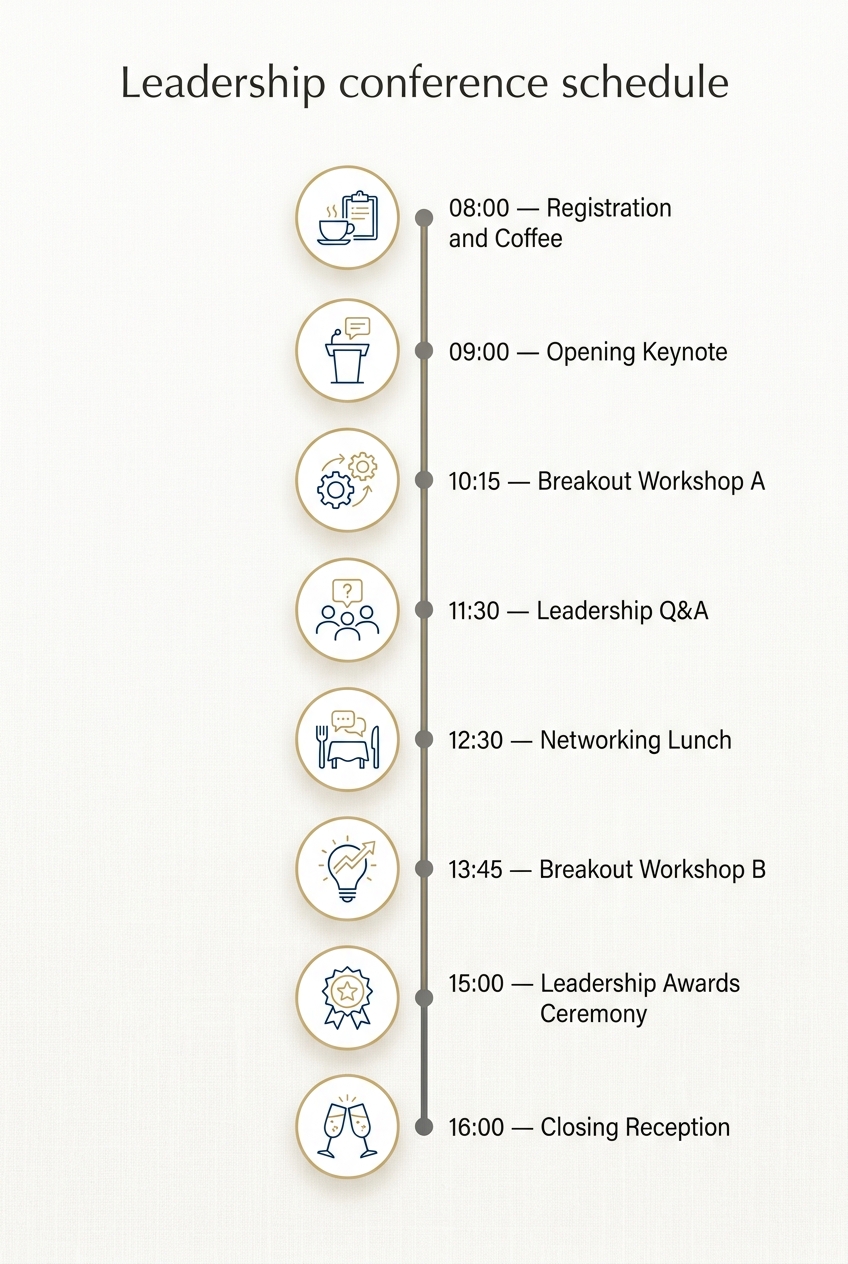
Why Leadership Conferences Need a Timeline
Planning executive leadership gatherings presents unique operational challenges. Corporate executives and industry leaders expect punctual session execution and clear logistical direction; delays at the main stage instantly cascade into room overcrowding, cold meals, and missed networking opportunities.
A comprehensive timeline serves three fundamental executive function requirements:
- Pacing and Energy Management: Attending dense strategy sessions creates cognitive fatigue. Alternating 60-minute keynotes with movement-focused breakout workshops and structured breaks keeps attendees engaged throughout the entire day.
- Vendor and Operational Alignment: Catering staff need precise delivery times for hot luncheons, while AV operators require exact cues for stage lighting, microphone handoffs, and slide decks across multiple rooms.
- Attendee Experience and Navigation: Clear timetables prevent hallway congestion in the foyer and give participants time to digest key insights, visit sponsor booths, and build professional connections.
What to Include in a Leadership Conference Schedule
To build a professional agenda, your event timeline must incorporate several distinct functional elements:
- Registration and Hospitality Buffers: Morning arrival windows with coffee and refreshments to handle check-in queues.
- Plenary Keynote Sessions: High-level strategic addresses delivered in the main hall to establish overarching summit themes.
- Interactive Breakout Tracks: Parallel, smaller-group workshops focused on specialized practical leadership skills.
- Moderated Executive Panels: Structured Q&A sessions where attendees interact directly with industry leaders.
- Dedicated Networking Periods: Uninterrupted meal times and evening receptions designed to foster peer-to-peer relationship building.
- Recognition Formalities: Ceremonies highlighting exceptional organizational achievements or industry awards.
Morning Keynote and Skill-Building Tracks
The opening phase of the conference sets the strategic tone and immediately engages attendees in practical learning.
| Time | Event |
|---|---|
| 08:00 | Registration and Coffee |
| 09:00 | Opening Keynote |
| 10:15 | Breakout Workshop A |
The event opens at 08:00 in the Grand Foyer with morning registration and informal coffee networking. Opening registration an hour prior to the first session prevents lobby bottlenecks and ensures attendees are settled in their seats before the stage program begins.
At 09:00, attendees transition into the Main Auditorium for the opening keynote presentation on global leadership. Placing your most compelling vision-setting speaker in this morning slot leverages maximum attendee focus. Following a quick 15-minute transition buffer, participants disperse into Room 201 at 10:15 for Breakout Workshop A covering agile team dynamics. Capping workshop room capacity at 30 people guarantees meaningful group interaction and direct engagement with session facilitators.
Midday Panel Alignment and Networking Lunch
The middle block of the day shifts from broad leadership strategy to interactive audience dialogue and formal networking.
| Time | Event |
|---|---|
| 11:30 | Leadership Q&A |
| 12:30 | Networking Lunch |
| 13:45 | Breakout Workshop B |
At 11:30, all tracks reconvene in the Main Auditorium for a moderated executive leadership Q&A panel. Utilizing live digital submission tools alongside a professional facilitator keeps discussions tight, practical, and highly relevant to audience challenges.
At 12:30, the summit transitions to the Garden Terrace for a structured networking luncheon. Providing a full 60-minute meal period with diverse dietary options (vegetarian, gluten-free) gives executives time to debrief on morning takeaways without feeling rushed. At 13:45, attendees split across parallel tracks into Room 305 for Breakout Workshop B on strategic planning. Similar to running a specialized creative industry conference timeline, offering distinct track options lets participants tailor the afternoon content to their specific corporate discipline.
Executive Recognition and Closing Reception
The final phase celebrates industry excellence and solidifies professional relationships built throughout the day.
| Time | Event |
|---|---|
| 15:00 | Leadership Awards Ceremony |
| 16:00 | Closing Reception |
At 15:00, participants return to the Main Auditorium for the annual leadership awards ceremony. Staging awards late in the afternoon maintains high audience retention across the full agenda while creating a celebratory, inspirational atmosphere prior to departure.
The event concludes in the Grand Ballroom with a closing networking reception from 16:00 to 17:30. Serving light appetizers and beverages allows attendees to execute final follow-ups with contacts made during the day. A short 5-minute wrap-up address by the conference host brings the entire event to an organized, memorable close.
Leadership Conference Schedule vs Event Running Order
It is common to confuse an attendee-facing schedule with an internal event running order. While both detail the conference, they serve entirely different operational roles.
| Feature | Conference Schedule | Internal Event Running Order |
|---|---|---|
| Primary Audience | Conference attendees, guests, and sponsors | Production crew, stage managers, and AV techs |
| Level of Detail | High-level start times, room locations, and titles | Minute-by-minute cues, lighting changes, mic assignments |
| Primary Focus | Session navigation and speaker awareness | Technical execution and back-of-house logistics |
| Format | Visual timelines, digital apps, printed booklets | Detailed spreadsheets or technical run sheets |
A conference schedule informs participants where to be and what to expect, whereas an internal running order instructs technical staff on precise audio cues, slide advances, and stage mark setups.
Who Should Use This Template?
This timeline framework is designed for event professionals, corporate executives, and meeting coordinators across diverse organizations. Whether you are adapting this for corporate retreats or cross-industry summits, it caters to:
- Corporate Executive Teams: Planning annual leadership summits, senior management alignment meetings, or strategic retreats.
- Industry Trade Associations: Hosting annual executive conventions, leadership development days, or member forums.
- Professional Event Organizers: Coordinating high-profile client conferences requiring tight staging and polished execution.
- Startup Accelerators: Organizing founder summits that mirror the fast-paced nature of a startup pitch event timeline.
- Healthcare & Academic Institutions: Adaptable for specialized leadership tracks similar to a medical conference timeline.
Chronolio inherently supports the various event team roles required to plan, review, and execute high-profile schedules smoothly.
How to Use This Template
You can quickly customize this leadership conference schedule to fit your specific venue constraints and session topics:
- Download the Baseline Schedule: Access the customizable template files directly using our Leadership Conference Schedule (.docx) or Leadership Conference Schedule (.pdf) options.
- Adjust Session Timings: Load the schedule into Chronolio to stretch or compress session blocks based on your keynote speaker agreements.
- Assign Room Numbers: Update breakout locations according to your venue floorplan to guide traffic efficiently.
- Publish to Stakeholders: Export finalized PDF versions for attendees, send print-ready assets to graphic designers, and supply technical run sheets to your AV team.
Tips for a Successful Leadership Conference
To deliver an exceptional experience for high-level attendees, keep these proven operational strategies in mind:
- Enforce Strict Timekeeping: Station dedicated room monitors with countdown clocks in every breakout session and keynote hall to prevent session overlap.
- Build In 15-Minute Movement Buffers: Never schedule breakout workshops directly back-to-back without transition periods; executive attendees need time to check emails and walk between rooms.
- Curate Small Workshop Sizes: Cap practical breakout sessions at 30 to 40 participants to encourage open, peer-level executive dialogue.
- Optimize Catering Placement: Scatter coffee stations and buffet lines across multiple points in the foyer to shorten lunch lines.
- Brief Moderation Teams Early: Ensure panel moderators review speaker bios and draft high-impact questions at least 48 hours before stage time.
- Partner with Professional AV Crews: Test all microphones, lapels, and slide presentation decks during early morning technical rehearsals according to guidelines from professional bodies like Meeting Professionals International.
Common Mistakes to Avoid
Even experienced planners encounter scheduling pitfalls during large leadership events. Avoid these frequent missteps:
- Overpacking the Agenda: Packing sessions too tightly causes cognitive overload and leaves no time for spontaneous networking.
- Neglecting Buffer Times: Omitting 15-minute transit buffers between keynotes and breakouts guarantees that afternoon sessions will run late.
- Ignoring Room Capacities: Assigning popular workshop topics to small breakout rooms creates hallway congestion and safety issues.
- Vague Room Signage: Failing to clearly display room numbers and session titles on venue doors confuses attendees.
- Skipping Stage Rehearsals: Expecting senior executives to walk onto stage without a lighting check or microphone brief risks technical errors.
- Underestimating Lunch Flow: Offering a single food station for hundreds of guests eats into afternoon session start times.
In Summary
- Purpose: A structured 8-hour agenda balancing keynotes, skill-building workshops, panel Q&As, and executive networking.
- Target Audience: Corporate event coordinators, executive assistants, association planners, and professional summit producers.
- Key Sessions: Registration, Opening Keynote, Breakout Workshop A, Executive Q&A, Networking Lunch, Breakout Workshop B, Awards, and Closing Reception.
- Primary Benefit: Keeps production crews synchronized, prevents venue bottlenecks, and maximizes executive guest engagement.
- Customization: Fully editable timeline downloadable in Word and PDF formats for seamless venue setup.
Executing a flawless executive event requires balancing high-impact content with realistic operational timing. This leadership conference schedule template provides corporate event planners, executive teams, and meeting organizers with a field-tested structure that ensures smooth transitions, engaged audiences, and professional delivery from start to finish.
Build Your Leadership Conference Schedule