





This Template at a Glance
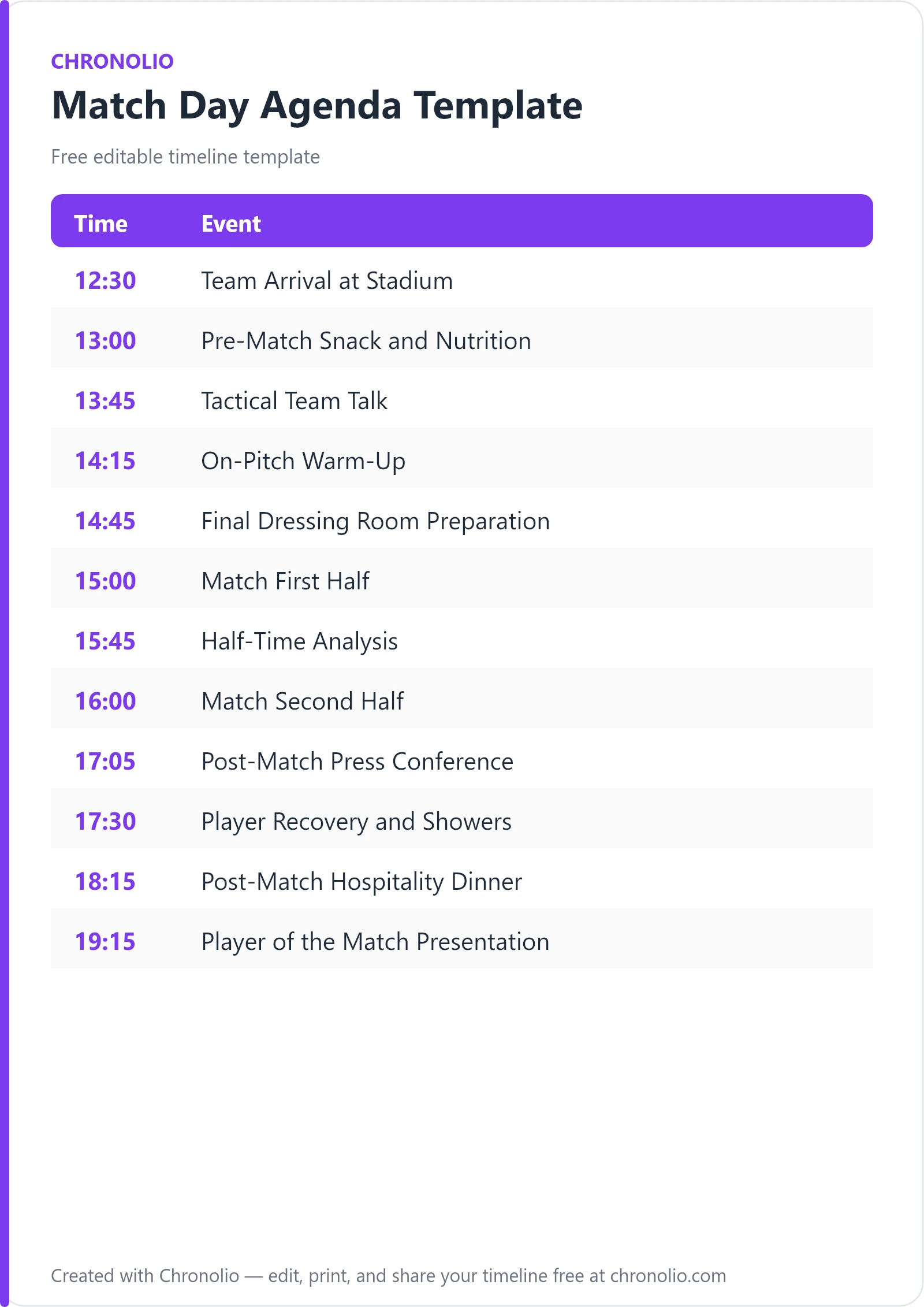
Here is the complete schedule this free template gives you — every time block, ready to edit, download, and share:
| Time | Event |
|---|---|
| 12:30 | Team Arrival at Stadium |
| 13:00 | Pre-Match Snack and Nutrition |
| 13:45 | Tactical Team Talk |
| 14:15 | On-Pitch Warm-Up |
| 14:45 | Final Dressing Room Preparation |
| 15:00 | Match First Half |
| 15:45 | Half-Time Analysis |
| 16:00 | Match Second Half |
| 17:05 | Post-Match Press Conference |
| 17:30 | Player Recovery and Showers |
| 18:15 | Post-Match Hospitality Dinner |
| 19:15 | Player of the Match Presentation |
What Is a Match Day Agenda?
A match day agenda is a synchronized, minute-by-minute schedule that governs every activity surrounding a competitive fixture, ensuring players, coaching staff, and stadium operations stay completely aligned. From the second the team coach pulls into the stadium players' entrance to the final presentation in the executive suite, this running order removes guesswork so athletes can focus purely on peak performance.
Having run operations across non-league fields and professional stadiums, I can tell you that elite performance requires predictable schedules. When a striker does not know when pre-match nutrition finishes or when the kit manager needs players in match jerseys, anxiety creeps in and pre-game focus deteriorates. This template reflects real-world matchday structures refined across sports organizations, blending sports science requirements with stadium venue protocols to create an environment where players thrive under pressure.
Customize Your Match Day Agenda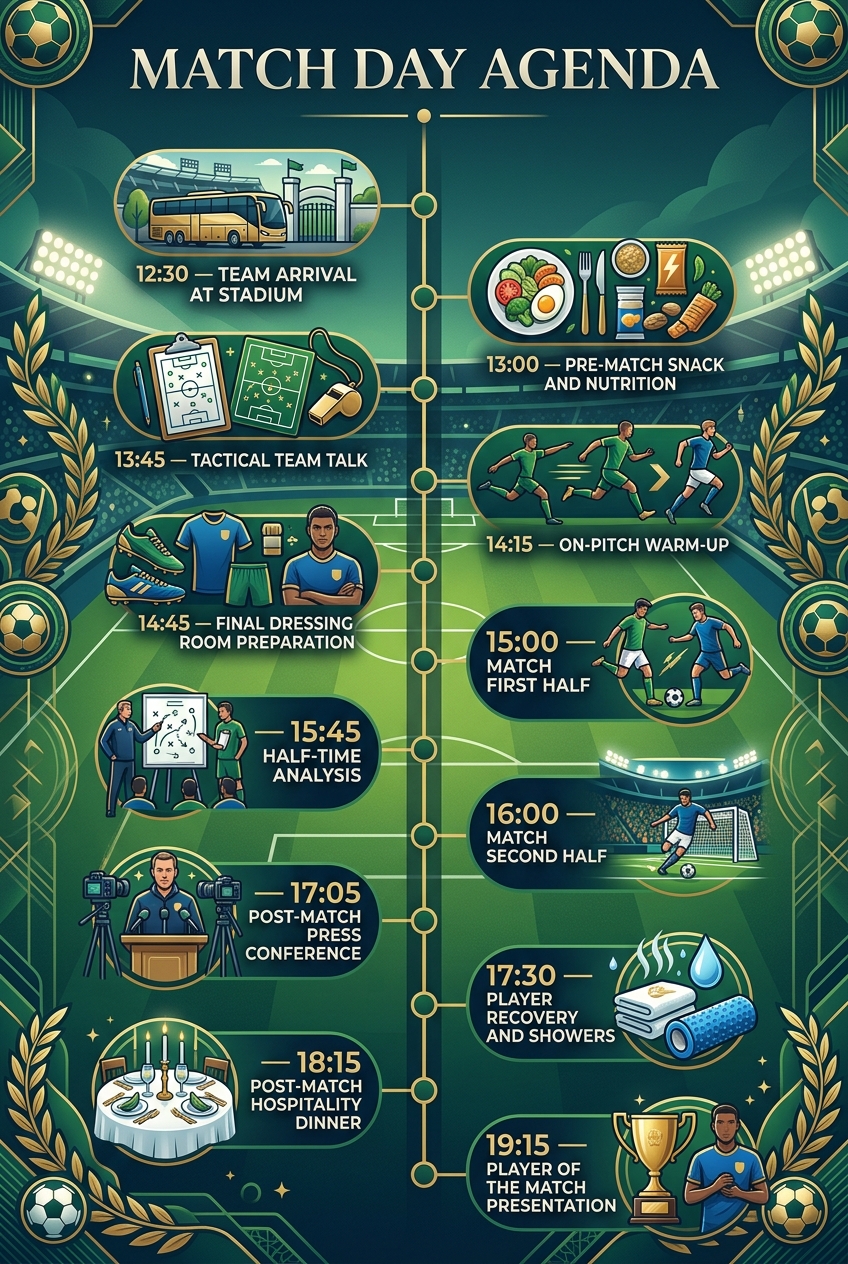
Why Matches Need a Match Day Agenda
Running a successful fixture involves coordinating dozens of moving parts simultaneously. Without a centralized schedule, players wander into tactical meetings late, physios get overwhelmed right before warm-ups, and stadium staff struggle to enforce broadcast or referee deadlines. A structured timeline serves as the single source of truth for players, coaches, medical personnel, and media officers.
Professional sports bodies like UEFA and The Football Association enforce strict matchday regulations regarding tunnel line-ups and warm-up windows. Following a tested running order eliminates operational friction and avoids penalties for late kick-offs. Much like managing high-stakes executive governance in a board meeting timeline, a game day running order ensures every stakeholder understands their exact time commitment.
Beyond compliance, a disciplined match day agenda maximizes player physical readiness. Sports science shows that timing hydration, pre-game snacks, warm-ups, and post-match ice baths down to the minute directly impacts muscle recovery and prevents on-field injury. When logistically supported, athletes maintain focus throughout intense match environments.
What to Include in a Match Day Agenda
To build an air-tight running order for your fixture, make sure your master schedule incorporates these core components:
- Arrival & Lockers: Bus arrival, stadium entry, and locker room allocation.
- Nutrition & Physio: Pre-game meals, hydration protocols, taping, and massage sessions.
- Tactical Briefing: Head coach lineup announcement, opposition analysis, and set-piece reviews.
- On-Pitch Activation: Goalkeeper drills, team physical warm-ups, and pitch departure timing.
- Pre-Kick-off Prep: Jersey hand-outs, captain's speech, referee equipment checks, and tunnel assembly.
- Match Execution: First half, half-time tactical debriefs, and second half action including extra time.
- Media & Recovery: Post-game press conferences, ice baths, shower routines, and physio triage.
- Hospitality & Function: Post-match meals, sponsor meet-and-greets, and player awards.
Pre-Match Arrival & Tactical Preparation
| Time | Event |
|---|---|
| 12:30 | Team Arrival at Stadium |
| 13:00 | Pre-Match Snack and Nutrition |
| 13:45 | Tactical Team Talk |
The pre-match phase sets the mental and physical tone for the entire fixture. When the team bus drops the squad off at the Stadium Players Entrance, player movement must follow a calm, efficient path toward the home dressing room. Arriving 2.5 hours before kick-off provides ample buffer time for players to drop off personal gear, meet with physical therapists for preventative taping, and transition out of travel mode.
At 13:00, the squad gathers in the Stadium Dining Lounge for controlled pre-match snacks and precise hydration supplements. Consuming light carbohydrates and electrolytes exactly two hours prior to physical exertion guarantees optimal glycogen storage without causing digestive discomfort during high-intensity play. Once nutrition is completed, the group moves to the Home Dressing Room at 13:45, where the head coach presents the starting lineup, breaks down tactical strategies, and reviews defensive set-piece responsibilities using visual whiteboards and match footage.
On-Pitch Warm-Up & Kick-Off Preparation
| Time | Event |
|---|---|
| 14:15 | On-Pitch Warm-Up |
| 14:45 | Final Dressing Room Preparation |
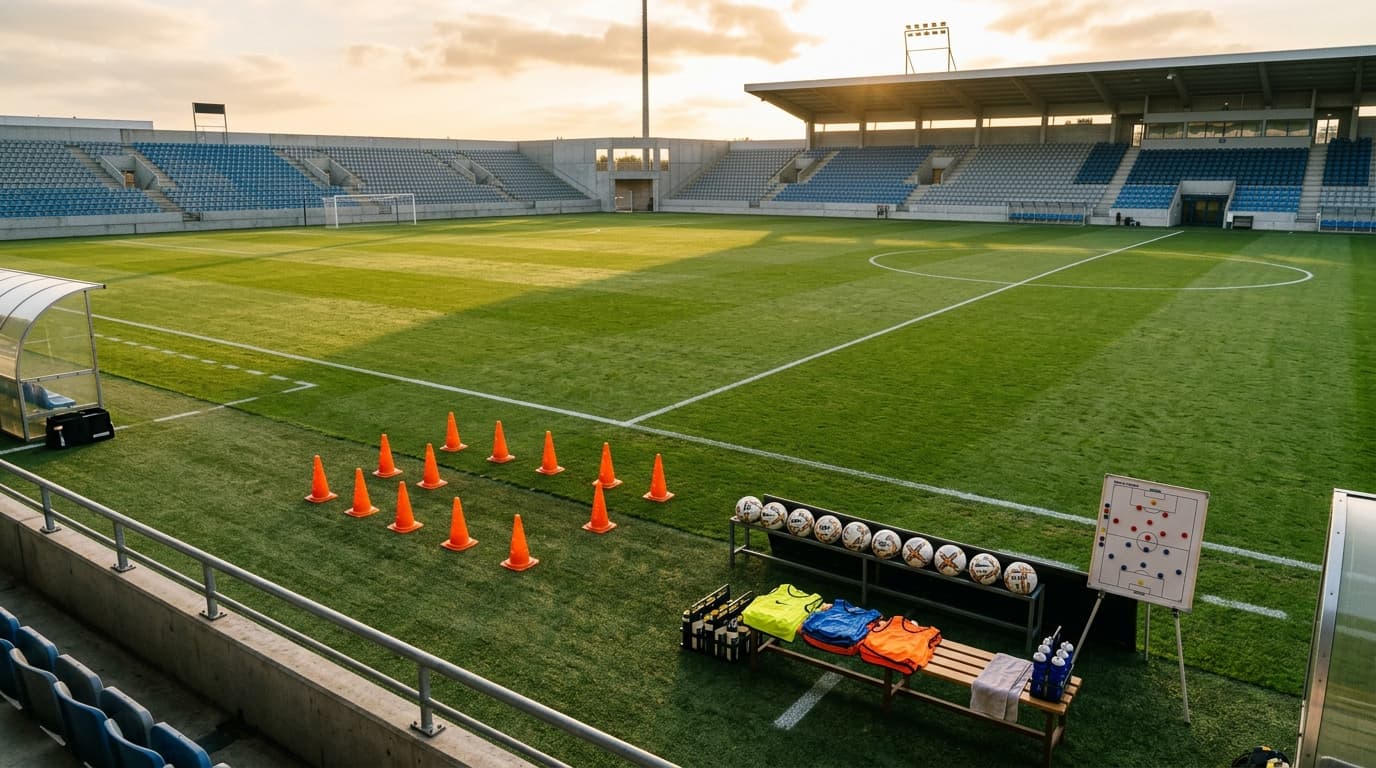
Moving from the tactical board to the playing surface requires deliberate pacing. When players step onto the Main Pitch at 14:15, the strength and conditioning coach takes command for a structured 30-minute physical warm-up. Goalkeepers execute specific shot-stopping drills while outfield players move through dynamic mobility exercises, short-sprint accelerations, and possession rondo games to sharpen touch and elevate heart rates safely.
By 14:45, the squad leaves the pitch and returns to the Home Dressing Room for final preparations. This ten-minute window is vital: players swap training gear for match jerseys, apply shin guards, and gather around the team captain for final motivational remarks. Similar to coordinating structured milestones for a birthday party timeline, keeping this transition brief prevents players' physical warmth from cooling down before match officials call the teams to the tunnel.
Match Execution & Half-Time Analysis
| Time | Event |
|---|---|
| 15:00 | Match First Half |
| 15:45 | Half-Time Analysis |
| 16:00 | Match Second Half |
The main event demands absolute operational clarity. At 15:00, the referee blows the whistle on the Main Pitch to begin the first half. While players battle for 45 minutes plus stoppage time, video analysts and assistant coaches track player metrics, tactical spacing, and positional weaknesses from the coaching box to prepare actionable data for the break.
When the whistle signals half-time at 15:45, the team retreats to the Home Dressing Room. The first three minutes are reserved strictly for rehydration, deep breathing, and medical triage. Once heart rates settle, the head coach delivers a concise, three-minute tactical analysis highlighting key adjustments for the second half before players return to the field for kick-off at 16:00. Where precise protocol dictates every minute, not unlike a formal Catholic wedding timeline, sticking firmly to the 15-minute half-time limit ensures the club avoids stadium delay fines.
Media, Recovery & Post-Match Functions
| Time | Event |
|---|---|
| 17:05 | Post-Match Press Conference |
| 17:30 | Player Recovery and Showers |
| 18:15 | Post-Match Hospitality Dinner |
| 19:15 | Player of the Match Presentation |
Post-game routines balance commercial commitments with immediate physical recovery. Immediately following the final whistle, the head coach and designated key players report to the Press Conference Room at 17:05. Holding media obligations right away allows media outlets to meet tight publishing deadlines while keeping non-interviewed players focused on immediate body care.
By 17:30, the entire squad reconvenes in the Home Dressing Room for active recovery. Under the supervision of medical staff, players complete cool-down stretching, sit in ice baths for inflammation management, and complete shower routines. Later at 18:15, players, coaching staff, and corporate sponsors gather in the Executive Suite Lounge for a post-match hospitality dinner. Just as you would manage formal evening hospitality with an anniversary party schedule, this function transitions the team into a relaxed environment, culminating in the Player of the Match Presentation at 19:15 to honor individual excellence.
Match Day Agenda vs Training Schedule
It is easy to confuse a match day running order with a weekly team training schedule, but their operational objectives, timing flexibility, and stakeholder involvement differ significantly.
| Match Day Agenda | Training Schedule |
|---|---|
| Fixed times dictated by kick-off, media, & referees | Flexible timings adjusted by coaching staff real-time |
| High intensity focused on immediate match performance | Variable intensity focused on long-term development |
| Coordinates venue, media, medical, & sponsors | Coordinates coaching staff and active players only |
| Rigid stadium and competition protocol windows | Internal club facility protocols with flexible breaks |
A training schedule builds physical fitness, tactical understanding, and team cohesion over weeks and months. In contrast, a match day agenda governs immediate execution, enforcing non-negotiable operational checkpoints so that peak physical performance coincides precisely with the referee's opening whistle.
Who Should Use This Template?
This match day agenda template is tailored for sports professionals and club officials across all competitive levels who need to coordinate game day logistics cleanly.
- Professional & Semi-Pro Football Clubs: Standardize first-team and academy team schedules for league fixtures.
- College & University Athletic Programs: Coordinate team travel, facility access, and student-athlete meal schedules.
- Youth Sports Academies: Provide clear arrival and warm-up schedules for parents, players, and volunteer coaches.
- Stadium & Venue Operations Managers: Ensure matchday security, catering, and broadcast staff operate on the same timetable.
- Tournament Organizers: Schedule multi-game showcase events smoothly without pitch schedule collisions.
Note that Chronolio supports various athletic and organizational roles involved in setting up, executing, and distributing game day running orders seamlessly.
How to Use This Template
- Duplicate or Download: Save a digital copy of this template to your Chronolio account or export it as a customizable document using the download links below:
- Adjust for Your Kick-off Time: Set your exact kick-off time (e.g., 15:00, 19:45, or 12:30) and automatically shift all pre-match and post-match timing blocks backward and forward accordingly.
- Tailor Specific Facilities: Customize location names (e.g., "Home Dressing Room" or "Executive Suite Lounge") to match your venue’s precise room names.
- Distribute to Key Personnel: Share digital or printed copies with coaches, kit staff, physical therapists, venue management, and media coordinators 24 hours prior to game day.
Tips for a Successful Match Day
- Lock in Kit Preparation Early: Have the kit manager set up jerseys, boots, shorts, and warm-up gear in dressing room stalls two hours before team arrival.
- Buffer for Traffic Delays: Always factor a 15-to-20-minute traffic cushion into your team bus schedule when traveling to away venues.
- Keep Tactical Briefings Concise: Limit pre-game video talks to under 25 minutes to prevent visual and mental fatigue before physical exertion.
- Enforce Strict Dressing Room Access: Keep non-essential staff, agents, and guests out of the dressing room during pre-match talk windows.
- Prepare Hydration Early: Ensure pitch-side water bottles, ice towels, and electrolyte powders are positioned on the bench before pitch warm-ups begin.
- Sync Watches with Officials: Matchday coordinators should confirm match clock timing with head referees 45 minutes before kick-off.
Common Mistakes to Avoid
- Overrunning Pre-Match Talks: Spending too much time in the dressing room eats into crucial pitch warm-up windows, increasing risk of player hamstring pulls.
- Ignoring Medical Triage Time: Failing to schedule individual player taping time leads to chaotic, rushed warm-ups right before kick-off.
- Neglecting Immediate Nutrition: Delaying post-game meals past 45 minutes post-whistle impairs glycogen replenishment and slows muscle recovery.
- Disregarding Stadium Protocol: Missing tunnel lining calls due to poor timekeeping can result in financial fines from league authorities.
- Unclear Media Guidelines: Allowing journalists access to players before structured press conference windows disrupts post-match cool-downs.
In Summary
- A match day agenda organizes all team logistics, meals, tactics, matches, and media commitments into one master timeline.
- It protects player physical readiness by timing nutrition, warm-ups, and ice bath recovery down to the minute.
- It ensures full compliance with stadium operations and league rules, preventing late kick-off penalties.
- The template is ideal for coaches, sports directors, team logistics managers, and stadium operators.
- Customizing timing blocks around your specific kick-off time maintains elite operational discipline every matchday.
Executing a flawless matchday requires structured preparation off the pitch so your players can perform at their physical limits on it. Whether you manage a local grassroots squad, a collegiate program, or a professional stadium, establishing a reliable, easily accessible schedule builds winning habits. Start personalizing your official fixture schedule today using Chronolio's interactive timing platform.
Customize Your Match Day Agenda