





This Template at a Glance
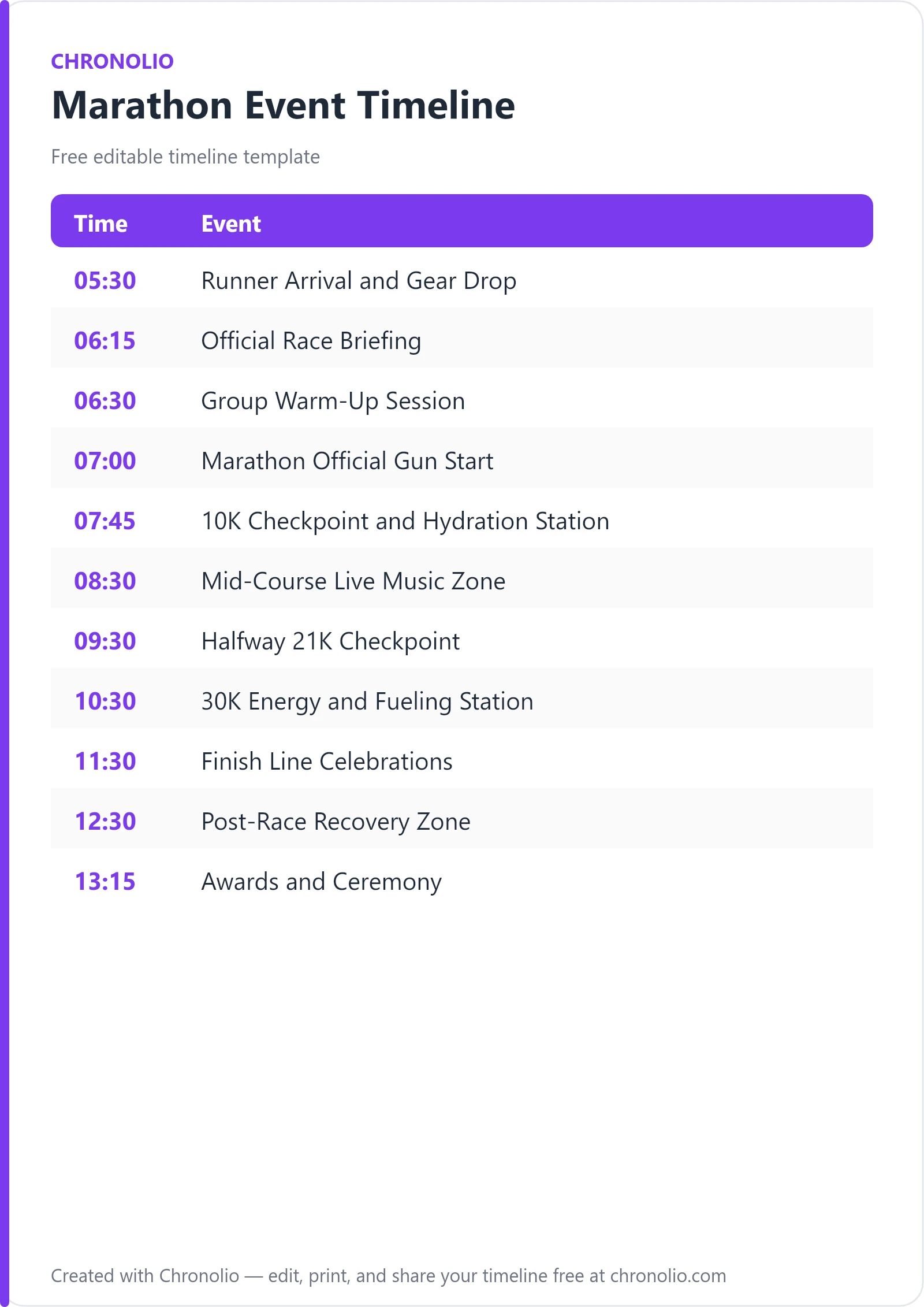
Here is the complete schedule this free template gives you — every time block, ready to edit, download, and share:
| Time | Event |
|---|---|
| 05:30 | Runner Arrival and Gear Drop |
| 06:15 | Official Race Briefing |
| 06:30 | Group Warm-Up Session |
| 07:00 | Marathon Official Gun Start |
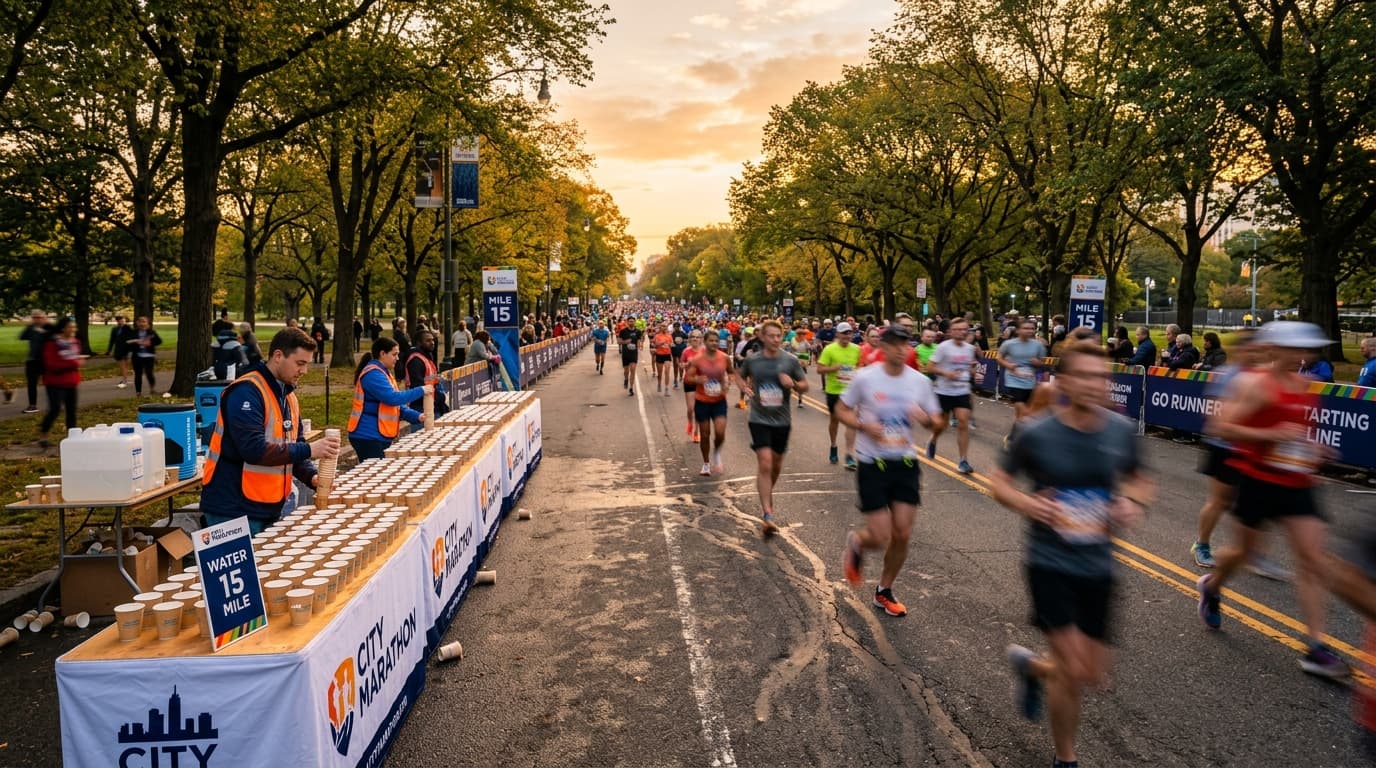
| 07:45 | 10K Checkpoint and Hydration Station |
| 08:30 | Mid-Course Live Music Zone |
| 09:30 | Halfway 21K Checkpoint |
| 10:30 | 30K Energy and Fueling Station |
| 11:30 | Finish Line Celebrations |
| 12:30 | Post-Race Recovery Zone |
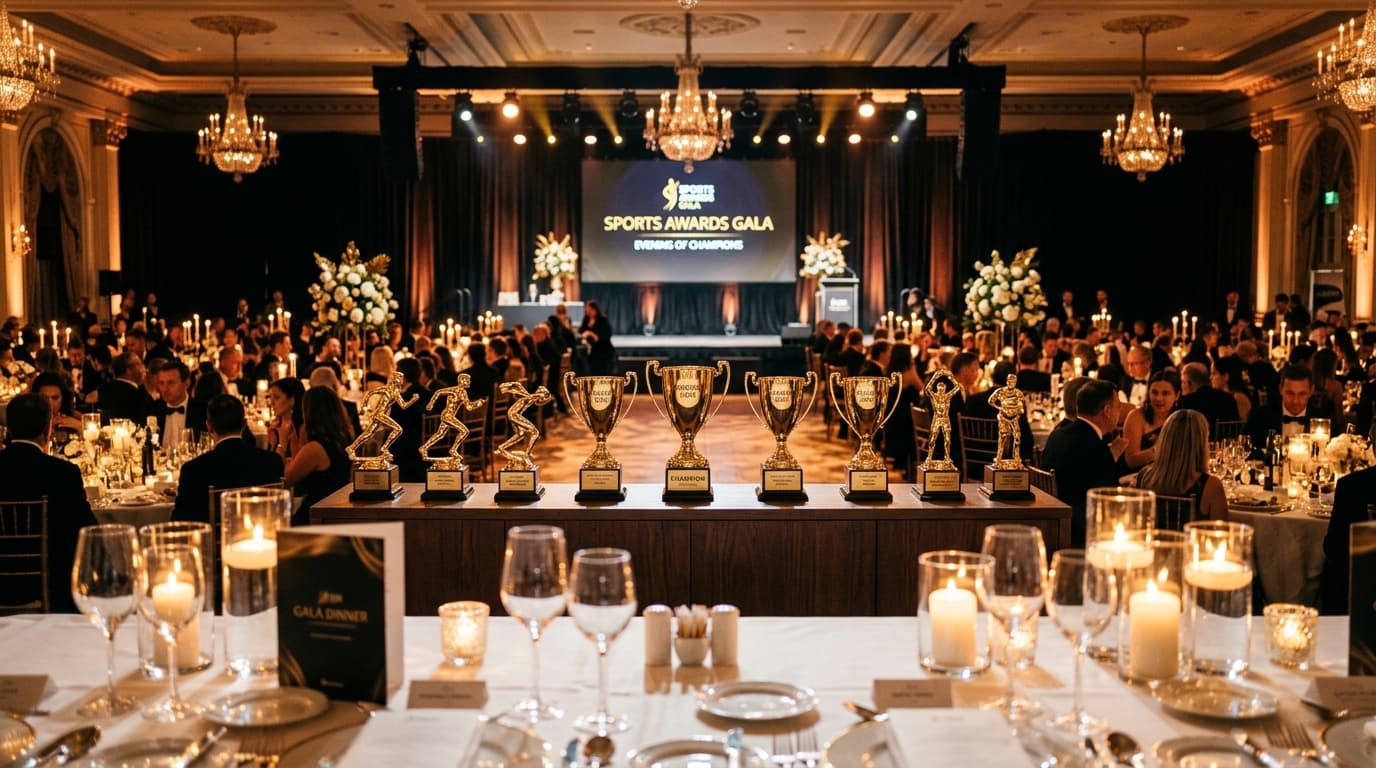
| 13:15 | Awards and Ceremony |
What Is a Marathon Event Timeline?
A marathon event timeline is the operational backbone of any road race, establishing precise synchronization between athletes, volunteers, city services, and medical personnel. Managing thousands of participants along a 26.2-mile course requires meticulous planning where minutes—and sometimes seconds—dictate course safety, traffic control, and broadcast schedules.
From the moment the pre-dawn gear drop opens at the race village to the final trophy presentation on the main stage, an accurate marathon schedule template ensures every moving piece executes on time. Drawing from real-world mass-participation event management and industry standards established by governing bodies like USA Track & Field, this template balances athletic performance needs with complex municipal logistics.
Customize Your Marathon Event Timeline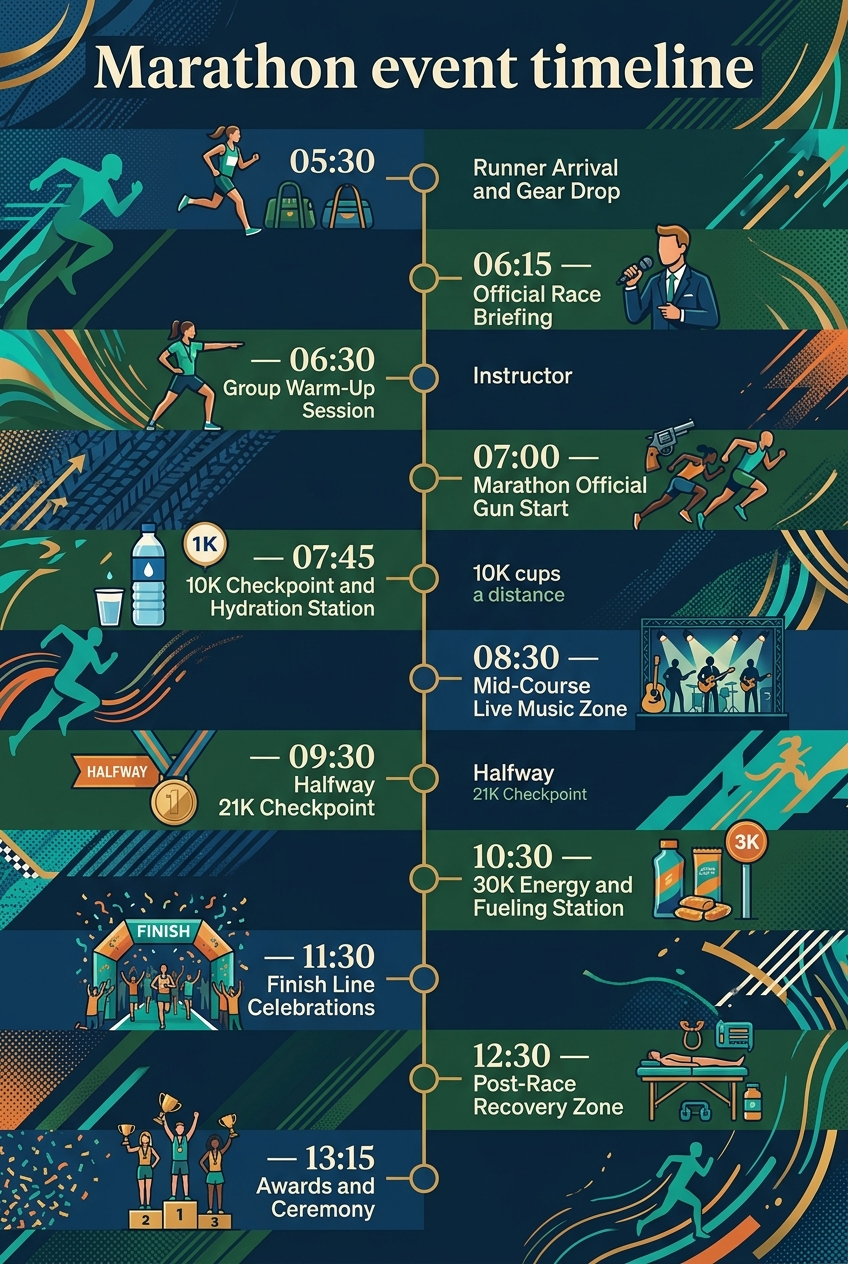
Why Marathons Need a Timeline
Executing a multi-thousand-person sporting event across active public thoroughfares leaves zero margin for error. Without a strict race day timeline, bottlenecking at bag checks can delay start times, which cascades into municipal permit violations and compromised traffic reopening plans. Coordinating course marshals, hydration station crews, and emergency services requires a single source of timing truth.
A structured schedule also protects athlete welfare. Professional runners rely on predictable start sequences to time their nutrition and physical warm-ups down to the minute. Meanwhile, recreational runners count on consistent fluid replacement and medical support at predictable distance intervals. Maintaining steady logistics prevents medical gridlock at aid tents and keeps the energy high across all 26 miles.
Finally, an integrated timeline ensures clear stakeholder communication. Much like managing a corporate assembly using a Board Meeting Timeline Template (Free Schedule) or directing a tight sequence for formal celebrations like a Catholic Wedding Timeline: Complete Nuptial Mass Schedule, a public marathon demands seamless handoffs between production heads, timing mat vendors, security personnel, and entertainment teams.
What to Include in a Marathon Event Timeline
To keep operations running smoothly, a robust marathon event running order should encompass all core operational phases of race day:
- Pre-race assembly: Runner arrival window, gear drop operations, bib verification, and restroom queues.
- Official briefings & warm-ups: Safety announcements, weather updates, route reminders, and trainer-led stretching sessions.
- Start sequence: Wave corral loading, national anthem, elite field staging, and official gun start.
- Course operations: Splitting timing mat triggers, hydration/fueling station activations, and live entertainment zones.
- Finish line operations: Finisher tape breaks, medal distribution, thermal blanket handouts, and chip recovery.
- Athlete recovery: Medical triage, physical therapy stations, post-race refreshments, and family reunion zones.
- Post-race ceremonies: Official results verification, age-group awards, and closing remarks.
Pre-Race Village & Athlete Assembly
| Time | Event | | 05:30 | Runner Arrival and Gear Drop | | 06:15 | Official Race Briefing | | 06:30 | Group Warm-Up Session |
The early morning hours set the tone for the entire race. Opening the City Park Race Village early allows participants to navigate security, drop off gear bags, and move through bib check stations without panic. Early coordination prevents overcrowding near the baggage trucks and gives runners time to hydrate and locate their starting corrals.
As dawn breaks, the focus transitions to participant readiness at the Main Stage. The official race briefing ensures that every athlete hears vital course condition updates, hydration locations, and safety advisories before entering the corral chutes. Following the briefing, an energetic warm-up at the Start Line Plaza builds adrenaline while preparing muscle groups for the grueling endurance effort ahead.
Gun Start & Early Course Milestones
| Time | Event | | 07:00 | Marathon Official Gun Start | | 07:45 | 10K Checkpoint and Hydration Station | | 08:30 | Mid-Course Live Music Zone |
The energy reaches its peak as participants gather under the Start Line Arch. Punctuality here is mandatory, as TV broadcasts, traffic closures, and police escorts are synchronized to the exact second of the horn blast. Staggering elite waves and main corral groups ensures proper spacing across the initial miles, preventing dangerous bottlenecks.
As runners settle into their target paces, course operations transition into active monitoring. By the time lead packs reach the Riverside Drive 10K Mark, electronic timing mats capture initial split data while volunteer crews supply hydration. Further down the course at the Mile 15 Entertainment Plaza, live music zones provide a crucial psychological boost, motivating athletes as physical fatigue begins to accumulate.
Mid-Race Progression & Crucial Fueling
| Time | Event | | 09:30 | Halfway 21K Checkpoint | | 10:30 | 30K Energy and Fueling Station |
Crossing the halfway threshold at the Central Avenue Overpass is both a mental and technical milestone. Timing crews capture official half-marathon split times to calculate projected finish times and flag any irregularities. Aid crews stationed here stand ready with basic medical care and targeted electrolyte replenishment.
The 30-kilometer mark at Lakefront Park represents the infamous "wall" for many marathoners, where glycogen stores drop sharply. Establishing a dedicated fueling station here—stocked with energy gels, fruit, and additional fluids—is essential for athlete safety. Medical teams stationed at this mark monitor passing runners closely for signs of severe dehydration, heat stress, or muscle cramping.
Finish Line, Recovery & Podium Ceremonies
| Time | Event | | 11:30 | Finish Line Celebrations | | 12:30 | Post-Race Recovery Zone | | 13:15 | Awards and Ceremony |
The culmination of the race takes place at the Main Stadium Finish Line, where organizers shift focus from course management to high-volume crowd control and celebration. Splitting elite ribbon breaks from general finisher channels ensures photographers get clear shots without interrupting the flow of incoming waves crossing the timing mats.
Once across the finish line, athletes are quickly funneled into the Athlete Recovery Area to prevent gridlock on the track. Volunteers hand out commemorative finisher medals, thermal space blankets, and recovery fluids, while professional physical therapists and medical personnel manage post-race care. The day wraps up at the Main Stage with the official awards presentation, honoring top elite performers and age-group winners.
Marathon Event Timeline vs Race Day Operational Plan
While both documents are critical for race day execution, they serve distinct operational functions across your organizing team.
| Marathon Event Timeline | Race Day Operational Plan |
|---|---|
| Focuses on the public sequence of events and runner schedule | Details technical setup, staffing lists, and logistics behind the scenes |
| Shared with participants, media, spectators, and city partners | Used internally by race directors, venue managers, and production teams |
| Uses simple chronological time blocks | Contains complex resource mapping, vendor contacts, and contingency protocols |
| Highlights key course milestones, start times, and ceremonies | Focuses on road closure permits, barrier placements, and generator power |
A marathon event timeline keeps your participants, spectators, and public agency partners aligned on what happens when. In contrast, an operational plan outlines the behind-the-scenes mechanics—such as portable toilet placement schedules, generator drop-offs, and security post assignments—required to make that timeline possible.
Who Should Use This Template?
This versatile schedule template is engineered for mass-participation athletic events and large-scale public gatherings. It is ideal for:
- Race Directors and Event Coordinators: Overseeing full 26.2-mile marathons, half-marathons, or multi-distance running festivals.
- Municipal Event Committees: Coordinating city permits, police escorts, road closures, and public safety teams.
- Charity Sports Event Managers: Organizing peer-to-peer fundraising runs, awareness walks, and community athletic events.
- Athletic Clubs & Running Associations: Hosting certified road races and regional championship qualifiers.
- Production & Logistics Agencies: Managing stage builds, timing equipment, PA systems, and finish line chute setups.
Using Chronolio’s flexible platform, event leaders can assign distinct roles to logistics leads, volunteer coordinators, and medical teams, ensuring everyone accesses the exact timing data they need on race morning.
How to Use This Template
- Download or Duplicate the Template: Access the editable format directly within Chronolio or download our offline files:
- Adjust for Your Course Distance & Field Size: Modify the arrival times, wave start intervals, and checkpoint splits based on whether you are hosting 500 local runners or 20,000 international participants.
- Customize Course Landmarks: Replace placeholder locations (e.g., "City Park Race Village", "Lakefront Park") with your specific venue names, road intersections, and mile markers.
- Assign Stage & Area Managers: Link specific timeline blocks to key personnel, such as start corral captains, course marshals, and recovery zone managers.
- Distribute to Key Stakeholders: Share your finalized schedule with local law enforcement, emergency services, broadcast partners, and vendor teams to ensure complete alignment.
Much like setting up a timeline for other complex gatherings—such as a milestone social event using an Anniversary Party Schedule Template (Free Agenda & Guide) or a milestone birthday run with a Birthday Party Timeline Template (Free Agenda & Guide)—having a clear, editable template saves hours of layout effort.
Tips for a Successful Marathon Event
- Build in buffer time for corrals: Allow at least 30 to 45 minutes between opening start corrals and firing the official start gun to prevent chute congestion.
- Sync all operational clocks: Ensure race directors, timing chip companies, PA announcers, and starter officials synchronize their devices to master atomic time before 05:00.
- Over-communicate bag drop deadlines: Clear baggage drop-off trucks at least 20 minutes before gun start so vehicles can safely drive to the finish area ahead of the runners.
- Stagger aid station shifts: Schedule volunteer arrivals at early aid stations (e.g., 5K/10K) earlier than late-course stations to avoid paying for unnecessary idle hours.
- Prepare clear finish line funnels: Design the post-finish chute wide enough to accommodate rapid runner clearance, preventing physical backups onto the active timing mats.
- Establish a central command center: Position a unified operations lead who monitors GPS course markers, weather updates, and medical call volumes in real time.
Common Mistakes to Avoid
- Underestimating restroom wait times: Insufficient portable toilets near starting corrals causes delayed starts and frustration among runners.
- Ignoring elite vs. mass wave timing: Firing a single start horn for thousands of runners creates severe course overcrowding and safety hazards; always utilize staggered wave starts.
- Neglecting course cutoff times: Failing to establish strict cutoffs at intermediate checkpoints can leave slow-moving runners stranded when city streets re-open to vehicle traffic.
- Failing to brief entertainment zones: Live bands or DJ stations placed too close to timing mats can interfere with emergency radio communications or official race announcements.
- Inadequate post-race medical staffing: Concentrating medical staff only at the finish arch instead of spreading them throughout the recovery village leads to unaddressed heat illnesses or collapses.
- Delaying official results posting: Delaying split time verification holds up age-group awards presentations, frustrating participants who want to collect their awards before leaving.
In Summary
- What it is: A master operational timeline coordinating pre-race setup, wave starts, mid-course checkpoints, entertainment, recovery, and post-race awards for a 26.2-mile marathon.
- Who it is for: Designed for race directors, city logistics teams, sports management agencies, charity event hosts, and athletic clubs.
- What it ensures: Keeps participants safe, guarantees precise split timing, aligns city services, and prevents race village bottlenecks.
- Key course markers: Captures critical milestones at 10K, halfway (21K), and 30K to manage fueling, hydration, and runner monitoring.
- Post-race workflow: Organizes a smooth flow from finish line ribbon breaks to medical recovery, medal distribution, and stage ceremonies.
Planning a world-class marathon requires precision, safety, and seamless communication across hundreds of staff and volunteers. By utilizing this structured marathon event timeline, race organizers, city officials, and athletic directors can deliver an unforgettable, safe, and perfectly timed race day experience for athletes and spectators alike.
Customize Your Marathon Event Timeline