






This Template at a Glance
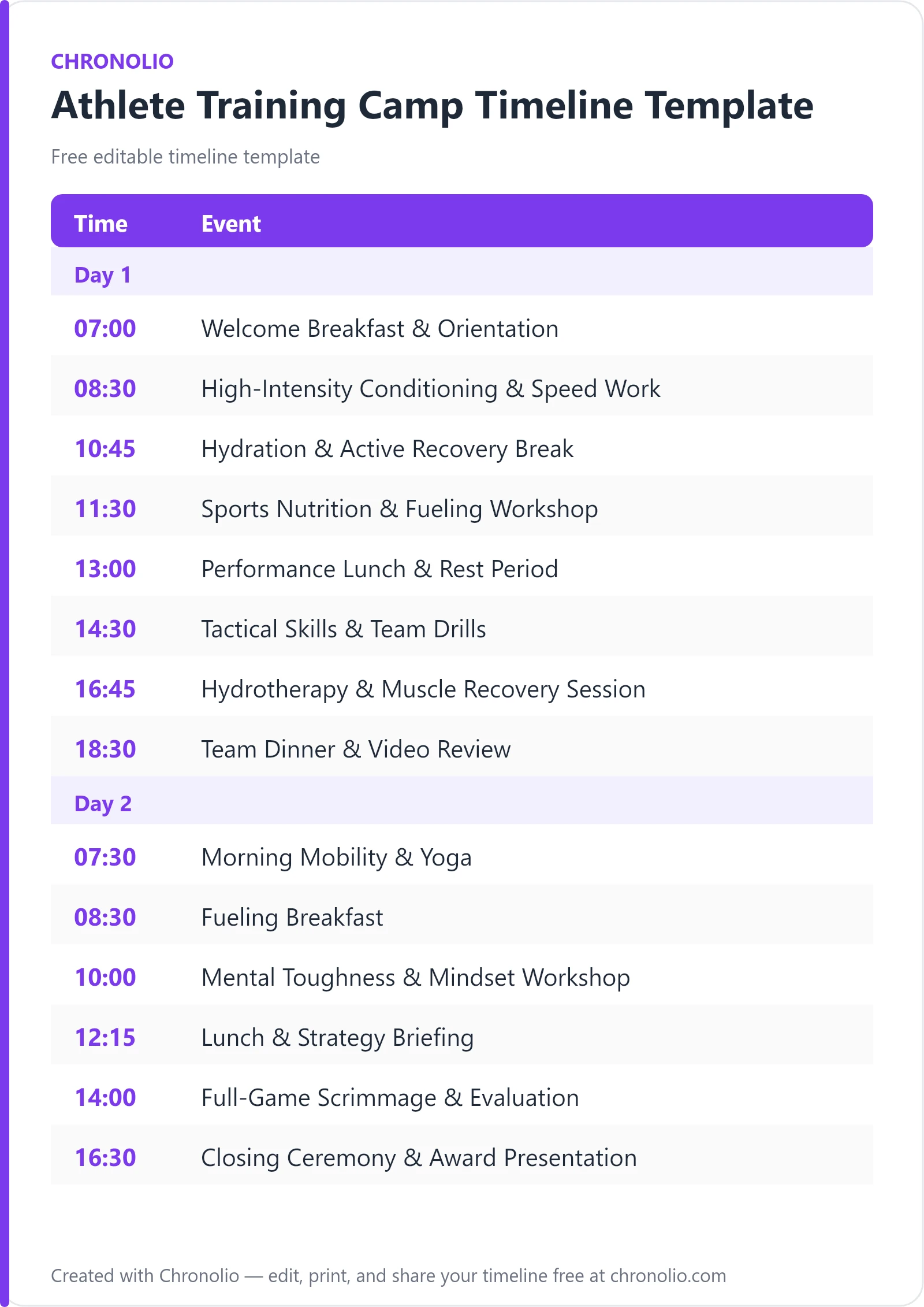
Here is the complete schedule this free template gives you — every time block, ready to edit, download, and share:
| Day | Time | Event |
|---|---|---|
| 1 | 07:00 | Welcome Breakfast & Orientation |
| 1 | 08:30 | High-Intensity Conditioning & Speed Work |
| 1 | 10:45 | Hydration & Active Recovery Break |
| 1 | 11:30 | Sports Nutrition & Fueling Workshop |
| 1 | 13:00 | Performance Lunch & Rest Period |
| 1 | 14:30 | Tactical Skills & Team Drills |
| 1 | 16:45 | Hydrotherapy & Muscle Recovery Session |
| 1 | 18:30 | Team Dinner & Video Review |
| 2 | 07:30 | Morning Mobility & Yoga |
| 2 | 08:30 | Fueling Breakfast |
| 2 | 10:00 | Mental Toughness & Mindset Workshop |
| 2 | 12:15 | Lunch & Strategy Briefing |
| 2 | 14:00 | Full-Game Scrimmage & Evaluation |
| 2 | 16:30 | Closing Ceremony & Award Presentation |
What Is an Athlete Training Camp Timeline?
An athlete training camp timeline is an operational master schedule that outlines every minute of an intensive sports clinic or multi-day athletic retreat. Managing a successful camp requires far more than blowing a whistle and running drills; it demands precise load management, synchronized facility usage, timed macronutrient intake, and structured physiological recovery. Without a master running order, high-intensity workouts can easily bleed into recovery windows, leading to severe fatigue or elevated injury rates.
Having managed sports facilities and high-performance retreats for over a decade, I can tell you that timing is your most crucial coaching tool. This template reflects real-world training camp structures developed alongside certified strength and conditioning specialists, sports dietitians, and athletic trainers. It balances hard physiological stress with scientifically backed recovery windows, ensuring athletes absorb instruction without burning out.
Create Your Athlete Training Camp Timeline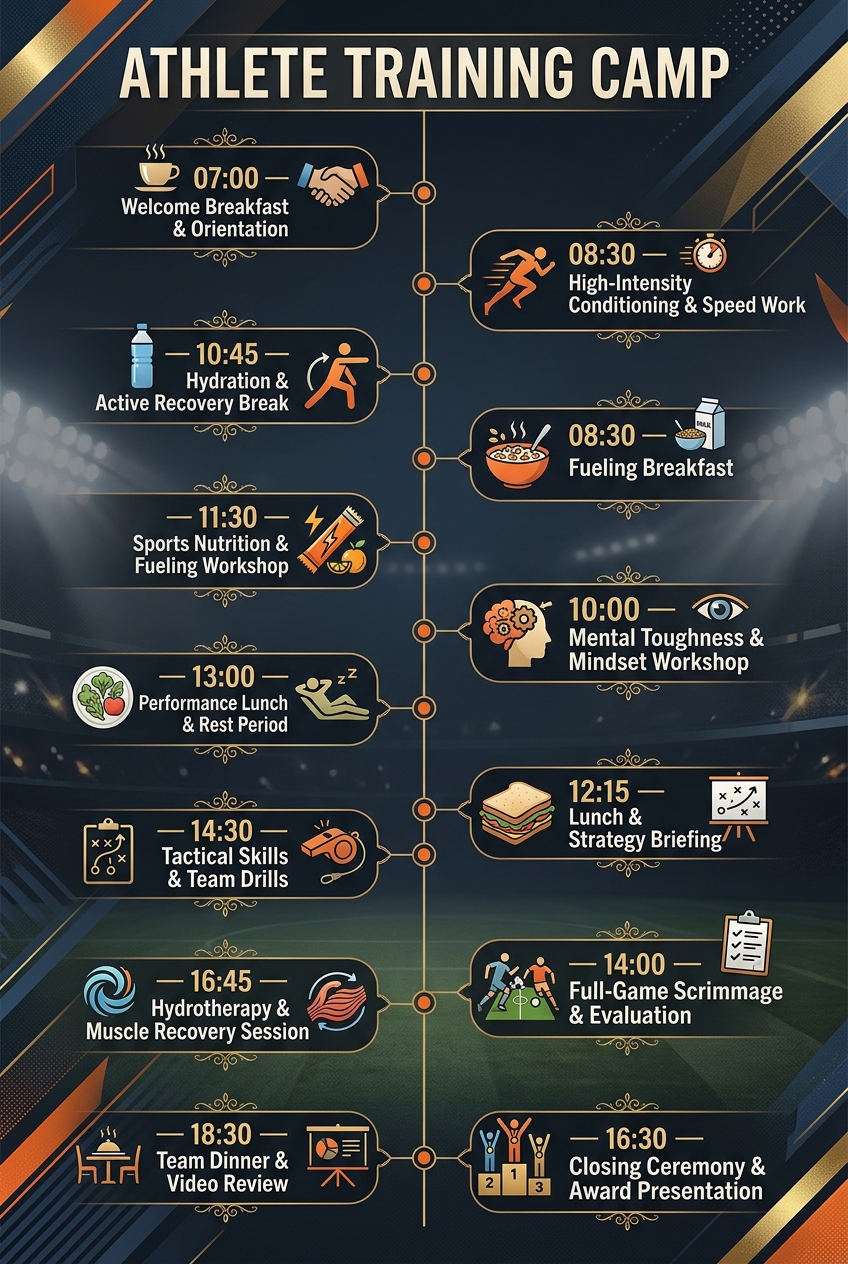
Why Athlete Training Camps Need a Timeline
High-performance athletic camps operate under tight constraints, balancing facilities like outdoor tracks, weight rooms, aquatic centers, and lecture halls. A disciplined running order keeps coaching staff perfectly synchronized, ensuring every drill starts on time and no group overstays their allotted facility booking.
Furthermore, elite performance relies on predictable biological rhythms. By sticking to a strict schedule, you ensure that macronutrient intake and digestion timing align naturally with peak physical output. Athletes who eat lunch too close to a high-intensity tactical session will underperform, just as those who skip post-workout hydrotherapy will suffer from excessive delayed onset muscle soreness (DOMS).
Finally, clear schedules reduce mental fatigue for athletes. When competitors know exactly when their next rest period, meal, or video review is scheduled, they can focus entirely on execution rather than stressing over logistics.
What to Include in an Athlete Training Camp Timeline
An elite athletic training camp agenda must blend physical training, intellectual instruction, and restorative care into a seamless flow. Key components include:
- Dynamic Warm-ups & Speed Work: Morning blocks dedicated to joint mobility, sprint mechanics, and baseline agility.
- Targeted Educational Workshops: Classroom modules covering sports nutrition, fueling strategies, and sports psychology.
- Tactical & Position-Specific Drills: On-field or in-gym skill execution, team play design, and technical refinement.
- Structured Recovery Protocols: Hydrotherapy, cold plunge sessions, active stretching, and foam rolling.
- Video Analysis & Film Review: Evening sessions where coaches break down practice footage and correct execution errors.
- Nutritional Support Windows: Carefully timed, high-protein meals and electrolyte recovery breaks.
Day 1: Conditioning, Tactical Drills & Recovery
| Time | Event | | 07:00 | Welcome Breakfast & Orientation | | 08:30 | High-Intensity Conditioning & Speed Work | | 10:45 | Hydration & Active Recovery Break | | 11:30 | Sports Nutrition & Fueling Workshop | | 13:00 | Performance Lunch & Rest Period | | 14:30 | Tactical Skills & Team Drills | | 16:45 | Hydrotherapy & Muscle Recovery Session | | 18:30 | Team Dinner & Video Review |
Day 1 sets the tone for the entire camp, establishing standards, measuring baseline fitness, and introducing tactical schemes. Starting bright and early at 07:00 in the Main Dining Hall, athletes receive their gear and schedules while coaches set expectations. We immediately follow breakfast with an intense 08:30 conditioning block at the Outdoor Track Complex, taking advantage of cooler morning temperatures and fresh central nervous system (CNS) energy to gather baseline performance metrics.
+-------------------------------------------------------------------+ | DAY 1 TRAINING SCHEDULE | +-------------------------------------------------------------------+ | 07:00 | Welcome Breakfast & Orientation (Main Dining Hall) | | 08:30 | High-Intensity Conditioning & Speed Work (Track Complex) | | 10:45 | Hydration & Active Recovery Break (Athlete Lounge) | | 11:30 | Sports Nutrition & Fueling Workshop (Auditorium B) | | 13:00 | Performance Lunch & Rest Period (Main Dining Hall) | | 14:30 | Tactical Skills & Team Drills (Indoor Gymnasium) | | 16:45 | Hydrotherapy & Recovery Session (Aquatic Center) | | 18:30 | Team Dinner & Video Review (Main Dining Hall) | +-------------------------------------------------------------------+
After hard sprint mechanics and interval work, the 10:45 active recovery break in the Athlete Lounge gives athletes time to lower their heart rates and replace electrolytes before moving into the Auditorium B for sports nutrition education. This classroom break acts as a physical breather before lunch. The afternoon shifts to skill work at the Indoor Gymnasium, followed by mandatory contrast hydrotherapy at the Aquatic Center to clear metabolic waste before dinner and film review.
While planning an intensive athletic retreat requires periodization, the underlying event coordination principles mirror other structured programs. For instance, just as executives rely on a board meeting timeline template to keep strategic discussions moving forward, athletic directors use rigid time blocks to keep multiple coaching departments operating in sync.
Day 2: Mobility, Mindset & Peak Competition
| Time | Event | | 07:30 | Morning Mobility & Yoga | | 08:30 | Fueling Breakfast | | 10:00 | Mental Toughness & Mindset Workshop | | 12:15 | Lunch & Strategy Briefing | | 14:00 | Full-Game Scrimmage & Evaluation | | 16:30 | Closing Ceremony & Award Presentation |
Day 2 focuses on mental preparation, tactical application, and competitive evaluation. To address muscle stiffness from Day 1, the morning begins at 07:30 in Studio 1 with gentle mobility and yoga. This light movement promotes blood flow and prepares the neuromuscular system for afternoon competition without causing excessive physical strain.
+-------------------------------------------------------------------+ | DAY 2 TRAINING SCHEDULE | +-------------------------------------------------------------------+ | 07:30 | Morning Mobility & Yoga (Studio 1) | | 08:30 | Fueling Breakfast (Main Dining Hall) | | 10:00 | Mental Toughness & Mindset Workshop (Conference Room A) | | 12:15 | Lunch & Strategy Briefing (Main Dining Hall) | | 14:00 | Full-Game Scrimmage & Evaluation (Main Stadium Field) | | 16:30 | Closing Ceremony & Award Presentation (Main Stadium Field)| +-------------------------------------------------------------------+
Following breakfast, a sports psychology workshop in Conference Room A equips athletes with visualization and stress-management techniques. After a strategic lunch briefing, the camp peaks with a full-intensity scrimmage at the Main Stadium Field. Staff record final performance metrics before wrapping up the camp with an awards ceremony to recognize top performers and hand out evaluation packets.
If your athletic organization hosts celebratory banquets or social events alongside competitive clinics, exploring an anniversary party schedule template or a birthday party timeline template can offer helpful insights into pacing social programs and banquets.
Athlete Training Camp Timeline vs Daily Training Itinerary
It is common to confuse an overall camp timeline with a daily training itinerary, but they serve distinct operational functions during an athletic camp.
| Feature | Camp Master Timeline | Daily Training Itinerary |
|---|---|---|
| Primary Scope | Multi-day macro view covering all departments | Daily micro view focused on player schedules |
| Target Audience | Head coaches, trainers, dietitians, venue staff | Individual athletes, positional groups, parents |
| Details Included | Facility bookings, hydrotherapy protocols, meals | Group assignments, jersey colors, locker numbers |
| Primary Purpose | Operational control and physical load management | Personal time management and attendance |
The camp master timeline acts as the blueprint for facility managers, catering teams, and athletic trainers, ensuring every support system runs smoothly. The daily training itinerary, by contrast, gives athletes a simplified look at where they need to be at any given moment.
Who Should Use This Template?
This training camp schedule is built for sports professionals who need to manage human performance, facility logistics, and group schedules simultaneously:
- Collegiate & High School Coaches: Organize pre-season training camps that balance team installs with physical conditioning.
- Strength & Conditioning Specialists: Plan periodized physical loads and active recovery windows across multi-day clinics.
- Club & Academy Directors: Deliver professional-grade athletic camps for elite youth developmental programs.
- Private Sports Performance Centers: Run commercial weekend clinics with structured meal, classroom, and field sessions.
- National Governing Bodies & Olympic Committees: Standardize elite athlete evaluation camps across multiple regional sites.
Chronolio supports the distinct roles required to run these multi-faceted camps, giving head coaches, head trainers, and operations managers separate views tailored to their specific responsibilities.
How to Use This Template
- Download or Duplicate the Template: Access the schedule directly in Chronolio, or download customizable files via our Athlete Training Camp Word Template or Athlete Training Camp PDF Template.
- Input Camp Dates and Facility Locations: Customize the schedule with your venue details, such as specific field numbers, gymnasium courts, or lecture rooms.
- Adjust Workouts for Your Specific Sport: Modify session titles to match your discipline (e.g., swim sets, basketball footwork, football scrimmage drills).
- Share with Staff and Support Personnel: Send tailored versions to catering staff, athletic trainers, and strength coaches so everyone stays aligned.
- Publish Digital Schedules for Athletes: Distribute read-only links or print physical copies for display in locker rooms and dining facilities.
Tips for a Successful Athlete Training Camp
- Enforce Post-Workout Nutrition Windows: Require athletes to consume recovery shakes or carbohydrate-protein snacks within 30 minutes of finishing hard physical blocks, following guidelines established by leading institutions like the Gatorade Sports Science Institute.
- Protect Rest and Digestion Time: Never shorten the rest period between lunch and afternoon practice. Athletes need adequate digestion time to avoid stomach cramps during tactical sessions.
- Monitor Environmental Stress: Use Wet Bulb Globe Temperature (WBGT) devices during outdoor track sessions and adjust break durations instantly if heat indexes rise.
- Coordinate with Facility Managers Early: Confirm weight room, hydrotherapy, and stadium bookings weeks in advance to avoid scheduling conflicts with other teams.
- Implement Mandatory Cold Plunges: Standardize contrast hydrotherapy protocols under the supervision of certified athletic trainers affiliated with organizations like the National Strength and Conditioning Association.
- Keep Classroom Modules Engaging: Limit lecture-style workshops to 45 minutes to keep athletes attentive and engaged.
- Build in Buffer Time for Transitions: Allow at least 15 to 30 minutes between physical sessions and meal blocks for athletes to shower, change, and travel between venues. When managing multi-stage events, planners often borrow principles from other detailed schedules, such as a baby shower timeline template, where smooth transitions between distinct activities are essential.
Common Mistakes to Avoid
- Over-Scheduling Physical Workouts: Pushing athletes through consecutive high-intensity blocks without enough recovery drastically increases injury risks and decreases performance quality.
- Ignoring Central Nervous System (CNS) Fatigue: Heavy sprint work, tactical learning, and competitive scrimmages all strain the CNS. Balance high-demand activities with low-stress workshops and mobility sessions.
- Vague Facility Directions: Failing to list exact room names or field numbers leads to lost athletes and delayed drill starts.
- Neglecting Hydration Protocols: Waiting for athletes to complain of thirst is a mistake. Schedule forced hydration breaks every 20 to 30 minutes during warm outdoor training blocks.
- Uncoordinated Meals: Providing high-fat, slow-digesting catering right before hard training sessions leads to sluggish performance and nausea.
- Failing to Track Individual Metrics: Skipping baseline fitness tracking during morning sessions prevents coaches from measuring athletic progress over the course of the camp.
In Summary
- An athlete training camp timeline is a structured multi-day master schedule balancing workouts, meals, workshops, and hydrotherapy.
- It protects physical load limits, preventing burnout and injury through scheduled recovery windows.
- Designed for collegiate programs, high school teams, private performance academies, and elite sports clubs.
- Coordinates multiple facilities simultaneously, including tracks, gymnasiums, auditoriums, and aquatic centers.
- Aligns dietary intake with physical demands by matching high-carb fueling meals to high-intensity training sessions.
- Provides clear, transparent expectations for coaching staff, athletic trainers, and athletes alike.
Organizing a top-tier athletic camp requires clear logistics, synchronized facility usage, and modern recovery practices. By using this training camp schedule template, athletic directors, head coaches, and performance staff can deliver an exceptional camp experience that maximizes physical development while keeping athletes healthy and engaged.
Create Your Athlete Training Camp Timeline