






This Template at a Glance
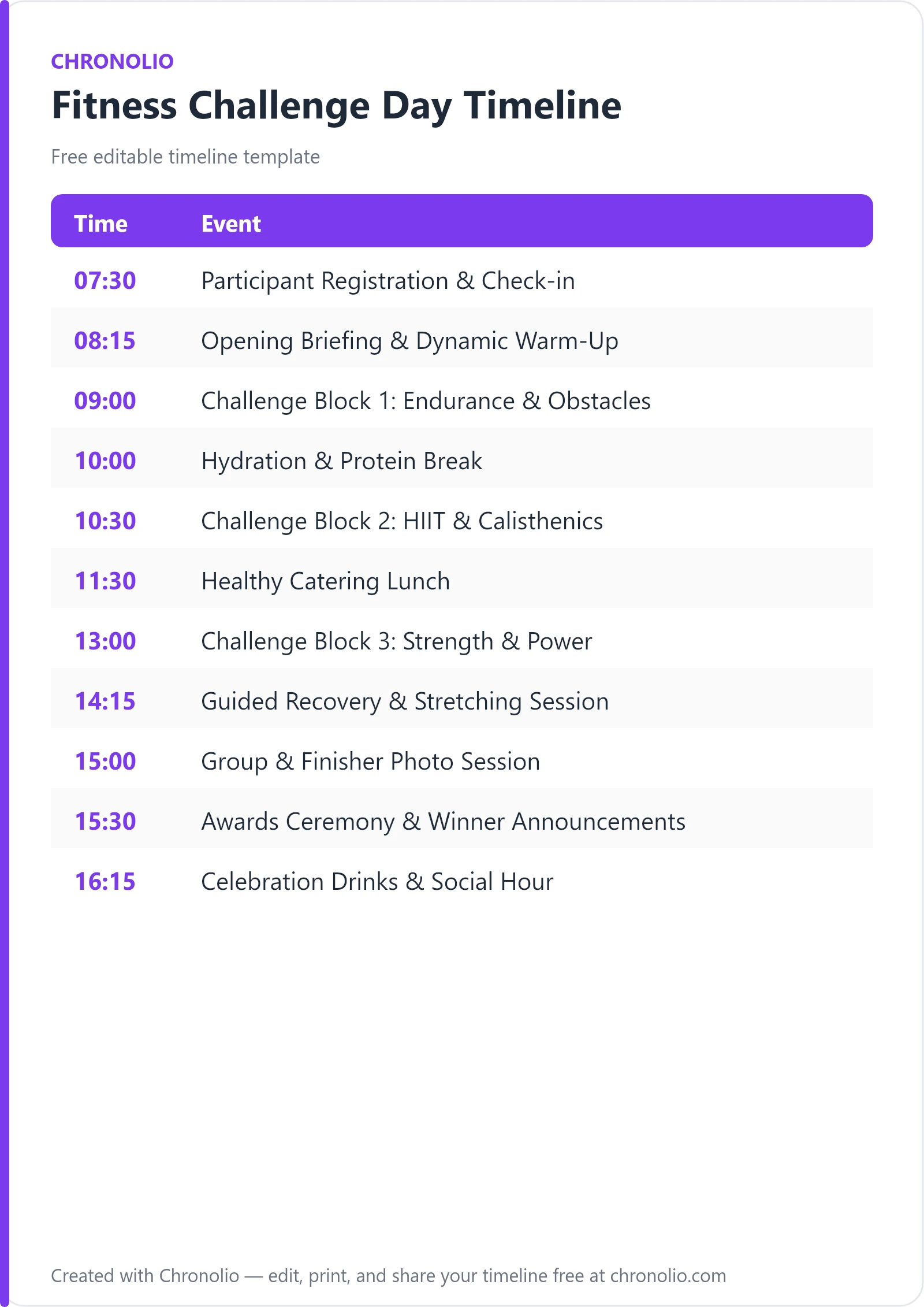
Here is the complete schedule this free template gives you — every time block, ready to edit, download, and share:
| Time | Event |
|---|---|
| 07:30 | Participant Registration & Check-in |
| 08:15 | Opening Briefing & Dynamic Warm-Up |
| 09:00 | Challenge Block 1: Endurance & Obstacles |
| 10:00 | Hydration & Protein Break |
| 10:30 | Challenge Block 2: HIIT & Calisthenics |
| 11:30 | Healthy Catering Lunch |
| 13:00 | Challenge Block 3: Strength & Power |
| 14:15 | Guided Recovery & Stretching Session |
| 15:00 | Group & Finisher Photo Session |
| 15:30 | Awards Ceremony & Winner Announcements |
| 16:15 | Celebration Drinks & Social Hour |
What Is a Fitness Challenge Day Timeline?
A fitness challenge day timeline is an operational master schedule that structures every phase of an athletic competition from setup to breakdown. It coordinates participant check-in, judge briefings, dynamic warm-up routines, heat transitions, scoring tabulations, and recovery breaks. Running a multi-discipline physical competition requires strict time management; without a published order of events, floor judges lose track of heat rotations, athletes suffer from inadequate rest intervals, and the main stage awards run late.
Drawing from over a decade of operating functional fitness tournaments and multi-stage endurance trials, this template reflects real-world athletic venue logistics and industry best practices. It establishes a predictable rhythm that allows athletes to prime their energy systems properly before stepping onto the competition floor. You can download this template directly as a customizable Word document or a printable PDF guide to distribute among your floor crew and volunteer team.
Customize Your Fitness Challenge Day Schedule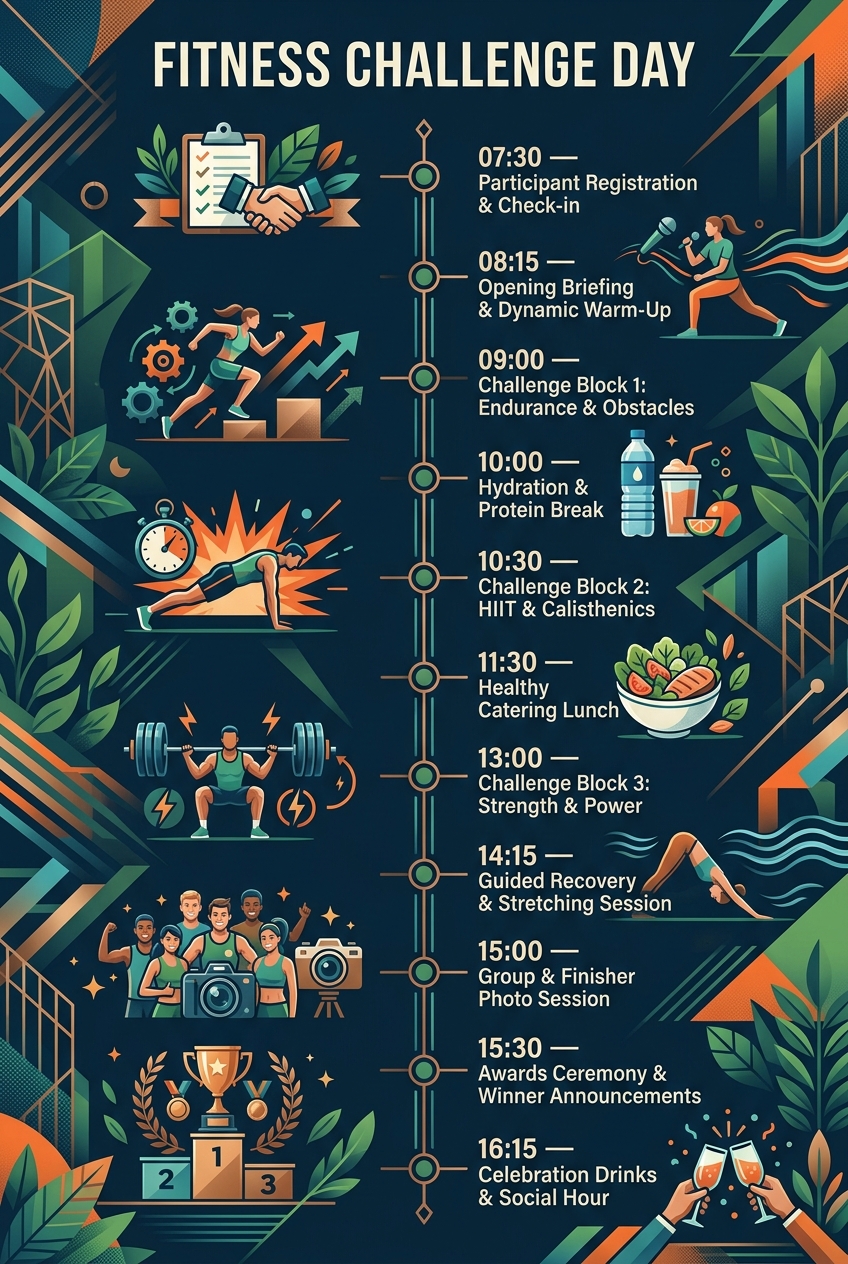
Why Fitness Challenge Days Need a Timeline
Multi-stage physical events involve moving parts that demand high-level coordination. Between managing judge scorecards, monitoring heat sheets, and ensuring athlete safety across different zones, an accurate run-sheet serves as the operational backbone of your event.
First, an explicit timetable guarantees athlete safety and peak performance. High-intensity workouts put immense stress on the cardiovascular and musculoskeletal systems. When schedules slip and recovery windows shrink, athletes face an elevated risk of heat exertion and acute injuries. A structured routine ensures mandatory cool-down periods and structured nutrition breaks are never compromised.
Second, precise timing keeps floor judges, station Marshalls, and equipment managers synchronized. Transitioning an entire arena floor from an outdoor obstacle course to an indoor barbell weightlifting rig requires swift logistics. A detailed timetable gives your crew predictable windows to reset equipment, double-check electronic timing chips, and update live leaderboards without rushing participants off the floor.
Finally, structured scheduling elevates the participant and spectator experience. Competitors want to know exactly when their heat hits the floor so they can time their pre-workout nutrition and dynamic mobility drills. Meanwhile, spectators appreciate knowing when high-stakes finals and podium ceremonies will take place so they can plan their viewing day.
What to Include in a Fitness Challenge Day Timeline
To build an authoritative competition schedule, you must account for both front-of-house athlete movements and back-of-house administrative tasks. Every comprehensive fitness competition schedule should include these key phases:
- Participant Arrival & Safety Check-In: Bib distribution, timing chip assignment, waiver verification, and facility orientation.
- Competitor Briefing & Group Warm-Up: Movement standard demonstrations, lane assignments, safety rules, and lead-trainer mobility drills.
- Varied Challenge Blocks: Structured testing phases covering distinct athletic domains like aerobic capacity, calisthenics, and maximal strength.
- Hydration & Physical Therapy Breaks: Dedicated rest windows featuring electrolyte stations, physical therapist strapping, and active recovery.
- Nutritional Catering Windows: Balanced recovery meals designed for high-performance athletic replenishment.
- Guided Down-Regulation: Post-competition stretching, foam rolling, and heart-rate recovery sessions.
- Media & Awards Presentations: Official score auditing, division winner announcements, sponsor prize handouts, and podium photo opportunities.
Morning Setup, Briefing & Endurance Testing
The opening phase of the competition sets the operational tone for the rest of the day. Prompt registration prevents downstream delay cascades, ensuring athletes complete mandatory safety checks before stepping onto the main arena floor.
| Time | Event |
|---|---|
| 07:30 | Participant Registration & Check-in |
| 08:15 | Opening Briefing & Dynamic Warm-Up |
| 09:00 | Challenge Block 1: Endurance & Obstacles |
The event day begins at 07:30 at the Main Entrance Desk, where support staff hand out race bib numbers, official event t-shirts, and timing chips. Staff verify participant liability waivers and provide a quick facility tour covering athlete-only prep zones, hydration points, and first-aid stations. Allowing a full 45 minutes for registration prevents long queues from pushing back the morning briefing.
At 08:15, all athletes transition to the Main Arena Field for the head organizer's welcome address. Judges walk through movement standards and penalty criteria for the day's events. Following the rules breakdown, a certified strength and conditioning coach leads a 20-minute full-body mobility dynamic warm-up to increase core body temperature and prime neuromuscular pathways.
At 09:00, competitors head to the Outdoor Track Area for Challenge Block 1: Endurance & Obstacles. This opening test evaluates cardiovascular stamina, agility, and mental grit across a timed outdoor course. Floor marshals and split-time judges monitor key obstacle stations to enforce movement standards, record split times, and issue time penalties for missed reps. If your organisation hosts corporate wellness days alongside executive strategy retreats, coordinating this athletic kickoff with a board meeting timeline template helps executive teams manage their business and athletic commitments seamlessly.
High-Intensity Workouts & Midday Refuel
Following a heavy aerobic endurance test, competitors require immediate metabolic replenishment before taking on short-duration, high-intensity anaerobic challenges. Managing the transition between outdoor and indoor arenas requires clear zone directional signage.
| Time | Event |
|---|---|
| 10:00 | Hydration & Protein Break |
| 10:30 | Challenge Block 2: HIIT & Calisthenics |
| 11:30 | Healthy Catering Lunch |
At 10:00, competitors step off the track and clear into the Athlete Lounge Pavilion for a mandatory 30-minute recovery break. Athletes refuel with quick-digesting carbohydrates, protein shakes, and electrolyte fluids available at dedicated hydration stations. Licensed physical therapists and athletic trainers stand by to assist with quick muscle treatment, hyper-tonic massage, and kinesiology taping for lingering joint issues.
Promptly at 10:30, athletes assemble in the High-Intensity Zone for Challenge Block 2: HIIT & Calisthenics. This station-based circuit tests local muscular endurance through rapid bodyweight movements, ergometer rowing sprint intervals, and kettlebell work. Station judges log total completed repetitions against precise heat timers. To review how structured pacing works across different physical and social gatherings, explore our baby shower timeline template to see how balanced rest periods maintain overall guest energy.
By 11:30, the second challenge block concludes, and participants head to the Dining Tent for a catered healthy recovery lunch. The menu features lean protein choices, complex carbohydrates, and wholesome plant-based options engineered specifically for glycogen replenishment. Providing a full hour for lunch gives scorekeepers time to audit morning heat sheets while allowing athletes to digest their meals before lifting heavy weights in the afternoon.
Heavy Strength Trials & Guided Recovery
The afternoon schedule pivots toward maximal power production, heavy force output, and deliberate post-workout tissue restoration. Spectator excitement peaks during maximum load attempts, making floor safety barriers essential in the weightlifting hall.
| Time | Event |
|---|---|
| 13:00 | Challenge Block 3: Strength & Power |
| 14:15 | Guided Recovery & Stretching Session |
At 13:00, the energy shifts to the Indoor Weightlifting Arena for Challenge Block 3: Strength & Power. Athletes showcase raw strength across heavy deadlift ladders and weighted sled pushes. Spectators gather around designated safety perimeters to cheer on competitors as they attempt personal records. Judges enforce strict lift completion standards to ensure participant safety under maximal loads.
Once the final deadlifts drop at 14:15, participants move straight into the Recovery Studio for a 30-minute guided down-regulation session. A lead physical therapy specialist guides athletes through static stretching routines, foam-rolling techniques, and controlled parasympathetic breathing drills. According to guidance from the National Strength and Conditioning Association (NSCA), structured cool-down sessions accelerate lactate clearance and significantly reduce delayed onset muscle soreness (DOMS).
Photography, Awards & Post-Event Social
The final phase of the timeline focuses on celebrating participant accomplishments, validating final leaderboard standings, and fostering community connections. Auditing scores before calling athletes to the podium prevents awkward scoring revisions.
| Time | Event |
|---|---|
| 15:00 | Group & Finisher Photo Session |
| 15:30 | Awards Ceremony & Winner Announcements |
| 16:15 | Celebration Drinks & Social Hour |
At 15:00, fresh off their stretching session, athletes assemble around the Media Wall Stand for official group and individual finisher portraits. Competitors pose with their completion medals, custom event bibs, and heat partners while head scorekeepers perform a final audit of all judging scorecards. If you regularly run social milestone celebrations that involve casual physical games, take a look at our birthday party timeline template for structuring fun group activities.
At 15:30, action centers on the Central Ceremony Stage for the formal Awards Ceremony. Event directors announce division podium finishes across age and skill divisions, presenting trophies, sponsor prize bundles, and custom finisher medals. Celebrating both overall champions and spirit-of-the-day award winners builds strong athlete loyalty for future events.
The day concludes at 16:15 with an informal post-event social hour on the Outdoor Terrace Lounge. Competitors, coaches, judges, and spectators relax with refreshing beverages and light snacks. Attendees trade war stories, compare workout split times on printed score sheets, and celebrate completing a demanding physical challenge. For gym owners pairing an annual competition with milestone celebrations, integrating an anniversary party schedule template can help turn your awards ceremony into an unforgettable evening gala.
Fitness Challenge Day Timeline vs Heat Sheet
Organizers new to athletic event execution often confuse an overall event timeline with an individual heat sheet. While both tools track time, they serve entirely different operational functions on competition day.
| Feature | Fitness Challenge Day Timeline | Athlete Heat Sheet |
|---|---|---|
| Primary Scope | Master operational schedule for the entire day | Specific lane and movement schedules for individual athletes |
| Target Audience | Event directors, venue managers, caterers, sponsors | Competitors, lane judges, staging marshals |
| Key Information | Venue shifts, meal times, award ceremonies, photo ops | Athlete names, heat numbers, lane assignments, start times |
| Pacing Function | Keeps the overall facility and vendor operations on track | Controls athlete floor staging and warm-up hall entry |
While the master timeline governs venue opening times, lunch services, and overall stage ceremonies, heat sheets break down specific challenge blocks into sub-10-minute floor rotations. Use the master timeline to manage venue logistics, and print separate heat sheets for floor marshals and athlete staging areas.
Who Should Use This Template?
This competition run-sheet adapts easily across diverse sports facilities and athletic organizations. Chronolio provides tailor-made planning tools for various operational roles involved in orchestrating complex events. This master timeline is tailored specifically for:
- CrossFit Affiliates & Functional Fitness Gyms: Hosting local throwdowns, internal gym clashes, or regional individual competitions.
- Corporate Wellness Coordinators: Planning team-building athletic challenges and corporate health initiative days.
- University & Collegiate Sports Clubs: Managing intramural multi-discipline fitness days and inter-university physical trials.
- Charity Athletic Fundraisers: Running endurance and strength challenge events to raise community donor funds.
- Military & First Responder Squadrons: Structuring unit physical readiness competitions and tactical fitness challenges.
How to Use This Template
- Download or Duplicate: Open the timeline in Chronolio or download the editable Word or PDF files.
- Set Your First Heat Time: Adjust the morning registration start time based on your venue opening hours and local participant travel needs.
- Customize Movement Modalities: Edit the challenge block descriptions to reflect your specific event formats (e.g., swimming, Olympic weightlifting, track sprints).
- Distribute to Key Personnel: Share published copies with head judges, medical staff, floor marshals, and catering teams at least 48 hours before the event.
Tips for a Successful Fitness Challenge Day
- Build 15-Minute Buffer Windows: Work short buffer windows into the afternoon schedule to absorb scoring disputes, equipment resets, or floor cleanup delays without pushing back the main awards ceremony.
- Establish a Dedicated Warm-Up Zone: Never let athletes perform high-intensity lifts or dynamic sprints in high-traffic spectator corridors; designate a fenced warm-up zone stocked with basic mobility gear.
- Brief Floor Judges Standardized Scoring: Conduct a mandatory 15-minute judging sync before check-in opens to review repetition standards, no-rep criteria, and penalty reporting processes.
- Centralize First Aid & Therapy: Position your medical tent right between the primary competition floor and the athlete lounge so injured participants receive immediate attention.
- Display Real-Time Leaderboards: Set up digital monitors or whiteboards near the main pavilion so athletes and spectators can track live division standings throughout the day.
- Maintain High-Volume Hydration Outlets: Supply cold water stations and electrolyte powder points at every competition station to prevent athlete cramping and heat illness.
Common Mistakes to Avoid
- Overpacking the Competition Schedule: Trying to fit four or five heavy workout blocks into a single day causes extreme athlete fatigue, floor delays, and heightened injury risks.
- Neglecting Judge and Volunteer Breaks: Floor judges standing in high-noise arenas experience fatigue, leading to missed rep calls; schedule rotating shifts and supply catered meals for your crew.
- Underestimating Equipment Transitions: Moving heavy barbells, rowers, and obstacle rigs off the competition floor takes longer than expected; assign dedicated floor crews for equipment changes.
- Delaying Leaderboard Audits: Waiting until all challenge blocks end to audit scorecards creates massive delays before the awards ceremony; audit scores progressively after each heat.
- Skipping Parasympathetic Cool-Downs: Pushing athletes straight from heavy lifting to social drinking without structured stretching increases post-event soreness and fainting risks.
In Summary
- A fitness challenge day timeline is an operational schedule balancing workouts, recovery breaks, meals, and awards presentations.
- It protects athlete physical safety by mandating dynamic warm-ups, hydration windows, and post-event cool-down sessions.
- Clear scheduling allows floor crew and judges to reset complex athletic equipment between competition heats efficiently.
- Master timelines manage overall venue logistics, whereas athlete heat sheets control lane assignments and floor staging.
- The schedule adapts easily for CrossFit throwdowns, corporate fitness days, charity fundraisers, and university games.
- Chronolio allows event directors to customize, export, and distribute competition run-sheets seamlessly across teams.
Organizing an energetic, safe, and punctual event comes down to rigorous advance planning. Whether you are running a regional functional fitness throwdown, a corporate health day, or a university sports challenge, maintaining clear pacing across every heat ensures athletes perform at their best and leave inspired. Take control of your competition schedule today and build a smooth athlete experience from the first check-in to the final podium celebration.
Customize Your Fitness Challenge Day Schedule