





This Template at a Glance
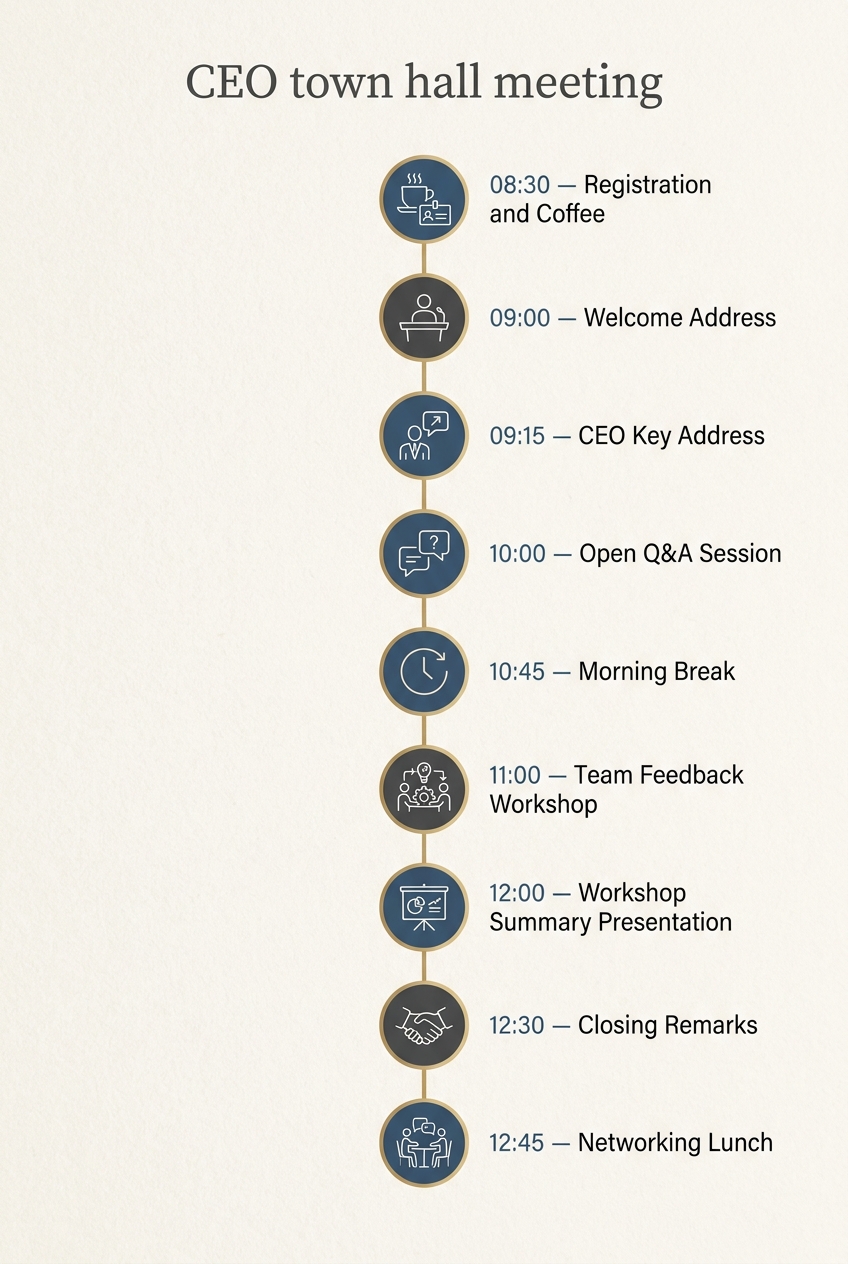
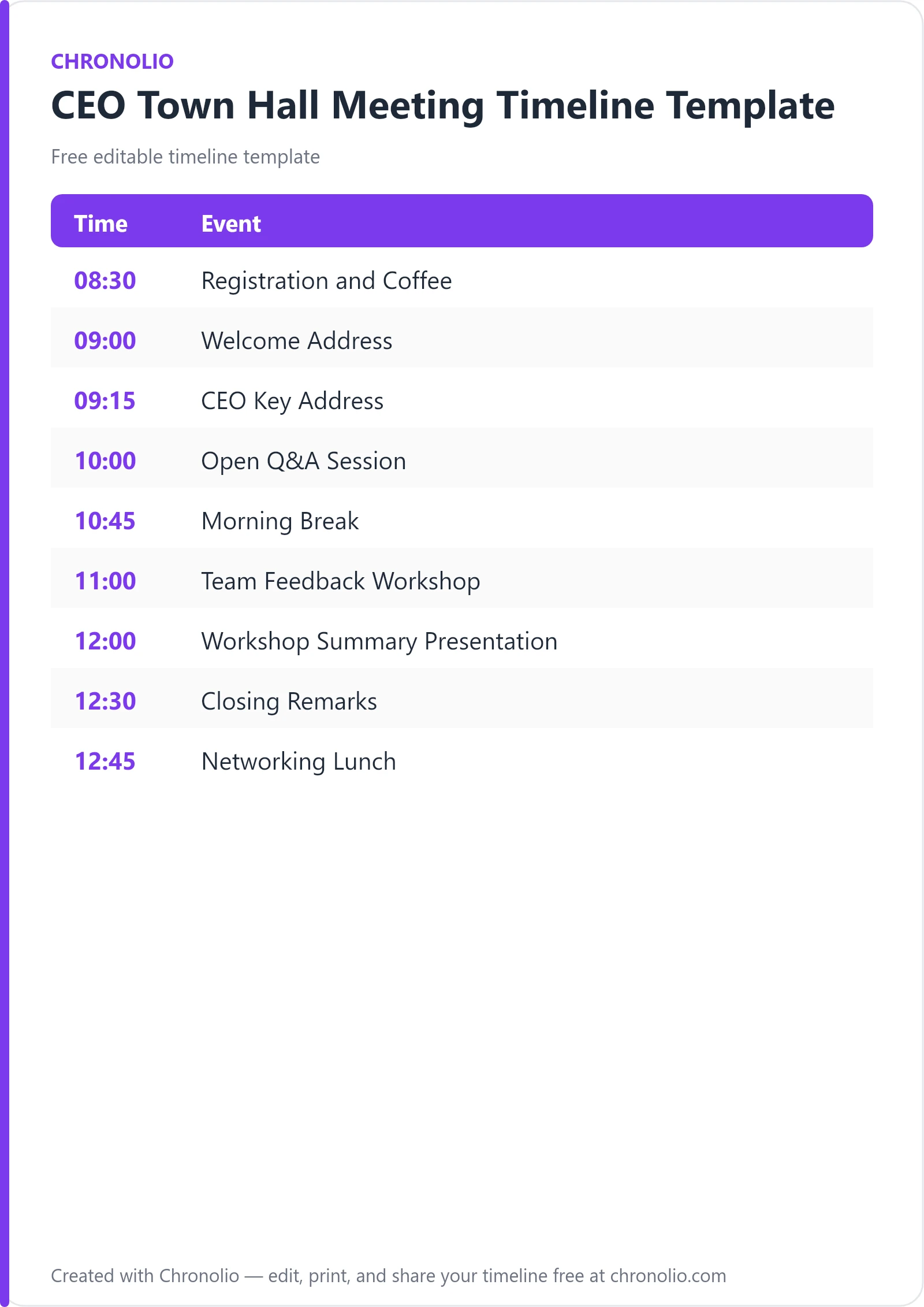
Here is the complete schedule this free template gives you — every time block, ready to edit, download, and share:
| Time | Event |
|---|---|
| 08:30 | Registration and Coffee |
| 09:00 | Welcome Address |
| 09:15 | CEO Key Address |
| 10:00 | Open Q&A Session |
| 10:45 | Morning Break |
| 11:00 | Team Feedback Workshop |
| 12:00 | Workshop Summary Presentation |
| 12:30 | Closing Remarks |
| 12:45 | Networking Lunch |
What Is a CEO Town Hall Meeting Timeline?
A CEO town hall meeting timeline is a minute-by-minute master schedule designed to align leadership presentations, audience interaction, and logistical transitions during an all-hands internal gathering. Managing an all-company event requires balancing high-level executive messaging with authentic employee feedback. Without a tight schedule, critical leadership addresses can easily overrun, squeezing out the vital Q&A and workshop sessions that drive internal engagement.
Having coordinated corporate events across diverse organizations, I can attest that impeccable timing builds executive credibility. When leadership respects the company's time by keeping presentations punctual and structured, employees remain far more engaged. This timeline reflects real-world operational workflows used by top internal communications teams to deliver seamless, impact-driven town halls. Much like a structured board meeting timeline, this schedule provides clear boundaries that keep presenters accountable while preserving ample space for two-way dialogue.
Customize Your CEO Town Hall Meeting Timeline
Why CEO Town Hall Meetings Need a Timeline
Running a enterprise-wide gathering without a rigid schedule frequently leads to executive monologue and participant fatigue. A dedicated town hall agenda framework establishes clear time boundaries for every segment, preventing leadership from spending the entire session on financial slides at the expense of interactive dialogue.
A disciplined schedule also coordinates complex facility logistics. Venue operators, AV technicians, and catering teams rely on precise timestamps to manage room resets, microphoning, audio-visual cues, and food service transitions. When your schedule is structured, breakout room moves occur without administrative friction.
Finally, an organized agenda signals respect for your workforce. Aligning corporate announcements—such as company reorgs, fiscal updates, or strategic pivots—with structured interactive workshops demonstrates that executive leadership values staff input. For high-stakes corporate broadcasts, such as an M&A announcement event schedule, detailed timeline control is essential to manage organizational narrative and reduce employee uncertainty.
What to Include in a CEO Town Hall Meeting Timeline
To deliver a well-rounded internal event, your schedule should blend formal corporate updates with interactive, peer-led discussion. A comprehensive all-hands agenda must incorporate:
- Registration and Informal Connection: Early arrival time with light refreshments to encourage informal cross-departmental mixing.
- Emcee Opening Remarks: A brief kick-off to outline safety protocols, establish meeting norms, and review the agenda.
- The CEO Strategic Address: A focused presentation highlighting organizational milestones, financial health, and strategic vision.
- Unfiltered Q&A Session: Dedicated time for leadership to address pre-submitted and live questions from staff.
- Structured Intermissions: Adequate breaks for bio-needs, networking, and room transitions.
- Interactive Team Workshops: Breakout sessions where departmental teams deliberate operational obstacles and generate feedback.
- Feedback Synthesis & Closing Commitments: Representatives summarize workshop takeaways directly to the CEO, followed by actionable executive closing remarks.
- Post-Event Networking: A shared meal or reception to reinforce corporate culture and strengthen team relationships.
Phase 1: Registration and Executive Presentation
| Time | Event |
|---|---|
| 08:30 | Registration and Coffee |
| 09:00 | Welcome Address |
| 09:15 | CEO Key Address |
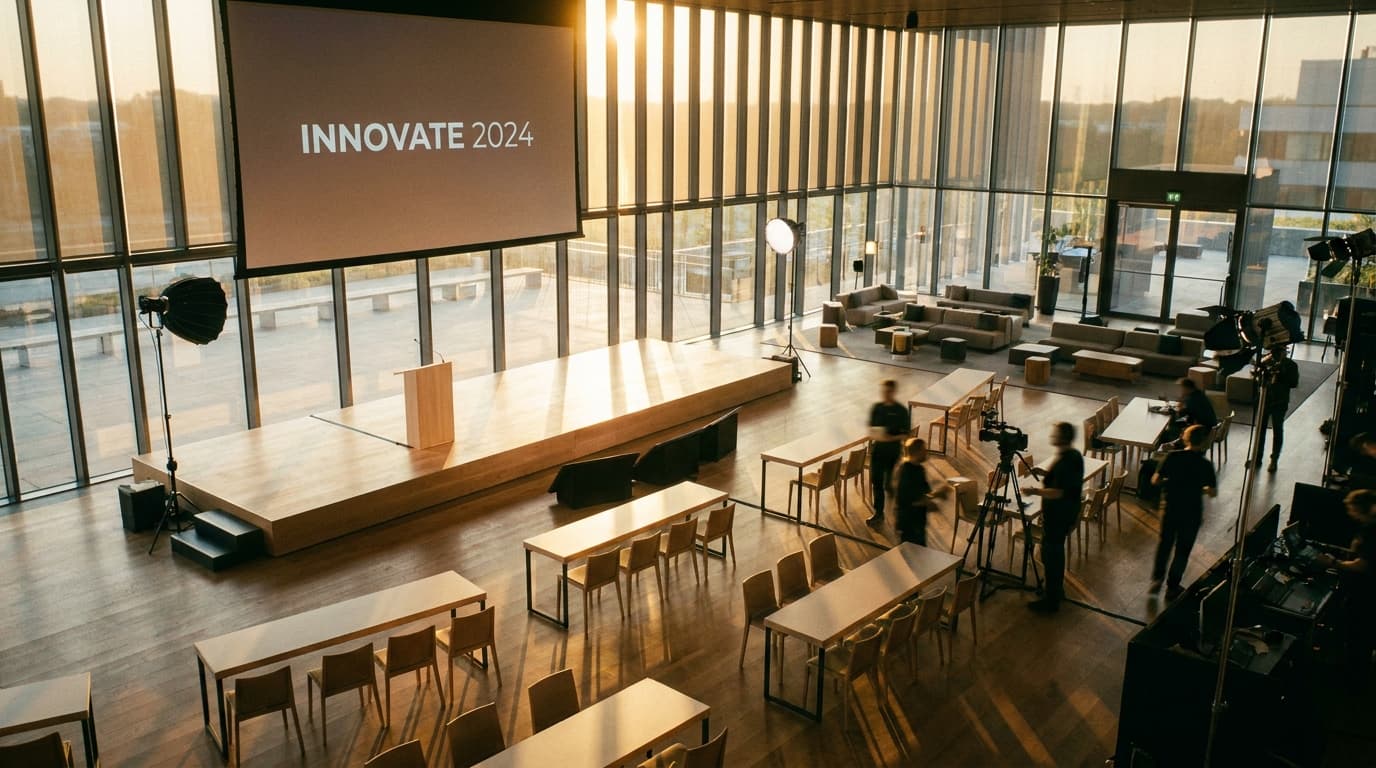
The morning begins in the Main Lobby with welcoming registration and coffee, allowing staff members to sign in, gather physical materials, and connect casually over light breakfast refreshments. Setting aside thirty minutes for arrival ensures that the main program in the Grand Auditorium starts promptly at 09:00 without latecomers disrupting the proceedings.
At 09:00, the event moderator opens the gathering with a fifteen-minute welcome address to introduce the event theme, establish ground rules for participation, and outline the day's schedule. Promptly at 09:15, the CEO takes the stage for a forty-five-minute primary strategic presentation. This uninterrupted block gives executive leadership sufficient runway to explain performance metrics, present strategic growth pillars, and outline organizational priorities for the upcoming fiscal year.
Phase 2: Open Q&A and Intermission
| Time | Event |
|---|---|
| 10:00 | Open Q&A Session |
| 10:45 | Morning Break |
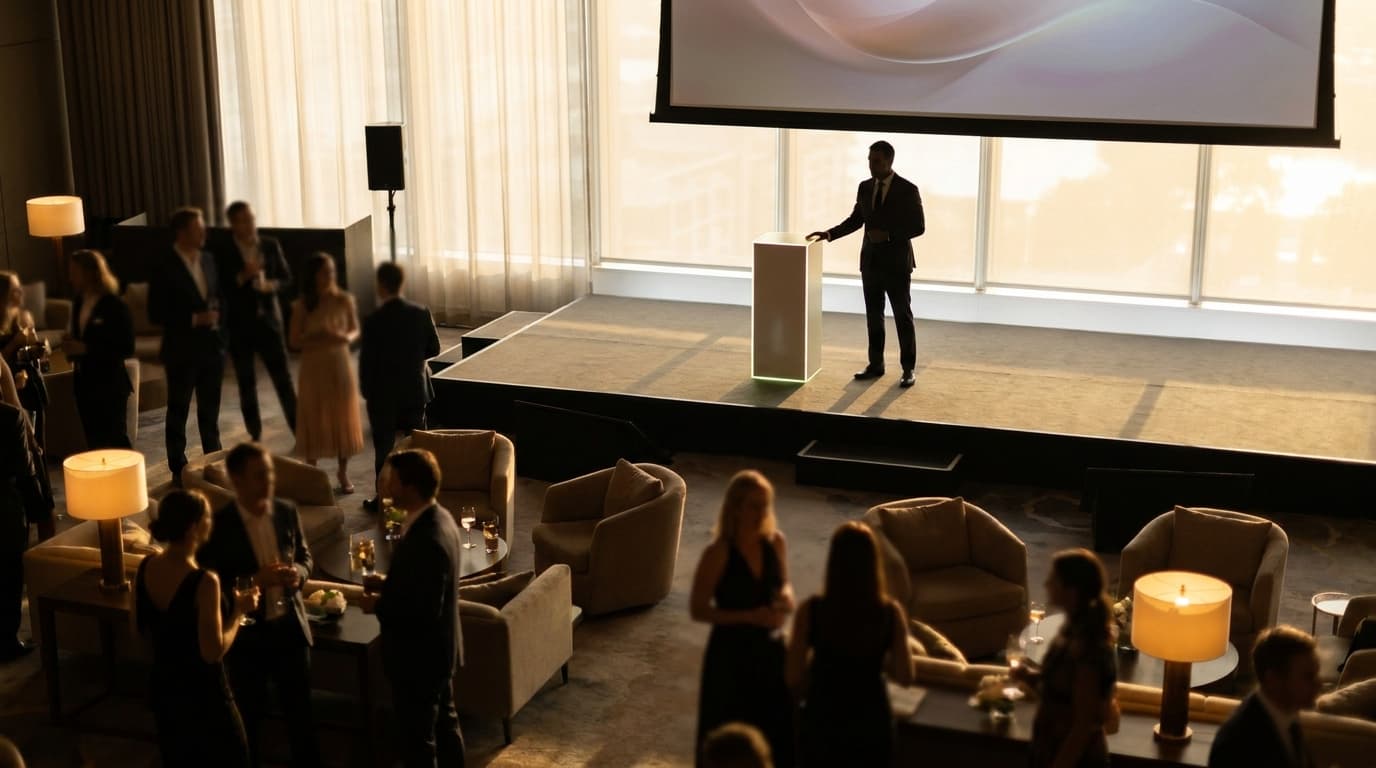
Following the strategic address, the event immediately transitions into an interactive forty-five-minute open Q&A session in the Grand Auditorium. Moderated by the internal communications host, the executive leadership team responds to live floor questions and digital submissions collected via anonymous polling platforms. Research published by the Harvard Business Review emphasizes that psychological safety and transparent executive communication are primary drivers of organizational trust during periods of corporate change.
At 10:45, attendees disperse into the Grand Auditorium Foyer for a fifteen-minute structured morning break. This short intermission gives participants time to recharge, grab fresh coffee, and navigate to assigned breakout locations across the facility before the intensive workshop sessions commence.
Phase 3: Team Feedback Workshop and Synthesis
| Time | Event |
|---|---|
| 11:00 | Team Feedback Workshop |
| 12:00 | Workshop Summary Presentation |
At 11:00, employees break out from the main auditorium into Conference Rooms A through D for a focused sixty-minute team feedback workshop. Facilitated by designated floor captains, smaller departmental groups analyze real-world operational challenges, brainstorm solutions, and formulate constructive feedback regarding company strategy.
At 12:00, all participants reassemble in the Grand Auditorium for a thirty-minute workshop summary presentation. Selected group representatives present synthesized key findings directly to executive leadership. The CEO listens, acknowledges recurring operational themes, and commits publicly to concrete follow-up actions, completing a genuine two-way feedback loop.
Phase 4: Closing Remarks and Networking
| Time | Event |
|---|---|
| 12:30 | Closing Remarks |
| 12:45 | Networking Lunch |
The formal assembly wraps up at 12:30 with fifteen minutes of CEO closing remarks. The CEO summarizes the main insights from the workshop presentations, reasserts executive appreciation for staff dedication, and outlines immediate next steps for management action items before adjourning the auditorium session.
At 12:45, the event shifts to the Dining Hall for a catered hour-long networking lunch. This informal gathering offers employees across various departments an opportunity to continue conversations, build cross-functional relationships, and reflect on the morning's topics over a meal. For companies coordinating broader seasonal celebrations, you can easily adapt this afternoon segment into a broader corporate year-end function schedule or tie it into major product announcements using a product launch event timeline.
CEO Town Hall Meeting Timeline vs CEO Town Hall Agenda
While professionals occasionally mix up these terms, a town hall timeline and a town hall agenda serve distinct planning functions during corporate event execution.
| Detail Level | CEO Town Hall Agenda | CEO Town Hall Meeting Timeline |
|---|---|---|
| Primary Audience | All staff and general attendees | Event planners, AV techs, and facilitators |
| Content Focus | High-level overview of topics and speakers | Minute-by-minute schedule with location specs |
| Operational Depth | High-level summary of major event blocks | Technical cues, room moves, and speaker setups |
| Primary Purpose | Set expectations for participants | Drive real-time execution and venue coordination |
An agenda outlines high-level presentation topics to set attendee expectations prior to the gathering. In contrast, a detailed operational timeline acts as the logistical run-sheet, explicitly mapping out room allocations, speaker cues, microphone handoffs, and transition buffers to ensure the live event runs seamlessly from start to finish.
Who Should Use This Template?
This town hall schedule is designed for organizations that want to build an open, transparent corporate culture through structured internal communications. It is ideal for:
- Enterprise Executives & CEO Offices: Leadership teams conducting quarterly or annual company-wide updates.
- Internal Communications Directors: Communications specialists responsible for managing company messaging and employee feedback channels.
- Human Resources & People Ops Leaders: HR personnel focused on measuring employee engagement and organizational alignment.
- Corporate Event Planners & Venue Managers: Logistics specialists handling stage production, breakout setups, and catering schedules.
- Chiefs of Staff: Executive coordinators aligning operational agendas across leadership teams.
Whether you are hosting a small corporate gathering or an enterprise-wide assembly, Chronolio supports the various operational roles involved in planning and executing flawless corporate schedules.
How to Use This Template
- Download or Duplicate the File: Access the customizable template files using the download buttons below to start adjusting your schedule in Word or PDF.
- Download as Word Document (.docx)
- Download as PDF File (.pdf)
- Establish Key Event Milestones: Input your fixed start time, catering delivery slots, and venue contract limits to set your master timetable.
- Adjust Stage Allocations: Adapt the duration of executive speeches and Q&A blocks based on your company size and speaker availability.
- Assign Facility Locations: Map specific room names (e.g., Grand Auditorium, Conference Rooms A-D) directly into your run sheet to guide room transfers smoothly.
- Distribute to Key Roles: Share tailored versions of the timeline with your AV tech crew, catering managers, breakout facilitators, and executive speakers.
Tips for a Successful CEO Town Hall Meeting
- Incorporate Pre-Event Audience Polling: Open a digital question submission portal at least seven days before the event. Gathering inquiries ahead of time allows leadership to address key staff concerns directly during the main address.
- Assign Neutral Table Facilitators: Place trained moderators in breakout conference rooms to prevent single vocal opinions from dominating the team feedback workshop.
- Conduct an Executive Tech Rehearsal: Schedule a full AV check 24 hours in advance, testing lavalier microphones, slide switchers, and remote streaming connections.
- Implement Strict Timekeeping Cues: Position a visual timer or floor manager with time-cards in view of the stage to keep leadership presentations on track. According to workplace surveys conducted by Gallup, organizational trust increases significantly when executive leadership maintains transparent, highly predictable communication routines.
- Leverage Digital Q&A Moderation: Use moderation features on audience engagement tools to consolidate similar questions and filter out duplicate submissions.
- Commit to Post-Event Accountability: Publish a formal follow-up memo within a week summarizing key employee questions and management action items.
Common Mistakes to Avoid
- Overpacking the Presentation Deck: Cramming too many slides into the CEO key address leaves little breathing room for meaningful employee engagement.
- Treating the Q&A as an Afterthought: Squeezing the Q&A into a rushed ten-minute segment at the end of the event signals to employees that their input is a low priority.
- Neglecting Buffer Times for Room Transitions: Failing to account for movement between the main auditorium and breakout conference rooms causes schedule delay.
- Ignoring Remote and Hybrid Participants: Forgetting to integrate streaming audio feeds or virtual Q&A submissions isolates remote team members.
- Failing to Train Breakout Group Lead Rapporteurs: Leaving breakout summary presentations unguided can result in long-winded, disorganized reports during the re-assembly phase.
- Ignoring Post-Town-Hall Refreshments: Skipping informal networking after intensive feedback sessions misses a valuable opportunity for cross-departmental connection.
In Summary
- A CEO town hall meeting timeline organizes company-wide assemblies into strategic presentations, Q&A, and interactive workshops.
- This half-day template balances top-down corporate updates with bottom-up employee feedback over a 5-hour operational footprint.
- Dedicated workshop and synthesis phases ensure employee feedback reaches executive leadership directly.
- Rigorous timing coordinate venue operations, AV technician cues, and catering transitions.
- Pre-submitted questions and anonymous digital polling maximize Q&A engagement and transparency.
- Customizable exports in Word and PDF formats simplify distribution across event management teams.
Planning an impactful all-hands gathering requires balancing executive messaging with meaningful staff dialogue. By relying on a structured, field-tested CEO town hall meeting schedule, enterprise leaders, internal communications directors, and HR teams can host transparent, engaging corporate events that keep the entire workforce aligned with organizational goals.
Customize Your CEO Town Hall Meeting Timeline