





This Template at a Glance
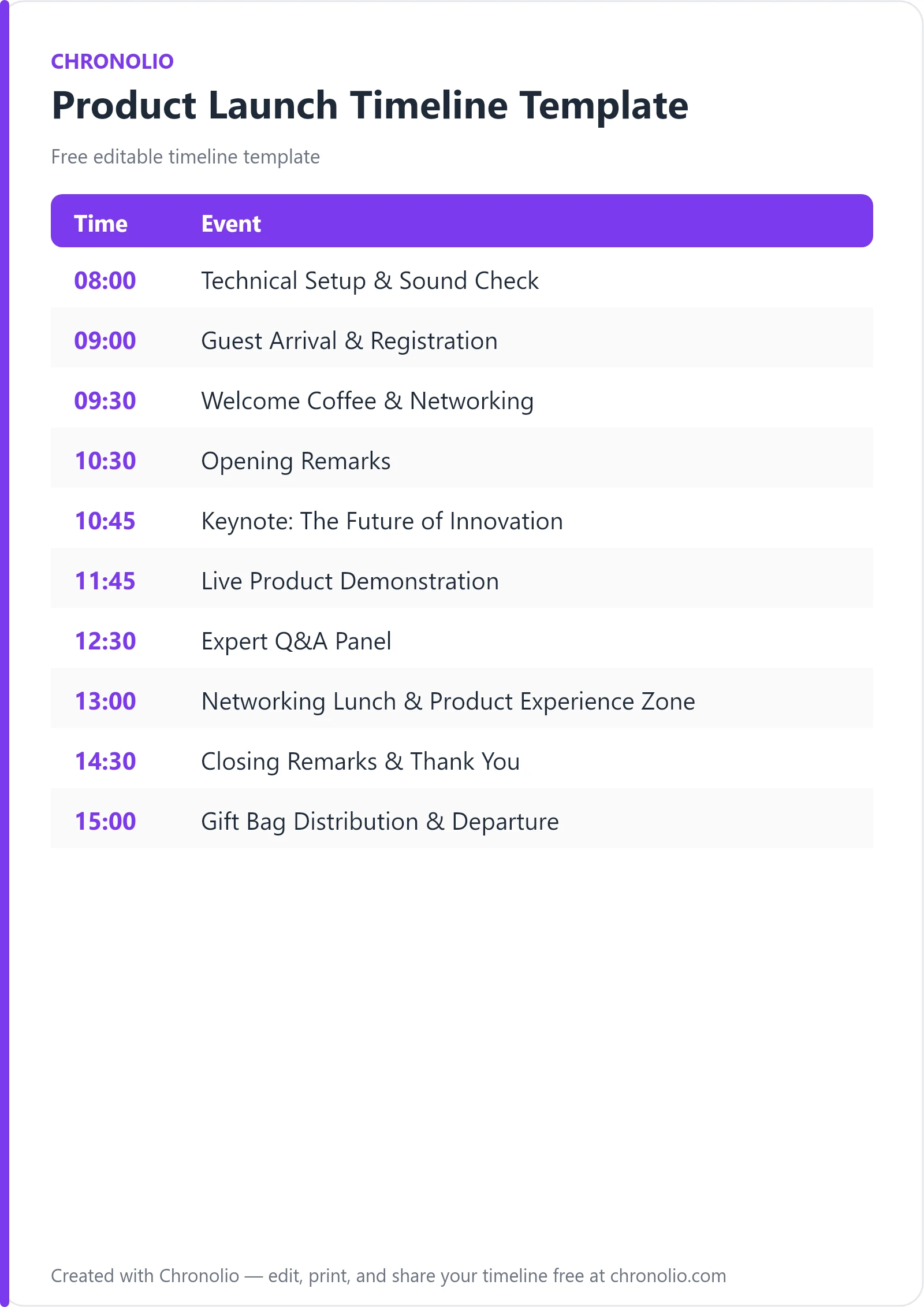
Here is the complete schedule this free template gives you — every time block, ready to edit, download, and share:
| Time | Event |
|---|---|
| 08:00 | Technical Setup & Sound Check |
| 09:00 | Guest Arrival & Registration |
| 09:30 | Welcome Coffee & Networking |
| 10:30 | Opening Remarks |
| 10:45 | Keynote: The Future of Innovation |
| 11:45 | Live Product Demonstration |
| 12:30 | Expert Q&A Panel |
| 13:00 | Networking Lunch & Product Experience Zone |
| 14:30 | Closing Remarks & Thank You |
| 15:00 | Gift Bag Distribution & Departure |
What Is a Product Launch Timeline Template: Run a Flawless Launch Event?
A Product Launch Timeline Template: Run a Flawless Launch Event is a structured master schedule that orchestrates every minute of a high-stakes corporate unveiling. Having run dozens of flagship unveils in convention halls and corporate auditoriums, I can tell you that timing directly dictates your product's perception. Whether you are presenting a breakthrough software suite, hardware technology, or consumer device, a precise run of show connects technical production, executive presentations, and attendee hospitality into a unified experience.
This template reflects real-world product launch structures and common best practices developed across enterprise tech launches and corporate showcases. By establishing clear stage cues, designated networking windows, and structured live demonstrations, it eliminates chaotic transitions and prevents technical delays from derailing your headline announcement.
Use This Product Launch Timeline Template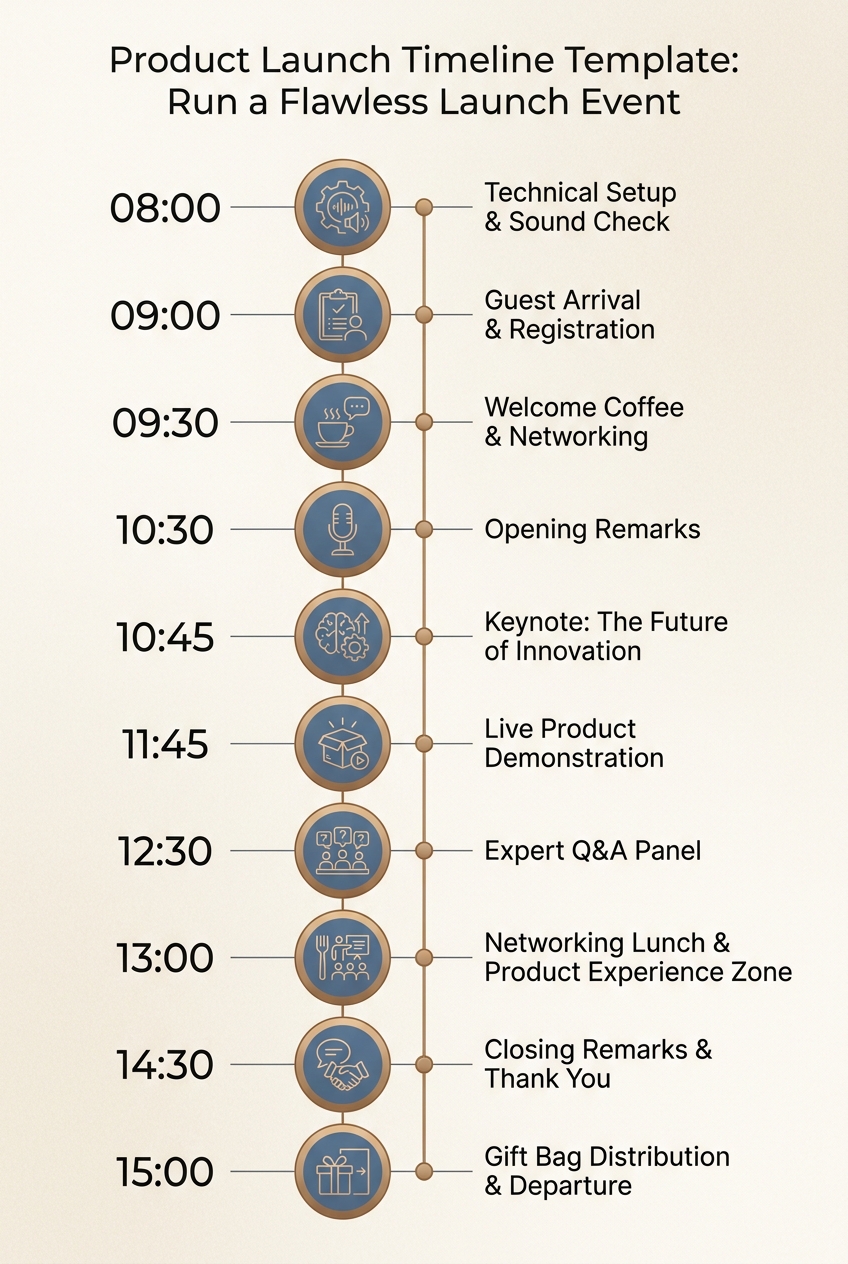
Why Product Launches Need a Timeline
A corporate product reveal is far more than a simple speech; it is a live theatrical production involving media representatives, key clients, stakeholders, and broadcast crews. Without a synchronized minute-by-minute timeline, small delays early in the morning compound quickly, leaving your headline keynote rushed and your press audience frustrated.
Furthermore, seamless cross-departmental coordination hinges on a shared source of truth. Your audio-visual crew needs to know exact cue times for lighting changes and video playback, while your catering staff must align meal service with the end of stage presentations. When every team operates from the same master schedule, the event flows naturally, keeping high-value guests engaged from doors-open to final departure.
Finally, an accurate schedule safeguards your brand's authority. When executive keynotes start on time, live product demos run smoothly, and expert panels finish without overrunning, attendees perceive your company as organized, reliable, and market-ready.
What to Include in a Product Launch Timeline
To ensure your corporate reveal covers all critical touchpoints, your master schedule should encompass these core phases:
- Technical Setup & AV Calibration: Rigorous sound checks, lighting cues, stage rehearsals, and live demo testing before doors open.
- Guest Registration & Hospitality: Efficient badge pickup, welcome beverages, and casual networking to set an inviting tone.
- Executive Opening & Keynote: High-impact presentations delivering the vision, market strategy, and core value proposition.
- Live Product Demonstration: An unscripted or carefully staged walkthrough highlighting key features and real-world utility.
- Interactive Q&A Session: Direct engagement between executive leaders, product engineers, media, and attendees.
- Hands-On Experience & Networking: Dedicated demo booths or experience zones paired with lunch or cocktails for deep audience engagement.
- Closing Remarks & Gift Distribution: Final call to action, press release distribution, and branded takeaway kits.
Phase 1: Pre-Show Technical Setup & Guest Arrival
| Time | Event |
|---|---|
| 08:00 | Technical Setup & Sound Check |
| 09:00 | Guest Arrival & Registration |
| 09:30 | Welcome Coffee & Networking |
The early morning hours determine the technical foundation for the entire launch. At 08:00, the production team conducts comprehensive AV equipment checks and mic level tests in the Main Stage area within The Grand Exhibition Hall. This hour gives engineers time to stress-test live demo rigs, verify presentation clickers, and adjust stage lighting before any external guests set foot inside the building. If you are also holding press-only previews, consider aligning this technical preparation with a dedicated media press briefing guide to keep journalist workflows distinct from general attendee arrivals.
At 09:00, the Exhibition Hall Entrance Foyer opens for guest registration. Streamlined badge collection and welcome kit distribution prevent bottlenecks, allowing attendees to transition smoothly into the Foyer Lounge Area at 09:30. Offering high-quality coffee and pastries encourages early arrival and gives clients, industry analysts, and executives time to connect prior to the main presentation.
+-------------------------------------------------------------------+ | LAUNCH DAY FLOW OVERVIEW | | | | [08:00 - 10:30] PREPARATION & ARRIVAL | | • AV Calibration & Rehearsals | | • Guest Registration & Networking Coffee | | | | [10:30 - 13:00] MAIN STAGE PRESENTATIONS | | • CEO Opening & Keynote Reveal | | • Live Feature Demonstration & Panel Q&A | | | | [13:00 - 15:30] INTERACTIVE EXPERIENCE & DEPARTURE | | • Demo Stations & Networking Lunch | | • Closing Remarks & Gift Bag Distribution | +-------------------------------------------------------------------+
Phase 2: Main Stage Keynote & Live Demonstration
| Time | Event |
|---|---|
| 10:30 | Opening Remarks |
| 10:45 | Keynote: The Future of Innovation |
| 11:45 | Live Product Demonstration |
| 12:30 | Expert Q&A Panel |
At 10:30, doors close in the foyer as guests take their seats in the main auditorium. The CEO takes the stage for brief, high-energy opening remarks that set an ambitious context for the day. At 10:45, the keynote presentation begins, outlining industry shifts, market pain points, and the strategic vision behind the new product reveal. Keynote timing should remain tight; an hour allows enough room for compelling storytelling without causing audience fatigue.
At 11:45, the event transitions directly into the live product demonstration. This 45-minute segment is the climax of your event, showing the product in action rather than relying on slide decks. Following the live demo, the 12:30 Expert Q&A Panel connects product developers, engineers, and marketing directors directly with audience questions. For organizations aligning launch dates with broader executive governance or fiscal reporting, pairing this operational flow with a board meeting schedule or a strategic M&A announcement event timeline ensures corporate leadership stays aligned on public messaging.
Phase 3: Experience Zone, Networking & Departure
| Time | Event |
|---|---|
| 13:00 | Networking Lunch & Product Experience Zone |
| 14:30 | Closing Remarks & Thank You |
| 15:00 | Gift Bag Distribution & Departure |
Following the main stage sessions, guests move to the Exhibition Hall Dining Area and Product Zones at 13:00. This 90-minute window combines a full networking lunch with hands-on interaction at dedicated product demonstration stations. Allowing attendees to test hardware, explore software interfaces, or speak one-on-one with technical experts converts abstract keynote promises into concrete product trust.
At 14:30, attendees return toward the Main Stage for brief closing remarks. Executive leadership recaps key announcements, provides purchasing or roll-out details, and directs media to digital press kits. As guests head to the exit foyer at 15:00, staff hand out curated gift bags containing premium branded items and product documentation, ending the event on a professional, memorable note. If your launch doubles as a major celebratory milestone for staff and partners, you can easily adapt this post-event structure using a corporate year-end function schedule.
Product Launch Timeline vs Event Itinerary
Understanding the distinction between an operational event timeline and a guest-facing itinerary is vital for event managers. While both documents detail the same event day, they serve drastically different purposes and audiences.
| Feature / Aspect | Product Launch Master Timeline | Guest-Facing Event Itinerary |
|---|---|---|
| Primary Audience | Event planners, AV techs, speakers, catering leads | Attendees, VIP guests, media representatives |
| Level of Detail | Minute-by-minute stage cues, tech setups, mic checks | High-level session times, room locations, meal windows |
| Internal Cues | Sound checks, lighting changes, backstage briefings | Speaker bios, Wi-Fi details, key session summaries |
| Primary Purpose | Operational control and flaw-free execution | Guest orientation and personal schedule planning |
While an itinerary informs your guests where to be, your master launch timeline keeps your production team synchronized backstage. Event organizers often publish a simplified itinerary in digital event apps while retaining the full technical timeline for the control room.
Who Should Use This Template?
This timeline template is designed for professional corporate execution across various enterprise sectors and organizational scales:
- Corporate Event Planners & Production Leads: Managing complex stage setups, venue logistics, and third-party vendors.
- Product Marketing Managers (PMMs): Unveiling new offerings to clients, industry analysts, and internal sales teams.
- Executive Leadership Teams & CEOs: Delivering high-impact keynote announcements and press statements.
- Public Relations & Communications Agencies: Coordinating press reveals, media Q&A, and executive interviews.
- Enterprise Software & Hardware Companies: Requiring live technical demo environments and hands-on testing booths.
Chronolio offers specialized features tailored to the various enterprise roles managing corporate launches, keeping cross-functional teams in sync from planning to teardown.
How to Use This Template
- Download or Duplicate the Template: Select your preferred format using the editable online tool or download offline copies in Word Format (.docx) or PDF Format (.pdf).
- Set Your Target Launch Time: Work backward from your headline keynote time (e.g., 10:45 AM) to lock in arrival, catering, and setup windows.
- Customize Venue & Stage Details: Update specific room names, exhibition hall zones, and AV technical notes.
- Assign Role Accountability: Designate lead contacts for each block—such as stage managers for keynotes or product leads for experience zones.
- Share with Stakeholders: Distribute the finalized run of show to venue operators, AV crews, catering leads, and executive speakers at least 48 hours prior to launch.
Tips for a Successful Product Launch Event
- Conduct a Full Dress Rehearsal: Run through keynotes and live demos on stage the day before to identify presentation bugs and lighting issues.
- Build Backup Demos: Always maintain local, offline video recordings or secondary hardware devices on stage in case live network connections fail.
- Assign Dedicated Green Room Managers: Keep executive presenters focused and on schedule by assigning staff to prep them 15 minutes before stage cues.
- Optimize the Product Experience Zone: Ensure demo booths have dedicated technical specialists so guests never wait in line for hands-on access.
- Align Commercial Strategy: Before going public on stage, ensure internal consensus on messaging by conducting a dedicated strategy session agenda weeks prior.
- Publish Media Materials Promptly: Synchronize digital press releases and digital asset links to release automatically as the keynote concludes, as recommended by leading event strategy resources like Eventbrite's Event Planning Guides.
Common Mistakes to Avoid
- Skipping AV Technical Checks: Opening doors without comprehensive mic and screen tests frequently leads to embarrassing feedback or display delays.
- Overpacking the Keynote: Crowding too many product features into a single talk loses audience focus; keep keynotes under 60 minutes.
- Neglecting Live Demo Fail-Safes: Relying solely on live cloud connections without offline backup environments is a recipe for technical disruption.
- Inadequate Staffing at Experience Stations: Leaving interactive product booths understaffed causes frustration among prospective buyers and journalists.
- Ignoring Transition Time: Failing to allocate 10 to 15 minutes between auditorium sessions and dining areas creates corridor congestion.
- Running Over Schedule: Allowing early morning remarks to drag delays lunch and causes press contacts to leave before afternoon sessions.
In Summary
- Master Execution: A product launch timeline synchronizes technical operations, executive keynotes, and guest hospitality into a unified schedule.
- Balanced Structure: Spans early morning setup (08:00), main stage reveals (10:30–13:00), and hands-on networking (13:00–15:00).
- Risk Prevention: Allocates dedicated rehearsal windows and live demo fail-safes to prevent technical mishaps.
- Stakeholder Alignment: Keeps event directors, AV teams, catering leads, and speakers operating from a single source of truth.
- Versatile Application: Adaptable for enterprise software reveals, hardware showcases, and media press events.
Executing a high-stakes corporate reveal requires perfect harmony between technical production and executive storytelling. By implementing this structured timeline, event planners, marketing leaders, and corporate executives can deliver an unforgettable product launch that engages audiences and drives market momentum.
Use This Product Launch Timeline Template