





This Template at a Glance
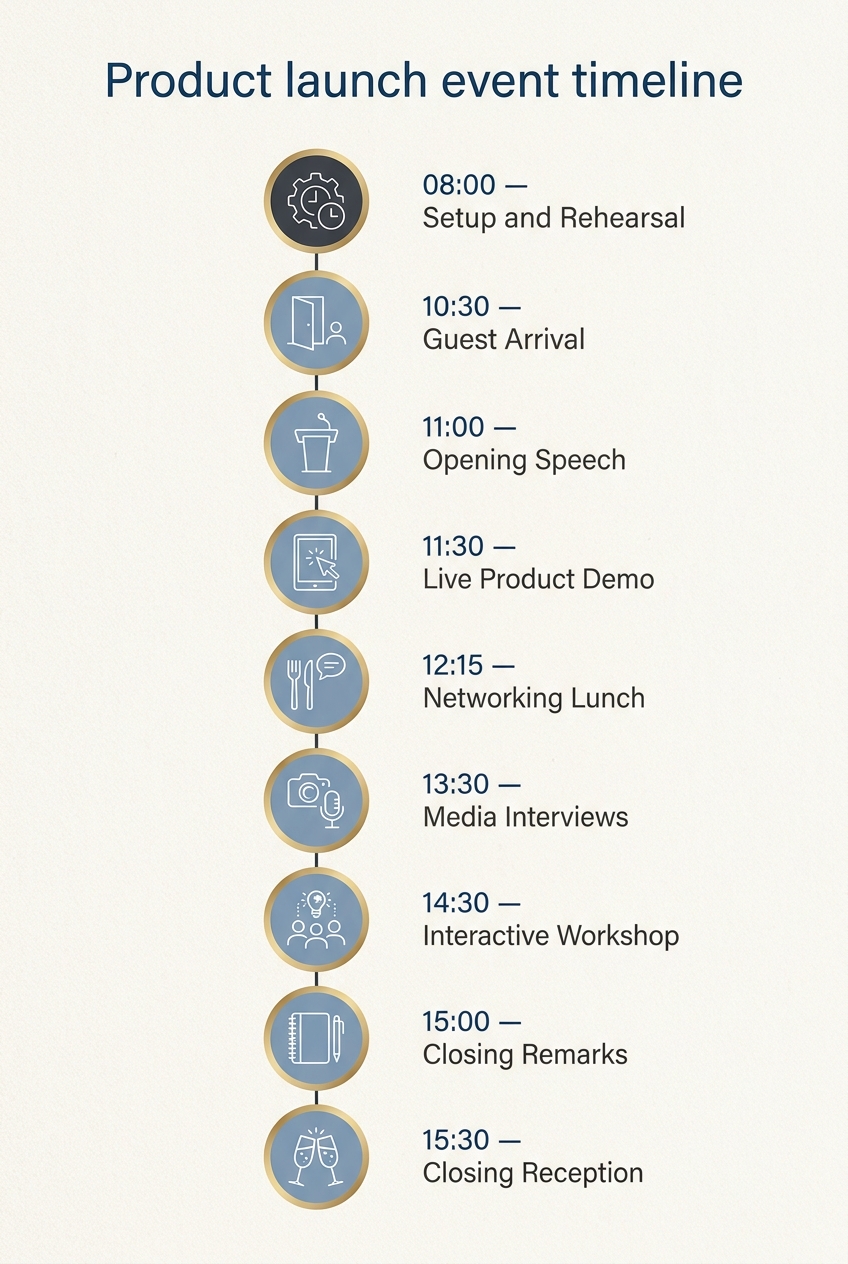
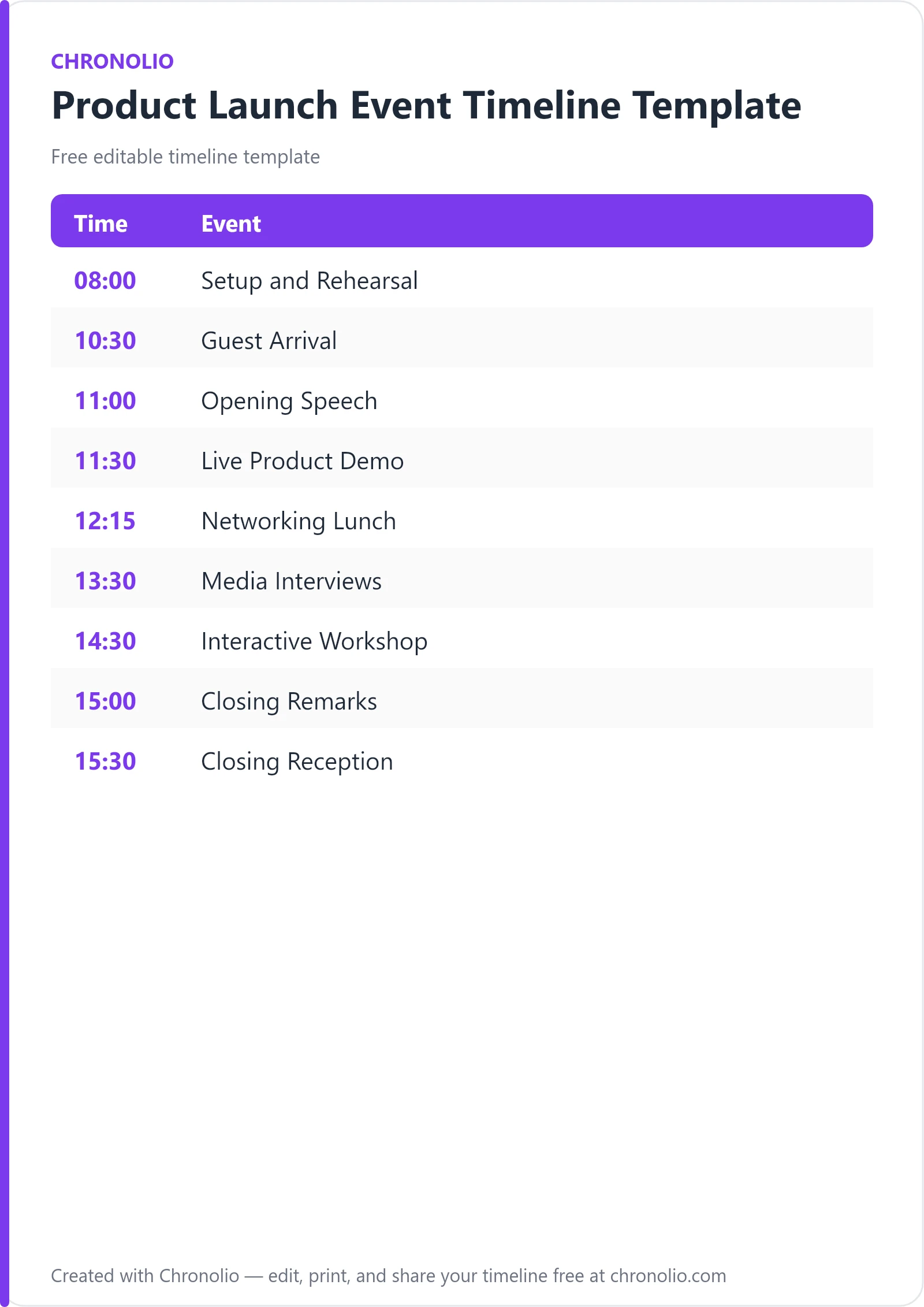
Here is the complete schedule this free template gives you — every time block, ready to edit, download, and share:
| Time | Event |
|---|---|
| 08:00 | Setup and Rehearsal |
| 10:30 | Guest Arrival |
| 11:00 | Opening Speech |
| 11:30 | Live Product Demo |
| 12:15 | Networking Lunch |
| 13:30 | Media Interviews |
| 14:30 | Interactive Workshop |
| 15:00 | Closing Remarks |
| 15:30 | Closing Reception |
What Is a Product Launch Event Timeline?
A product launch event timeline is an operational master schedule that outlines every technical, stage, and hospitality milestone on the day of a major product reveal. Running a flawless corporate unveil requires orchestrating stage crew, sound engineers, C-suite executives, product managers, press reporters, and eager attendees into a synchronized choreography.
This guide reflects real-world venue management practices and stage production logistics tested across tech unveils, consumer hardware launches, and enterprise software releases. By following this schedule, you protect your team from unexpected technical glitches and keep press coverage running smoothly. You can also download our quick-start files directly as a product launch event timeline DOCX or product launch event timeline PDF to hand off directly to your venue stage manager.
Edit This Product Launch Event Timeline
Why Product Launch Events Need a Timeline
A single technical slip or off-script executive can cascade through a live event schedule, throwing off press interviews, cold catering, and rented venue departure windows. Executing a successful launch requires a strictly enforced order of events that keeps all functional teams aligned.
First, live technical demonstrations carry inherent operational risk. Dedicated setup windows ensure wireless frequencies, screen resolution ratios, and stage audio levels undergo stress tests before journalists take their seats.
Second, members of the press operate under strict editorial deadlines. Keeping stage presentations concise and holding one-on-one press briefings on schedule ensures journalists have ample time to write stories and hit their embargo publication windows.
Finally, attendee comfort dictates overall brand perception. Providing a predictable flow between high-intensity auditorium presentations and relaxed networking breaks keeps energy levels elevated throughout the entire afternoon.
What to Include in a Product Launch Event Timeline
- Technical Setup and Rehearsal: Full stage, audio-visual, lighting, and presentation dry-run.
- Guest Arrival and Check-in: Front-of-house badge pickup, welcome drinks, and lobby networking.
- Keynote Presentation: Executive opening address setting the strategic vision.
- Live Product Demonstration: Interactive feature walkthrough showcasing the core product value.
- Catered Networking Lunch: Unstructured downtime for attendees, partners, and team members to converse.
- Media and Press Interviews: Private 1-on-1 Q&A sessions in dedicated media suites.
- Interactive Workshop / Experience Lab: Hands-on station allowing guests to test physical or digital prototypes.
- Closing Remarks and Call-to-Action: Final wrap-up covering pricing, availability, and ordering details.
- Wind-Down Reception: Casual outdoor or lounge networking to celebrate the launch.
Phase 1: Pre-Show Setup and Guest Arrival
| Time | Event |
|---|---|
| 08:00 | Setup and Rehearsal |
| 10:30 | Guest Arrival |
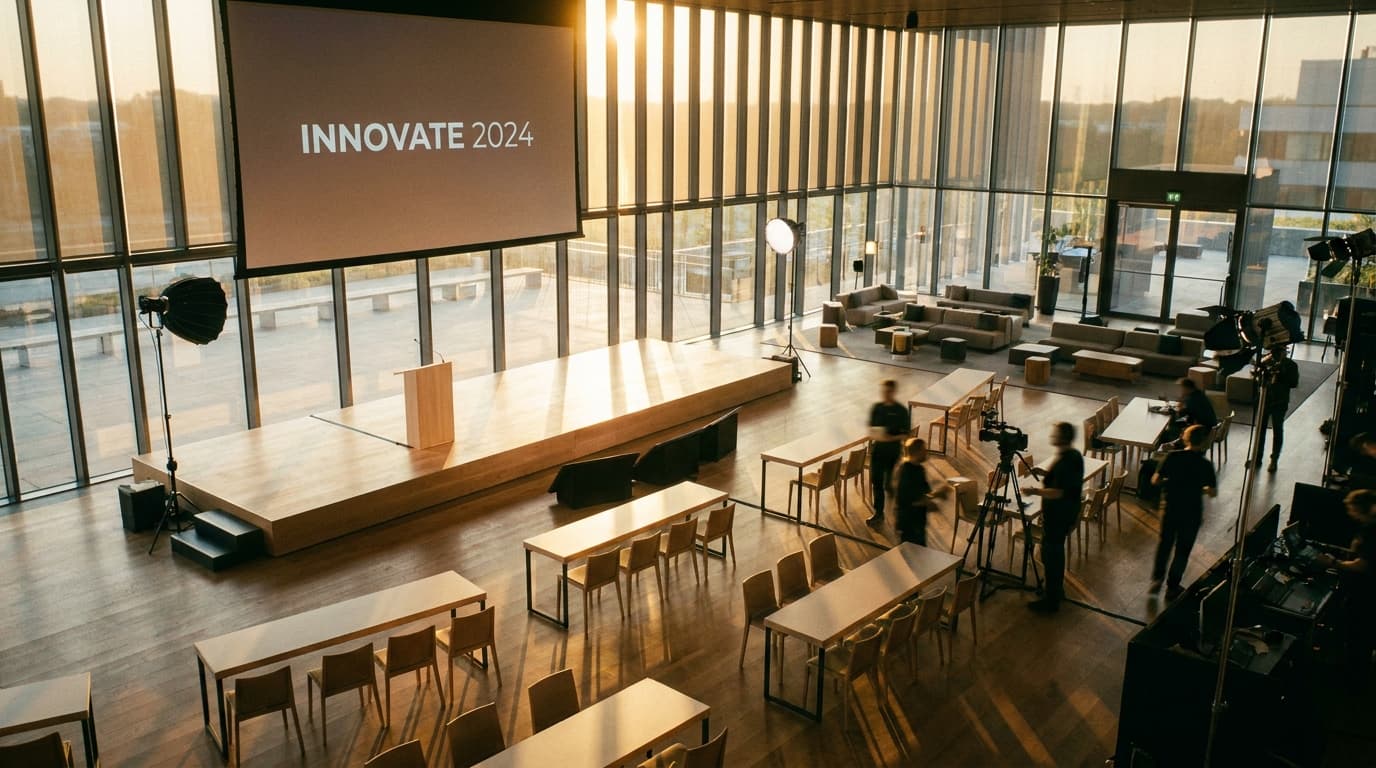
The early morning hours focus entirely on mitigating technical risk and staging. Giving your audio-visual engineers and keynote speakers two full hours in the Main Auditorium allows for comprehensive mic checks, display output calibration, and slide pacing adjustments. If your launch coincides with major corporate announcements, you may also want to reference our M&A Announcement Event Schedule to coordinate market-sensitive news releases during this window.
When doors open at 10:30 in the Main Entrance Lobby, the transition from back-of-house preparation to front-of-house hospitality must feel effortless. Front desk staff welcome guests, verify credentials, hand out press badges, and direct early arrivals toward the pre-keynote refreshment stations.
Phase 2: Keynote Address and Live Demonstration
| Time | Event |
|---|---|
| 11:00 | Opening Speech |
| 11:30 | Live Product Demo |
Promptly at 11:00, chime signals guide guests into the Main Auditorium for the opening keynote address. The CEO takes the stage to lay out industry context, frame the core problem, and unveil the company’s strategic vision. Keeping this opening speech under thirty minutes maintains high narrative momentum.
At 11:30, the spotlight shifts to the live interactive product demonstration. Product managers showcase real-time features, workflows, and hardware performance directly on the main stage displays. If you regularly run executive-level briefings, pair this section with a structured media/press briefing timeline to streamline follow-up press questions.
Phase 3: Networking Lunch and Media Engagement
| Time | Event |
|---|---|
| 12:15 | Networking Lunch |
| 13:30 | Media Interviews |
Following the high-energy stage reveal, attendees transition into the Dining Hall at 12:15 for a catered networking lunch. This hour provides immediate buffer space for guests, partners, and prospective clients to process the announcement and discuss key takeaways with industry peers.
At 13:30, executive leadership and product leads relocate to Media Suite B for private one-on-one press interviews. While general attendees explore venue displays, top-tier journalists get direct access to executive leadership to record quotes, clarify specifications, and record broadcast clips.
Phase 4: Hands-On Experience and Event Wrap-Up
| Time | Event |
|---|---|
| 14:30 | Interactive Workshop |
| 15:00 | Closing Remarks |
| 15:30 | Closing Reception |
At 14:30, guests gather in the Demo Lab for a hands-on interactive workshop. Allowing attendees to personal touch, feel, or test software builds transforms passive audience members into active product advocates. For larger product ecosystems, alignment across internal strategy leads during this period can be managed using a strategy session agenda.
At 15:00, guests return to the Main Stage for brief closing remarks. The presenter thanks attendees, outlines commercial availability dates, and announces special launch day offers. The day finishes with an informal closing reception on the Outdoor Terrace at 15:30, letting guests celebrate and build lasting professional connections before departures.
Product Launch Event Timeline vs Product Launch Campaign Plan
It is easy to confuse a single-day event agenda with a broader go-to-market campaign plan. According to event planning standards curated by industry authorities like EventMB, operational day-of schedules require granular, minute-by-minute detail, whereas strategic launch campaigns track deliverables across weeks or months.
| Operational Aspect | Event Day Timeline | Campaign Launch Plan |
|---|---|---|
| Primary Scope | Day-of physical/virtual venue schedule | Multi-month go-to-market strategy |
| Time Scale | Minute-by-minute breakdown (08:00 - 16:30) | Week-by-week campaign milestones |
| Target Audience | On-site AV crew, speakers, media, guests | Marketing, sales, product, & PR teams |
| Key Deliverables | Stage cues, registration flow, live demo | Content assets, PR releases, ad spend |
| Primary Risk | Stage technical failure, late speakers | Missed feature releases, market misalignment |
While your broader marketing team works off a multi-month campaign document, your on-site event crew needs this dedicated event running order to manage venue logistics seamlessly.
Who Should Use This Template?
This timeline is crafted for corporate teams and event producers who need a reliable, battle-tested structure for on-site execution. Chronolio provides tailored views for various organizational roles so every stakeholder sees the exact timing they need.
- Product Marketing Managers (PMMs): Align live feature demos with strategic messaging and campaign goals.
- Corporate Event Directors: Coordinate external vendors, venue staff, catering, and stage technical crews.
- Public Relations Specialists: Ensure journalists receive press kits, attend keynotes, and complete media interviews on time.
- Startup Founders & C-Suite Executives: Deliver confident, well-rehearsed keynote presentations without schedule stress.
- Executive Assistants: Manage registration desks, executive speaker green rooms, and VIP arrival flows.
How to Use This Template
- Duplicate or Edit: Click the template edit button to clone this master timeline directly into your Chronolio workspace.
- Set Your Event Date & Venue Rooms: Update room labels (e.g., Main Auditorium, Media Suite B) to match your specific event venue contract.
- Adjust Phase Durations: Tailor keynote or demo windows based on the complexity of your product announcement.
- Export and Share: Download offline printouts using our product launch event timeline DOCX or product launch event timeline PDF formats for your technical stage hands.
- Assign Owner Tags: Tag specific team leads (AV Lead, PR Director, Catering Captain) to every milestone so accountability is clear.
Tips for a Successful Product Launch Event
- Build Stage Backups: Always prepare secondary offline laptops, local server environments, and pre-recorded video screen grabs in case live cloud connections drop during the demo.
- Brief Media Ahead of Time: Issue press kits under strict embargo 24 hours prior so journalists can prepare insightful questions for afternoon interview slots.
- Enforce Strict Keynote Time Limits: Use stage timer displays visible to speakers to prevent opening speeches from spilling into demo time.
- Host a Dedicated PR Green Room: Keep your C-suite executives rested and focused by assigning a private holding space near Media Suite B.
- Designate a Float Coordinator: Appoint one event manager who has no stage duties other than monitoring clock adherence and troubleshooting room transitions.
- Repurpose Event Content: Position camera crews to record high-resolution video of the keynote and live demo for post-event digital marketing assets.
Common Mistakes to Avoid
- Rushing Technical Rehearsals: Skipping a comprehensive morning sound and display test almost guarantees audio distortion or screen scaling issues.
- Overloading Presentation Slides: Packing keynotes with excessive bullet points distracts from the core product narrative—let the live demo do the heavy lifting.
- Ignoring Buffer Windows: Failing to leave time between the main stage presentation and lunch causes hallway bottlenecks and delayed catering schedules.
- Neglecting VIP & Press Guidance: Leaving journalists to navigate unfamiliar venues without dedicated escorts leads to missed interview appointments.
- Omitting Clear Purchasing CTAs: Ending the event without clearly instructing guests on how, where, and when they can purchase the product weakens lead conversion.
In Summary
- Complete Single-Day Coverage: Covers all stages of a unveil from 08:00 setup through 16:30 outdoor networking.
- Balanced Structure: Integrates executive strategy, live technical proofs, guest hospitality, and targeted media outreach.
- Risk Mitigation: Allocates two full morning hours for technical rehearsals and stage mic checks.
- Press-Optimized: Dedicates 60 minutes of uninterrupted media suite access for high-value press interviews.
- Interactive Engagement: Features a hands-on experience workshop that lets attendees test product features directly.
- Fully Adaptable: Easily exported to Word or PDF formats for stage hands, venue operators, and agency partners.
Mastering your reveal day comes down to clear communication, careful technical preparation, and a predictable event cadence. Whether you are launching a flagship hardware device, enterprise SaaS platform, or consumer product line, this template provides the structural blueprint you need for a smooth unveil. Align your team, lock in your stage times, and deliver an unforgettable launch experience.
Edit This Product Launch Event Timeline