





This Template at a Glance
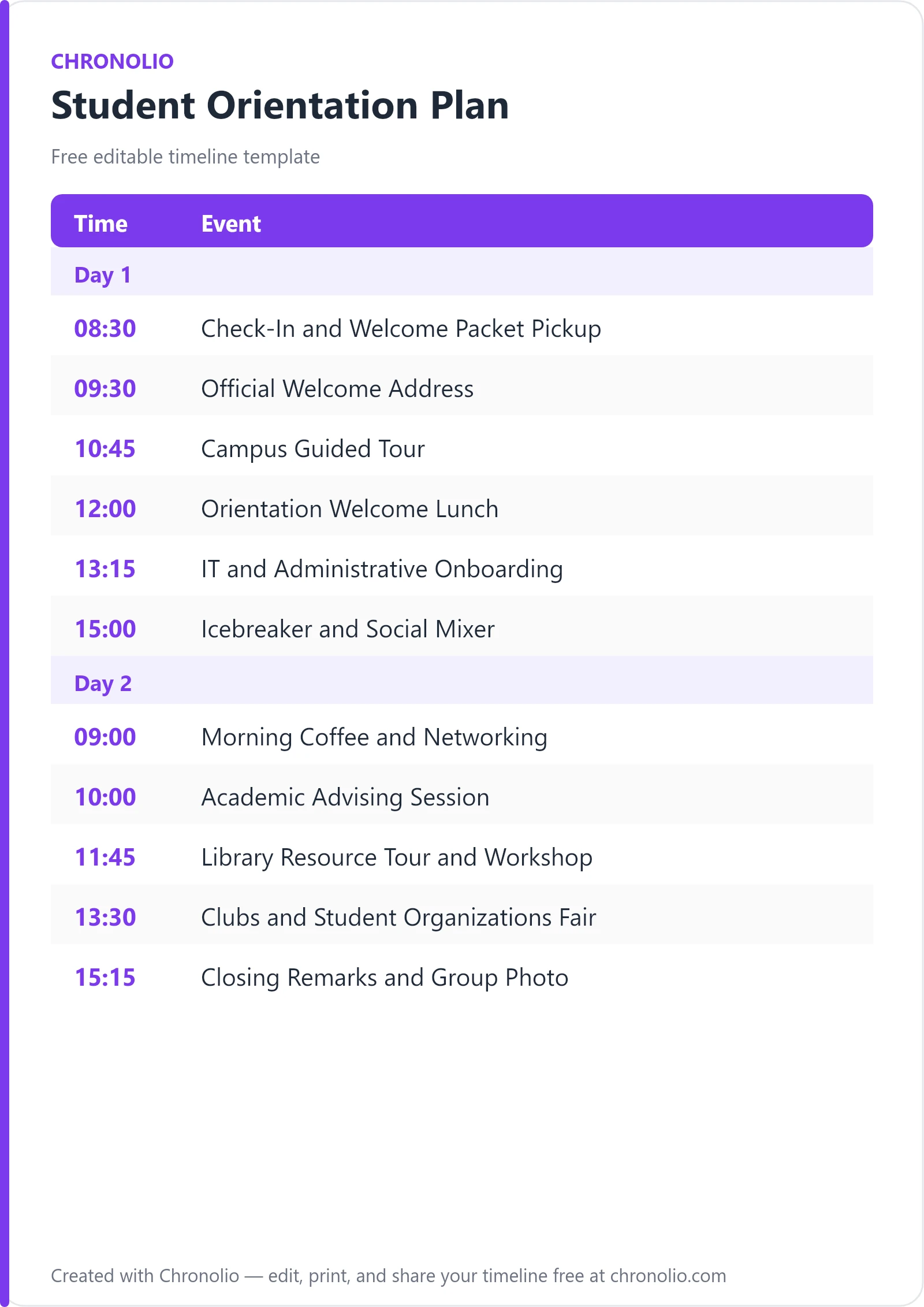
Here is the complete schedule this free template gives you — every time block, ready to edit, download, and share:
| Day | Time | Event |
|---|---|---|
| 1 | 08:30 | Check-In and Welcome Packet Pickup |
| 1 | 09:30 | Official Welcome Address |
| 1 | 10:45 | Campus Guided Tour |
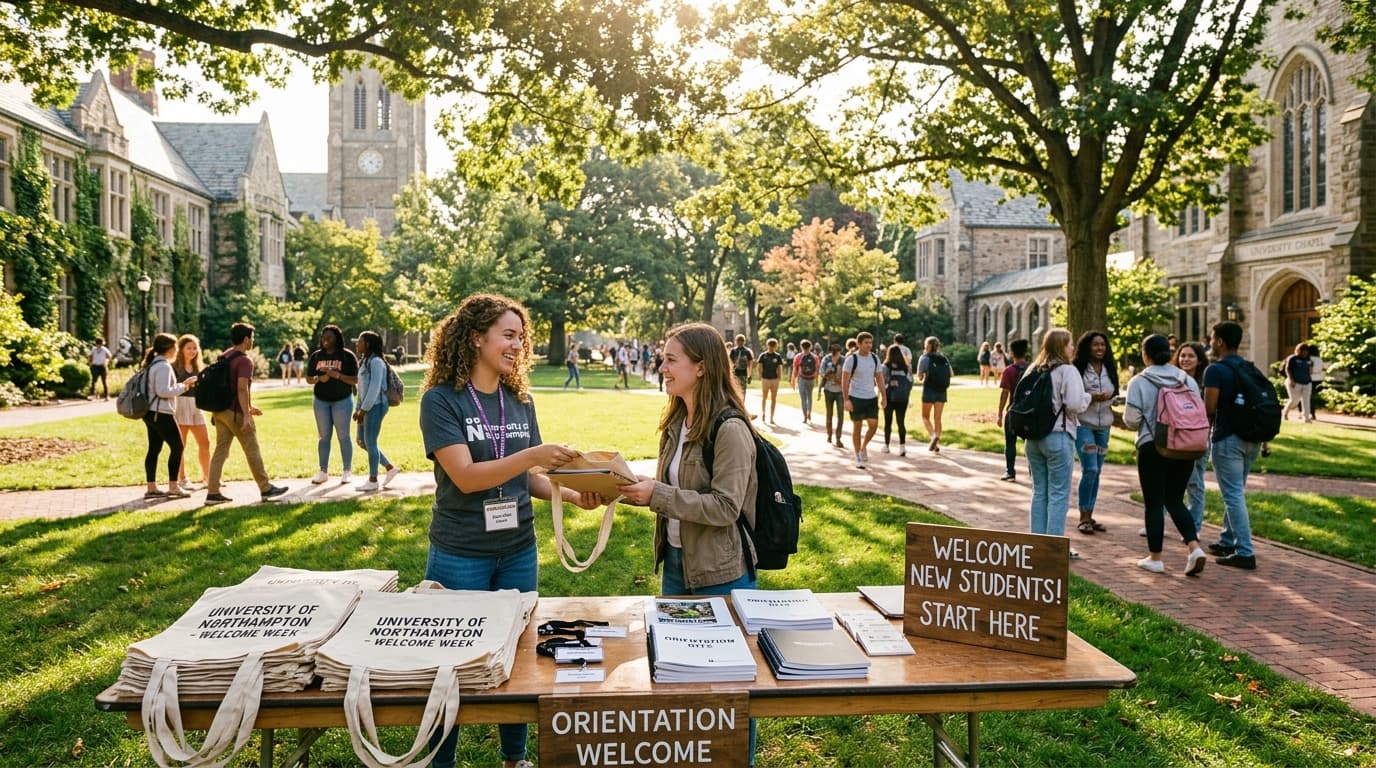
| 1 | 12:00 | Orientation Welcome Lunch |
| 1 | 13:15 | IT and Administrative Onboarding |
| 1 | 15:00 | Icebreaker and Social Mixer |
| 2 | 09:00 | Morning Coffee and Networking |
| 2 | 10:00 | Academic Advising Session |
| 2 | 11:45 | Library Resource Tour and Workshop |
| 2 | 13:30 | Clubs and Student Organizations Fair |
| 2 | 15:15 | Closing Remarks and Group Photo |
What Is a Student Orientation Plan?
A student orientation plan is a master schedule and operational blueprint designed by university administrators, student affairs professionals, and orientation leaders to welcome new cohorts to campus. As an orientation coordinator who has run these events for over a decade, I can tell you that welcoming incoming students is equal parts event management and student retention strategy. A well-designed plan bridges the intimidating gap between secondary school or transfer life and higher education expectations, ensuring matriculation administrative hurdles are cleared before academic classes begin.
This template reflects real-world higher education structures and student affairs best practices, bringing together academic advising, registrar compliance, technical onboarding, and peer networking into a logical, human-centered flow. Whether you need a downloadable format to hand out at registration or an online timeline for digital portals, you can grab this layout as an editable Word document or print-ready PDF file to distribute across your campus team.
Customize Your Student Orientation Plan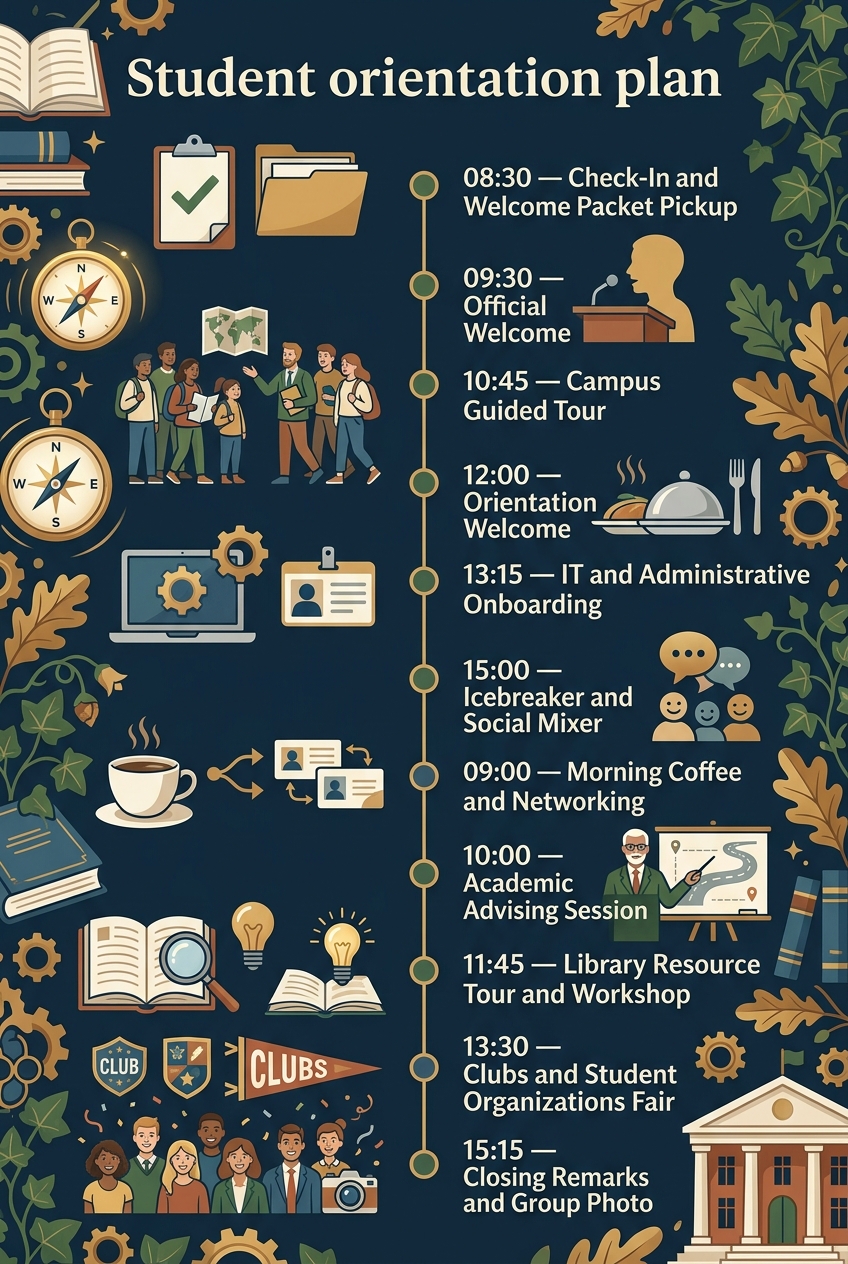
Why Students Need an Orientation Plan
Transitioning to a new campus is one of the most exciting—and nerve-wracking—milestones a student experiences. Without a published student orientation plan, new arrivals often suffer from campus navigation anxiety, missed administrative deadlines, and feeling disconnected from their peers. A published timeline provides students with a predictable structure that transforms a chaotic first impression into a confident step forward.
From an administrative perspective, a standardized running order ensures that thousands of students cycle through high-traffic bottlenecks like identity photo stations, IT setup labs, and advising rooms without causing campus gridlock. Just as running formal governance meetings requires strict adherence to a board meeting timeline template, multi-departmental campus events depend on synchronized timing across student affairs, facilities, security, and dining services.
- Reduces Cognitive Overload: Spreading administrative onboarding and academic orientation across two balanced days gives students time to process information.
- Eliminates Bottlenecks: Staggering check-in routines and tour routes keeps high-density venues operating smoothly.
- Fosters Immediate Belonging: Mixing structured academic sessions with informal social icebreakers accelerates student social integration.
- Aligns Departmental Teams: Orientation leaders, IT technicians, faculty advisors, and catering teams work from a unified timeline.
What to Include in a Student Orientation Plan
Every effective campus orientation schedule must balance regulatory requirements, practical navigation, academic planning, and social connection. Here are the core building blocks every coordinator should build into their agenda:
- Identity & Credential Check-In: Welcome packet pickup, official ID card issuance, and room key distribution.
- Institutional Welcome Assemblies: Keynote speeches from deans, student body presidents, and campus leaders introducing university culture.
- Guided Physical Tours: Expert-led walks highlighting classrooms, dining facilities, health centers, and emergency call stations.
- IT & System Onboarding: Hands-on support for university email, single sign-on (SSO) credentials, Wi-Fi access, and tuition portals.
- Academic Advising & Course Registration: Degree planning overviews, syllabus expectations, and direct consultation with academic advisors.
- Library & Digital Research Workshops: Database training, citation tools, printing protocols, and study space reservations.
- Student Organization Fairs: Interactive expos showcasing intramural sports, academic clubs, and campus governance opportunities.
- Peer Icebreakers & Social Events: Informal social mixers, games, and cohort traditions that encourage community building.
Day 1 — Morning Check-In and Campus Orientation
| Time | Event |
|---|---|
| 08:30 | Check-In and Welcome Packet Pickup |
| 09:30 | Official Welcome Address |
| 10:45 | Campus Guided Tour |
| 12:00 | Orientation Welcome Lunch |
The first morning of orientation sets the emotional and operational tone for the entire academic year. We start at 08:30 in the Student Union Atrium to handle check-in, issue official campus identification cards, and distribute physical orientation packets. Placing check-in early provides a 45-minute arrival buffer that accommodates traffic delays, parking questions, and long registration lines without pushing back subsequent assemblies. Staff members are positioned along main walkways to greet families and direct students toward the auditorium.
At 09:30, everyone transitions to the Main Auditorium for the Official Welcome Address. University deans and student leaders deliver inspiring introductory speeches that introduce key university traditions, academic integrity standards, and community expectations. Following the assembly, students meet their assigned peer guides at 10:45 on the Campus Quadrangle for the Campus Guided Tour. Breaking into small groups of 10 to 15 students ensures everyone can hear their guide, ask questions, and learn practical shortcuts between major academic buildings, dining facilities, and security centers.
Day one morning concludes at 12:00 with the Orientation Welcome Lunch in the Central Dining Hall. Serving a complimentary buffet lunch gives students their first experience with campus dining options while offering a comfortable setting to chat with peer mentors and fellow classmates.
08:30 Check-In -> 09:30 Welcome Address -> 10:45 Campus Tour -> 12:00 Welcome Lunch
Day 1 — Afternoon Onboarding and Social Integration
| Time | Event |
|---|---|
| 13:15 | IT and Administrative Onboarding |
| 15:00 | Icebreaker and Social Mixer |
After lunch, the schedule shifts toward operational readiness and social connections. At 13:15, students head to Computer Lab Building B for IT and Administrative Onboarding. Setting up technical credentials on the first afternoon is critical; technical staff assist students with activating their official university email addresses, configuring campus Wi-Fi networks, and navigating the student portal for billing and record verification. Tackling tech hurdles early prevents system access issues when academic advising begins on Day 2.
Once technical accounts are established, we wrap up Day 1 at 15:00 with an interactive Icebreaker and Social Mixer at the Student Recreation Center. After hours of listening to presentations and navigating systems, students need a low-pressure environment to release energy and make friends. Orientation leaders facilitate team games, background music plays, and light refreshments are served. Ending the day with social connection leaves incoming students feeling excited rather than exhausted.
Day 2 — Morning Academic Readiness and Research Tools
| Time | Event |
|---|---|
| 09:00 | Morning Coffee and Networking |
| 10:00 | Academic Advising Session |
| 11:45 | Library Resource Tour and Workshop |
Day two focuses on academic success, classroom expectations, and research infrastructure. We begin at 09:00 with Morning Coffee and Networking at the outdoor Campus Plaza. Providing pastries and coffee allows students to wake up, re-engage with peer mentors, and compare notes from their first evening on or near campus. Much like starting a private event using a birthday party timeline template, beginning with informal conversation eases participants into the day's main activities.
At 10:00, students assemble in the Science Lecture Hall for the Academic Advising Session. Faculty advisors outline core curriculum requirements, explain the course registration process, introduce professor office hours, and review academic support centers. This formal briefing ensures students understand how to build their degree plans and where to seek tutoring if needed.
At 11:45, the cohort moves to the University Library for the Library Resource Tour and Workshop. University librarians lead a hands-on walkthrough covering online research databases, physical archives, private study room bookings, and printing stations. Students complete a short interactive search exercise on their mobile devices, ensuring they know how to access peer-reviewed journals before their first syllabus assignment.
09:00 Morning Coffee -> 10:00 Academic Advising -> 11:45 Library Workshop
Day 2 — Afternoon Campus Involvement and Program Wrap-Up
| Time | Event |
|---|---|
| 13:30 | Clubs and Student Organizations Fair |
| 15:15 | Closing Remarks and Group Photo |
The final afternoon focuses on co-curricular life and building long-term campus community. Following an open break for lunch, students gather at 13:30 on the University Green for the Clubs and Student Organizations Fair. Dozens of student-run organizations, club sports, volunteer groups, and campus departments set up informational booths. New students wander between tables, sign up for email lists, and discover extracurricular opportunities that match their personal interests.
At 15:15, the entire orientation group convenes at the outdoor University Amphitheater for Closing Remarks and Group Photo. Orientation leaders deliver final words of encouragement, highlight upcoming welcome-week events, and answer lingering questions. The two-day plan culminates on the amphitheater steps as photographers capture the official incoming class photo. Managing large crowd gatherings like this photo session relies on clear staging strategies similar to those used in a formal catholic wedding timeline or a structured christian wedding timeline, where directing group movement swiftly keeps the schedule on track.
Student Orientation Plan vs Student Orientation Schedule
While higher education professionals often use these terms interchangeably, a student orientation plan and a student orientation schedule serve distinct administrative functions during campus onboarding:
| Strategic Element | Student Orientation Plan | Student Orientation Schedule |
|---|---|---|
| Primary Scope | Comprehensive operational strategy, learning outcomes, staff allocation, and budget. | Time-blocked agenda detailing specific event times, locations, and speaker assignments. |
| Target Audience | Orientation directors, department heads, student affairs staff, and campus partners. | Incoming students, parents, peer mentors, and workshop facilitators. |
| Level of Detail | High-level logistics, contingency protocols, venue capacities, and staff duties. | Specific event titles, start/end times, room numbers, and brief activity descriptions. |
| Flexibility | Dynamic working document updated throughout the institutional planning cycle. | Fixed reference guide published digitally and printed prior to launch day. |
A student orientation plan outlines why and how the university welcomes its new cohort, establishing departmental responsibilities and contingency protocols. The orientation schedule is the customer-facing output of that plan—the clean running order that tells a student where to be at 08:30 AM.
Who Should Use This Template?
This orientation planning framework is designed for higher education teams and academic leaders responsible for onboarding new cohorts:
- University Student Affairs Officers: Campus directors coordinating multi-day university welcome weeks across multiple administrative divisions.
- Community College Onboarding Teams: Administrators organizing condensed or flexible orientation tracks for non-traditional and commuter students.
- Graduate School Coordinators: Department heads structuring specialized orientation tracks for professional, law, or medical student intakes.
- High School Transition Counselors: Educators designing senior-year prep days and college readiness transition workshops.
- Residence Life Directors: Dormitory staff aligning residential hall icebreaker activities with campus-wide orientation agendas.
Chronolio supports the different roles involved in planning campus events, allowing orientation coordinators, IT leads, and student volunteers to collaborate seamlessly on a single master timeline.
How to Use This Template
- Duplicate or Edit the Master Layout: Click the edit button on this page to load the timeline directly into Chronolio.
- Set Your Event Dates and Venues: Adjust the location labels (e.g., replace "Computer Lab Building B" with your campus building names) to fit your physical facilities.
- Customize Time Slots: Scale session durations up or down based on your cohort size and campus walking distances.
- Assign Departmental Owners: Map specific orientation leaders, IT staff, and faculty speakers to each time block.
- Publish and Distribute: Download your finished plan as an editable Word document, a print-ready PDF, or share an interactive online link with students.
Tips for a Successful Student Orientation Plan
- Incorporate Generous Transition Buffers: Never schedule back-to-back sessions in different buildings without at least 15 minutes of walking time. Campus navigation takes twice as long when hundreds of students move together.
- Train Peer Leaders Thoroughly: Run a full practice walkthrough with student mentors two days before official check-in so they can navigate venues blindfolded and answer common FAQs.
- Establish a Dedicated IT Help Desk: Technical credentials fail frequently during mass onboarding. Position extra help-desk staff in the computer lab to resolve login issues quickly.
- Provide Digital and Physical Maps: Print QR codes on physical welcome packets that launch interactive campus map apps on students' smartphones.
- Offer Dietary and Quiet Spaces: Ensure dining halls provide clear vegan, gluten-free, and halal options, and designate a quiet sensory lounge for students needing a break from crowded assemblies.
- Over-Communicate via Mobile Alerts: Send SMS or app notifications 10 minutes before major transitions to keep crowds moving efficiently.
Common Mistakes to Avoid
- Overpacking the Day: Trying to cram every administrative policy into two days leads to student burnout. Save non-essential presentations for mid-semester workshops.
- Underestimating Check-In Lines: Expecting hundreds of students to pick up packets in 15 minutes causes massive delays. Always allocate 45 to 60 minutes for initial morning arrivals.
- Ignoring Commuter Student Needs: Designing schedules that force non-resident students to hang around campus during awkward 3-hour gaps causes early departure.
- Neglecting Parent and Family Tracks: Parents often accompany new students; failing to provide separate family Q&A sessions leads to crowded student workshops.
- Forgetting Weather Contingencies: Outdoor events like campus tours or student org fairs need pre-planned indoor rain locations with clear signage.
- Lacking Centralized Timekeeping: If individual workshop leaders run over their allotted time, downstream schedules collapse across campus.
In Summary
- Balanced Two-Day Structure: Combines administrative requirements, academic advising, technical setup, and social icebreakers into a digestible 2-day flow.
- Reduces Campus Gridlock: Staggers high-traffic activities like check-in, IT registration, and dining hall lunches across manageable time blocks.
- Protects Academic Readiness: Schedules mandatory IT setup on Day 1 so students have portal access ready for Day 2 academic advising and library workshops.
- Drives Co-Curricular Engagement: Connects students with student organizations, intramural clubs, and peer networks before classes begin.
- Fully Customizable Layout: Easily adapts to different institutional sizes, campus geography, and cohort demographics using Chronolio.
Planning an unforgettable orientation requires balancing administrative compliance with authentic student hospitality. By using this student orientation plan as your master framework, you can lead your orientation staff, faculty advisors, and incoming cohort through a smooth, empowering, and stress-free welcome experience.
Customize Your Student Orientation PlanFor guidance on structuring other major institutional gatherings and multi-day celebrations, explore our guides on managing a formal anniversary party schedule or hosting a structured community baby shower timeline. To research higher education retention standards and orientation best practices, visit the NODA Association for Higher Education Orientation.