





This Template at a Glance
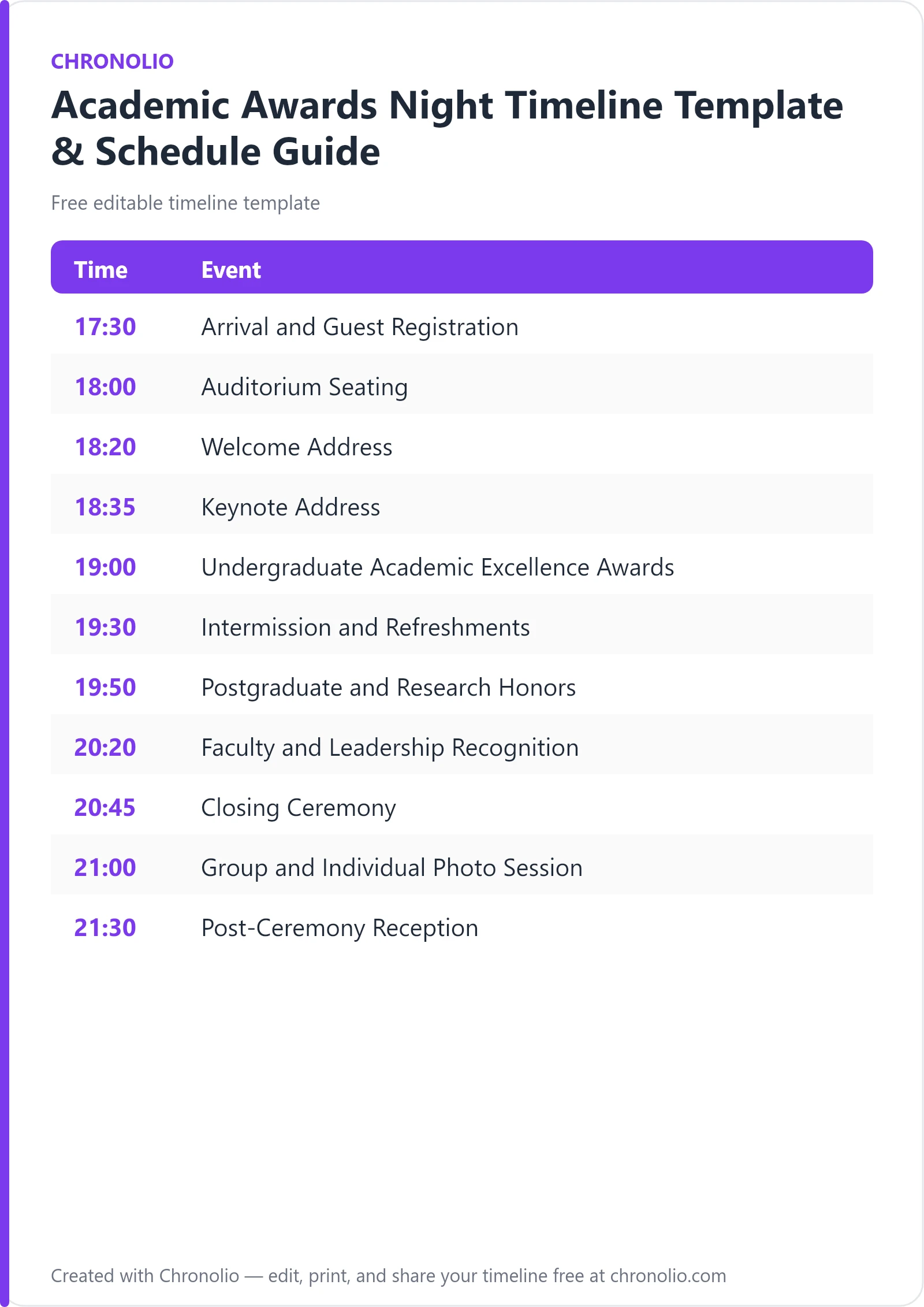
Here is the complete schedule this free template gives you — every time block, ready to edit, download, and share:
| Time | Event |
|---|---|
| 17:30 | Arrival and Guest Registration |
| 18:00 | Auditorium Seating |
| 18:20 | Welcome Address |
| 18:35 | Keynote Address |
| 19:00 | Undergraduate Academic Excellence Awards |
| 19:30 | Intermission and Refreshments |
| 19:50 | Postgraduate and Research Honors |
| 20:20 | Faculty and Leadership Recognition |
| 20:45 | Closing Ceremony |
| 21:00 | Group and Individual Photo Session |
| 21:30 | Post-Ceremony Reception |
What Is an Academic Awards Night Timeline?
An academic awards night timeline is the operational run-of-show that governs the timing, movement, and presentation sequence of an institutional recognition evening. Running a university or departmental awards night requires balancing protocol with celebratory atmosphere, keeping dozens of award recipients moving across the stage while preserving the dignity of academic honors.
This guide provides a tested timeline built on real-world university governance practices and stage management principles. By breaking down the evening into distinct phases—from grand foyer guest registration to post-ceremony photo calls—you give department heads, stage crew, and media teams the exact blueprint they need. Just as administrative leadership relies on a structured board meeting timeline template to conduct formal business without delay, an academic event team needs a clear sequence to honour scholars without overrunning the venue rental time.
Build Your Academic Awards Night Timeline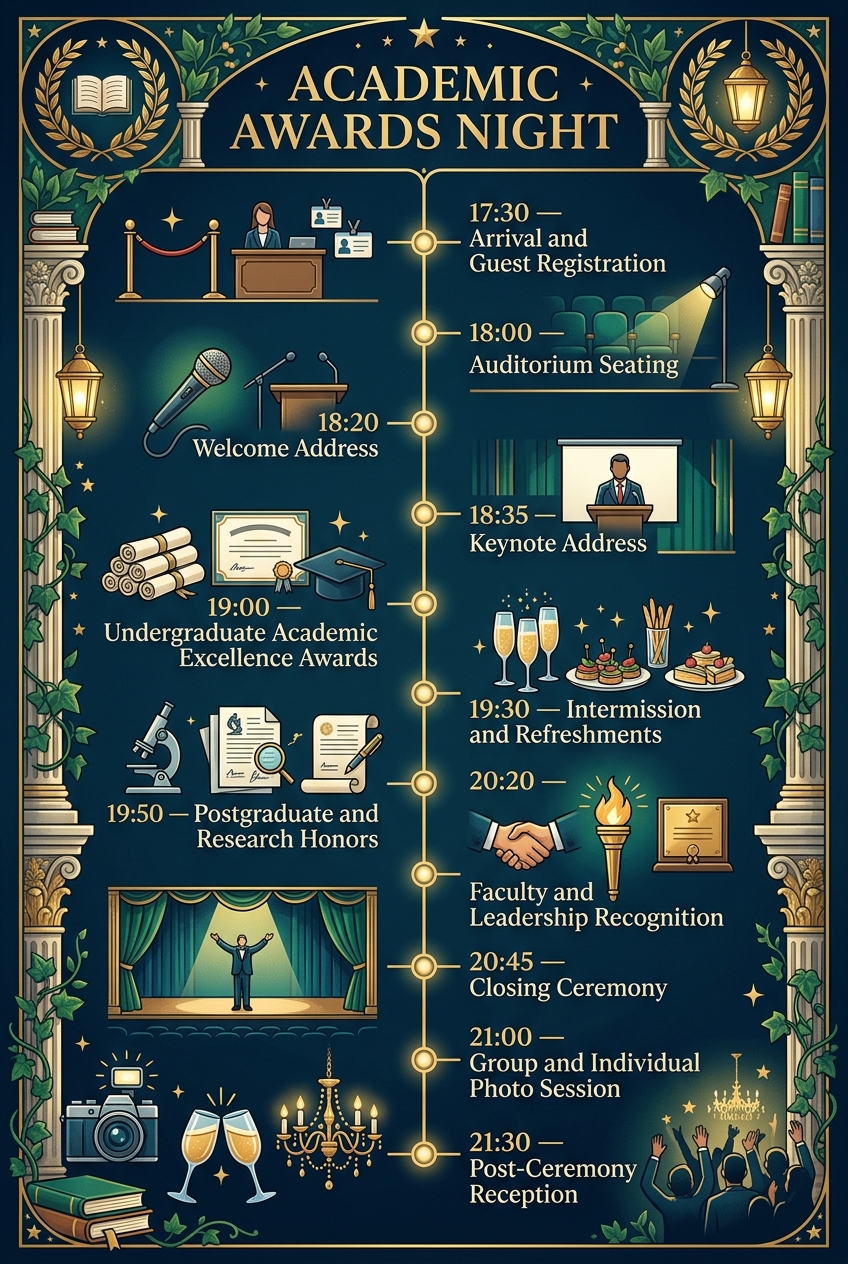
Why Academic Awards Nights Need a Timeline
A detailed timeline is the single most effective tool for preventing stage logjams and backstage chaos. When hundreds of students, family members, faculty staff, and donor representatives gather under one roof, clear timing guarantees a professional attendee experience. Without strict visual and acoustic timing cues, individual speeches can drag on, certificate handoffs lose momentum, and tired audience members begin leaving before senior honors or faculty awards are announced.
Furthermore, academic ceremonies require complex coordination between multiple campus departments and external partners. Audio-visual technicians need explicit cues for slide transitions and stage lighting, photographers require set windows for group shots, and catering staff must know precisely when to set out hot refreshments in the atrium.
By distributing a synchronized schedule in advance, you eliminate guesswork for venue operators and department heads alike. While informal family gatherings use a lighter structure like an anniversary party schedule template or birthday party timeline template, institutional events demand rigid cueing so every recipient enjoys their well-deserved moment in the spotlight.
What to Include in an Academic Awards Night Timeline
To deliver a polished event, your master schedule must incorporate both front-of-house guest management and back-of-house stage execution:
- Foyer Welcome & Registration: Name badge distribution, program handovers, and instrumental background music.
- Auditorium Seating Protocols: Staggered ushering to align recipients with stage line-up points.
- Institutional & Keynote Addresses: Concise opening remarks from deans or executive leadership paired with an inspiring keynote address.
- Categorized Award Blocks: Grouping awards by academic level (undergraduate, postgraduate, faculty) to maintain flow.
- Midway Intermission: Brief intermission for guest comfort, venue ventilation, and backstage certificate management.
- Formal Photography Sessions: Reserved photo backdrop calls for individual portraits and department group shots.
- Post-Ceremony Networking Reception: Concluding refreshments, donor interaction, and social celebration.
Pre-Ceremony Arrival and Seating
| Time | Event | | 17:30 | Arrival and Guest Registration | | 18:00 | Auditorium Seating |
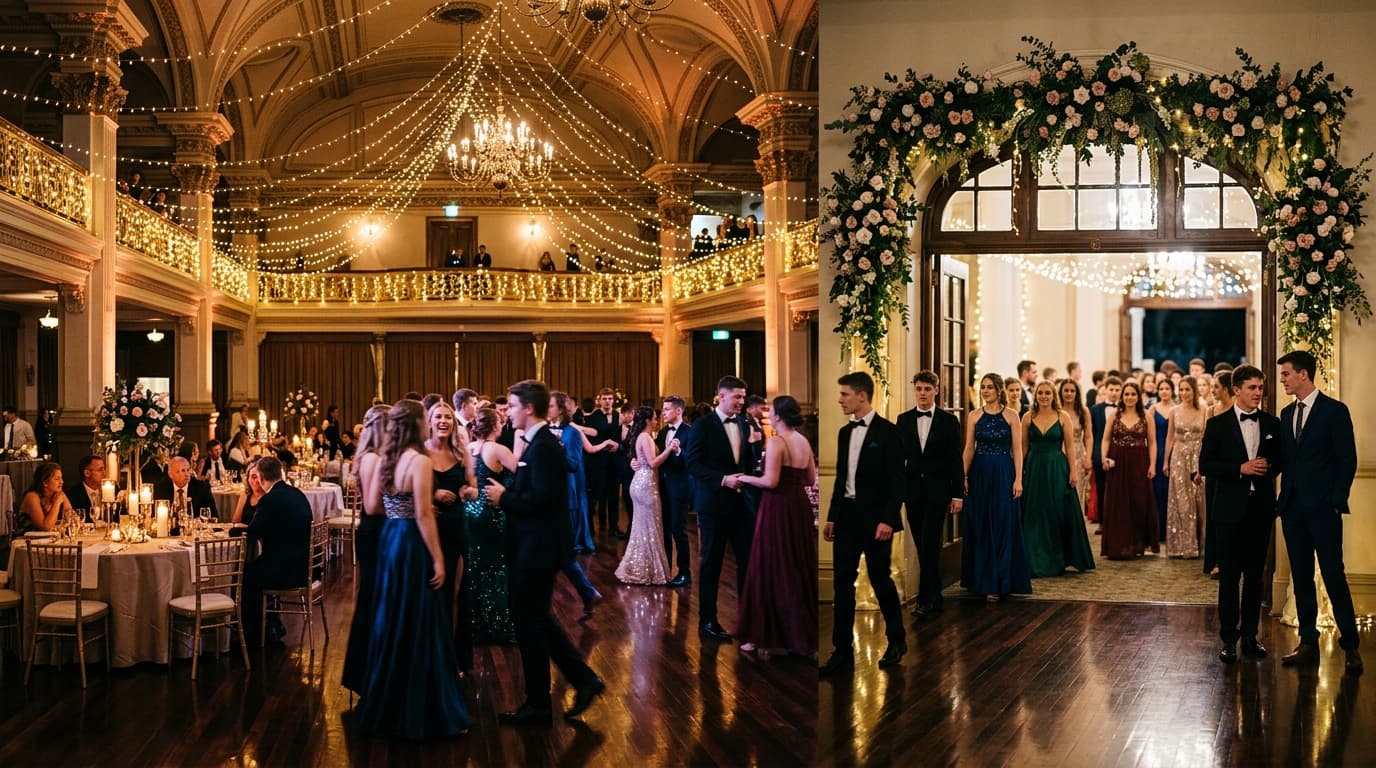
The evening begins in the Grand Foyer of University Hall, where guest arrival and registration set a celebratory tone. Providing a full 30 minutes for registration allows attendees to collect their personalized name badges, pick up printed programs, and mingle while light background music plays. Early registration prevents entrance bottlenecks and gives award recipients time to find their designated gathering areas before auditorium doors open.
At 18:00, auditorium doors open for general seating. Ushers direct attendees to specific seating blocks arranged by academic department and award category. Seating honorees close to the aisle in their exact presentation order drastically reduces transition delays once stage calls begin, ensuring the formal program starts precisely on time at 18:20.
Welcome Address and Keynote Speech
| Time | Event | | 18:20 | Welcome Address | | 18:35 | Keynote Address |
The formal stage presentation opens with a welcome address from the Dean of Academic Affairs on the main auditorium stage. This 15-minute opener frames the significance of the academic year's achievements, introduces the evening's master of ceremonies, and establishes etiquette for applause and stage etiquette.
Directly following the dean's opening, a guest speaker delivers the 25-minute keynote address focused on research innovation, perseverance, and academic leadership. Setting strict time limits for speakers keeps the energy high and preserves ample room for the primary focus of the evening: acknowledging student and faculty honorees.
Undergraduate Awards and Intermission
| Time | Event | | 19:00 | Undergraduate Academic Excellence Awards | | 19:30 | Intermission and Refreshments |
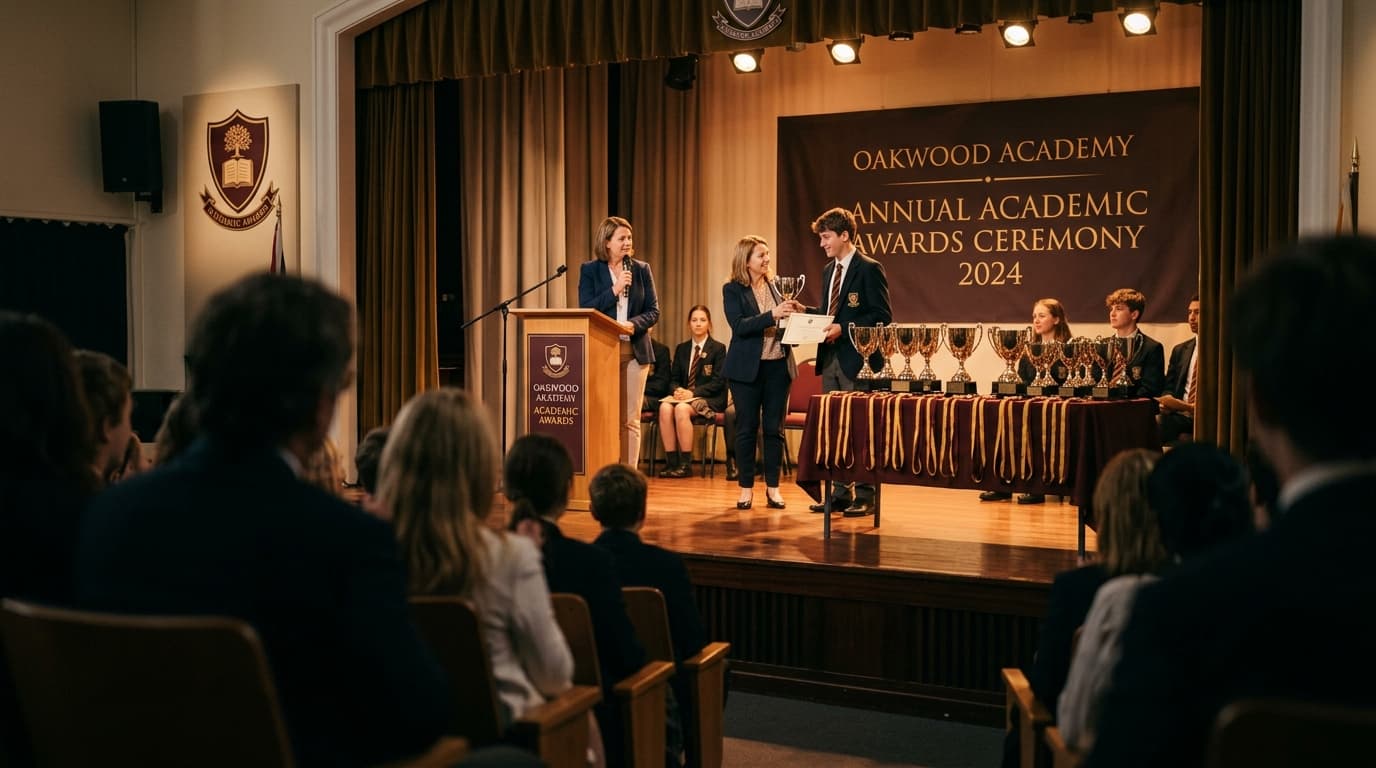
At 19:00, the ceremony transitions into the Undergraduate Academic Excellence Awards. Department heads take positions at the stage lectern as awardees walk across the stage to accept their certificates and plaques. Grouping awards by department streamlines stage walks and ensures photographers can capture crisp presentation handshakes without blocking audience sightlines.
Following 30 minutes of undergraduate recognition, guests transition to the Atrium Lounge for a 20-minute intermission. This scheduled break gives attendees a chance to stretch, enjoy light beverages, and socialize. Backstage, stage managers use this break to re-index postgraduate plaques and verify the order of senior presenters.
Postgraduate Honors, Faculty Recognition, and Closing
| Time | Event | | 19:50 | Postgraduate and Research Honors | | 20:20 | Faculty and Leadership Recognition | | 20:45 | Closing Ceremony |
The second half of the stage program opens at 19:50 with Postgraduate and Research Honors, recognizing master's scholars, doctoral candidates, and special research grant recipients. The elevated academic focus transitions naturally into Faculty and Leadership Recognition at 20:20, where professors and professional staff accept awards for teaching excellence and institutional service to warm applause from their peers and students.
The formal stage portion concludes at 20:45 with closing remarks from the University Vice-Chancellor. The Vice-Chancellor summarizes the evening's triumphs, thanks the event planning committee, and directs attendees toward the photo staging area and post-ceremony reception in the foyer.
Photography and Post-Ceremony Reception
| Time | Event | | 21:00 | Group and Individual Photo Session | | 21:30 | Post-Ceremony Reception |
Immediately following stage dismissal, award winners and faculty gather in the Grand Foyer for official group and individual photo calls. Dedicated photo blocks protect press quality by allowing lighting technicians and campus media teams to capture publication-ready portraits with branded backdrops without crowd clutter.
At 21:30, the post-ceremony networking reception commences across the foyer. Honorees, family members, faculty, and industry partners enjoy finger foods, background music, and informal conversation, providing a fitting end to an evening of academic excellence before final teardown begins at 22:15.
Academic Awards Night Timeline vs Event Running Order
While many organizers treat timelines and event running orders interchangeably, they serve distinct operational functions during university-level ceremonies:
| Feature | Academic Awards Night Timeline | Event Running Order (Cue Sheet) |
|---|---|---|
| Primary Audience | Event planners, venue staff, university leadership | Stage managers, AV technicians, podium ushers |
| Time Granularity | 15 to 30-minute functional phases | Minute-by-minute or cue-by-cue triggers |
| Scope | Whole-evening flow from registration to teardown | Stage calls, mic switches, slide triggers, lighting presets |
| Key Content | Department blocks, guest arrivals, meal breaks | Presenter names, audio cues, plaque tray numbers |
An academic awards night timeline offers executive oversight of the whole evening, ensuring leadership, catering, and security align on start and end points. By contrast, a stage cue sheet zooms into the exact seconds a microphone unmutes or a slide changes as an awardee walks onstage.
Who Should Use This Template?
This academic awards night schedule is built for academic institutions and educational organizers seeking a dependable, repeatable run-of-show. It is ideally suited for:
- University Faculties & Schools: Coordinating multi-department honors convocation ceremonies.
- High Schools & Secondary Academies: Managing senior prize-giving nights and graduation award ceremonies.
- Research Institutes & Centers: Honoring grant recipients, fellowship awardees, and published scholars.
- Honor Societies & Associations: Hosting annual induction banquets and excellence awards.
- Student Affairs Offices: Managing campus-wide leadership and extracurricular achievement events.
Managing these multi-layered events requires coordination across various roles. Chronolio provides tailored tools for distinct event management roles, enabling event leads, stage managers, and AV technicians to collaborate seamlessly in real time.
How to Use This Template
- Download or Duplicate the Template: Select your preferred format using our online editor or download the editable document files directly via the Academic Awards Night DOCX Template or Academic Awards Night PDF Schedule.
- Adjust Key Milestones: Match start times to your venue access window and ceremony length.
- Customize Department Blocks: Rename presentation sections to match your specific academic schools, degree programs, or award categories.
- Distribute to Key Stakeholders: Share the master schedule with deans, keynote speakers, stage crews, photographers, and venue caterers.
Tips for a Successful Academic Awards Night
- Pre-Sort Award Certificates and Plaques: Arrange physical awards on staging tables backstage in the exact sequence names will be called to eliminate stage awkwardness.
- Establish a Dual-Presenter System: Have one department head read honoree citations at the lectern while a dean presents the plaque on stage center to speed up handovers.
- Implement Stage Walk Rehearsals: Conduct a 15-minute walk-through with ushers and student marshals before doors open so they know how to lead awardee queues.
- Utilize Stage Sightline Tape: Mark standing positions with gaffer tape so recipients automatically align with lighting rigs and official photographer angles.
- Brief Keynote Speakers on Time Limits: Remind VIP speakers that podium timers are active and request that they keep presentations within allocated blocks.
- Reserve Front-Row Seats for Honorees: Place clear name placards on aisle seats in the auditorium to ensure award recipients can step onto the stage swiftly.
- Set Up a Secondary Photo Station: Maintain a dedicated photo backdrop in the foyer during the ceremony so recipients can take family photos immediately after stepping off stage.
Common Mistakes to Avoid
- Overcrowding Single Presentation Blocks: Attempting to call over 50 names in a single block without a break causes reader fatigue and audience disinterest.
- Neglecting AV and Lighting Rehearsals: Failing to test lectern microphone heights and slide deck changes during pre-ceremony checks leads to delays during live speeches.
- Ignoring Stage Queue Space: Forgetting to clear a dedicated waiting lane in side-stage wings creates congestion as recipients move up and down stairs.
- Unclear Direction for Photo Handshakes: Failing to instruct presenters on how to pause facing the camera during award handovers leads to blurry press photography.
- Omitting Intermission Buffer Time: Skipping a mid-ceremony break causes audience restlessness, especially when young family members or donor guests are in attendance.
- Failing to Track Missing Awardees: Proceeding without an usher at the stage wing to signal when a named recipient is absent leads to embarrassing silence at the lectern.
In Summary
- Comprehensive Structure: A 4.75-hour integrated schedule covering guest arrival, speeches, awards, photos, and reception.
- Dual Presentation Blocks: Keeps audience attention sharp by splitting undergraduate and postgraduate/faculty awards with a 20-minute intermission.
- Designed for Institutional Protocols: Tailored specifically for deans, department heads, research scholars, and university stage managers.
- Professional Photo Management: Includes dedicated backdrop photo blocks after stage dismissal to capture high-resolution portraits.
- Fully Customizable: Easily adapted for high school prize nights, honor societies, or university convocations.
Executing a flawless academic recognition event requires meticulous preparation, clear stage direction, and aligned venue operations. This academic awards night schedule template equips university event directors, high school administrators, and academic societies with an institutional-grade run-of-show that respects tradition while keeping the evening moving smoothly.
Build Your Academic Awards Night Timeline