





This Template at a Glance
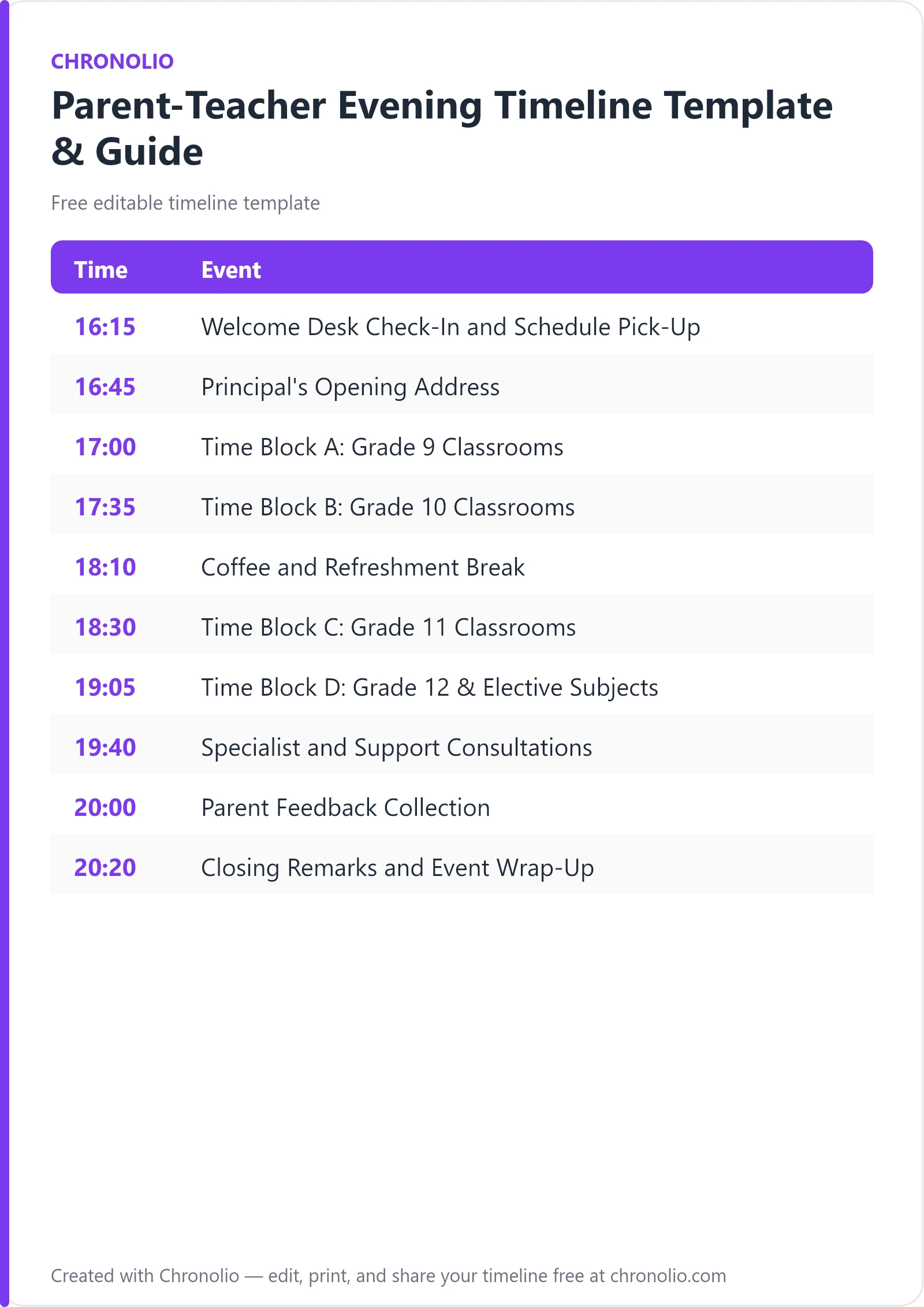
Here is the complete schedule this free template gives you — every time block, ready to edit, download, and share:
| Time | Event |
|---|---|
| 16:15 | Welcome Desk Check-In and Schedule Pick-Up |
| 16:45 | Principal's Opening Address |
| 17:00 | Time Block A: Grade 9 Classrooms |
| 17:35 | Time Block B: Grade 10 Classrooms |
| 18:10 | Coffee and Refreshment Break |
| 18:30 | Time Block C: Grade 11 Classrooms |
| 19:05 | Time Block D: Grade 12 & Elective Subjects |
| 19:40 | Specialist and Support Consultations |
| 20:00 | Parent Feedback Collection |
| 20:20 | Closing Remarks and Event Wrap-Up |
What Is a Parent-teacher evening Timeline?
A parent-teacher evening timeline is the definitive schedule used by school administrators, faculty, and support staff to run an efficient, high-impact parent consultation event. Coordinating hundreds of parents as they navigate corridors, meet with core subject teachers, and speak with guidance staff requires strict temporal structure. Without a synchronized running order, individual meetings frequently spill over, corridor traffic stalls, and parents miss critical updates regarding their child's academic progress.
Reflecting real-world academic event management and secondary school operational best practices, this timeline provides a tested four-hour framework. It accounts for front-desk registration, administrative briefings, staggered grade-level classroom visits, staff breaks, specialist consultations, and structured feedback collection. Whether you are managing a large high school or a specialized academy, using a standardized schedule ensures that every family receives equal face time with educators while maintaining strict event punctuality.
Customize Your Parent-Teacher Evening Timeline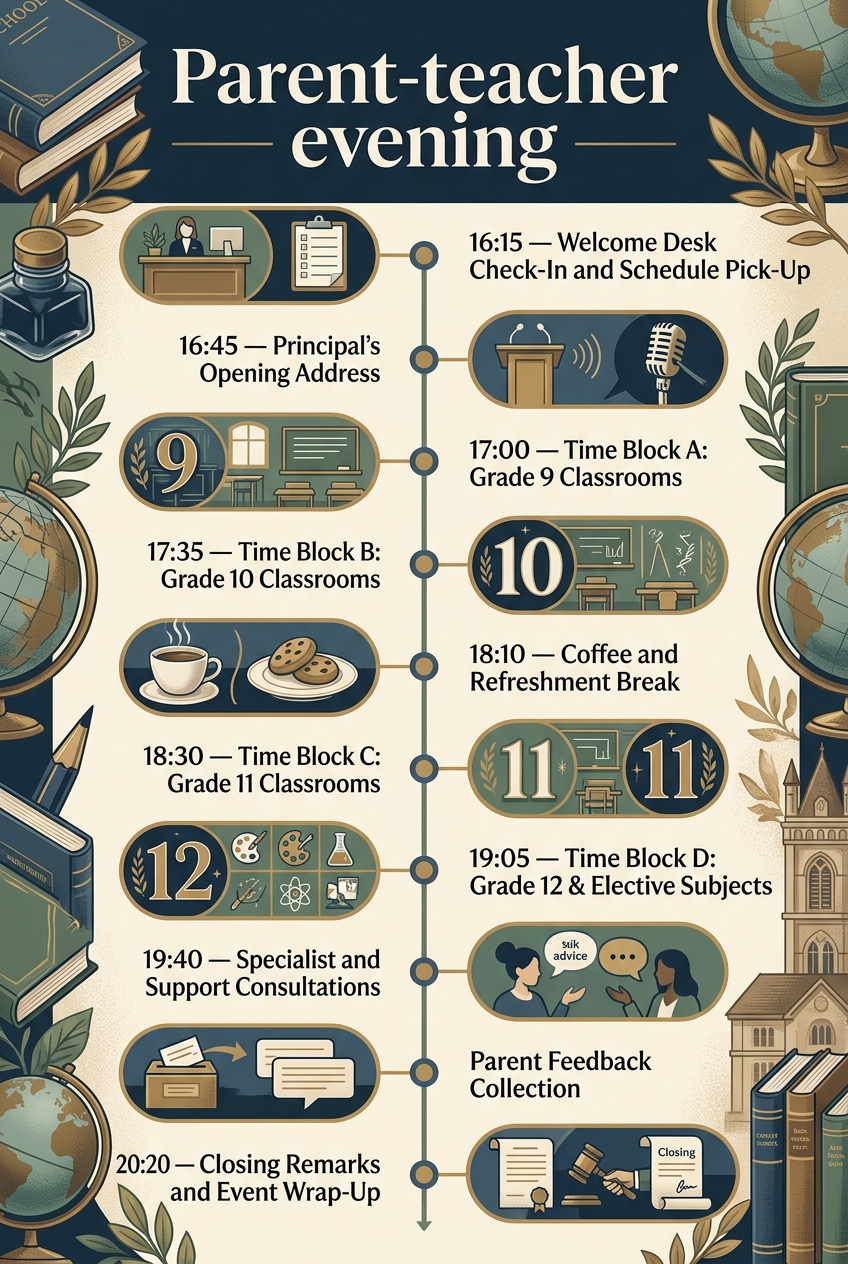
Why Parent-teacher evenings Need a Timeline
Organizing a school-wide evening event involves complex facility logistics, tight communication windows, and competing parent schedules. A centralized schedule serves as the primary coordination tool for teaching staff, student volunteers, and administrative personnel.
- Prevents Overcrowding and Bottlenecks: Staggering visits by grade level distributes parent movement across different wings of the building, keeping hallway corridors navigable and quiet during active consultation periods.
- Protects Faculty Break and Preparation Time: Teachers face continuous back-to-back discussions. Building in a synchronized refreshment break ensures staff remain energized, focused, and ready for late-evening appointments.
- Ensures Equitable Parent Access: Fixed time slots prevent individual meetings from running long, guaranteeing that every parent on the schedule gets their allocated consultation window with core and elective teachers.
- Streamlines Administrative Logistics: Clear timing allows support services, career coordinators, and feedback kiosks to operate efficiently without overlapping with main auditorium announcements.
What to Include in a Parent-teacher evening Timeline
To execute an effective school consultation night, your agenda must balance general school communication with private teacher-parent dialogues. Every successful parent-teacher evening schedule should incorporate:
- Foyer Arrival and Registration: A designated check-in period where families collect personalized appointment cards, physical room maps, and name badges.
- Administrative Welcome Address: Opening remarks by school leadership to frame institutional goals, curriculum shifts, and assessment schedules.
- Staggered Grade-Level Consultation Blocks: Dedicated windows reserved for specific student cohorts (e.g., Grade 9, Grade 10) to streamline teacher availability.
- Faculty Refreshment Intermission: A scheduled rest period to encourage informal parent-staff networking and allow teachers to recover.
- Specialist and Learning Support Access: Flexible drop-in sessions for career advisors, guidance counselors, and special educational needs (SEN) coordinators.
- Digital and Paper Feedback Channels: Dedicated check-out stations to gather immediate parent sentiment regarding the event and school operations.
Arrival, Registration, and Opening Address
| Time | Event | | 16:15 | Welcome Desk Check-In and Schedule Pick-Up | | 16:45 | Principal's Opening Address |
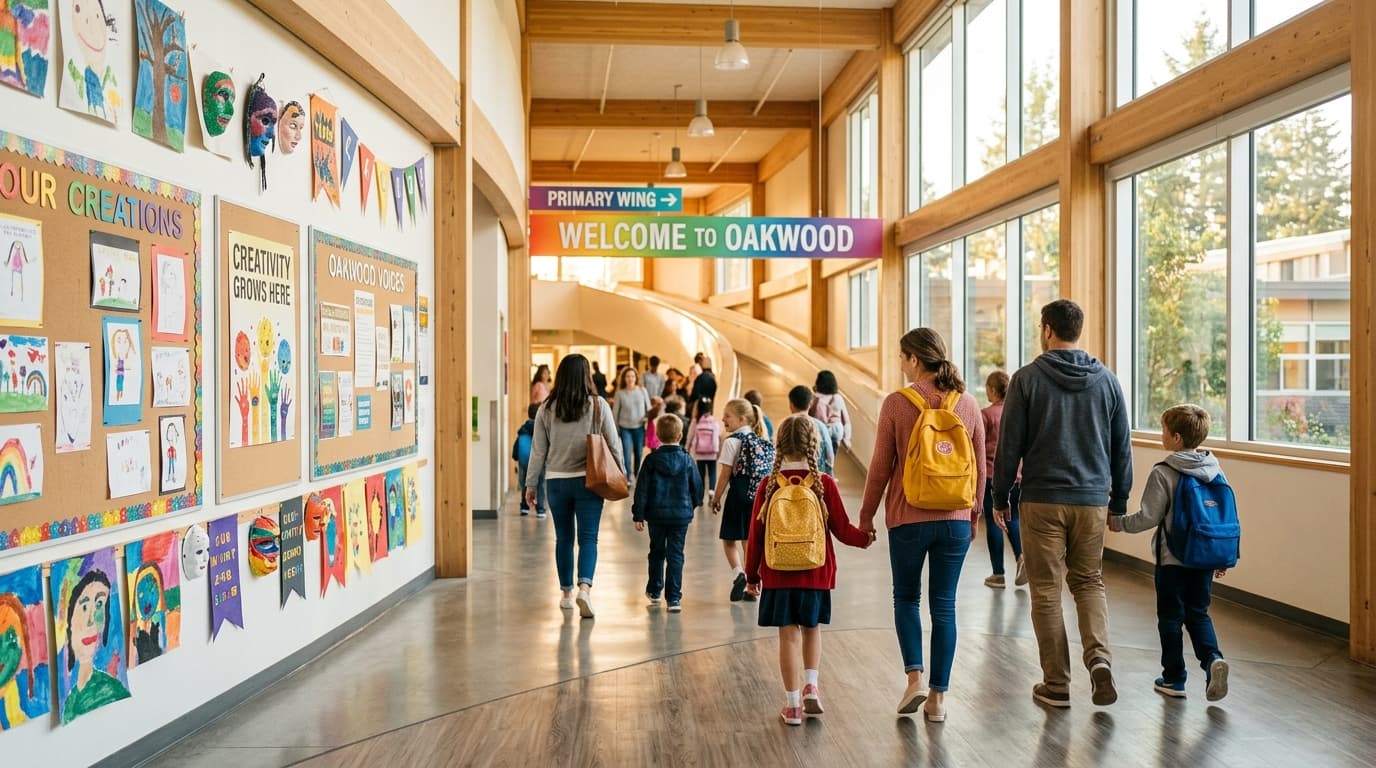
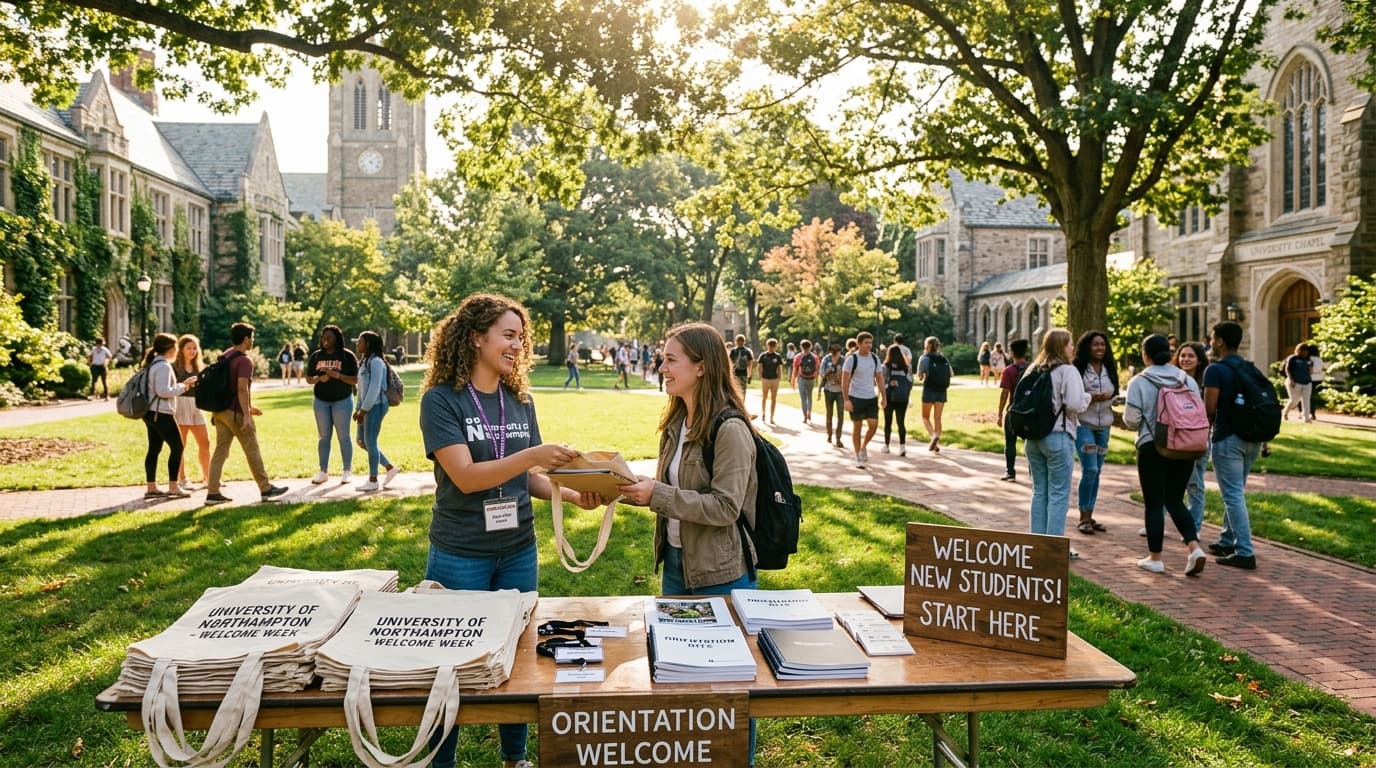
The foundation of a successful school event lies in smooth arrival logistics. Beginning check-in at 16:15 gives working parents a comfortable arrival window while preventing long queues at the main entrance. Setting up the Main Foyer Welcome Desk with student volunteers allows families to quickly collect personalized meeting schedules, building maps, and name tags before proceeding into the facility.
At 16:45, transitioning all guests into the Main Auditorium for the Principal's Opening Address aligns everyone on key academic goals for the upcoming year. Keeping this address to exactly fifteen minutes guarantees that general administrative remarks do not eat into critical classroom consultation time.
Core Academic and Elective Classroom Blocks
| Time | Event | | 17:00 | Time Block A: Grade 9 Classrooms | | 17:35 | Time Block B: Grade 10 Classrooms | | 18:10 | Coffee and Refreshment Break | | 18:30 | Time Block C: Grade 11 Classrooms | | 19:05 | Time Block D: Grade 12 & Elective Subjects |
The middle portion of the evening represents the core function of the event: face-to-face parent-teacher consultations across individual classrooms. Starting with lower grades in Classrooms 101-108 and 201-208, Time Blocks A and B focus heavily on foundational subject progress, attendance records, and early assessment milestones. Staggering these 35-minute windows prevents senior and junior hallway intersections, making navigation straightforward for parents.
A scheduled twenty-minute break at 18:10 in the School Cafeteria is essential for maintaining momentum. Teachers rely on this intermission to digest early notes and grab warm beverages, while parents use the time to review report cards. Following the break, Time Block C (Classrooms 301-308) and Time Block D (Classrooms 401-408 & Elective Wing) tackle higher-stakes topics, including college preparatory coursework, senior exams, and elective specializations in arts and physical education.
For administrators who also organize formal governance meetings, structuring detailed agendas with precise time boundaries is a familiar discipline. Just as executive directors rely on a board meeting timeline template to keep trustee discussions on schedule, school leaders must enforce rigid block times during consultation nights to avoid cascade delays.
Specialized Consultations and Event Wrap-Up
| Time | Event | | 19:40 | Specialist and Support Consultations | | 20:00 | Parent Feedback Collection | | 20:20 | Closing Remarks and Event Wrap-Up |
Not all student needs fit into standard subject consultations. Dedicating the 19:40 time slot to the Student Resource Center provides families with access to guidance counselors, learning support specialists, and career advisors. Placing this session toward the end of the evening allows parents to discuss specialized learning accommodations or college pathways using fresh context gained from their earlier subject teacher meetings.
The final phase of the night centers on data gathering and orderly wrap-up. Directing parents to digital kiosk stations or paper submission trays in the Main Foyer at 20:00 ensures high feedback return rates while experiences are top of mind. Concluding the night with brief announcements at 20:20 provides a clear operational signal that the event has ended, allowing custodial staff to begin facility resets.
School teams organizing social milestones alongside academic events can leverage similar chronological frameworks. Whether hosting end-of-year banquets using an anniversary party schedule template, running student celebrations with a birthday party timeline template, or planning community gatherings with a baby shower timeline, structured scheduling ensures smooth event delivery.
Parent-teacher evening Timeline vs Open House Itinerary
It is common for school communities to confuse a parent-teacher evening with a traditional school open house. While both events bring parents onto campus, their operational objectives, scheduling mechanics, and flow differ significantly.
| Operational Aspect | Parent-Teacher Evening Timeline | Open House Itinerary |
|---|---|---|
| Primary Objective | Individual student academic evaluation and consultations | Broad introduction to facilities, campus culture, and staff |
| Format | Time-blocked appointments and grade-level windows | Self-guided walkthroughs and drop-in presentations |
| Pacing Control | Rigid, timer-driven classroom transitions | Flexible, parent-driven exploration |
| Target Audience | Current enrolled families and core teaching faculty | Prospective families, current parents, and wider community |
| Resource Focus | Academic progress reports and learning support plans | Facilities, extra-curricular displays, and student showcases |
A parent-teacher evening requires strict timing precision because individual consultation slots are zero-sum: if one meeting runs five minutes long, every subsequent parent appointment in that block is delayed. An open house itinerary, by contrast, operates on a fluid drop-in model where guests browse art displays, science labs, and athletic facilities at their own pace.
Who Should Use This Template?
This structured schedule template is designed for primary, secondary, and post-secondary educational environments that require synchronized family-teacher meetings. Specifically, this layout serves:
- High School Principals & Vice-Principals: Who need to coordinate multi-departmental faculty teams and large student populations across expansive campuses.
- Middle School Grade Coordinators: Looking to structure smooth transitions between core block teachers and elective subject specialists.
- Academic Department Heads: Who want clear time blocks to manage parent queues outside high-demand subject classrooms.
- Special Educational Needs Coordinators (SENCOs): Who require designated, quiet drop-in windows to discuss support strategies without rushing.
- School Administrative Assistants: Tasked with printing schedules, setting up foyer check-in desks, and orchestrating logistics.
To explore how Chronolio tailors schedule management across different administrative and coordinator roles, review our specialized workflow guides.
How to Use This Template
Implementing this timetable for your upcoming academic evening takes only a few simple steps:
- Download or Duplicate the Master Schedule: Access the timeline online through Chronolio, or download offline versions in .docx or .pdf formats.
- Adjust Time Blocks to Match Your Bell Schedule: Modify the start and end times to fit your school's operating hours and typical travel times between wings.
- Assign Room Numbers and Teachers: Populate classroom numbers (e.g., Classrooms 101–108) and specialist locations specific to your campus map.
- Distribute Early Copies to Faculty: Provide teachers with their consultation rosters at least 48 hours prior so they can organize student portfolios.
- Publish the Parent Schedule: Send the master running order to families via your school communication portal alongside venue map links.
Tips for a Successful Parent-teacher evening
- Use Visual Countdown Timers: Display digital clocks or ring school bells at the end of each grade block to signal room transitions.
- Deploy Student Ambassadors: Station trained senior student volunteers at corridor intersections to help lost parents locate classrooms quickly.
- Pre-Print Student Progress Sheets: Have subject teachers prepare concise one-page academic summaries before parents sit down, maximizing discussion time.
- Establish a Stated Meeting Rule: Encourage teachers to enforce a strict five-minute limit per parent, redirecting complex discussions to follow-up phone calls.
- Provide Dedicated Waiting Chairs: Place two or three labeled chairs outside each classroom door so next-in-line parents can sit comfortably while waiting.
- Leverage Digital Feedback Kiosks: Position tablet stations near main exit doors to capture parent survey responses before families leave campus, as recommended in research on family engagement by the Harvard Graduate School of Education.
Common Mistakes to Avoid
- Omitting Transition Buffer Times: Failing to account for travel time between distant wings (e.g., science block to physical education facilities) leads to constant appointment slippage.
- Skipping the Administrative Welcome Address: Bypassing a central opening speech deprives leadership of a vital platform to explain school-wide assessment strategies.
- Forgetting Dedicated Support Services: Leaving guidance counselors and SEN specialists out of the master timetable results in underutilized support resources.
- Overloading Individual Teacher Schedules: Booking teachers with zero break periods causes severe mental fatigue, reducing consultation quality by late evening.
- Neglecting Clear Exit Directions: Failing to direct parent traffic systematically toward feedback kiosks and exit doors at closing causes corridor lingering.
In Summary
- A parent-teacher evening timeline structures a school's annual consultation event into manageable, synchronized time blocks.
- The template balances front-desk check-in, principal remarks, core classroom sessions, support drop-ins, and survey collection.
- Staggering grade-level blocks prevents hallway congestion and distributes parent traffic evenly across school wings.
- Including a dedicated cafeterial coffee break protects teacher energy and supports informal parent-staff networking.
- Customizable files are available for download in .docx and .pdf formats.
Planning a seamless parent-teacher evening requires precise temporal control, clear room assignments, and structured communication channels. Designed specifically for high school administrators, middle school coordinators, and academic event committees, this template ensures every family receives targeted updates on their child's educational journey while keeping school operations running strictly on time.
Customize Your Parent-Teacher Evening Timeline