





This Template at a Glance
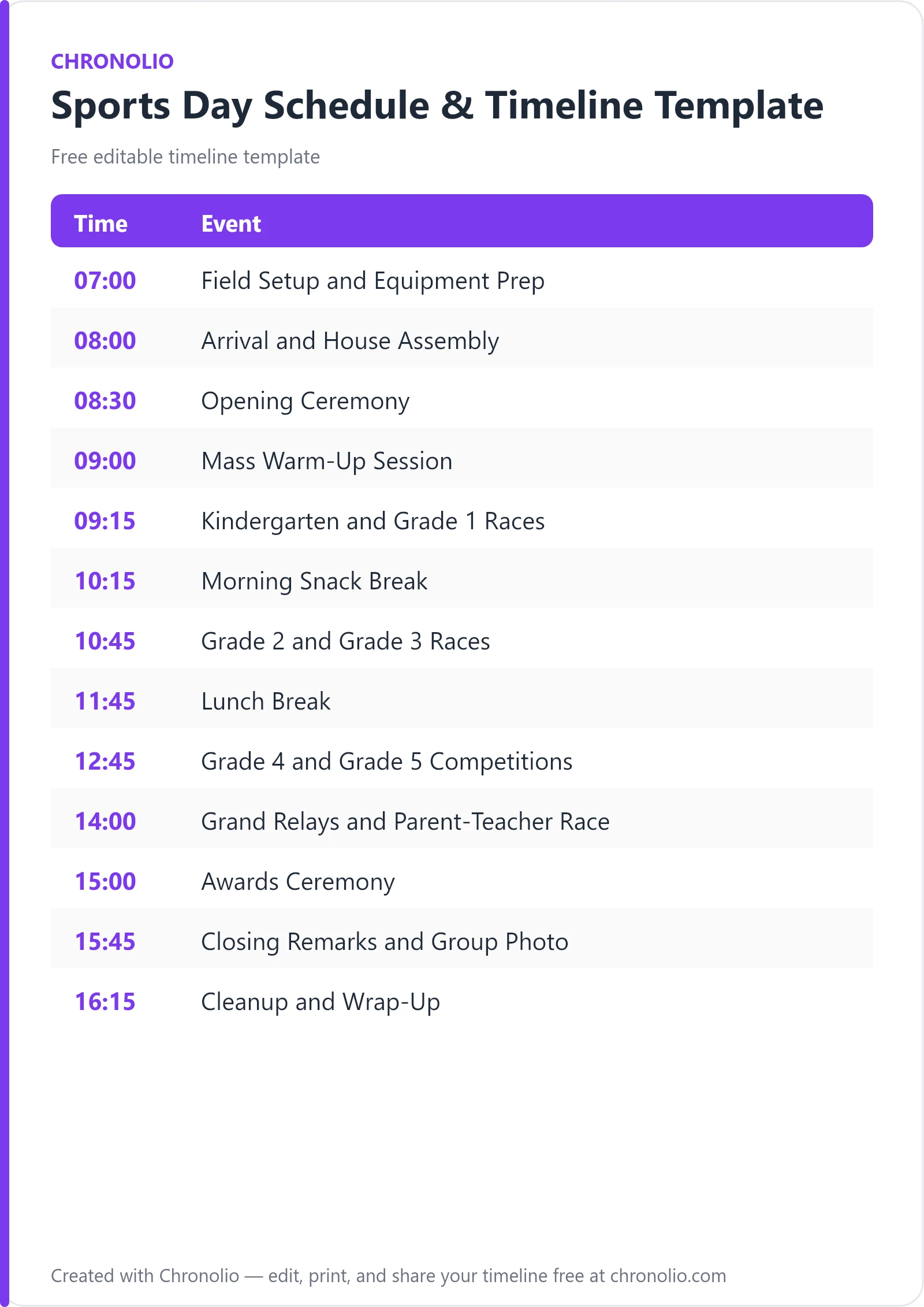
Here is the complete schedule this free template gives you — every time block, ready to edit, download, and share:
| Time | Event |
|---|---|
| 07:00 | Field Setup and Equipment Prep |
| 08:00 | Arrival and House Assembly |
| 08:30 | Opening Ceremony |
| 09:00 | Mass Warm-Up Session |
| 09:15 | Kindergarten and Grade 1 Races |
| 10:15 | Morning Snack Break |
| 10:45 | Grade 2 and Grade 3 Races |
| 11:45 | Lunch Break |
| 12:45 | Grade 4 and Grade 5 Competitions |
| 14:00 | Grand Relays and Parent-Teacher Race |
| 15:00 | Awards Ceremony |
| 15:45 | Closing Remarks and Group Photo |
| 16:15 | Cleanup and Wrap-Up |
What Is a Sports Day Timeline?
A sports day timeline is the operational master schedule that structures every phase of a school or community athletic meet, from pre-dawn equipment setup to final grounds restoration. Running a seamless outdoor athletic event requires coordinating hundreds of energetic students, eager parents, physical education staff, and track marshals across multiple competition zones. Without a clear chronological sequence, field events overlap, track marshals lose control of staging areas, and spectators struggle to follow the action.
Having managed dozens of multi-house athletic meets, I can attest that success relies heavily on detailed logistical timing. Whether you are staging a primary school fun day or an academy-wide track championship, a practical sports day schedule aligns PA announcements, official heat starts, medal staging, and catering drop-offs. This tested template reflects real-world sports day operations, ensuring student athletes stay energized, events start on time, and safety protocols remain uncompromised from start to finish.
Customize Your Sports Day Timeline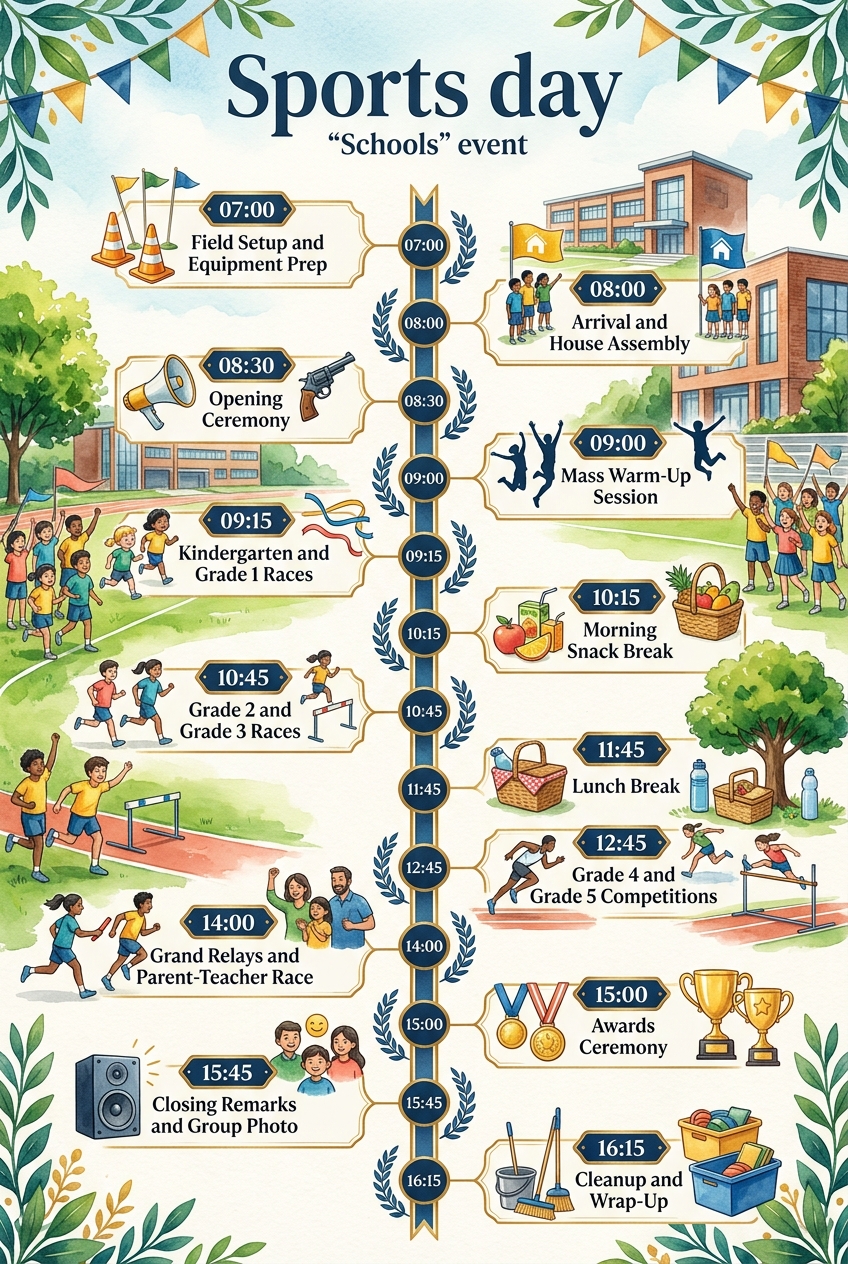
Why Sports Days Need a Timeline
Coordination on an athletic field presents unique operational hurdles that standard indoor event plans rarely encounter. Managing crowds scattered across bleachers, maintaining strict heat schedules, and keeping younger children engaged require a robust chronological framework. Similar to how a structured board meeting timeline keeps executive discussions focused, an athletic schedule prevents expensive operational delays on the field.
- Prevents Staging and Track Bottlenecks: A precise schedule ensures track marshals call age groups to the staging pens exactly when preceding races reach final heat status, keeping the running track active without overwhelming track judges.
- Protects Student Health and Energy: Outdoor physical activity demands calculated rest intervals. Pacing track competitions around dedicated snack, hydration, and lunch windows prevents heat exhaustion and keeps young athletes performing at their best.
- Synchronizes Multi-Zone Operations: While track events draw heavy spectator attention, field events like long jump and tug-of-war happen simultaneously. A master schedule keeps station judges, public address announcers, and timekeepers operating in unison.
- Enhances Spectator Experience: Parents and house supporters rely on predictable timing to cheer for specific grade heats. Clear schedules let families plan their arrival, grab refreshments, and secure prime seating in the grandstands without missing key moments.
What to Include in a Sports Day Timeline
When assembling your sports day running order, ensure every logistical phase is accounted for before publishing the official program:
- Site Preparation & Sound Testing: Pre-event setup for PA systems, finish line banners, ribbons, public safety tents, and water refilling stations.
- House Assembly & Parade: Designated gathering times for students to align in color-coded house seating areas before entering the main grounds.
- Ceremonial Openings: Official welcome speeches, house torch relay, national anthem, and student athlete oaths.
- Mass Warm-Up Sessions: High-energy, music-driven group stretching routines led by PE instructors to ready athletes and minimize injuries.
- Age-Tiered Track and Field Races: Chronological heat groupings—from short novelty sprints for younger grades to technical distance runs for senior students.
- Scheduled Hydration and Catering Breaks: Fixed windows for morning snacks, water station refills, and a sit-down lunch break for staff and families.
- Feature Events & Community Races: High-stakes inter-house relay finals and crowd-pleasing parent versus teacher challenge dashes.
- Podium Presentations & Wrap-Up: Awarding ribbons, medals, and championship trophies, followed by official house photography and site teardown.
Morning Setup and Opening Ceremonies
| Time | Event |
|---|---|
| 07:00 | Field Setup and Equipment Prep |
| 08:00 | Arrival and House Assembly |
| 08:30 | Opening Ceremony |
| 09:00 | Mass Warm-Up Session |
The operational foundation of any successful sports day is laid long before the first whistle blows. Commencing field setup at 07:00 on the Main Sports Field gives facilities personnel, sound engineers, and track marshals sixty uninterrupted minutes to erect finish line archways, position public address speakers, set up timing hardware, and establish shade canopies over hydration stations. Completing heavy setup early eliminates the hazard of service vehicles operating near early-arriving families.
As students and spectators enter the grounds at 08:00, clear signage directs them toward the Grandstands, where color-coded house seating banners create an immediate atmosphere of friendly team competition. The formal opening ceremony begins at 08:30 at the Main Stage with introductory remarks from school leadership, followed by traditional torch relay laps and student athlete pledges. Transitioning directly into a upbeat, 15-minute mass warm-up session on the main field at 09:00 gets students stretched, focused, and ready to compete safely. Much like setting the pace on a multi-phase celebration using a birthday party timeline, establishing an energetic morning ritual builds momentum for the entire event.
Junior Division Races and Mid-Morning Rest
| Time | Event |
|---|---|
| 09:15 | Kindergarten and Grade 1 Races |
| 10:15 | Morning Snack Break |
| 10:45 | Grade 2 and Grade 3 Races |
Morning schedule slots belong to junior participants, taking advantage of cool early temperatures when younger children exhibit peak energy levels. At 09:15, the running track opens for Kindergarten and Grade 1 events, incorporating gentle 50-meter dashes, beanbag relays, and low-hurdle obstacle tracks. Running these novelty races first builds confidence among young athletes and provides early photo opportunities for visiting families.
By 10:15, younger students require physical recovery and shade. Moving all participants to the Refreshment Tent for a designated 30-minute morning break allows volunteers to distribute sliced fresh fruit, chilled water, and light snacks. This break double-functions as a track calibration period where race marshals review early point totals. At 10:45, Grade 2 and Grade 3 athletes take to the running track for 100-meter sprints, traditional three-legged partner races, and lively shuttle relays that introduce formal baton-passing rules under official judge supervision.
Senior Division Events and Feature Races
| Time | Event |
|---|---|
| 11:45 | Lunch Break |
| 12:45 | Grade 4 and Grade 5 Competitions |
| 14:00 | Grand Relays and Parent-Teacher Race |
A structured 60-minute lunch break at 11:45 brings athletes, school staff, and families together across the Picnic Lawn. Pacing sports events around fixed meal periods mirrors the smooth guest management found in an anniversary party schedule, ensuring everyone recharges before the day's primary competitive heats. Food trucks, house picnic areas, and volunteer catering stalls benefit from this predictable, concentrated service window.
At 12:45, energy shifts to the main Athletic Field for upper-grade competitions. Grade 4 and Grade 5 athletes face off in technical 200-meter track heats, measured long jump pits, and crowd-favorite tug-of-war bracket matches. Staging these strength and endurance events in early afternoon allows older students to compete in front of an engaged crowd. The excitement culminates at 14:00 on the main track with the high-stakes inter-house grand relays, followed immediately by the annual parent versus teacher dash—a tradition that delivers high entertainment value and drives house spirit to its peak.
Podium Presentations and Event Wrap-Up
| Time | Event |
|---|---|
| 15:00 | Awards Ceremony |
| 15:45 | Closing Remarks and Group Photo |
| 16:15 | Cleanup and Wrap-Up |
At 15:00, attention moves to the Podium Stage for formal award presentations. Keeping medal delivery smooth requires pre-sorting certificates, ribbons, and trophies by heat and house points during the preceding relay races. Individual event winners step up to receiving blocks before the head official announces overall house point totals and awards the championship trophy.
Following the awards, the head organizer delivers closing remarks at 15:45, thanking staff, medical volunteers, and house captains. House groups, winning teams, and graduating cohorts gather around the podium stage for group photography, capturing memories before families depart. Finally, at 16:15, event staff and designated student volunteers begin systematic grounds restoration across the Main Sports Field. Packing away sound rigs, collecting house banners, storing track hurdles, and performing trash sweeps ensures the school grounds are left in pristine condition before nightfall.
Sports Day Timeline vs Master Event Agenda
It is common to confuse an operational sports day schedule with a general master event agenda. While both detail the day's outline, they serve distinct roles across technical event execution and public communication.
| Aspect | Sports Day Timeline | Master Event Agenda |
|---|---|---|
| Primary Audience | PE staff, track marshals, referees, catering lead | Parents, general spectators, visiting guests |
| Level of Detail | Exact heat times, equipment drop locations, setup windows | High-level overview of race blocks and meal times |
| Flexibility | Operational live updates made by track officials | Fixed reference document published on program cards |
| Focus | Logistical coordination and safety protocols | Guest orientation and key spectator highlights |
A sports day timeline provides the precise operational scaffolding that track marshals, timing officials, and facilities crews need behind the scenes. In contrast, a public agenda offers parents and visitors a streamlined overview of key highlights, such as when their child's grade takes the track or when lunch begins on the lawn.
Who Should Use This Template?
This sports day schedule template provides a flexible framework that can be adapted across various educational, civic, and athletic settings:
- Primary and Elementary Schools: Organize age-appropriate novelty races, house competitions, and parent involvement events safely.
- Secondary Academies and High Schools: Manage competitive track and field meets, official heat timing, and formal medal podium ceremonies.
- Community Athletic Clubs: Structure multi-sport community festivals, youth development meets, and regional track events.
- Corporate Sports Leagues: Run company field days, team-building relay events, and inter-departmental athletic tournaments.
- Youth Summer Camps: Direct multi-team color war competitions, outdoor obstacle challenges, and end-of-session awards ceremonies.
Chronolio supports the different team roles involved in executing complex outdoor events, allowing physical education directors, administrative assistants, venue managers, and volunteer coordinators to collaborate seamlessly on live operational schedules.
How to Use This Template
Implementing this sports day timeline for your upcoming athletic meet is straightforward:
- Duplicate or Download the Template: Access the schedule in Chronolio or download offline versions using our sports day Word template or sports day PDF template.
- Adjust for Your Event Duration: Modify race durations and block times based on total student enrolment, track lane counts, and available field spaces.
- Assign Staging Lead Roles: Attach specific staff names, PE teachers, and volunteer leads to each time block directly within your operational schedule.
- Publish and Distribute: Share digital links with event staff, display printed copies in teacher prep rooms, and distribute simplified public schedules to parents via school communication portals.
Tips for a Successful Sports Day
- Establish Clear Hydration Stations: Position multi-spigot water refilling stations near both the race finish line and student house seating tents to prevent heat exhaustion.
- Pre-Sort Award Ribbons and Medals: Organize ribbons, certificates, and trophies into labelled heat boxes ahead of time so podium presentations flow without delay.
- Schedule Built-In Buffer Periods: Allow 5 to 10 minutes between major grade-level race blocks to absorb minor track delays without pushing back lunch or final awards.
- Establish a Dedicated First Aid Hub: Set up a clearly marked, shaded medical tent with certified personnel near the central athletic field to manage minor scrapes or heat fatigue quickly.
- Maintain Central PA Communication: Designate a single experienced public speaker as master of ceremonies to make clear, authoritative announcements for staging calls and lost items.
- Conduct Pre-Event Volunteer Briefings: Gather house captains, parent marshals, and track officials 20 minutes before student assembly to review line-call protocols and emergency procedures.
Common Mistakes to Avoid
- Overcrowding Track Heats: Attempting to run too many individual runners without adequate lane separation leads to track collisions and disputed finish lines.
- Neglecting Sun Protection: Failing to provide adequate shade canopies over grandstand seating, staging pens, and official judge tables exposes attendees to severe heat discomfort.
- Ignoring Sound System Coverage: Placing PA speakers only near the main stage leaves distant field station judges and grandstand spectators unable to hear staging announcements.
- Rushing the Awards Presentation: Leaving insufficient time at the end of the day forces podium presentations into a chaotic rush, disappointing student medal winners and families.
- Forgetting Track Safety Boundaries: Failing to rope off team staging areas and finish line buffer zones allows excited spectators to spill onto active running lanes.
- Underestimating Equipment Cleanup Time: Assigning too few staff members to post-event teardown leads to misplaced school athletic gear and delayed venue handover.
In Summary
- A sports day schedule coordinates pre-event setup, ceremonies, track events, lunch breaks, grand relays, and grounds cleanup across a 10-hour operational day.
- Early morning field setup at 07:00 guarantees sound hardware, track lanes, and safety tents are ready before students arrive at 08:00.
- Age-tiered scheduling places junior grade races in the cool morning hours and senior relays in the afternoon for optimal physical performance.
- Dedicated morning snack and lunch windows protect student health, maintain energy levels, and provide predictable break times for spectator families.
- Pre-sorting ribbons and hosting organized podium ceremonies at 15:00 ensures student achievements are recognized professionally without delaying grounds teardown.
Planning a school athletic meet requires balancing tight logistical timings with clear safety controls and community engagement. By tailoring this operational timeline to your facility layout and student headcount, your physical education team can deliver a safe, punctual, and highly memorable sports day. Explore our complete library of timing resources—including our flexible baby shower timeline and religious event guides like the Catholic wedding timeline—to simplify event management across every occasion.
Customize Your Sports Day TimelineFor additional guidelines on youth athletic safety standards and recommended physical activity benchmarks, consult resources provided by the Youth Sport Trust and review pediatric health guidelines from the CDC Physical Activity Guidelines.