





This Template at a Glance
Here is the complete schedule this free template gives you — every time block, ready to edit, download, and share:
| Time | Event |
|---|---|
| 08:00 | Media Check-in |
| 09:00 | Coffee and Networking |
| 09:30 | Key Message Delivery |
| 10:15 | Speaker Lineup Presentation |
| 10:45 | Q and A Session |
| 11:45 | One-on-One Interviews |
| 13:00 | Working Lunch |
| 14:00 | Final Photo Opportunity |
What Is a Media/press briefing Timeline?
A Media/press briefing timeline is a precise operational roadmap designed to guide press officers, media relations managers, and executives through the execution of an impactful media event. Unlike general meeting agendas, a press schedule operates on strict time constraints tailored to reporter deadlines, broadcast windows, and publication cycles.
As a veteran communications director who has overseen dozens of high-stakes corporate announcements, I have seen firsthand how impeccable timing builds press credibility. Whether you are coordinating a major financial update, launching an innovative product, or handling a sensitive public relations issue, journalists expect clear organization, immediate access to visual b-roll assets, and dedicated time for questioning.
This template reflects real-world media relations best practices used across corporate, non-profit, and public sector communications teams. It provides a balanced flow that accommodates technical check-ins, core executive remarks, moderated Q&A, and high-value individual interviews without feeling rushed or chaotic.
Use this Media/Press Briefing Timeline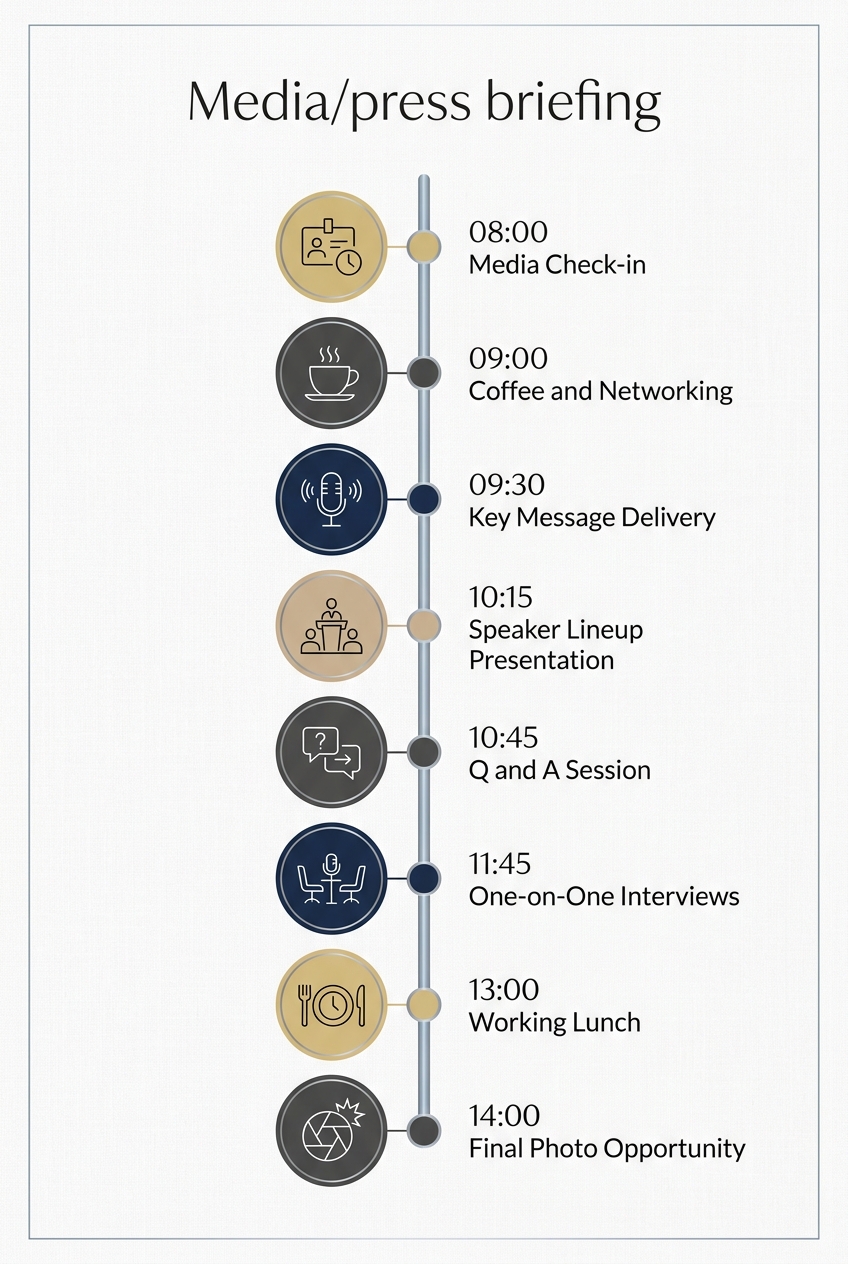
Why Media/press briefings Need a Timeline
In the fast-paced world of modern journalism, reporters operate under severe time constraints. If your press briefing starts late, micro-phones fail, or key executives run over their allotted presentation windows, beat reporters will simply leave to cover competing stories. A synchronized timeline guarantees that broadcast crews and print journalists get their required soundbites on time.
Beyond accommodating press deadlines, a structured timeline ensures flawless cross-departmental coordination. Technical crews, security officers, PR specialists, and C-suite executives must act in unison. Having a centralized master schedule eliminates confusion about sound checks, embargo lift times, and spatial movements between main stage areas and interview breakout suites.
Finally, maintaining a rigorous schedule preserves spokesperson composure and message retention. Executives who know exactly when they are presenting, answering open floor questions, or moving to private interview suites display greater confidence. This poise directly enhances how your brand's key messages are perceived in headline coverage.
What to Include in a Media/press briefing Timeline
To run an authoritative press event, your master schedule should clearly outline every physical movement, broadcast milestone, and media touchpoint:
- Security & Registration Check-in: Verification of press credentials, badge issuance, and digital media kit distribution.
- Media Lounge & Networking: Informal prep time for reporters to review background materials, enjoy refreshments, and set up preliminary gear.
- Key Message Presentation: Formal remarks delivered by primary organizational leadership backed by presentation visuals.
- Expert Panel Lineup: Targeted introductory insights from specialized subject-matter experts or technical leaders.
- Moderated Press Q&A: Open floor floor session allowing credentialed outlets to ask clarifying questions on the record.
- Exclusive 1-on-1 Interviews: Pre-booked, short-format breakout interviews for primary news outlets seeking exclusive angles.
- Working Hospitality & Photo Calls: Dedicated time for visual press documentation, headshots, stage photos, and informal backgrounding over lunch.
Phase 1: Media Reception & Arrival Setup
| Time | Event |
|---|---|
| 08:00 | Media Check-in |
| 09:00 | Coffee and Networking |
08:00 - 09:00 | Media Check-in | Main Lobby 09:00 - 09:30 | Coffee and Networking | Press Lounge
The initial arrival window sets the professional tone for your entire press briefing. Beginning at 08:00 at the Main Lobby, dedicated press officers manage credential verification and press kit delivery. Allowing an hour for check-in prevents bottlenecking at security checkpoints, especially when dealing with heavy camera equipment carried by broadcast crews. During this time, press officers distribute embargoed press releases, flash drives containing high-resolution b-roll, and printed agendas.
At 09:00 in the Press Lounge, attendees transition into a informal networking and refreshment period. Providing light breakfast items, hot coffee, and reliable, high-speed Wi-Fi gives journalists time to scan your press kits, adjust their coverage angles, and coordinate with news desks before formal remarks begin. This period also allows your internal communications team to gauge media attendance and brief executives on key journalists in the room.
If your event revolves around complex organizational change, you can adapt this reception structure by reviewing our specialized M&A Announcement Event Schedule & Planning Guide or download printable planning formats like our Media Briefing Docx Template and Media Briefing PDF Template.
Phase 2: Core Briefing & Expert Panel
| Time | Event |
|---|---|
| 09:30 | Key Message Delivery |
| 10:15 | Speaker Lineup Presentation |
09:30 - 10:15 | Key Message Delivery | Briefing Room A 10:15 - 10:45 | Speaker Lineup Presentation | Briefing Room A
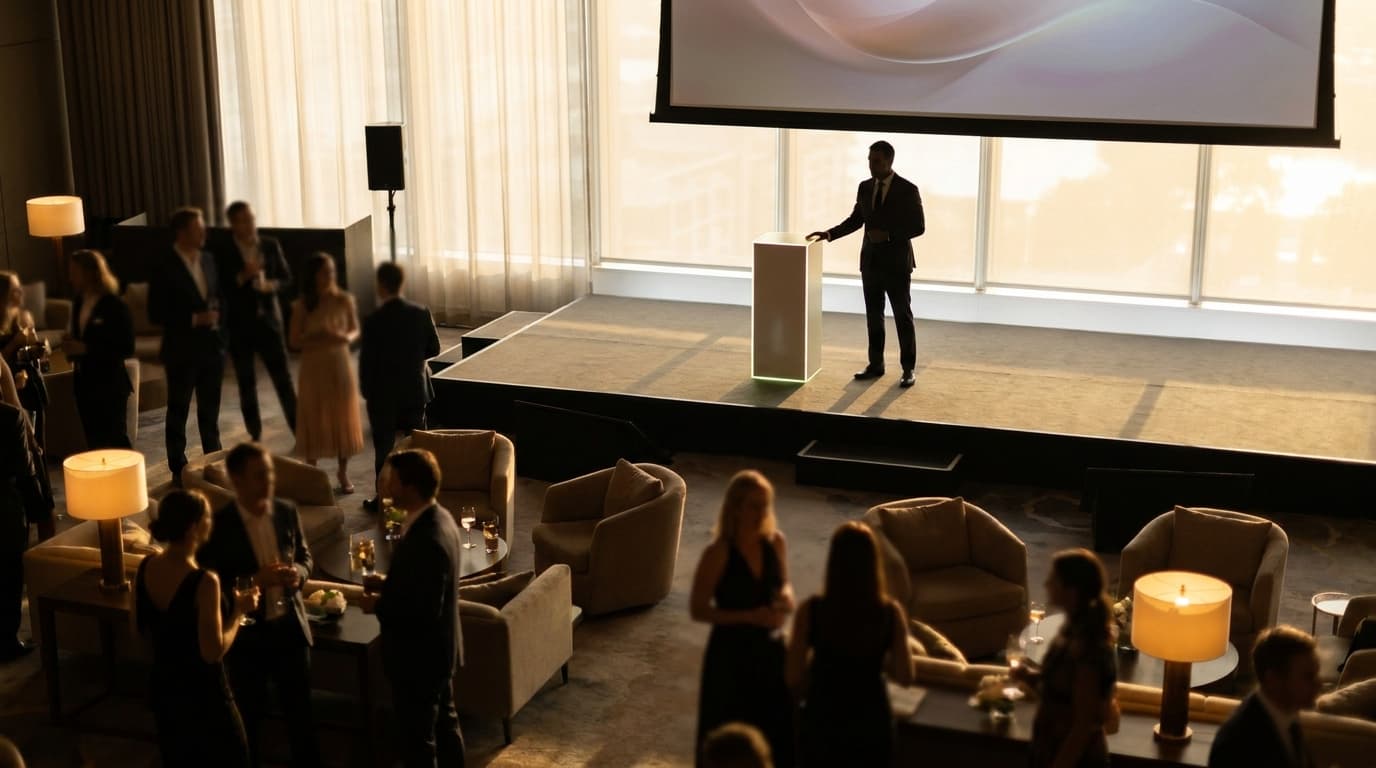
Promptly at 09:30 in Briefing Room A, doors close as the communications director initiates key message delivery on the main stage. This 45-minute segment is the heart of your press event, where leadership articulates major strategic updates, quarterly developments, or strategic organizational transitions. Utilizing crisp visual aids, clear infographic slides, and framed soundbites helps reporters digest complex data points instantly.
Immediately following the core message delivery at 10:15 in Briefing Room A, the speaker lineup presentation introduces subject matter specialists. Rather than repeating primary headlines, each panel member offers targeted commentary on specific operational, technical, or market dimensions. This tiered presentation structure gives journalists immediate access to diverse quotes from multiple organizational authorities in a single sitting.
For commercial product reveals or technology showcases, this stage works seamlessly alongside our dedicated Product launch event timeline: A Guide to a Flawless Reveal and our Product Launch Timeline Template.
Phase 3: Open Media Q&A & Dedicated Interviews
| Time | Event |
|---|---|
| 10:45 | Q and A Session |
| 11:45 | One-on-One Interviews |
10:45 - 11:30 | Q and A Session | Briefing Room A 11:45 - 13:00 | One-on-One Interviews | Breakout Suites
At 10:45 in Briefing Room A, the floor opens for a moderated question and answer session. A skilled PR moderator controls room microphones, ensures equal access among national outlets and beat reporters, and keeps spokesperson answers concise. This 45-minute block provides transparency while guarding against single-outlet domination or off-topic derailments.
Following a brief 15-minute transition, the schedule moves to 11:45 in the Breakout Suites for pre-scheduled one-on-one media interviews. These quiet, sound-treated rooms are reserved for tier-one media outlets, broadcast networks, and key industry analysts who booked exclusive interview slots prior to the event. Structuring these as tight 10- to 15-minute windows maximizes executive availability while granting journalists tailored content for broadcast or investigative features.
Managing critical executive agendas during media days requires executive alignment. Consider pairing this schedule with our Board Meeting Timeline Template or review our Strategy Session Agenda Guide to prepare leadership prior to meeting the press.
Phase 4: Media Hospitality & Photo Staging
| Time | Event |
|---|---|
| 13:00 | Working Lunch |
| 14:00 | Final Photo Opportunity |
13:00 - 14:00 | Working Lunch | Dining Hall 14:00 - 14:30 | Final Photo Opportunity | Main Stage
At 13:00 in the Dining Hall, the event moves into a relaxed working lunch for journalists and staff. Providing high-quality catering onsite keeps reporters on venue grounds as they begin drafting initial news copy. It also fosters informal, off-the-record background conversations between media personnel and corporate communications officers, building long-term professional media relationships according to standards outlined by the Public Relations Society of America (PRSA).
The formal schedule concludes at 14:00 on the Main Stage with a structured final photo opportunity. Professional stage lighting, corporate backdrops, and arranged group positions allow photojournalists and camera operators to capture crisp visual documentation. Having a designated photo call prevents random, unstructured photo requests throughout the morning and guarantees high-caliber image distribution across media wires like Reuters and AP.
For organizations integrating press briefings into larger multi-day conventions or staff celebrations, see our guide on the Corporate Year-End Function Timeline.
Media/press briefing Timeline vs Press Run Sheet
It is common to confuse a public-facing press briefing schedule with an internal broadcast run sheet. While both manage event timing, they target entirely distinct audiences and operational detail levels.
| Feature | Media/Press Briefing Timeline | Production Run Sheet |
|---|---|---|
| Primary Audience | Journalists, executive spokespersons, PR leads | AV technicians, floor managers, stage crews |
| Level of Detail | High-level event blocks (15-60 min windows) | Minute-by-minute or second-by-second cues |
| Focus | Narrative flow, key messages, interview slots | Mic toggles, slide triggers, lighting presets |
| Distribution | Press kits, media advisories, digital invites | Internal crew headsets, sound booth binders |
| Terminology | On the record, soundbites, panel, Q&A | Teleprompter, lavalier mic, lower thirds, b-roll |
While your media/press briefing timeline outlines external reporter expectations, your technical production team will use a granular run sheet behind the scenes to control lighting, teleprompter cues, and audio feeds.
Who Should Use This Template?
Managing press operations requires explicit coordination across organizational divisions. Chronolio offers customizable schedule tools adapted to various professional roles involved in public communication:
- Corporate Communications Directors: To structure financial, crisis, or organizational news updates for national news outlets.
- Public Relations Agencies: To run professional press days, client product reveals, and executive media tours.
- Government & Public Affairs Officers: To host agency briefings, policy announcements, and public safety updates.
- Non-Profit & Foundation PR Teams: To announce grant awards, research findings, and advocacy campaigns.
- Tech Startup Founders & VCs: To announce funding rounds, executive hires, and strategic platform pivots.
- University & Research Institute Press Offices: To showcase academic breakthroughs, clinical trial results, and campus developments.
How to Use This Template
- Duplicate or Download: Access this template directly on Chronolio or download our printable Media Briefing Docx or Media Briefing PDF versions.
- Adjust Specific Timings: Align check-in and presentation blocks with your local media market's morning filing deadlines or morning news broadcast cycles.
- Assign Executive Roles: Map specific executives and technical experts to each section of the speaker lineup and Q&A segment.
- Distribute to Key Stakeholders: Share digital read-only access with journalists in advance and print physical copies for check-in desks and media kits.
Tips for a Successful Media/press briefing
- Enforce Strict Timekeeping: Designate a dedicated PR floor manager equipped with visible countdown timers to keep executive presenters on schedule.
- Prepare an Embargo Strategy: Clearly mark digital media kits with explicit embargo lift times if distributing materials before remarks begin.
- Test All Audio/Visual Gear Early: Perform comprehensive microphone checks, slide clicker tests, and live stream connection tests before check-in opens at 08:00.
- Train Spokespersons on Q&A Techniques: Conduct mock interview rehearsals so leaders master bridging back to primary messaging during difficult questioning.
- Provide Dedicated Media Space: Ensure the press lounge features accessible power strips, high-speed ethernet or Wi-Fi, and adequate workspace for journalists to file stories onsite.
- Establish Clear Ground Rules: Explicitly state at the start of the Q&A session whether statements are on the record, off the record, or for background context.
Common Mistakes to Avoid
- Overloading the Presentation Stage: Packing too many slides or multi-page speeches into the opening presentation leaves insufficient time for reporter questions.
- Ignoring Broadcast Technical Needs: Failing to provide a mult-box for audio splitters or adequate camera riser platforms frustrates television news crews.
- Unclear Q&A Moderation: Allowing single attendees to monopolize questioning creates an unhelpful environment for other credentialed outlets.
- Forgetting B-Roll and Visual Assets: Providing only text press releases without high-resolution video footage or executive headshots reduces visual media coverage.
- Late Running Schedules: Overrunning initial schedule blocks forces journalists to abandon your event before one-on-one interviews begin.
- Unprepared Crisis Contingencies: Lacking pre-approved messaging points for sensitive industry questions can derail an otherwise routine briefing.
In Summary
- A media/press briefing timeline guarantees professional event execution by balancing formal remarks with interactive Q&A and private interviews.
- Allocating early arrival windows for check-in ensures camera crews and beat reporters are fully set up before presentations start.
- Keeping opening executive presentations under 45 minutes protects crucial floor time for open press Q&A.
- Pre-scheduled breakout interview suites give tier-one media outlets exclusive angles without delaying the primary run of show.
- Dedicated photo calls and working lunches offer valuable visual documentation opportunities and informal backgrounding context.
Planning a high-impact announcement requires precision, clarity, and reliability. By utilizing this standardized media/press briefing timeline, corporate communications leads, PR agency directors, and public affairs managers can host authoritative press events that respect journalist deadlines and deliver powerful media coverage.
Use this Media/Press Briefing Timeline