





This Template at a Glance
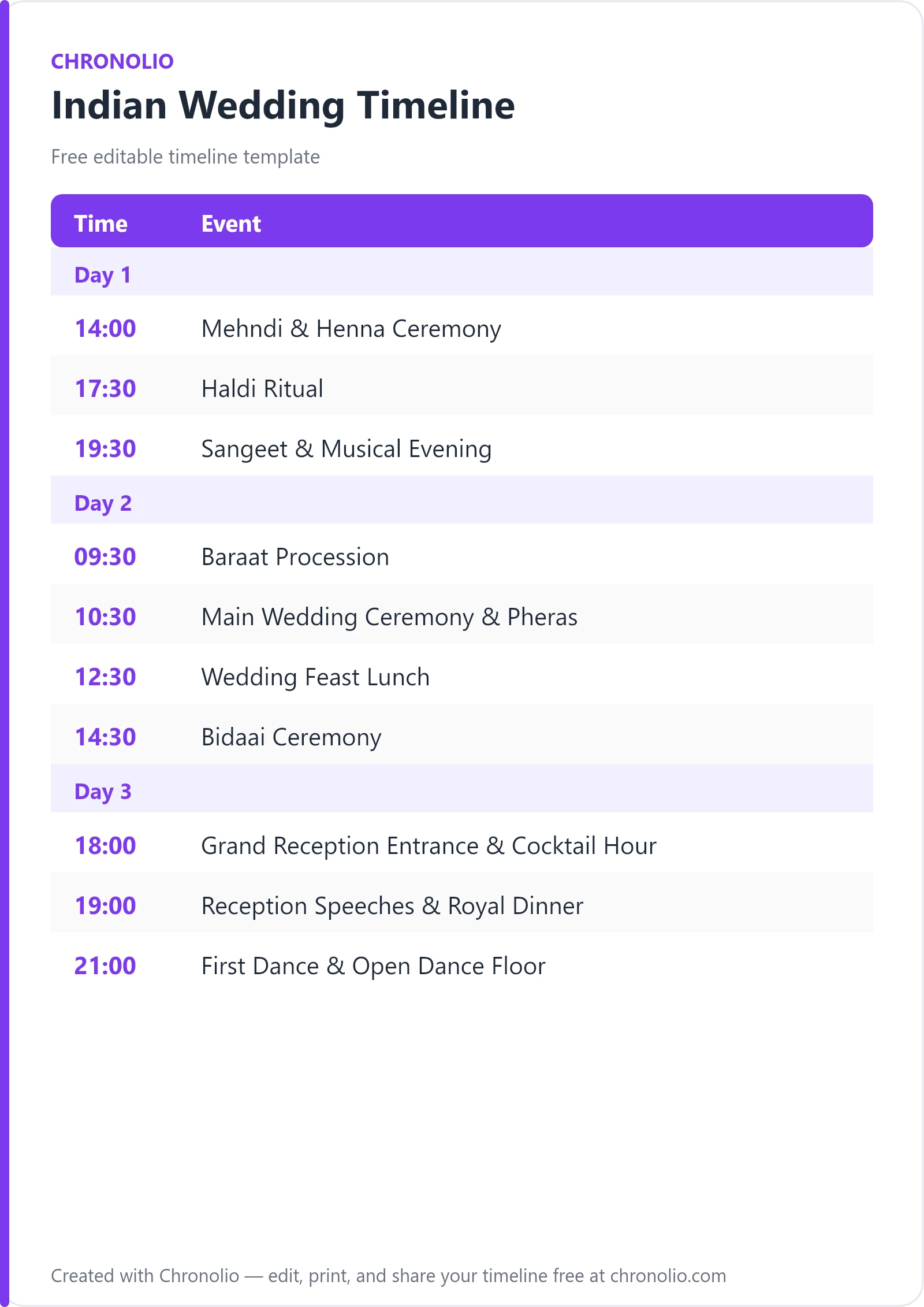
Here is the complete schedule this free template gives you — every time block, ready to edit, download, and share:
| Day | Time | Event |
|---|---|---|
| 1 | 14:00 | Mehndi & Henna Ceremony |
| 1 | 17:30 | Haldi Ritual |
| 1 | 19:30 | Sangeet & Musical Evening |
| 2 | 09:30 | Baraat Procession |
| 2 | 10:30 | Main Wedding Ceremony & Pheras |
| 2 | 12:30 | Wedding Feast Lunch |
| 2 | 14:30 | Bidaai Ceremony |
| 3 | 18:00 | Grand Reception Entrance & Cocktail Hour |
| 3 | 19:00 | Reception Speeches & Royal Dinner |
| 3 | 21:00 | First Dance & Open Dance Floor |
What Is an Indian Wedding Timeline (Multi-Day)?
An Indian wedding timeline (multi-day) is a detailed running order that sequences the complex, multi-event celebrations characteristic of modern South Asian nuptials. Unlike single-day celebrations, an Indian wedding involves several distinct events spread across multiple venues, requiring dedicated time slots for outfit changes, hair and makeup shifts, religious priest preparations, and elaborate catering setups.
A traditional South Asian celebration blends sacred Vedic rituals with energetic social gatherings. Managing these moving parts requires clear operational boundaries so that family members, guests, and hospitality teams stay synchronized. This guide reflects real-world hospitality logistics and vendor best practices, ensuring your celebratory flow remains seamless from the first henna application to the final dance floor track.
Customize Your Multi-Day Indian Wedding Timeline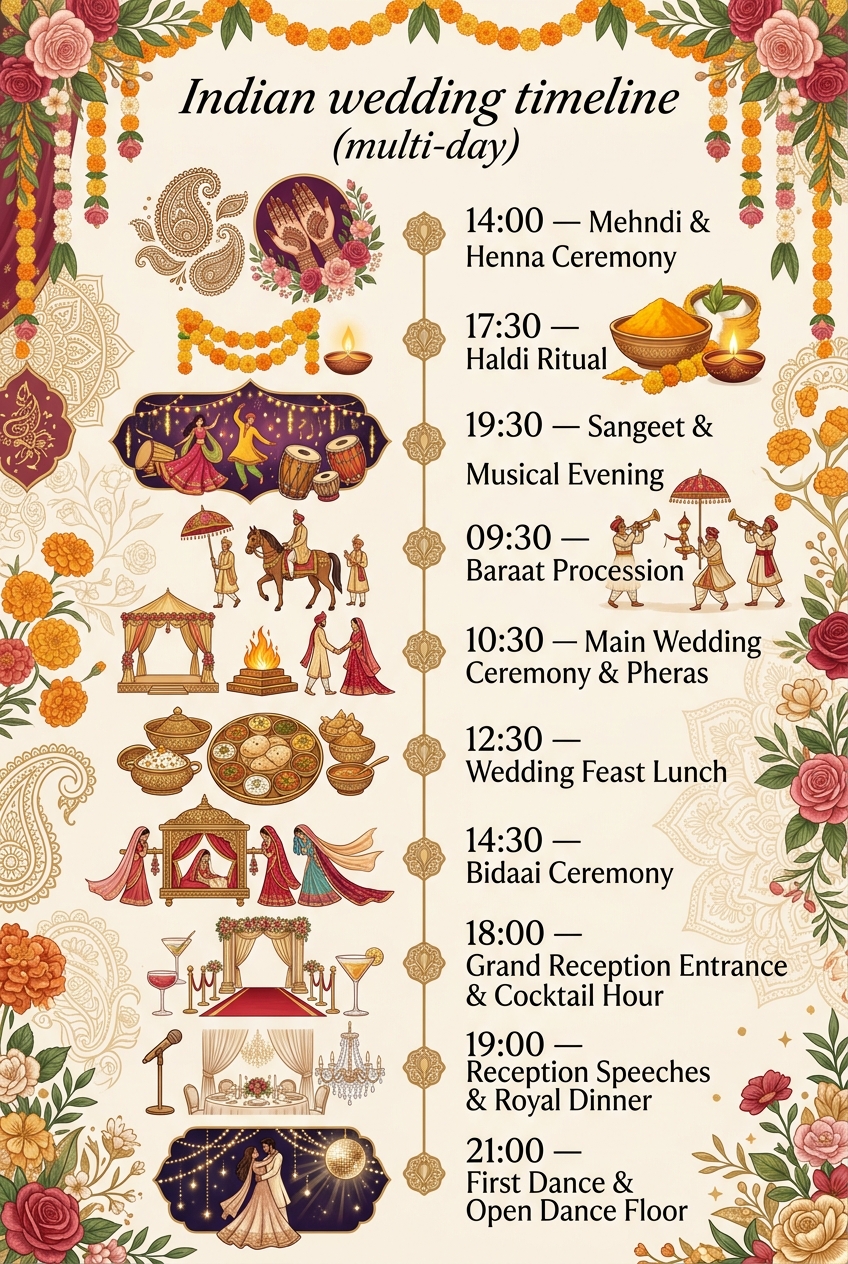
Why Indian Weddings Need a Timeline
Planning a multi-day celebration without a central schedule quickly leads to vendor confusion, extended downtime, and delayed sacred rituals. Because Indian weddings feature hundreds of guests, dynamic sound and lighting setups, and multiple catering spreads, a synchronized master schedule is essential for operational success.
- Coordinate Multiple Venues and Vendors: Decorators, caterers, dhol players, makeup artists, and photographers must know exact call times for distinct ballrooms and lawns.
- Manage Wardrobe and Styling Transitions: The bride, groom, and family members change into different heavy traditional outfits and jewelry styles between rituals, requiring allocated prep windows.
- Honor Sacred Timings (Muhurat): Hindu Vedic ceremonies rely on astrologically favorable timeframes; a delayed Baraat can compromise the auspicious timing of the mandap rituals.
- Prevent Guest Fatigue: Balancing vibrant dancing sessions with restful breaks keeps guests energized across multiple days of festivities.
Whether you are organizing an elaborate destination affair or a grand hotel ballroom event, a structured schedule ensures every tradition receives the time and focus it deserves. If you are comparing different cultural frameworks, you might also examine a Christian wedding timeline or a single-day civil ceremony wedding timeline.
What to Include in an Indian Wedding Timeline
A comprehensive multi-day schedule accounts for both private preparation hours and public ceremonial milestones. When drafting your master document, ensure you capture these essential elements:
- Pre-Wedding Ritual Hours: Dedicated slots for Mehndi application, Haldi turmeric blessings, and pre-event family photos.
- Sangeet Performance Lineup: Sequence of dance performances, emcee introductions, audio checks, and open dance floor hours.
- Baraat Assembly & Route: Gathering times for the groom's procession, live dhol drummers, and the milni (family greeting) at the entrance.
- Mandap Ceremony Milestones: Kanyadaan, Jai Mala (garland exchange), Mangalsutra tying, and the seven Pheras around the holy fire.
- Catering & Hospitality Shifts: Post-ceremony lunch spreads, tea/coffee service, cocktail hour hors d'oeuvres, and formal reception dinners.
- Emotional Transitions: Bidaai send-off details, room turnover intervals, and late-night reception entrances.
Day 1: Pre-Wedding Celebrations (Mehndi, Haldi, and Sangeet)
| Time | Event |
|---|---|
| 14:00 | Mehndi & Henna Ceremony |
| 17:30 | Haldi Ritual |
| 19:30 | Sangeet & Musical Evening |
Day one establishes the joyful, festive energy of the wedding weekend. The afternoon begins on the Royal Courtyard Lawn with the Mehndi ceremony, where intricate henna paste is applied to the bride’s hands and feet while female family members sing traditional folk songs. Because intricate bridal henna application requires up to three hours of constant sitting, guests enjoy light refreshments, floral jewelry making, and casual background music.
Following the henna session, guests gather at the Poolside Terrace for the playful Haldi ritual. Family members apply auspicious turmeric paste to both the bride and groom to cleanse and brighten their skin before the main wedding day. Guests traditionally dress in yellow attire, and the event finishes with playful water splashes and group photography.
As night falls, festivities transition to the Imperial Ballroom for the high-energy Sangeet. This evening features rehearsed dance performances by cousins, parents, and friends, acting as a friendly musical competition between both families. Similar in festive energy to a Western wedding welcome party or a extended rehearsal dinner timeline template, the Sangeet concludes with late-night buffet dining and an open dance floor managed by a live DJ.
Day 2 Morning: Baraat, Mandap Ceremony, and Bidaai
| Time | Event |
|---|---|
| 09:30 | Baraat Procession |
| 10:30 | Main Wedding Ceremony & Pheras |
| 12:30 | Wedding Feast Lunch |
| 14:30 | Bidaai Ceremony |
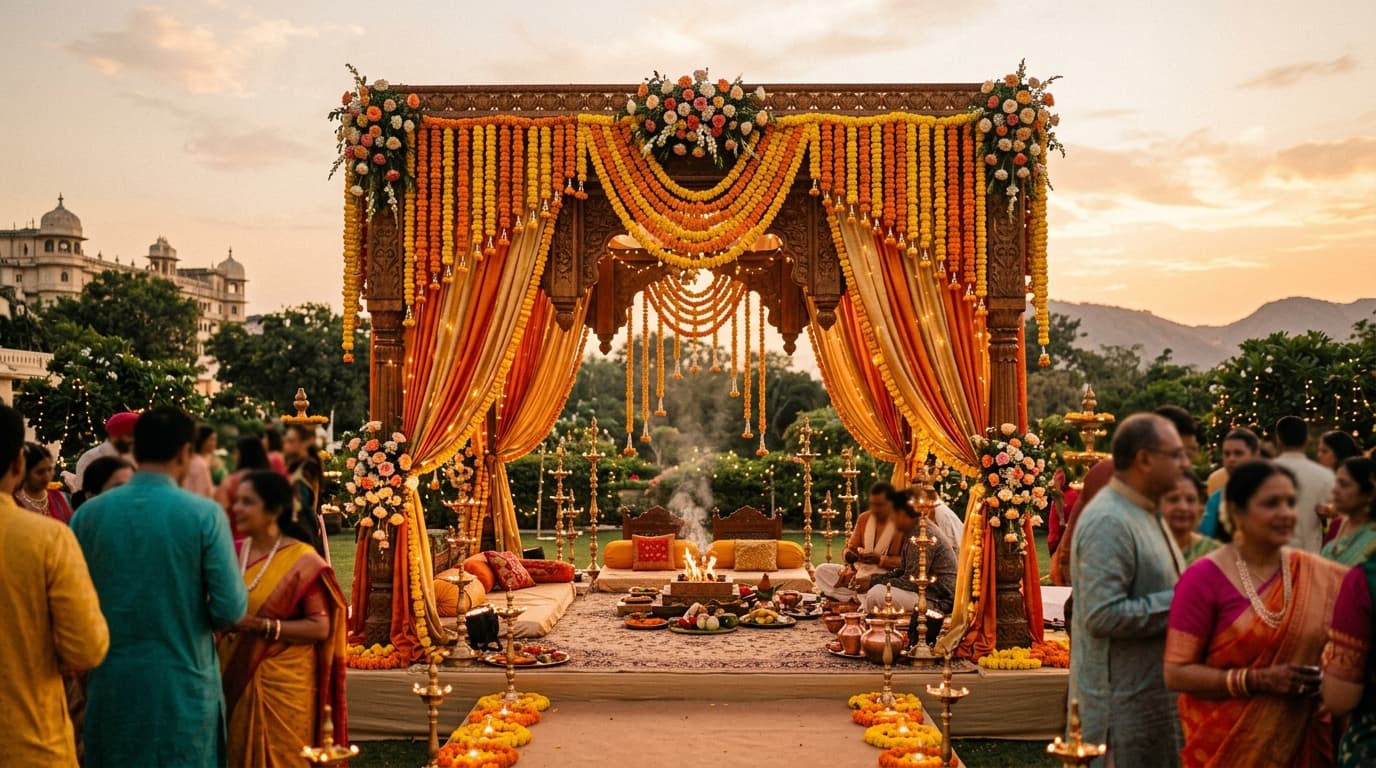
Day two opens with the groom's festive arrival along the Hotel Entrance Driveway. The Baraat procession features live dhol drummers, lively dancing by the groom's family (barati), and the groom arriving on a decorated horse or classic car. At the venue archway, the bride's family warmly welcomes the procession through the formal Milni greeting and floral garland exchanges.
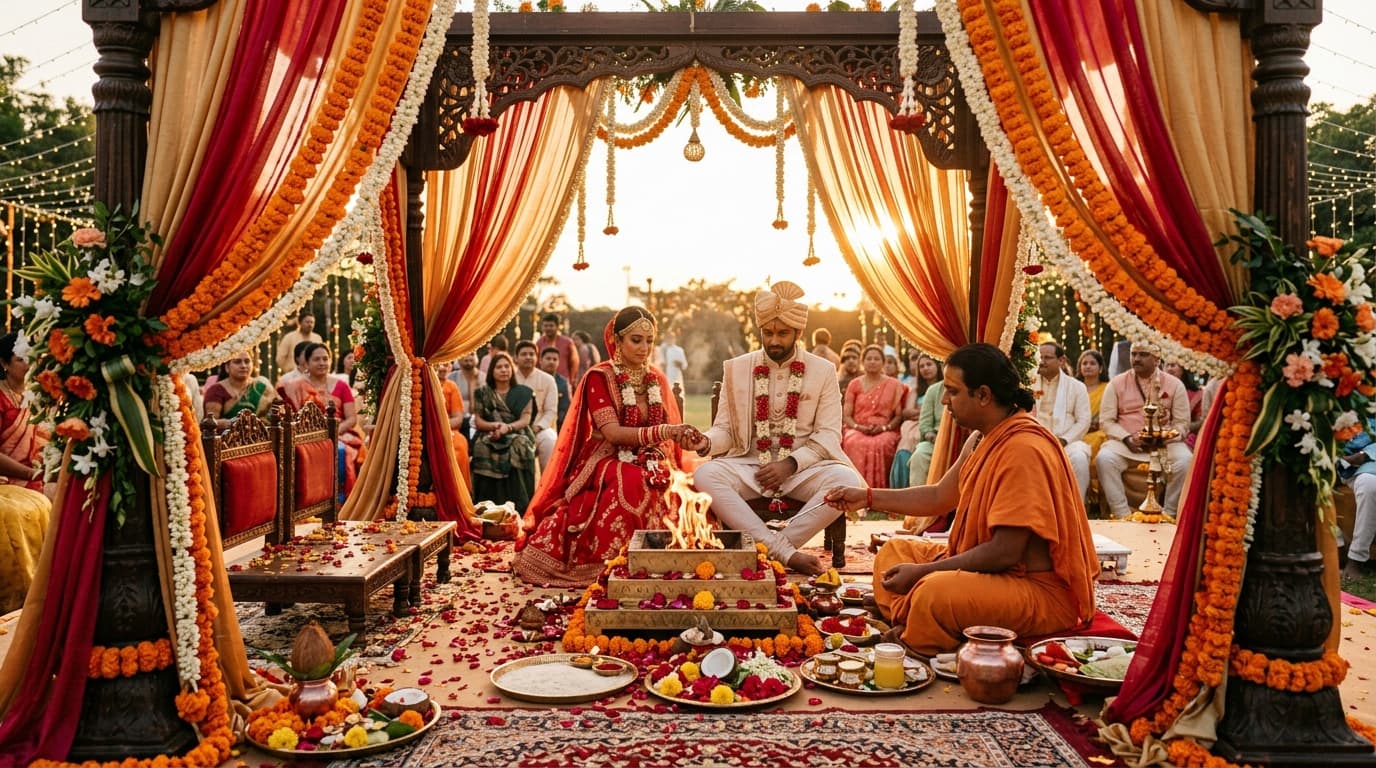
Guests then move into the Mandap Pavilion in the Grand Palace Gardens for the sacred Hindu wedding rituals. Guided by the family priest (pandit), the couple exchanges floral garlands (Jai Mala) before taking their seats under the floral mandap. The priest conducts sacred Vedic chants, the tying of the nuptial knot, and the seven Pheras (circumambulations) around the holy fire. Unlike a structured Western service like a Catholic wedding timeline or a brief church wedding ceremony timeline, guests may quietly socialize and enjoy warm beverages during portions of the two-hour ritual.
Following the solemnization, guests step into the Grand Garden Banquet Tent for a traditional vegetarian wedding feast. After dining, everyone gathers at the Main Archway for the emotional Bidaai ceremony, where the bride bids a tearful farewell to her parental family as she steps into her new life with her husband.
Day 2 Evening: The Grand Reception Gala
| Time | Event |
|---|---|
| 18:00 | Grand Reception Entrance & Cocktail Hour |
| 19:00 | Reception Speeches & Royal Dinner |
| 21:00 | First Dance & Open Dance Floor |
After a short afternoon rest and wardrobe change into formal evening gowns and tuxedos, guests arrive at the Crystal Ballroom Foyer of the Monarch Hotel for cocktail hour. Attendants serve signature cocktails and passed hors d'oeuvres while guests mingle and leave messages in the guestbook. The couple makes their grand, televised-style entry into the room once all attendees are seated.
Inside the Grand Crystal Ballroom, the program transitions into formal speeches by parents, maid of honor, and best man, celebrating the couple's union. A lavish multi-course gourmet dinner is served, accompanied by ambient lighting and video recap montages on screen.
The celebration reaches its climax as the newlyweds perform their romantic first dance, followed by formal parent dances. The DJ opens the main stage with a mix of Bollywood hits and modern pop tracks, keeping the dance floor packed until the late-night close. Couples looking for streamlined evening formats after intimate destination vows can compare this gala flow against an elopement timeline.
Indian Wedding Timeline (Multi-Day) vs Single-Day Western Wedding Schedule
| Operational Aspect | Multi-Day Indian Wedding Timeline | Single-Day Western Wedding Schedule |
|---|---|---|
| Duration & Scope | Spans 2 to 4 days across multiple venues | Spans 8 to 12 hours on a single day |
| Outfit Changes | 4 to 6 distinct traditional outfits per person | 1 to 2 outfits (Ceremony & Reception) |
| Main Ceremony Style | Interactive 2-hour Vedic ritual under a Mandap | 30 to 60-minute linear seated service |
| Musical Focus | Live dhol drummers, Sangeet choreography, DJ | Organist, acoustic duet, live reception band |
| Catering Logistics | Multiple heavy meals, live action food stations | Plated dinner or single buffet service |
An Indian wedding schedule requires significantly greater buffer times and setup windows than a traditional single-day event. Because guests, families, and vendors transition between distinct event concepts—from vibrant poolside yellow themes to formal black-tie ballrooms—event coordinators must track venue resets and styling schedules with extreme precision.
Who Should Use This Template?
This master schedule template is engineered for couples, families, and professional planners managing complex South Asian wedding celebrations.
- Bride and Groom: Couples seeking a clear visual master schedule to manage their outfit changes, artist bookings, and family obligations.
- Professional Wedding Planners: Hospitality coordinators who need a clear operational framework to manage multi-venue setups and vendor teams.
- Hotel & Venue Event Managers: Resort and ballroom directors aligning banquet staff, room setups, and catering delivery schedules.
- Decorators & Floral Designers: Production crews needing precise access windows for mandap construction, Sangeet stage building, and ballroom transformations.
- Photographers & Videographers: Media teams mapping out shot lists, family portraits, and key ceremonial milestones.
Chronolio offers specialized workflow tools tailored to various event management roles, ensuring every vendor accesses the exact timeline updates they need in real time.
How to Use This Template
- Download or Duplicate: Start by customizing this schedule online or downloading the editable /downloads/indian-wedding-timeline.docx or /downloads/indian-wedding-timeline.pdf formats.
- Align with Your Priest (Pandit): Confirm your astrologically recommended auspicious time (muhurat) for the main Mandap ceremony and set your morning Baraat times accordingly.
- Adjust Vendor Call Times: Insert arrival hours for hair and makeup artists, henna artists, decorators, and caterers based on their setup requirements.
- Distribute Custom Schedules: Share tailored copies with your core bridal party, family leads, and vendor leads so everyone knows their specific arrival times.
Tips for a Successful Multi-Day Indian Wedding
- Schedule Heavy Makeup Early: Bridal makeup and dupatta draping take up to three hours; schedule your styling team to start at least four hours before the Baraat arrival.
- Provide Guest Hydration Stations: Keep cold water, fresh coconut juice, and masala chai flowing during outdoor afternoon rituals like Mehndi and Haldi.
- Build Buffers into the Baraat: The groom's procession almost always runs long due to energetic dancing; add a 30-minute buffer before the planned Mandap start.
- Set Up a Dedicated Vendor Holding Room: Provide photographers, sound engineers, and decorators with a quiet break room to eat and recharge between long event shifts.
- Designate a Family Logistics Lead: Assign a trusted relative or coordinator to keep the groom’s and bride’s family members on schedule for group portraits.
- Consult Experienced Cultural Planners: Work with vendors familiar with traditional South Asian customs by reviewing industry guides on platforms like Vogue Weddings and Brides.
Common Mistakes to Avoid
- Underestimating Wardrobe Shift Time: Trying to squeeze outfit changes, jewelry adjustments, and photo shoots into less than two hours between events creates unnecessary stress.
- Ignoring Mandap Sound Systems: Sacred mantras spoken by the priest must be clearly audible to all seated guests; always conduct audio sound checks before the ceremony.
- Forgetting Afternoon Snack Spreads: Guests get hungry during long gaps between morning ceremonies and late evening receptions; schedule light snack bites during afternoon downtime.
- Over-scheduling Sangeet Dances: Packing too many group dance performances drags out the program; limit performances to no more than 45 to 60 total minutes before opening the dance floor.
- Omitting Vendor Meal Schedules: Long 14-hour event days exhaust media and entertainment crews; mandate clear meal breaks in your catering contracts.
In Summary
- Multi-Day Structure: Covers pre-wedding rituals (Mehndi, Haldi, Sangeet), main sacred ceremonies (Baraat, Mandap, Bidaai), and a formal evening Reception.
- Pivotal Milestones: Balances joyful folk dance traditions with sacred Vedic fire rituals and black-tie dinner celebrations.
- Buffer Management: Requires dedicated 2 to 3-hour gaps between major events to account for hair, makeup, and heavy wardrobe changes.
- Vendor Alignment: Serves as the central coordination tool for planners, caterers, decorators, priests, and media crews across multiple venue spaces.
- Customizable Formats: Downloadable in editable Word (.docx) and PDF versions for effortless personal adaptation.
Executing a flawless South Asian wedding celebration relies on structured logistics and clear team communication. By utilizing this master running order, you ensure your family, guests, and vendor teams enjoy a smooth, stress-free, and memorable multi-day experience.
Customize Your Multi-Day Indian Wedding Timeline