





This Template at a Glance
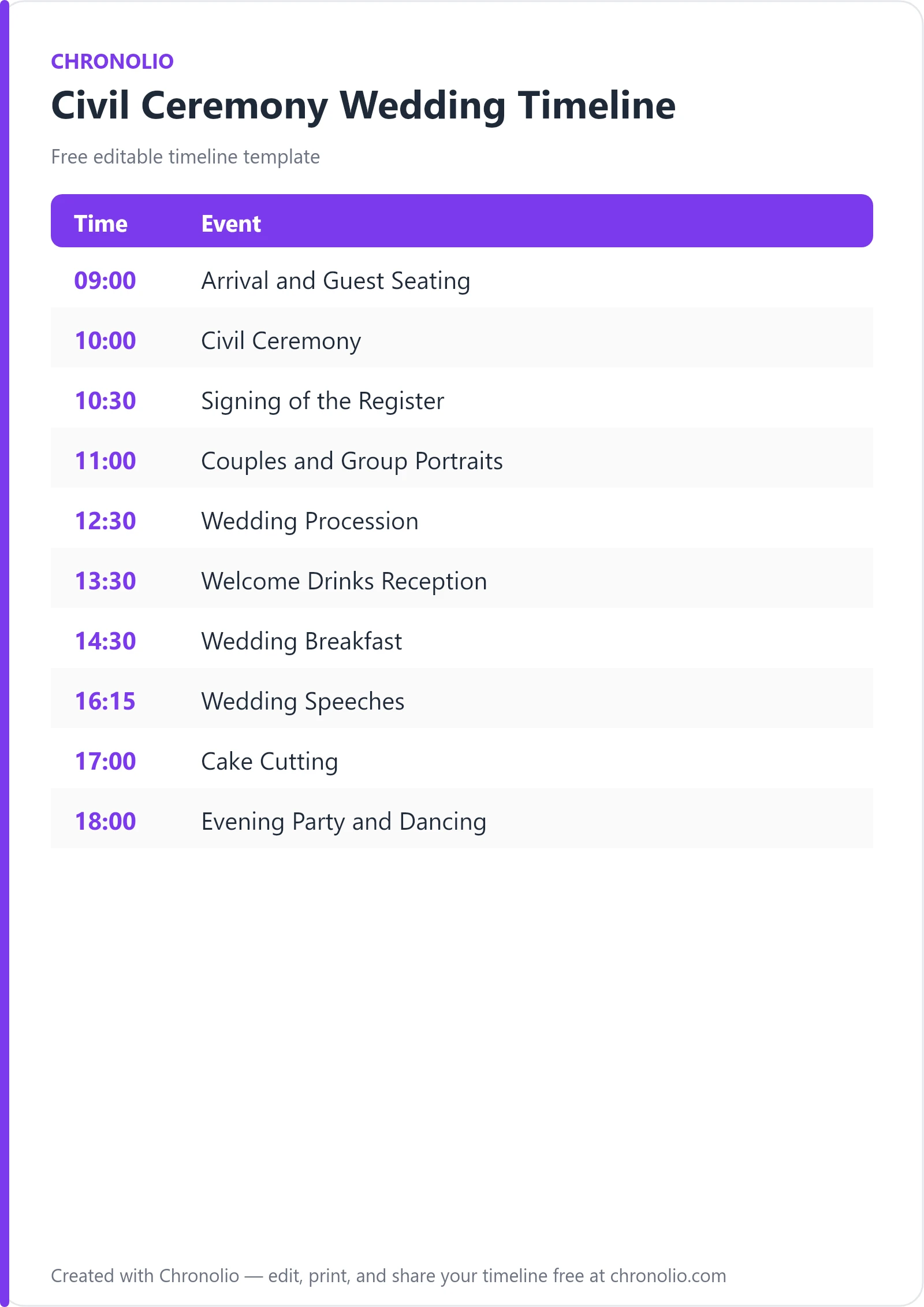
Here is the complete schedule this free template gives you — every time block, ready to edit, download, and share:
| Time | Event |
|---|---|
| 09:00 | Arrival and Guest Seating |
| 10:00 | Civil Ceremony |
| 10:30 | Signing of the Register |
| 11:00 | Couples and Group Portraits |
| 12:30 | Wedding Procession |
| 13:30 | Welcome Drinks Reception |
| 14:30 | Wedding Breakfast |
| 16:15 | Wedding Speeches |
| 17:00 | Cake Cutting |
| 18:00 | Evening Party and Dancing |
What Is a Civil Ceremony Wedding Timeline?
A civil ceremony wedding timeline is an end-to-end operational agenda that organizes every detail of a non-religious wedding day from start to finish. Unlike traditional faith-based services, a civil wedding revolves around statutory requirements overseen by a legal registrar or authorized officiant, often taking place in a city hall, magistrate courthouse, or local municipal building.
Because civic venues frequently operate on tight time slots, keeping your wedding party and guests on schedule is critical. This comprehensive agenda bridges the gap between official legal proceedings and your celebratory evening party. Designed around battle-tested venue logistics, this timeline reflects real-world civil ceremony structures, offering a reliable, stress-free blueprint for your big day. If you are opting for a simplified celebration, you might also compare this flow with an elopement timeline to decide on the right scale for your nuptials.
Customize Your Civil Ceremony Wedding Timeline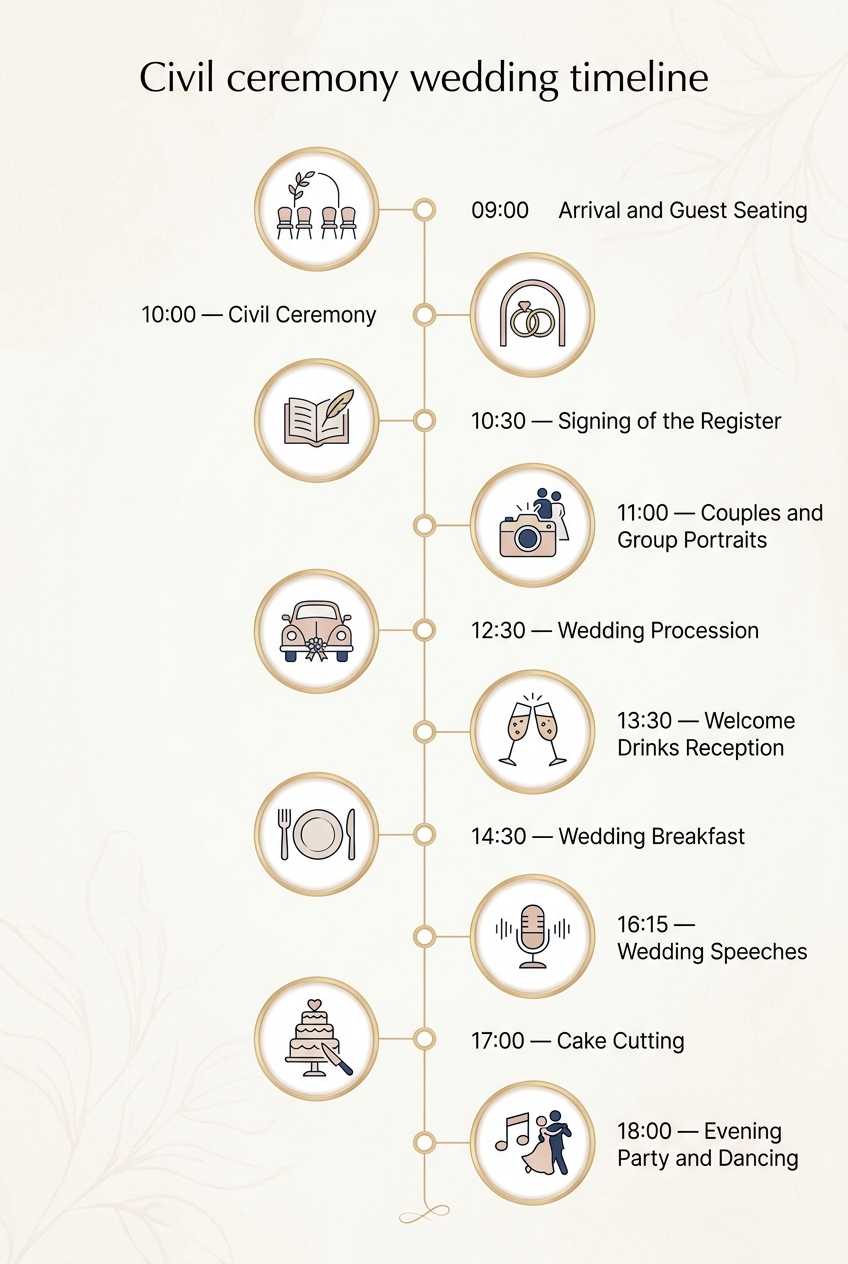
Why Civil Ceremony Weddings Need a Timeline
Planning a civil wedding comes with unique logistics. City halls and registrars run on strict statutory schedules, leaving very little buffer for late arrivals. If your party misses its designated window, local authorities may have to delay or even reschedule your ceremony to accommodate other bookings.
A dedicated timeline keeps every moving part aligned across separate locations. Civil weddings typically feature a venue split: an official legal space in the morning followed by a restaurant, hotel, or private hall for the evening reception. Moving guests smoothly between these locations requires exact timing.
Finally, an organized schedule keeps your vendors—photographers, caterers, drivers, and DJs—working in harmony. When everyone knows where to be, the couple can remain present, relaxed, and focused on celebrating their marriage.
What to Include in a Civil Ceremony Wedding Timeline
- Guest Arrival & Pre-Ceremony Seating: Time for guests to gather and ushers to seat everyone before the registrar calls the couple.
- The Official Civil Ceremony: The legal declaration, exchange of vows, and ring exchange led by the officiant.
- Signing of the Register: The mandatory legal signing involving the couple, witnesses, and registrar.
- Formal Photography: Group portraits and couple photos outside the venue or in adjacent gardens.
- Venue Transition: Organized shuttle or private transport from the civil location to the reception site.
- Welcome Drinks & Canapés: Socializing and background entertainment for guests as they arrive at the reception.
- Wedding Breakfast (Meal): A sit-down dinner or family-style banquet.
- Speeches & Toasts: Formal words from key wedding party members and the newlyweds.
- Cake Cutting & First Dance: Traditional reception milestones transitioning the event into evening entertainment.
- Evening Dance Party: DJ or live band playing until the final send-off.
Civil Ceremony & Legal Formalities
| Time | Event |
|---|---|
| 09:00 | Arrival and Guest Seating |
| 10:00 | Civil Ceremony |
| 10:30 | Signing of the Register |
The morning begins with arrival and guest seating inside the City Hall Main Chamber. Civic venues often host multiple events in a single day, making early guest arrival essential. Setting a strict guest seating window prevents late arrivals from disrupting the registrar's official briefing. During this time, ushers direct guests to their seats while the officiant completes brief pre-ceremony identity checks with the couple behind closed doors.
At 10:00, the civil ceremony officially begins. Civil services are concise and modern, focusing on contractual vows and ring exchanges without religious text or music. Once vows are exchanged, the party moves to the vestry at 10:30 for the signing of the marriage register, where the couple and two witnesses complete the legal paperwork under the direction of the registrar.
Photography & Reception Transition
| Time | Event |
|---|---|
| 11:00 | Couples and Group Portraits |
| 12:30 | Wedding Procession |
Once the legalities are wrapped up, the focus shifts to photos and moving your guests. At 11:00, formal portraits begin in the Courthouse Gardens. Allocating a full hour for photography guarantees that key family groupings, bridal party shots, and quiet couple portraits are captured without feeling rushed. According to industry advice on wedding day photography schedules, securing outdoor group shots immediately following the ceremony keeps guests organized before they disperse.
At 12:30, the wedding party and guests embark on the wedding procession across town. Moving an entire wedding party requires clear logistics; while the main bridal party boards a hired private shuttle, guests drive or rideshare to the reception venue. Building a 45-minute window into the schedule accounts for city traffic and gives guests time to park comfortably.
Reception Welcome & Sit-Down Meal
| Time | Event |
|---|---|
| 13:30 | Welcome Drinks Reception |
| 14:30 | Wedding Breakfast |
| 16:15 | Wedding Speeches |
| 17:00 | Cake Cutting |
Guests arrive at the venue's Rooftop Terrace at 13:30 for the welcome drinks reception. Serving light appetizers and champagne creates an inviting environment while the couple takes any remaining candid photos. Gentle background music sets a relaxed tone, allowing guests to mingle after the formal ceremony.
At 14:30, everyone moves into the main Reception Hall for the traditional wedding breakfast—a three-course seasonal meal. Following the meal at 16:15, the best man, maid of honor, and newlyweds deliver their wedding speeches. Keeping speeches directly after the meal ensures an attentive audience. At 17:00, the couple cuts the cake, offering a fun photo opportunity before the cake is plated and served. If you are hosting pre-wedding gatherings the night before, consider reviewing our rehearsal dinner timeline template to keep all your weekend events equally organized.
Evening Party & Dancing
| Time | Event |
|---|---|
| 18:00 | Evening Party and Dancing |
By 18:00, the atmosphere shifts as the DJ opens the dance floor for the evening party. Opening the dance floor early allows families with young children or older guests to enjoy the music before departing, while keeping the energy high for late-night dancers.
The four-hour evening block provides plenty of time for dancing, casual socializing, late-night snacks, and a final farewell to the newlyweds as the night wraps up at 22:00.
Civil Ceremony Wedding Timeline vs Traditional Church Wedding Schedule
Couples often wonder how a civil ceremony timeline differs from a traditional church service. While both aim to celebrate a marriage, their schedules operate under very different structural constraints.
| Aspect | Civil Ceremony Timeline | Traditional Church Wedding Schedule |
|---|---|---|
| Ceremony Location | City hall, registry office, or licensed venue | Church, chapel, or house of worship |
| Ceremony Duration | Short (20–30 minutes) | Long (45–90 minutes with full mass) |
| Legal Officiant | State registrar or civil officiant | Ordained clergy member |
| Content Restrictions | Strictly non-religious music and readings | Sacred music, religious scripture, and prayers |
| Schedule Flexibility | Strict, fixed time slots enforced by local government | Flexible, subject to parish schedules |
A civil timeline moves faster through the ceremony phase, offering more afternoon flexibility for photos, travel, and extended receptions. If you are comparing non-religious schedules with traditional sacred services, look over our church wedding ceremony timeline or our detailed Catholic wedding timeline to see how liturgical requirements alter the day's flow.
Who Should Use This Template?
This timeline template is tailored for couples and wedding professionals who need a reliable, structured agenda for non-religious weddings. It is ideal for:
- Registry Office & City Hall Couples: Couples marrying in municipal buildings with strict arrival windows.
- Courthouse & Micro-Wedding Hosts: Couples holding intimate ceremonies followed by a local restaurant or rooftop reception.
- Destination & Urban Wedding Planners: Coordinators managing dual-location city weddings involving guest transport.
- Venue Managers & Coordinators: Hospitality teams who need to coordinate catering staff, DJs, and room turnarounds.
Chronolio offers specialized workflow tools and customizable views tailored for the various roles involved in planning and executing seamless events.
How to Use This Template
- Download your copy: Save this schedule by downloading the editable civil ceremony wedding timeline Word document or the printable civil ceremony wedding timeline PDF.
- Lock in statutory times: Insert your official registry office slot first, as this fixed time dictates the rest of your day.
- Adjust transition buffers: Update travel durations based on real-time travel estimates between your ceremony site and reception venue.
- Distribute to vendors: Share your finalized schedule with your photographer, transport provider, caterer, and DJ.
- Brief key guests: Provide a trimmed version of the agenda to ushers, witnesses, and speakers so everyone knows their arrival times.
Tips for a Successful Civil Ceremony Wedding
- Verify legal paperwork early: Ensure your marriage license, IDs, and witness details are submitted to the registrar prior to wedding day.
- Build in transit buffers: City traffic can be unpredictable; always add an extra 15 to 20 minutes to your travel estimates between venues.
- Confirm photo permits: Check if public gardens or city hall steps require photography permits ahead of time.
- Assign dedicated ushers: Station clear ushers at the city hall entrance to gather guests in the main chamber quickly.
- Appoint two clear witnesses: Ensure your chosen witnesses know their legal responsibilities and arrive early for pre-ceremony checks.
- Provide clear venue directions: Put address details and parking instructions on your wedding website for smooth guest transitions.
Common Mistakes to Avoid
- Underestimating registry office punctuality: Arriving late at a city hall can lead to cancellation or long delays; arrive early.
- Forgetting non-religious music rules: Playing music with religious references in a civil ceremony is often illegal under local statutory rules; verify your playlist with the registrar.
- Rushing formal group photos: Attempting too many group photo combinations in limited outdoor space causes delays; limit your formal photo list.
- Failing to coordinate transport for non-drivers: Leaving guests to find their own city parking between venues leads to lost attendees and late arrivals.
- Overpacking the speech schedule: Planning too many speeches after dinner pushes back cake cutting and cuts into evening dancing time.
In Summary
- Purpose: A structured guide balancing registry office legal requirements with reception celebrations.
- Target Audience: Ideal for urban couples, courthouse weddings, city hall ceremonies, and multi-venue celebrations.
- Primary Focus: Ensures exact timing for civil vows while providing generous buffers for photography and transport.
- Reception Flow: Moves smoothly from outdoor photos to welcome drinks, sit-down dinner, speeches, and evening dancing.
- Key Benefit: Eliminates timing stress caused by strict municipal schedules and dual-location logistics.
Planning a legal civil marriage followed by a lively celebration requires precise timing and clear coordination. This civil ceremony wedding timeline balances legal requirements with reception festivities, giving modern couples, wedding planners, and city hall venues a reliable blueprint for an unforgettable wedding day.
Customize Your Civil Ceremony Wedding Timeline