





This Template at a Glance
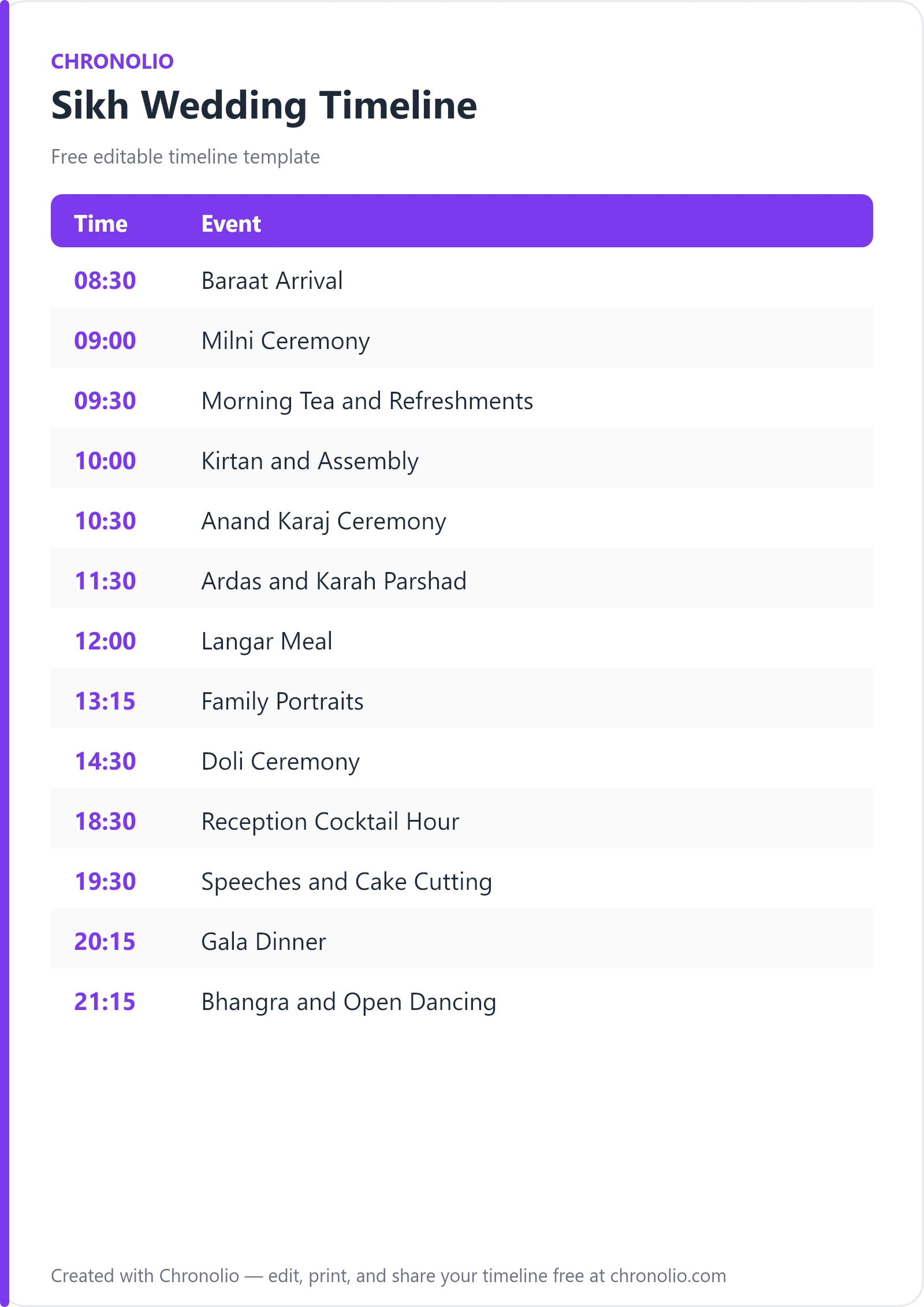
Here is the complete schedule this free template gives you — every time block, ready to edit, download, and share:
| Time | Event |
|---|---|
| 08:30 | Baraat Arrival |
| 09:00 | Milni Ceremony |
| 09:30 | Morning Tea and Refreshments |
| 10:00 | Kirtan and Assembly |
| 10:30 | Anand Karaj Ceremony |
| 11:30 | Ardas and Karah Parshad |
| 12:00 | Langar Meal |
| 13:15 | Family Portraits |
| 14:30 | Doli Ceremony |
| 18:30 | Reception Cocktail Hour |
| 19:30 | Speeches and Cake Cutting |
| 20:15 | Gala Dinner |
| 21:15 | Bhangra and Open Dancing |
What Is a Sikh Wedding Timeline (Anand Karaj)?
A Sikh wedding timeline (Anand Karaj) is an essential master schedule designed to coordinate every sacred ritual, logistics transition, and evening celebration on a Sikh marriage day. Meaning "Blissful Union," the Anand Karaj ceremony takes place inside the Gurdwara's main sanctuary (Darbar Sahib) in the presence of the Guru Granth Sahib (the holy scripture).
Planning a Sikh wedding requires managing two distinct phases: a reverent morning religious service followed by high-energy evening festivities. Because Gurdwara protocol dictates that the holy matrimony be completed before midday, meticulous timing is paramount to ensure sacred customs are honored without rushing family members or vendors. This guide reflects real-world Sikh wedding structures and venue best practices, helping you balance religious solemnity, cultural heritage, and modern party dynamics.
Edit Your Sikh Wedding Timeline Now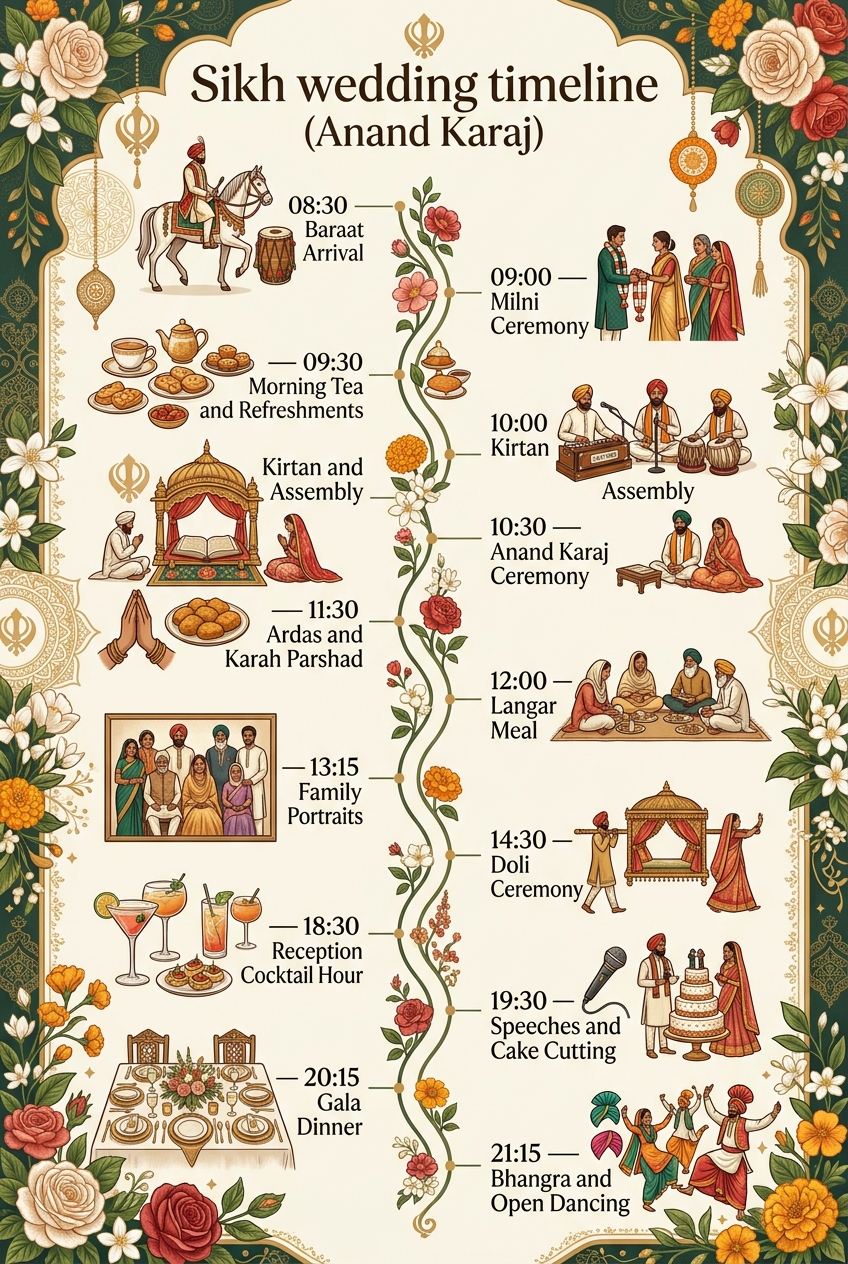
Why Sikh Weddings Need a Timeline
Running a Sikh wedding without a detailed schedule frequently leads to missed Gurdwara time slots, anxious vendors, and overwhelmed family members. Unlike conventional single-venue events, a traditional Sikh wedding spans multiple locations—from the groom's home and the bride's residence to the Gurdwara and an evening banquet hall. Coordinating transport, caterers, ragis (traditional musicians), and photographers requires uncompromising time management.
Furthermore, morning hair and makeup for traditional bridal attire—including intricate jewelry, heavy dupattas, and elaborate turban tying (Pagg)—takes significantly longer than standard preparation. Having a clear running order ensures the groom's procession (Baraat) arrives at the Gurdwara on schedule, allowing the holy hymns to begin without delay.
Finally, an organized agenda reduces stress for key family members, enabling them to immerse themselves in spiritual rituals like the Milni garland exchange and the emotional Doli farewell rather than managing logistics.
What to Include in a Sikh Wedding Timeline
To capture the true essence of a Sikh marriage, your day's schedule must account for both ceremonial traditions and modern hospitality:
- Baraat Arrival & Milni Greeting: The lively arrival of the groom's family accompanied by dhol drums, followed by formal introductions between key male relatives.
- Morning Refreshments: Serving hot Punjabi chai, samosas, and sweets in the Langar Hall before entering the prayer hall.
- Kirtan & Seating: Assembling guests inside the sanctuary, covering heads, removing shoes, and enjoying devotional music.
- Anand Karaj & Lavan: The four sacred marital circumambulations around the Guru Granth Sahib.
- Ardas & Karah Parshad: The final standing congregation prayer, reading of the Hukamnama, and distribution of blessed sweet pudding.
- Langar Meal: A communal, egalitarian vegetarian lunch served to all attendees on floor carpets.
- Family Portraits & Doli: Formal photography followed by the bride's poignant departure from her parental home.
- Evening Reception: A glamorous night of cocktail hour, speeches, multi-course dining, and lively Bhangra dancing.
Morning Gurdwara Arrival & Pre-Ceremony Traditions
| Time | Event |
|---|---|
| 08:30 | Baraat Arrival |
| 09:00 | Milni Ceremony |
| 09:30 | Morning Tea and Refreshments |
The morning portion of the day begins outside the Gurdwara main entrance as the bridegroom arrives accompanied by his extended family, singing, and energetic dhol drumming. Guests gather in the courtyard to join in the celebration before transitioning to formal introductions.
At 09:00, the Milni ceremony takes place in the Gurdwara foyer. Key male counterparts from both families (fathers, grandfathers, uncles, and brothers) greet one another with floral garlands and warm embraces, symbolizing the spiritual joining of two clans. A Sikh priest or officiant offers a short blessing prayer (Ardas) to mark this meeting. Afterwards, everyone moves into the Langar Hall for hot Punjabi chai and fresh snacks. This half-hour window gives traveling guests time to socialise before entering the sacred hall, much like how couples use a rehearsal dinner timeline template to bring families together before the formal wedding day.
The Sacred Anand Karaj & Langar
| Time | Event |
|---|---|
| 10:00 | Kirtan and Assembly |
| 10:30 | Anand Karaj Ceremony |
| 11:30 | Ardas and Karah Parshad |
| 12:00 | Langar Meal |
Before entering the sanctuary (Darbar Sahib), all guests remove their shoes, cover their heads with scarves or bandanas, and wash their hands. Attendees sit cross-legged on the carpeted floor—men on one side and women on the other—as a sign of equality before the Guru Granth Sahib. At 10:00, talented ragis perform live devotional hymns (Kirtan) to prepare everyone's mindset for the sacred vows.
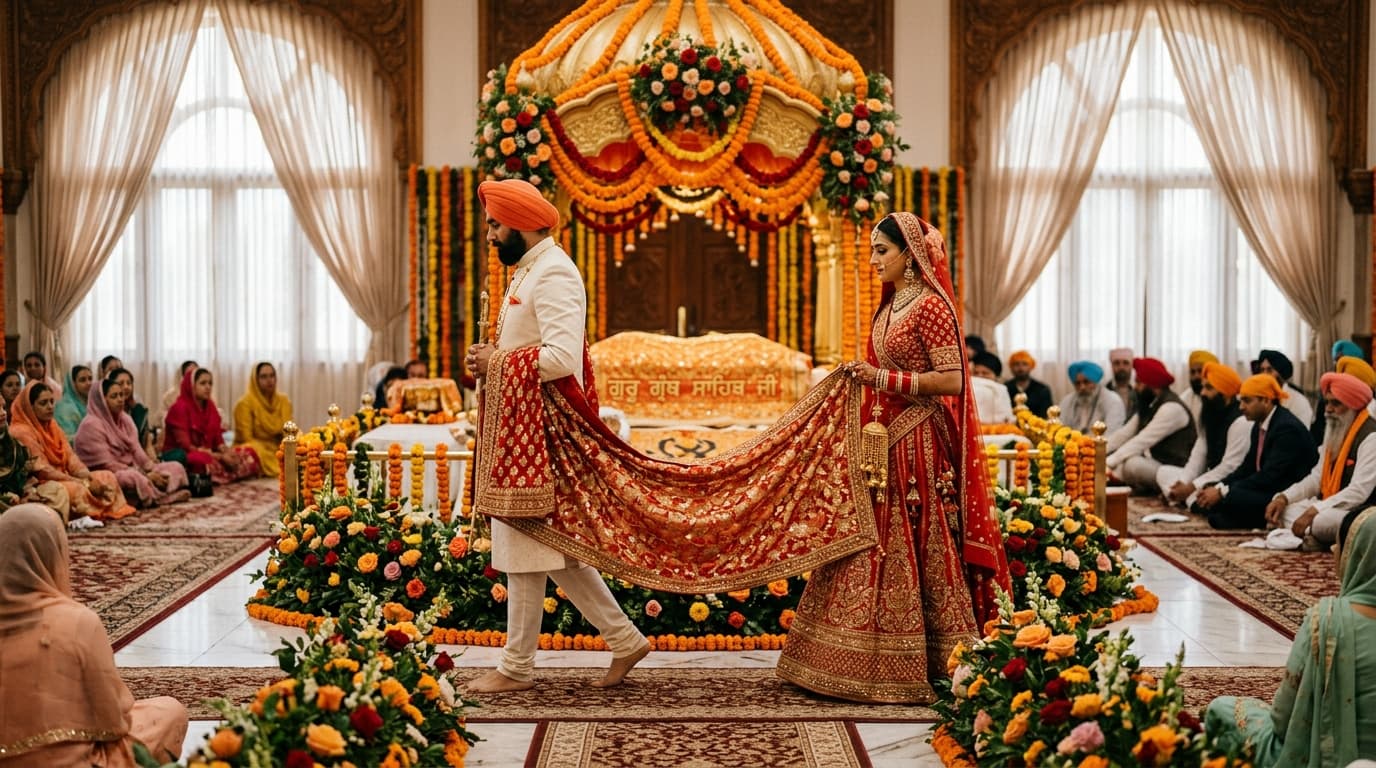
The core Anand Karaj ceremony begins promptly at 10:30. The bride's father places a long wedding scarf (Palla) over the groom's shoulder and into the bride's hands, physically connecting the couple. As the officiant reads each of the four Lavan stanzas composed by Guru Ram Das Ji, the couple bows and then walks clockwise around the holy scripture while musicians sing the corresponding verse. Unlike Western vows found in a civil ceremony wedding timeline or traditional vows in a church wedding ceremony timeline, the Lavan represent four progressive stages of spiritual love and devotion.
Following the final stanza, the congregation stands for the closing Ardas prayer at 11:30, after which a random verse (Hukamnama) is read from the scriptures as a divine guidance for the couple's future. Warm, sacred sweet pudding (Karah Parshad) is distributed in palms to all attendees. By 12:00, guests descend to the hall for Langar—a delicious, fully vegetarian community meal served by volunteer helpers (Sewadars) that reinforces humility and social equality. For detailed guidelines on Gurdwara etiquette and ceremonial sanctity, consult resources from SikhNet or your local Gurdwara management committee.
Afternoon Photography & Doli Farewell
| Time | Event |
|---|---|
| 13:15 | Family Portraits |
| 14:30 | Doli Ceremony |
Once the communal meal concludes around 13:15, guests assemble in the Gurdwara courtyard or garden area for group photographs. Setting aside dedicated time for portraits ensures that extended family members get cherished pictures with the newlyweds without delaying the afternoon schedule.
At 14:30, the wedding party travels to the bride's parental home for the Doli ceremony. This deeply poignant ritual marks the bride's formal departure from her childhood family to start her new life. As she steps across her family threshold, she gently throws handfuls of rice or puffed wheat over her head, expressing gratitude to her parents for her upbringing. After tearful hugs, she enters the wedding vehicle with her husband. This completes the morning religious proceedings, allowing a rest and wardrobe-change window before the evening party.
Evening Reception & Gala Celebration
| Time | Event |
|---|---|
| 18:30 | Reception Cocktail Hour |
| 19:30 | Speeches and Cake Cutting |
| 20:15 | Gala Dinner |
| 21:15 | Bhangra and Open Dancing |
After a rest and outfit change, the celebration transitions to a grand ballroom or event center. At 18:30, guests arrive for an elegant cocktail hour in the foyer, complete with mocktails, cocktails, finger foods, and light instrumental background tracks.
The couple makes their grand entrance into the main ballroom at 19:30 to introduce the formal evening program. Family members and close friends deliver heartfelt speeches, followed by the cutting of the wedding cake. At 20:15, a lavish North Indian buffet dinner opens featuring curries, paneer dishes, naan, and sweets. Once dinner concludes around 21:15, the DJ turns up high-energy Bhangra music, opening the dance floor for an unforgettable celebration that runs until late into the night.
Sikh Wedding Timeline vs. Standard Wedding Timeline
Understanding how a Sikh wedding schedule differs from other cultural or religious ceremonies helps couples and wedding planners allocate time efficiently.
| Element | Sikh Wedding Timeline (Anand Karaj) | Standard Western / Civil Timeline |
|---|---|---|
| Primary Focus | Spiritual union before Guru Granth Sahib & community service | Exchange of legal vows & personalized commitments |
| Start Time | Early morning (08:30 AM arrival required) | Late morning or afternoon |
| Seating Arrangement | Floor seating on carpets (segregated by gender) | Pews or rows of chairs facing the alter |
| Food Service | Two distinct meals (Morning tea/Langar & Evening dinner) | Single cocktail hour and dinner reception |
| Midday Break | Built-in 3-4 hour afternoon rest & wardrobe shift | Continuous flow from ceremony directly to reception |
While a traditional Christian wedding timeline or Catholic wedding timeline focuses on a single afternoon service followed immediately by a reception, a Sikh wedding features two distinct phases separated by an afternoon break.
Who Should Use This Template?
This structured schedule is tailored for anyone involved in executing or attending a Sikh marriage celebration:
- Sikh Brides and Grooms: Looking to organize complex multi-venue timelines easily.
- Wedding Planners & Coordinators: Managing logistics, vendor arrivals, and Gurdwara rules.
- Interfaith Couples: Harmonizing traditional Punjabi customs with modern reception expectations.
- Photographers & Videographers: Planning light conditions for outdoor portraits and courtyard Doli departures.
- Gurdwara Management Committees: Establishing clear timeline expectations for morning Darbar Sahib bookings.
Whether you are managing single or team member permissions, Chronolio supports different roles so your entire vendor team stays synchronized.
How to Use This Template
- Customize or Download: Open this template in Chronolio to edit directly online, or download our printable files in Word (.docx format) or PDF format.
- Adjust Ceremony Timings: Update start times according to your Gurdwara's allocated morning slot (some Gurdwaras require weddings to begin as early as 08:00 AM).
- Share with Vendors: Send the finalized running order to your photographer, DJ, hair and makeup artists, and dhol players.
- Distribute to Family: Provide printed key-event summaries to immediate family members so everyone knows when the Milni and Doli take place.
Tips for a Successful Sikh Wedding
- Build Turban Tying Buffers: Professional turban tying (Pagg) for the groom and family members can take 20 to 30 minutes per person. Always allocate an extra 45 minutes to morning hair and makeup schedules.
- Provide Head Covers for Guests: While many guests bring their own, keep a basket of matching rumals (scarves) or bandanas outside the Gurdwara for international or non-Sikh guests.
- Coordinate Transport Between Venues: Ensure dedicated drivers or hired shuttles are ready to move the couple and core family smoothly from the Gurdwara to the bride's house and onwards to the reception venue.
- Inform Non-Sikh Guests of Etiquette: Remind guests beforehand that they will be sitting cross-legged on the floor inside the sanctuary and must dress respectfully with covered shoulders and knees.
- Brief Your Photographer on Gurdwara Protocol: Ensure your photography team knows not to step on the raised platform (Prakash) or turn their back directly toward the sacred scripture.
Common Mistakes to Avoid
- Starting the Baraat Too Late: Delaying the groom's procession pushes back the Lavan, which can conflict with Gurdwara afternoon prayer schedules.
- Underestimating the Afternoon Gap: Trying to squeeze rest, outfit changing, makeup touch-ups, and travel into a 60-minute window causes extreme fatigue. Allow at least 3 to 4 hours between the Doli and evening reception.
- Skipping Morning Tea: Bypassing the morning tea and samosas leaves guests hungry during the hour-long Anand Karaj ceremony.
- Forgetting Comfortable Footwear Changes: Brides wearing heavy traditional Punjabi suits or lehengas should bring easy slip-on shoes for walking between the Darbar Sahib and Langar Hall.
- Not Assigning Family Leads: Failing to designate a family member to manage Milni garland exchanges often creates confusion at the Gurdwara entrance.
In Summary
- A Sikh wedding day is built around the sacred morning Anand Karaj ceremony and an evening celebration party.
- The groom's arrival (Baraat) and family greeting (Milni) set a joyful, festive tone before entering the sanctuary.
- The core spiritual ceremony takes place in the Darbar Sahib and features four Lavan hymns sung while circling the Guru Granth Sahib.
- Langar is a mandatory, egalitarian vegetarian meal served to all guests after the religious ceremony.
- An emotional afternoon departure (Doli) is followed by an evening reception with dinner, speeches, and Bhangra dancing.
- You can customize this entire schedule online or download free editable templates in Word or PDF formats.
Whether you are organizing a simple elopement style event like our elopement timeline template or coordinating a massive multi-day Punjabi celebration, having a clear running order ensures every moment is honored with grace. Customize your schedule today using the button below.
Edit Your Sikh Wedding Timeline Now