





This Template at a Glance
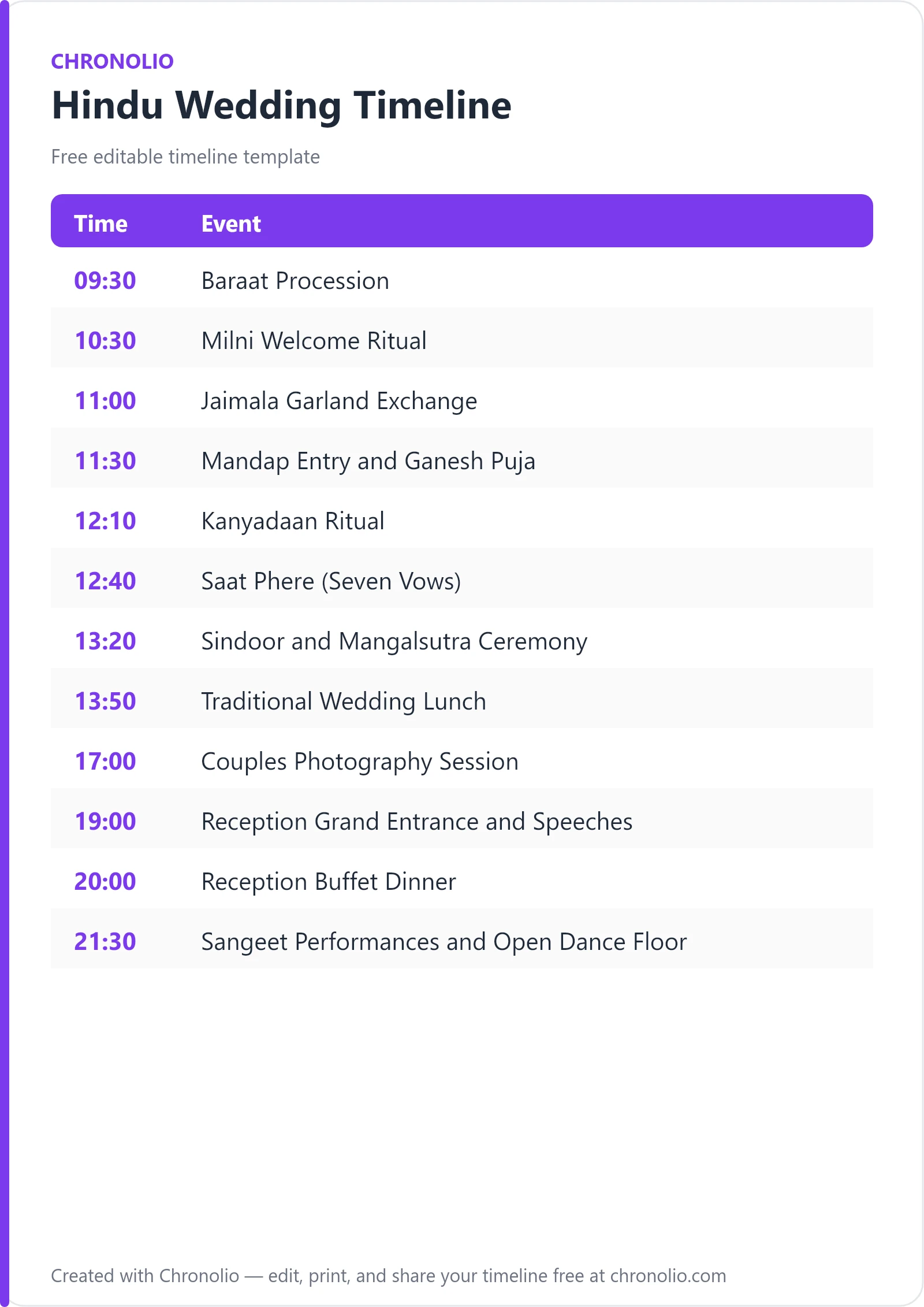
Here is the complete schedule this free template gives you — every time block, ready to edit, download, and share:
| Time | Event |
|---|---|
| 09:30 | Baraat Procession |
| 10:30 | Milni Welcome Ritual |
| 11:00 | Jaimala Garland Exchange |
| 11:30 | Mandap Entry and Ganesh Puja |
| 12:10 | Kanyadaan Ritual |
| 12:40 | Saat Phere (Seven Vows) |
| 13:20 | Sindoor and Mangalsutra Ceremony |
| 13:50 | Traditional Wedding Lunch |
| 17:00 | Couples Photography Session |
| 19:00 | Reception Grand Entrance and Speeches |
| 20:00 | Reception Buffet Dinner |
| 21:30 | Sangeet Performances and Open Dance Floor |
What Is a Hindu Wedding Timeline?
A Hindu wedding timeline is an essential master schedule that organizes the complex sequence of sacred Vedic rituals, vibrant processions, hospitality, and entertainment across your wedding day. Unlike streamlined western events, a Hindu wedding blends ancient spiritual milestones with high-energy family celebrations that require precise coordination across multiple venue zones.
Having managed dozens of grand South Asian celebrations, I can tell you that cultural event flow hinges entirely on balancing strict auspicious timing (muhurat) with real-world guest hospitality. This template reflects proven real-world wedding structures, giving couples, wedding planners, pandits, and venue operations teams a reliable framework to execute every moment effortlessly.
Customize Your Hindu Wedding Timeline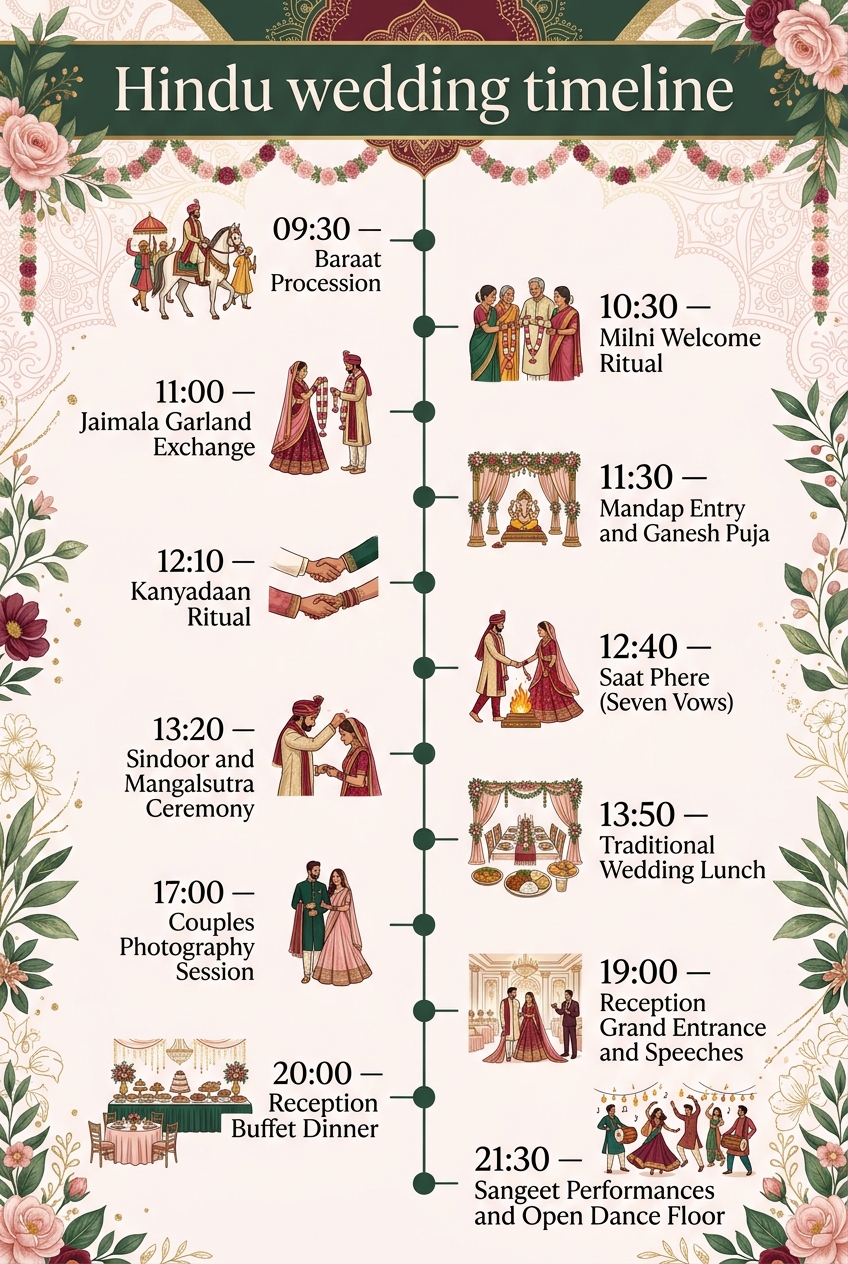
Why Hindu Weddings Need a Timeline
Managing a Hindu wedding day without a structured operational plan quickly leads to overwhelming vendor confusion and guest exhaustion. Between live dhol drummers, complex mandap fire setups, multi-course catering transitions, and outfit changes, precise timeline planning protects your peace of mind and keeps the energy high.
- Aligning Auspicious Timings: Religious rituals often rely on specific astrological windows (muhurat) set by the priest; strict operational timing ensures you hit these crucial moments without skipping sacred vows.
- Seamless Vendor Synchronization: Photographers, caterers, decorators, and DJs need clear cues so lighting changes and food service happen perfectly on cue.
- Guest Comfort and Hospitality: Moving hundreds of extended family members from outdoor arrival zones to shaded mandap seating and dining rooms requires guided crowd control to maintain momentum.
- Managing Multiple Outfit Changes: Couples and immediate family members often change garments and jewelry between the holy ceremony and evening party, making dedicated wardrobe buffer windows vital.
What to Include in a Hindu Wedding Timeline
Every traditional Hindu wedding schedule must incorporate key cultural landmarks while preserving realistic transition buffers:
- Baraat & Milni: The groom's energetic arrival procession with music, dancing, and formal family introductions.
- Jaimala / Varmala: The public exchange of floral garlands signifying mutual consent and respect.
- Mandap Setup & Ganesh Puja: Establishing the sacred altar space and invoking Lord Ganesha's blessings for an obstacle-free ceremony.
- Kanyadaan & Granthi Bandhan: The emotional entrusting of the bride by her parents and the symbolic tying of the holy scarf knot.
- Saat Phere & Agni Rituals: Taking seven sacred vows around the holy fire (agni) to solidify the martial bond.
- Sindoor & Mangalsutra: The culmination of marriage rites where vermillion is applied and the auspicious necklace is tied.
- Traditional Feast: A generous, traditional vegetarian meal served immediately post-ceremony.
- Evening Reception: Grand entrances, speeches, gourmet buffet dining, and Sangeet dance performances transitioning into an open dance floor.
Morning Arrival & Welcoming Ceremonies
| Time | Event |
|---|---|
| 09:30 | Baraat Procession |
| 10:30 | Milni Welcome Ritual |
| 11:00 | Jaimala Garland Exchange |
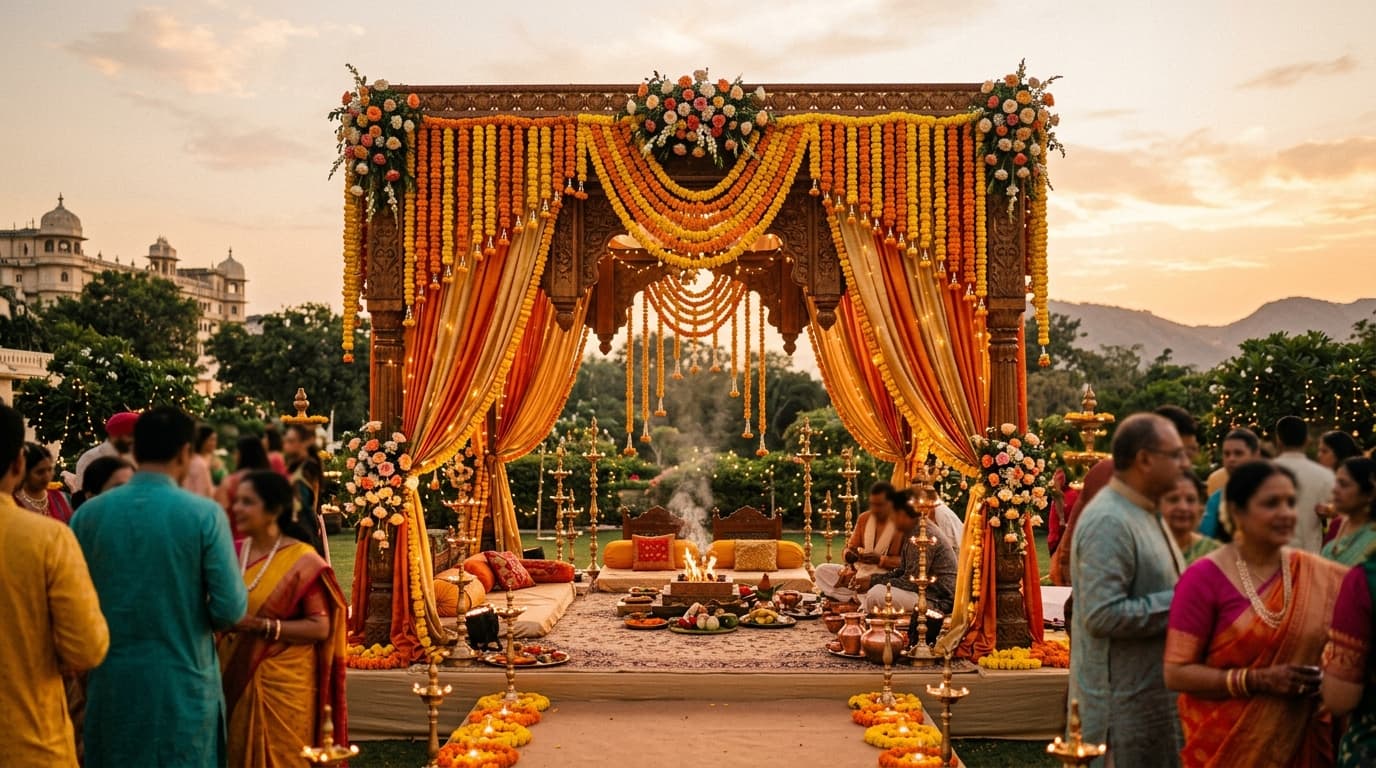
The morning kicks off with maximum celebration along the resort entrance promenade. The groom's joyous procession (Baraat) features high-energy dhol drummers, brass bands, and dancing family members celebrating the groom's journey to the venue. Giving this phase a full hour allows everyone to dance freely without rushing the arrival.
Once the Baraat reaches the main gateway, the bride's family officially greets them during the Milni welcome ritual. Here, male counterparts from both families exchange flower garlands, warm hugs, and formal blessings. Immediately after, everyone gathers at the central lawn stage for the Jaimala garland exchange, where the bride and groom exchange flower garlands to symbolize their union before ascending to the mandap.
Sacred Mandap Rituals & Traditional Lunch
| Time | Event |
|---|---|
| 11:30 | Mandap Entry and Ganesh Puja |
| 12:10 | Kanyadaan Ritual |
| 12:40 | Saat Phere (Seven Vows) |
| 13:20 | Sindoor and Mangalsutra Ceremony |
| 13:50 | Traditional Wedding Lunch |
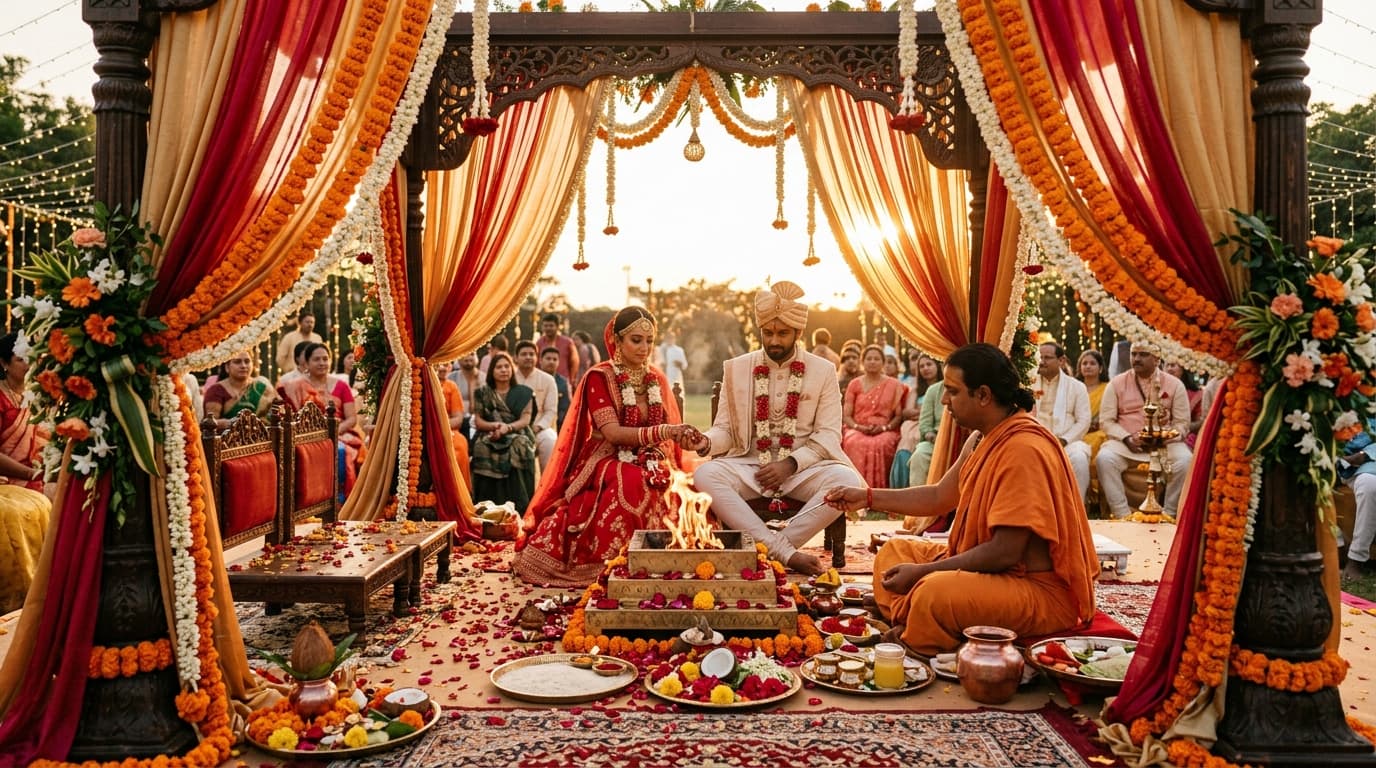
Transitioning into the primary ceremony, the wedding party gathers under the hand-decorated mandap structure. The officiating priest begins with invoking Lord Ganesha, driving away obstacles and sanctifying the environment. Family members gather closely around the altar as the priest chants Vedic mantras and prepares the sacred fire box.
Next, the emotional Kanyadaan ritual takes place as the bride's parents place her hands into the groom's while pouring sacred water. This leads into the seven holy vows (Saat Phere), where the couple walks around the agni fire seven times, cementing their commitments to health, wealth, prosperity, and lifelong fidelity. The ceremony culminates with the groom applying red vermillion (sindoor) to the bride's hair parting and tying the mangalsutra necklace. Afterward, guests transition to the royal dining hall for a hearty vegetarian meal, giving the newlyweds time to greet extended relatives before taking an afternoon break.
If you are planning an interfaith or multi-cultural weekend, you can compare this ceremony structure with our Christian Wedding Timeline: Schedule & Agenda Template or review a Church Wedding Ceremony Timeline (Free Schedule Template) to see how sacred service structures differ across traditions.
Evening Reception & Celebrations
| Time | Event |
|---|---|
| 17:00 | Couples Photography Session |
| 19:00 | Reception Grand Entrance and Speeches |
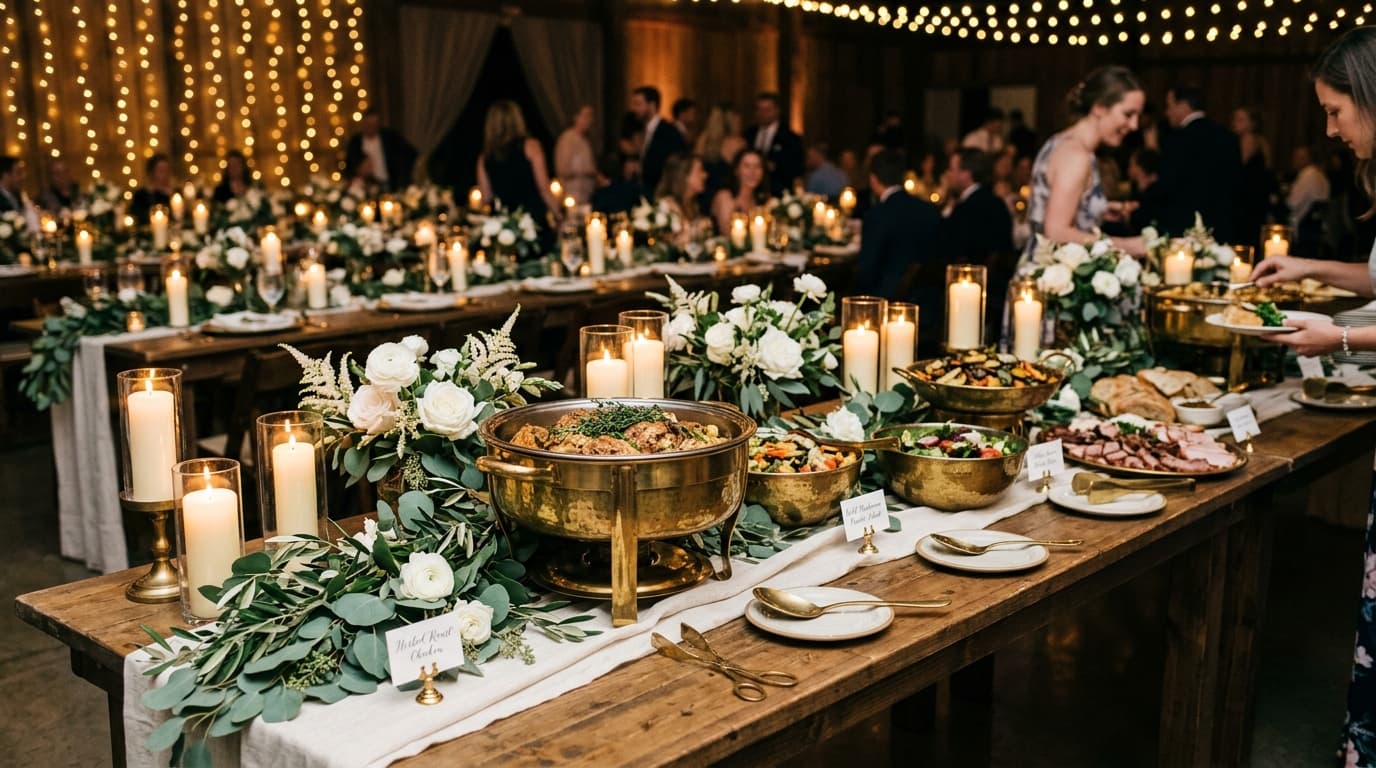
| 20:00 | Reception Buffet Dinner |
| 21:30 | Sangeet Performances and Open Dance Floor |
Following an afternoon rest and wardrobe change, the couple meets in the palace courtyard gardens for formal bridal portraits and extended family group photos while natural daylight is soft. This dedicated photography window prevents photo sessions from cutting into cocktail hours or evening reception entertainment.
At 19:00, the grand ballroom doors open as the newlyweds make their dramatic entrance. Following heartfelt family toasts and dinner, the evening accelerates into choreographed dance routines (Sangeet) performed by family and bridal party groups, eventually opening up to an all-night dance floor powered by a live DJ.
For couples hosting pre-wedding gatherings or formal dinners the evening prior, using a dedicated Rehearsal Dinner Timeline Template for a Smooth Event ensures welcome drinks and family speeches stay perfectly organized ahead of the main wedding day.
Hindu Wedding Timeline vs Western Wedding Timeline
Understanding how a Hindu wedding schedule differs from a standard single-venue Western or civil wedding helps planners and venues allocate staffing, venue space, and equipment accurately.
| Timing & Event Element | Hindu Wedding Timeline | Western Wedding Timeline |
|---|---|---|
| Primary Focus | Multiple sacred rituals, fire ceremonies, and extended family processions | Unified ceremony exchange, cocktail hour, and dinner reception |
| Ceremony Duration | 1.5 to 2.5 hours at the mandap | 30 to 45 minutes at the altar |
| Food & Hospitality | Morning snacks, post-ceremony lunch, and evening multi-cuisine dinner | Post-ceremony cocktail hour followed by seated dinner |
| Outfit Changes | 2 to 3 traditional outfit and jewelry updates throughout the day | Typically 1 main dress/suit, occasionally a reception party dress |
| Entertainment Flow | Live dhol procession, interactive family rituals, and Sangeet dances | Processional music, acoustic ceremony sets, and live band/DJ party |
If you are contrasting these extensive multi-part celebrations with simpler, single-phase gatherings, explore our Civil Ceremony Wedding Timeline: Schedule & Agenda or check out an Elopement Timeline Template (Free Printable Schedule) for streamlined alternative ideas.
Who Should Use This Template?
This master schedule is engineered to keep all key stakeholders aligned throughout a complex wedding weekend:
- Bridal Couples & Families: Structure your ideal wedding day while balancing modern hospitality with traditional elder expectations.
- Professional Wedding Planners: Standardize vendor cues, setup schedules, and crowd management across multiple venue zones.
- Venue Operators & Banquet Managers: Plan room turnarounds, buffet setups, fire-safety clearances for the mandap agni, and sound restrictions.
- Pandits & Officiants: Coordinate exact timing for Vedic rituals so auspicious muhurat hours are strictly respected.
- Event Photographers & Videographers: Anticipate emotional ritual moments, family entrances, and portrait lighting windows.
- DJ & Entertainment Teams: Time dhol drum entrances, procession sound systems, and Sangeet dance cues seamlessly.
Remember that Chronolio offers customized views tailored to various event roles, ensuring vendors see operational cues while family members view guest-facing schedules.
How to Use This Template
- Download or Duplicate: Access this template directly in Chronolio or export print-ready versions using our direct files:
- Download as Word Document (.docx)
- Download as PDF Document (.pdf)
- Set Your Muhurat Timing: Consult your priest (Pandit Ji) to lock in the exact wedding ceremony start time, adjusting upstream events (Baraat and Milni) accordingly.
- Customize Vendor Transitions: Tailor buffer times between the morning lunch and evening reception based on your photography location and outfit change requirements.
- Share Role-Specific Schedules: Export targeted running orders for your catering team, decorator, DJ, and bridal party leads so everyone stays synchronized.
Tips for a Successful Hindu Wedding
- Verify Mandap Fire Safety Regulations: Ensure your venue permits open flames (agni fire) inside ballroom spaces or has designated outdoor mandap areas equipped with proper ventilation.
- Provide Guest Comfort Stations: Offer chilled bottled water, shade parasols, and hand fans during outdoor Baraat arrivals and lawn Jaimala exchanges, as noted by event experts at The Knot.
- Schedule Groom Outfit Prep Ahead: The groom's turban tying (safa) often takes longer than anticipated; assign an experienced turban tier to start early.
- Include a Mandap Ritual Guide: Print or digitally share short ritual explainers for non-Hindu guests so they can follow along with the significance of the Saat Phere and Kanyadaan.
- Prepare a Post-Baraat Refreshment Lounge: Serve light tea, coffee, and savory snacks right after the energetic Baraat to keep guests hydrated before settling into mandap seats.
- Designate a Ritual Items Lead: Assign a trusted relative or assistant to organize the puja samagri (ceremonial materials like rice, coconuts, flowers, and ghee) near the mandap before 11:00 AM.
- Coordinate Dj & Dhol Hand-Offs: Ensure the dhol drummers leading the outdoor Baraat seamlessly transition sound cues to the main stage DJ as guests move toward the Jaimala stage.
Common Mistakes to Avoid
- Underestimating Baraat Duration: Planning less than 45 minutes for the Baraat often delays all subsequent morning rituals, pushing your auspicious mandap start back significantly.
- Skipping the Afternoon Break: Trying to run straight from the wedding ceremony into evening photos without a resting window wears out the couple and close family members.
- Ignoring Muhurat Windows: Failing to confirm ritual lengths with your Pandit Ji in advance can result in missing the exact auspicious window calculated for the wedding vows.
- Forgetting Catering Buffers for Late Rituals: Mandap rituals can occasionally run 20 to 30 minutes over; ensure catering teams can keep lunch warm without deteriorating food quality, a key practice highlighted by hospitality guides on Brides.
- Not Allocating Time for Group Family Photos: Attempting spontaneous family group photos at the mandap creates bottlenecks; schedule dedicated group photo lists right after the Jaimala or during the evening break.
- Overpacking the Reception Speeches: Permitting endless unscheduled toasts delays dinner service and kills dance floor momentum during the evening reception.
In Summary
- Complete Day Coverage: Integrates all key celebrations from the 09:30 AM Baraat procession through sacred mandap vows to the 23:00 Sangeet dance floor.
- Culturally Detailed: Built specifically around Vedic customs, including Ganesh Puja, Kanyadaan, Saat Phere, Sindoor, and Mangalsutra.
- Optimized Hospitality: Balances morning ritual energy with structured meal breaks, afternoon rest periods, and high-energy evening entertainment.
- Vendor-Ready Design: Built for venue managers, planners, decorators, and DJs to execute precise logistical hand-offs without stress.
- Fully Editable Format: Easily adjust start times, ritual sequences, and venue locations in Chronolio to match your unique family traditions.
Planning a wedding requires balancing deep cultural traditions with practical venue logistics. Whether you are a bride, groom, professional wedding planner, venue manager, or hospitality director, this timeline gives you the structural blueprint needed to run an unforgettable, perfectly timed celebration.
Customize Your Hindu Wedding Timeline