





This Template at a Glance
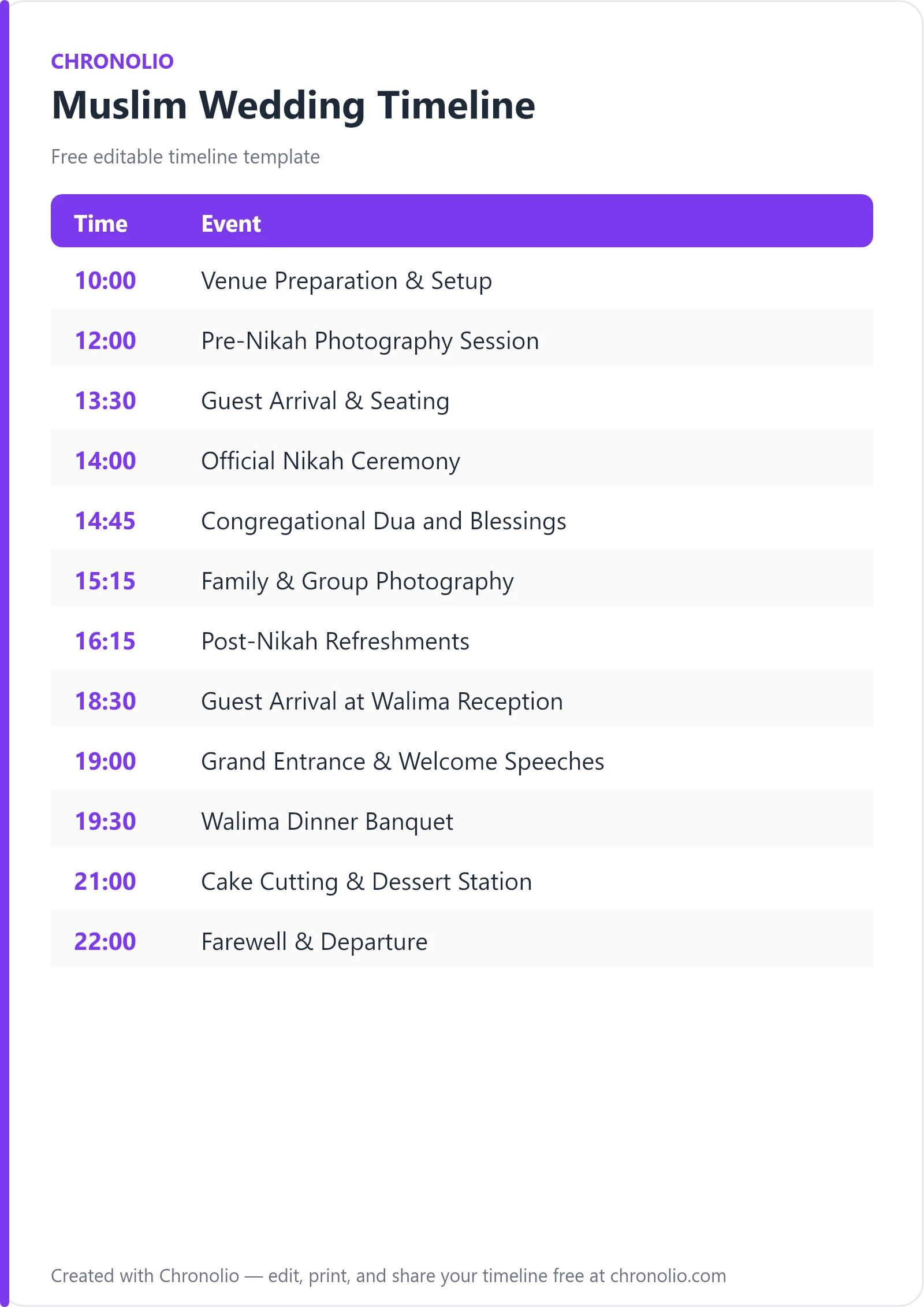
Here is the complete schedule this free template gives you — every time block, ready to edit, download, and share:
| Time | Event |
|---|---|
| 10:00 | Venue Preparation & Setup |
| 12:00 | Pre-Nikah Photography Session |
| 13:30 | Guest Arrival & Seating |
| 14:00 | Official Nikah Ceremony |
| 14:45 | Congregational Dua and Blessings |
| 15:15 | Family & Group Photography |
| 16:15 | Post-Nikah Refreshments |
| 18:30 | Guest Arrival at Walima Reception |
| 19:00 | Grand Entrance & Welcome Speeches |
| 19:30 | Walima Dinner Banquet |
| 21:00 | Cake Cutting & Dessert Station |
| 22:00 | Farewell & Departure |
What Is a Muslim Wedding Timeline (Nikah)?
A Muslim wedding timeline (Nikah) is an essential master plan that maps out the sacred religious solemnization and surrounding social festivities of an Islamic marriage. Grounded in prophetic traditions (Sunnah) and cultural customs, the day centers on the Nikah—the legal and spiritual contract between the bride and groom—followed by the Walima, the traditional celebratory banquet host by the groom's family or the couple.
Managing a smooth Islamic wedding day requires harmonizing sacred moments, mandatory prayer times (Salah), vendor deliveries, and family photography. Whether you are coordinating a simple mosque ceremony or a grand two-part day across multiple venues, establishing an intentional schedule prevents rush and stress. This real-world guide reflects best practices from experienced wedding planners and Islamic centers, ensuring your blessed occasion runs with grace, poise, and absolute peace of mind.
Customize Your Muslim Wedding Timeline (Nikah)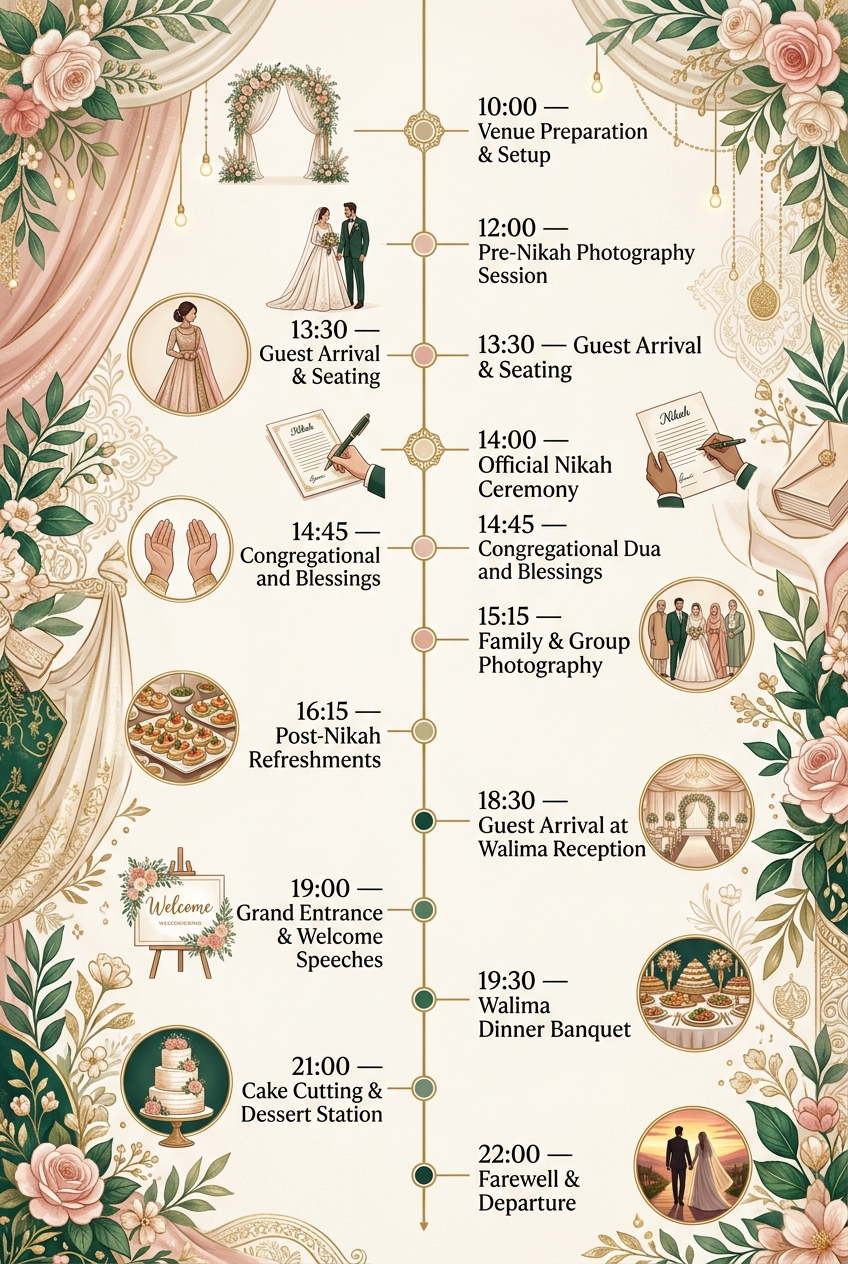
Why Muslim Weddings Need a Timeline
Planning an Islamic wedding involves orchestrating distinct religious rituals, sensitive cultural expectations, and modern event logistics. Without a clear master schedule, even the most beautiful celebration can feel frantic or disorganized.
- Respecting Prayer Times and Sacred Protocols: Daily congregational prayers (Salah) form the rhythmic backbone of an Islamic day. A structured timeline ensures that key events—such as the Ijab-o-Qubool (offer and acceptance) or main speeches—do not overlap with prayer calls (Adhan), allowing guests and family members to fulfill their religious duties peacefully.
- Flawless Vendor and Venue Coordination: From florists decorating the Islamic Center Main Sanctuary to caterers preparing a multi-course halal feast, external teams rely on precise timestamps. Clear timing keeps caterers from serving cold food and keeps photographers aligned on key emotional moments.
- Buffer Time for Multi-Stage Transitions: Unlike standard single-venue events, an Islamic wedding often includes outfit changes, venue shifts from mosque to ballroom, and extensive family group portraits. Built-in transition buffers protect the couple from feeling rushed.
If you are incorporating different cultural traditions or comparing religious structures, you might also find inspiration in our Church Wedding Ceremony Timeline or explore a simple structure like our Civil Ceremony Wedding Timeline.
What to Include in a Muslim Wedding Timeline (Nikah)
To build a seamless Islamic wedding day, your agenda should incorporate these vital stages:
- Morning Prep & Floral Setup: Decorating the primary stage (Madrassa or hall), sound checks, and bridal party preparation.
- Pre-Nikah Photography: Individual portraits, bridal details, and immediate family photographs before guests arrive.
- Guest Arrival & Quran Recitation: Welcoming attendees into the sanctuary with ambient Quranic recitations or peaceful nasheeds.
- The Sacred Nikah Ceremony: The sermon (Khutbah Nikah), declaration of the bridal gift (Mahr), mutual consent, and signing of the official Islamic contract.
- Congregational Dua & Congratulations: Heartfelt prayers recited by the Sheikh or Imam, followed by family blessings and Salami (congratulatory greetings).
- Family Group Photos & Refreshments: Structured photography while guests enjoy light tea, dates, and traditional sweets.
- The Walima Reception: Grand entrance, elder speeches, traditional halal feast, cake cutting, and formal send-off.
Morning Preparation and Pre-Nikah Logistics
Morning Setup & Pre-Nikah Photography
| Time | Event |
|---|---|
| 10:00 | Venue Preparation & Setup |
| 12:00 | Pre-Nikah Photography Session |
| 13:30 | Guest Arrival & Seating |
The wedding day begins at 10:00 AM in the Islamic Center Grand Hall, where event coordinators, florists, and staging teams set up floral backdrops, podiums, and comfortable seating. Assigning a dedicated venue coordinator during this early window guarantees that sound systems for the officiating Imam are tested and that separate seating zones—if requested by the families—are laid out correctly.
At 12:00 PM, the focus shifts to the Bridal Suite & Courtyard for pre-ceremony portraits. Capturing detail shots of the bridal attire, jewelry, wedding rings, and individual family portraits before guests fill the space ensures the couple looks fresh and unfatigued. By 1:30 PM, doors open at the Islamic Center Main Sanctuary. Guests are greeted warmly with ambient background nasheeds or Quran recitations, giving everyone ample time to settle into their seats before the solemn proceedings start.
The Sacred Nikah Ceremony & Blessings
The Sacred Nikah Ceremony & Blessings
| Time | Event |
|---|---|
| 14:00 | Official Nikah Ceremony |
| 14:45 | Congregational Dua and Blessings |
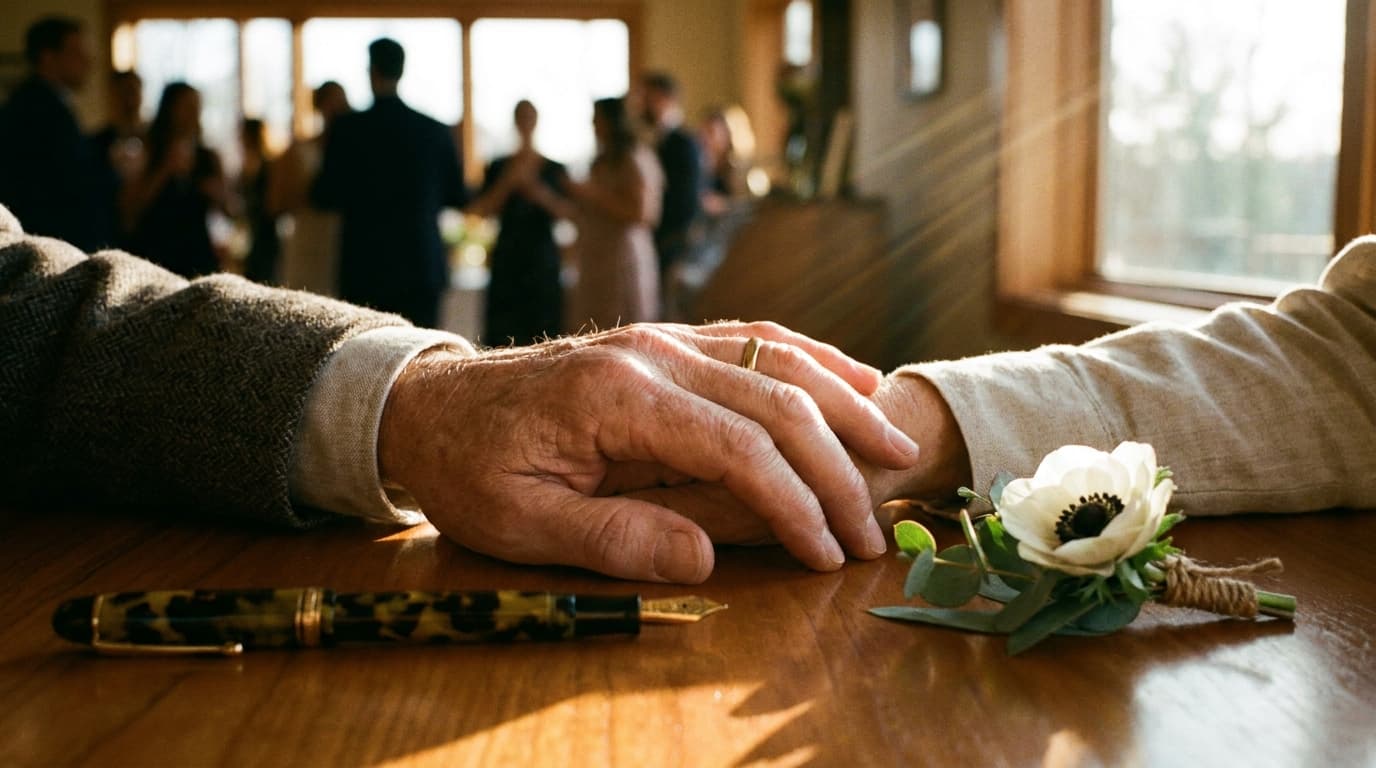
At 14:00 PM, the heart of the wedding day commences in the Islamic Center Main Sanctuary. The officiating Sheikh or Imam opens the Official Nikah Ceremony with a traditional sermon (Khutbah), reminding the couple and community of the spiritual duties of marriage in Islam. The Imam verifies the agreed bridal gift (Mahr) and confirms the consent of both the bride and groom through the Ijab-o-Qubool. Once the couple states their acceptance, the legal Islamic marriage contract is signed by the bride, groom, two adult Muslim witnesses, and the bride's guardian (Wali).
Following the contract signing at 14:45 PM, the Imam leads a Congregational Dua and Blessings. The entire assembly joins hands in heartfelt prayer, asking the Almighty to grant the newlyweds love, harmony, and prosperity. Once the prayer concludes, close relatives and guests step forward to offer congratulations, traditional hugs, and moral blessings to the newly married couple.
Post-Nikah Photography & Social Refreshments
Post-Nikah Photography & Social Refreshments
| Time | Event |
|---|---|
| 15:15 | Family & Group Photography |
| 16:15 | Post-Nikah Refreshments |
With the religious contract officially sealed, the schedule transitions into informal celebration at 15:15 PM in the Islamic Center Courtyard. The photographer guides extended family groups, elders, and friends through a structured shot list. Utilizing outdoor natural light during this window delivers breathtaking imagery while keeping large crowds organized.
At 16:15 PM, attendees move to the Social Hall for Post-Nikah Refreshments. Guests mingle over warm chai, coffee, savory pastries, and traditional sweets like baklava or mithai. This light social hour provides a crucial break, allowing the bridal party to rest, change attire, or prepare for the evening's grand Walima celebration without leaving guests unattended.
For couples planning non-denominational or hybrid celebrations, taking cues from a standard Christian Wedding Timeline or a Catholic Wedding Timeline can help structure multi-faith guest expectations.
The Evening Walima Reception & Banquet
The Evening Walima Reception & Banquet
| Time | Event |
|---|---|
| 18:30 | Guest Arrival at Walima Reception |
| 19:00 | Grand Entrance & Welcome Speeches |
| 19:30 | Walima Dinner Banquet |
| 21:00 | Cake Cutting & Dessert Station |
| 22:00 | Farewell & Departure |
The second half of the wedding day takes place in the Grand Ballroom, commencing with Guest Arrival at Walima Reception at 18:30 PM. Escort cards or seating charts guide guests to their designated tables while welcome drinks are served. At 19:00 PM, the room darkens slightly as the newlyweds make their Grand Entrance & Welcome Speeches, greeted by joyful applause, traditional drums (Daff), or rhythmic music. Elders from both families share brief opening remarks and offer warm prayers for the banquet.
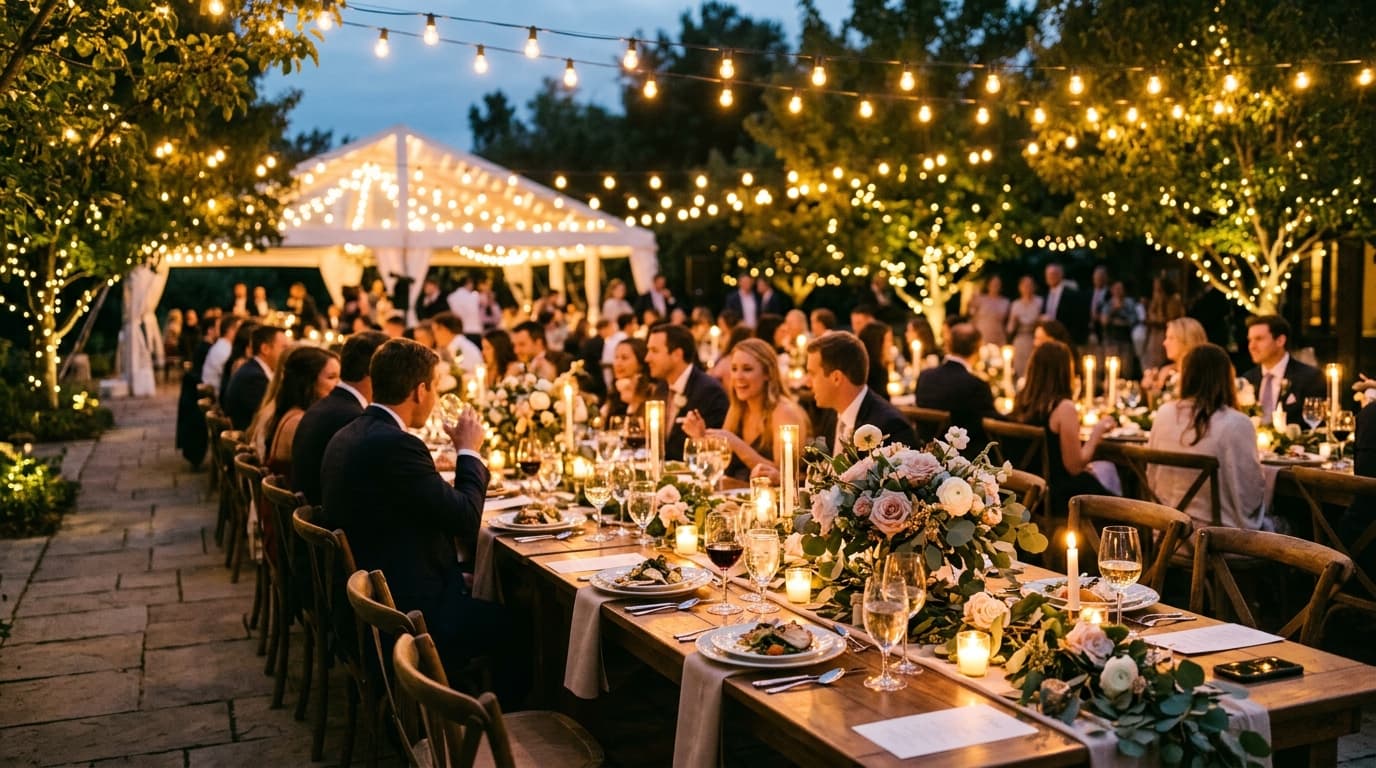
The Walima Dinner Banquet is served at 19:30 PM, featuring a luxurious, multi-course halal catering spread. The Walima is a foundational prophetic tradition meant to express gratitude and share joy with family, friends, and community members. At 21:00 PM, the couple gathers at the central stage for the Cake Cutting & Dessert Station, opening up an elaborate array of pastries, fruit displays, and coffee stations for all attendees.
As the evening draws to a close at 22:00 PM, guests gather in the Grand Ballroom Foyer for the formal Farewell & Departure. Surrounded by close friends and family throwing rose petals or offering warm hugs, the couple departs into their new life together, bringing a memorable and blessed day to a peaceful close. If you are hosting your rehearsal or family dinner on a separate evening prior to the big day, take a look at our helpful Rehearsal Dinner Timeline Template.
Muslim Wedding Timeline (Nikah) vs Walima Agenda
While closely tied together, the Nikah and the Walima serve distinct spiritual and social functions within Islamic tradition. Understanding their unique roles helps in organizing the timing of each event.
| Feature | Nikah Ceremony | Walima Reception |
|---|---|---|
| Primary Focus | Religious & legal marriage contract | Sunnah celebratory feast & reception |
| Atmosphere | Solemn, spiritual, reverent | Festive, joyful, social |
| Key Participants | Imam, couple, Wali, legal witnesses | Extended family, friends, community |
| Primary Location | Mosque, Islamic center, or quiet hall | Reception hall or grand ballroom |
| Traditional Host | Traditionally hosted by the bride's family | Traditionally hosted by the groom's family |
While the Nikah centers on contractual consent, religious sermons, and congregational Dua, the Walima is designed around hospitality, dining, speeches, and community celebration. For smaller, intimate gatherings or destination unions, review our Elopement Timeline Template to streamline low-complexity schedules.
Who Should Use This Template?
This versatile wedding schedule is designed to adapt to diverse Islamic cultural traditions and venue setups. It serves as an ideal framework for:
- Muslim Couples & Families: Couples planning a same-day Nikah and Walima who need a balanced, manageable structure.
- Islamic Center Event Coordinators: Mosque administrators managing facility bookings, sanctuary schedules, and guest logistics.
- Professional Wedding Planners: Coordinators overseeing South Asian (Shaadi), Arab (Katb El-Kitab), Turkish, Persian, or Western Muslim weddings.
- Vendors & Caterers: Halal caterers, decorators, photographers, and sound engineers requiring clear operational checkpoints.
Chronolio offers customizable role-based access so planners can share tailored timelines with different event stakeholders. Learn more about managing different roles on Chronolio to keep your vendors and venue managers perfectly synchronized.
How to Use This Template
- Download or Duplicate: Access the customizable template files in Word format or PDF format to edit on your computer or print for your planning binder.
- Adjust for Daily Prayer Times: Check the specific prayer schedule (Salah) for your event date and geographic location. Shift contract or meal times by 15–30 minutes to avoid overlapping with prayer calls.
- Customize Venue Names: Replace placeholder locations with your specific mosque sanctuary, courtyard, or hotel banquet room.
- Distribute to Key Parties: Share final digital copies with your Imam, photographer, caterer, and family coordinators at least two weeks before the event.
Tips for a Successful Muslim Wedding Day
- Align Schedule with Local Prayer Times: Prayer times change seasonally. Always verify Dhuhr, Asr, Maghrib, and Isha times for your specific event date when setting ceremony start times.
- Designate a Vendor Liaison: Appoint a trusted family member or professional planner to manage vendor inquiries so the couple can focus entirely on their special day.
- Provide Clear Guidance for Guests: Include clear arrival instructions, dress codes, and shoe-removal guidelines (if holding the ceremony inside a carpeted prayer hall) on your wedding invitations.
- Set Up a Private Room for the Couple: Ensure the bride and groom have access to quiet, private suites between the Nikah and Walima to rest, perform ablution (Wudu), and touch up hair or makeup.
- Prepare Contract Documents Early: Complete pre-marital administrative paperwork with your local mosque and local government authorities prior to the wedding day to prevent contract signing delays.
- Organize Formal Photo Lists: Supply your photographer with a strict family group shot list in advance to keep post-ceremony photos swift and orderly.
Common Mistakes to Avoid
- Ignoring Prayer Time Shifts: Forgetting that prayer times shift throughout the year can lead to awkward interruptions during contract speeches or meal service.
- Underestimating Guest Arrival Delays: Islamic weddings often host large, extended family groups. Failing to build a 30-minute buffer for guest arrival can delay the Nikah start time.
- Overcrowding the Afternoon Gap: Attempting to fit complex outfit changes, multiple photo shoots, and travel across town in under an hour causes unnecessary panic.
- Lacking Separate Facilities Plan: If hosting segregated events, failing to coordinate separate entrance, dining, or photo arrangements causes confusion upon arrival.
- Forgetting Document Pens and Stamp Pads: Simple oversights, such as missing legal pens or ink pads for contract signatures, can stall the official contract signing.
In Summary
- The Muslim wedding timeline (Nikah) balances sacred religious duties with social banquet celebrations.
- It accommodates key rituals including the sermon, contract signing, Mahr verification, Dua, and Walima banquet.
- The schedule accounts for morning preparations, pre-ceremony portraits, post-Nikah tea, and an evening dinner reception.
- Customizing the schedule around daily prayer times guarantees an organized, respectful atmosphere for all guests.
- Using downloadable templates in Word or PDF formats simplifies vendor coordination and family planning.
Planning a memorable Nikah and Walima requires a thoughtful blend of spiritual reverence and polished event management. Designed for couples, wedding coordinators, and Islamic centers alike, this guide provides the perfect balance of flexibility and structure for a blessed celebration. You can learn more about how experts streamline event timing by consulting The Knot's Islamic Wedding Guide or reading historical marriage customs documented by the Islamic Society of North America. Ready to design your personalized agenda? Click below to build your schedule today.
Customize Your Muslim Wedding Timeline (Nikah)