





This Template at a Glance
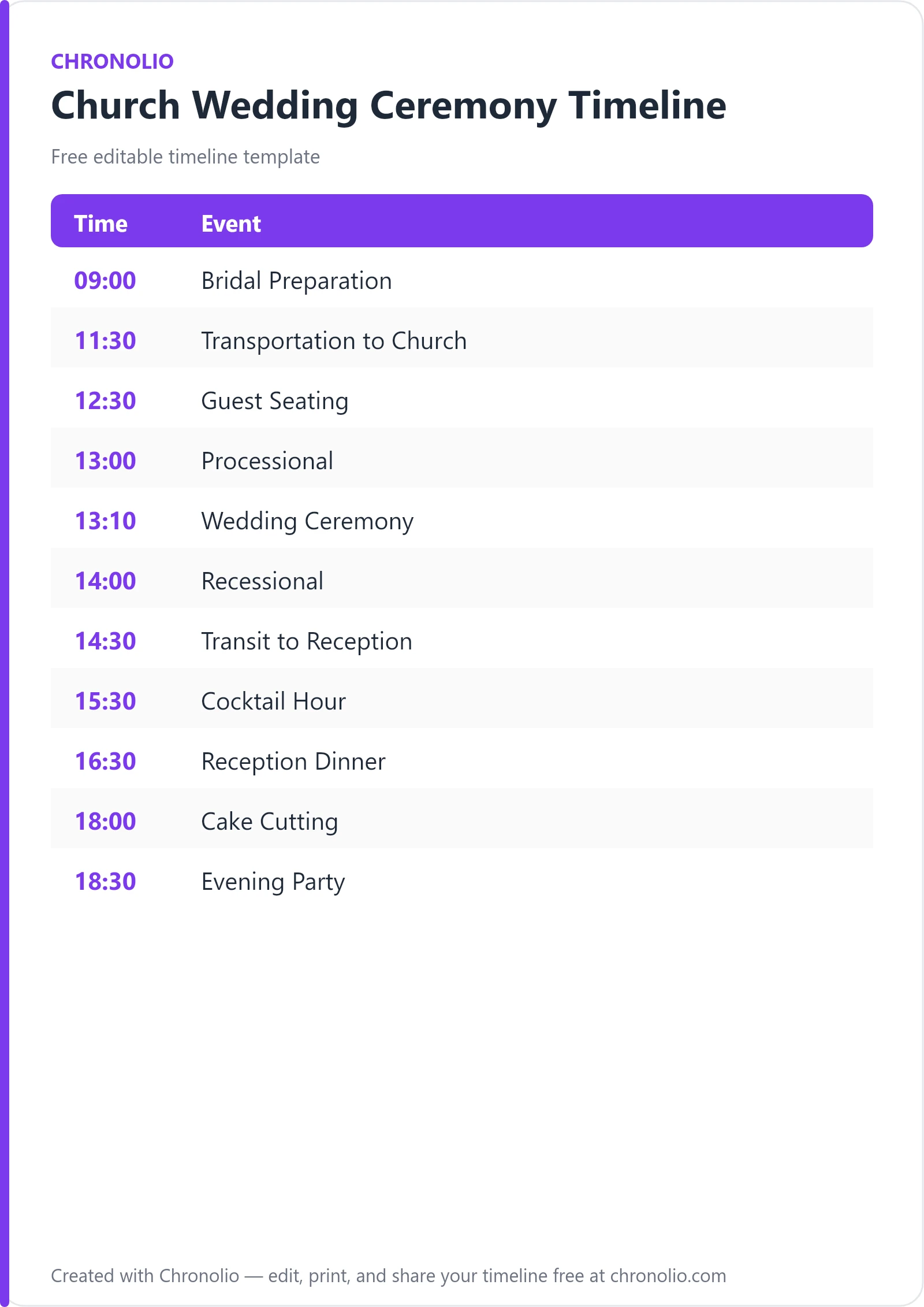
Here is the complete schedule this free template gives you — every time block, ready to edit, download, and share:
| Time | Event |
|---|---|
| 09:00 | Bridal Preparation |
| 11:30 | Transportation to Church |
| 12:30 | Guest Seating |
| 13:00 | Processional |
| 13:10 | Wedding Ceremony |
| 14:00 | Recessional |
| 14:30 | Transit to Reception |
| 15:30 | Cocktail Hour |
| 16:30 | Reception Dinner |
| 18:00 | Cake Cutting |
| 18:30 | Evening Party |
What Is a Church Wedding Ceremony Timeline?
A church wedding ceremony timeline is a comprehensive master schedule that outlines the precise sequence of events for a faith-based wedding day, from early preparation through the church service and evening reception. Running a flawless religious service requires balancing sacred church regulations, vendor delivery schedules, transportation logistics, and guest hospitality. Whether you are holding a classic parish service or comparing it with a Christian wedding timeline or a Catholic wedding timeline, this schedule serves as the single source of truth for your wedding party, officiant, organist, photographer, and venue coordinators.
Drawing from extensive experience in venue management and religious event logistics, this template reflects proven timing standards that protect the solemnity of the sanctuary while keeping your entire day running smoothly.
Customize Your Church Wedding Ceremony Timeline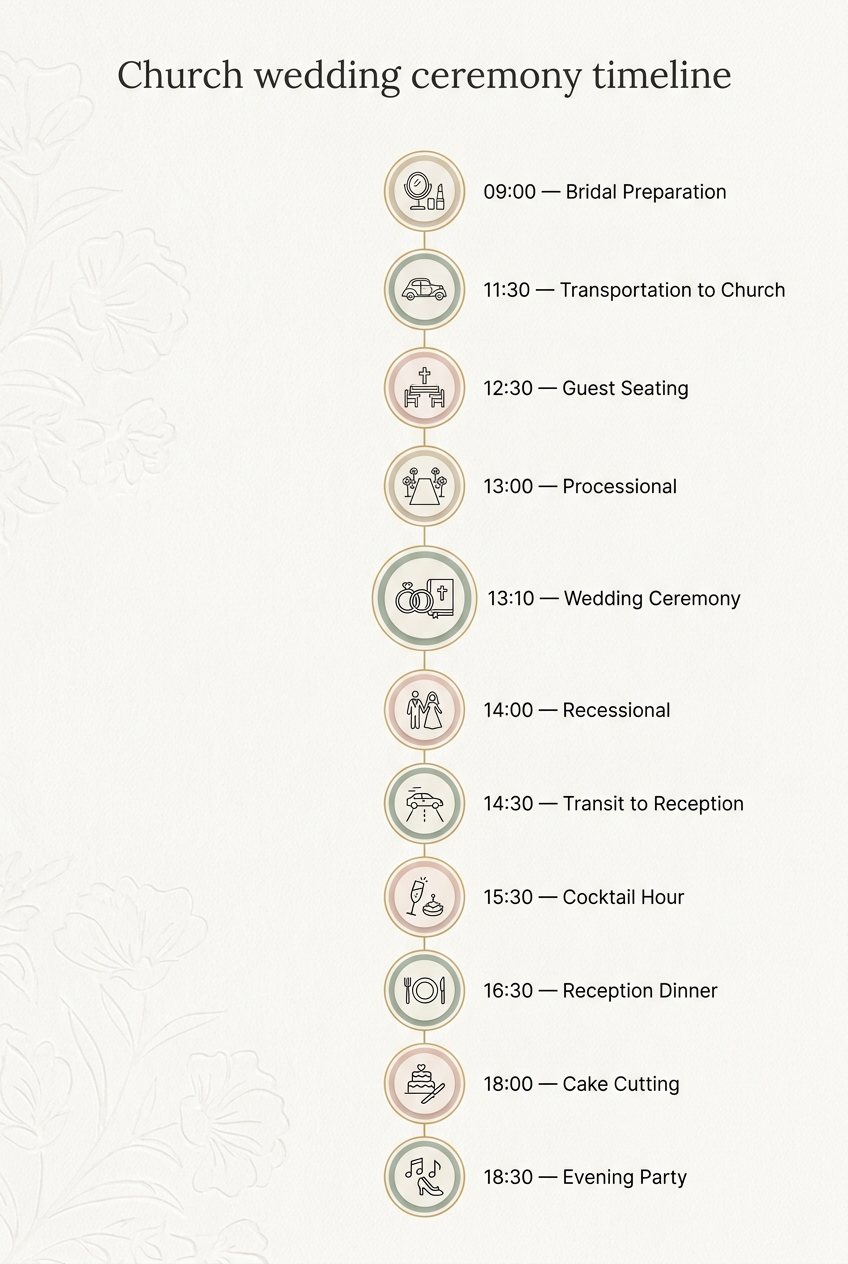
Why Church Weddings Need a Timeline
Religious venues operate on distinct structural rules that demand careful time management. Churches often host multiple services, confessions, or secondary weekend weddings, meaning strict start and end times in the sanctuary are non-negotiable. Having a clear schedule prevents late starts that could force an officiant to shorten sermon readings or truncate your exit photos on the church steps.
Beyond church guidelines, a timeline creates essential calm for the couple and their families. When everyone from the limousine driver to the head usher knows exact arrival times, unnecessary day-of wedding stress is eliminated. Your bridal party can focus on the emotional significance of the liturgy rather than worrying about traffic or missing buttonholes.
Finally, seamless coordination between two distinct locations—the church sanctuary and the reception venue—requires calculated transit times. A structured plan guarantees that guests arrive at cocktail hour relaxed and ready to celebrate, while leaving ample time for the newly married couple to capture romantic family portraits in the church grounds. You can also download our quick-reference templates in Word format or as a printable PDF file for your team.
What to Include in a Church Wedding Ceremony Timeline
A complete church wedding schedule accounts for both spiritual customs and social celebrations. Key phases to include are:
- Bridal Preparation & Beauty: Hair, makeup, dress fitting, and preliminary photos in the suite.
- Transportation & Church Arrival: Staggered arrival for groom, bride, and wedding party to preserve sanctuary privacy.
- Guest Seating & Prelude: Ushering guests into pews while sacred or classical prelude music plays.
- Processional & Ceremony: Entry of clergy, wedding party, and bride, followed by vows, ring exchange, and blessing.
- Recessional & Departure: Formal exit of the couple and guests, followed by outdoor photography.
- Venue Transit & Cocktail Hour: Travel to the reception, guest appetizers, and private portrait sessions.
- Reception Celebration: Grand entrance, formal dinner, toasts, cake cutting, and open dancing.
Morning Preparation & Sanctuary Arrival
| Time | Event |
|---|---|
| 09:00 | Bridal Preparation |
| 11:30 | Transportation to Church |
| 12:30 | Guest Seating |
The morning begins in the bridal suite with dedicated time for hair, makeup, and final dress fittings. Building two full hours into this initial block prevents the domino effect of late hair stylists, ensuring the bride and bridesmaids can enjoy a calm morning without rushing through details. Photographers often arrive during the final 40 minutes of this window to capture detail shots of the dress, rings, invitation suite, and champagne toasts.
At 11:30, private transportation arrives to carry the bridal party along the transit route to the church. Arriving well ahead of guest seating gives the bride time to settle into the church’s private dressing room unseen by arriving guests. Meanwhile, at 12:30, ushers take their places in the main sanctuary, greeting guests and guiding them into pews while soft organ or string quartet music establishes a sacred, inviting atmosphere. If you are hosting a pre-wedding dinner the night before, align your evening flow using our rehearsal dinner timeline template.
The Sacred Church Ceremony
| Time | Event |
|---|---|
| 13:00 | Processional |
| 13:10 | Wedding Ceremony |
| 14:00 | Recessional |
At 13:00, the church doors open for the processional down the main aisle. Guided by the church coordinator, the officiant, groom, best man, groomsmen, bridesmaids, flower girl, and ring bearer make their entrance, culminating in the grand entry of the bride. According to traditional ceremony guidelines established by platforms like Brides, maintaining a steady processional pace creates a memorable visual flow while keeping the schedule on track.
The main wedding ceremony begins at 13:10 at the church altar. This 50-minute block allows comfortable pacing for traditional religious elements, including Scripture readings by close family members, musical interludes, homily, exchange of holy vows, ring presentation, and the final blessing. At 14:00, the newly married couple leads the recessional out through the church entrance, followed by the wedding party and guests transitioning outdoors.
Travel & Reception Celebration
| Time | Event |
|---|---|
| 14:30 | Transit to Reception |
| 15:30 | Cocktail Hour |
| 16:30 | Reception Dinner |
| 18:00 | Cake Cutting |
| 18:30 | Evening Party |
Following ceremony exit photos on the church steps, guests and the wedding party set off along the roadway to the venue at 14:30. This hour-long buffer absorbs real-world travel delays and affords the couple peaceful photo opportunities on church grounds without feeling rushed. Guests arrive at the reception foyer by 15:30 for cocktail hour, enjoying light hors d'oeuvres, drinks, and patio socialization while wedding portraits finish up.
At 16:30, everyone gathers in the main ballroom for a formal sit-down reception dinner, punctuated by heartfelt toasts from the maid of honor and best man. At 18:00, the couple performs the formal cake cutting, signaling to guests that the formal dining period is complete. The night culminates at 18:30 as the dance floor opens for an energetic evening party featuring classic and contemporary hits until the event concludes.
Church Wedding Ceremony Timeline vs Civil Ceremony Timeline
While both honor the union of two people, a church ceremony involves distinct sacred steps, liturgical requirements, and strict venue policies that differ significantly from a civil service.
| Feature | Church Wedding Ceremony | Civil Ceremony |
|---|---|---|
| Location & Setting | Religious sanctuary, chapel, or cathedral | Town hall, registry office, outdoor garden, or venue |
| Officiant | Ordained clergy, priest, pastor, or minister | Magistrate, registrar, or secular solemnizer |
| Duration | 45 to 60+ minutes (longer with Mass/liturgy) | 20 to 30 minutes |
| Music & Content | Hymns, sacred music, religious Scripture readings | Secular songs, personalized readings, non-religious vows |
| Transit Needs | Usually requires travel between church and reception | Ceremony and reception are often held at the same venue |
If you are evaluating non-religious alternatives or intimate gatherings, compare this structure with a civil ceremony wedding timeline or explore an elopement timeline guide to see how timing varies across ceremony formats.
Who Should Use This Template?
This timeline template is designed for couples, planners, and religious institutions seeking a reliable, structured wedding day schedule. Chronolio supports the various roles involved in executing flawless events:
- Engaged Couples: Planning a traditional church, chapel, or cathedral wedding with a separate reception.
- Professional Wedding Planners: Looking for an editable master schedule to distribute to drivers, florists, and caterers.
- Church Wedding Coordinators: Managing sanctuary availability, priest/pastor agendas, and pew seating flow.
- Musicians & Organists: Needing exact cues for prelude, processional, communion, and recessional pieces.
- Photographers & Videographers: Mapping out lighting windows for sanctuary shots and family portraits.
How to Use This Template
- Duplicate or Edit: Click the edit button on this page to load the timeline directly into Chronolio.
- Set Your Ceremony Start Time: Adjust the 13:00 ceremony block to match your church’s allocated time slot; all adjacent blocks will scale automatically.
- Incorporate Specific Liturgy: Add custom rows for unity candles, communion, or special choir performances within the ceremony block.
- Share with Vendors & Clergy: Export your schedule to PDF or Word and distribute printouts to your officiant, driver, photographer, and venue director.
Tips for a Successful Church Wedding Ceremony
- Confirm Church Photography Rules: Verify with your officiant where photographers are allowed to stand during the service to avoid unexpected restrictions.
- Pew Seating Strategy: Assign ushers early and clarify reserved seating policies for immediate family and grandparents in the front pews.
- Pad Your Travel Windows: Add an extra 15 minutes to GPS estimates between church and reception to account for guest group travel delays.
- Distribute Orders of Service Early: Ensure printed church programs or orders of service are placed on pews or handed out at the sanctuary doors.
- Prepare an Emergency Touch-Up Kit: Keep a kit with bobby pins, breath mints, tissues, and double-sided tape in the church bridal dressing room.
- Coordinate Prelude Music: Brief musicians to begin prelude music 30 minutes prior to the processional so early arriving guests enter a warm atmosphere.
Common Mistakes to Avoid
- Underestimating Hair and Makeup Duration: Starting beauty preparations too late creates cascading delays that shorten pre-ceremony photo sessions.
- Ignoring Church Arrival Deadlines: Arriving right at ceremony time leaves no buffer for dress adjustments or settling nervous jitters.
- Overlooking Post-Ceremony Signings: Forgetting to schedule 10 to 15 minutes immediately after the recessional for signing the marriage register.
- Neglecting Guest Parking Logistics: Failing to communicate church parking constraints or overflow rules on your wedding website.
- Rushing Sanctuary Photography: Not checking church exit windows, resulting in church staff clearing pews before family photos finish.
- Forgetting Vendor Meals: Not planning timing for photographer and DJ breaks during the reception dinner phase.
In Summary
- Complete 12-Hour Coverage: Manages everything from 09:00 morning preparations through an 18:30 dance floor party.
- Sanctuary-Focused Timing: Allocates a realistic 50-minute block for church vows, Scripture readings, and religious traditions.
- Built-in Buffer Windows: Includes a designated transit hour to absorb real-world traffic between church and reception.
- Multi-Role Coordination: Keeps couple, clergy, ushers, drivers, caterers, and photographers aligned on a single master schedule.
- Fully Customizable: Easily adapted for Protestant, Catholic, or non-denominational church formats inside Chronolio.
Planning a church wedding requires balancing sacred traditions with real-world timing. By following this proven schedule, engaged couples, church coordinators, and wedding planners can ensure every moment—from the quiet morning preparation to the final dance—unfolds effortlessly.
Customize Your Church Wedding Ceremony Timeline