





This Template at a Glance
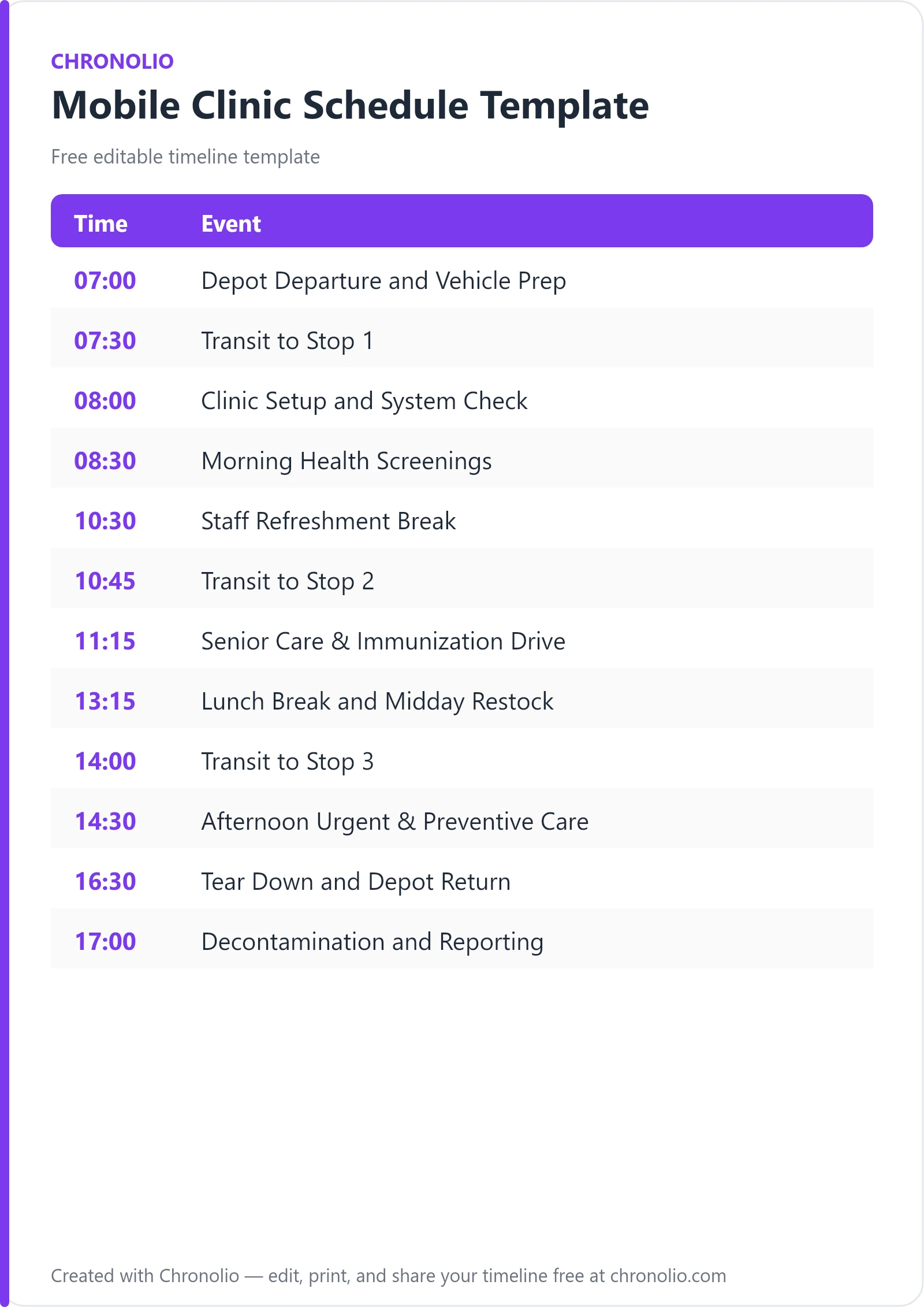
Here is the complete schedule this free template gives you — every time block, ready to edit, download, and share:
| Time | Event |
|---|---|
| 07:00 | Depot Departure and Vehicle Prep |
| 07:30 | Transit to Stop 1 |
| 08:00 | Clinic Setup and System Check |
| 08:30 | Morning Health Screenings |
| 10:30 | Staff Refreshment Break |
| 10:45 | Transit to Stop 2 |
| 11:15 | Senior Care & Immunization Drive |
| 13:15 | Lunch Break and Midday Restock |
| 14:00 | Transit to Stop 3 |
| 14:30 | Afternoon Urgent & Preventive Care |
| 16:30 | Tear Down and Depot Return |
| 17:00 | Decontamination and Reporting |
What Is a Mobile Clinic Schedule?
A mobile clinic schedule is an operational master plan that governs how a mobile health unit moves, sets up, treats patients, and completes mandatory sanitization throughout a service day. Running a successful mobile health initiative requires synchronizing clinical workflows with vehicle mechanics, ensuring that healthcare providers arrive fully equipped to treat underserved populations on time.
This mobile clinic schedule reflects real-world mobile healthcare operations, incorporating best practices from community triage units, disaster relief programs, and preventive healthcare fleets. By establishing strict time blocks for cold-chain storage validation, patient intake, and site transit, your clinical team maintains standard of care compliance while maximizing patient throughput.
Use this Mobile Clinic Schedule Template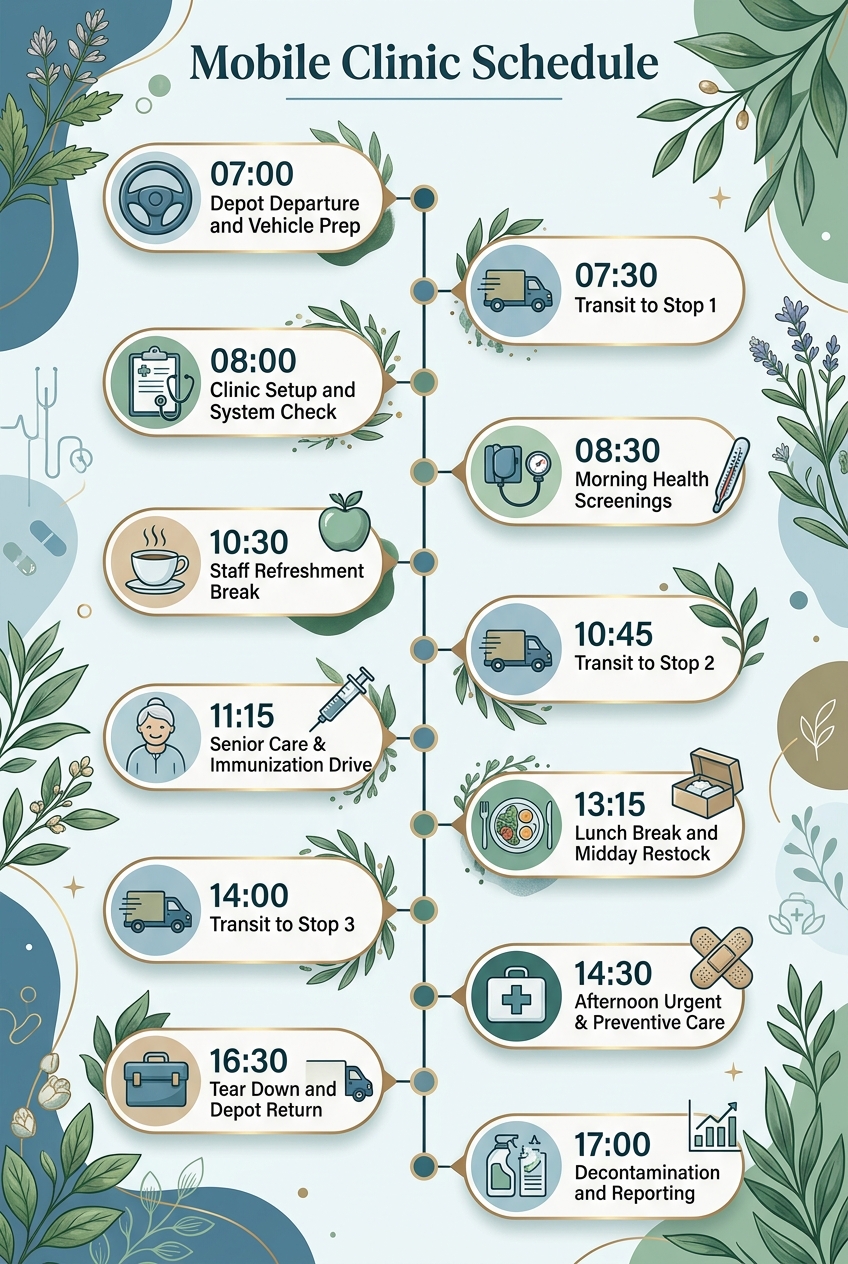
Why Mobile Clinics Need a Timeline
Operating a health center on wheels presents unpredictable variables, from urban traffic bottlenecks to sudden fluctuations in patient walk-in volume. A precise schedule acts as the structural spine of your mobile outreach, ensuring clinical safety protocols are never compromised when unexpected delays occur in transit.
Beyond traffic navigation, structured timing establishes strict accountability among team members. When nurses, driver-technicians, and intake clerks operate from the same master schedule, patient triage runs smoothly, wait times decrease, and staff burnout is minimized across long field shifts.
Organizing community health initiatives requires precise timekeeping, much like structuring a corporate governance schedule with our board meeting timeline template. Clear scheduling also allows partnering community centers, senior homes, and municipal parks to prepare their facilities in advance for your arrival.
What to Include in a Mobile Clinic Schedule
To ensure comprehensive coverage and operational safety, a mobile healthcare schedule must account for both clinical and mechanical activities:
- Depot Prep & Mechanical Inspections: Pre-trip safety checks, diagnostic powerups, generator fuel level verification, and onboard stock inventory.
- Transit & Route Navigation: Realistic travel windows between service locations that include driver buffer times.
- Site Deployment & Setup: Deploying stabilizing jacks, awning extensions, queue barriers, and point-of-care diagnostic workstations.
- Dedicated Patient Service Blocks: Categorized clinical hours tailored to specific community demographics (e.g., general wellness, geriatric care, urgent triage).
- Mandatory Staff Breaks & Restocking: Scheduled downtime for clinical teams to rest, sanitize tools, and replenish pharmaceuticals.
- Tear Down & Site Restoration: Packing exterior hardware, securing biohazard disposal containers, and leaving the hosting venue clean.
- Terminal Base Decontamination: Post-shift chemical and UV disinfection, electronic health record (EHR) synchronization, and daily performance logging.
Morning Dispatch & Stop 1: Community Wellness
Morning Dispatch & Stop 1
| Time | Event |
|---|---|
| 07:00 | Depot Departure and Vehicle Prep |
| 07:30 | Transit to Stop 1 |
| 08:00 | Clinic Setup and System Check |
| 08:30 | Morning Health Screenings |
| 10:30 | Staff Refreshment Break |
The initial hour of the morning sets the operational baseline for the entire day. At the Central Medical Depot, the driver-technician and clinical staff perform critical pre-flight checks, verifying generator fuel levels, testing diagnostic systems, and confirming cold-chain vaccine temperatures before turning the key. Departing base precisely at 07:30 ensures the unit arrives at the Eastside Community Center on time.
Upon arrival at Stop 1, the crew has 30 minutes to deploy hydraulic stabilizing jacks, raise check-in canopies, and initialize electronic health record systems. Opening the doors at 08:30 allows the team to deliver preventive wellness screenings, blood pressure checks, and routine prescription dispensing. A quick 15-minute break at 10:30 gives staff time to sanitize consultation bays before moving to the next stop.
Midday Operations & Senior Care Outreach
Midday Operations & Senior Care Outreach
| Time | Event |
|---|---|
| 10:45 | Transit to Stop 2 |
| 11:15 | Senior Care & Immunization Drive |
| 13:15 | Lunch Break and Midday Restock |
Transit across town during mid-morning traffic requires a dedicated 30-minute block. During transit along Transit Route 2, onboard medical personnel sanitize internal hard surfaces and prep immunization kits so they are ready the moment the vehicle parks at Oakridge Senior Living.
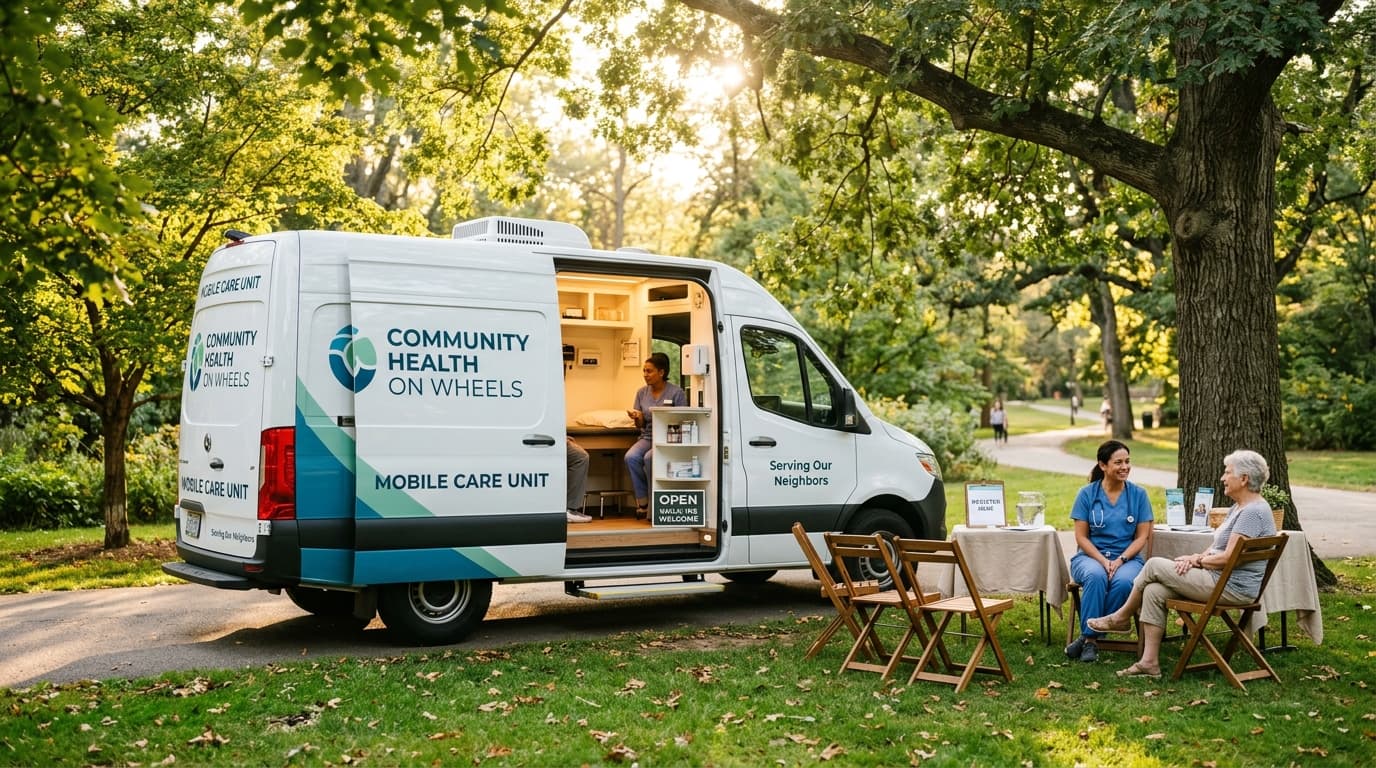
At this stop, the focus shifts to specialized geriatric care and seasonal vaccinations. Deploying wheelchair-accessible ramps ensures safe mobility for residents entering the mobile unit. Following two hours of high-density vaccinations and mobility assessments, the unit pauses for a 45-minute lunch break. Planners often coordinate seasonal wellness drives alongside broader community activities, pairing health schedules with event plans like our anniversary party schedule template or birthday party timeline template for civic celebrations. During this pause, logistics coordinators lock biohazard containers and restock critical vaccine supplies.
Afternoon Outreach & Terminal Decontamination
Afternoon Outreach & Terminal Decontamination
| Time | Event |
|---|---|
| 14:00 | Transit to Stop 3 |
| 14:30 | Afternoon Urgent & Preventive Care |
| 16:30 | Tear Down and Depot Return |
| 17:00 | Decontamination and Reporting |
The afternoon route leads to Downtown Plaza Park, a high-foot-traffic urban hub where services target urgent preventive care, dental triage, and hygiene kit distribution. When health teams conduct targeted maternal or family wellness pop-ups during outreach drives, they often draw structural inspiration from family-focused plans like our baby shower timeline template. Social workers join the clinical team during this window to provide housing and mental health referrals.
Promptly at 16:30, the crew begins tear down, stowing exterior canopies, retracting ramps, and locking diagnostic equipment for transit. Returning to the Central Medical Depot by 17:00 marks the start of terminal decontamination. The shift wraps up with medical-grade UV sterilization, biohazard transfer, and patient data synchronization to complete the daily governance log.
Mobile Clinic Schedule vs Route Itinerary
A common oversight when organizing field medicine is confusing an operational clinic schedule with a driver's route itinerary. While both documents support field operations, they serve fundamentally different functional roles:
| Operational Feature | Mobile Clinic Schedule | Driver Route Itinerary |
|---|---|---|
| Primary Focus | Patient care flow, clinical triage, setup, and sanitization | Transit timing, navigation routes, traffic updates, and vehicle mileage |
| Key Audience | Clinicians, nurses, intake clerks, and site partners | Fleet drivers, logistics managers, and vehicle dispatchers |
| Core Metrics | Patient throughput, intake duration, vaccine cold-chain integrity | Fuel usage, telematics, drive time, and arrival windows |
| Scope | Complete end-to-end operational service day | Vehicle movement between geographic coordinates |
While a driver itinerary focuses exclusively on geographic transit and telematics, the mobile clinic schedule integrates transit windows into clinical workflows, ensuring healthcare delivery remains safe, compliant, and punctual.
Who Should Use This Template?
This timeline template is designed for healthcare operators, public agencies, and non-profit logistics teams managing mobile service delivery models:
- Public Health Departments: Municipal health teams running city-wide immunization drives and mobile disease testing fleets.
- Non-Profit Healthcare Organizations: Humanitarian organizations offering free primary care and preventive screenings in rural or urban healthcare deserts.
- Mobile Dental & Vision Units: Specialized outpatient practices bringing screening machinery directly to schools and community centers.
- Disaster Relief Operations: Emergency response teams deploying triage units into affected regions following environmental crises.
- Occupational Health Providers: On-site corporate healthcare teams administering workplace safety physicals, drug screens, and annual flu shots.
Chronolio supports the distinct roles involved in running mobile medical operations, from fleet coordinators to head clinicians.
How to Use This Template
- Download or Duplicate: Open this template in Chronolio or download our ready-to-print formats using the Word schedule template or PDF schedule template.
- Set Your Operating Date & Route: Map out your specific community stops and adjust geographic transit windows based on real-time traffic data.
- Customize Clinical Service Windows: Tailor service duration blocks (e.g., lengthen screening times for high-density stops or adjust for specialist clinics).
- Assign Team Roles: Detail specific prep tasks for drivers, intake staff, nurses, and decontamination technicians across each phase of the day.
- Share with Partners: Export and distribute the schedule to site managers, hosting facilities, and security staff at least 48 hours prior to arrival.
Tips for a Successful Mobile Clinic Day
- Pre-Register Patients Online: Use digital pre-registration portals to reduce walk-in paperwork and keep patient intake under five minutes per person.
- Establish Clear Site Signage: Place high-visibility feather flags and directional pavement markers as soon as the vehicle arrives to direct patient queues safely.
- Maintain Strict Cold-Chain Monitoring: Assign a dedicated nurse to log vaccine refrigerator temperatures every hour, including during transit windows.
- Deploy Rapid Triage Protocols: Designate an experienced nurse at the check-in canopy to assess patient urgency immediately, routing minor inquiries away from primary exam rooms.
- Factor in Mechanical Buffers: Build 15 minutes of non-allocated operational buffer into morning setup to handle generator or leveling jack adjustments.
- Cross-Train Operational Staff: Ensure at least one medical team member is trained to assist the driver with awning deployment and generator troubleshooting.
- Coordinate with Host Site Facilities: Confirm electrical hookup availability, restroom access, and waste disposal permissions with venue managers prior to deployment day.
Common Mistakes to Avoid
- Underestimating Transit Times: Failing to account for urban congestion or heavy vehicle navigation can delay clinic opening times and erode community trust.
- Overbooking Appointment Slots: Filling every minute with patient bookings leaves no margin for complex medical cases or unexpected walk-in emergencies.
- Skipping Midday Decontamination: Omitting quick surface sanitization between heavy patient sessions increases cross-contamination risks inside compact medical units.
- Neglecting Onboard Storage Limits: Packing excess inventory without clearing accumulated biohazard waste creates spatial clutter and safety hazards inside clinical bays.
- Ignoring Driver Rest Regulations: Mandating long continuous shifts without built-in driving breaks violates fleet safety guidelines and increases transit risks.
- Failing to Notify Local Authorities: Arriving at public parks or civic spaces without proper municipal parking permits can result in costly operational shutdowns.
In Summary
- A mobile clinic schedule balances vehicle navigation, patient care, and mandatory sanitation protocols into a unified daily timeline.
- Scheduling two to three targeted community stops per day optimizes patient reach while preventing staff fatigue.
- Reserving dedicated 30-minute setup and tear-down windows ensures safety equipment and diagnostic networks are fully operational before intake begins.
- Incorporating mid-shift restocking and end-of-day terminal decontamination maintains rigorous healthcare compliance standards.
- Clear time coordination between drivers, clinicians, and host venues drastically reduces patient wait times and improves community health outcomes.
Executing a successful mobile health initiative depends on structured logistics and clear team communication. By adhering to a rigorous daily schedule, mobile health units can safely bring high-quality healthcare directly to the heart of the communities that need it most. For additional governance templates, explore our board meeting timeline template or review federal mobile care standards on the HRSA Health Center Program and CDC Community Health Guidelines.
Use this Mobile Clinic Schedule Template