





This Template at a Glance
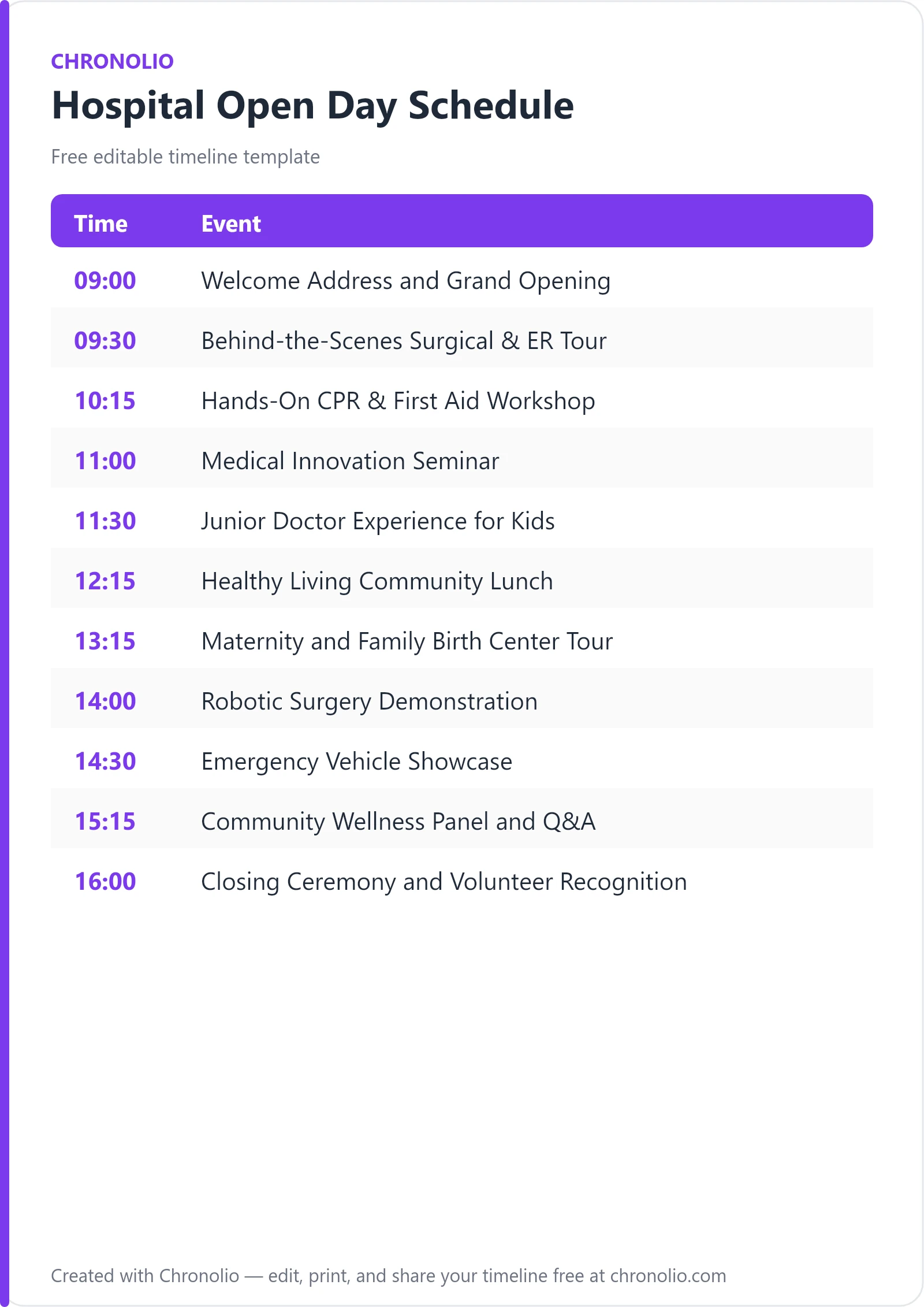
Here is the complete schedule this free template gives you — every time block, ready to edit, download, and share:
| Time | Event |
|---|---|
| 09:00 | Welcome Address and Grand Opening |
| 09:30 | Behind-the-Scenes Surgical & ER Tour |
| 10:15 | Hands-On CPR & First Aid Workshop |
| 11:00 | Medical Innovation Seminar |
| 11:30 | Junior Doctor Experience for Kids |
| 12:15 | Healthy Living Community Lunch |
| 13:15 | Maternity and Family Birth Center Tour |
| 14:00 | Robotic Surgery Demonstration |
| 14:30 | Emergency Vehicle Showcase |
| 15:15 | Community Wellness Panel and Q&A |
| 16:00 | Closing Ceremony and Volunteer Recognition |
What Is a Hospital Open Day Schedule?
A hospital open day schedule is a detailed tactical agenda designed to manage the flow of visitors, medical professionals, and community members during a public healthcare event. Hosting a public open house allows medical facilities to showcase cutting-edge diagnostic technology, foster trust within the local community, recruit clinical talent, and educate families on health and wellness.
Executing a flawless hospital event requires rigorous operational timing. Unlike standard corporate open houses, healthcare facilities must navigate strict security protocols, patient privacy standards, and infection control procedures. Based on real-world facility management expertise and established public relations frameworks from healthcare organizations like the American Hospital Association, this framework ensures high-traffic zones remain safe while granting attendees meaningful, hands-on access to modern medicine.
Customize Your Hospital Open Day Schedule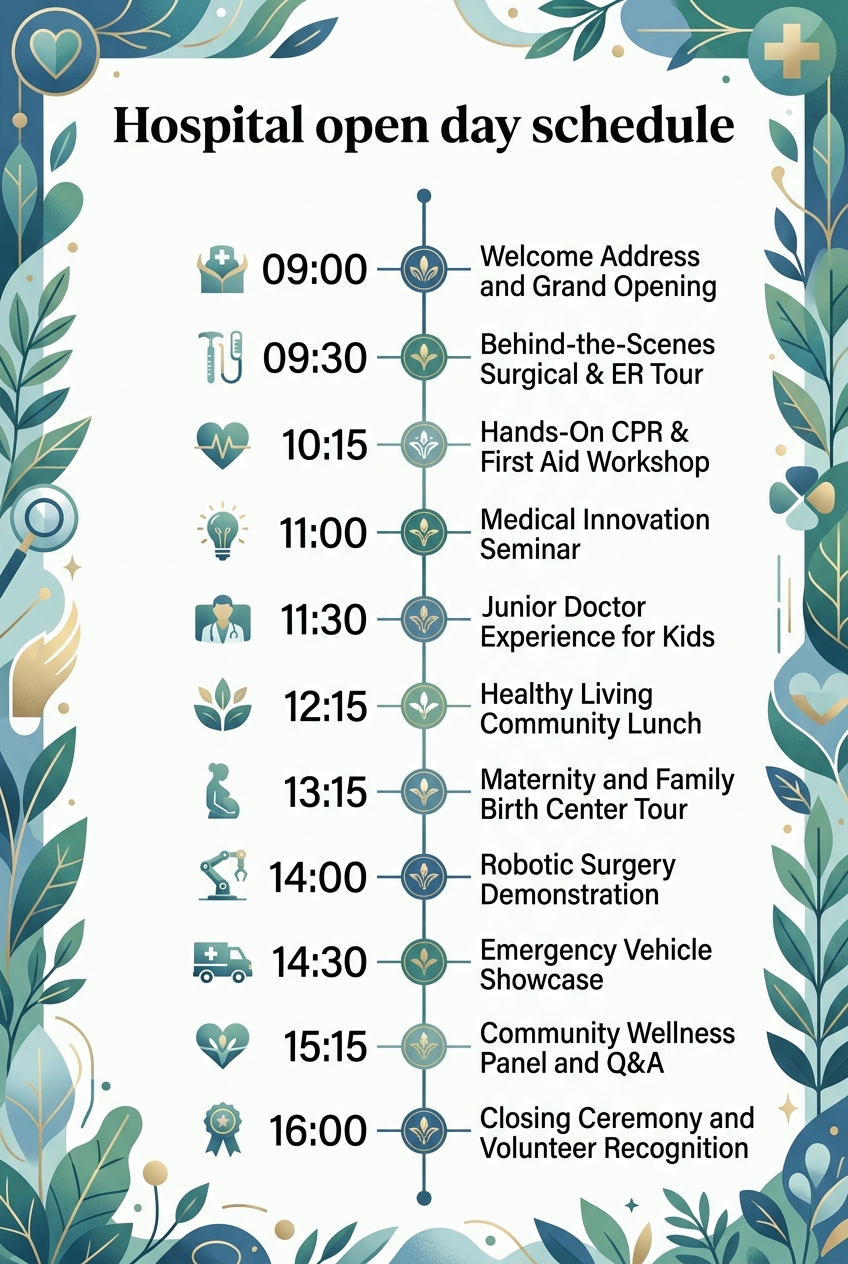
Why Hospitals Need an Open Day Schedule
Running a large-scale event inside a medical center presents unique spatial and logistical challenges. Without a clear master timeline, crowd congestion quickly builds around popular attractions such as trauma bays or helicopter helipads, creating safety hazards and diminishing the guest experience. A structured schedule spreads visitor traffic evenly across auditorium presentations, outdoor vehicle showcases, and indoor clinical wings.
A synchronized schedule also ensures that busy clinical staff remain organized. Physicians, nurse managers, surgeons, and paramedics often step away from active rotations or volunteer during off-duty hours to lead workshops. Establishing firm start and end times for each activity respects clinicians' schedules and guarantees that live demonstrations—such as robotic surgery simulations or CPR classes—begin promptly.
Finally, transparent timing drastically improves the overall community experience. Visitors with young children or elderly family members need to know exactly when specific programs start, such as pediatric interactive sessions or maternity ward tours. A well-communicated agenda allows guests to tailor their visit to match their family's health interests and availability.
What to Include in a Hospital Open Day Schedule
To deliver an engaging and informative public open house, your event plan should incorporate a balanced mix of executive greetings, behind-the-scenes access, interactive education, and family-friendly activities:
- Executive Opening & Welcome: Formal greeting by executive directors, hospital administrators, or civic leaders to set the tone for the day.
- Behind-the-Scenes Guided Tours: Small-group access to high-interest clinical areas like operating rooms, emergency departments, radiology suites, and maternity wards.
- Interactive Health Workshops: Practical, hands-on sessions such as infant CPR, first aid training, or blood pressure screening stations.
- Educational Seminars & Expert Panels: Short, accessible presentations in hospital auditoriums covering medical innovations, wellness tips, and public health Q&As.
- Youth & Family Engagement: Interactive activities like "Junior Doctor" zones, teddy bear clinics, or interactive anatomical displays tailored for children.
- Emergency Service Demonstrations: Outdoor showcases featuring rapid-response ambulances, fire engines, air ambulances, and trauma transport teams.
- Catering & Volunteer Recognition: Dedicated time for community lunching, networking, dietary consultation, and honoring staff and volunteer contributions.
Morning Opening & Clinical Highlights
| Time | Event |
|---|---|
| 09:00 | Welcome Address and Grand Opening |
| 09:30 | Behind-the-Scenes Surgical & ER Tour |
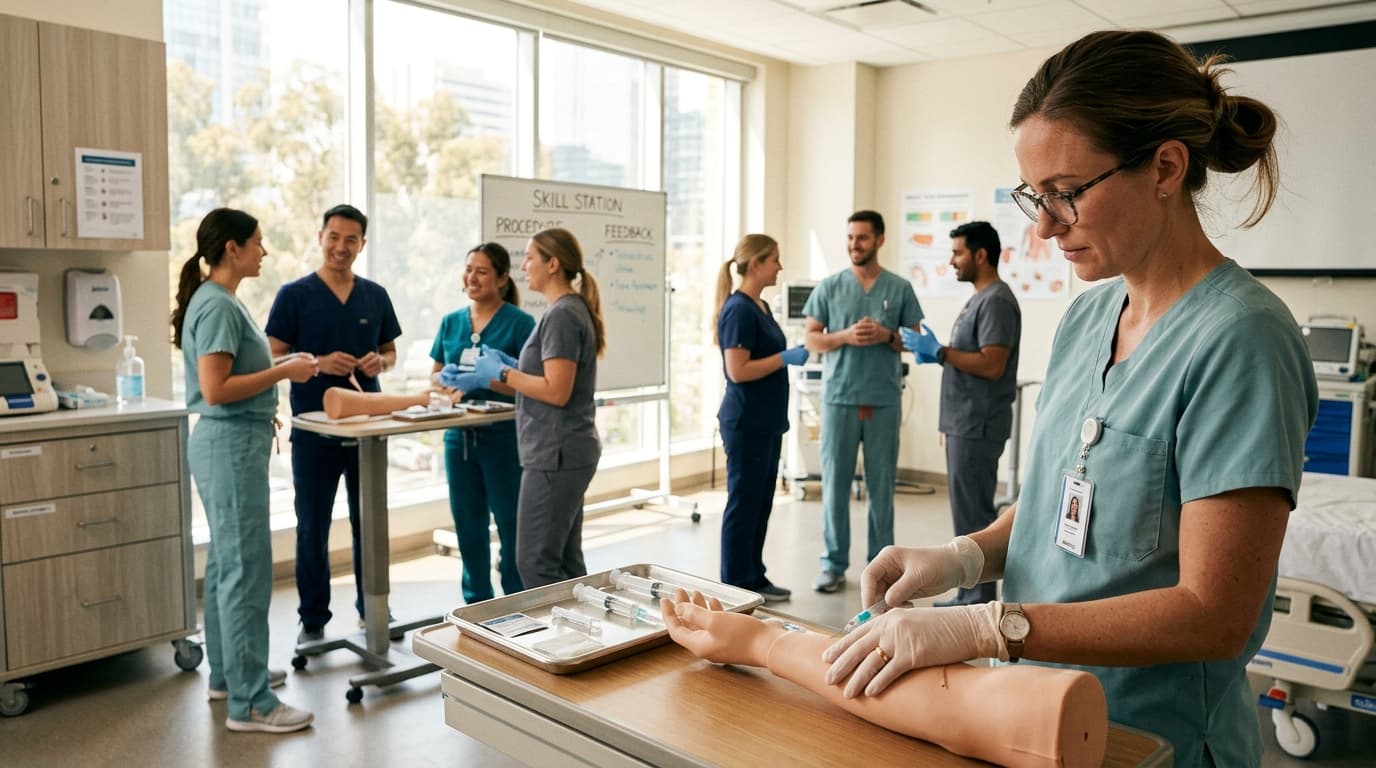
| 10:15 | Hands-On CPR & First Aid Workshop |
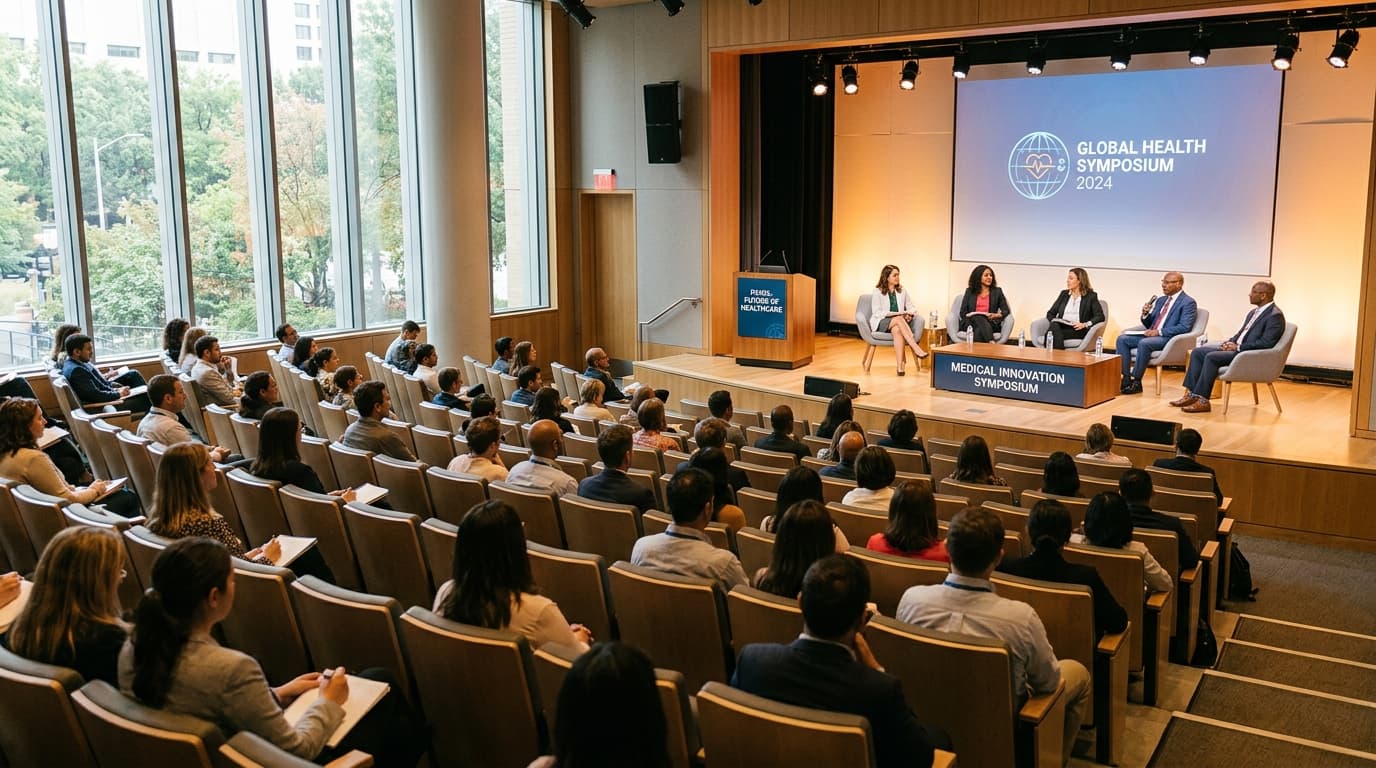
| 11:00 | Medical Innovation Seminar |
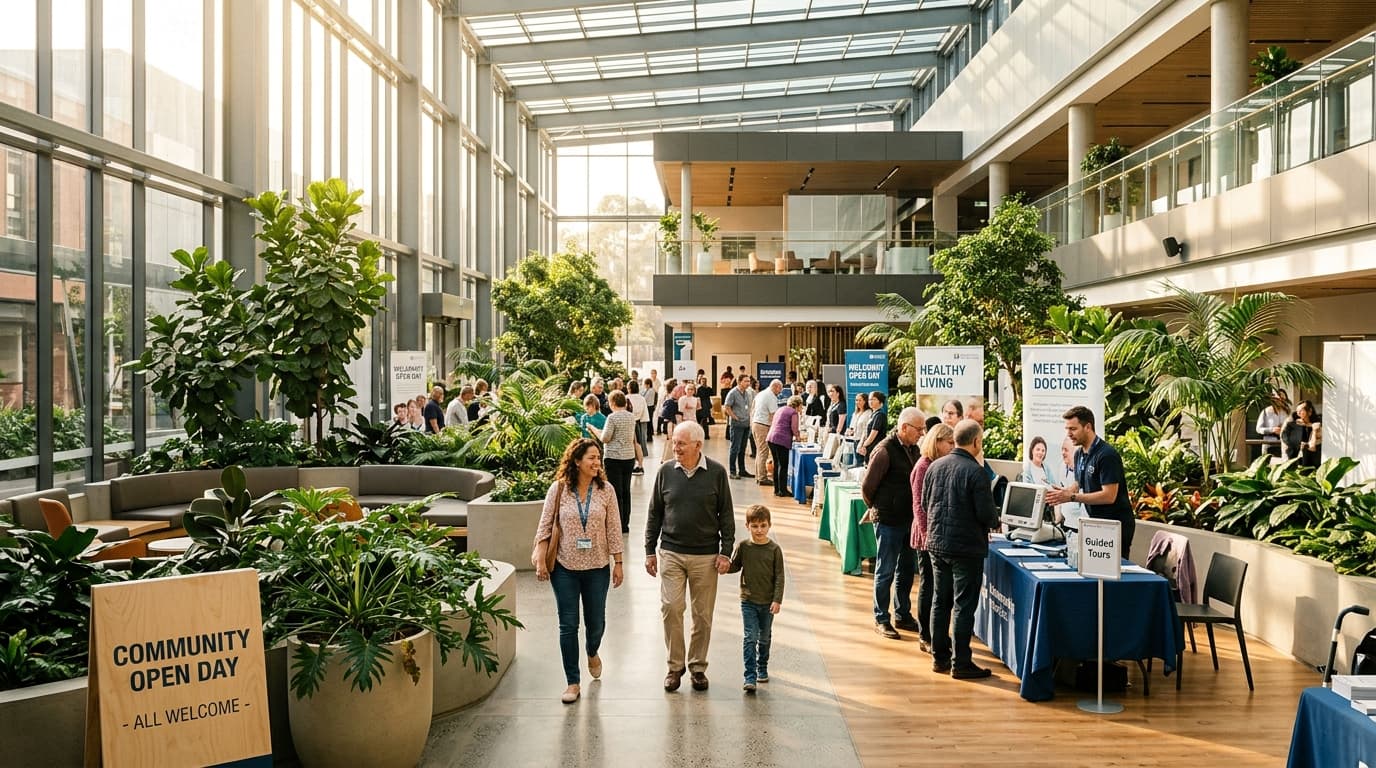
The event opens in the main entrance lobby, where the hospital director and community leaders welcome early arrivals, explain security safety guidelines, and outline the day's itinerary. Stagging the opening at 09:00 allows morning visitor registration to run smoothly while setting an inviting, professional tone. If your administrative board leads formal hospital governance alongside public relations, you may also want to adapt our board meeting schedule template for executive briefing sessions prior to public doors opening.
Following the opening address, visitors move directly into the first major highlight: an exclusive tour of the upgraded trauma bays and operating suites on the 2nd floor surgical wing. Moving large groups into clinical spaces early in the morning prevents corridor bottlenecking before general crowd levels peak. Immediately following the tour, paramedics host a high-energy CPR and AED workshop in the Community Education Center, followed by an insightful medical innovation seminar in Auditorium A detailing non-invasive diagnostic technologies.
Midday Youth Activities & Community Lunch
| Time | Event |
|---|---|
| 11:30 | Junior Doctor Experience for Kids |
| 12:15 | Healthy Living Community Lunch |
By mid-morning, family attendance generally spikes as parents bring children for weekend activities. Positioning the "Junior Doctor Experience" at 11:30 in the pediatric care unit captures family energy perfectly. Children receive mini lab coats, learn how to bandage toy injuries, and practice listening to heartbeats through real stethoscopes under the supervision of pediatric nurses.
At 12:15, activity shifts to the hospital cafeteria and garden courtyard for a complimentary healthy living lunch. Providing a dedicated 60-minute nutrition window allows visitors to re-energize while engaging with clinical dietitians on healthy recipes and meal planning. For healthcare organizations combining public open houses with facility milestone anniversaries, reviewing our anniversary party schedule template can provide great inspiration for catering layouts and speeches.
Afternoon Tours & Specialized Demonstrations
| Time | Event |
|---|---|
| 13:15 | Maternity and Family Birth Center Tour |
| 14:00 | Robotic Surgery Demonstration |
| 14:30 | Emergency Vehicle Showcase |
The afternoon block opens with a specialized tour of the maternity wing on the 3rd floor. Expecting parents and community members inspect private recovery suites, delivery rooms, and neonatal facilities in small, guided groups. If your hospital communications team frequently organizes maternal health campaigns or baby showers for staff, check out our baby shower timeline template for structured event planning tips.
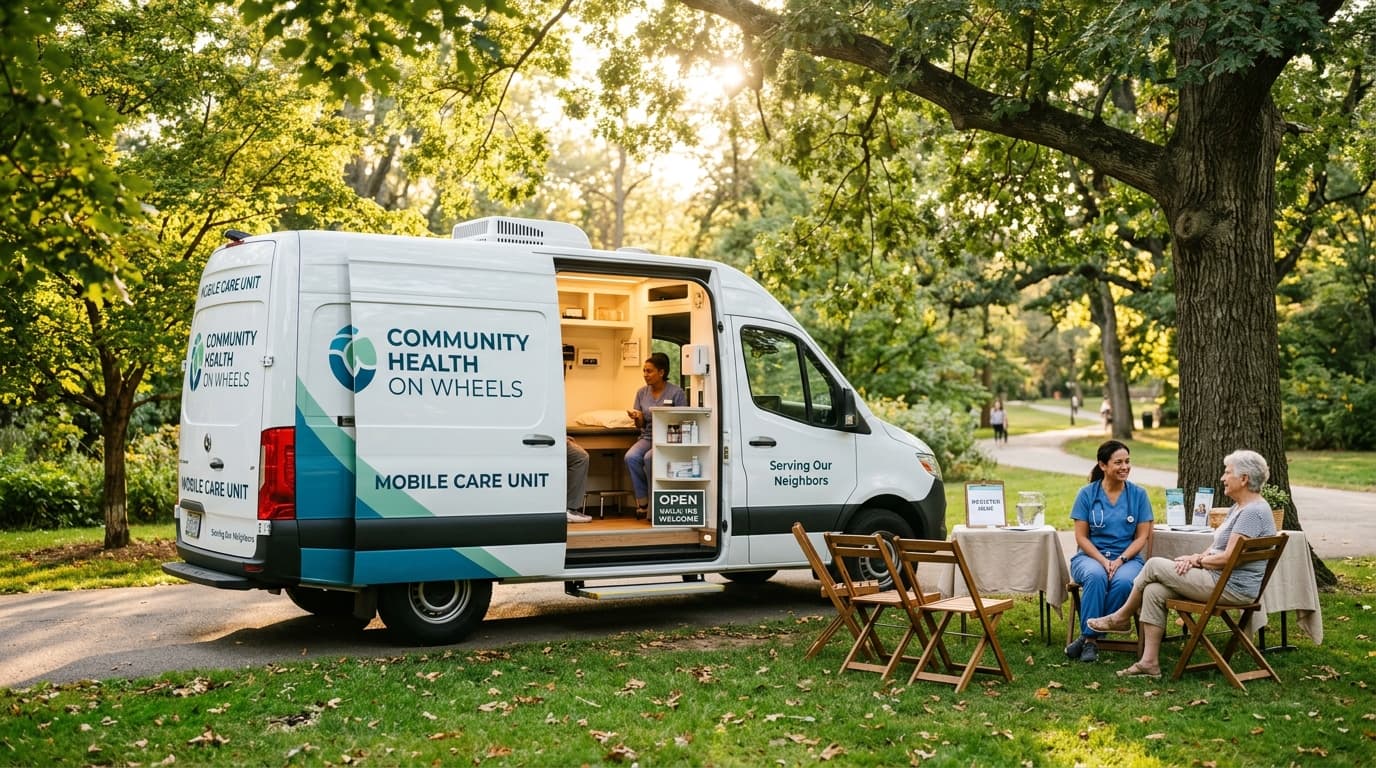
At 14:00, attention shifts back to Auditorium B for a live demonstration of precision robotic surgical tools, where visitors can test simulated flight-deck consoles. Immediately afterward, attendees head outdoors to the helipad and ambulance bay to view rapid-response emergency vehicles, medical helicopters, and heavy rescue engines up close. Spacing these interactive events keeps crowd energy high throughout the early afternoon.
Late Afternoon Panel & Closing Remarks
| Time | Event |
|---|---|
| 15:15 | Community Wellness Panel and Q&A |
| 16:00 | Closing Ceremony and Volunteer Recognition |
As the afternoon winds down, visitors gather in Auditorium A for an open community wellness panel. Doctors, clinical nurses, and mental health specialists take direct questions from the audience regarding preventative healthcare, stress management, and local clinic access. Positioning this Q&A late in the day encourages thoughtful dialogue after guests have explored the hospital's clinical capabilities.
The open day concludes at 16:00 in the main entrance lobby with a formal closing ceremony. Hospital leadership takes this opportunity to thank community sponsors, present appreciation awards to volunteers, and officially wrap up public operations. Ending promptly at 16:30 provides hospital facilities management ample time to conduct post-event sanitation and restore clinical areas before evening shifts begin.
Hospital Open Day Schedule vs Hospital Event Itinerary
Understanding the difference between a high-level open day schedule and a detailed staff event itinerary is essential for clear operational management.
| Feature | Hospital Open Day Schedule | Hospital Event Itinerary |
|---|---|---|
| Primary Audience | General public, community members, patients, and families | Hospital staff, clinical leads, security, and vendors |
| Level of Detail | Public event start times, major locations, and activity highlights | Turn-by-turn logistics, volunteer shifts, AV setup, and staging |
| Focus | Visitor engagement, community education, and facility awareness | Resource allocation, crowd safety, and operational control |
| Distribution | Website, social media, printed event flyers, and signage | Internal email, staff briefing packets, and administrative portals |
While the public open day schedule focuses on clear start times and general locations to guide visitors smoothly across the grounds, an internal staff itinerary focuses on backstage staffing assignments, equipment transport, and facility prep work.
Who Should Use This Template?
This versatile open house schedule is tailored specifically for healthcare leaders, communications specialists, and administrative coordinators looking to plan a seamless, safe event. Chronolio supports various roles involved in event planning, ensuring seamless coordination across departments.
- Regional Medical Centers & General Hospitals: Hosting large-scale annual community health fairs or opening newly constructed hospital wings.
- Specialty Clinics & Outpatient Surgical Centers: Showcasing specific technology, such as orthopedic suites, cancer centers, or diagnostic imaging hubs.
- Children's Hospitals & Pediatric Units: Organizing interactive, child-friendly healthcare exploration days to reduce clinical anxiety among local youth.
- Urgent Care & Emergency Medical Networks: Educating local residents on emergency care access, triage procedures, and ambulance partnerships.
- Veterinary Hospitals & Research Institutes: Adapting the timeline layout for animal care facility open houses and scientific research demonstrations.
How to Use This Template
- Download or Duplicate the Schedule: Select your preferred file format using our quick-download options, including Word (.docx) or PDF (.pdf), or edit directly inside Chronolio.
- Adjust Your Start and End Times: Modify activity start times to match your facility's public opening hours and staffing availability.
- Assign Specific Clinical Locations: Tailor room numbers, auditorium letters, and floor names to match your hospital's precise layout.
- Delegate Departmental Leads: Assign nurse managers, security officers, and volunteer leads to oversee each individual schedule block.
- Print and Publish: Share digital versions across public relations channels and print physical copies for welcome desks and ushering staff.
Tips for a Successful Hospital Open Day
- Implement a Staggered Tour Sign-Up System: High-demand areas like surgical suites or intensive care units have strict room capacity limits. Use digital pre-registration or timed ticketing at the welcome desk to manage group sizes.
- Establish Clear Infection Control Protocols: Place hand sanitizing stations at every entrance, maintain strict corridor cleaning schedules, and clearly mark restricted patient care zones.
- Coordinate Outdoor Emergency Access: Ensure that emergency ambulance routes and trauma reception entrances remain completely unobstructed by public open house parking or outdoor displays.
- Provide Multilingual Ushers and Signage: Healthcare communities are diverse; deploy bilingual volunteers or clear visual pictograms to guide non-native speakers across large facilities.
- Maintain Dedicated First Aid & Quiet Zones: Designate a quiet room and dedicated nursing/first aid station for elderly attendees, young families, or guests feeling overwhelmed by large crowds.
- Schedule Pre-Event Staff Briefings: Hold a 15-minute operational briefing at 08:30 with all clinical guides, security personnel, and volunteers to review emergency evacuation routes and communication channels.
Common Mistakes to Avoid
- Overcrowding Clinical Corridors: Trying to host too many tours simultaneously without buffer times leads to severe hallway congestion and safety risks.
- Ignoring Public Acoustics: Hosting loud interactive activities near quiet recovery wings or clinical zones disrupts ambient hospital operations.
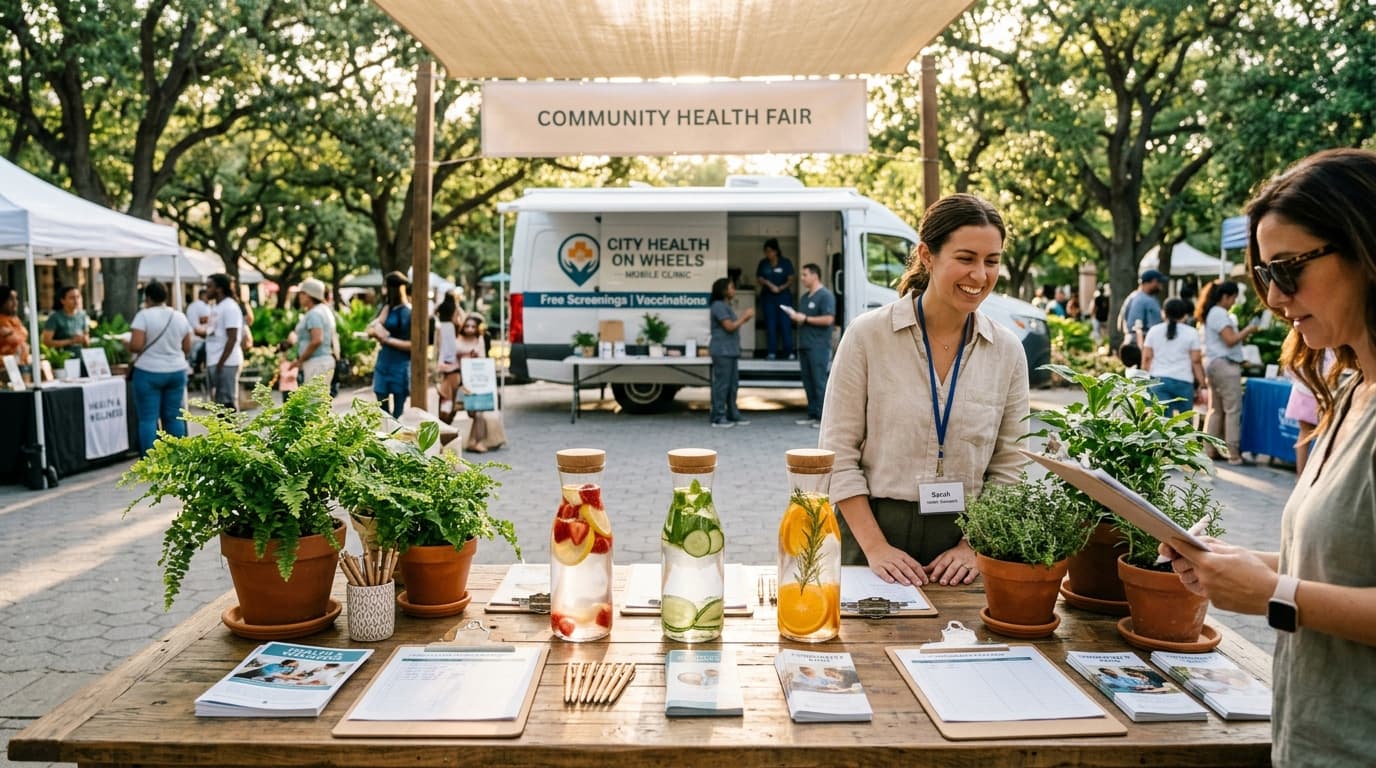
- Forgetting Adequate Refreshment Stations: Public open house visitors walk long distances; neglecting water hydration stations across different floors creates guest fatigue.
- Unclear Directional Signage: Failing to place large, high-contrast floor signs at major elevators and stairwells leads to lost visitors and missed workshop start times.
- Running Presentations Over Time: Allowing morning seminars to run long creates a cascading delay that disrupts lunch catering and afternoon vehicle showcases.
- Neglecting Post-Event Sanitization: Forgetting to schedule dedicated cleaning crews immediately following the closing ceremony can delay evening shift preparation in shared auditoriums and lobbies.
In Summary
- What It Is: A strategic 09:00 to 16:30 schedule designed to guide public visitors through hospital tours, clinical workshops, emergency vehicle showcases, and health seminars.
- Who It Benefits: Hospital administrators, public relations teams, clinical department leads, and local community members seeking health education.
- Key Safety Goal: Manages crowd traffic, enforces infection control standards, and maintains unhindered access for active emergency operations.
- Core Highlight: Features hands-on learning experiences, including robotic surgical console simulators and pediatric "Junior Doctor" workshops.
- Fully Customizable: Easily edited in Chronolio or exported directly to Word (.docx) or PDF (.pdf) formats for instant printing and staff distribution.
Planning a memorable hospital open day requires balancing public engagement with strict operational safety. By utilizing this structured timeline, hospital administrators, healthcare outreach managers, and clinical staff can deliver an inspiring, professional community event that builds lasting trust.
Customize Your Hospital Open Day Schedule