





This Template at a Glance
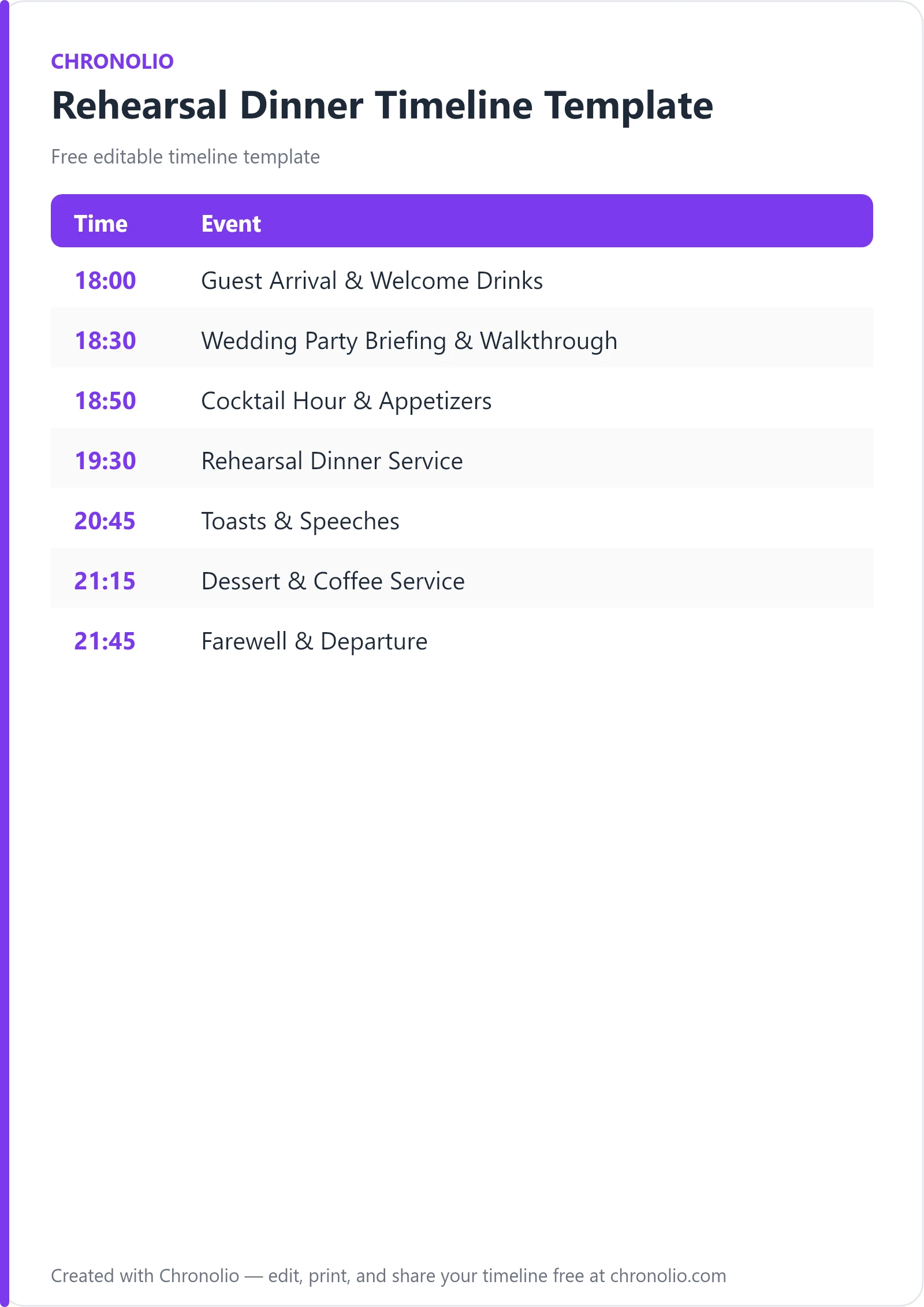
Here is the complete schedule this free template gives you — every time block, ready to edit, download, and share:
| Time | Event |
|---|---|
| 18:00 | Guest Arrival & Welcome Drinks |
| 18:30 | Wedding Party Briefing & Walkthrough |
| 18:50 | Cocktail Hour & Appetizers |
| 19:30 | Rehearsal Dinner Service |
| 20:45 | Toasts & Speeches |
| 21:15 | Dessert & Coffee Service |
| 21:45 | Farewell & Departure |
What Is a Rehearsal Dinner Timeline Template?
Rehearsal Dinner Timeline Template guides couples, event hosts, and venue coordinators through the optimal running order for the evening before the wedding ceremony. Having operated dining spaces and private event halls for over a decade, I can tell you that the night before the wedding sets the emotional tone for the entire weekend. A structured itinerary ensures that key moments—from the ceremony walkthrough to emotional family toasts—unfold without feeling rushed or chaotic.
This schedule reflects proven real-world hospitality standards and common best practices used across boutique restaurants, hotel banquets, and private estates. By organizing your evening into distinct phases, you allow your wedding party, family members, and culinary team to remain completely synchronized while ensuring the bride and groom get to bed early enough for their big day.
Customize Your Rehearsal Dinner Timeline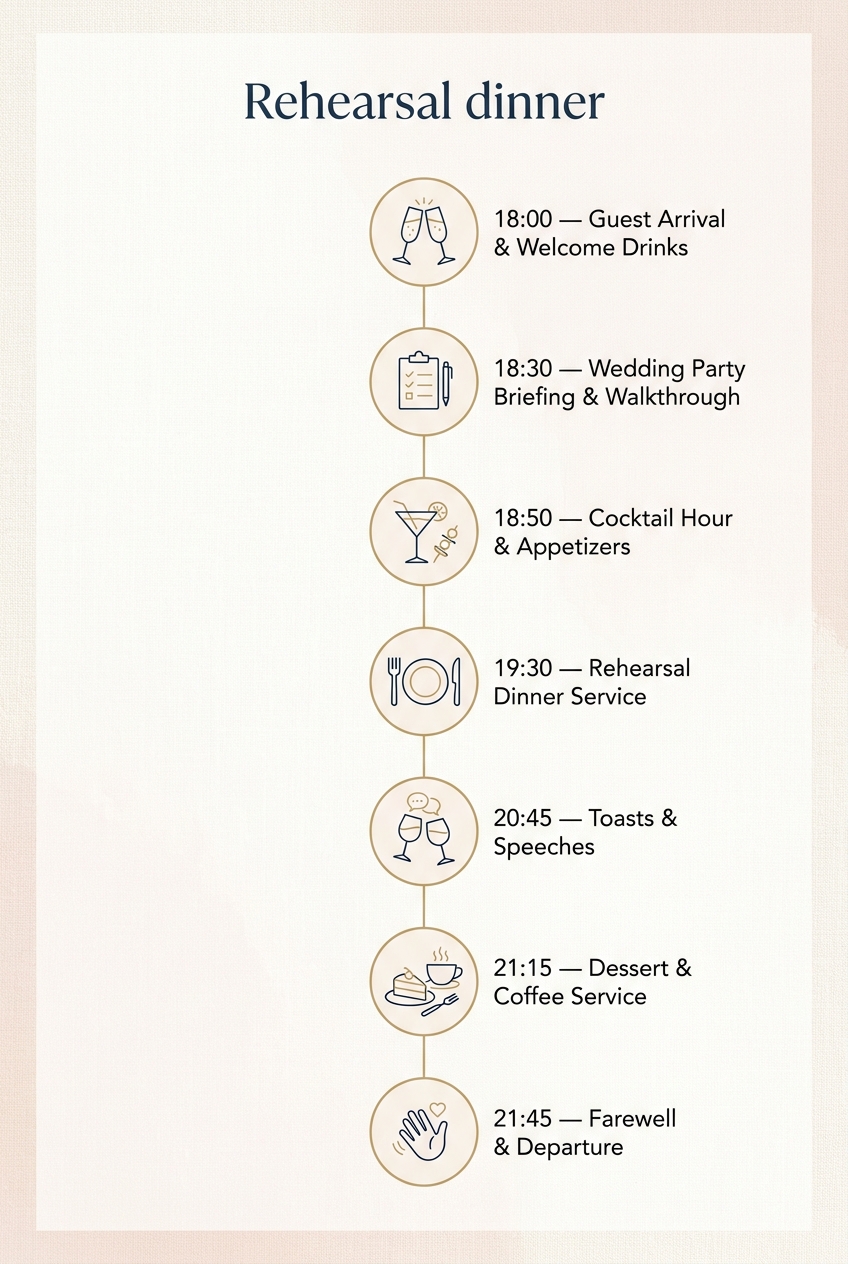
Why Rehearsals Dinners Need a Timeline
The evening before a wedding is filled with nervous excitement, family reunions, and logistical loose ends. Without a clear timeline, guest arrivals bleed into dinner service, speeches run over, and the venue kitchen is left struggling to serve hot food on schedule. A well-constructed schedule acts as a blueprint that keeps servers, bartenders, and guests operating on the same page.
A tight itinerary also protects the couple from decision fatigue. When everyone knows where to be—whether gathered in Private Dining Room A for a quick briefing or seated in the main ballroom for dinner—the couple can relax and enjoy the company of their closest friends. It establishes clear boundaries so speeches do not consume the whole night, preventing late-night exhaustion before the wedding morning.
Finally, detailed timing gives your venue staff and catering team the operational structure they need to deliver exceptional service. Kitchens rely on precise call times for multi-course meals, while floor staff need designated windows to clear plates and serve coffee before the evening concludes.
What to Include in a Rehearsal Dinner Timeline
To run a seamless event, your rehearsal dinner schedule should explicitly account for the following key milestones:
- Welcome Reception & Guest Arrival: A dedicated window for early arrivals to check coats, grab a drink, and settle into the venue space.
- Wedding Party Briefing & Walkthrough: A private operational session led by the coordinator or officiant to confirm processional order and roles.
- Cocktail Hour & Passed Hors d'Oeuvres: Time for guests to mingle casually while the core wedding party finishes their briefing.
- Seated Multi-Course Dinner: A structured meal service with clear transition points for starters, entrees, and dietary requests.
- Dedicated Toasts & Speeches: A organized block of time after the main course for personal stories, thank-yous, and gift exchanges.
- Dessert & Hot Beverage Service: A soft wind-down offering coffee, tea, and sweet bites while conversations continue.
- Formal Farewell & Wrap-Up: An intentional conclusion point that allows guests to say goodbye without lingering late into the night.
Phase 1: Guest Arrival, Briefing & Walkthrough
| Time | Event |
|---|---|
| 18:00 | Guest Arrival & Welcome Drinks |
| 18:30 | Wedding Party Briefing & Walkthrough |
| 18:50 | Cocktail Hour & Appetizers |
The evening begins at 18:00 in The Grand Ballroom Foyer, welcoming early arrivals with prosecco or signature mocktails. This brief 30-minute arrival window compensates for potential traffic delays and gives extended family members time to mingle comfortably.
At 18:30, the officiant, venue coordinator, and core bridal party transition into Private Dining Room A for a focused wedding party walkthrough. This private session ensures everyone understands walking speeds, positioning, and cues without taking away from the broader social gathering. If you are coordinating a full weekend schedule, this prep work connects directly with your main event structure—whether you are following a traditional church wedding ceremony timeline or a streamlined civil ceremony wedding timeline.
By 18:50, the bridal party rejoins the rest of the attendees in The Grand Ballroom Lounge for an expanded cocktail hour. Serving gourmet appetizers and wine during this period keeps energy high while the culinary staff finishes final prep work for table service.
Phase 2: Dinner Service & Speeches
| Time | Event |
|---|---|
| 19:30 | Rehearsal Dinner Service |
| 20:45 | Toasts & Speeches |
At 19:30, doors open to The Grand Ballroom, and guests take their assigned seats for the main meal. A multi-course dinner service requires about 75 minutes to deliver appetizers, main entrees, and table clearing comfortably. Keeping background music soft during this time allows family tables to converse easily without competing against loud acoustics.
Once entree plates are cleared at 20:45, the host opens the floor for rehearsal dinner toasts. Unlike reception speeches—which are often strictly timed—the rehearsal dinner provides a warm, intimate platform for extended family, maid of honor, best man, and parents to share longer anecdotes. For detailed guides on structuring vows and weekend proceedings, explore resources like The Knot's rehearsal dinner guide or review our specialized Catholic wedding timeline and Christian wedding timeline guides to see how speeches fit into broader weekend traditions.
Phase 3: Dessert, Coffee & Departure
| Time | Event |
|---|---|
| 21:15 | Dessert & Coffee Service |
| 21:45 | Farewell & Departure |
Following the emotional high of the speeches, table service transitions at 21:15 to dessert, tea, and espresso in The Grand Ballroom. Serving coffee at this stage offers a natural cue that the formal program is concluding while providing a quick burst of energy for guests driving back to their hotels.
By 21:45, guests move back toward The Grand Ballroom Foyer for final goodbyes and departure. Setting a firm 22:00 end time guarantees that the couple and VIPs can return to their accommodations to get plenty of sleep before wedding morning preparations begin. Even if you are planning an intimate celebration using an elopement timeline, establishing a clear end time for pre-wedding dining ensures everyone feels rested and ready.
Rehearsal Dinner Timeline vs Wedding Day Running Order
While both documents keep your wedding weekend on track, a rehearsal dinner timeline serves a very different purpose than your main wedding day running order.
| Rehearsal Dinner Timeline | Wedding Day Running Order |
|---|---|
| Focuses on hospitality, intimate speeches, and walkthroughs | Focuses on vendor setups, ceremony execution, and dancing |
| Attended by close family, wedding party, and out-of-towners | Attended by the full guest list |
| Pacing is relaxed, centered around a seated meal | Pacing is fast and highly dynamic across multiple spaces |
| Hosted typically over 3 to 4 evening hours | Spans 10 to 14 hours from morning prep to late exit |
| Managed primarily by venue floor staff or hosts | Managed by wedding planners, coordinators, and stage leads |
The rehearsal dinner acts as an intimate warm-up event, whereas the wedding day running order is an all-hands operational master plan.
Who Should Use This Template?
This rehearsal dinner schedule is crafted for any host, venue manager, or couple looking for a stress-free pre-wedding event. Chronolio provides tailored tools for various event coordination roles to make editing and distributing schedules seamless.
This template is ideally suited for:
- Groom's Parents or Event Hosts: Traditional hosts managing dinner reservations and vendor coordination.
- Wedding Planners & Coordinators: Professionals who need an editable, professional timeline to share with venues.
- Venue Managers & Catering Directors: Hospitality teams establishing service timing for kitchen and floor staff.
- Maid of Honor & Best Man: Key speakers coordinating toast lists and gift presentations with the venue.
- DIY Couples: Brides and grooms taking charge of their own wedding weekend logistics.
How to Use This Template
- Download or Duplicate the Schedule: Start by customizing the template directly on Chronolio or download a copy using our printable files:
- Set Your Event Times: Adjust the arrival hour based on when your ceremony rehearsal finishes at the ceremony site.
- Input Your Unique Locations: Replace default room names (e.g., Grand Ballroom) with your chosen venue’s specific dining areas or restaurant spaces.
- Distribute to Key Parties: Send final copies to your wedding planner, venue manager, head chef, and all designated speakers at least one week prior.
Tips for a Successful Rehearsal Dinner
- Confirm Dietary Needs Early: Collect dietary restrictions with RSVPs so the kitchen team can execute seamless meal services without delaying the table.
- Limit Individual Toast Lengths: Remind speakers to keep toasts between 3 and 5 minutes so the speeches block does not extend past 30 minutes.
- Coordinate Transport Ahead of Time: Ensure rideshares, shuttles, or designated drivers are arranged for out-of-town guests leaving at 22:00.
- Keep the Briefing Focused: Use the 18:30 walkthrough strictly for logistics; save personal catch-ups for the cocktail hour.
- Set Up a Designated Toast Area: Ensure the venue places a cordless microphone and warm lighting near the head table or center stage.
- Give Gifts During Dessert: The dessert window at 21:15 is the ideal time for the couple to distribute thank-you gifts to the wedding party.
Common Mistakes to Avoid
- Overcrowded Toast Lists: Allowing open-mic speeches without a set order can drag dinner on past 23:00, exhausting the couple.
- Skipping Room Transitions: Failing to assign distinct rooms for arrival, briefing, and dinner creates bottlenecking in hallways.
- Ignoring Kitchen Service Schedules: Starting speeches while hot entrees are being served results in cold food and distracted guests.
- Scheduling Too Late: Starting guest arrival past 19:30 leaves little time for a relaxed multi-course meal before late hours.
- Forgetting Background Music: Eating dinner in a silent room ruins atmosphere; coordinate a plug-and-play playlist with the venue beforehand.
In Summary
- Purpose: A structured 4-hour framework balancing ceremony walkthroughs, dining, and intimate speeches before the wedding day.
- Timing: Runs from 18:00 to 22:00 to protect the wedding party's sleep schedule.
- Structure: Divided into arrival drinks, private walkthrough, cocktail hour, plated dinner, toasts, dessert, and departure.
- Audience: Essential tool for wedding planners, venue hosts, couples, and catering leads.
- Flexibility: Completely editable and downloadable in
.docxand.pdfformats via Chronolio.
Planning a wedding weekend requires clear communication and timing across all events. By utilizing our comprehensive rehearsal dinner timeline template, event hosts, wedding planners, and couples can ensure an effortless, elegant evening that prepares everyone for the big day ahead.
Customize Your Rehearsal Dinner Timeline