





This Template at a Glance
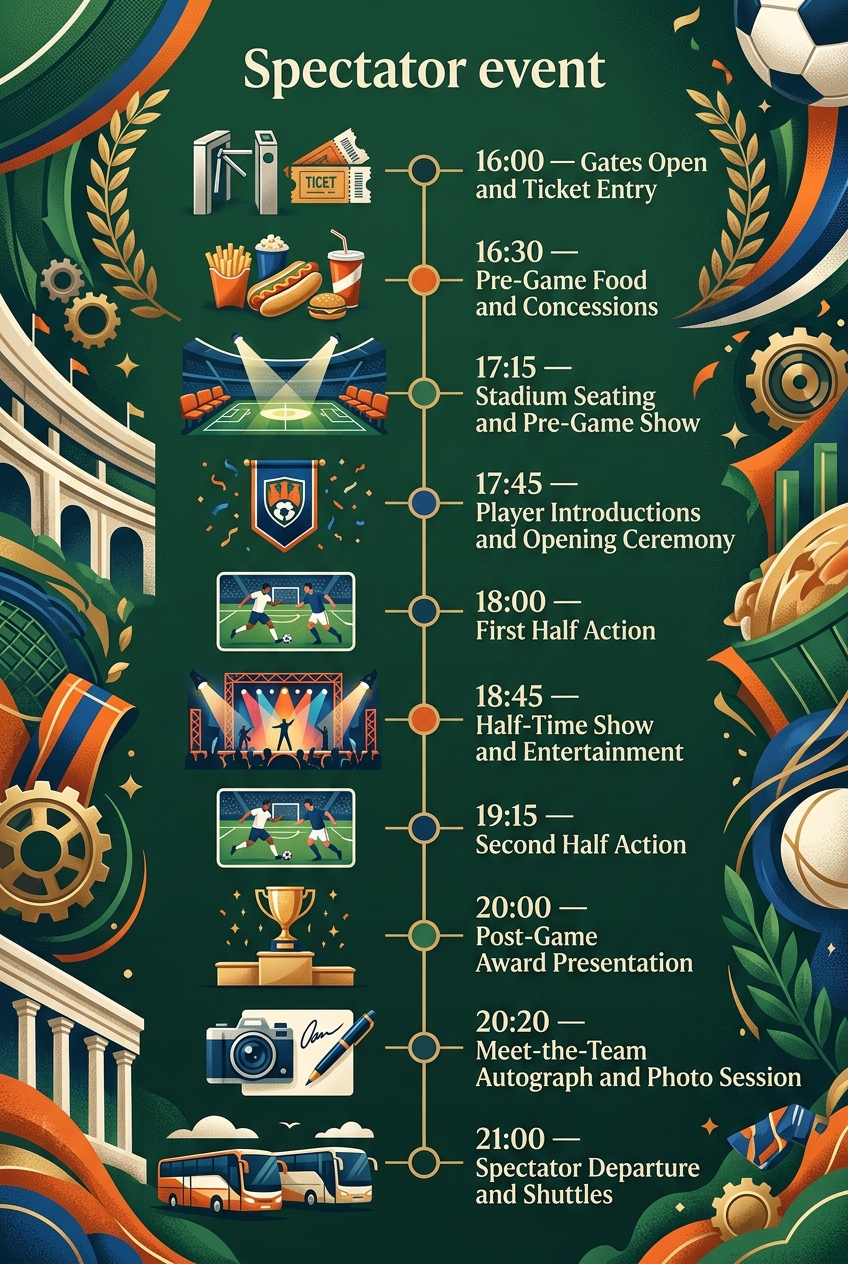
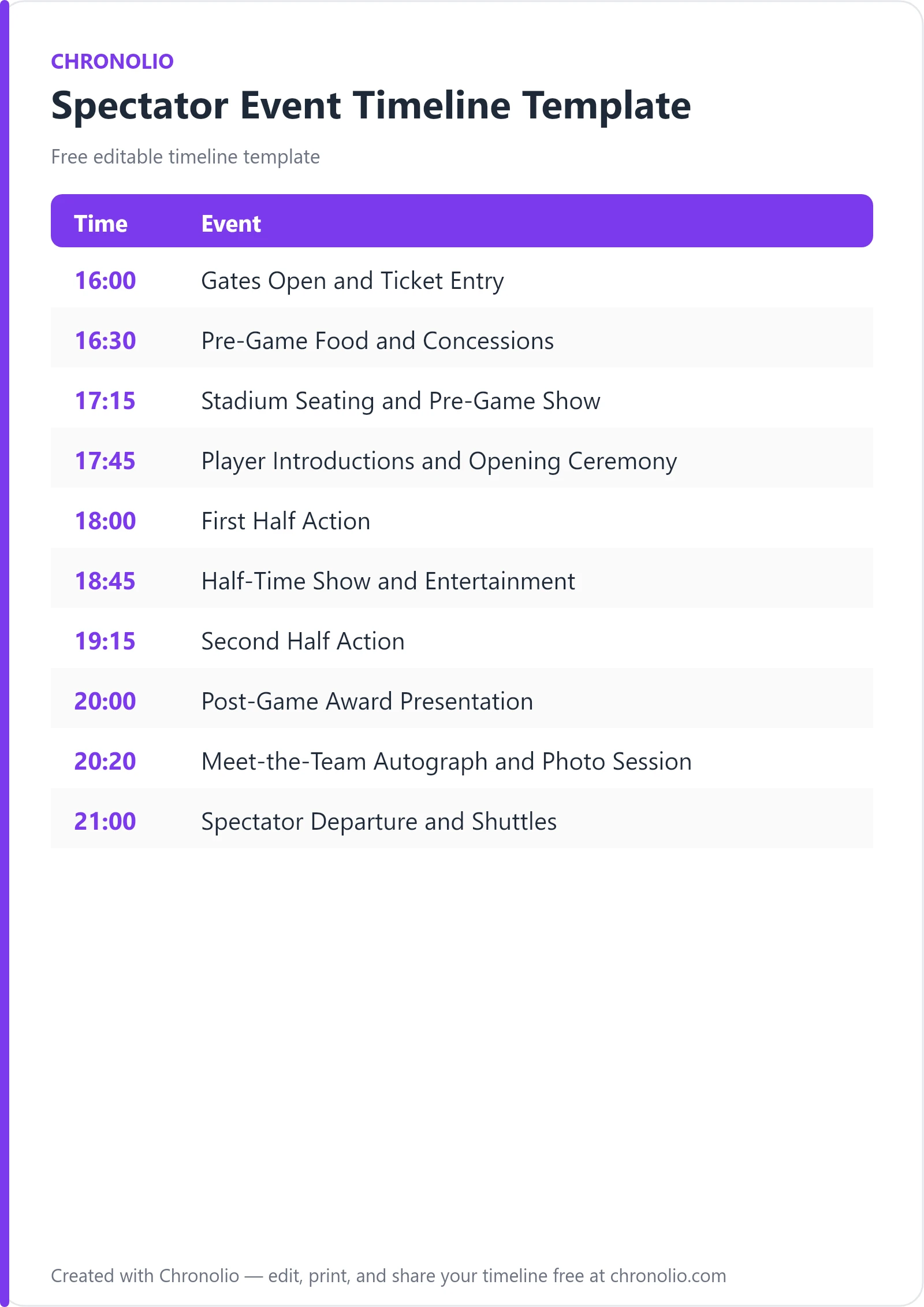
Here is the complete schedule this free template gives you — every time block, ready to edit, download, and share:
| Time | Event |
|---|---|
| 16:00 | Gates Open and Ticket Entry |
| 16:30 | Pre-Game Food and Concessions |
| 17:15 | Stadium Seating and Pre-Game Show |
| 17:45 | Player Introductions and Opening Ceremony |
| 18:00 | First Half Action |
| 18:45 | Half-Time Show and Entertainment |
| 19:15 | Second Half Action |
| 20:00 | Post-Game Award Presentation |
| 20:20 | Meet-the-Team Autograph and Photo Session |
| 21:00 | Spectator Departure and Shuttles |
What Is a Spectator Event Timeline?
A spectator event timeline is an operational master schedule that synchronizes stadium security ingress, concession service windows, broadcast cues, match play, and fan engagement across an arena event. Managing thousands of attendees requires precise chronological staging to ensure security checkpoints flow smoothly through main entry turnstiles while funneling fans toward dining plazas and seating bowls without creating hazardous bottlenecks. Having managed stadium operations and large arena logistics for over fifteen years, I can confirm that a clear, unified schedule is the single most critical tool for preventing concourse overcrowding and keeping live event broadcasts on schedule. Whether you are staging a professional athletic fixture, a regional championship, or an exhibition match, this template reflects real-world spectator event structures and practical venue management standards.
Use this Spectator Event Timeline Template
Why Spectator Events Need a Timeline
Large public assemblies introduce complex logistics, making rigorous timeline management essential for safety and venue efficiency. Without clear time boundaries, ticket gates get overwhelmed, concession lines spill into exit routes, and live television broadcasts risk missing ceremonial kickoffs.
A central schedule aligns diverse operational teams, including private security guards, ticketing agents, broadcast technicians, catering crews, and team staff. When every department operates from the exact same operational schedule, venue coordinators can manage crowd movement proactively, ensuring attendees enjoy a seamless experience from arrival to final shuttle departure.
What to Include in a Spectator Event Timeline
A thorough matchday or arena schedule must balance front-of-house guest experiences with back-of-house venue requirements. Key elements to incorporate include:
- Gate opening and security screening windows to establish steady concourse entry rates.
- Concession plaza and dining windows to maximize food and beverage engagement before seating calls.
- Pre-game entertainment sequences, including announcer callouts, team warm-ups, and national anthem performances.
- Official competition periods, featuring precise kick-off or start times and sports-governing body rules.
- Half-time show and sponsor activations synchronized with video displays and audio crews.
- Post-game trophy presentations and fan experiences, such as autograph and photo zones.
- Orderly spectator departure phases linked with public transit and parking hub logistics.
Stadium Arrival and Pre-Game Staging
| Time | Event |
|---|---|
| 16:00 | Gates Open and Ticket Entry |
| 16:30 | Pre-Game Food and Concessions |
| 17:15 | Stadium Seating and Pre-Game Show |
| 17:45 | Player Introductions and Opening Ceremony |
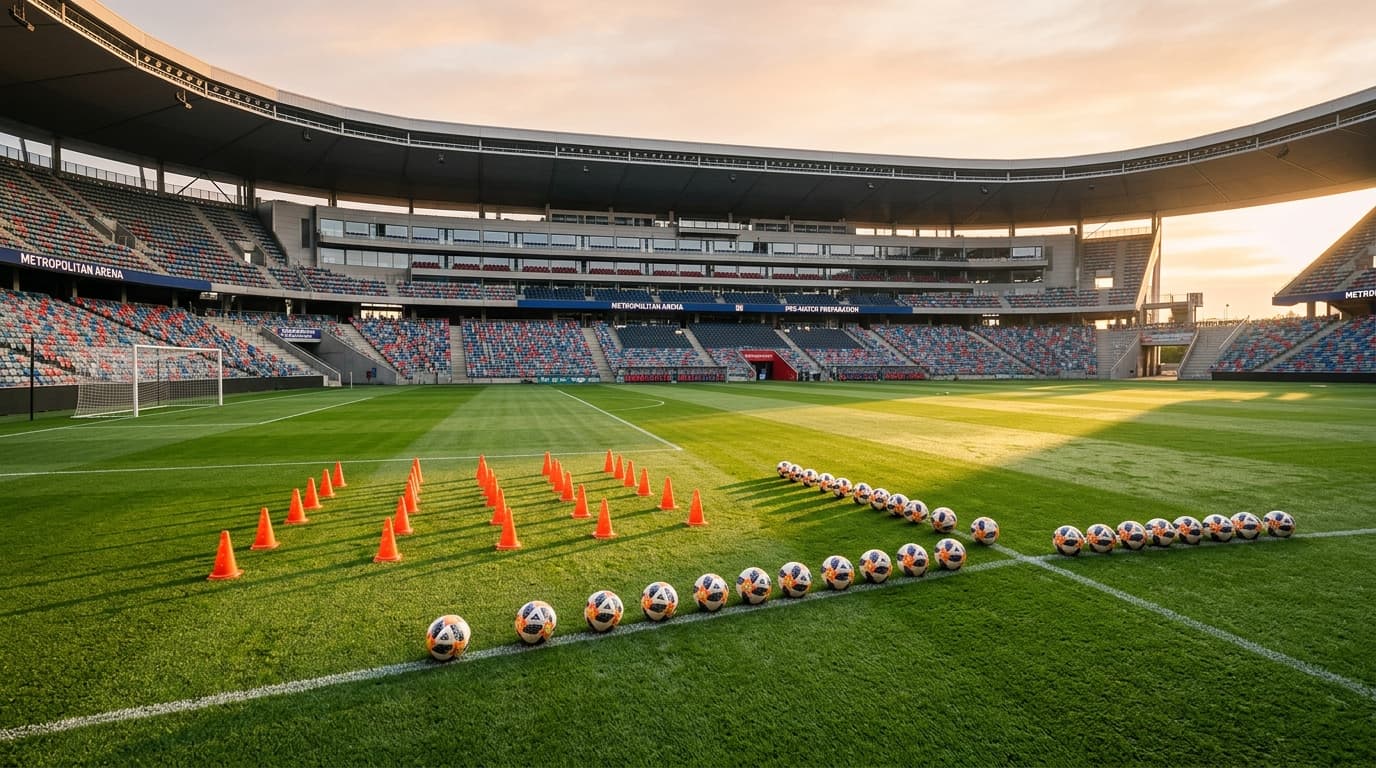
The opening phase of a matchday focuses entirely on smooth crowd ingress and concourse distribution. Unlocking main entry gates at 16:00 gives early arrivals plenty of time to clear security screening and physical or digital ticket scanners. While managing private gatherings like a birthday party timeline involves handling a single group arrival, stadium environments require continuous crowd filtering across multiple turnstile lines.
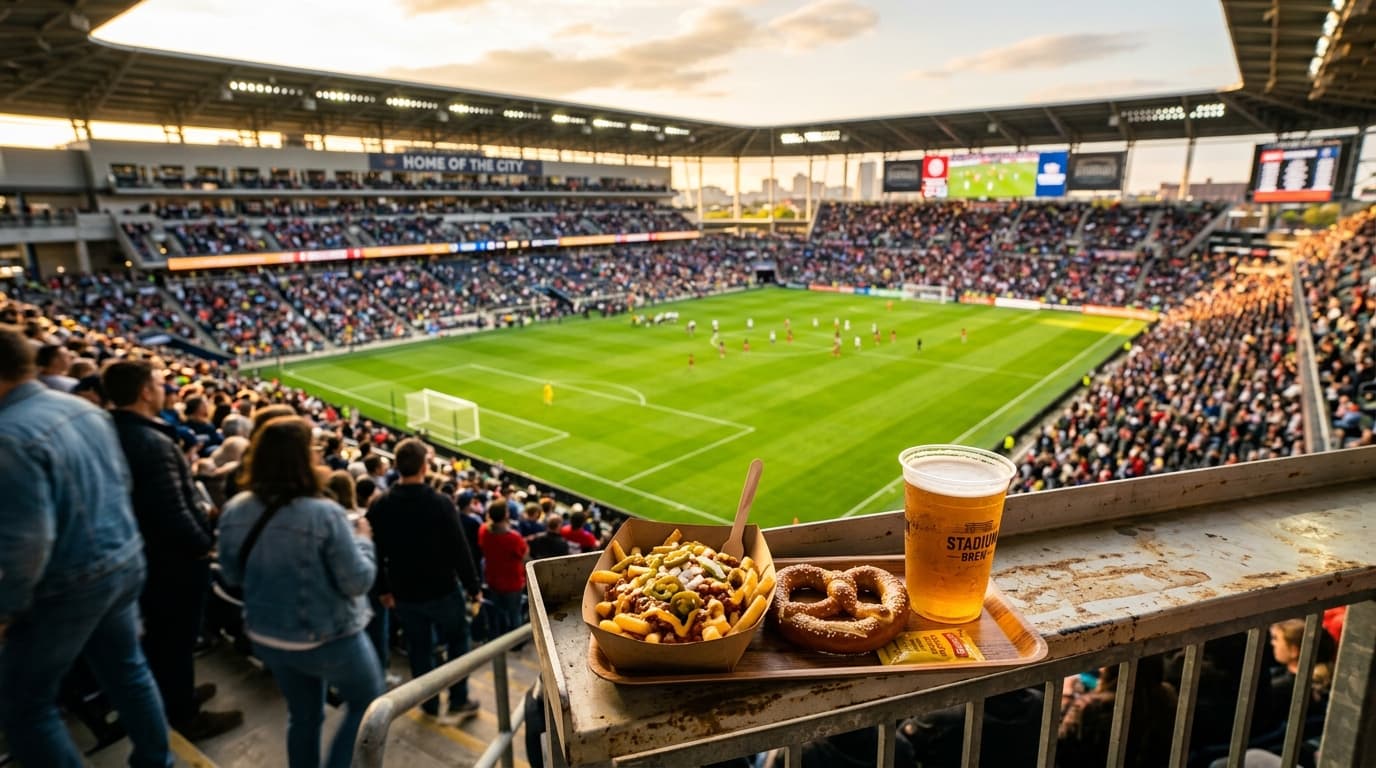
Allowing forty-five minutes between gate opening and official seating calls encourages fans to visit the food concourse plaza. Promoting pre-game concessions early drives venue revenue while spreading out foot traffic before the seating bowl fills. By 17:15, stadium announcers start directing fans toward assigned seating with pre-game statistics and music, leading smoothly into official player introductions and the national anthem performance on the main field at 17:45.
Match Play and Half-Time Production
| Time | Event |
|---|---|
| 18:00 | First Half Action |
| 18:45 | Half-Time Show and Entertainment |
| 19:15 | Second Half Action |
The core of any sporting event relies on uncompromising clock management during live play. The match officially kicks off at 18:00, initiating first-half action complete with live PA commentary, display board animations, and broadcast camera tracking. Venue managers must ensure referees, coaches, and production staff adhere strictly to this start time to fulfill broadcast television windows and streaming rights contracts.
When the first-half whistle blows at 18:45, the venue shifts immediately into the thirty-minute half-time window. Similar to coordinating multi-phase reception entertainment on an anniversary party schedule, half-time demands tight coordination between on-field performers, mascot handlers, cheer squads, and jumbotron operators. Running spectator raffle drawings and sponsor activations during half-time keeps audience energy high while allowing athletes to rest before returning for second-half action at 19:15.
Post-Game Ceremonies, Fan Interaction, and Egress
| Time | Event |
|---|---|
| 20:00 | Post-Game Award Presentation |
| 20:20 | Meet-the-Team Autograph and Photo Session |
| 21:00 | Spectator Departure and Shuttles |
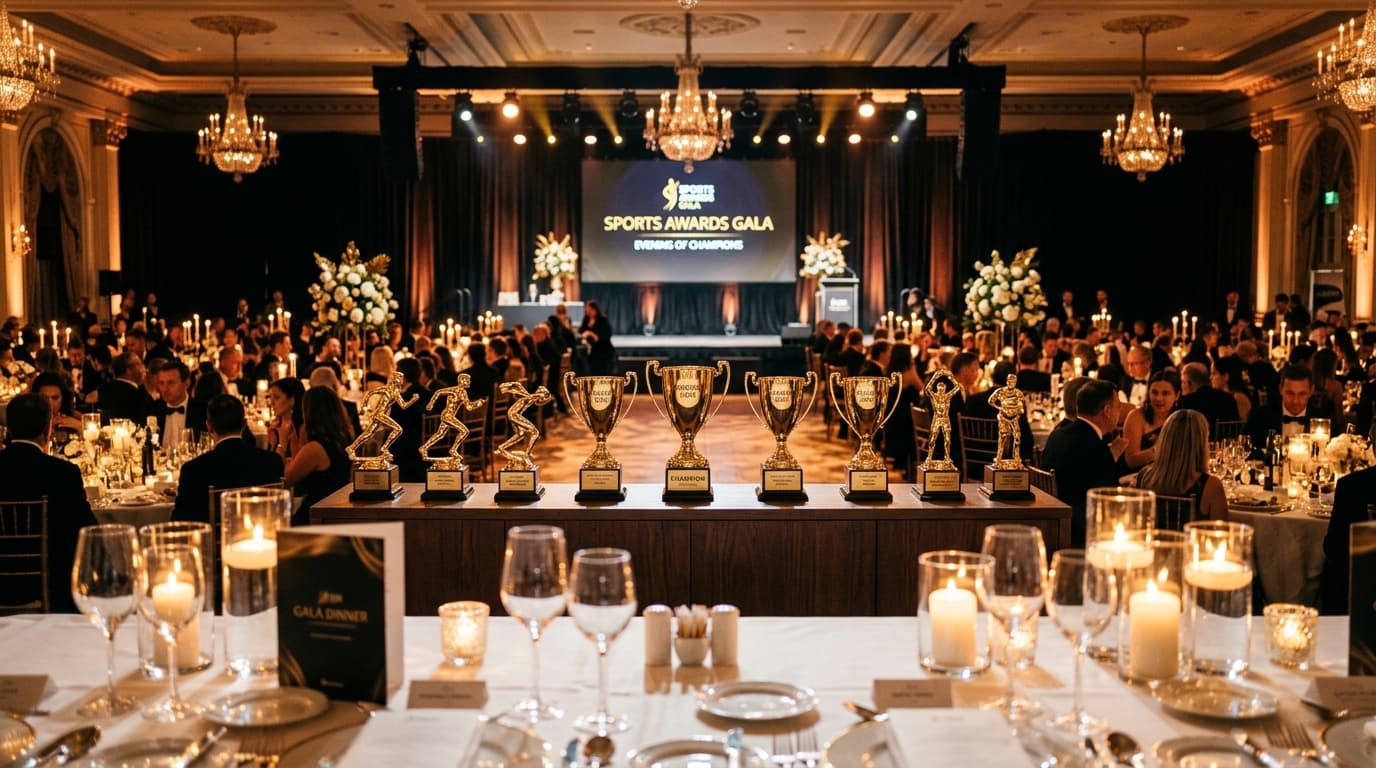
The final phase transforms competitive action into memorable fan engagement and controlled venue departure. Immediately following the final whistle at 20:00, center-field stages are set up for post-game award presentations, trophy handoffs, and individual player accolades. Keeping this presentation under twenty minutes ensures non-participating fans can begin exiting while dedicated supporters move toward designated fan zones.
At 20:20, the fan experience zone opens for autograph signings and photos with players and coaching staff. Structuring this activity in a designated, barricaded zone prevents fans from wandering onto restricted team areas or blocking exit ramps. By 21:00, public announcements direct remaining spectators toward the south transit hub, where event shuttle buses and rideshare zones facilitate safe, orderly crowd egress in accordance with municipal transport safety guidelines provided by organizations like the International Association of Venue Managers.
Spectator Event Timeline vs Matchday Run of Show
While both documents support event operations, they serve very different purposes and operational audiences during a live sporting event or arena show.
| Feature / Aspect | Spectator Event Timeline | Matchday Run of Show |
|---|---|---|
| Primary Focus | Public crowd flow, guest milestones, and high-level match stages | Minute-by-minute technical execution and script cues |
| Target Audience | Venue directors, floor stewards, catering managers, and general fans | Control room directors, audio operators, stage managers, and PA announcers |
| Level of Detail | 15- to 45-minute high-level operational blocks | Exact time codes down to seconds for lighting, audio, and video clips |
| Inclusions | Gate times, half-time duration, award shows, and shuttle departures | Camera transitions, wireless mic assignments, and sponsor video triggers |
| Flexibility | General staging schedule with built-in buffer windows | Rigorous, fixed broadcast script tied to live timing triggers |
A spectator event timeline keeps department heads, venue stewards, and public attendees synchronized on general timings. Conversely, production control rooms rely on a run of show to execute precise technical cues. Just as executive organizers use a board meeting timeline for overall governance while relying on detailed scripts for specific votes, stadium directors use both master timelines and detailed technical cues to run flawless events.
Who Should Use This Template?
This timeline is designed for anyone managing ticketed live events, arena sports, or open-air athletic competitions. Chronolio supports various operational roles involved in organizing spectator events, including:
- Professional sports franchise operators managing stadium fixtures and broadcast timelines.
- Collegiate athletic departments coordinating multi-sport tournaments and bowl games.
- High school athletic directors organizing regional rivalries, homecoming games, and championship meets.
- Esports arena managers balancing competitive gaming rounds, host commentary, and audience meet-and-greets.
- Exhibition and martial arts promoters staging multi-card fight nights and podium presentations.
- Municipal park and recreation boards hosting citywide sporting festivals and charity matches.
How to Use This Template
- Download or duplicate the template using Chronolio or export direct copy formats below.
- Adjust the primary kick-off time to align with your venue's local permits or broadcast schedule.
- Scale gate entry duration based on estimated attendance and available security screening lanes.
- Distribute copies to all operational departments, including stadium security, concessions, catering, and team liaisons.
- Review the timeline during pre-game staff briefings to ensure every team member understands their timing responsibilities.
You can download offline reference copies directly using these links:
Tips for a Successful Spectator Event
- Stagger security gates early to ensure entry turnstiles process attendees steadily and avoid last-minute surges near kickoff.
- Position concessions strategically along key concourse routes, encouraging early purchases before stadium seating calls.
- Test all audio-visual systems before gates open to ensure public address speakers and jumbotron graphics sync perfectly.
- Designate a dedicated fan experience zone using physical barricades to manage autograph lines safely away from main exit paths.
- Build buffer time into post-game ceremonies to accommodate unexpected overtimes, injury delays, or extended award speeches.
- Coordinate closely with local transit agencies to ensure exit shuttle buses line up at transit hubs before final spectator departure calls.
- Maintain active communication between control rooms and security staff using two-way radios operating on dedicated channels.
Common Mistakes to Avoid
- Opening gates too close to start time, which creates massive security lines, frustrates fans, and delays initial kickoff.
- Overbooking half-time entertainment, causing second-half play to start late and violating athletic association timing limits.
- Neglecting pre-game concourse management, resulting in overcrowded corridors and slow concession service.
- Failing to assign designated autograph zones, allowing fans to flood post-game team areas without crowd control barriers.
- Ignoring egress lighting and transit coordination, leading to hazardous post-game traffic jams outside stadium transit hubs.
- Omitting back-of-house staff timing, such as referee briefings, catering preparation windows, and team arrival schedules.
In Summary
- What it is: A complete master schedule managing spectator arrivals, security entry, concessions, match play, half-time shows, and transit departures.
- Who it is for: Stadium managers, athletic directors, tournament coordinators, and sports marketing directors.
- Total duration: A structured 5-hour operational template spanning from 16:00 gate opening to 21:20 spectator departure.
- Key benefit: Reduces concourse congestion, improves venue revenue, protects safety compliance, and preserves event broadcast timings.
- Customization: Fully adaptable across collegiate sports, professional leagues, esports arenas, and local tournaments.
Organizing a large-scale stadium match or tournament requires precise coordination across security teams, venue vendors, broadcast operators, and athletes. By implementing this comprehensive spectator event timeline, sports venue managers, collegiate athletic directors, esports organizers, and tournament promoters can deliver a safe, highly engaging, and punctual matchday experience for every fan.
Use this Spectator Event Timeline Template