





This Template at a Glance
Here is the complete schedule this free template gives you — every time block, ready to edit, download, and share:
| Time | Event |
|---|---|
| 08:00 | Prep Phase: Morning Team Strategy Briefing |
| 08:30 | Prep Phase: Venue Signage & Material Staging |
| 09:30 | Prep Phase: Digital Systems & AV Check |
| 10:30 | Launch Phase: Keynote Press Conference |
| 11:15 | Launch Phase: Digital Media Go-Live |
| 12:00 | Launch Phase: VIP & Press Networking Luncheon |
| 13:30 | Engagement Phase: Community Action Workshop |
| 15:00 | Engagement Phase: Street Team Public Outreach |
| 16:00 | Engagement Phase: Expert Panel Discussion |
| 17:00 | Engagement Phase: Interactive Photo & Story Booth |
| 18:15 | Wrap-up Phase: Closing Remarks & Volunteer Recognition |
| 19:00 | Wrap-up Phase: Evening Debrief & Reception |
What Is an Awareness Campaign Plan Timeline?
An awareness campaign plan timeline is a master operational schedule that coordinates every physical, digital, and media event during an advocacy initiative's launch day. Managing public cause launches requires coordinating venue operations, broadcasting digital assets, hosting press briefings, and mobilizing volunteers simultaneously across multiple locations.
Drawing from extensive real-world experience managing complex community advocacy initiatives and corporate social responsibility (CSR) rollouts, this template structures a multi-faceted campaign into four actionable, manageable phases: Prep, Launch, Engagement, and Wrap-up. By mapping specific times to dedicated teams—from street teams handing out flyers in public plazas to technical crews managing live streaming feeds—your organization ensures maximum public reach, consistent messaging, and seamless stakeholder management without missing key deadlines.
Use This Awareness Campaign Plan Template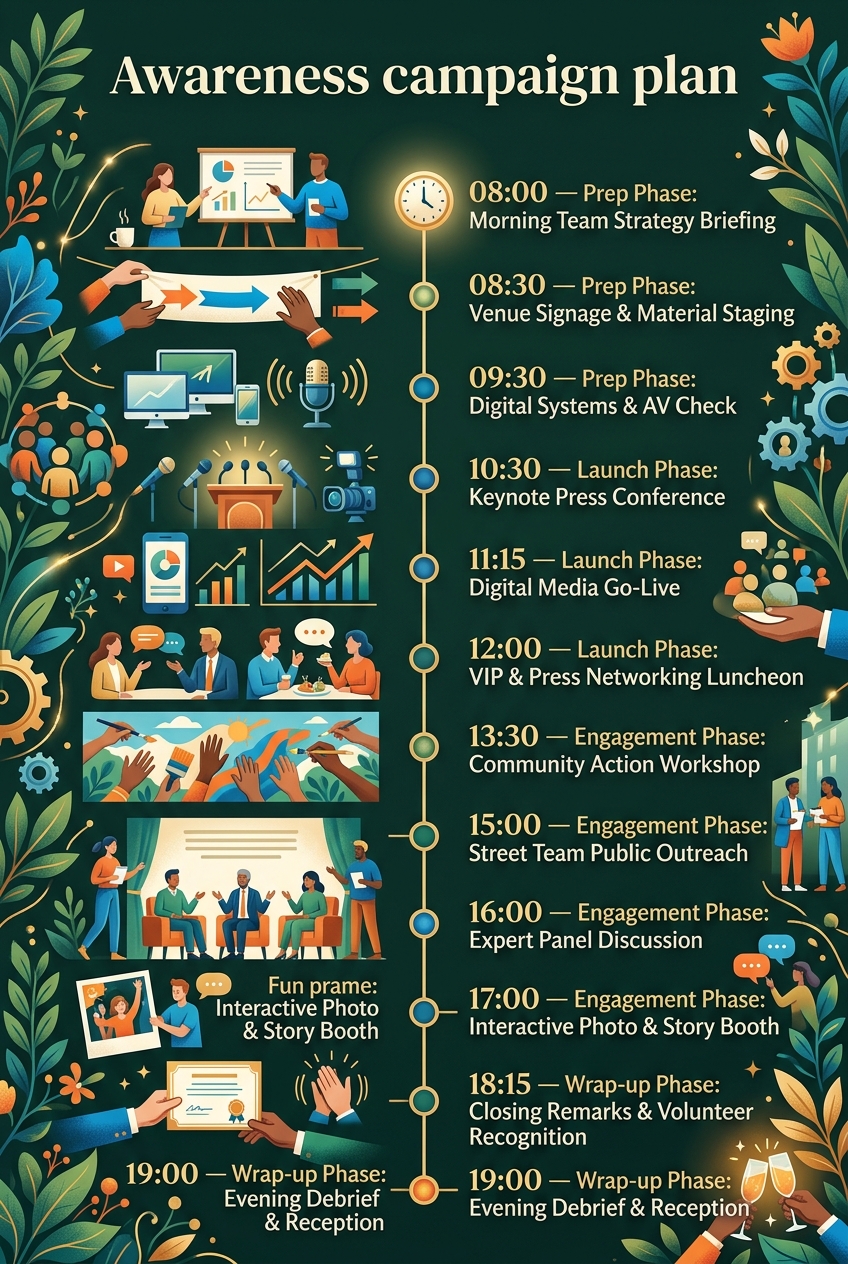
Why Awareness Campaign Plans Need a Timeline
Public awareness activations involve dozens of moving parts that must hit tight deadlines to capture media attention and audience interest. Without a clear central schedule, team members risk operating in isolation, leading to delayed press releases, technical glitches during keynotes, or understaffed engagement booths.
A unified schedule establishes clear operational accountability across public relations teams, venue technicians, volunteer street teams, and executive spokespeople. When every contributor understands exactly when collateral must be staged and when digital broadcasts go live, cross-departmental coordination runs smoothly.
Furthermore, a well-structured timeline protects your monetary investment and brand reputation. Maintaining momentum throughout a 12-hour launch day requires strategic pacing so that public participation peaks during high-traffic afternoon hours and finishes with meaningful partner recognition.
What to Include in an Awareness Campaign Plan
A comprehensive launch-day awareness campaign plan must integrate ground operations with digital marketing channels. Essential elements include:
- Operational Preparation: Staff briefings, physical collateral auditing, venue signage assembly, and rigorous audiovisual checks.
- Media & Press Activations: Keynote press releases, executive Q&A sessions, media distribution kits, and media networking luncheons.
- Synchronized Digital Launches: Coordinated social media blasts, influencer distribution pushes, website landing page launches, and livestream feeds.
- Public Engagement Touchpoints: Interactive workshops, street-level guerrilla outreach, expert panel discussions, and social media photo opportunities.
- Stakeholder Recognition & Analytics Debrief: Formal volunteer appreciations, closing campaign metrics summaries, and partner receptions.
Prep Phase: Morning Staging & Briefings
Preparation Phase Schedule
| Time | Event |
|---|---|
| 08:00 | Prep Phase: Morning Team Strategy Briefing |
| 08:30 | Prep Phase: Venue Signage & Material Staging |
| 09:30 | Prep Phase: Digital Systems & AV Check |
The success of a public-facing campaign relies heavily on early-morning rigor. Kick off the morning at 08:00 in the Main Conference Room at Campaign HQ with a dedicated strategy briefing. Supplying coffee and breakfast items builds morale while leadership reviews core messaging, assigns emergency contact roles, and confirms team positioning for the day.
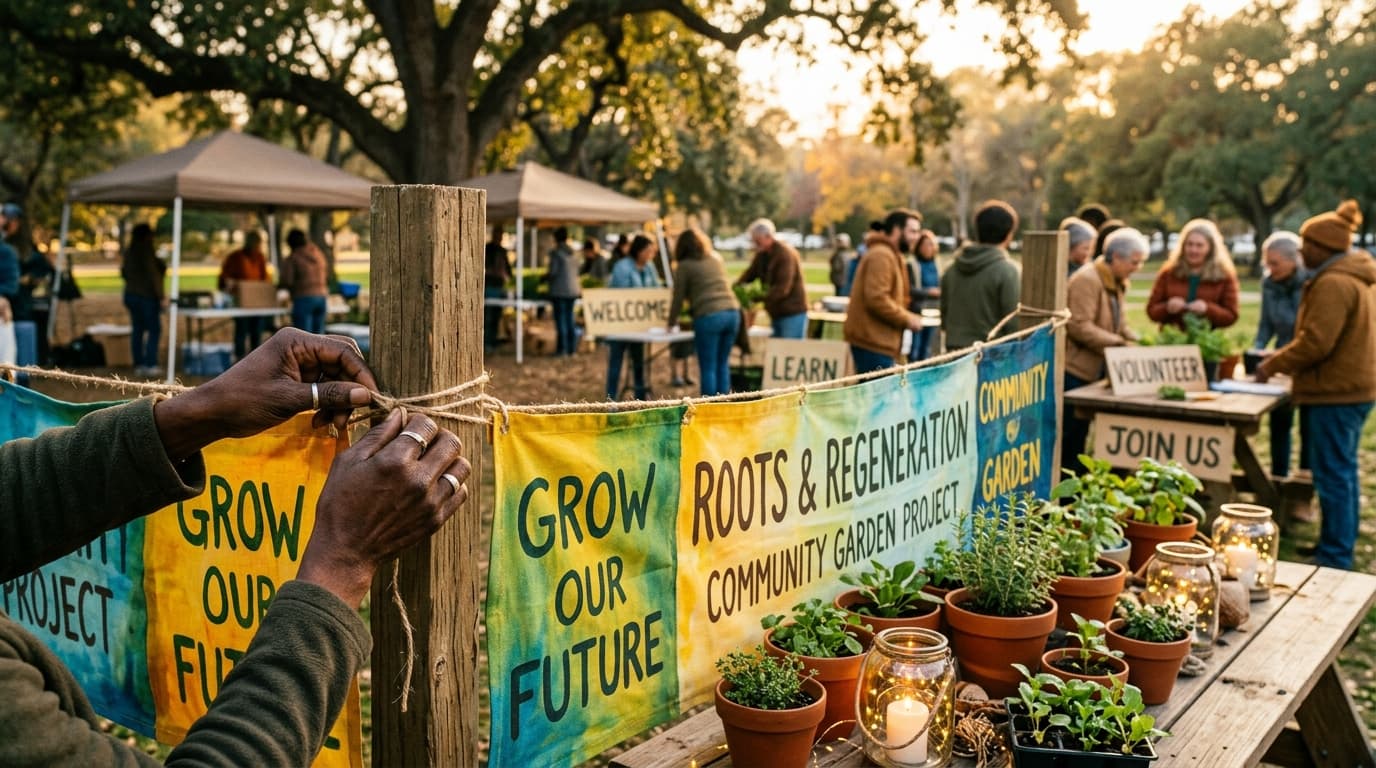
By 08:30, shift ground operations to the Central Atrium in the City Center for physical staging. Teams must perform a complete audit of banners, informational booths, and promotional giveaways to ensure maximum visual impact before public foot traffic arrives. Concurrently at 09:30, the technical crew enters the AV Control Room to test broadcast feeds, verify microphone audio levels, and push preliminary landing page updates to ensure zero technical downtime during the live launch.
Launch Phase: Press & Digital Broadcast
Launch Phase Schedule
| Time | Event |
|---|---|
| 10:30 | Launch Phase: Keynote Press Conference |
| 11:15 | Launch Phase: Digital Media Go-Live |
| 12:00 | Launch Phase: VIP & Press Networking Luncheon |
Transition smoothly into the public launch phase starting at 10:30 in the Main Stage Auditorium. Hosting your press conference mid-morning accommodates journalist deadlines while giving spokespeople ample time to deliver an inspiring opening address, present key statistics, and handle reporter Q&As efficiently.
Directly following the press briefing at 11:15, execute the digital media rollout from the Media Center. Coordinating global digital publishing across social media platforms simultaneously with partner influencer posts amplifies initial momentum generated by news coverage. Conclude the launch window at 12:00 with a catered VIP and press luncheon in the Executive Lounge, providing an intimate venue for key sponsors, community leaders, and journalists to establish valuable relationships.
Engagement Phase: Public Activations & Interactive Events
Engagement Phase Schedule
| Time | Event |
|---|---|
| 13:30 | Engagement Phase: Community Action Workshop |
| 15:00 | Engagement Phase: Street Team Public Outreach |
| 16:00 | Engagement Phase: Expert Panel Discussion |
| 17:00 | Engagement Phase: Interactive Photo & Story Booth |
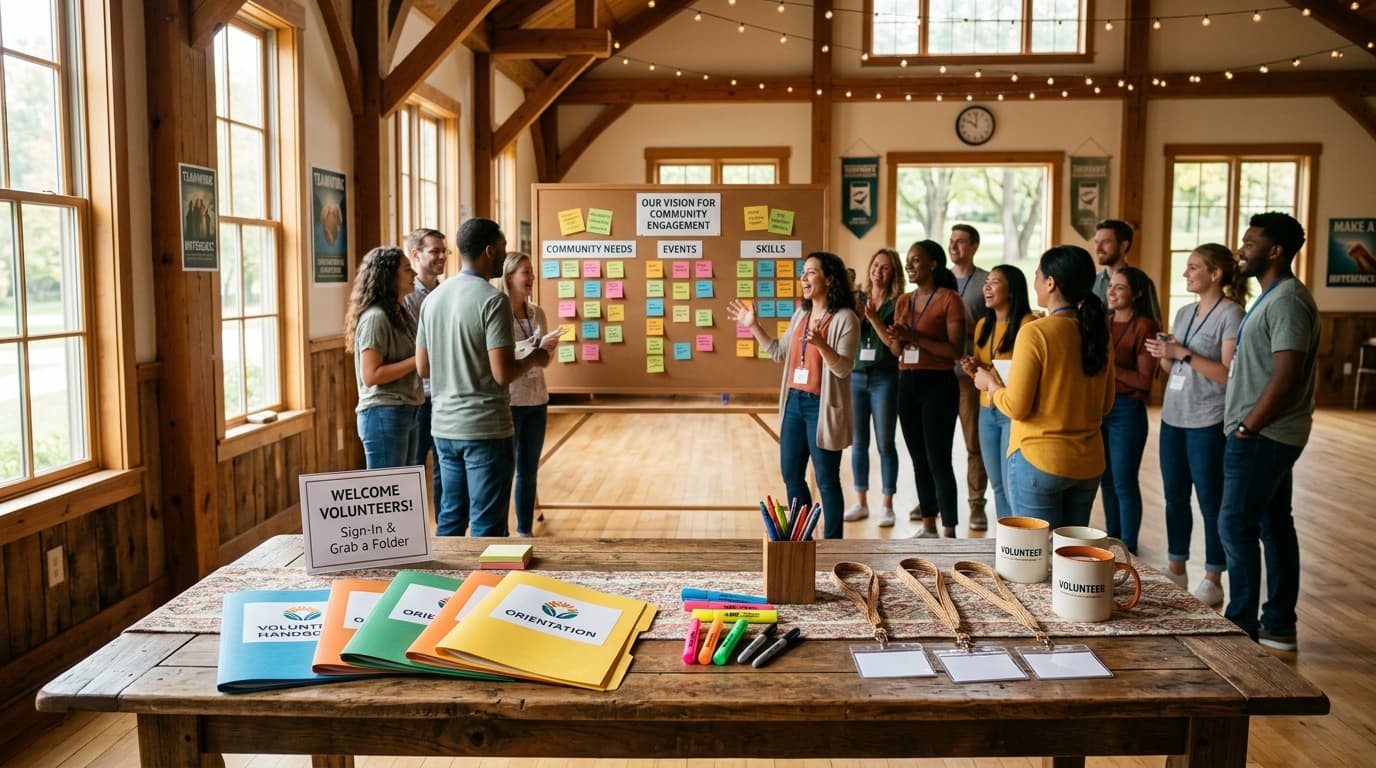
The afternoon focuses entirely on driving audience participation and community involvement. Re-engage foot traffic at 13:30 in the Community Hall with an interactive action workshop where facilitators guide hands-on discussions and distribute resource kits detailing tangible steps attendees can take for the cause.
At 15:00, deploy street teams into the high-foot-traffic Downtown Pedestrian Plaza. Distributing branded merchandise and educational flyers directly to passersby is an effective strategy to drive foot traffic to digital sign-up portals. Continue engagement back in the Main Stage Auditorium at 16:00 with an expert panel discussion exploring long-term solutions, featuring live audience app-based Q&A. Wrap up afternoon activities at 17:00 in the Engagement Zone, where participants record personal video testimonials and snap photos to share across social networks using tracked campaign hashtags.
Wrap-up Phase: Closing Remarks & Partner Debrief
Wrap-up Phase Schedule
| Time | Event |
|---|---|
| 18:15 | Wrap-up Phase: Closing Remarks & Volunteer Recognition |
| 19:00 | Wrap-up Phase: Evening Debrief & Reception |
A structured wrap-up preserves momentum for future advocacy efforts and validates the hard work of your team. At 18:15, gather organizers and public participants in the Main Stage Auditorium to highlight initial engagement metrics, summarize achievements, and publicly recognize volunteer contributions with formal awards.
At 19:00, transition the organizing committee, key sponsors, and civic partners to the Rooftop Terrace for a celebratory reception. Unwinding over light refreshments provides a comfortable setting to gather initial feedback, build long-term relationships, and outline initial next steps for post-campaign outreach.
Awareness Campaign Plan Timeline vs Campaign Strategy Document
It is common to confuse an operational day-of campaign timeline with a high-level strategy document, but both serve distinct functions during a public push:
| Feature | Campaign Plan Timeline | Campaign Strategy Document |
|---|---|---|
| Primary Focus | Minute-by-minute execution and day-of operational flow | Long-term messaging, target personas, and policy goals |
| Primary Audience | Event directors, stage managers, street teams, AV tech staff | Executive boards, major donors, agency directors, legal leads |
| Time Horizon | Specific 12-to-24-hour launch window | Multi-month or multi-year campaign lifecycle |
| Core Deliverable | Room assignments, run-of-show cues, and shift schedules | Key performance indicators (KPIs), budget allocations, press releases |
While your campaign strategy document defines the messaging framework and campaign goals, your day-of running order translates policy strategy into concrete physical actions on the ground.
Who Should Use This Template?
This multi-phase timeline template is engineered for organizations that need to align diverse teams around a unified public launch day, including:
- Non-Profit Organizations & Charities: Coordinating advocacy rallies, public education campaigns, and donor outreach days.
- Corporate Social Responsibility (CSR) Teams: Launching sustainability initiatives, community grant projects, or employee volunteer days. If your executive team needs to brief leadership beforehand, pair this with a board meeting timeline template.
- Public Health & Government Agencies: Rolling out community wellness initiatives, municipal awareness drives, and public safety announcements.
- PR Agencies & Marketing Firms: Executing experiential brand activations, non-profit awareness drives, and press launches.
- Student Unions & Academic Associations: Organizing campus awareness weeks, charity fundraisers, or student elections. If you are coordinating milestone social gatherings alongside campaign drives, check out our anniversary party schedule template or birthday party timeline template.
Chronolio supports the distinct roles involved in event execution, allowing stage managers, press leads, and volunteer coordinators to view tailored schedules specific to their responsibilities.

How to Use This Template
- Duplicate or Import the Schedule: Open this template within Chronolio to customize the times, titles, and zone details for your specific initiative.
- Set Your Target Launch Date: Adjust the master clock to match your actual event date; all relative phase windows will auto-align.
- Customize Roles and Locations: Tailor room assignments (e.g., swapping "Executive Lounge" for your venue's VIP suite) and assign dedicated point-persons for each section.
- Export and Distribute: Generate downloadable staff kits using our offline formats—get your awareness campaign plan in Word (.docx) or print your awareness campaign plan in PDF format—or distribute live mobile-friendly view links to your street teams.
Tips for a Successful Awareness Campaign Day
- Build Buffer Windows Between Phases: Leave 15 to 30 minutes of open slack between major transitions (such as moving from the press conference to public street outreach) to absorb minor delays.
- Establish a Single Command Center: Maintain a dedicated office space or tech desk as campaign headquarters where leads can quickly resolve logistics issues.
- Equip Street Teams with Mobile Schedules: Ensure volunteer leads can check visual schedules on mobile devices to manage shift rotations without returning to headquarters.
- Stage Media Materials Early: Upload digital press kits, quote sheets, and high-res photo assets to cloud folders the evening before so press teams can distribute them instantly during the go-live window.
- Implement Centralized Hashtag Tracking: Assign a dedicated social media manager to track user-generated content and quote-tweet public posts during the afternoon story booth session.
- Provide Adequate Hydration and Rest: Public outreach requires immense energy; schedule rotating break shifts and supply plenty of water in team rooms.
Common Mistakes to Avoid
- Overpacking the Press Conference: Attempting to feature too many speakers during the morning briefing causes press delays and leaves insufficient time for reporter Q&As.
- Neglecting Technical AV Audits: Skipping early-morning microphone checks and livestream testing often leads to embarrassing delays during key speeches.
- Isolating Digital Releases from Live Events: Publishing social media announcements hours after your press conference misses peak media attention; synchronize digital launches closely with press events.
- Ignoring Street Team Safety and Weather: Failing to prepare indoor backup locations or weather contingency plans for street outreach risks halting afternoon public engagement.
- Forgetting Volunteer Recognition: Skimping on the evening recognition ceremony lowers staff morale and harms volunteer retention for future campaigns.
- Failing to Track Real-Time Analytics: Neglecting to collect sign-up stats, booth visitor counts, and media attendance throughout the day makes post-campaign evaluation difficult.
In Summary
- Comprehensive Scope: Covers the full trajectory of a public campaign launch day across 4 distinct phases: Prep, Launch, Engagement, and Wrap-up.
- Target Audience: Designed for PR agencies, non-profit directors, CSR managers, public health officers, and community organizers.
- Operational Alignment: Synchronizes morning physical site setup, live press briefings, digital asset drops, street-level outreach, and evening sponsor debriefs.
- Built-in Contingency: Uses balanced 30-to-90-minute operational blocks to absorb real-world scheduling shifts without disrupting media streams.
- Multi-Format Accessibility: Available for web management inside Chronolio, or downloadable as printable Word (.docx) and PDF files.
Organizing a multi-faceted public push requires clear timing, synchronized team execution, and clear communication across public relations and ground ops teams. Utilizing a structured awareness campaign plan timeline guarantees that your press briefings, digital launches, and public activations occur seamlessly, maximizing the reach and real-world impact of your cause. To learn more about industry-standard advocacy frameworks and public relations management, consult established guidelines from the Public Relations Society of America.
Use This Awareness Campaign Plan Template