





This Template at a Glance
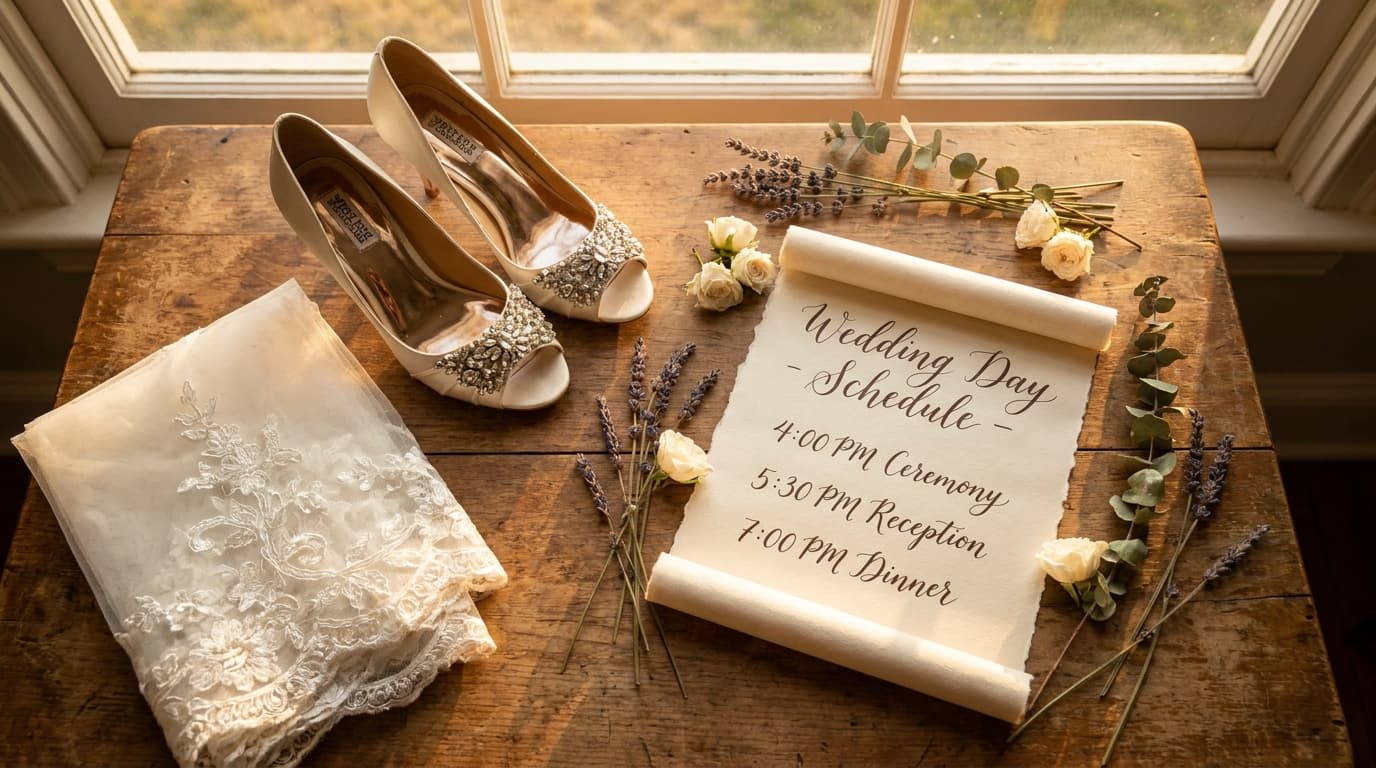
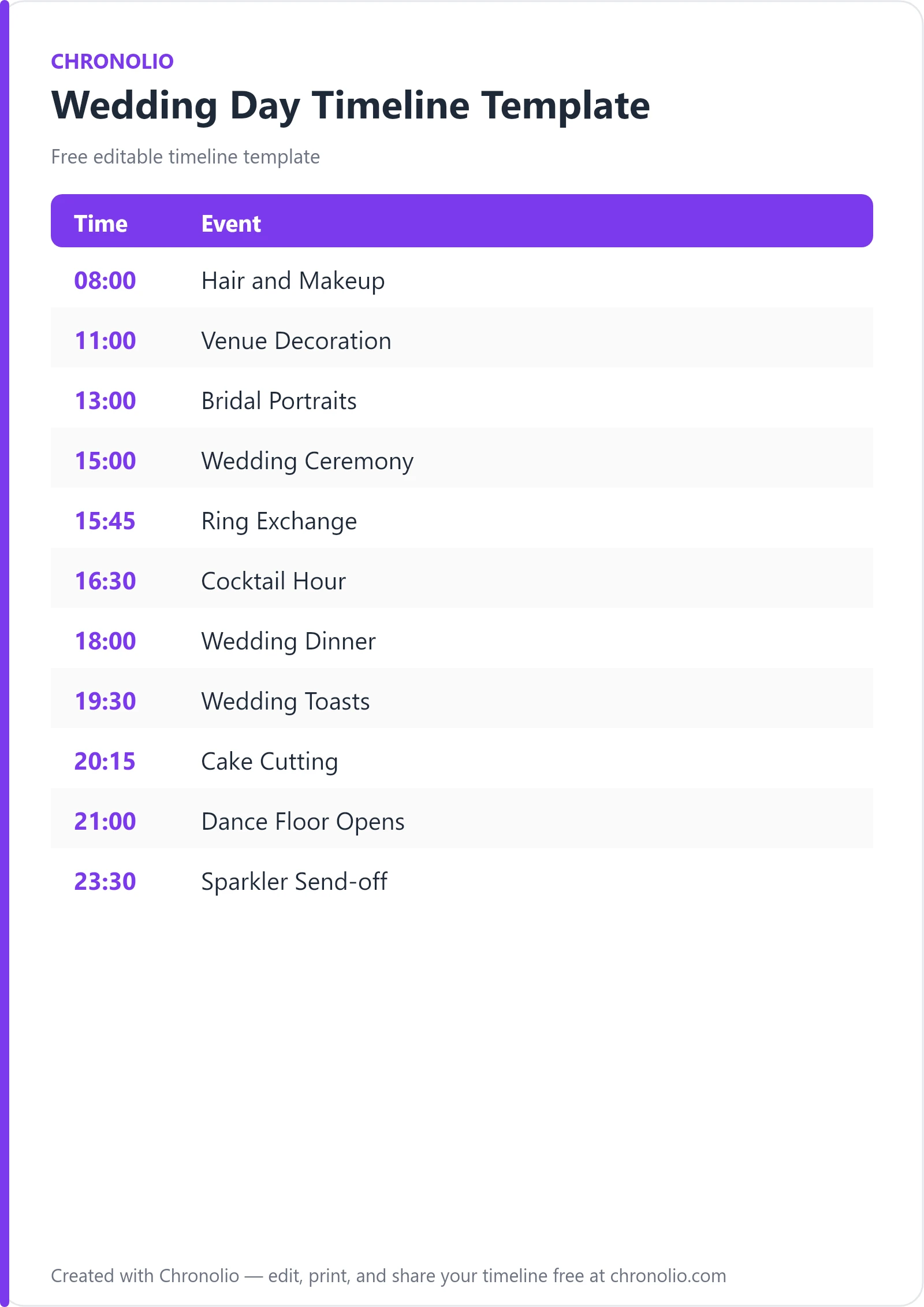
Here is the complete schedule this free template gives you — every time block, ready to edit, download, and share:
| Time | Event |
|---|---|
| 08:00 | Hair and Makeup |
| 11:00 | Venue Decoration |
| 13:00 | Bridal Portraits |
| 15:00 | Wedding Ceremony |
| 15:45 | Ring Exchange |
| 16:30 | Cocktail Hour |
| 18:00 | Wedding Dinner |
| 19:30 | Wedding Toasts |
| 20:15 | Cake Cutting |
| 21:00 | Dance Floor Opens |
| 23:30 | Sparkler Send-off |
What Is a Wedding Day Timeline?
A wedding day timeline is the central operational roadmap that coordinates every vendor, family member, and logistical phase across your entire wedding celebration. Having managed hundreds of weddings at our venue over the years, I can tell you that a well-structured schedule is the single biggest factor standing between a stress-free wedding day and complete chaotic rush.
This master outline dictates when the bridal party begins hair and makeup styling, when florists gain venue access for setup, precisely when the officiant opens the processional, and how dinner service leads smoothly into speeches, cake cutting, and late-night dancing. Built on proven venue logistics, this template incorporates realistic buffer periods that account for real-world delays like traffic, quick dress adjustments, and lost boutonnières. If you are coordinating a specialized service, you can also adapt this framework for a civil ceremony wedding timeline or consult our Catholic wedding timeline for traditional nuptial mass requirements.
Customize Your Wedding Day Timeline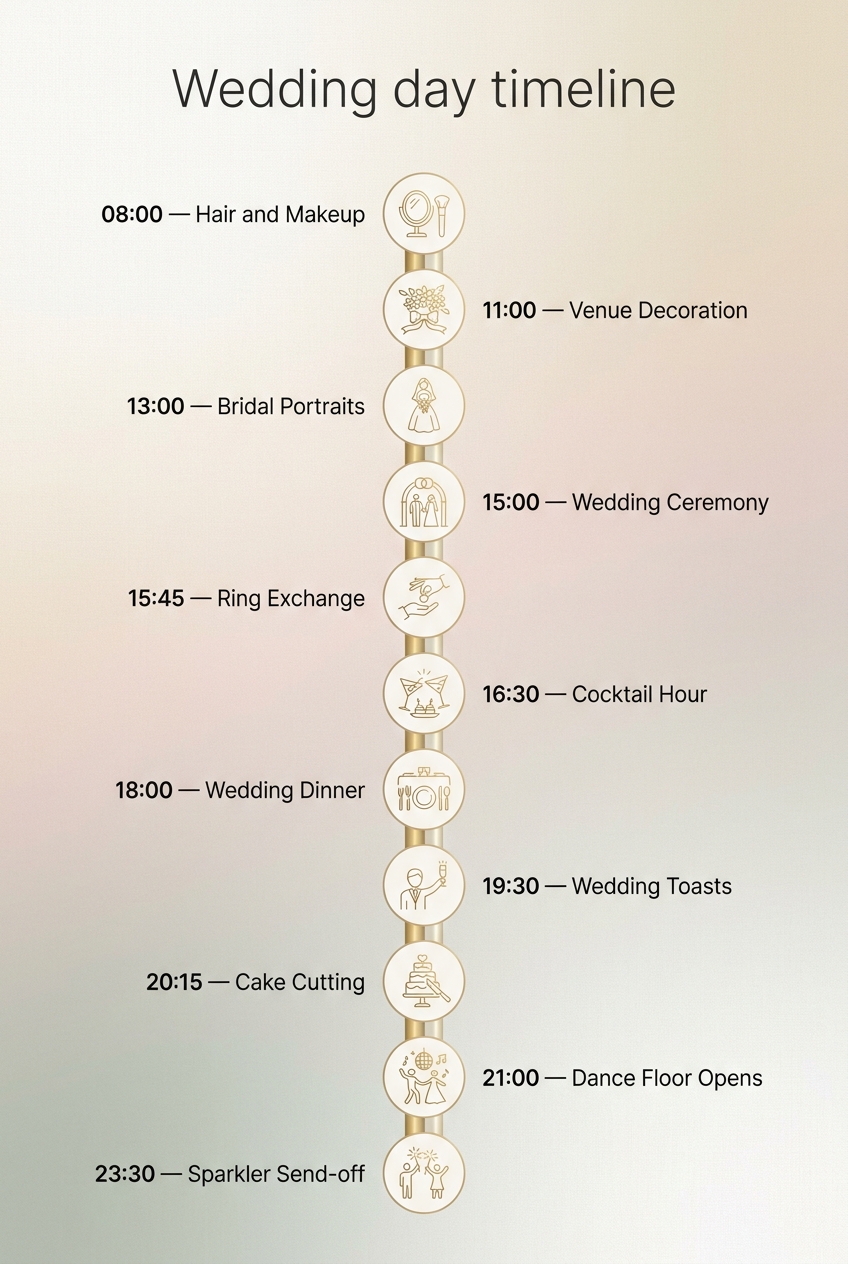
Why Weddings Need a Timeline
In event management, unmanaged time creates anxiety. On your wedding day, you are juggling dozens of independent moving parts: caterers synchronizing heat lamps with speech timings, photographers chasing natural light, and guests expecting smooth transitions. Without an authoritative run-of-show, vendors end up making split-second decisions that alter your vision, or worse, dinner service runs late and eats away at your dance floor hours.
A comprehensive schedule establishes single-source accountability for your day-of coordinator, venue team, and vendor squad. It ensures your catering staff knows exact plating times, preventing warm entrees from cooling while toasts drag on. Most importantly, a clear schedule protects the couple, taking logistics entirely off your shoulders so you can actually experience your wedding rather than manage it.
Finally, structured timing elevates guest comfort. When guests transition seamlessly from outdoor garden seating to the patio cocktail hour and into a climate-controlled main ballroom, they stay refreshed and energized. To keep your pre-wedding events just as organized, check out our guide to using a rehearsal dinner timeline template.
What to Include in a Wedding Day Timeline
To ensure zero detail gets overlooked on the big day, an effective master schedule must capture four essential categories of information:
- Vendor Access & Setup Windows: Arrival times, load-in procedures, floral arrangement delivery, sound checks, and table decor setup.
- Preparation & Getting Ready Protocols: Hair and makeup rotations, photographer arrival, bridal portrait windows, dress fluffing, and pre-ceremony transportation.
- Ceremony Logistics & Transition Padding: Officiant briefing, guest seating music, processional sequence, ring exchange, recessional, and guest movement to cocktail hour.
- Reception & Formal Event Milestones: Grand entrances, plated dinner service, maid of honor and best man toasts, cake cutting, open dancing start time, and sparkler send-off preparations.
Morning Preparation and Venue Setup
| Time | Event |
|---|---|
| 08:00 | Hair and Makeup |
| 11:00 | Venue Decoration |
| 13:00 | Bridal Portraits |
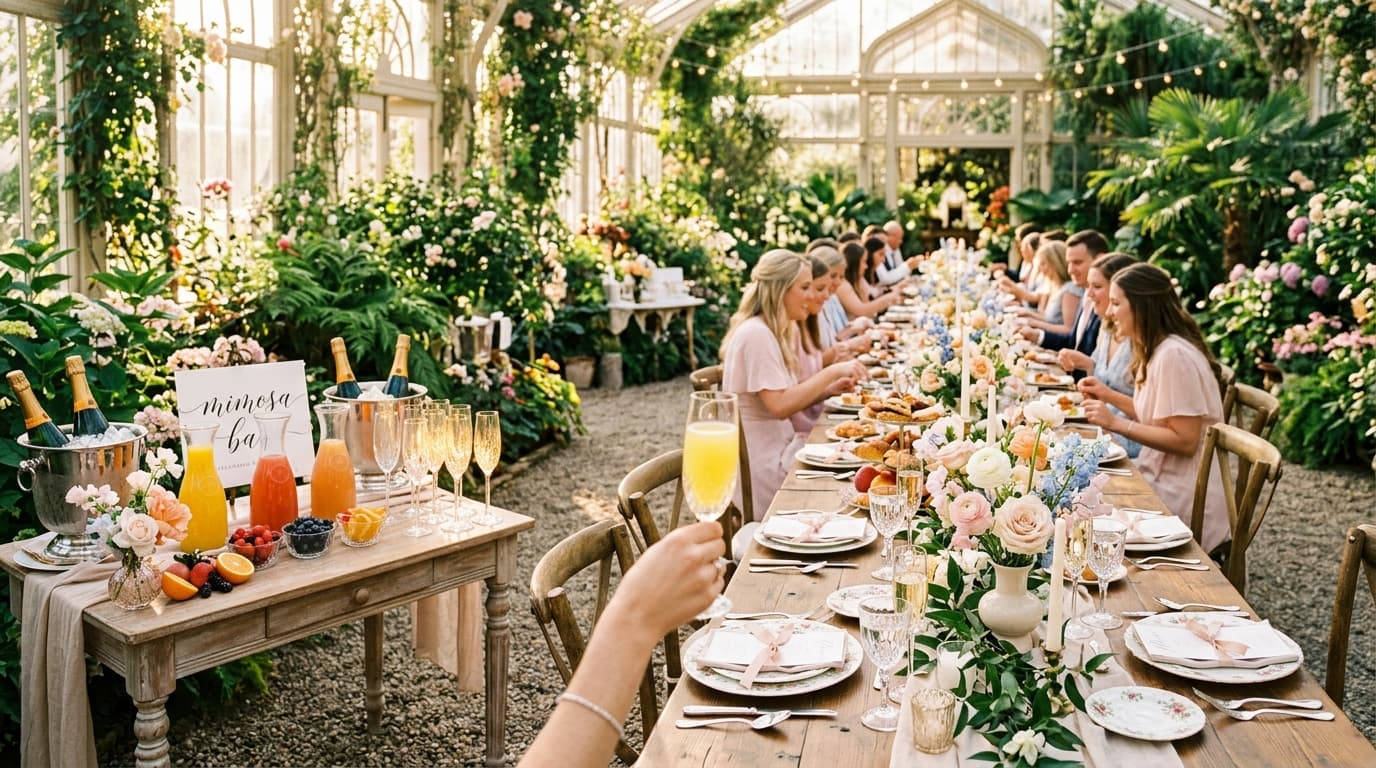
The morning portion of the day sets the emotional and operational foundation for everything that follows. We start hair and makeup early in the bridal suite at 08:00 because styling always takes longer than anticipated, especially with larger bridal parties. Allowing a solid 2.5-hour window ensures that hair artists and makeup professionals can work calmly without rushing the bride, while everyone enjoys light breakfast snacks and mimosas.
At 11:00, the main ballroom unlocks for floral teams and rental setup. Giving vendors two full hours to construct altar arrangements, arrange centerpieces, and lay out place settings before photographers arrive prevents background clutter during early photo sessions. By 13:00, the photographer takes advantage of optimal light on the garden terrace to capture relaxed bridal portraits and gown details, ensuring the couple does not feel rushed before guests begin arriving at the venue.
Ceremony and Post-Vow Celebrations
| Time | Event |
|---|---|
| 15:00 | Wedding Ceremony |
| 15:45 | Ring Exchange |
| 16:30 | Cocktail Hour |
The transition into the ceremony represents the crucial shift from pre-wedding preparation to live event execution. Starting the main garden gazebo ceremony at 15:00 allows late-arriving guests a brief cushion to settle in. If you are holding a religious service inside a church, pair this structure with our specialized Christian wedding timeline or review our church wedding ceremony timeline to account for sanctuary rules and formal processions.
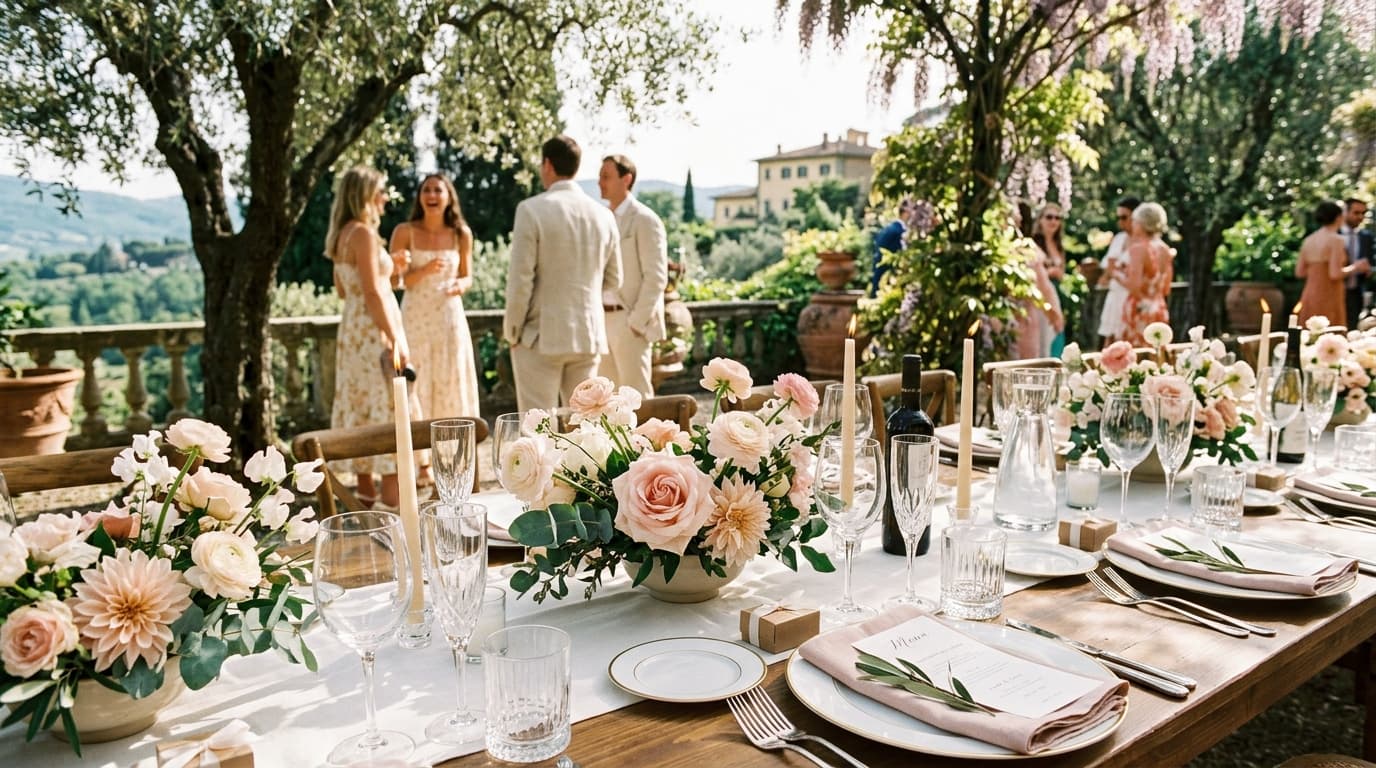
By 15:45, the service transitions into the sacred ring exchange and first kiss, followed by the joyful recessional down the aisle. Moving guests directly to the patio at 16:30 for cocktail hour accomplishes two critical goals: it entertains your guests with drinks and hors d'oeuvres, while providing an uninterrupted 60-minute window for the couple, family, and wedding party to take group photos around the grounds without feeling pulled away from the party.
Reception Dinner and Formal Protocols
| Time | Event |
|---|---|
| 18:00 | Wedding Dinner |
| 19:30 | Wedding Toasts |
| 20:15 | Cake Cutting |
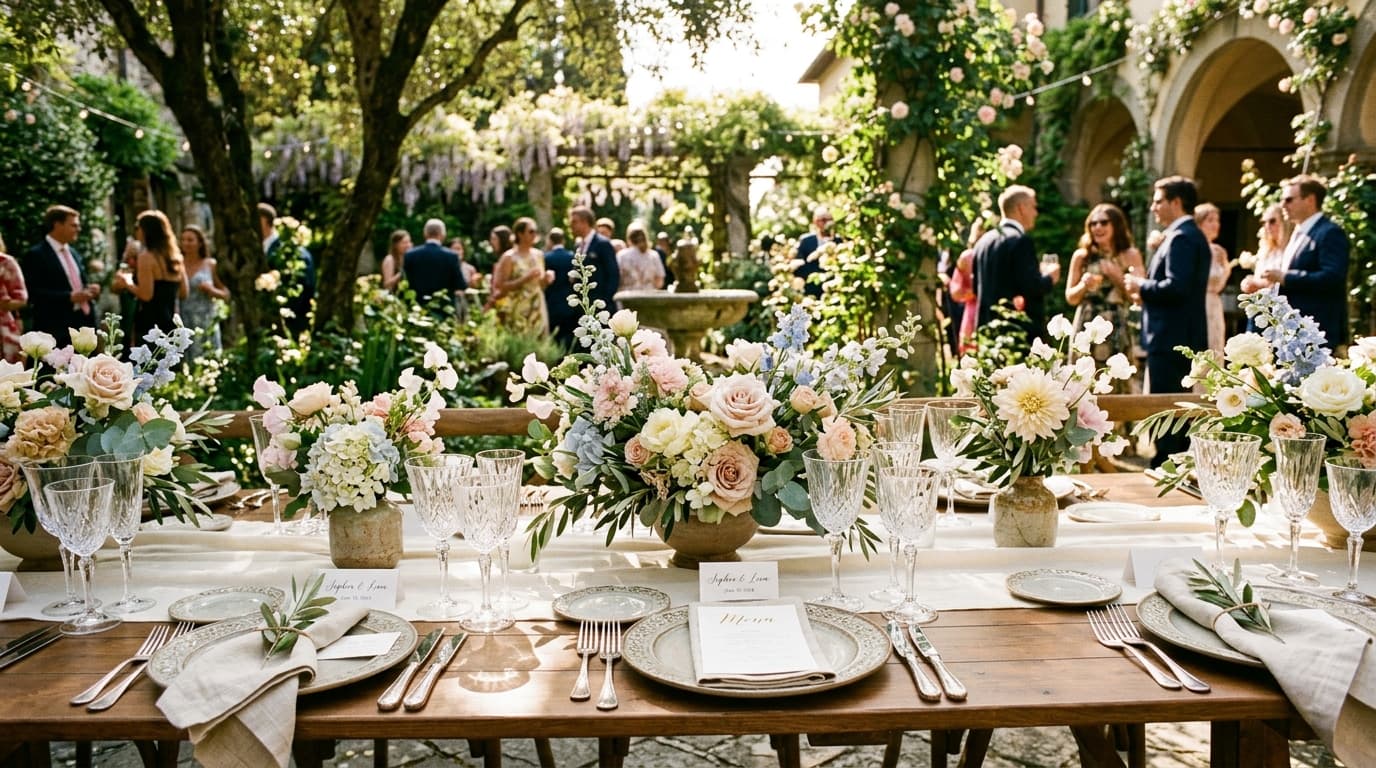
Inviting guests into the main ballroom at 18:00 establishes a seamless shift into formal reception proceedings. Serving a three-course dinner immediately after seating keeps energy high and prevents guests from drinking on an empty stomach. A full 90-minute block for dinner guarantees that the kitchen and catering staff can execute service smoothly across all tables without feeling rushed by the stage itinerary.
Following dinner at 19:30, the maid of honor and best man deliver their speeches while guests remain comfortably seated with their dessert wine. Holding wedding toasts right after dinner keeps audience attention locked on the head table before people get up to move around. At 20:15, the cake cutting serves as the transition anchor, signaling the end of formal dining and the opening of the dessert and coffee station.
Party Evening and Grand Send-Off
| Time | Event |
|---|---|
| 21:00 | Dance Floor Opens |
| 23:30 | Sparkler Send-off |
Opening the dance floor at 21:00 releases all the built-up celebratory energy of the day. The DJ or live band opens with the newlyweds' first dance before opening the floor to all attendees. Keeping a solid two-hour uninterrupted dancing window from 21:00 to 23:00 gives guests ample time to enjoy the bar, dance, and socialise without programmatic interruptions like late games or extra slide shows.
At 23:30, the venue coordinator gathers guests at the main entrance for the grand sparkler exit. Staging the send-off 15 minutes before venue access ends gives staff enough time to distribute sparklers safely, brief guests on lighting procedures, and create a pristine runway for photo-worthy farewell photos as the couple makes their exit.
Wedding Day Timeline vs Wedding Day Itinerary
Couples and wedding coordinators frequently confuse a wedding day timeline with a guest itinerary, but they serve completely distinct operational roles on the day of the event.
| Operational Aspect | Master Wedding Day Timeline | Guest Wedding Day Itinerary |
|---|---|---|
| Primary Audience | Vendors, coordinators, venue managers, photo crew | Wedding guests, family, bridal party |
| Level of Detail | Highly granular (load-in, cueing, food service times) | High-level (ceremony start, cocktail hour, shuttle departures) |
| Focus Area | Logistics, setup buffer, electrical check, catering pacing | Locations, start times, dress code, travel info |
| Primary Goal | Ensuring vendor synchronization & zero delays | Ensuring guests arrive on time and know what to expect |
While a guest itinerary briefly tells family when to board shuttle buses or sit for dinner, the master wedding day timeline directs backend operations. The timeline tracks technical cues, vendor delivery windows, load-out requirements, and internal catering prompts, according to industry standards established by top planners on sites like The Knot and Brides.
Who Should Use This Template?
This timeline template is crafted for anyone responsible for executing a flawless wedding day. Designed for maximum flexibility, it caters to:
- Professional Day-of Coordinators & Wedding Planners: Managing multi-vendor schedules and keeping the run-of-show on time.
- Venue Managers & Hospitality Directors: Coordinating kitchen timing, bar service, and room turnover.
- DIY Brides & Grooms: Structuring their own day for a private estate, rustic barn, or boutique venue.
- Photographers & Videographers: Mapping out natural lighting windows, portrait schedules, and key ceremony cues.
- Couples Planning Alternative Formats: Adjusting schedules for smaller celebrations or adapting to an elopement timeline.
Chronolio tailored features support the various dedicated roles involved in modern event execution, making communication simple across all devices.
How to Use This Template
- Download or Duplicate the Master Schedule: Click the editor link above or download our free templates in Word (.docx) format or printable PDF format.
- Set Your Anchor Event: Input your non-negotiable ceremony start time first, then build your morning prep backwards and your evening reception forwards.
- Adjust Buffers with Vendors: Review load-in times with your florist, catering head, and hair/makeup lead to confirm individual time requirements.
- Distribute Customized Views: Send tailored versions to vendors (logistics focused) and the bridal party (prep and transit focused) two weeks prior to the wedding.
Tips for a Successful Wedding Day
- Build 15-Minute Buffer Cushions: Always insert extra padding between hair styling, travel to the venue, and formal family photography sessions.
- Feed Your Vendors Early: Schedule vendor meals during guest dinner so photographers and DJs are ready to go the moment speeches begin.
- Assign a Dedicated Logistics Contact: Designate a trusted friend or day-of planner to handle minor vendor questions so your personal phone stays off.
- Confirm Lighting Profiles with Photographers: Plan outdoor portraits around golden hour light rather than mid-day harsh sun.
- Keep Emergency Touch-Up Kits Handy: Place safety pins, tape, tissues, and flat shoes in the bridal suite for quick dress adjustments.
- Communicate Travel Routes Clearly: Share detailed parking and shuttle drop-off instructions with hired drivers to eliminate group travel delays.
Common Mistakes to Avoid
- Underestimating Hair and Makeup Duration: Scheduling too little time for large bridal parties is the single primary cause of delayed wedding ceremonies.
- Packing Too Many Speeches Into Dinner: Allowing more than three to four toasts causes kitchen service to stall and eats up dance floor time.
- Omitting Transit Windows: Forgetting to account for walking between ceremony gazebos, patio spaces, and ballrooms causes cascading delays.
- Forgetting Pre-Ceremony Hydration and Meals: Skipping morning snacks leads to exhausted couples before the reception even begins.
- Starting Photos Without Formal Shot Lists: Arriving at family photos without a written shot list leads to confused crowd management and wasted daylight.
In Summary
- Complete Operational Coverage: Manages a 15-hour sequence from 08:00 prep through 23:45 sparkler send-off.
- Vendor Synchronization: Aligns florists, caterers, DJs, and photographers around unified timing milestones.
- Built-in Buffer Logic: Integrates realistic transition windows that absorb unexpected real-world delays.
- Adaptable Architecture: Works for grand ballroom receptions, intimate outdoor gardens, or religious venue settings.
- Multi-Format Convenience: Available for instant online editing or direct download in DOCX and PDF file types.
Planning a memorable celebration comes down to balancing careful organization with room to breathe. Whether you are professional event planners, wedding venue staff, or a couple designing a DIY wedding celebration, this wedding day timeline gives you the structured foundation needed to enjoy every single moment without watching the clock.
Customize Your Wedding Day Timeline